
Big Island Manta Ray Night Dive: Tours, Safety and Costs
Learn what to expect on a Big Island Manta Ray Night Dive in Kona, compare tour options, check safety and see typical costs.
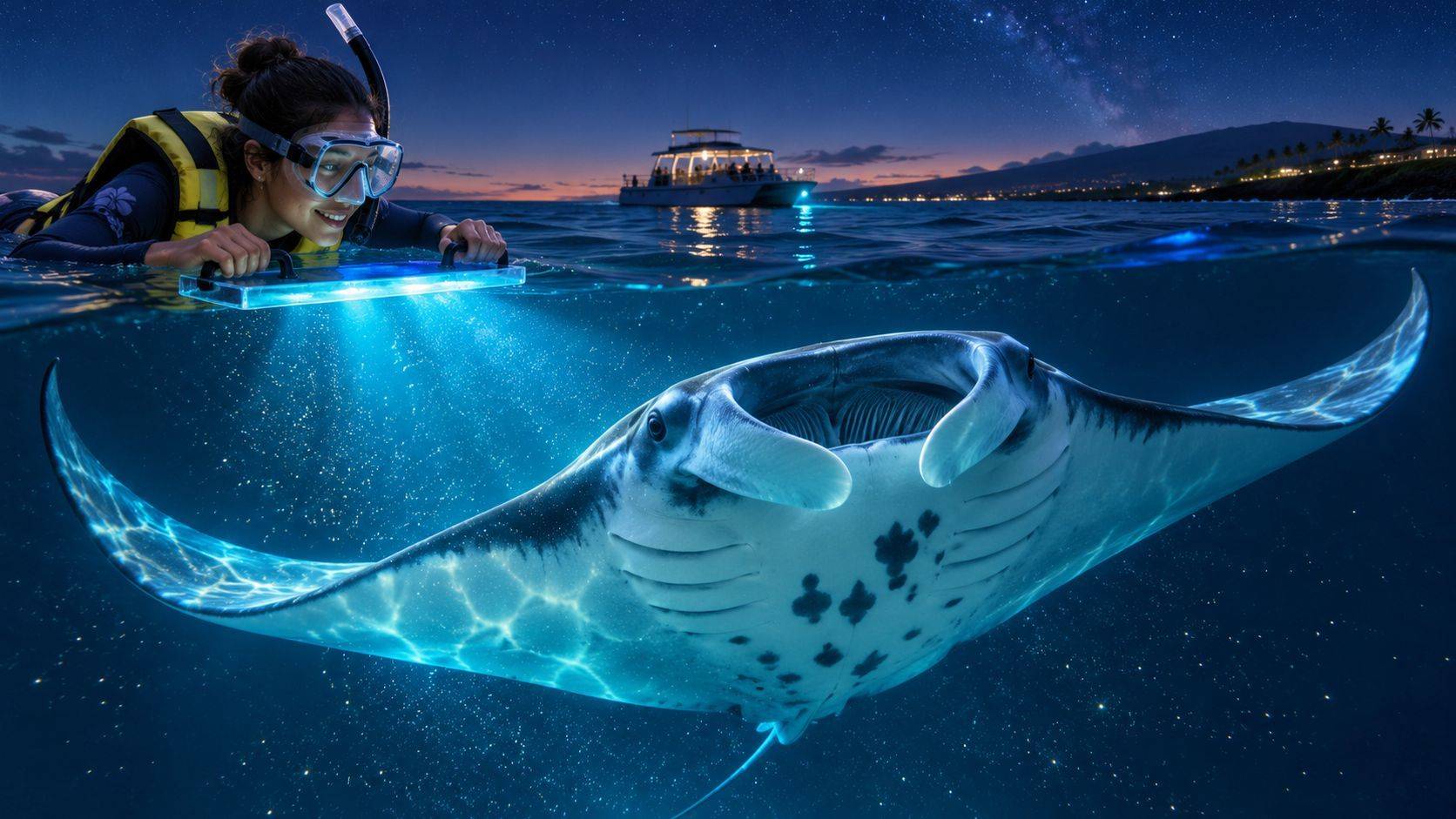
You've got a Kona evening open, several booking tabs on your phone, and one nagging question: are these manta tours different? The photos look similar, but a small boat, a crowded viewing site, and an unclear water-entry plan can produce very different nights.
A Big Island manta ray night dive can mean scuba diving beneath the animals or snorkeling above them. Choose the right format first, then judge the operator by its safety controls, not just its manta photos. The rays are wild, and no crew can promise their arrival. What a crew can control is the briefing, guest supervision, boat handling, and decision to stay ashore when conditions aren't suitable.
Table of Contents
- What Happens on a Big Island Manta Night Dive
- Choosing Between Shared, Private and Combined Tours
- Why Mantas Gather at Kona Night Sites
- Staying Safe and Viewing Responsibly
- Safety Questions to Ask Before You Book
- Compare Costs and Book Your Night Dive
- Questions Visitors Ask Before Booking
What Happens on a Big Island Manta Night Dive
Say you've chosen the surface snorkel rather than scuba. Our evening starts at Honokohau Small Boat Harbor, where you meet the lifeguard-certified crew and receive an educational briefing on manta biology and the history of Kona's rays. This is the time to mention unfamiliar equipment, swimming concerns, or difficulty using a boat ladder.
The briefing is part of the experience, not something to rush through before boarding.
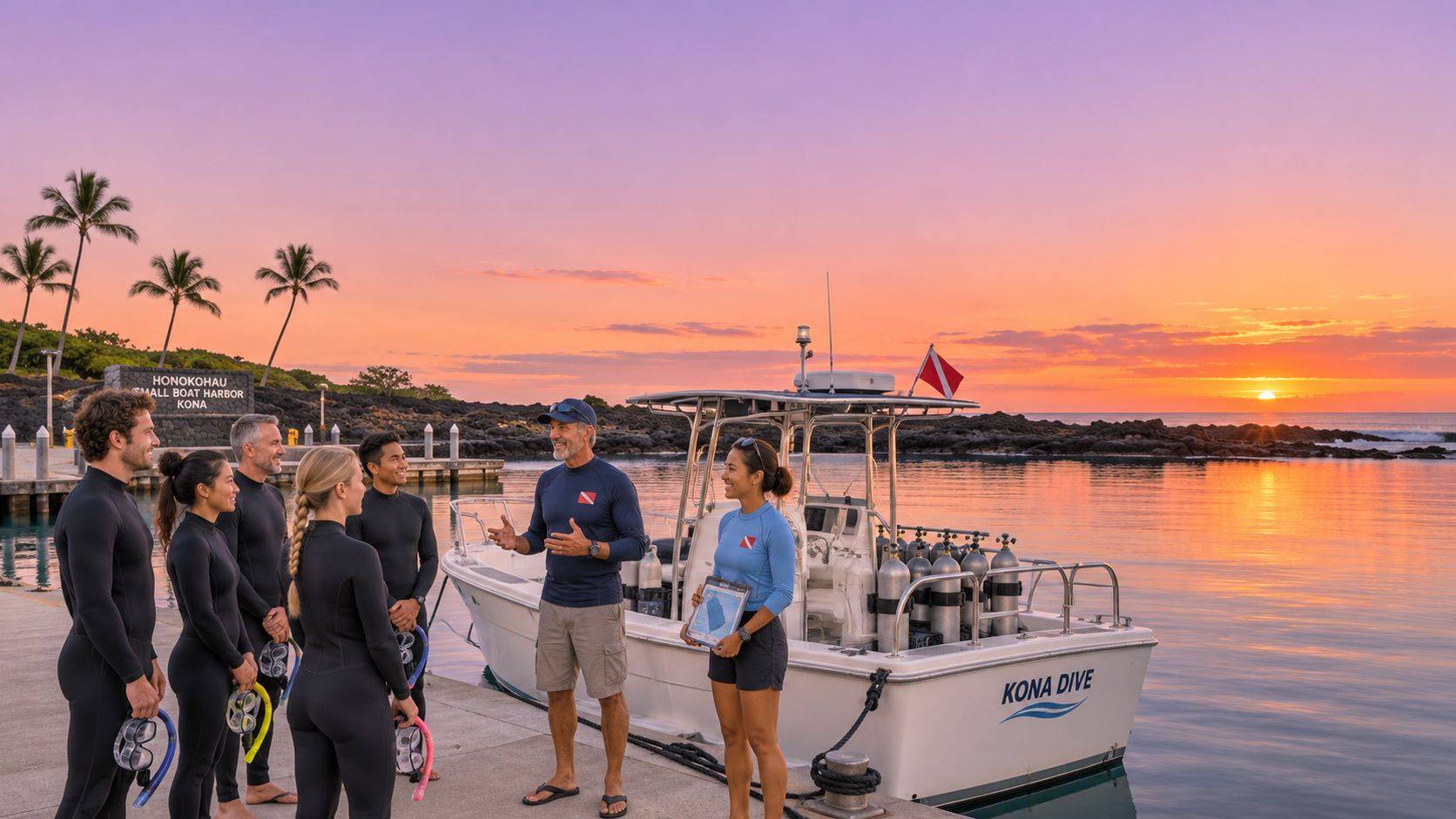
The boat ride takes 20 to 40 minutes, depending on where the mantas are showing up best that night. Use the ride to settle your gear and listen for the entry instructions rather than leaving every adjustment until you're beside the ladder.
From the boat to the light board
The water portion follows a straightforward sequence:
- Check your equipment. Fit the mask, test your snorkel breathing, and make sure your flotation device feels secure.
- Enter on the guide's signal. Move to the assigned position instead of swimming toward another group's lights.
- Hold the snorkel board. Float at the surface with your face in the water and your body relaxed.
- Watch without pursuing. Let the mantas choose their approach while you keep your position.
- Return when directed. Follow the crew's exit sequence, even if a ray is still nearby.
The outing lasts about two hours overall, not two hours continuously in the water. Your departure, briefing, boat travel, equipment handling, and return all belong within that evening.
Kona's encounters aren't a matter of passing animals happening by. A NOAA-hosted manta assessment describes strong site fidelity among the local reef mantas, which helps explain their repeated use of established viewing areas.
Practical rule: Arrive ready to listen and adjust your equipment. A comfortable mask and a clear exit plan matter more than being first into the water.
On a settled evening, the scene can feel surprisingly quiet: bright water beneath the board, dark ocean beyond it, and rays moving through the glow. Snorkelers watch below; scuba divers may see passes overhead. Then everyone returns to the boat for the ride back to the harbor.
Choosing Between Shared, Private and Combined Tours
The right format depends on who is going, how comfortable they are in the water, and whether they want to share a boat. A private charter offers more control over the group aboard, but it does not reserve the manta viewing area. Compare supervision and group arrangements, not just the chance of seeing a ray.
Option — Format — Best for — Requirement
Shared night snorkel — Group tour on a boat — Solo travelers, couples, families — Swimming skills required; minimum age 5
Two-tank manta night dive — Late afternoon reef dive, surface interval, then night dive — Certified scuba divers — Scuba certification
Private charter — Dedicated boat for one group — Groups, families, celebrations — Book ahead
Combined excursions — Manta night plus another snorkel or dive on a different day — Multi-day visitors — Check each operator's bundle options
Choose by water comfort, not the photograph
Shared snorkeling suits swimmers who want to watch from the surface without scuba equipment. Solo travelers and couples can join a group without organizing a whole boat. Manta Ray Night Snorkel Hawaii offers two tour times, reflecting the outing's popularity. For another shared option, compare the arrangements for Kona Snorkel Trips and check availability.
Certified divers can choose a two-tank trip with a late afternoon reef dive, a sunset surface interval with a light meal and manta briefing, followed by the night dive. Kona is a practical base for manta night dives, and Kona Honu Divers provides the two-tank manta dive. Review its two-tank manta dive and check availability. For a longer itinerary, compare its Big Island diving tours and broader departure calendar.
Private boats and multi-day plans
A private manta ray snorkel gives your group a dedicated boat, not exclusive access to the ocean. Other operators may be at the viewing site, so book private for group coordination and privacy aboard rather than expecting an empty site.
A daytime trip can complement the night outing. Compare a Captain Cook or Kealakekua Bay snorkel tour and check availability, or consider Captain Cook Snorkeling Tours. Check Hawaii State Parks' access guidance before assuming a bay excursion includes landing at the monument. Vessel transit and authorized access to Ka'awaloa Flat are distinct.
Start with three practical questions: Can everyone swim unaided? Is anyone scuba certified? Does the group want a private boat? The answers narrow the choice more reliably than photos, while keeping safety and the realities of a shared viewing site in view.
Why Mantas Gather at Kona Night Sites
Plankton draws manta rays to Kona's night sites. Lights gather zooplankton in a localized area, creating a feeding opportunity the rays may choose to use. They remain wild, so the lights cannot ensure they will appear.
The illuminated board gives snorkelers a stationary place to watch the feeding.
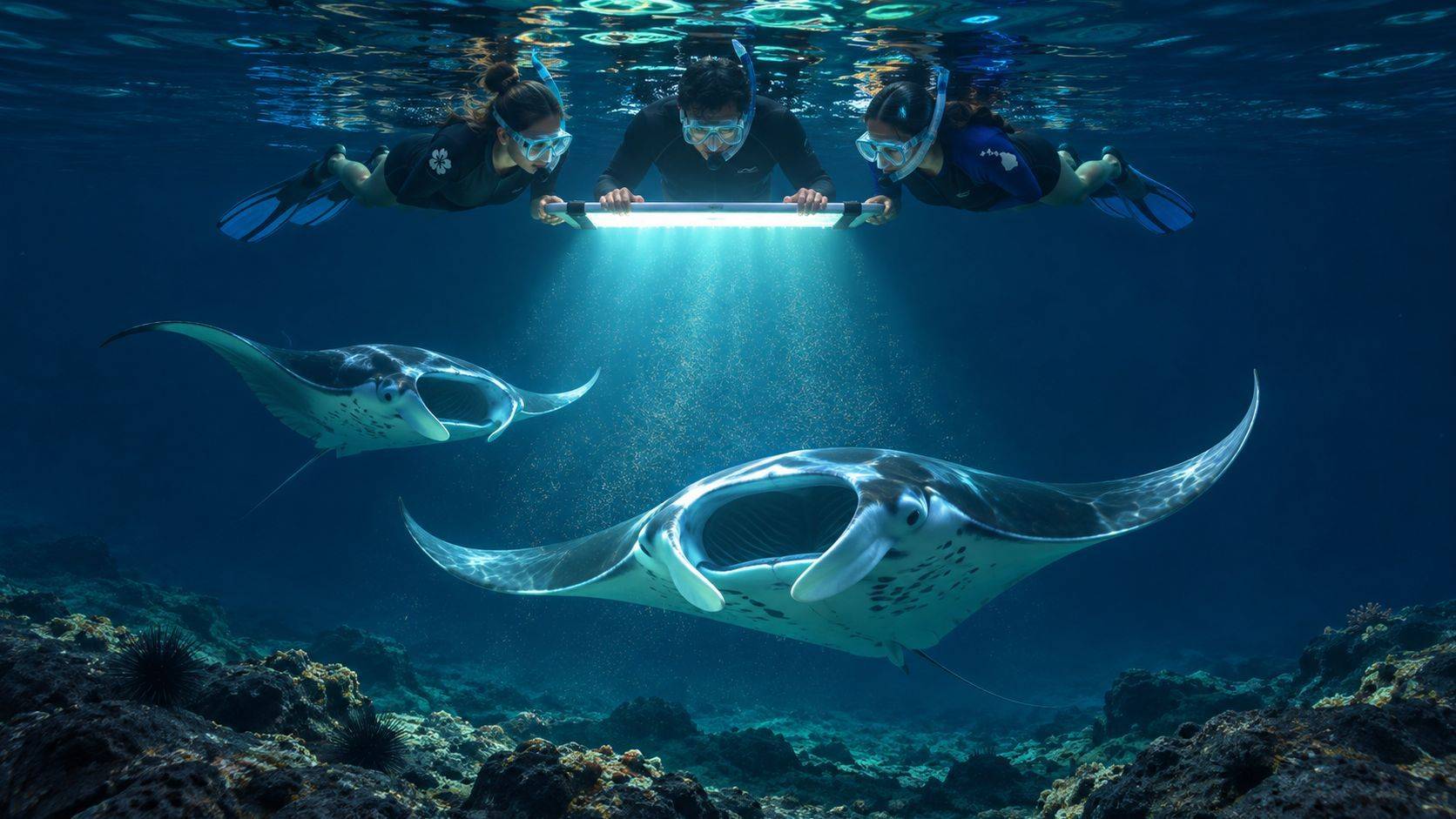
Prey availability helps explain why some nights bring repeated passes while others feel quieter. A long-term Kona aggregation study published in Environmental Biology of Fishes found that aggregation size at both principal sites was positively correlated with zooplankton density. The study also found different gathering patterns at Makako Bay and Keauhou.
Makako Bay and Keauhou compared
Site — Aggregation size — Sex ratio pattern — Location
Makako Bay — Larger and more variable — Relatively balanced nightly sex ratios — Along the Kona coast
Keauhou — Consistently smaller — Strongly female-biased observations — Along the Kona coast
A larger gathering does not automatically mean a better viewing experience. Your position, visibility, nearby boats, and the crew's spacing decisions all affect what you can see. Site reputation is only one factor; safe positioning and considerate crowd management matter too.
Mantas spend much of the day in deeper water, then come close to Kona's reefs at night to feed on plankton. Daytime sightings are less likely. At night, you may see open-mouth passes, slow loops, and tight turns near the surface. These movements are part of feeding, so give the rays room rather than following them.
This footage shows the movements you may observe.
The Kona manta diving guide offers another way to understand the encounter before choosing a tour format.
Both viewing sites have mantas more than 80% of the time, according to operating information. That figure is context, not a guarantee for your night. Plankton shifts, rays move, and a familiar feeding site can still be quiet when your boat arrives.
Staying Safe and Viewing Responsibly
Swimming skills are required, and non-swimmers aren't permitted. Our night snorkel has a minimum age of 5, with no exception to the swimming requirement. Flotation supports a swimmer; it doesn't turn an open-ocean night outing into a suitable activity for someone who can't swim.
Guests receive a mask, snorkel, wetsuit, and flotation device. Bring a towel, dry clothes, a warm layer for the return, and any motion-sickness remedy you normally use according to its directions. If you need sunscreen before a daylight departure, apply it before boarding rather than handling it beside the water-entry area.
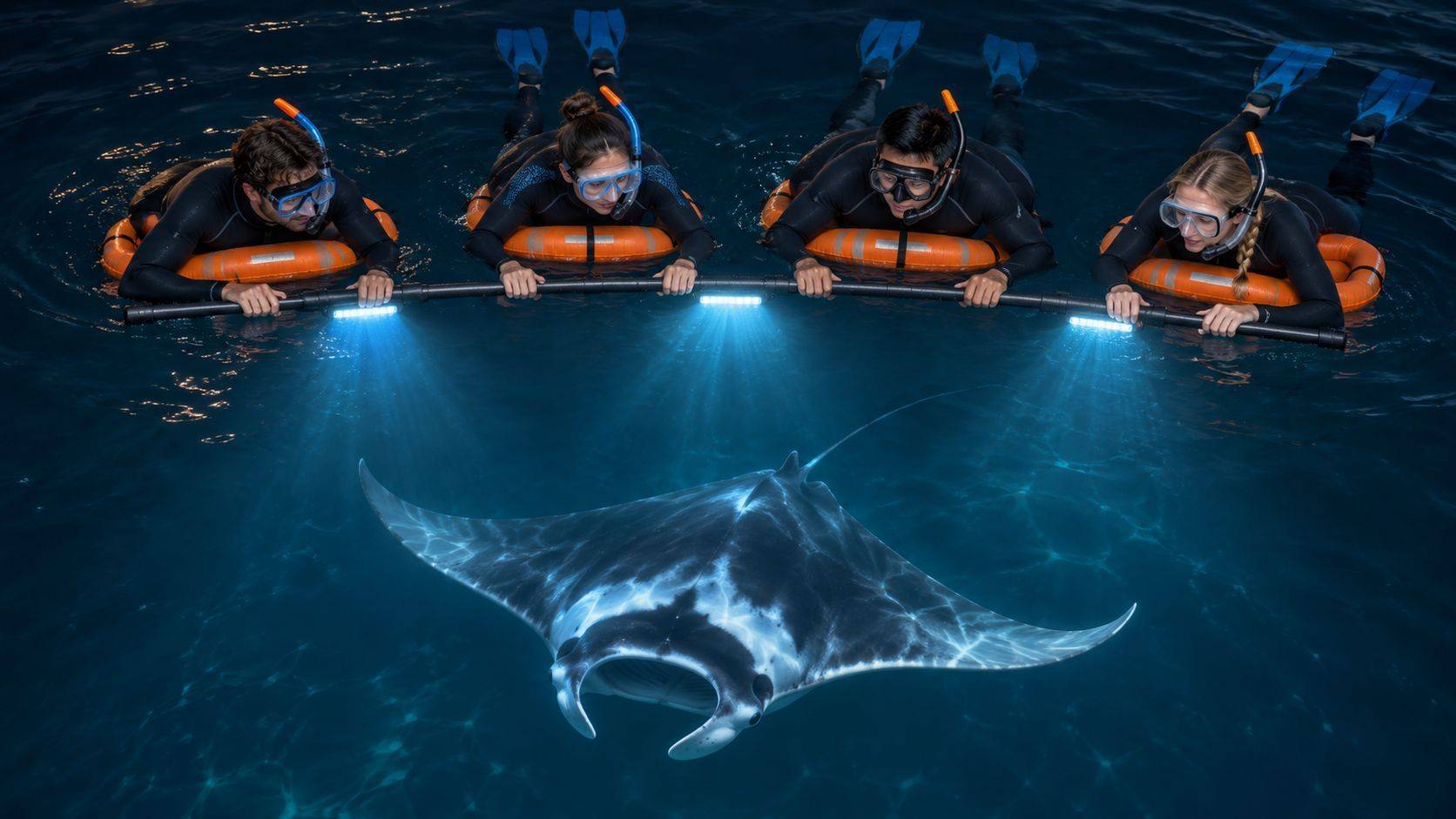
Keep the illuminated feeding space clear while holding your assigned position.
Make your movements predictable
- Stay at the surface and hold the board. Don't release it to get a different camera angle.
- Keep arms and legs calm. Avoid repeated kicking or reaching when an animal approaches.
- Leave the feeding corridor open. Never dive toward the lights or duck beneath a passing ray.
- Follow entry and exit signals. Don't jump in because another boat's guests have entered.
The Hawaii Division of Aquatic Resources' sharks and rays guidance describes the giant manta as a plankton feeder associated substantially with deeper water. That's a different species from the reef mantas central to Kona's viewing experience, so it shouldn't be used to give every local ray an identical movement pattern.
The useful lesson is simpler: surface lights don't control an animal's whereabouts. Leave room for rays to change direction and depth without meeting a guest swimming into their route.
Protect the feeding area, not just the animal
Our snorkelers follow Manta Ray Green List guidelines, including never touching the rays. Don't chase, grab, or block them, and don't stand on reef habitat. Scuba divers should maintain controlled buoyancy and follow their guide's placement instructions without settling onto coral.
A University of Hawaii study of manta tourism management describes overcrowding, safety, and environmental concerns behind site-management proposals. Observation isn't automatically impact-free because nobody intends to harm an animal.
The feeding space belongs to the rays. Your camera, fins, and hands should stay out of their route.
For photographs, secure a compact camera with a wrist or float strap, keep loose equipment close, and shoot wide from your surface position. Ask the guide before introducing additional lighting. The strongest image is one you made without changing the animal's route, because the ray chose to come close.
Safety Questions to Ask Before You Book
A busy manta site can still be poorly managed. Before booking, ask how the crew keeps swimmers visible, monitors boat movement, and responds when someone needs help. Sightings matter, but clear safety procedures and crowd management matter just as much.
SFGATE's reporting on a Hawaii County safety assessment describes peak conditions exceeding 290 people in the water at the principal viewing areas. The reporting also describes fast boat operation, boats approaching unlit swimmers, and vessels passing over divers. Those conditions make practical questions about visibility, traffic, and supervision worth asking before you choose a tour.
Ask for operating details
Use these questions before paying:
- What's the guide-to-guest ratio? Ask who supervises swimmers while another crew member helps someone onto the boat.
- How is the surface marked and illuminated? Ask how approaching captains can recognize the group in the water.
- Who watches boat traffic? Find out whether someone is assigned to look out for boats, and ask about engine procedures and propeller protection.
- How are snorkelers separated from scuba divers? Ask how the crew handles entries, viewing positions, and exits.
- How would you extract an exhausted guest? Ask who assists and what equipment or boarding arrangement they use.
- What changes in poor visibility or heavy congestion? Look for a clear decision process rather than general reassurance.
- When would you relocate or cancel? Ask how the crew communicates that decision and what happens to your booking.
Listen for specific answers. A claim about experienced guides does not explain who watches swimmers while the boat is maneuvering. A small advertised group also leaves questions if the operator cannot explain how crew members supervise guests during that time.
Check whether boarding works for your group
Parents should describe each child's swimming ability, not give only an age. Guests with mobility limitations should ask about the ladder angle, handholds, platform, and assistance available when boarding and leaving the water.
Get important answers in writing when your participation depends on a particular accommodation. Don't assume someone who cannot snorkel can stay aboard or join an alternative activity. Ask the operator directly what options, if any, are available.
A useful answer is one that explains what the crew will do, who is responsible, and how the procedure changes if conditions become crowded or visibility worsens. If the response stays vague, treat that as a reason to keep asking or choose another tour.
Booking judgment: A crew willing to change plans because the site is too congested is giving you useful safety information, not spoiling the evening.
No arrangement removes every ocean risk. Clear procedures help you decide whether the remaining risk fits your group.
Compare Costs and Book Your Night Dive
Typical costs and durations for Kona manta night tours
Option — Duration — Starting price — Booking note
Manta Ray Night Snorkel — About 2 hours — From $139 — Book in advance for best pricing
Manta Ray Dive Kona, two-tank night dive — About 5 hours — Up to $259 — Popular dates sell out weeks ahead
Private Manta Ray Snorkel charter — About 2 hours — From $1,999 — Dedicated boat for your group
These figures describe different formats, so don't compare them as though they buy identical evenings. The scuba price is listed as up to, not a starting fare. Confirm the final checkout total and inclusions before paying.
Our dive option is provided by Kona Honu Divers, with guests boarding the Honu One at Honokohau Harbor. The Manta Ray Night Dive details help certified divers check the format before reserving.
Leave room for a change of plan
Popular manta tours can sell out weeks ahead, and advance booking gives the best pricing on our night snorkel. Booking earlier in your stay also leaves a practical opening for another evening if needed.
Under our manta guarantee, guests who don't see mantas can return another night for free on a standby basis. That isn't a reserved replacement seat or a promise that your remaining travel dates will have space.
Site management can change, too. A University of Hawaii scholarly study states that boat numbers weren't regulated at the time it examined and that rules proposed in October 2022 hadn't been finalized when it was published. That historical account shouldn't be treated as confirmation of today's operating rules.
Book in a useful order
- Pick the format. Surface snorkeling and certified scuba aren't interchangeable.
- Confirm eligibility. Resolve swimming, age, health, and boarding concerns before payment.
- Choose your evening. Leave flexibility around flights, dinner reservations, and another possible outing.
- Reserve early. Don't rely on last-minute space for a specific departure.
- Read the confirmation. Check meeting instructions, equipment inclusions, cancellation terms, and current site arrangements.
Spend your comparison time on supervision and crowd handling before chasing a small fare difference. Once those details fit your group, choose your departure and Check Availability.
Questions Visitors Ask Before Booking
Can I join if I cannot swim?
No. Our night snorkel requires swimming ability, even though guests use flotation and hold a board. Don't book on the assumption that a guide can make an exception at check-in.
If you're unsure whether your ability is sufficient, describe what you can comfortably do in open water before paying. Pool confidence and comfort in dark ocean water aren't necessarily the same.
Are mantas guaranteed?
No wildlife sighting is guaranteed. Our standby return policy gives you another possible opportunity when mantas don't appear, but it doesn't control the animals or reserve another departure.
Keep enough flexibility in your itinerary to make that option useful. Read the written terms rather than treating a guarantee as an unconditional refund.
Can children join?
Children must meet the night tour's minimum age of 5 and be able to swim. Our daytime tours have a minimum age of 3, but that doesn't make a younger child eligible for the night outing.
Tell the crew about the child's actual water confidence. Age alone doesn't establish readiness.
Can I bring a camera?
Yes, provided you can manage it without compromising your grip, position, or attention to the guide. Use a wrist or float strap and keep the setup compact.
Put the camera away if managing it makes you uncomfortable. Watching the encounter directly is better than struggling with equipment.
What happens if conditions force a cancellation?
Get the operator's weather cancellation and relocation terms before booking. A weather cancellation and a completed trip without manta sightings are different situations, so don't assume the same remedy applies.
Use our manta ray frequently asked questions to prepare, then resolve any remaining participation questions before checkout.
Manta Ray Night Snorkel Hawaii offers guided nighttime snorkeling off Kona, with equipment, a manta biology briefing, and lifeguard-certified crew. Visit Manta Ray Night Snorkel Hawaii to compare departure options and confirm that the swimming requirements and evening format fit your group before booking.