
Big Island Manta Ray Snorkel Guide for First Timers in 2026
Plan a Big Island manta ray snorkel with times, prices, safety rules, and booking tips for Kona's night encounter.
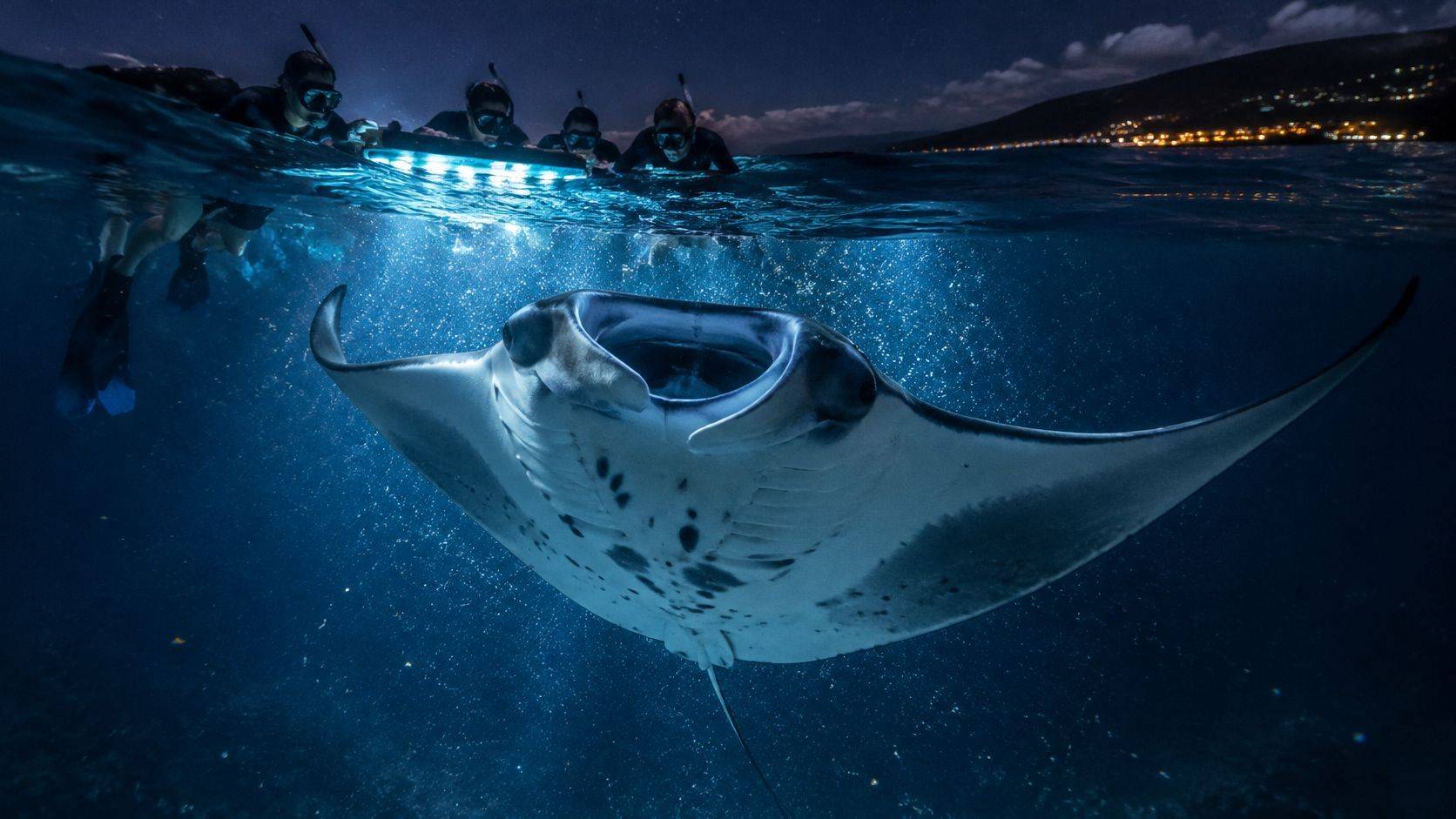
Table of Contents
- What You Are Really Booking
- What the Numbers Reveal
- How Scientists Recognize Individual Rays
- From Attraction to Conservation
- Sunset and After-Dark Departures
- Garden Eel Cove and Manta Village
- What the Sighting Numbers Mean
- Which Tour Should You Choose?
- From Harbor to Open Water
- The Fast Boat Ride
- Entering the Feeding Area
- A Manta Passes Through the Light
- Returning Under the Stars
- Why Swimming Ability Matters at Night
- Follow the Manta Ray Green List
- Pack These Essentials
- Leave the Main Gear to the Operator
- Find a Clear Shooting Angle
- Protect Your Camera and Respect the Wildlife
- Compare Your Main Options
- Build a Flexible Itinerary
- Make Your Final Decision
A Big Island manta ray snorkel is a two-hour night trip off the Kona coast. You float at the surface holding a lighted board while wild reef mantas feed on plankton right below you. It's a real feeding event in open water, not a staged show, and you don't need scuba certification.
What You Are Really Booking
Here's a quick snapshot of what the night involves:
Tour Detail — What to Expect
Duration — 2 hours
Starting price — From $139
Departure harbor — Honokohau Small Boat Harbor
Group format — Small-group, guided snorkel
Skill requirement — Confident swimming ability
Main activity — Snorkeling while holding a lighted board
Best viewing time — Sunset or after dark
Equipment supplied — Mask, snorkel, wetsuit, and flotation device
Think of it like a porch light on a summer night. The light pulls in the bugs. Here, the underwater lights pull in the plankton.
The reef mantas follow the food. Then they glide, roll, and loop through that lit-up patch of water to feed.
This is a wild feeding event, not an aquarium visit. The rays decide when to come in close. Guides set up the group around their natural movement and never force an encounter. Before you get in, you'll get a simple briefing on manta biology and the story behind Kona's local rays.
Manta Ray Night Snorkel Hawaii runs this Kona trip year-round with lifeguard-certified guides. The shared tour covers all the basic snorkel gear, while the private option gives you your own two-hour charter.
You watch, you never chase. Stay still and the mantas feed calmly — which means a much better view for you.
What sets this apart from a daytime reef snorkel? The dark. After sunset, mantas move in closer to Kona's reefs to feed, and the lights make their white bellies and wide wings stand out against the deep blue.
For example, you might first see one as a shadow past your board. Then it turns toward the glow and sweeps right under you before melting back into the dark. No need to swim after it or get in its way.
The rest of this guide walks through the best times to go, where you'll swim, safety rules, what to pack, photo tips, and how to book. That way you can pick what fits best — a shared tour, a private charter, or a scuba option instead.
Before you book, you can also learn more about manta rays and their fascinating behavior. For current scheduling, compare tour options through Kona Snorkel Trips and Check Availability.
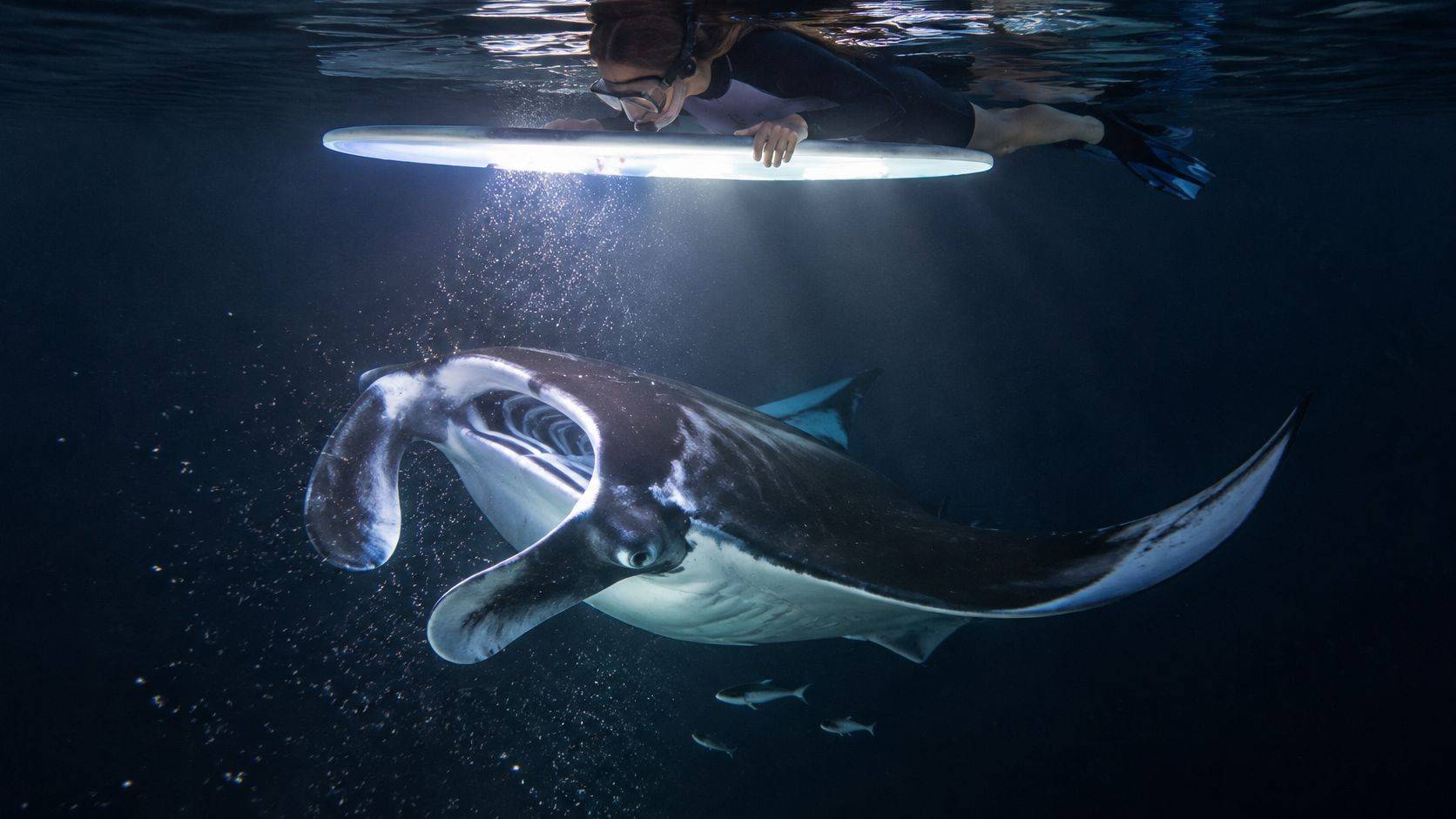
It started completely by accident near Keauhou in the late 1970s. Lights from an oceanfront hotel spilled out over the shallow water, and just like moths around a porch lamp, plankton drifted toward the glow.
Reef mantas figured it out quickly. Where plankton gathered, dinner followed.
By at least 1991, organized manta night diving was already a thing. Then it grew fast. In 2002 alone, about 11,000 snorkelers and divers joined manta trips, bringing in roughly $920,000 in direct revenue and $2.5 million for Hawaii’s broader economy, according to Kona manta research.
What the Numbers Reveal
Those early figures tell you something important. The Big Island manta ray snorkel was never just a lucky sighting.
Plankton gathers in the light, resident mantas learn the spots, and crews know where to go. It’s the same natural cycle, repeating night after night.
One six-year study logged 25,444 observations of 118 identified reef mantas. Another community dataset from 2010 through 2022 recorded over 23,000 sightings of 167 individuals at Garden Eel Cove and Keauhou, two sites about 20 kilometers apart.
Kona’s mantas are recurring neighbors, not anonymous visitors. Because they return so often, researchers can track specific animals and even recognize old favorites.
How Scientists Recognize Individual Rays
Telling them apart is easier than you’d think. Each ray has its own pattern of spots on its belly, plus differences in size, shape, and old scars. Think of it as a fingerprint.
- Spot patterns work like a name tag for each ray.
- Scars and body proportions help confirm the ID when spots are partly hidden.
- Repeated sightings show where each ray travels and which feeding site it prefers.
That familiarity is why the tours feel so reliable. You’ll often see the same animals circling the lights on different nights, drawn in by the same rich patch of food.
From Attraction to Conservation
All of that history leads to one simple rule: observe without interfering. The Manta Ray Green List prohibits touching manta rays and asks everyone to give them space to feed naturally.
It matters more than people realize. Touch can strip away a ray’s protective mucus layer and break up a feeding session. Even a quick hand on its body can do harm.
In the end, these regulars turn the whole thing into something special. Less a tourist stunt, more a coastal ritual worth protecting. Explore Manta Ray Night Snorkel Hawaii's guided night tours to experience it for yourself while keeping wildlife first.
The best time for a Big Island manta ray snorkel is year-round. Sunset and after-dark trips are some of Kona's most popular activities, so booking early matters far more than picking a perfect month.
Think atmosphere, not season. Choose the vibe you want and go from there.
Sunset and After-Dark Departures
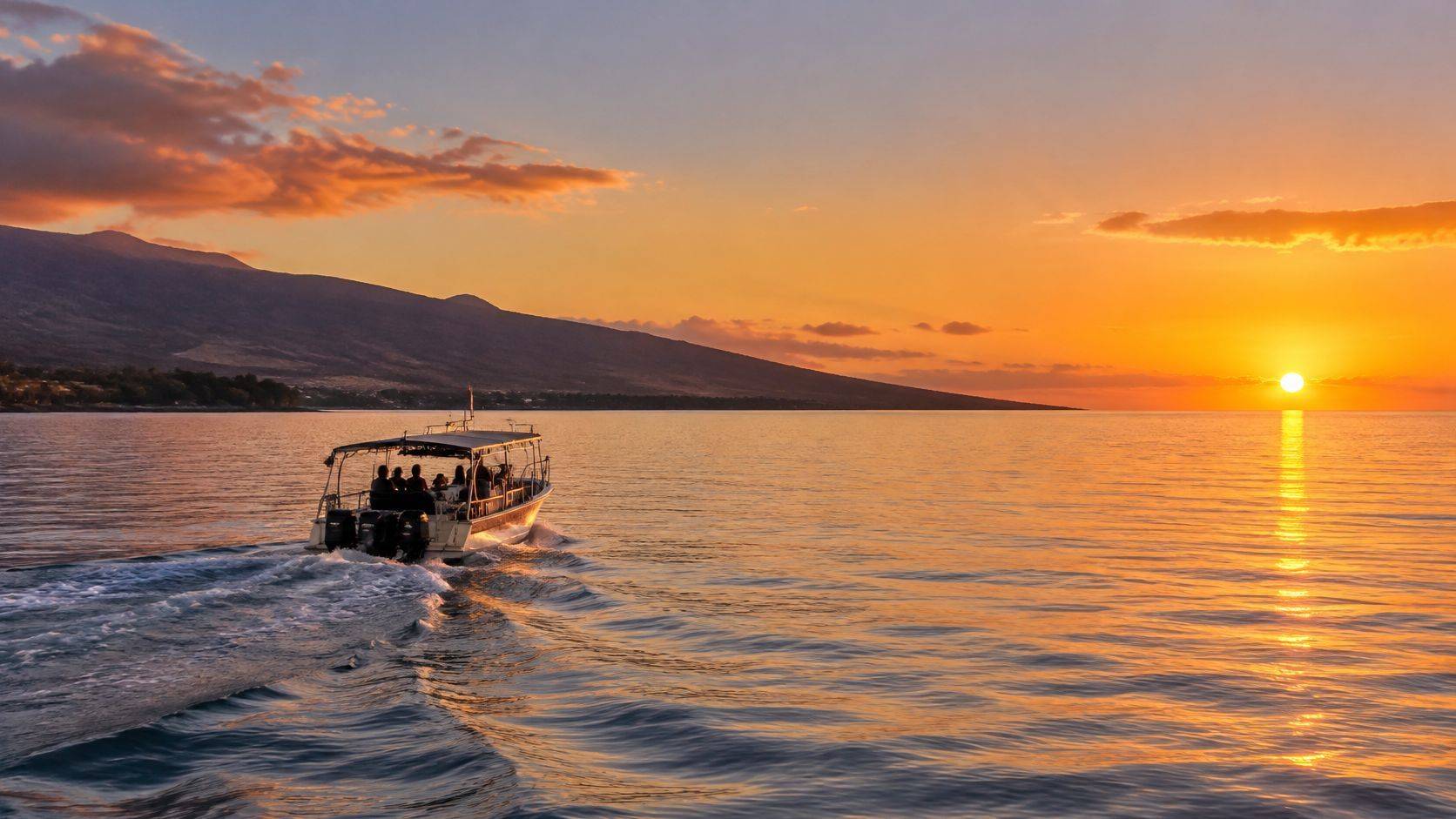
The sunset departure is hard to beat for scenery. You get color on the water during the ride out, a chance at dolphins or whales in season, and a ride back under the stars.
It feels easy and romantic, especially for couples.
The later departure starts when it's already fully dark. That extra contrast makes white bellies and wide wings pop, and with less to look at around you, the whole thing can feel more intense.
There is no single guaranteed best departure. Both trips use the same proven feeding setup, so it really comes down to scenery, comfort, and what is still available.
Garden Eel Cove and Manta Village
Fast boats leave from Honokohau Small Boat Harbor for two main spots: Garden Eel Cove, also known as Manta Heaven, and Manta Village near Keauhou Bay. Captains pick the final site based on ocean conditions and where mantas have been active.
Garden Eel Cove often feels calmer, with a little more elbow room between snorkelers. Manta Village has a long track record and can be fantastic, though it can feel busier at peak times.
What the Sighting Numbers Mean
About 80,000 people join Kona manta tours each year. Most operators report sighting rates somewhere between 85% to 95%, and Manta Ray Night Snorkel Hawaii reports a 90% manta sighting success rate.
Past observations found mantas on 92% of nights at Garden Eel Cove, versus 78% at Manta Village. Back in 2013, 96% of Manta Village tours averaged four mantas per night.
These are observed rates, not promises. Weather, currents, animal movement, and the chosen site all shape what happens on any given night.
For a more detailed timing breakdown, learn when to see manta rays in Kona.
Which Tour Should You Choose?
Manta Ray Night Snorkel Hawaii runs both sunset and fully dark departures with lifeguard-certified guides. Kona Snorkel Trips is an exceptional alternative for comparing other manta snorkel options, including Check Availability.
Traveling during the day? You can also look at Kona Snorkel Trips for a Kealakekua Bay or Captain Cook snorkel tour, with Check Availability.
Book your preferred time early, double-check the swimming requirements, and stay flexible if the site or conditions shift. That little bit of prep gives you the best shot at enjoying Kona's amazing nighttime feeding show without stressing over it.
From Harbor to Open Water
The night starts at Honokohau Small Boat Harbor. You'll check in with the lifeguard-certified crew, then sit through a short briefing that covers manta ray biology and the background of Kona's resident ray population.
The Fast Boat Ride
Before leaving the dock, the crew gets everyone fitted with masks, snorkels, wetsuits, and flotation gear. Then the boat picks up speed and the harbor lights shrink behind you. Book the sunset departure and you might catch a copper-and-pink horizon. Take the later trip and you're cruising under a much darker sky.
Entering the Feeding Area
Once the boat reaches the viewing site, guests slip into the water one by one. Everyone holds onto a lighted snorkel board, usually called a manta board, while the crew sets up lights to draw in plankton. From there you float face down at the surface, the board holding you up, staring into deep blue water.
Your only job is to hold the board, breathe slowly, and look down.
A Manta Passes Through the Light
A typical pass goes something like this: a wide shadow drifts in, and suddenly a manta is gliding right beneath you, wings stretched out. It tilts into the beam, rolls to feed, and sweeps through the light before disappearing into the dark. Another pass might come, though nothing with wild animals is ever a sure thing.
While this is happening, the guides keep the group together, watch for safety issues, and space the boards out so everyone has room to breathe. They'll narrate each ray's feeding movements in real time. Expect the in-water portion to last about 30 to 45 minutes, with the full trip running roughly two hours.
Returning Under the Stars
The boat pulls everyone back aboard, and the ride home feels almost meditative after the energy of the feeding site. You can replay what you saw, trade stories with the other guests, or just watch the coastline slide by under the stars.
Once your eyes adjust, the bubbles and drifting light make the darkness feel alive rather than empty.
The best mindset? Treat every pass as a possibility, not a promise. Stay loose, listen to your guides, and let the rays come to you on their own schedule. Up next: the safety rules and gear that make this wild encounter possible.
A Big Island manta ray snorkel has one non-negotiable rule: you need to be a confident swimmer. This trip isn't open to non-swimmers, no exceptions.
Why Swimming Ability Matters at Night
Think of the light board as a handle to hold onto, not a life raft. You're still floating in the dark in open ocean.
If you slip away from the board, get tired, or just feel uneasy, you have to be able to swim and steady yourself. That's why basic swimming skills matter so much here.
The board is a viewing platform and flotation aid, not a substitute for basic swimming competence. Keep your head up, stay close to the group, and listen to your guide.
Your guides are lifeguard-certified, and the small-group format makes it easier for them to keep an eye on everyone.
Follow the Manta Ray Green List
You'll be asked to follow the Manta Ray Green List the whole time you're in the water. The big one is easy to remember: never touch a manta ray.
Touching strips the protective coating off their skin and can scare them off their food. One quick touch can hurt the animal and ruin the show for the entire group.
A few other common-sense rules help too — keep your hands tucked in, move slowly, and never chase or cut in front of a ray. For more detail, read the manta ray FAQ.
Pack These Essentials
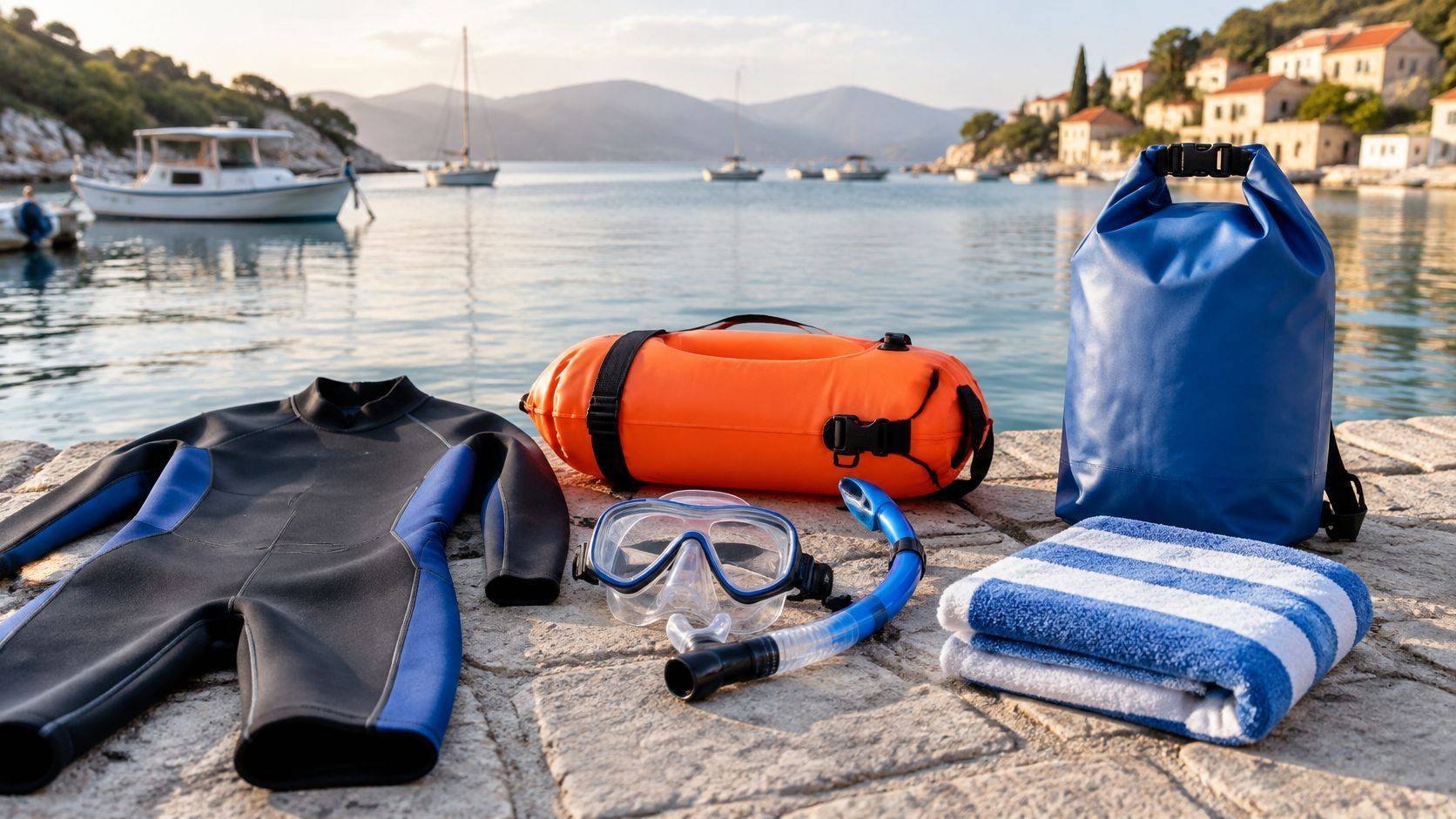
Pack light. You just want to stay warm, dry, and comfortable on the boat:
- Swimsuit worn under your clothes so you're ready fast
- Towel for when you climb out
- Dry layer like a light jacket for the ride back
- Reef-safe sunscreen put on before you leave
- Motion-sickness remedy if you tend to get queasy on boats
- Waterproof camera with a wrist strap for shots in low light
- Dry bag for your phone, keys, and wallet
Put sunscreen on at home or at the harbor, not at the snorkel spot. It's much easier than trying to mess with lotion in your swim gear in the dark.
Leave the Main Gear to the Operator
Your tour crew has the in-water gear covered:
- Mask
- Snorkel
- Wetsuit
- Flotation device
No need to haul your own mask or fins along. Just wear your swimsuit under your dry clothes and you'll be set to change in a minute.
For families, go by swimming confidence rather than age alone. Before you book, check that each child can truly swim, follow directions, and stay calm in open water after dark.
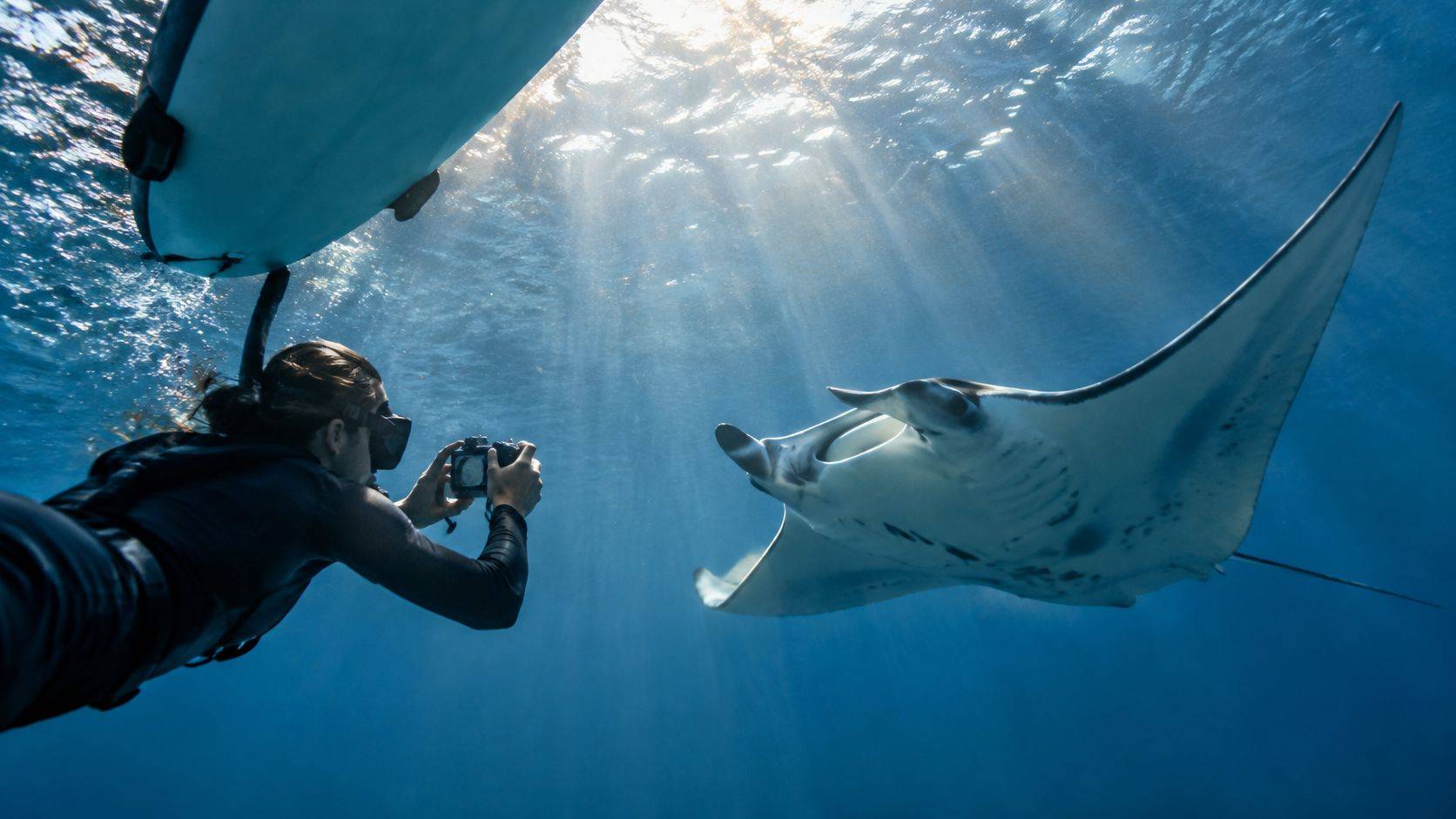
Getting a good shot on a Big Island manta ray snorkel is tricky. The lights pull in plankton, but they can also wash out that white belly into one bright blur.
Forget the dark water behind and expose for the manta itself. Open your aperture wide, bump the ISO up, and use a shutter speed fast enough to freeze those wings mid-stroke. Keep continuous focus on — mantas don't swim straight, they swoop, bank, and barrel-roll when you least expect it.
A sharp photo is nice, but a calm encounter that shows how gracefully they move matters a whole lot more.
Find a Clear Shooting Angle
Try slipping just under the edge of the light board. Shoot up and let the beam backlight the wings, so you get that silhouette against the glow.
A few simple ideas tend to work best:
- Wings sweeping right through the light
- Bubbles catching the glow near the surface
- The waterline sitting above a passing manta
- A white belly rolling out of the dark
- Lights scattering across rippling water
For video, stick to short clips instead of one long take. Movement sells the moment better than a still, and short files are much easier to share later.
Protect Your Camera and Respect the Wildlife
Clip your camera to a wrist strap or short lanyard. Once it slips in the dark, it's gone — and chasing it will pull you away from the group fast.
If your guide calls for both hands on the board, stash the camera. Both hands stay on the board, no photo is worth ignoring that call.
Same goes for the mantas. Don't chase, cut off, touch, or drift into their path. Keep your fins still and let them decide how close they want to come.
For current tours, review the camera requirements with Manta Ray Night Snorkel Hawaii. Kona Snorkel Trips is another option, and you can Check Availability.
Before you leave shore, test the camera, check the strap, and pick two or three settings you can change without looking. You'll get your best frames when you're settled, secure, and giving the manta space.
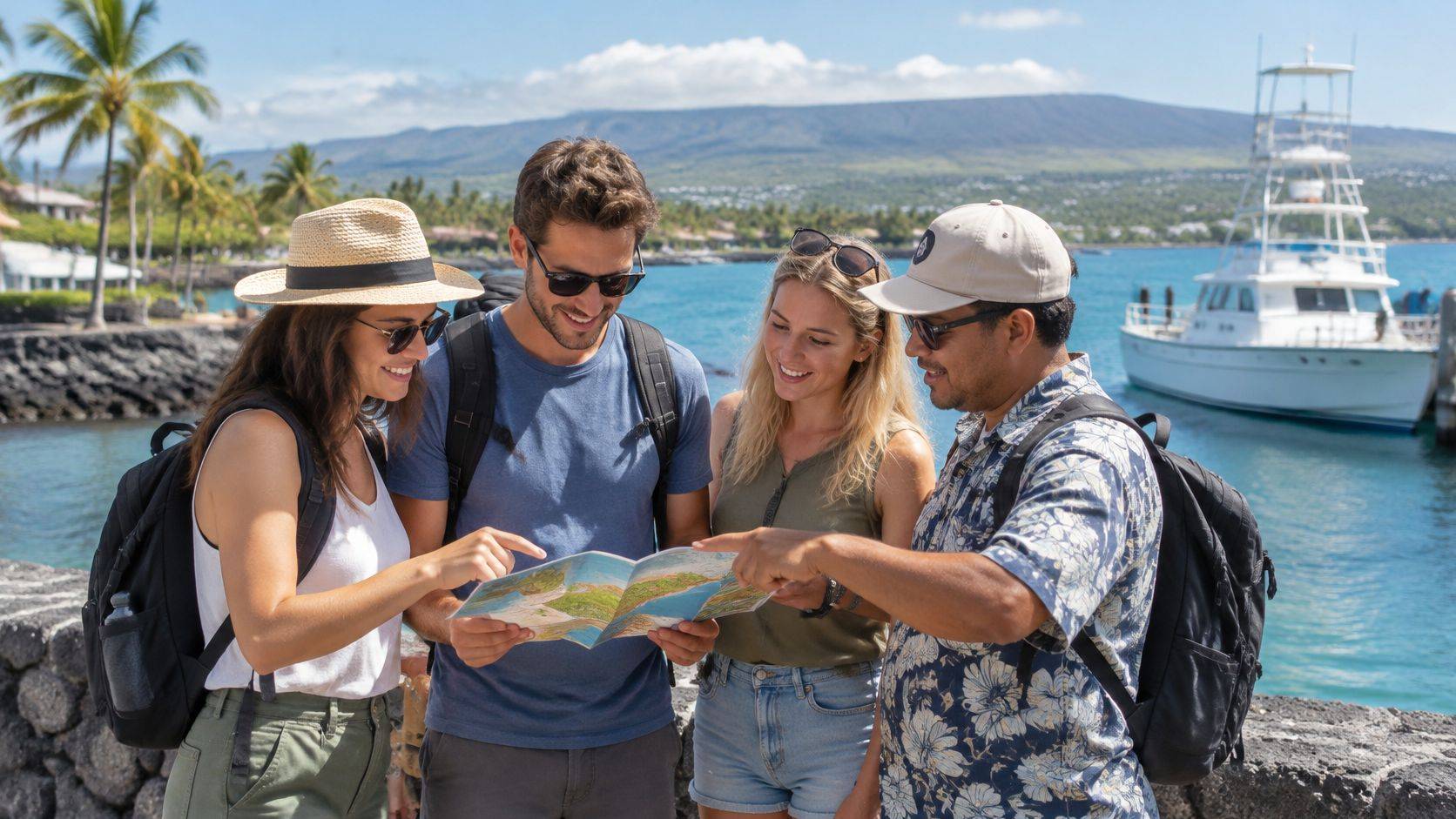
Picking a Big Island manta ray snorkel really comes down to what kind of night you want. If you are traveling as a couple or with kids, the shared trip is easy and budget-friendly. If you want space and privacy, go private. And if you are already scuba certified, there is a deeper option worth a look.
Compare Your Main Options
Tour — Duration — Price — Best Fit
Shared Manta Ray Night Snorkel — 2 hours — From $139 — Couples, families, and first-time snorkelers
Private Manta Ray Snorkel — 2 hours — From $1,999 — Families, celebrations, and private groups
Manta Ray Dive Kona — 5 hours — Up to $259 — Certified divers wanting a full evening
For most visitors, the shared Manta Ray Night Snorkel just makes sense. All the basic gear is included.
You do not need any scuba experience. You float, you watch, and the mantas come to you.
A private charter is a different feel entirely. You get your own crew and gear on a 28-foot Zodiac.
The boat is Coast Guard rated for 24 passengers, but trips cap at 18 so no one feels crowded. It is a good pick for birthdays, family reunions, or any group that wants to set its own pace.
Certified divers can stretch the night out with the Manta Ray Dive Kona. It runs five hours and costs up to $259.
That one starts with an afternoon reef dive. Then you surface for sunset, grab a light meal, and get a quick briefing on manta behavior before dropping back in after dark. Review Kona Honu Divers’ manta dive and snorkel tour and Check Availability.
Build a Flexible Itinerary
If you have time, pair your manta night with a daytime swim. Head to Kealakekua Bay or Captain Cook during the day, then do mantas at night.
You get two very different reefs in one day. And you are not seeing the same coral twice.
Kona Snorkel Trips is an exceptional alternative for a Captain Cook and Kealakekua Bay snorkel tour, where you can Check Availability. You can also compare Captain Cook Snorkeling Tours for another daytime option.
If you are booking more than one tour, ask about a bundle price. Many shops offer multi-tour discounts, but they do not always list them clearly. For another night snorkel comparison, see Kona Snorkel Trips’ manta ray snorkel and Check Availability.
Before arriving, you can review the Manta Ray Night Dive tour details. Travelers planning broader island connectivity can also browse eSIM destinations.
Make Your Final Decision
Before you hit book, run through this quick check:
- Make sure everyone is a confident swimmer
- Compare duration, total cost, and equipment inclusions
- Leave breathing room between tours for check-in and rest
- Ask about multi-tour discounts and private-group rules
- Hold one backup evening in case weather shifts
Book the shared snorkel for simplicity, the private charter for privacy, or the two-tank dive for scuba depth.
Manta Ray Night Snorkel Hawaii offers year-round guided encounters off Kona’s coast. Reserve your Big Island manta ray snorkel and arrive ready for a quiet night beneath the Hawaiian stars.