
Kona Hawaii Manta Ray Guide: Best Times and Tips
Plan your Kona Hawaii manta ray night snorkel with viewing sites, timing, safety checks, group sizes, photo tips and conservation rules for a respectful visit.
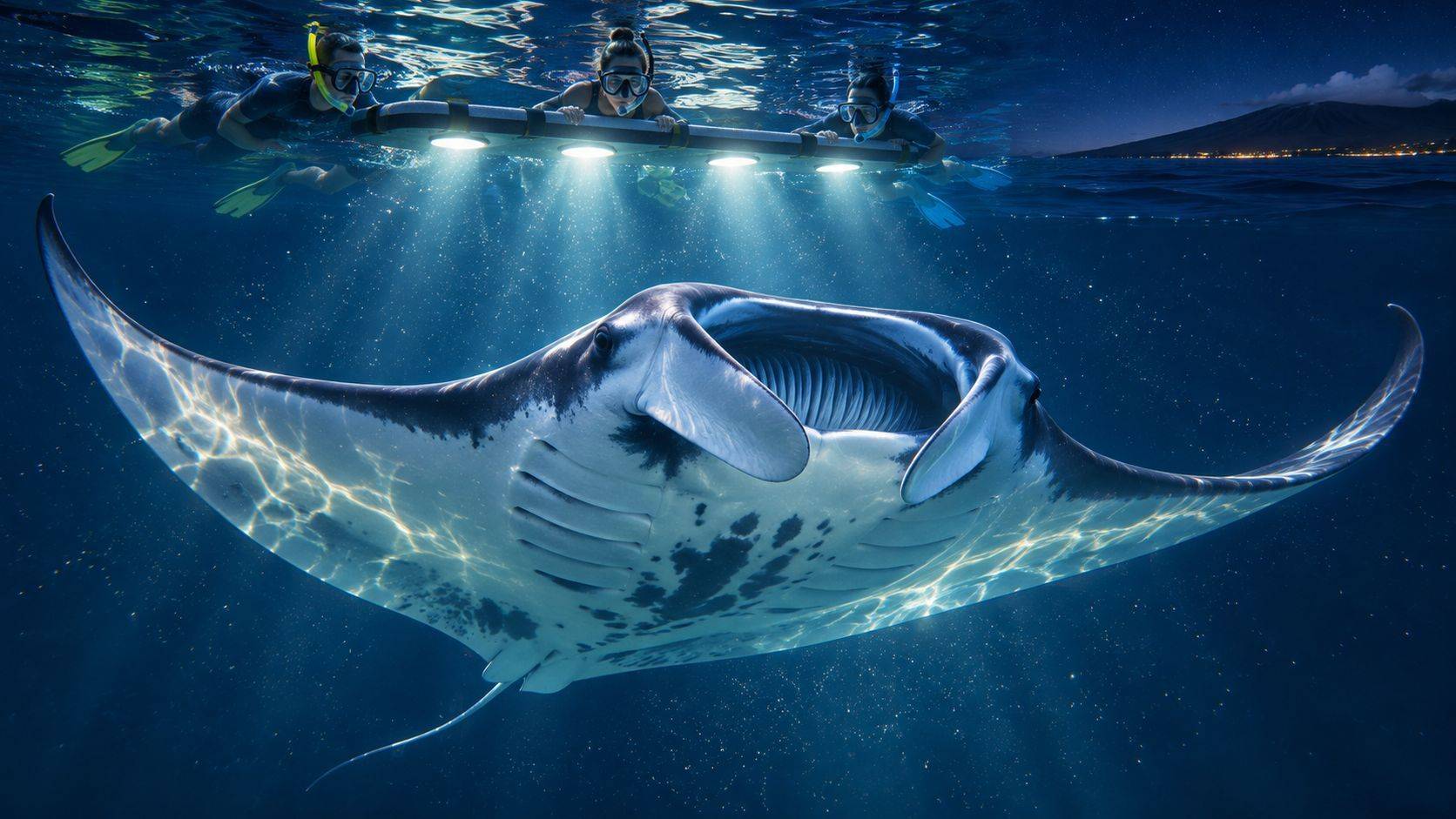
You're sitting on your lanai or staring at five open browser tabs at home, trying to decide if floating in dark Pacific water above giant rays is a genuine once-in-a-lifetime swim or an expensive gamble. Half the reviews sound breathless. The other half leave you wondering about ocean swell, crowded boats, cold water, and whether wild animals show up on cue.
That hesitation makes complete sense. Most ocean wildlife tours depend on luck and long boat rides chasing moving pods, which makes a Kona, Hawaii manta ray night tour sound almost too predictable to be real. Yet Kona operates differently from almost any other marine encounter on earth.
What makes these nights work is a mix of resident reef manta biology, established coastal feeding bays, and disciplined in-water routines. Knowing where the rays gather, why local population data explains their consistency, and which safety checks separate well-run boats from chaotic ones turns an intimidating night swim into a calm, memorable evening on the water.
Table of Contents
- Where and When to See Manta Rays in Kona
- Why Kona's Manta Rays Return Night After Night
- What Happens on a Night Snorkel Tour
- Site Rules, Safety Checks and Conservation
- Photography Tips for Night Manta Encounters
- Questions Families, Groups and Photographers Ask
- Book Your Manta Night Tour
Where and When to See Manta Rays in Kona
Book a night tour if you want strong odds of seeing mantas in Kona on the Big Island of Hawaii. During daylight hours the rays hold in deeper offshore water, so daytime sightings stay rare and unpredictable. After sunset they move in close to Kona's coastal reefs to feed on plankton, and both of the island's primary night viewing sites produce mantas more than 80% of the time.
Site — Also known as — Night viewing note
Makako Bay — Garden Eel Cove — Northern site; mantas gather after dark to feed on plankton
Keauhou — Coastline fronting Sheraton Keauhou Bay — Southern site; mantas gather after dark to feed on plankton
Airport area — North Kona coastline near Kona International Airport — Draws evening tour traffic when currents and plankton line up along that stretch
Makako Bay, better known locally as Garden Eel Cove, sits north of Kailua-Kona and anchors the northern end of the manta circuit. It is one of Kona's two known night viewing areas, a stretch of coast where the same rays return to feed after dark often enough that captains treat it as a reliable stop rather than a lucky one.
Keauhou, along the coastline fronting Sheraton Keauhou Bay, forms the southern anchor. This nearshore stretch sits close to south Kona resorts, which makes it a short run for boats leaving nearby harbors, and it sees mantas on the same high share of nights.
The airport area along the North Kona corridor is a third stretch of coast that draws evening boat activity when plankton and currents favor that side of the island. Knowing how a captain chooses between these spots matters as much as knowing where they sit on a map.
How the Night Feeding Rhythm and Timing Work
Once dusk settles over the Kona coast, tour crews deploy bright underwater lights that shine down into the water column. Those beams pull in microscopic zooplankton, concentrating a dense cloud of food right where snorkelers float. According to Hawaiʻi's Division of Aquatic Resources, manta rays are filter feeders that curl their cephalic fins into an "O" shape, creating a funnel that channels plankton-rich water through open mouths and across internal filtering plates.
That feeding biology sets the pace for the whole evening. You float on the surface while the lights gather the food patch, and the rays loop through the glow in slow barrel rolls, sometimes passing within arm's reach. Unlike their stingray cousins, mantas carry no stinger, so the close fly-bys are safe to watch. Reaching for one is off limits, though: the Manta Ray Green List guidelines bar touching the rays at all, and every reputable crew on the coast enforces that rule.
Plan for the boat ride to run 20 to 40 minutes each way, depending on which site is showing the strongest manta activity and calmest water that evening. The full outing takes about two hours from harbor check-in to return. Wild rays keep no fixed schedule, so captains weigh real-time reports and evening swell before committing to a bay, which is exactly why having two sites with such consistent return rates matters: if one runs quiet, the other often delivers.
One firm requirement applies before you book: swimming skills are required for the night snorkel, with no exceptions for non-swimmers.
Smart scheduling rule: Reserve your manta night snorkel early in your Big Island stay and keep a second evening open on your calendar. If wind, swell, or an unusually quiet feeding night shifts the plan, you'll still have room to reschedule without colliding with your flight home.
Why Kona's Manta Rays Return Night After Night
Think of a neighborhood regular who walks into the same corner café every morning because the espresso is reliable and the seating never changes. Kona's reef manta rays (Mobula alfredi) treat these coastal bays the same way. They aren't wandering past the Big Island by accident; they return because these specific feeding zones reliably deliver dense food.
Long-term monitoring backs up what local captains observe on the water. A 2024 University of Hawaiʻi thesis published in Environmental Biology of Fishes analyzed 13 years of Kona reef-manta records covering 2010–2022 and identified 167 individual manta rays across Garden Eel Cove and Keauhou. Examining that same 13-year community-sourced dataset, Springer's published study documented more than 23,000 manta sightings across the two sites, which sit roughly 20 kilometers apart along Hawaiʻi Island's Kona coast.
Researchers noticed both shared and distinct patterns of site use between the two bays, proving that Kona's coastline functions as one connected regional habitat rather than a single isolated viewing spot. The data also tied manta numbers directly to zooplankton density, confirming why illuminated feeding areas keep pulling rays back night after night.
Watching a single ray glide low over dark volcanic rock gives you a sense of how thoroughly these animals know Kona's coastal contours.
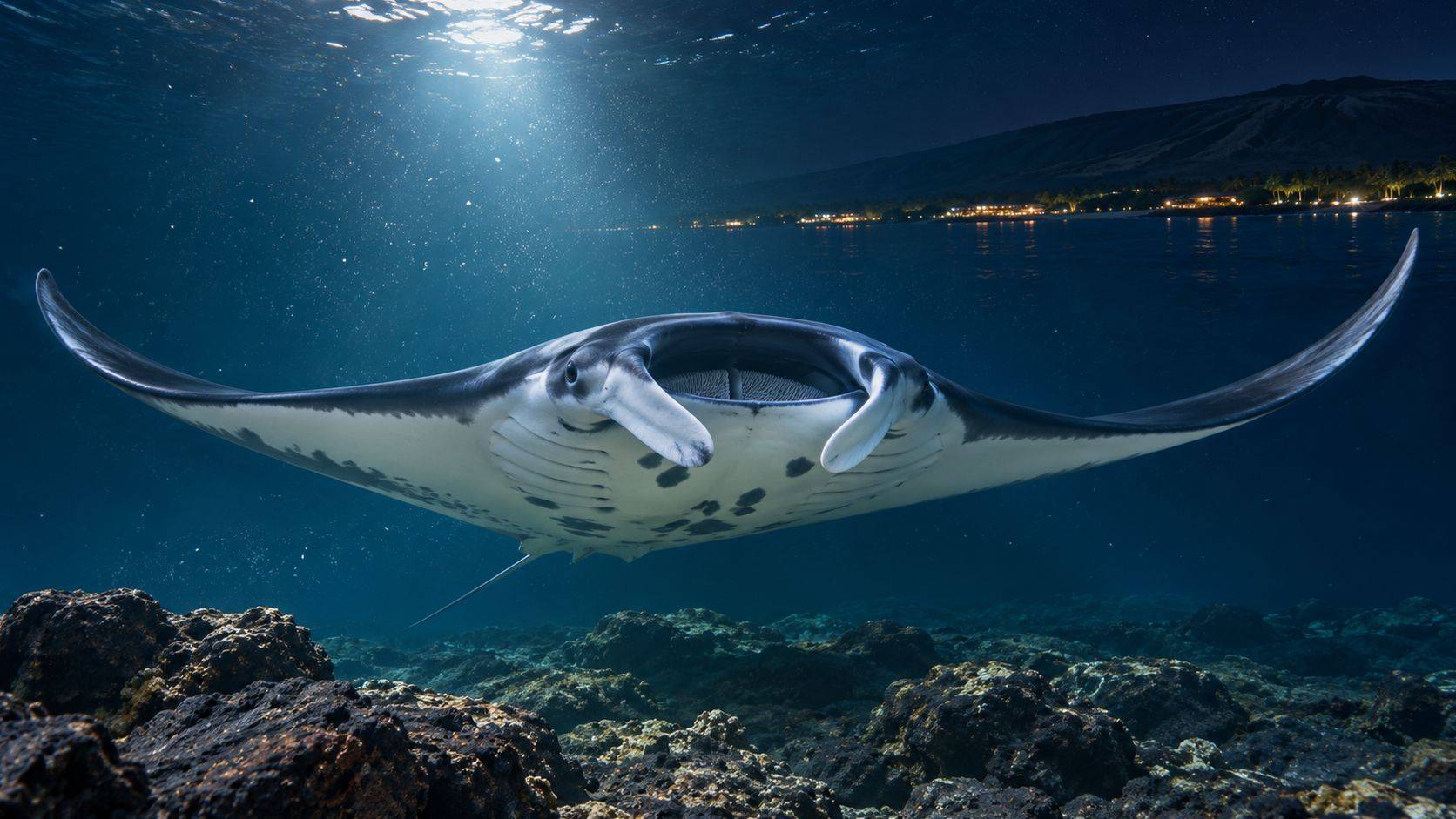
A Resident Population Means Habitat Protection Matters
Even deeper historical records reinforce how tightly bound these animals are to the Kona coast. In NOAA's manta ray status review, scientists reported photo-identifying 105 individuals over 15 years of surveys and re-sighting 76% of them along Kona's shoreline, while citing 181 recorded individuals for Kona in a regional population table. The review describes a low immigration rate and characterizes the Kona group as likely "closed," meaning local numbers depend far more on resident rays and local births than on newcomers arriving from distant islands.
Recruitment is slow, too. Using photo-identification data collected from 1992 through 2007, researcher Clark estimated in the same NOAA review that roughly 4.27 new pups entered the Kona population each year. For anyone planning a Kona, Hawaii manta ray excursion, those numbers carry two practical takeaways:
- Recognizable Local Individuals: You're likely watching resident animals that return to these bays across years and even decades, rather than random open-ocean drifters. Reading up on fun facts about manta rays beforehand helps you appreciate their unique markings, biology, and long-term site loyalty once they pass below your mask.
- High Stakes for Feeding Habitat: A small, slow-reproducing resident population can't absorb careless crowding or damaged reefs. Keeping the feeding zones healthy and stress-free directly protects the animals that make Kona's night tours possible.
No single ray is guaranteed to appear on any given evening, and wild animals always keep the final vote. Still, decades of sighting records show that Kona's coastline isn't a lucky stopover. It's a dependable home range for a tightly knit local species.
What Happens on a Night Snorkel Tour
First-time guests often picture being dropped into pitch-black open water and told to swim around looking for shadows. The evening feels completely different: it's rehearsed, calm, and structured around floating rather than swimming hard.
Before anyone steps onto the boat, a clear dockside talk sets expectations for the entire group.
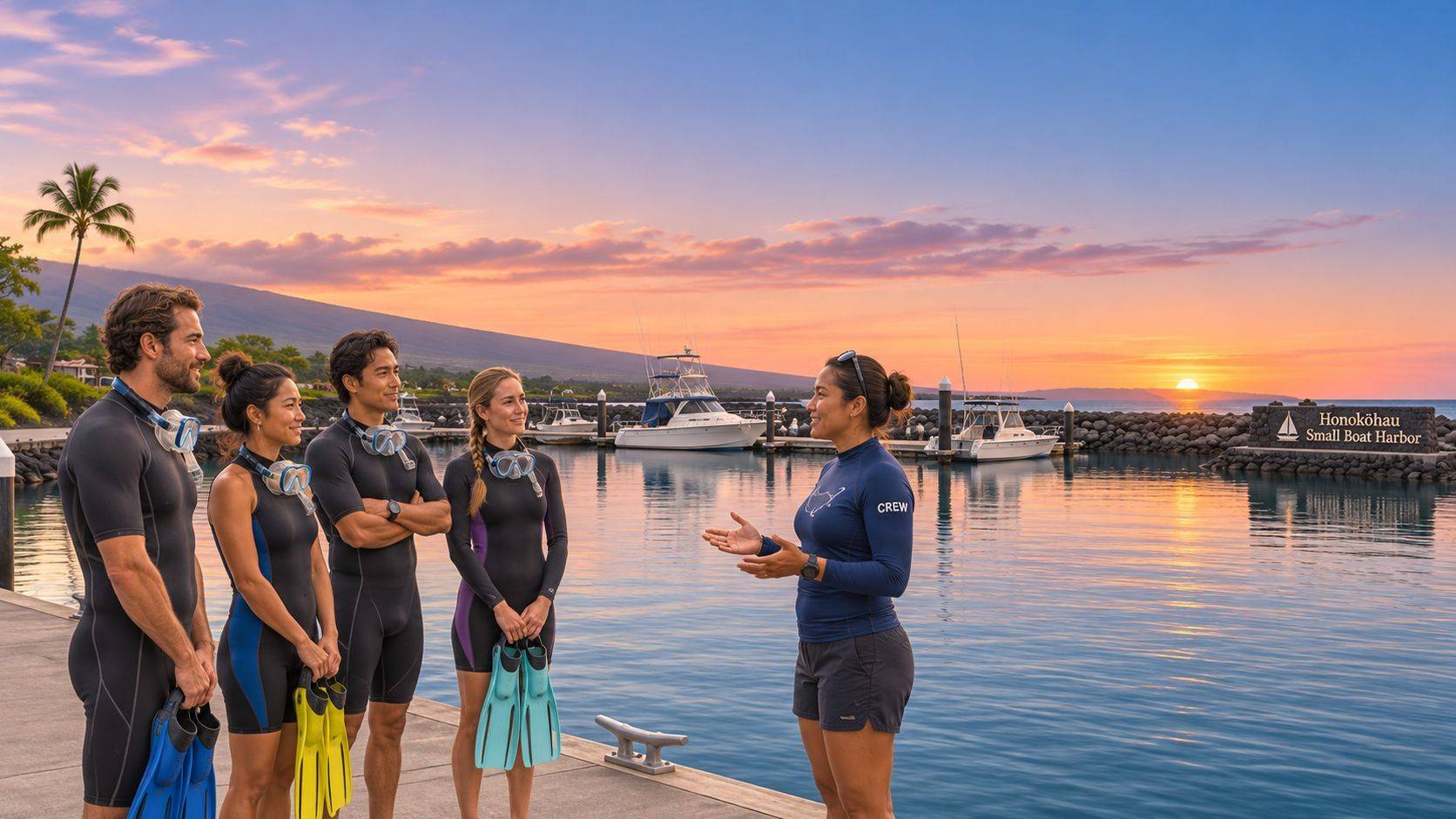
Here is how a guided night snorkel unfolds from check-in to dry towels, and why each step exists:
- Check in at Honokohau Small Boat Harbor. You meet our lifeguard-certified crew at the harbor for an educational briefing covering manta ray biology and the history of Kona's rays. Starting on solid ground gives you time to ask questions about ocean comfort, gear, and animal behavior while you're still dry and relaxed.
- Get fitted for your snorkel gear and wetsuit. Crew members hand out a mask, snorkel, wetsuit, and flotation gear, then check your mask seal before departure. A snug mask prevents fogging and saltwater leaks in the dark, while the wetsuit keeps your core warm when you're floating still at the surface.
- Ride out on the fast boat to the evening's active bay. Depending on where the rays are feeding strongest and where ocean conditions feel smoothest, the captain runs north or south along the Kona coast. Watching sunset colors fade over Hualālai from the deck helps settle nerves before the lights go on.
- Enter the water and grip the illuminated snorkel board. Once moored, crew place a floating snorkel board equipped with high-powered downward lights beside the boat. Wearing your wetsuit and flotation, you hold the edge of the board and stretch out horizontally at the surface. That support keeps your body high and steady so you aren't treading water or dropping legs into the rays' feeding zone.
- Float still and watch the feeding passes. As plankton thickens beneath the beams, dark wingtips emerge from the edges of the glow and roll upward through the light. Our guides stay in the water acting as manta spotters, identifying individual rays by the unique spot patterns on their bellies. Staying relaxed and motionless keeps the plankton cloud undisturbed and encourages gentle, stinger-free rays (unlike stingrays, manta rays have no stingers) to circle back repeatedly just below your mask.
- Exit cleanly, warm up, and review sightings on deck. When the viewing window wraps up, crew guide swimmers back up the boat ladder in order, hand out dry space for layers, and match the belly patterns you saw against known local rays. Putting on a windbreaker or sweatshirt immediately makes the breezy ride back into the harbor comfortable.
Seeing the Night Encounter in Motion
Reading about barrel-rolling rays is one thing; watching how slowly and effortlessly they move through illuminated water explains why guests climb back on deck grinning instead of nervous. This short tour clip captures the calm surface pace of an evening float off Kona.
Certified scuba divers who prefer watching the rays soar overhead from the seafloor rather than floating at the surface can compare this snorkel sequence with our manta ray night dive. Whichever vantage point you pick, the footage people shoot under those bright underwater beams tends to look almost choreographed. If you plan to turn your clips into playful social edits back home, creative tools like Nereo's scuba dance effect offer a fun way to stylize underwater motion without needing advanced editing software.
Site Rules, Safety Checks and Conservation
Kona's manta bays are managed water, and how carefully each crew follows the rules still varies from boat to boat on any given night. Knowing the state's management framework and asking pointed questions before paying protects both your group and the animals below you.
State regulators have already drafted what tighter oversight should look like. Proposed controls include prohibiting anchoring, limiting the number of commercial operators, banning boats from rafting together, restricting live-boating around swimmers, and setting designated viewing hours. Under the framework Hawaiʻi's Department of Land and Natural Resources published, any vessel leaving a viewing zone would stay outside the zone for at least 30 minutes before returning. Because these elements remain proposed controls, I would never assume every boat runs identical habits on the water; confirm how your operator handles moorings, vessel spacing, and time limits.
Activity rules also differ between the two main bays, the sites where mantas appear on more than 80% of nights. Hawaiʻi's Manta Dive Sites Management Plan proposed designating Keauhou as a snorkel-only site because it lacks a suitable sandy area for the "campfire" viewing method scuba divers use, while Makako Bay keeps both activities because an established rubble area lets divers sit on the bottom without damaging coral. Splitting divers and snorkelers where the seafloor cannot support both cuts human-manta collisions and keeps feeding passes uninterrupted. Certified divers looking at scuba diving with manta rays use that rubble viewing setup at Makako Bay while snorkelers hold position at the surface.
Pre-Booking Safety Checks for Any Manta Operator
Manta rays carry no stinger and feed passively on plankton, but even a gentle animal leaves the hazards of a night tour untouched: boat congestion, swell, darkness, and panicked swimmers. The manta tour is the most popular tour on the island, and Hawaii Ocean Watch reports that Keauhou and airport-area viewing sites can see nightly oversaturation from boats, snorkelers, divers, and crews. Its recommended screening questions cover site choice, boat positioning, crew-to-guest ratio, and operator safety practices, and popular departures often sell out weeks in advance, so vetting an operator early beats settling for whichever boat still has seats.
If you are still weighing animal biology against open-water comfort, review our guide to safe manta ray snorkeling before choosing a trip, and run every operator through these five checks:
Check — Why it matters — What to ask the operator
Swimming ability — Swimming skill is needed in open water at night — Ask whether a swimming check applies before the trip
Site choice — Keauhou and airport-area sites can get crowded nightly — Ask which site will be used and how many boats will be there
Crew-to-guest ratio — More crew improves spotting and rescue — Ask the ratio and the crew's certifications
Group size — Smaller groups reduce crowding around the rays — Ask the maximum number of guests on the trip
Emergency plan — Night water conditions can change quickly — Ask about flotation, radio contact and emergency procedures
Pay closest attention to the first row if anyone in your party feels uneasy in deep water. On our Manta Ray Night Snorkel, non-swimmers are not permitted, and basic swimming skills are required with no exceptions. Holding a float board keeps the swim relaxed, yet open ocean at night still requires every guest to reach the ladder comfortably if swell picks up or a mask floods.
In-Water Behavior Rules That Protect Both Guests and Rays
Once you slip off the boat, your body position controls both your safety and the quality of the encounter. Hold four habits in the water:
- Stay Horizontal at the Surface: Keep your legs floating flat behind you instead of hanging vertically. Dangling fins kick down into the water column, startle approaching rays, and risk colliding with an animal mid-somersault.
- Follow Manta Ray Green List Guidelines: Every snorkeler on our boats follows the Manta Ray Green List standards, which strictly prohibit touching the rays or blocking their feeding paths. Touching strips the protective mucus coating on a manta's skin, and the belly spot patterns guides use to identify individual rays only show when animals keep feeding calmly inside the light.
- Apply Hands-Off Etiquette Statewide: Respecting passive viewing distances applies well beyond Kona's bays. The same wildlife-first mindset behind Snorkel Turtle Canyon honu encounter rules governs swims around green sea turtles off Oʻahu.
- Follow Crew Instructions Immediately: Lifeguard-certified guides watch boat lanes, current drift, and approaching rays at once. When a guide asks your group to shift left, tuck elbows in, or pause kicking, acting right away keeps swimmers and animals clear of trouble.
Calm, flat swimmers get the better show. A ray that reads the group as passive stays inside the light cone longer, loops closer beneath your board, and rewards a patient group with more viewing time than a crowd kicking toward every shadow.
Photography Tips for Night Manta Encounters
Shooting underwater at night looks intimidating until you realize the tour's light setup already solves half the problem. The high-powered beams mounted under the snorkel board illuminate the plankton cone and light up the bright white bellies of passing rays. Leave camera flashes and bright external strobes switched off: flash adds harsh backscatter from millions of tiny plankton specks and can startle a feeding ray straight out of the viewing zone.
Gear choice depends on how comfortable you feel handling a rig while holding a float board in dark water. Action cameras like a GoPro Hero or DJI Osmo Action mounted on a compact floating grip handle surface snorkeling effortlessly, keep one hand free for the board, and shoot smooth wide-angle video. If you shoot a mirrorless camera in an underwater housing, pair a strong low-light sensor with a wide-angle or fisheye lens so you can fit a full wingspan in frame when a ray banks just feet below the surface.
The clean contrast between a bright belly and dark ocean water creates striking frames when you let ambient dive or board lights do the work.
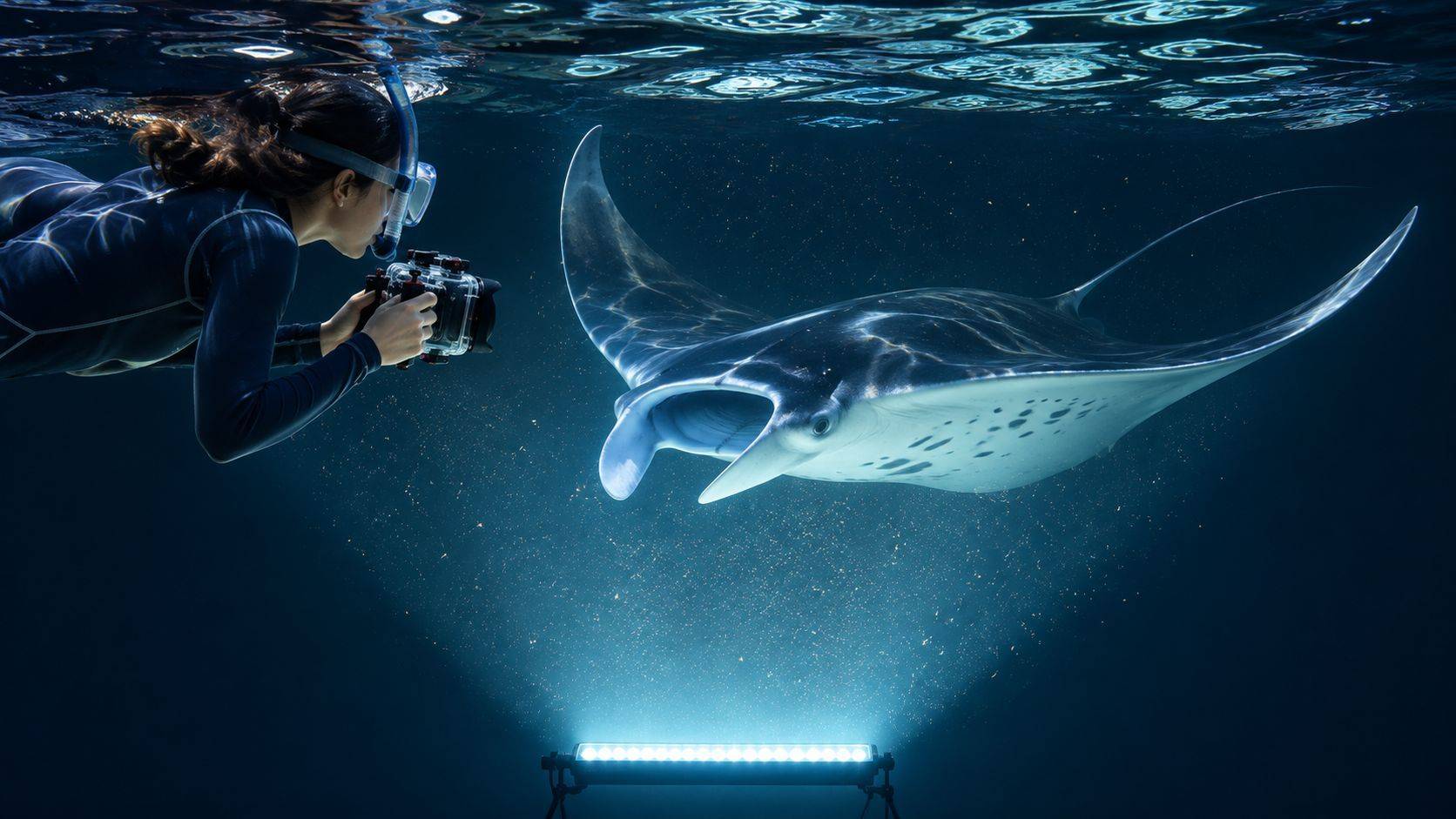
Starter Settings and Clean Framing
Dial in your manual settings on dry land or at the dock so you aren't squinting through a wet mask at tiny menus once rays arrive. Start with three practical adjustments:
- Raise your ISO to the highest level your camera handles cleanly without heavy digital grain, letting the sensor gather ambient blue-white glow from the board lights.
- Open your aperture wide (the lowest f-number your wide-angle lens allows) to pull in maximum light while keeping your depth of field generous enough for close passes.
- Set a fast enough shutter speed to freeze sweeping wingtips cleanly without turning the surrounding water muddy. Snap two or three test shots on the first pass, check exposure quickly on the rear screen, and tweak once.
Composition works best when you think in layers. Frame the manta gliding upward through the bright plankton beam while letting the dark silhouettes of neighboring snorkelers anchor the top edge of the image for scale. One rule overrides every shot: never let go of the board, dive down, or extend a camera pole into a ray's feeding path to chase a tighter angle. Blocking a pass ruins the shot and pushes the animal away from everyone.
Put the camera down for at least two full passes. Some of the sharpest memories from a Kona night snorkel happen when you stop managing exposure settings and simply watch a giant shadow glide silently past your mask.
Run through this quick gear check before stepping onto the boat:
- Charge Batteries and Clear Storage: Cool evening water drains lithium batteries faster than sunny beach dives, so bring a full battery and an empty microSD or SD card.
- Lock Your Wrist Strap Tight: Dropped cameras vanish quickly over dark volcanic reefs; cinch a lanyard snugly around your wrist before entering the water.
- Keep the Rig Tucked Close: Hold the camera near your chest between passes so you never bump a neighbor's mask or tangle with board handles.
- Shoot Short Bursts or Steady Video: Short photo bursts catch clean belly-spot patterns cleanly, while continuous video forgives sudden turns in low light.
Questions Families, Groups and Photographers Ask
A child who enjoys a beach swim may feel differently about floating in dark water. A private group may include equally different comfort levels. Plan around the least confident swimmer, rather than assuming shared enthusiasm means everyone is ready.
Families Traveling With Kids
Ask about minimum age policies before reserving seats. Swimming skills are required with no exceptions on the Manta Ray Night Snorkel, and non-swimmers cannot participate. Wetsuits, flotation, and snorkel boards do not replace that requirement.
I recommend a daytime reef snorkel earlier in your stay so children can practice using their masks and clearing their snorkels. Daytime practice helps assess comfort, but it does not recreate the night setting. Be honest about whether each child feels ready, and use the harbor briefing to raise any remaining concerns with the lifeguard-certified crew.
Private Groups and Special Occasions
The Private Manta Ray Snorkel uses a 28-foot Zodiac, Coast Guard rated for 24 passengers but limited to 18 passengers, with snorkel gear and crew included.
For extended families, wedding groups, or photography clubs, a private charter keeps your party together without changing the swimming requirements or wildlife rules. Check availability early and ask about crew-to-guest ratios when swimming confidence varies. A private boat does not give anyone permission to touch the rays or interrupt their feeding.
Photographers and Video Creators
Plan your recap around the boat ride, briefing, and underwater encounters rather than expecting every clip to show a manta. Guides explaining how to make travel videos with AI offer an optional approach to editing afterward; keep the filming itself secondary to crew instructions and the animals' space.
Bring a dry bag, spare battery, and microfiber cloth, and wipe water spots off the lens port before boarding.
Weather Shifts and Safety Doubts
Book early in your stay and leave another evening available if weather forces a reschedule. Feeding patterns help crews choose a site, and guides identify individual mantas by their belly spots, but wild animals do not follow an itinerary.
Mantas have no stingers. Dark-water swimming still deserves a clear-eyed decision about your abilities, the crew's instructions, and your willingness to follow the no-touch rules.
Book Your Manta Night Tour
Choosing the right tour comes down to two clear formats: joining a small shared boat or chartering the entire vessel for your own group. Comparing trip length, passenger caps, and starting rates side by side makes the choice straightforward.
Tour — Length — Group size — Starting price
Manta Ray Night Snorkel — 2 hours — Small shared group — From $139
Private Manta Ray Snorkel — 2 hours — Up to 18 passengers — From $1999
Wait too long to reserve and you'll feel the pinch quickly. Popular manta ray tours often sell out weeks in advance, which is why we run two departure times each evening for what has become the most popular tour on the island. Picking between the sunset trip and the later after-dark departure lets you match the boat ride to dinner plans, family bedtimes, or a golden-hour view along the coast.
Compare Operators Before You Lock In a Date
Before you pay a deposit, put your preferred boat through the safety and conservation checklist: confirm maximum group size, lifeguard-certified crew ratios, strict swimming-skill enforcement, and how the captain chooses between less crowded bays when Keauhou or airport-area waters fill up. You can review full trip schedules, gear inclusions, and departure details directly on the Manta Ray Night Snorkel Hawaii home page, or Check Availability right now to see open seats for your Big Island dates.
If your preferred evening is already full or you want to compare a second well-structured operator side by side, Kona Snorkel Trips is an exceptional alternative when looking for a manta ray night snorkel tour. Comparing two reputable, permitted crews makes it easy to spot transparent communication on site selection, in-water guides, and reschedule policies.
Choose a manta tour for its boat management, clear briefing, and respect for wildlife, never for a loud guarantee that wild animals will show up on demand.
Pick an evening early in your Kona stay, verify that everyone in your party meets the swimming requirement, and lock in your spots while small-group seats are still open. Once you're floating calmly above a lit plankton cloud watching Kona's resident rays bank beneath your mask, every bit of preparation pays off.
Ready to see Kona's resident reef mantas glide beneath the lights with a lifeguard-certified crew and small group sizes? Manta Ray Night Snorkel Hawaii runs two-hour guided night snorkels and private charters from Honokohau Small Boat Harbor with wetsuits, snorkel gear, illuminated float boards, and Manta Ray Green List conservation practices built into every trip. Visit Manta Ray Night Snorkel Hawaii to check upcoming sunset and after-dark departures and reserve your night on the water.