
Kona Hawaii Manta Ray Night Dive: A Practical 2026 Guide
Plan your Kona Hawaii Manta Ray Night Dive: compare snorkel and dive, learn safety rules, gear, photo tips and how to book.
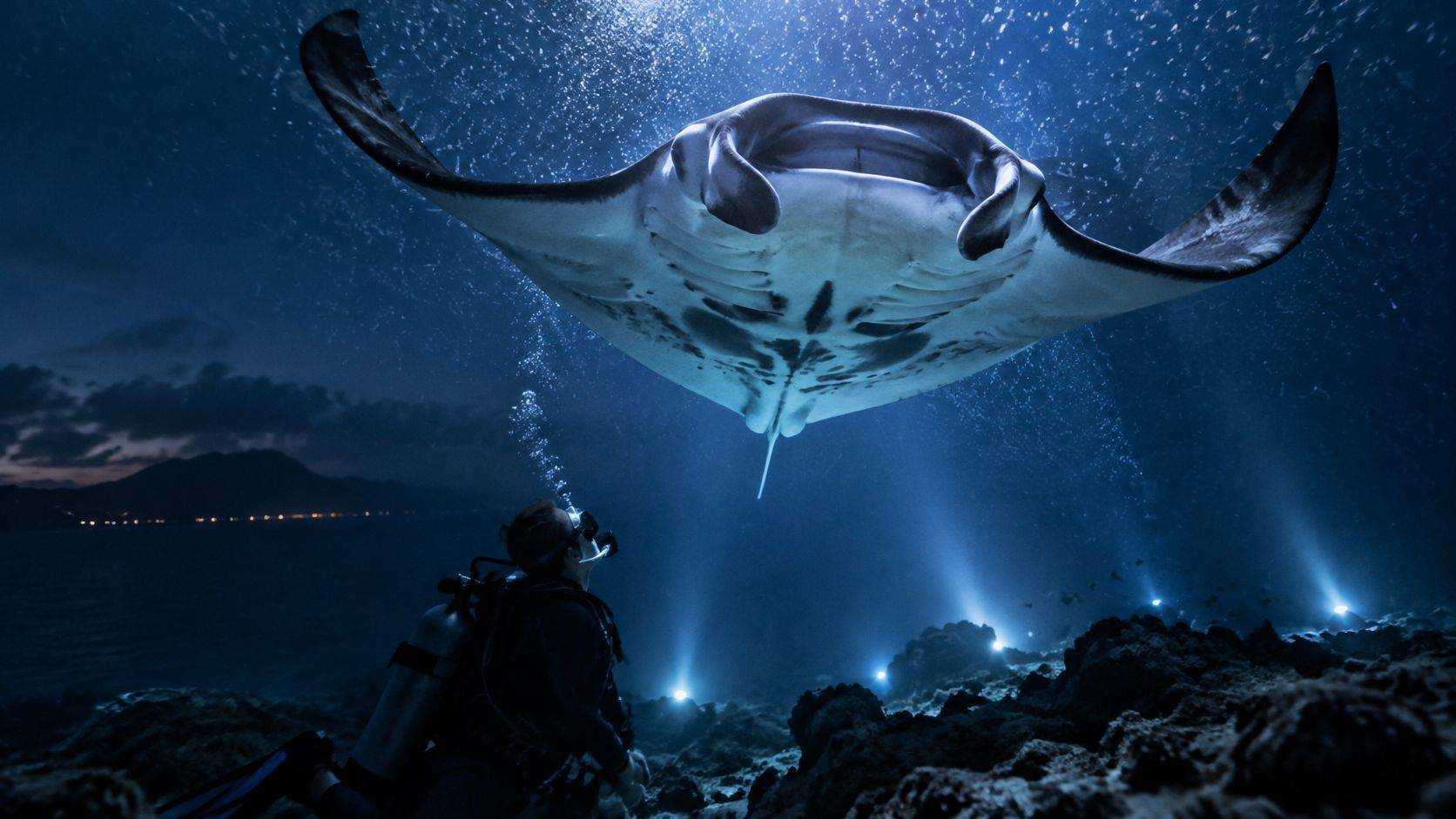
You've found photos of manta rays sweeping through blue light off Kona, and now you're deciding whether you could get into that dark water. You might also be wondering whether you need scuba certification, whether snorkeling gives you a good view, and what happens if the rays don't arrive.
A Kona Hawaii manta ray night dive starts with a simpler decision than most booking pages suggest: choose the position in the water where you'll feel comfortable and capable. You can't control the plankton or the animals, but you can control your preparation, your choice of trip, and how you behave when a manta approaches.
Table of Contents
- What Happens on a Kona Manta Ray Night Trip
- Choosing Between Night Snorkel and Night Dive
- When and Where Mantas Show Up and What Changes Your Odds
- Night Safety Rules, Gear and Pre-Trip Checklist
- How the Night Encounter Unfolds Step by Step
- Respectful Viewing and Photo Tips Around the Rays
- Book Your Manta Night Trip with Confidence
What Happens on a Kona Manta Ray Night Trip
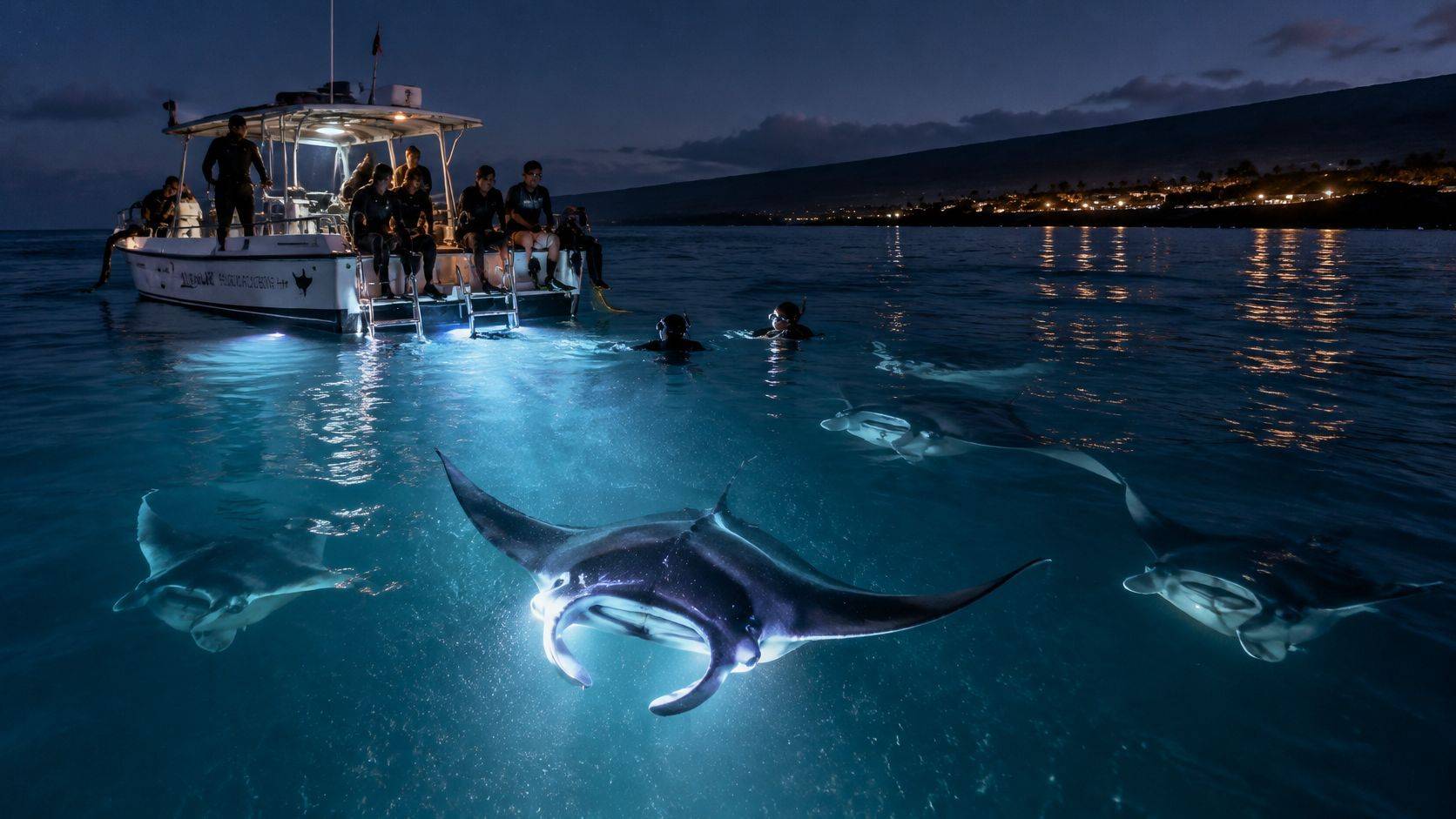
A Kona manta ray night trip is a guided outing where underwater lights concentrate plankton, creating an opportunity to watch wild reef manta rays feed after dark. The lights attract prey, and the prey attract mantas, rather than the rays arriving to perform for visitors.
The Hawaiʻi Department of Land and Natural Resources boating assessment describes this light-driven zooplankton concentration at Garden Eel Cove and Keauhou, the principal viewing sites. It also states that knowingly capturing or killing manta rays in state waters is prohibited and notes that, at the time of its review, there were no restrictions on where boats, divers, or swimmers could operate within those sites. That historical assessment shouldn't be treated as a complete statement of today's operating rules.
Why the rays swim through the light
Zooplankton are small drifting animals. Mantas filter them from the water as they swim, sometimes turning repeatedly through a concentrated patch of food. A state manta-viewing management proposal describes feeding through toothless mouths and manta widths reaching 5.5 meters, about 18 feet.
Mantas are mostly in deeper water during the day and come close to Kona's reefs at night to feed. The modern encounter developed after hotel lighting unintentionally attracted plankton and rays in the late 1980s and early 1990s; by 1991, operators were deliberately using underwater lights, according to historical testimony submitted to the Hawaiʻi Legislature.
You're watching natural feeding behavior around an artificial concentration of food, not a staged animal show.
That distinction matters. A bright viewing area can create an opportunity, but it can't make a wild manta stay.
Choosing Between Night Snorkel and Night Dive
The right choice depends first on your swimming ability or scuba certification, then on which viewpoint feels comfortable. Snorkelers float at the surface and watch the mantas feed below; divers experience the encounter underwater and must manage scuba gear in low light.
Factor — Night snorkel — Night dive
Who it suits — Confident swimmers who want a shorter outing — Certified divers who want time underwater
Swimming requirement — Must swim; non-swimmers aren't permitted — Must be certified and comfortable underwater
Minimum age — 5 years — Ask the dive operator about age and certification eligibility
Where you watch — Floating at the surface with a flotation device — Below the surface with the guide
Structure of the trip — Briefing, boat ride, then lights and rays at the surface — Late-afternoon reef dive, sunset surface interval with a light meal and briefing, then night dive
Gear provided — Mask, snorkel, wetsuit, and flotation device — Confirm rental equipment and inclusions with the dive operator
Departure point — Honokohau Small Boat Harbor — Honokohau Harbor aboard Honu One
A surface view is a full manta encounter in its own right. Snorkel guests hold onto boards as bright lights attract plankton, bringing the rays close while the group floats above them.
Choose snorkeling if you swim confidently and prefer staying at the surface. Non-swimmers cannot join, even with flotation. The minimum age is 5 for the night snorkel; daytime tours accept children from 3. For diving, you need scuba certification and comfort underwater. The two-tank manta ray dive includes a late-afternoon reef dive, a sunset interval with a light meal and briefing, then the night dive.
Manta Ray Night Snorkel Hawaii offers a night snorkel from Honokohau Harbor. Kona Snorkel Trips is another manta night snorkel option: Check Availability.
Kona is a base for manta night diving, and Kona Honu Divers operates the two-tank manta ray dive aboard Honu One. For more detail on the underwater viewpoint, see this guide to manta diving in Kona. Choose by swimming confidence and certification, then compare the trip details.
When and Where Mantas Show Up and What Changes Your Odds
Sightings are likely, but they aren't guaranteed. Our two viewing sites both have mantas more than 80% of the time, yet that doesn't promise an animal on your particular departure. Mantas are less likely to be seen during the day.
A University of Hawaiʻi study examined more than 23,000 sightings of 167 individually identified reef manta rays, Mobula alfredi, collected from 2010 through 2022. Its findings connect aggregation size with zooplankton density and describe a recurring, identifiable population rather than a vast passing migration.
Residency isn't the same as nightly abundance
A University of Hawaiʻi study summary published by Kona Honu Divers identifies that community-sighting study as published in 2025. Separately, a summary of a 2023 genomic study reports Hawaiʻi Island's contemporary effective population at approximately 104, with a 95% confidence interval of 99–110. Effective population is a genetic measure, not a headcount of animals available for visitors to see.
For your evening, the useful question is whether food is concentrated where the crew can safely position the group. Weather, water conditions, visibility, and lighting influence that decision; a calendar date alone doesn't settle it.
Say your crew chooses a location with fewer recent sightings because conditions are more suitable for your group. That isn't necessarily a disappointing compromise. A clear, orderly view of natural feeding can be more rewarding than a crowded encounter with more animals.
Booking principle: Prefer an honest explanation of nightly conditions over a promise about a peak month.
Our Big Island manta snorkeling guide can help you plan around the encounter rather than a guaranteed spectacle.
Kona manta sightings by site and dataset
Site or dataset — Group size pattern — Sex and visit pattern
Garden Eel Cove — Generally larger and more variable groups — The overall study population, not this site alone, had an approximately balanced sex ratio
Keauhou — Smaller aggregations than Garden Eel Cove — Strong female site fidelity; approximately 91% of sightings were female, according to the published study
Full dataset described above — Recurring observations of individually identified reef mantas — Aggregation size tracked zooplankton density
Night Safety Rules, Gear and Pre-Trip Checklist
Key night rules and what they mean
Rule — Applies to — What it means for you
Illuminated diver's flag between sunset and sunrise — Snorkelers, freedivers, and divers — The flag must be clearly lit to identify the group to boats
Stay within 100 feet of the flag in ocean waters — Snorkel groups — Two or more snorkelers can share a flag, but everyone stays within the radius except in emergencies
No touching the rays — Everyone in the water — Keep hands off and avoid disrupting feeding
Hawaiʻi law on manta rays — Everyone — Knowingly capturing or killing mantas is prohibited; report injured, entangled, or hooked animals
The flag requirements and 100-foot operating radius come from the state Division of Boating and Ocean Recreation snorkeling guidance. The flag is a boat-traffic reference, not a reason to spread out to the edge of the permitted area.
Our snorkelers must follow the Manta Ray Green List guidelines, including never touching the rays. For a common first-timer concern, our explanation of whether manta rays can sting you helps separate animal biology from the ordinary risks of nighttime ocean swimming.
Pack for the ride back as well as the water
- Secure swimsuit: Wear something that stays comfortable beneath a wetsuit.
- Sun protection: Apply reef-safe sunscreen before boarding if your departure includes daylight.
- Towel and dry layer: Keep them in a dry bag for the return journey.
- Water and a snack: Bring manageable portions and follow the crew's guidance about eating aboard.
- Motion-sickness preparation: If needed, take medication according to its label or your clinician's advice before boarding.
- Camera strap: Secure the housing so you don't have to chase dropped equipment.
- Booking and medical information: Keep your confirmation accessible and tell the crew about relevant conditions.
Our snorkel setup includes a wetsuit and flotation device, so you don't need to pack your own. For organizing the rest of a mixed vacation day, Urban Totes' packing checklist for city, beach, or trail is useful for separating dry essentials from wet gear.
Arrive early enough to explain concerns and check equipment without rushing. If you're unsure about medical suitability, resolve that before departure rather than at the boarding ladder.
How the Night Encounter Unfolds Step by Step
The following sequence describes the snorkel experience. Scuba guests follow their dive team's separate equipment, descent, and underwater-positioning procedures.
From harbor check-in to the viewing board
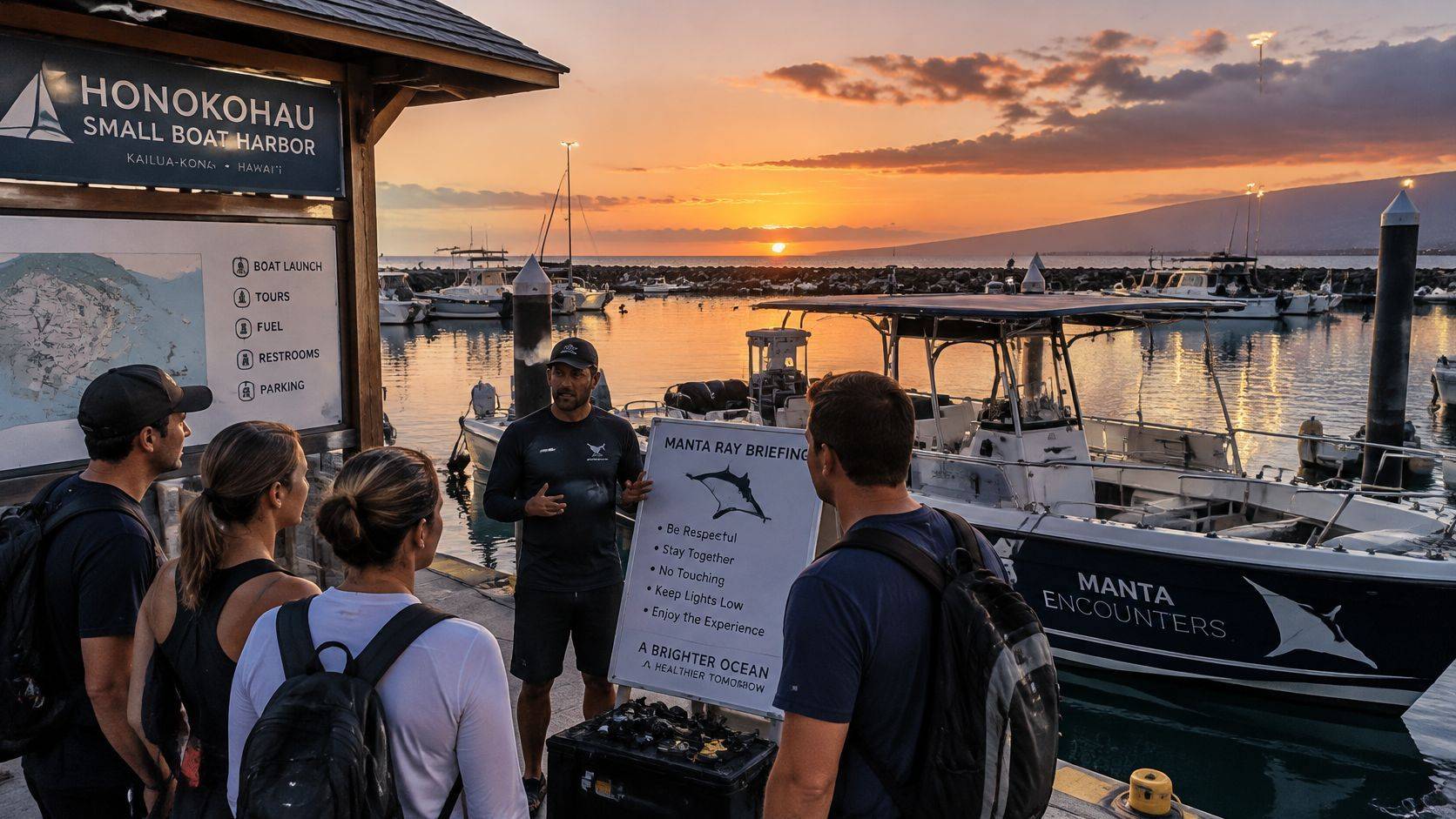
- Meet the crew at Honokohau Small Boat Harbor. Our lifeguard-certified crew explains manta biology and the history of Kona's rays, along with entry, positioning, and return procedures. Arriving late can leave you hurried when you most need time to listen.
- Fit your equipment before boarding. Adjust the mask so it seals comfortably without overtightening, and make sure you understand the snorkel and flotation setup. A loose mask that floods can turn an otherwise manageable entry into a frustrating one.
- Ride to the selected viewing site. Our boat ride takes 20 to 40 minutes, according to where the mantas are showing up best that night. Stay seated as directed and let the crew organize entry rather than trying to be first off the boat.
- Enter when instructed and take your assigned position. Snorkel guests hold onto snorkel boards while high-powered lights establish the viewing area. Swimming ahead separates you from the group and can put you in the space the animals need.
- Settle your breathing and keep your body quiet. Look down through the mask, breathe steadily through the snorkel, and tell the guide if you're uncomfortable. Hard kicking to get closer creates unnecessary movement and may interfere with another guest's position.
- Watch the turns without reaching. From the surface, you'll generally see feeding passes beneath you; divers may see rays passing overhead from their assigned underwater position. Let the animal complete its turn rather than lifting a hand or camera into its route.
- Return on the guide's signal. Follow the instructed order, approach the boat calmly, and use the boarding method the crew demonstrates. Once you're aboard, dry off and ask about any behavior you didn't understand.
Give yourself permission to speak up
You don't need to conceal nerves to belong on the boat. Tell the crew whether you're worried about darkness, breathing through a snorkel, or getting back aboard, so they can explain the relevant procedure before you enter.
A successful evening isn't measured by how aggressively you seek a close pass. It's an encounter you can follow calmly while the animals continue feeding without obstruction.
Respectful Viewing and Photo Tips Around the Rays
Crowding affects the experience before you ever lift a camera. A Hawaiʻi visitor study and management review reports that approximately 82% of surveyed participants felt crowded by snorkelers, 78% by boats, and 69% by scuba divers, while discussing potential impacts including stress, injury, disease transmission, altered feeding, and habituation.
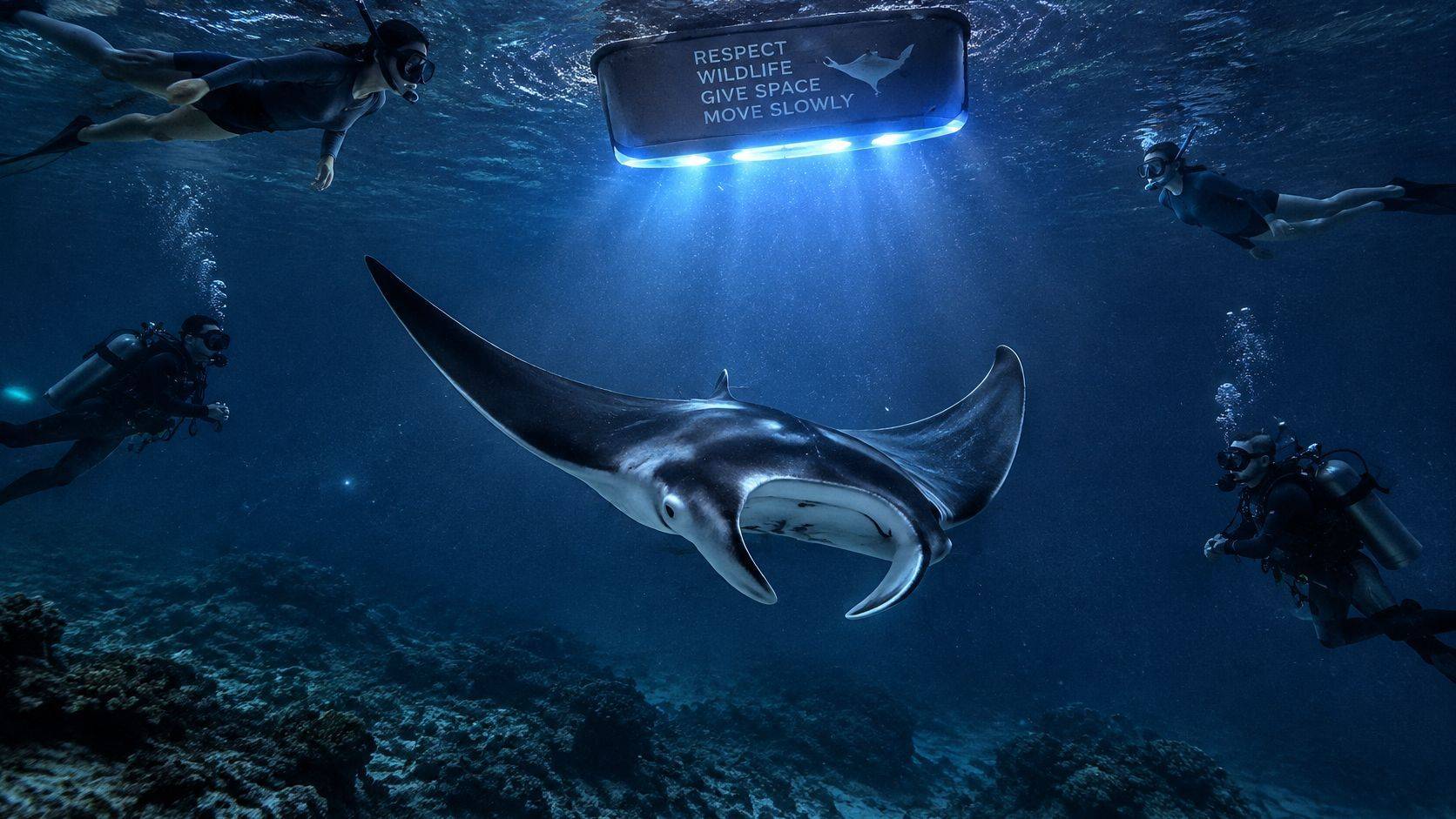
The practical response is low-intensity observation, not competing for the closest position. Repeated interference can affect feeding and increase collision risk, so don't pursue a ray or cut across its route.
Photograph from the position you're given
Snorkelers float near the surface wearing wetsuits and flotation. Keep your camera close to that position rather than lowering it into a manta's path.
- Use the established lighting: Start without your own flash and follow the guide's lighting instructions.
- Raise ISO cautiously: Accept some image noise rather than moving toward an animal for a brighter shot.
- Steady the housing: Keep a secure strap and use controlled movements.
- Put the screen down: Take a short sequence, then watch the animal directly.
Our Big Island manta night snorkel guide offers further preparation for surface viewing. Staggered arrivals may ease congestion, but longer total interaction periods can add disturbance, so respect the crew's ending signal.
If an animal appears injured, entangled, hooked, or ill, notify the crew rather than attempting a rescue. The state marine-species guidance lists the Marine Wildlife Hotline at 1-888-256-9840, option 5.
Book Your Manta Night Trip with Confidence
Choose the format you can safely participate in, then confirm the total price, departure instructions, equipment inclusions, and cancellation terms. A wildlife guarantee and a weather cancellation policy address different situations, so read both before paying.
Our Manta Ray Night Snorkel lasts 2 hours and starts from $139. Booking in advance gives the best pricing; if no mantas appear, our manta guarantee allows a free return on another night on a standby basis. Schedule early enough in your vacation to leave room for that possibility.
For wider price context, AAA lists Kona manta-ray night-snorkel tickets starting at $160.49 in 2026. That's a separate listing, not our advertised fare or a universal price for every Kona operator.
Keep the operator and booking page matched
- Snorkel booking: The Kona Snorkel Trips availability link above books with Kona Snorkel Trips, not Manta Ray Night Snorkel Hawaii. Confirm the business name on your checkout confirmation.
- Manta scuba booking: For the Kona Honu Divers departure, Check Availability and confirm your certification eligibility before purchasing.
- Other Big Island dives: Explore Kona Honu Divers' diving tours and Check Availability for the broader schedule.
If you also want a daytime outing, Kona Snorkel Trips is an exceptional alternative for a Captain Cook snorkel tour or Kealakekua Bay snorkel tour: Check Availability. You can also explore Captain Cook Snorkeling Tours separately.
This week, settle your swimming or certification eligibility, choose a date with some flexibility afterward, and reserve before your preferred departure fills. Save the harbor instructions somewhere you can access without relying on reception.
Manta Ray Night Snorkel Hawaii offers guided nighttime snorkeling off Kona with lifeguard-certified crew, an educational briefing, and the equipment you need for surface viewing. Visit Manta Ray Night Snorkel Hawaii to choose a suitable departure and prepare for a calm, respectful encounter with Kona's feeding mantas.