
Manta Ray Big Island Night Snorkel Guide
Your manta ray Big Island guide to Kona night sites, seasons, snorkel versus dive, etiquette, photos, and booking.
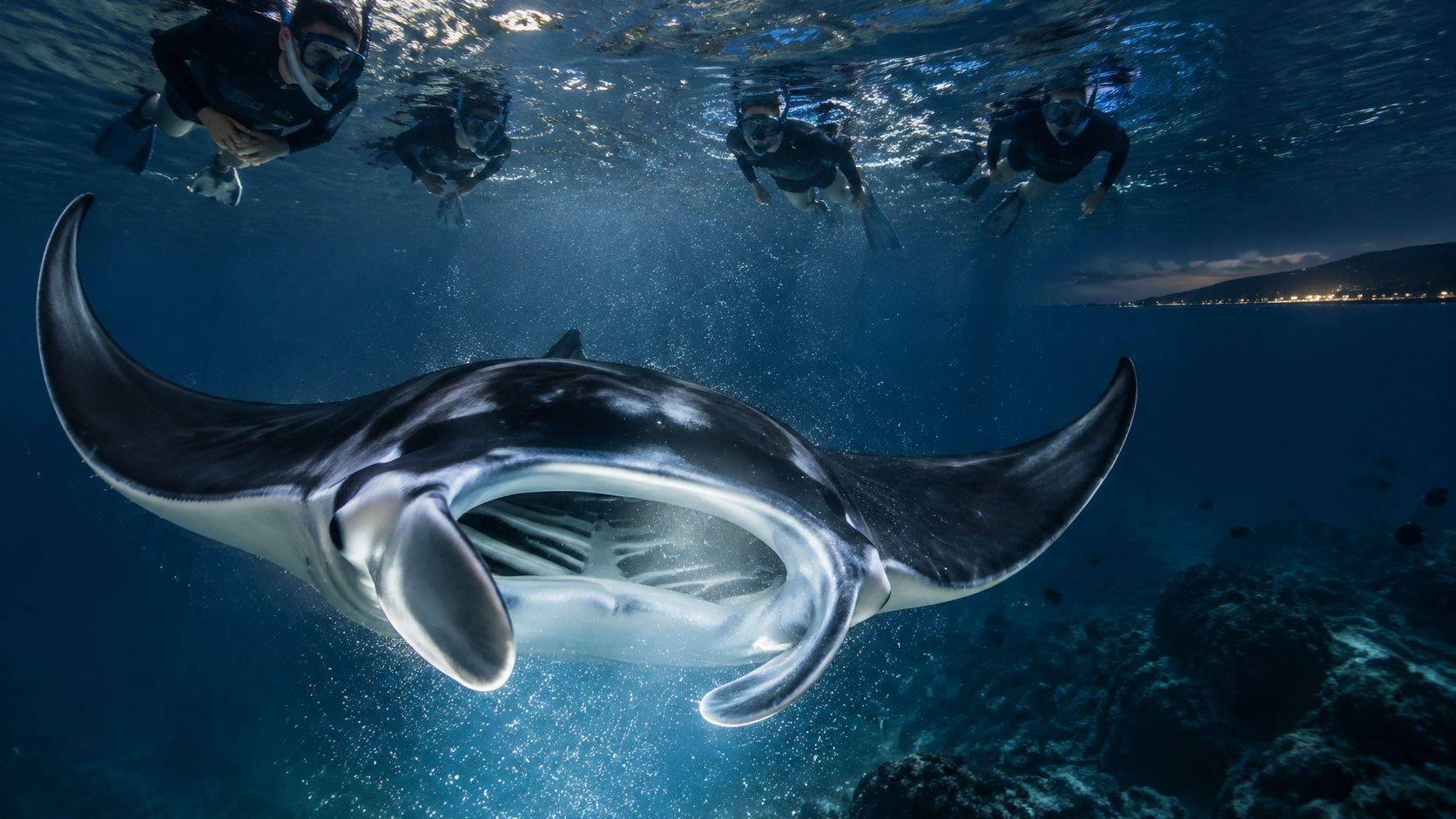
A NOAA-hosted genetic study estimated the effective population size of reef manta rays around Hawaiʻi Island at 104 individuals, with a 95% confidence interval of 99 to 110. That isn't a count of every manta in the water. It estimates how many individuals contribute genes to future generations, a measure that helps explain why a night encounter on the Big Island is about more than seeing a large ray glide beneath a light. (NOAA-hosted genetic study)
Table of Contents
- Where and When Kona Mantas Show Up
- How Lights Create the Feeding Lane
- What Happens on a Night Snorkel
- Safety Rules and Manta Etiquette
- Quiet Nights Photos and What to Pack
- Small Population and Crowding Rules
- Choose and Book the Right Night
Where and When Kona Mantas Show Up
For a planned manta ray Big Island encounter, head to the Kona coast after dark. Manta rays are mostly in deeper water during the day and come close to Kona's reefs at night to feed on plankton, so a daytime swim is a weaker bet. Manta tours operate in Kona, where two established viewing sites give crews options as conditions change.
The northern site, Garden Eel Cove, is also known as Manta Heaven. The southern site, Keauhou, is also called Manta Village. A University of Hawaiʻi study analyzed community records from 2010 through 2022, including more than 23,000 sightings of 167 individually identified reef mantas. Garden Eel Cove consistently supported larger aggregations, while females visited Keauhou disproportionately and showed strong site fidelity there. (University of Hawaiʻi study of Kona manta sites)
Kona night viewing sites
Site — Known pattern — Source
Garden Eel Cove — Larger aggregations than Keauhou — University of Hawaiʻi community logs, 2010 to 2022
Keauhou — Visited disproportionately by females, with high female site fidelity — University of Hawaiʻi community logs, 2010 to 2022
Both sites — Group size tracks zooplankton; aggregations remained relatively stable as tourism grew; sites are connected — 13-year review, 23,000+ sightings, 167 identified mantas
The sites aren't interchangeable in every way, but they are connected. The study found evidence that mantas moved between them, and it reported an approximately balanced sex ratio overall. Researchers also found that male mantas were more mobile than females. These patterns help explain why a crew may choose one site over another, rather than promising that every trip will visit the same spot.
There's no fixed season that guarantees a busy night. A winter boat ride may offer the chance to see humpbacks, while summer seas are often easier, but plankton availability can make any night quiet. For a month-by-month planning overview, use this guide to the best time to see manta rays in Kona. Treat the table as a map of known patterns, not a forecast: the crew picks the site that's active that evening.
How Lights Create the Feeding Lane
A streetlamp concentrates insects in one visible patch, and swallows follow the food. Kona's underwater lights create a similar effect: plankton gathers in the illuminated water, and manta rays follow their prey. The lights don't call trained animals to a performance. They help concentrate food where rays can feed.
The animals are reef manta rays, Mobula alfredi, and they're filter feeders, not stingrays. Manta rays don't have stingers. They feed by opening their mouths wide and extending the cephalic fins beside the mouth, which help guide water and prey inward. The rays then filter zooplankton from the water as they swim.
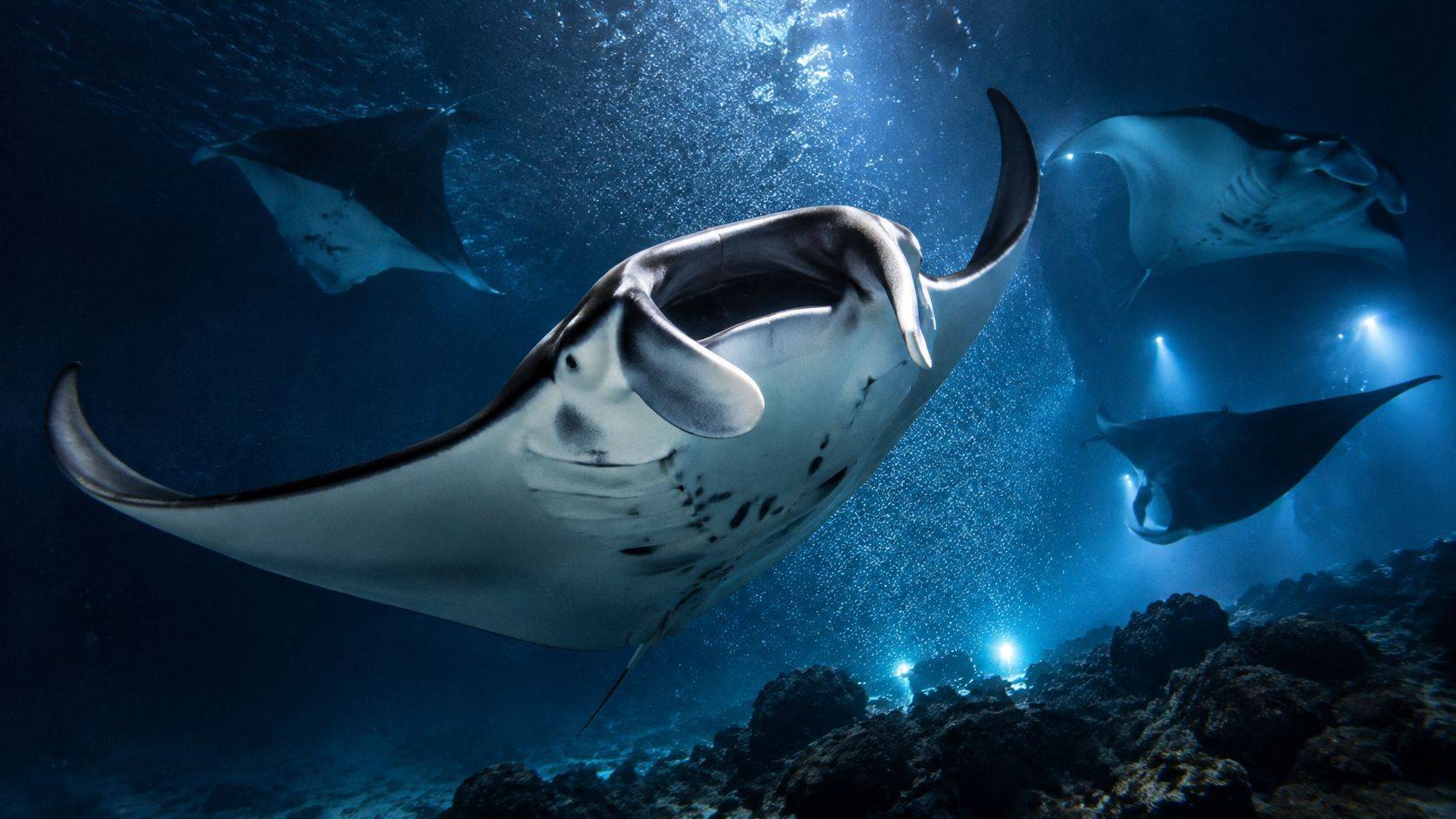
NOAA summarizes Kona evidence showing a significant positive relationship between manta abundance and zooplankton abundance. Artificial lights can gather plankton into the water column, while natural nighttime movement also brings plankton nearer the surface. That means the feeding opportunity depends on prey density, currents, and light placement, not the date on a calendar or the reputation of a viewing site. (NOAA-associated technical material on Kona manta feeding)
Why the feeding lane needs room
A manta feeding under the lights can change direction as it follows patches of plankton. NOAA-associated technical material reports that mantas beat their pectoral fins at approximately 30 beats per minute while feeding, nearly twice the rate observed during cleaning behavior. In a confined beam, that faster movement makes an obstructed path a real concern, not just an inconvenience.
The bright lights are used to bring mantas close to snorkelers, but the animals still need an open route through the food-rich water. A body or camera in that path can disrupt a feeding pass or create collision risk. The comparison to swallows helps set expectations: the manta is following its food, and people are visitors at the edge of the feeding area.
The rule that shapes the whole encounter: keep your body and gear out of the illuminated feeding lane.
What Happens on a Night Snorkel
A night snorkel follows the same basic arc on most Kona boats. Guests meet, gear up, ride to the active site, then float at the surface while lights concentrate plankton below. Swimming skill is required, since you hold position in open water at night and follow crew directions throughout.
- Meet the crew at Honokohau Small Boat Harbor. The lifeguard-certified crew gives an educational briefing about manta biology and the history of Kona's known rays. Listen closely, especially to instructions about positioning and what to do if a manta swims nearby.
- Get ready before the boat leaves. Fit your mask and snorkel, and put on your wetsuit and flotation equipment. A comfortable fit matters for the viewing portion. Secure straps early so you can stay still later.
- Ride to the active site. The boat trip takes 20 to 40 minutes, depending on where mantas are showing best that night. The crew chooses the site based on activity, rather than treating the destination as fixed.
- Enter the water and hold position. With a wetsuit and flotation, snorkelers float at the surface near a lit snorkel board. Bright lights gather plankton in the water below, creating a feeding area that the rays may enter.
- Look down and let the rays pass. Your job is to observe from the surface. A good view does not require diving down or swimming after a manta. Allow each animal to set the distance and direction of its pass.
- Climb back aboard for the return ride. When the viewing window ends, follow the crew's directions to exit the water and head back to the harbor.
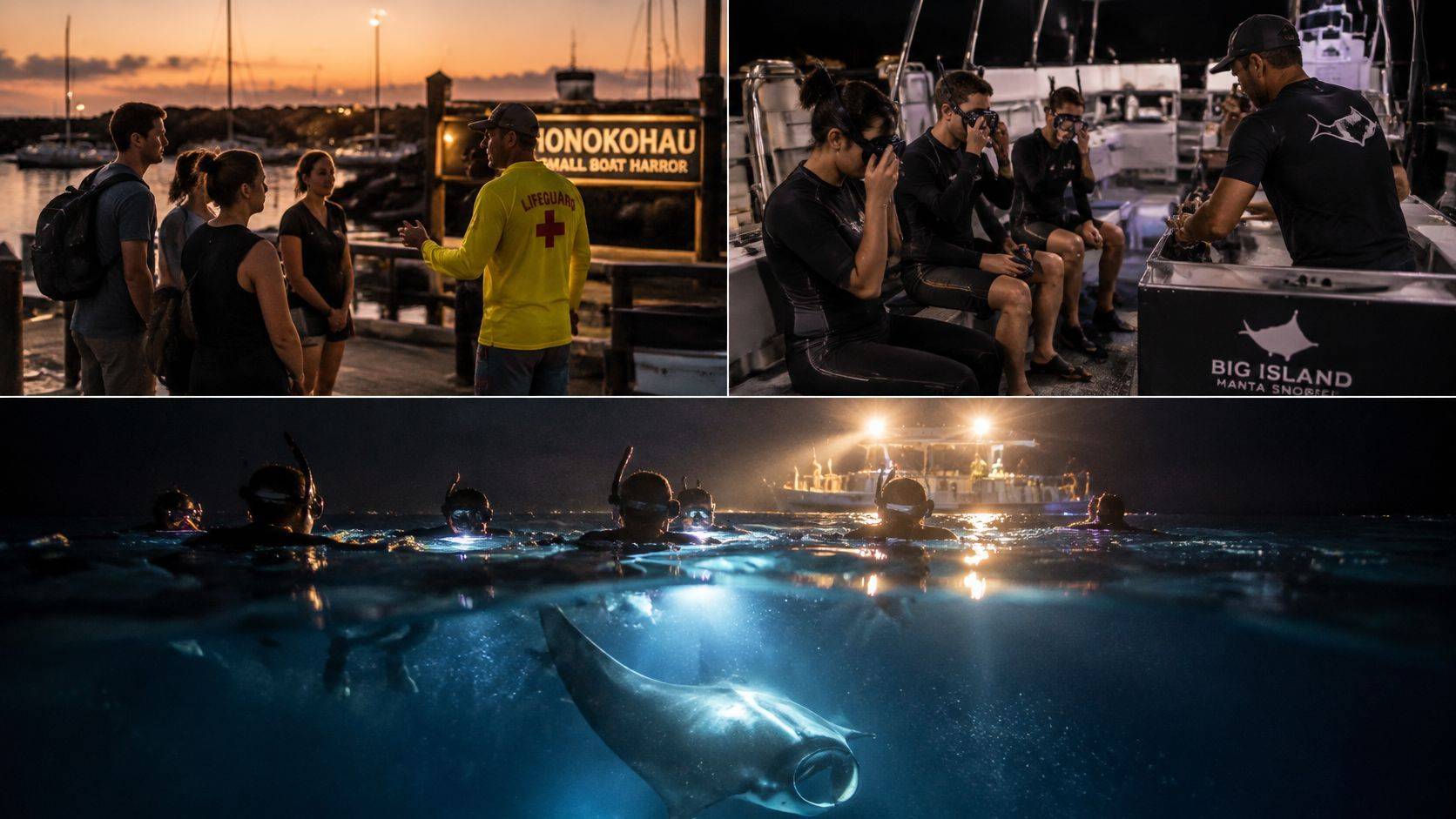
The shared Manta Ray Night Snorkel tour begins at Honokohau Small Boat Harbor. For travelers who want a different way to spend time under the lights, the manta ray night dive puts certified divers below the snorkelers during the same feeding activity.
For travelers comparing operators, Kona Snorkel Trips' manta ray night snorkel tour is an exceptional alternative. The key feeling to look for is not a chase across the bay, but repeated, slow passes beneath the lights while you float above the action. Check Availability
Safety Rules and Manta Etiquette
Never touch a manta ray. That rule protects the animal and makes the encounter safer for everyone in the water. NOAA advises watching giant mantas from a safe distance and never enticing them to approach people. Disturbance can interrupt feeding, breeding, resting, or socializing. (NOAA guidance on giant manta rays)
The Manta Ray Green List guidelines also require snorkelers never to touch the rays. Stay calm, keep your fins still, and allow each animal to control its own approach and departure. A close pass is the manta's choice, not a pose that a guest creates.
What to do when a ray comes close
If a manta comes within arm's reach, freeze. Don't reach toward it, duck under it, or kick after it. Keep cameras, straps, and other equipment close to your body, and leave the lit lane clear so a fast turn doesn't become a collision. If a ray swims away from the lights, let it go rather than following it.
That same restraint applies to positioning. Don't block the gap between the light and open water, and don't try to draw a manta toward you. If you want to check a practical detail before your trip, consult the manta ray snorkel FAQ.
Night water, a boat ride, and time in the ocean make a proper briefing and a real assessment of your swimming ability important. Non-swimmers aren't permitted on the Manta Ray Night Snorkel, and swimming skills are required with no exceptions, including for someone who plans to rely on a float or a partner. Before booking, make an honest check: you can swim, you're willing to hold still, and you're comfortable leaving without a touching story.
Quiet Nights Photos and What to Pack
“Resident” doesn't mean that every manta stays at one site or appears every night. A NOAA-repository study recorded 25,444 observations of 118 identified reef mantas over six years at Manta Heaven and Manta Village. Some animals repeatedly used a limited area, while others moved between sites and had longer gaps between sightings. The study also found sex-biased site use, so a single viewing location doesn't necessarily represent the whole local population. (NOAA-repository study of manta movements at Kona sites)
Manta Ray Night Snorkel Hawaii's two viewing sites have mantas more than 80% of the time, but that doesn't promise a particular number of animals on a specific night. The study explains part of the uncertainty: operators illuminate the water from the surface and from approximately 10 meters down, gathering zooplankton into feeding patches, but they can't set the head count.
Bring practical gear, not extra fuss
Popular manta tours often sell out weeks ahead, so book early and consider leaving a backup evening open. If the mantas don't show, guests can return another night for free on a standby basis under the manta guarantee. That gives you another opportunity, but it isn't the same as a guaranteed sighting on a chosen date.
For photos, use a wide view from the surface. Keep your elbows in and don't chase a ray to get a closer frame. A constant video light or a harsh strobe aimed at an animal is a poor choice in a feeding lane. Keep your gear compact and your attention on the water around you.
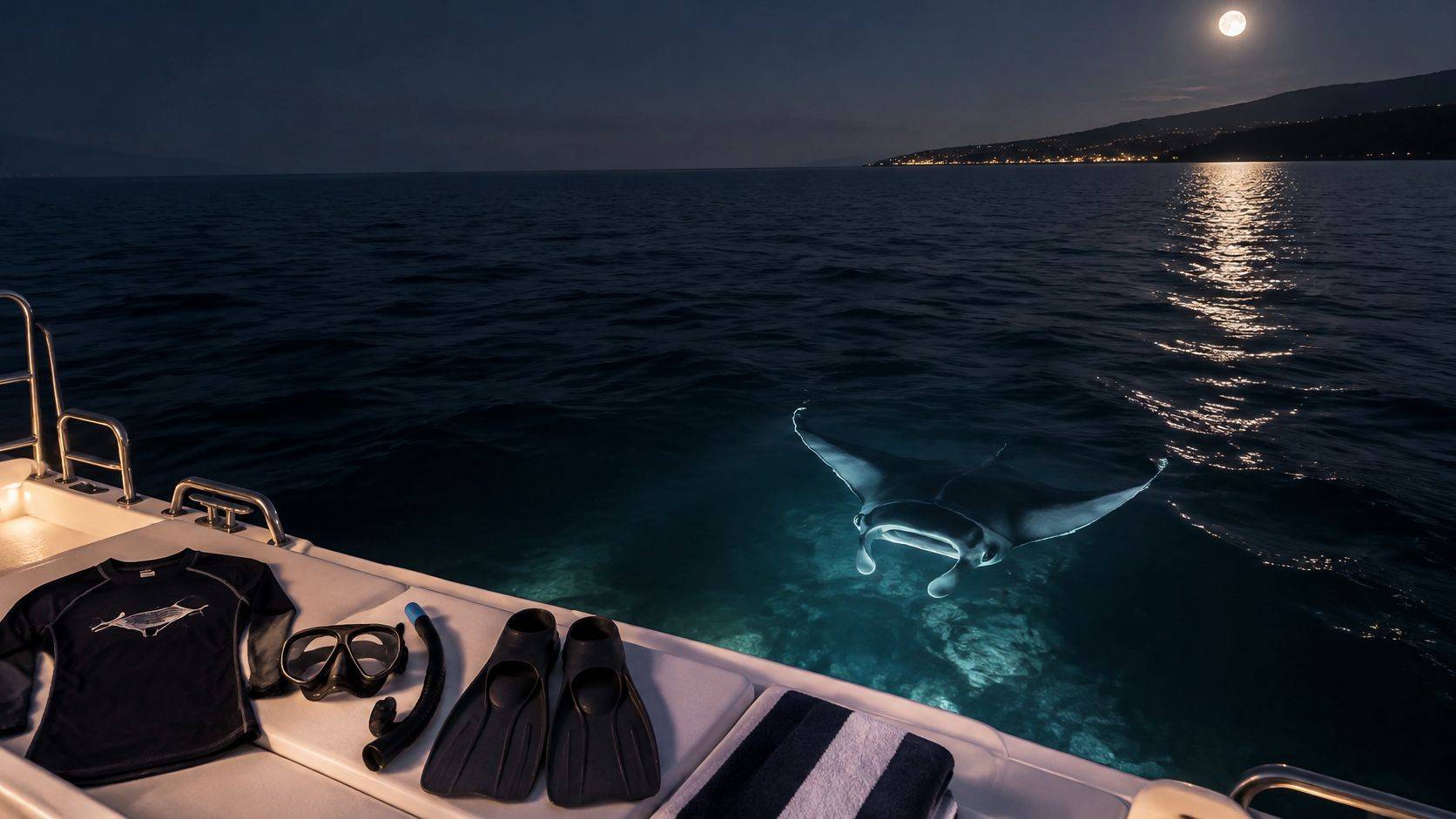
Pack a swimsuit, towel, and a dry bag for your phone. A light layer helps on the ride back, and if you're prone to motion sickness, take your usual medicine early enough to be useful. Leave reef-unfriendly lotion off the boat. A meaningful encounter might be a few recognizable passes or a larger group; neither should be treated as a promise.
Small Population and Crowding Rules
Kona's night encounter works like a neighborhood kitchen. A small resident group returns to the same reefs because plankton gathers there under lights, and currents decide how rich that patch is on a given night. The NOAA-hosted genetic study estimated an effective population size of 104 for Hawaiʻi Island and 129 for Maui Nui. Effective size describes breeding contribution, a narrower measure than a headcount of animals in the water.
Crowding changes how that small group can feed. Hawaiʻi's Department of Land and Natural Resources identified overcrowding, safety concerns, user conflicts, and environmental impacts in proposed manta-viewing rules. The proposal included limiting commercial viewing permits to 24 in each of two designated zones, restricting vessels to 60 passengers for hire per 24-hour period, and assigning two-hour shifts. These were proposed rules, not a statement of current requirements, so check their status before booking. (Hawaiʻi DLNR announcement on proposed manta-viewing rules)
Those limits target boat spacing, swimmer position, and time in the viewing area. Fewer hulls overhead means fewer propeller risks. Shorter, spaced shifts mean mantas meet an orderly line of floating snorkelers instead of a scattered crowd.
The practical choice is straightforward.
Pick operators that hold position, limit group size, enforce passive observation, and prohibit touching. That approach protects feeding behavior and keeps the plankton response working night after night.
Population measure — Estimate or finding — What it tells you
Hawaiʻi Island effective population size — 104, 95% confidence interval 99–110 — Estimated breeding contribution, not a total headcount
Maui Nui effective population size — 129 — A separate, geographically structured population
Choose and Book the Right Night
Four bookings cover most visitors: a shared surface snorkel, a certified-diver night dive, a private boat, or a daytime reef trip. Pick by how you enter the water, not by which flyer sounds busiest.
Option — Best for — Length — Price
Manta Ray Night Snorkel — Swimmers who want the surface view — 2 hours — From $139
Manta Ray Dive Kona, two-tank night adventure — Certified divers — 5 hours — Up to $259
Private Manta Ray Snorkel charter — Groups wanting the boat alone — 2 hours — From $1,999
Kealakekua Bay snorkel with Kona Snorkel Trips — Daytime reef, coral, and fish — Day trip — Booked separately
The shared Manta Ray Night Snorkel is the direct surface option. It lasts 2 hours and starts from $139. You hold a snorkel board in a wetsuit with flotation while lights draw plankton, and the rays rise to feed. The lights work like a porch light on a summer night: insects gather where the glow is, and the animals follow the food. Plankton and current still decide the night. The ride to the site takes 20 to 40 minutes, depending on where the mantas are showing up. Two sites are used, and both have mantas more than 80% of the time. Two departure times run because this is the most popular tour on the island, and popular nights often sell out weeks ahead. Non-swimmers are not permitted. Swimming skills are required, with no exceptions. If the mantas do not show, the manta guarantee lets you come back another night for free on a standby basis. That is a return ticket, not a promise that a small resident population will perform.
Certified divers can book Manta Ray Dive Kona, this operator's own two-tank night adventure. It lasts 5 hours and is priced up to $259. The sequence is a late afternoon reef dive, a sunset surface interval with a light meal and a briefing on manta biology, then the night dive. Read the Manta Ray Dive Kona night dive page before you book. Certification is required. The dive does not replace the surface snorkel.
A group that wants the boat to itself can book the Private Manta Ray Snorkel. The charter lasts 2 hours and starts from $1,999, with snorkel gear and crew included. The boat is a 28-foot zodiac, Coast Guard rated for 24 passengers and limited to 18. The two shared departures each take about two hours and visit the same manta site that night, so a private booking mainly changes who shares the boat and when you leave.
For a daylight outing, Kona Snorkel Trips offers a Captain Cook and Kealakekua Bay snorkel tour. Use the Kona Snorkel Trips availability calendar to reserve it. Kealakekua Bay is a Marine Life Conservation District. Fishing, taking or injuring marine life, feeding fish, and removing or altering coral and other natural features are prohibited. Anchoring rules differ by subzone, and boats must avoid damaging coral. The bay trip is about reef, fish, and the Captain Cook Monument, not a daytime manta showing. (DLNR rules for Kealakekua Bay Marine Life Conservation District; DLNR Kealakekua Bay regulated-area details)
Reserve the shared night snorkel early for a couple, a family, or a photographer. Choose the private charter for your own boat and timing. Book the dive only if you are certified, and book the bay when the day should be about the reef.