
Manta Ray Hawaii Guide: Where, When and How to See Them
Manta Ray Hawaii guide to Kona's night snorkel: where to see them, when to go, what to expect on the water and how to book your trip.
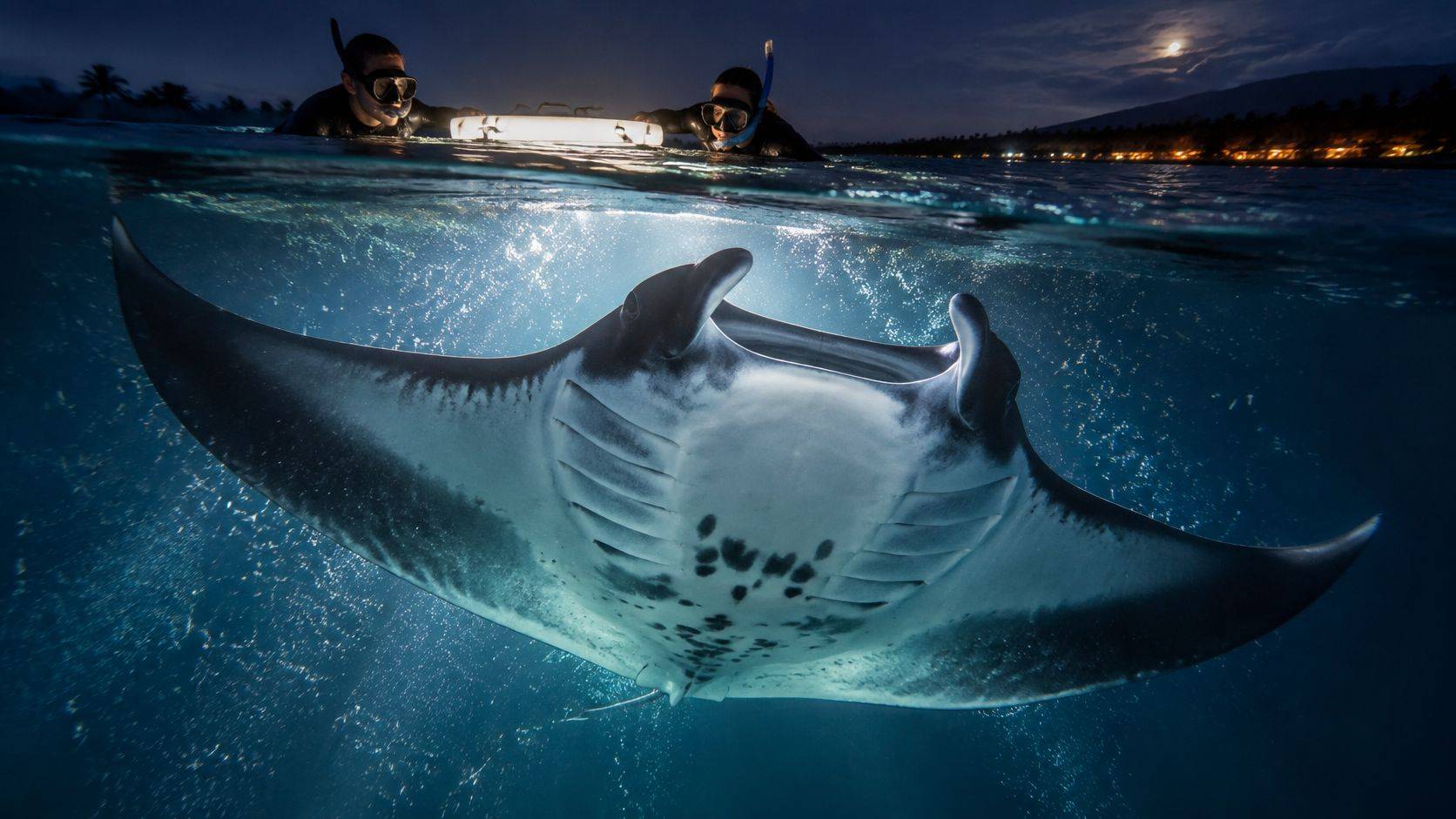
You're in the middle of planning a Big Island trip, and one photo keeps surfacing: a dark shape the size of a dining table, gliding under a spotlight, close enough that you can count the marks on its belly. You want that. You also want to know whether it's real, whether it's safe for a nervous snorkeler, and whether the money is worth it.
The manta ray Hawaii experience is real, but it's narrower and stranger than the brochures suggest. The animals aren't trained, they aren't guaranteed, and the population you'd be visiting is smaller than almost anyone assumes. Understanding how a night on the water works is the difference between hoping you get lucky and knowing what you're looking at when a ray slides past.
You need this, in the order a first-timer usually requires it.
Table of Contents
- Where and When to See Manta Rays in Hawaii
- Manta Ray Size, Diet and Gentle Nature
- Why Kona's Manta Rays Gather After Dark
- Kona's Two Night Viewing Sites Compared
- What Happens on a Manta Ray Night Snorkel
- Rules, Safety and Etiquette on the Water
- Packing Checklist and Photography Tips
- Book Your Manta Ray Night Snorkel
- Manta Ray Hawaii Questions Answered
Where and When to See Manta Rays in Hawaii
If you want the best odds of seeing a manta ray in Hawaii, plan for the Kona coast of the Big Island, and schedule it for after dark. Manta rays are mostly in deeper water during the day and come close to Kona's reefs at night to feed on plankton, which is why the night trip has become the dependable one. Three options exist, and they're distinctly different experiences.
Option — Best time — Length — Best for — Requirement
Night snorkel, Kona — After dark, year-round — 2 hours — First-timers and families — Swimming skills required, minimum age 5
Two-tank manta dive, Kona — After dark, with a late afternoon reef dive first — Two dives, afternoon into evening — Certified scuba divers — Scuba certification
Daytime snorkel or dive — Daylight — Half day — Reef and fish viewing — Mantas are less often seen by day
The difference between these isn't the boat or the gear. It's the light. After sunset, plankton gathers near the surface around the lights crews run in the water, and mantas arrive to feed in slow, looping passes. You float at the surface holding a board and watch from above, which is why families do well on the snorkel, provided everyone can swim.
Certified divers get the same evening from a different angle. The two-tank trip starts with a late afternoon reef dive, breaks for a sunset surface interval with a light meal and a briefing on manta biology, then finishes with the night dive itself. You can read the format on the Kona Honu Divers manta dive page. Divers settle on sand and look up. Snorkelers hang at the surface and look down.
Why this population is smaller than you think
Kona isn't one interchangeable slice of a statewide herd. A NOAA Fisheries genetic study of reef manta rays identified only 318 individual reef manta rays around Hawaiʻi Island since records began in 1979, against roughly 600 documented in Maui Nui since 2005. The estimated number of adult breeders around Hawaiʻi Island was about 104. Genetic analysis put movement between the island groups at roughly one female every 1,300 years and one male every 64 years, and females reproduced only at the island where they were born.
What this means for you: if a guide says they recognize the ray passing your mask, that isn't a sales line. Repeat sightings here often involve the same residents.
Three checks before you book
- Can you swim in open water without a flotation aid? If the answer is no, or you panic when you can't touch bottom, the night snorkel isn't the right first step.
- Do you hold a scuba certification? If yes, the two-tank dive gives you a longer, closer view and a quieter vantage point.
- Do you want the animals at night or the reef by day? Night is the manta show. Daytime is the reef show, with a manta as a bonus rather than the plan.
Manta Ray Size, Diet and Gentle Nature
On a night trip, someone often grips the board a little harder. A shape has come out of the dark, and it keeps getting bigger.
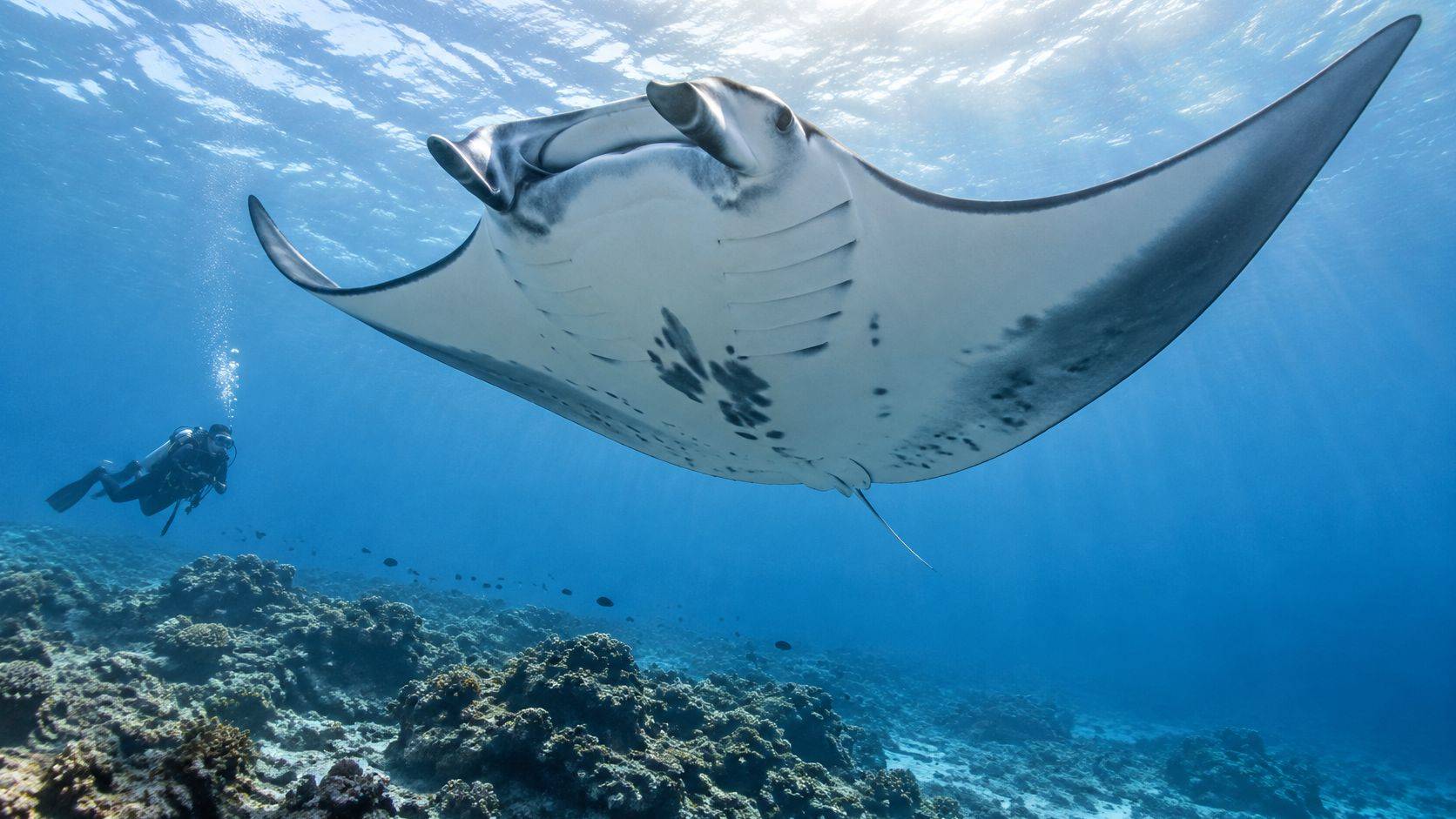
The Hawaiʻi Division of Aquatic Resources manta ray page puts the giant oceanic manta ray at a wingspan of 22 feet or more, and describes its diet as planktonic crustaceans and small schooling bony fishes. The reef mantas that gather in Kona generally run smaller, but a broad adult still blocks out the light above you.
Feeding works like dragging a very fine net through a swimming pool full of suspended confetti. The water passes through. The confetti stays. Mantas swim with their mouths open and push water across gill plates that strain out the food, so a feeding ray looks like a slow-moving sieve rather than an animal hunting something with a face.
The safety question, answered plainly
Manta rays don't have stingers like other rays. Their size doesn't make them a threat either. A manta's diet and filter-feeding anatomy fit the gentle, nonpredatory behavior people see in the water. A snorkeler isn't plankton, so the ray has no reason to treat you as food.
What you'll experience is a large animal passing near you on its own schedule, sometimes close enough to brush your shoulder. That contact comes from the ray's choice of line, not yours. A longer look at stingers and close passes is in more manta ray facts worth knowing.
Every belly is a fingerprint
Open your eyes when a ray rolls toward you. The underside carries a unique pattern of spots and dark patches, and no two animals match. Guides learn those patterns the way a dog walker learns the neighborhood dogs, then use them to tell one resident from another.
You are watching an individual with a home address. It may show up under the light twice in the same week because it lives here. A night encounter often means meeting a recognizable animal again, which is why keeping your hands still matters more than most first-timers expect. Expect calm and unhurried. Expect nothing on cue. The best encounters come to people who stop swimming and let the animal set the distance.
Why Kona's Manta Rays Gather After Dark
The reason the night snorkel works is unglamorous. Plankton.
Reef manta rays (Mobula alfredi) forage in tropical water that holds relatively little food, so they need patches of zooplankton dense enough to make feeding worthwhile. A study of manta foraging aggregations along Hawaiʻi Island traces where those patches come from, and the chain is worth following one link at a time.
From slick to spotlight
Along Hawaiʻi Island's western coast, converging water movements such as Langmuir circulation form surface slicks that accumulate zooplankton. Tides working against the island's topography and internal waves create additional plankton hotspots. The ocean is concentrating food into narrow, drifting ribbons whether or not a boat is nearby.
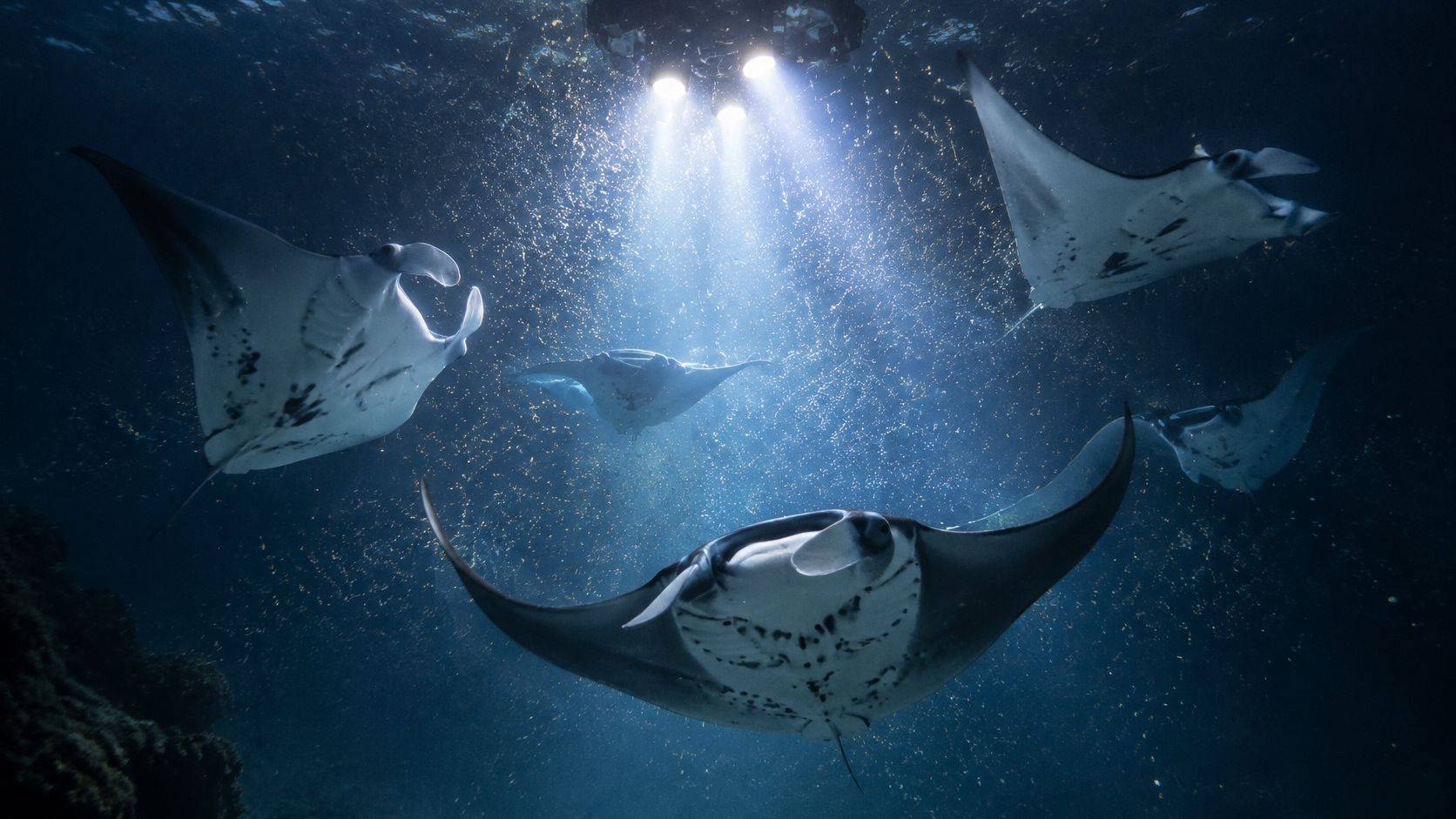
Now add the lights. Artificial light at night intensifies the effect by pulling light-attracted zooplankton toward the surface, building a predictable feeding layer that mantas work through in continuous passes. The mantas aren't gathering to see the boat. They're gathering because dinner is suddenly easy to find.
Plain version: the crew isn't calling the animals. They're switching on a lamp in a room that already smells like food.
That distinction matters when you're in the water. The rays are responding to prey availability, not to feeding, not to conditioning, and definitely not to you. Bright lights bring them close to snorkelers because the light is where the plankton is.
What changes from night to night
Plankton density isn't constant, so neither is the show. These are the variables that shape any given evening:
- Moonlight: a bright moon can scatter plankton deeper and thin the surface layer.
- Cloud cover: overcast nights sometimes hold the layer tighter.
- Wind: it drives slicks and chops up the surface, changing where the food sits.
- Water clarity: it decides how far you can see, and how spectacular a close pass looks.
- Current structure: it decides whether the layer stays put or drifts off your site.
- Light placement: it decides whether the plankton concentrates where swimmers are floating.
This is why guides keep lights in consistent positions, ask swimmers to stay off the seafloor, and minimize splashing and disturbance. A clean, stable feeding layer at a known site is a renewable resource. Cloud it, trample it, or scatter it, and the aggregations that make Kona special get harder to predict for everyone, including the rays that live here.
Kona's Two Night Viewing Sites Compared
Kona has two main nighttime feeding areas, Garden Eel Cove and Keauhou, and they don't behave identically. A 13-year University of Hawaiʻi analysis of community-sourced records covering 2010 through 2022 logged more than 23,000 sightings of 167 unique manta rays across the two sites. That's not a tourism fad. It's a long-running ecological pattern.
Garden Eel Cove regularly hosted the larger aggregations. Keauhou showed stronger female use and high female site fidelity, which suggests the two locations serve partly different functions for the same population rather than being interchangeable backdrops. Across both sites the observed sex ratio sat at roughly 1:1, even though how the animals used each place differed.
The sites are connected, too. Individual rays move between them, so you're not looking at two separate populations. You're looking at one small population using two dining rooms.
Practical rule: the crew picks the site on the night, based on where activity is strongest. The ride out takes 20 to 40 minutes depending on which site the mantas are favoring, and both sites have mantas on more than 80% of trips.
Which site you'll actually visit
You won't usually choose. Sea conditions and recent activity decide, and that flexibility is the reason the odds are decent. What you can choose is your perspective.
If seeing the animals from the sand in about 30 feet of water appeals more than floating at the surface, manta encounters with Kona Honu Divers run a night dive at the same sites, with divers settled on the bottom looking up as the rays sweep overhead. Snorkelers get the top-down view of the same event.
What should you expect from each site?
- Garden Eel Cove on a busy night: the biggest groups, more rays moving through the light in sequence, and a stronger sense of a crowd of animals rather than a pair.
- Keauhou on a repeat visit: a better chance of seeing the same females again, since site fidelity runs strong there.
- Either site on a quiet night: fewer animals, longer waits, and a stronger chance that the group ahead of you saw something you didn't.
Aggregation size follows zooplankton density, so the same site can be wild one night and nearly empty the next. Through the whole 13-year study, patterns stayed relatively stable even as tourism grew, which speaks well of the way these sites have been managed. It also puts the responsibility on tonight's visitors to keep it that way.
What Happens on a Manta Ray Night Snorkel
The boat is still tied at the harbor, the lights are on, and the water past the breakwater is already dark. Most of the nerves settle in that first stretch on land, because the rest of the night follows a set order.
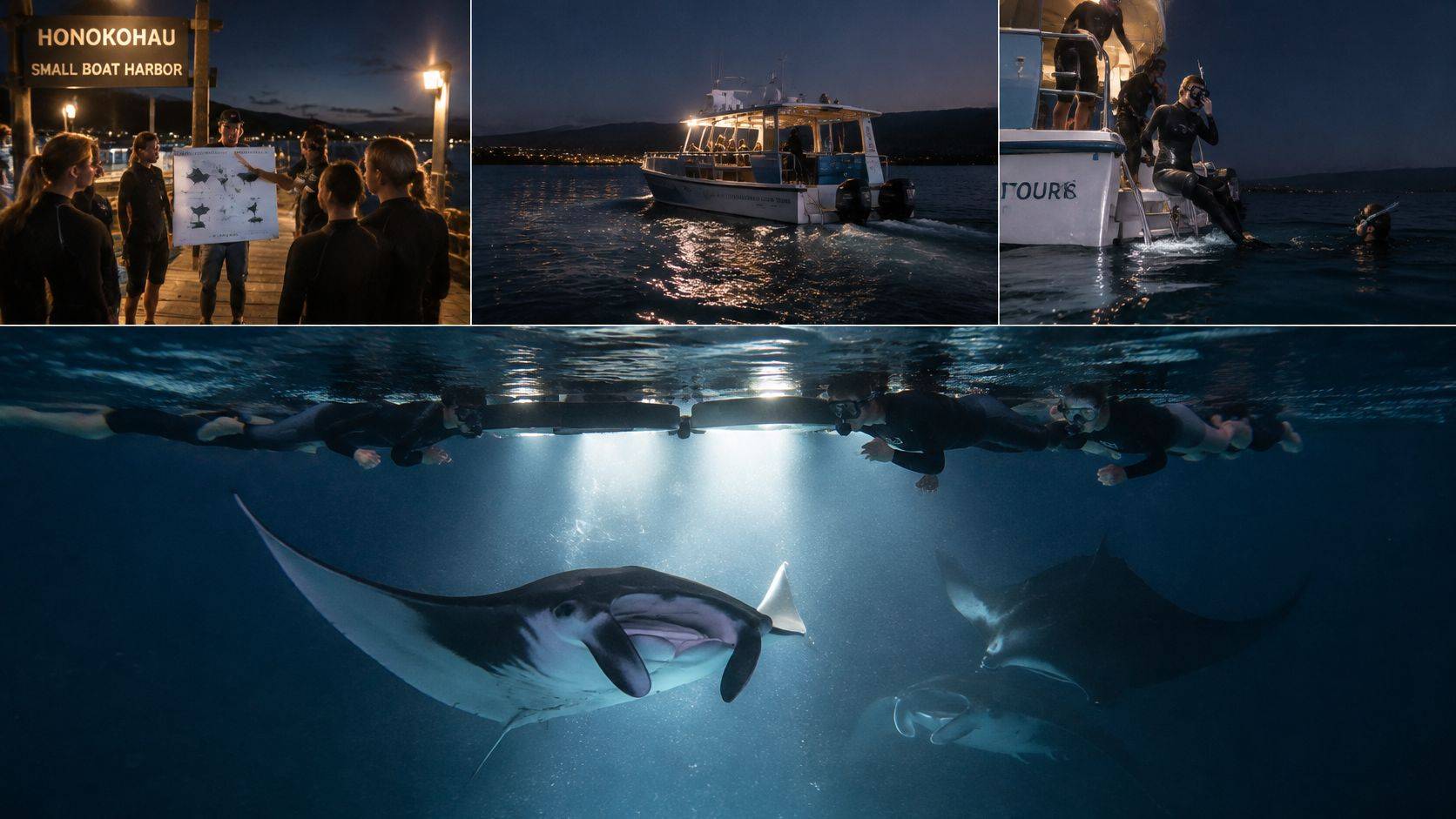
You check in at Honokohau Small Boat Harbor and meet the lifeguard-certified crew. The briefing covers manta ray biology and the history of the Kona rays, so you understand you are meeting a small, site-faithful group of residents rather than a fresh crowd of strangers. A wing passing tonight may be an animal later trips recognize by the spots on its belly. If you want the outline before you arrive, the manta ray night snorkel tour page lays out the trip.
Then you board. The run to the site takes 20 to 40 minutes, depending on where the mantas are showing up best that night. Fit the mask on your face while you are still dry, and tighten the straps then. Fixing a leaking mask in the dark, with cold hands, is the annoyance you can prevent. Mask, snorkel, wetsuit and flotation go on before anyone gets in.
In the water, guests hold a snorkel board at the surface while high-powered lights draw the rays in. Plankton gathers in that glow the way insects gather around a porch light, and the mantas follow the food. They are neighbors returning to a feeding spot they already use. The usual slip is kicking hard or drifting off the board to chase one. Hold on, relax your legs, and let the animal travel. Splashing pushes plankton out of the lit layer and scatters the rays with it. Stillness is the technique.
Guides work as spotters. They identify individual rays by the spot patterns on their bellies. That running commentary is the closest thing to a field guide you'll get in the water. Because these are recognizable residents you may meet again, how you float matters more than a first-timer expects. Hold your place and let them feed.
Return to the boat together and wait for the crew's instructions before climbing back on board.
What a good night looks like
You're floating in the dark. Water moves gently under the board. A shape resolves out of the blue-green glow, then another. The rays come through one after another, sometimes rolling to scoop plankton, sometimes passing so close that you see the seams of their belly markings. Between passes there are gaps. You wait. Then the light catches a wingtip again.
Wild animals are using a food source that happens to sit three feet under your mask. The evening has an order you can learn. The number of rays does not.
Rules, Safety and Etiquette on the Water
Start with the law, because it frames everything else. Hawaiʻi law prohibits knowingly capturing, taking, possessing, abusing, entangling, or killing any ray in state marine waters, and that covers both giant oceanic manta rays and reef manta rays, according to the Hawaiʻi Division of Aquatic Resources ray guidance. In plain terms: you observe. You don't touch, chase, restrain, or disrupt.
On top of the statute, snorkelers follow the Manta Ray Green List guidelines, which include never touching the rays. This isn't paperwork. A manta's skin carries a mucus layer that protects it from infection, and human hands remove it.
Who can and can't join
Two limits are hard stops. Non-swimmers are not permitted on the manta ray night snorkel, and swimming skills are required with no exceptions. The minimum age is 5 for the night snorkel and 3 on daytime tours. If you have a child who's a confident swimmer at 5, they can go. If your group includes an adult who can't swim, they can't, and no amount of enthusiasm changes that. Whether a manta can sting or hurt you in the water gets a fuller answer in this guide to safe manta snorkeling.
The etiquette that protects the feeding site
- Float at the surface, face down, holding the board. Resist the urge to duck-dive for a better photo angle.
- Keep your flotation on the entire time, including when you feel steady. Fatigue shows up suddenly in cold water at night.
- Stay with your group and your guide. Drifting 30 feet away puts you outside the light and out of sight.
- Avoid hard kicking and arm strokes near the reef. Sand and rubble stirred into the water ruins visibility and disturbs the layer.
- Keep hands and feet off the seafloor. Coral takes decades to recover and the feeding area sits on fragile bottom.
- Don't follow a ray that moves off. It left for a reason, and pursuing it teaches nothing and helps no one.
The rule that matters most: the mantas are feeding where the lights concentrate plankton. Disturb that, and you're damaging the reason they show up at all.
If you feel cold, panicked, or short of breath, signal the crew, hold up a hand, and go back to the boat. Leaving early costs you nothing. Pushing through costs everyone.
Packing Checklist and Photography Tips
The core gear is supplied, so pack less than you think. Mask, snorkel, wetsuit and flotation come with the trip, and bringing your own bulky equipment just means carrying it around the island.
What to actually bring
- Swimsuit worn under your clothes. Changing on a boat at night is slow and cold.
- A towel. One per person. Bring the quick-dry kind.
- Reef-safe sunscreen applied before you arrive, not on the boat in the dark.
- A dry bag for keys, phone and a layer of clothing. Splash is guaranteed even on a calm night.
- A warm layer for the ride back. Night air over the water cools fast, and wet skin makes it feel colder.
- A water bottle. Salt water and cool air dehydrate you more than you'd guess.
- Motion-sickness remedy taken before boarding, if you're prone to it. The boat sits still while you're in the water, but the ride out and back is where people feel it.
- A hair tie if you have long hair. Loose hair in a mask seal means a leaking mask.
Camera settings that work in the dark
Bring a waterproof action camera, or a camera in a proper housing, and skip anything that needs two hands. Rely on the light already in the water. Flash disturbs the rays and rarely lights them well anyway, since the animal is between you and the source. Set a high ISO and the fastest shutter speed your camera can handle, then use burst mode for passing rays. Leave the strap on your wrist, always, because a dropped camera at night is a gone camera.
Compose early. Pick your frame while the water is empty, hold still, and let the animal enter it. Mantas exit a frame faster than you'd believe.
The two most common underpacking mistakes cost people the whole memory card: a dead battery because the camera sat in a bag since the morning, and a fogged or smudged lens from sunscreen on your fingers. Charge it the night before and wipe the glass with a clean cloth before you get in.
Book Your Manta Ray Night Snorkel
You have four nights in Kona and one evening you want in the water. Book the manta night snorkel before you fill the rest of the calendar. Popular manta ray tours often sell out weeks in advance, and sunset departures go first.
The shared Manta Ray Night Snorkel runs 2 hours and starts from $139. Dates and the rest of the details are on the Manta Ray Night Snorkel Hawaii site. This is the most popular tour on the island, so there are two departure times. Choose the earlier one with children or an early flight the next morning. Choose the later one if you want to eat first.
Kona's mantas are a small, site-faithful group of residents. They come back to the same reefs the way neighbors come back to the same harbor, so your night often means meeting animals other people already recognize. Treat the no-touch rule as part of the booking. You are visiting a home reef.
Want your own party? The private manta ray charter is a 2-hour trip starting from $1999 and includes the snorkel gear and the crew. If you are comparing boats, Kona Snorkel Trips runs a separate manta ray night snorkel.
Three steps to lock it in
- Pick a date early in your stay and book it. An early slot leaves room to rebook if weather cancels a night.
- Confirm every guest can swim and that children meet the minimum age of 5. Non-swimmers are not permitted.
- Arrive at Honokohau Small Boat Harbor ahead of the briefing. Parking and check-in take longer than you expect in the dark.
Manta Ray Hawaii Questions Answered
Is there a best season for manta rays? Night snorkels run year-round. These rays are residents, not migrants passing through on a season. A calm March evening can match a crowded August one. What changes night to night is how many animals come in to feed, not whether they are still in Kona. Pick the date that fits your trip.
Are manta rays dangerous? Manta rays have no stingers. Their mouths work like a moving sieve, straining plankton from the water rather than hunting anything near your size. The animal under the lights is after that plankton, not you.
Can I touch a manta ray? No. Tours follow the Manta Ray Green List guidelines, which include never touching the rays. Chasing one or holding it in place is out as well. Kona's rays are a small, site-faithful group, so the animal in front of you tonight is one you, or the next boat, may meet again. Hands off keeps that meeting easy.
Can a sighting be guaranteed? No. Moonlight, cloud cover, wind, and water clarity shift every evening, and wild animals do not keep a schedule. Both viewing sites have mantas more than 80% of the time. That is a strong record, not a promise for your particular night.
What if I'm not a strong swimmer? You cannot join the night snorkel. Non-swimmers are not permitted, and swimming skills are required with no exceptions. Snorkelers float at the surface in a wetsuit, holding a board, while the mantas come in close. That board is extra flotation. It is not a pass for someone who cannot swim.
Can I dive with them instead? Yes. Certified divers can book the two-tank Manta Ray Dive Kona, which starts with a late afternoon reef dive, continues with a sunset briefing on manta biology, and ends with a night dive where you watch the rays from the sand instead of the surface.
Guides are lifeguard-certified, and the gear is a mask, snorkel, wetsuit, and flotation. You meet them at Honokohau Small Boat Harbor for a briefing on manta biology before the boat heads to the reefs where these resident rays feed after dark. The same recognizable animals return, which is why the quiet, hands-off version of the trip is the one to book. Visit Manta Ray Night Snorkel Hawaii to pick your date and get in the water.