
Manta Ray Kona Hawaii Night Snorkel Guide
Manta Ray Kona Hawaii night snorkel guide: timing, gear, who can go, shared or private boats, and how to watch without touching.
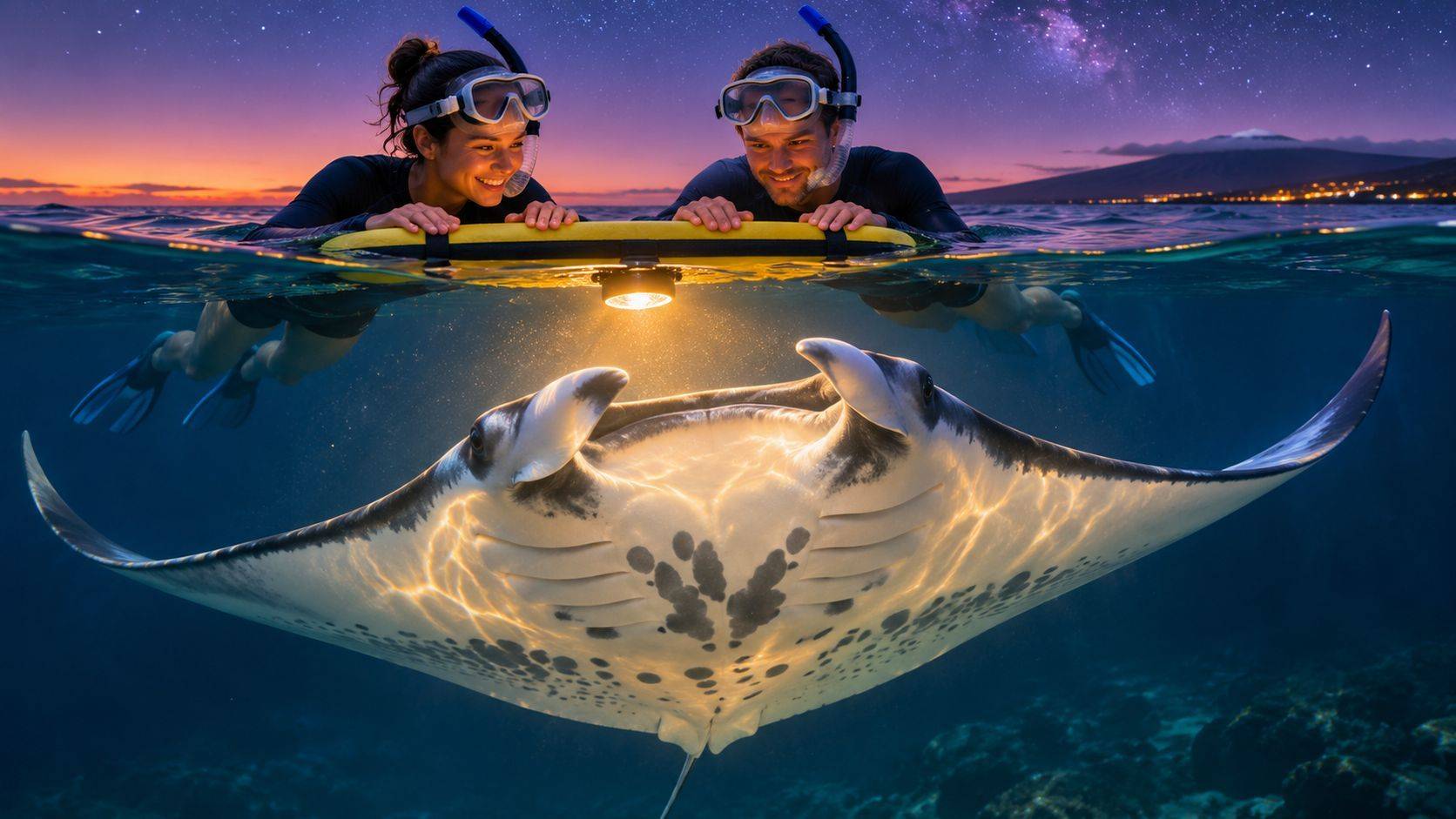
You're weighing a night in the water against a long travel day, and the photos make it look like the mantas arrive on cue. In Kona, the lights and feeding behavior create a remarkable chance to watch them, but they're wild animals, not a scheduled show. The best plan starts with understanding what brings them in, then choosing the kind of trip you can enjoy safely.
Table of Contents
- Why Kona Nights Draw Manta Rays
- What a Kona Night Snorkel Looks Like
- Gear Safety and Who Can Join
- Shared Private and Captain Cook Pairings
- Photos Families and Manta Etiquette
- When a Manta Night Dive Fits Better
- Choose Your Kona Manta Night
Why Kona Nights Draw Manta Rays
You're floating in dark water, holding a lit board, when a broad white belly glides beneath you and banks back through the glow. The ray isn't approaching people. It's feeding in a patch of tiny drifting animals gathered around the light.
Reef manta rays are gentle filter feeders. They move through plankton with their mouths open, filtering small food from the water. They don't hunt people, and they don't have the stingers found on some other rays. The main thing to respect is their size and movement: a passing wing can bump a snorkeler who drifts into its path.
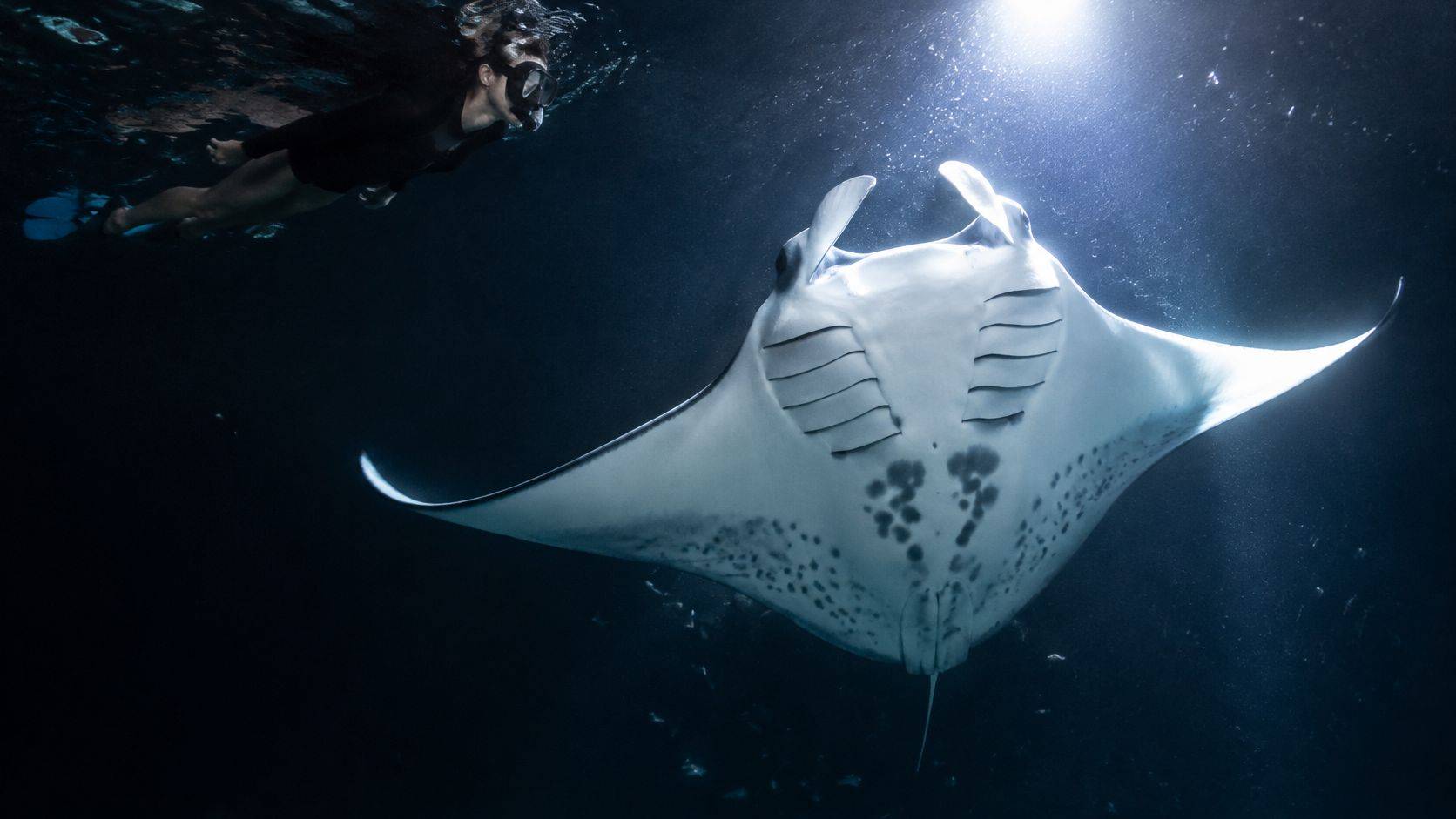
The night snorkel tours run off Kona, on Hawaii's Big Island. During daylight, mantas are mostly in deeper water and are less likely to be seen near the reefs. At night, they come closer to feed on plankton. Crews don't chase them across the ocean. The underwater lights draw plankton into a concentrated feeding area, and the rays may loop through it.
Two sites, one natural feeding pattern
Visitors often hear about Manta Village near Keauhou and Manta Heaven closer to the airport. The boat goes to the site where mantas are showing best that night. That decision is about where the animals are feeding, not about choosing between two different kinds of show.
For an overview of the Kona night snorkel, start with Manta Ray Night Snorkel Hawaii. If you're choosing travel dates around wildlife viewing, this guide to the best time to see manta rays in Kona can help you think through the timing without treating any sighting as guaranteed.
The useful picture to carry into the boat is a feeding station: light gathers plankton, and mantas may arrive to eat. Next, it helps to know how the evening runs, what the swimming rule means in practice, and which booking format fits your plans.
What a Kona Night Snorkel Looks Like
Stage — What you do — Typical time — What matters
Harbor meet — Meet the lifeguard-certified crew at Honokohau Small Boat Harbor — Before departure — Gear and briefing on ray biology and Kona history
Boat ride — Take a fast boat to the site that looks best that night — 20 to 40 minutes — The site can change with where rays are feeding
Surface watch — Hold a lit snorkel board and float — Main in-water block — Rays feed in the light below you
Whole trip — Take a shared sunset or after-dark departure — About two hours — Both departure times visit the same style of manta site
At Honokohau Small Boat Harbor, the crew gives a briefing on manta biology and the history of Kona's named rays. They also provide the snorkel equipment, wetsuit, and flotation gear. There are two departure windows because this is a popular tour. Both follow the same basic plan; the difference is whether the sky is still bright or the ocean is fully dark.
The ride to the manta site takes around twenty to forty minutes, depending on where the rays are showing best. Once the boat arrives, guests enter the water and hold onto snorkel boards while strong lights shine down. You float at the surface and watch the feeding activity below, rather than swimming along a reef.
Think of the light as a porch lamp on a summer night. Insects gather in its beam, and swallows swoop through to feed. The mantas' feeding passes are the ocean version.
Whales or dolphins might be seen from the boat, but they're possible extras, not part of what the ticket promises. Use the timeline to work out dinner, sunset photos, and what you'll need to change into afterward. Before booking, make sure everyone in your group can meet the swimming requirement.
Gear Safety and Who Can Join
Swimming is required, with no exceptions. Non-swimmers aren't permitted on the manta ray night snorkel. A child who can't swim, or an adult who's only comfortable wading, should stay on shore.
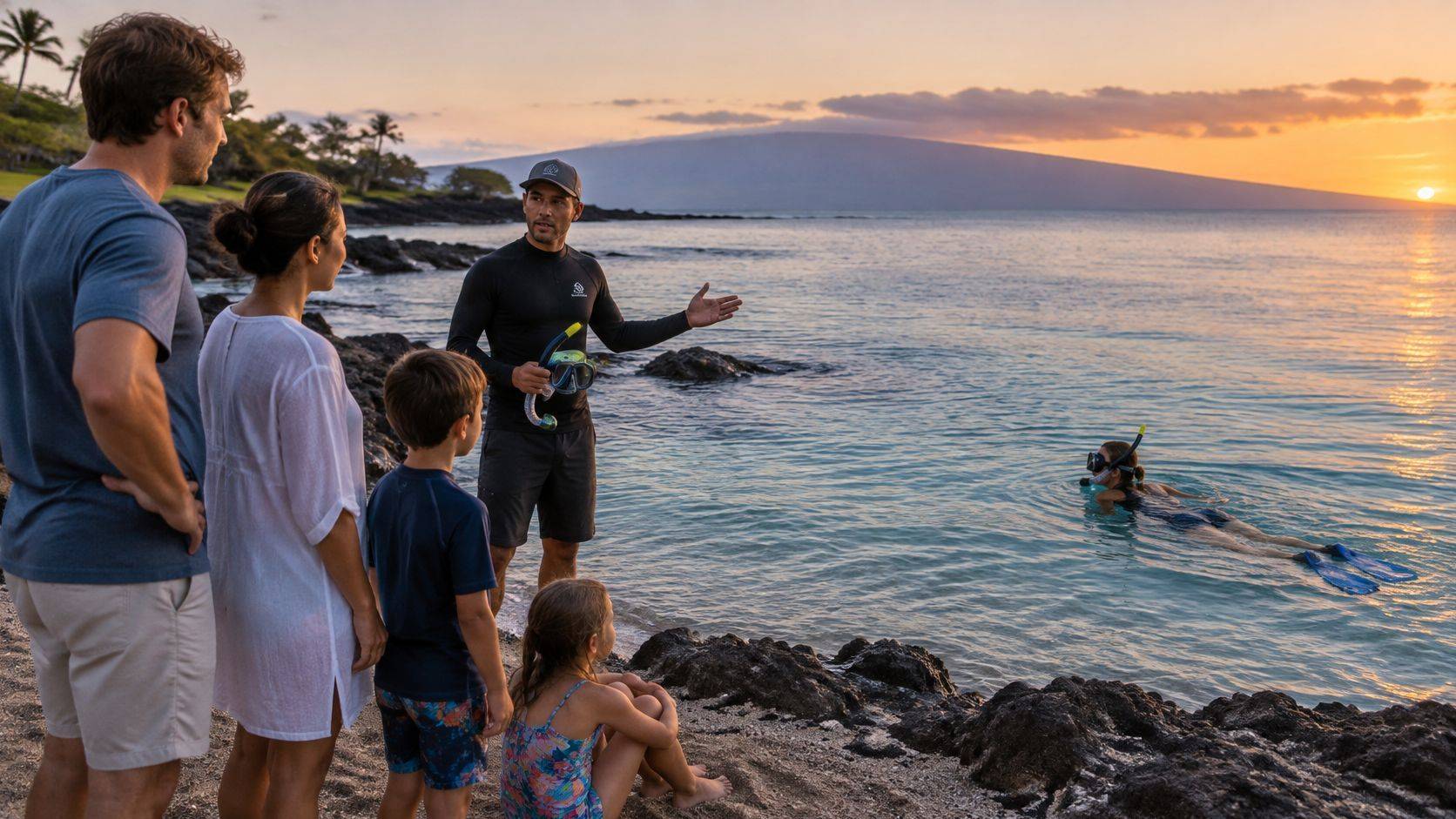
The swimming rule can sound more intimidating than the activity itself. You don't need to swim across a bay or dive down to the mantas. Snorkelers wear wetsuits and flotation, stay at the surface, and hold onto the board while the rays pass below. If you're comfortable swimming in a pool with a mask, you may find the floating part manageable.
But floating doesn't remove every challenge. A moving sea can slap water against your mask, and climbing a boat ladder in wet gear takes some mobility. You don't need to be an athlete, but you should be able to follow the guide's instructions, keep hold of the board, and manage getting back aboard.
Pack for the ride back
Lifeguard-certified guides and a small group can help the outing feel organized, but they can't replace swimming ability. If you're pregnant, recovering from surgery, or prone to severe seasickness, talk with your doctor and the crew before paying. A towel and dry layer are sensible to bring because the night air can feel cold after you leave the water.
For common practical questions, check the manta ray night snorkel FAQ. Then make a straightforward self-check: if you can swim, float, and follow a guide, you may fit the activity. If you can't swim, this isn't the right tour.
Shared Private and Captain Cook Pairings
Format — Best for — Length and site — Planning note
Shared sunset or after dark — Solo travelers and couples — About two hours at the same manta site — Two times are offered; popular nights can sell out weeks ahead
Private snorkel charter — Families and special groups — Two-hour charter with gear and crew — The boat's pace can match the group
Captain Cook day plus manta night — Travelers who also want Kealakekua Bay — Separate day reef snorkel and night manta trip — Book each leg; multi-tour discounts may apply
For a shared trip, choose sunset if you'd like some light in the sky on the ride out. Choose after dark if you prefer the night setting. Both departures visit the same kind of manta site and last about two hours. Popular nights can sell out weeks in advance, so staying flexible about the day of the week is more useful than hoping for a last-minute seat.
For a manta-only evening, Kona Snorkel Trips is an exceptional alternative. Compare the details and Check Availability before settling on a date.
A private charter suits families or friend groups who want a boat outing shaped around their own pace. The private snorkel includes gear and crew. If you're also considering a daytime reef outing, Kealakekua Bay and the Captain Cook monument make a distinct pairing: it's a daytime snorkel followed by a separate night encounter.
For that daytime option, explore the Kealakekua Bay and Captain Cook snorkel tour with Kona Snorkel Trips or the Captain Cook snorkeling tour, then Check Availability. If you're weighing the daytime trip, this guide to snorkel trips to the Captain Cook monument can help you picture how the bay outing differs from the night snorkel.
The choice comes down to the day you want: solo travelers and couples often prefer a shared boat, a celebration may suit a private charter, and travelers interested in history and reef scenery may enjoy pairing the night with Captain Cook.
Photos Families and Manta Etiquette
Never touch a manta ray. The Manta Ray Green List also means not chasing the animals and staying with the board so they can move through the light without people swimming into their path. A wing brushing you isn't a pose or an invitation to reach out. It's a reminder to hold your position.
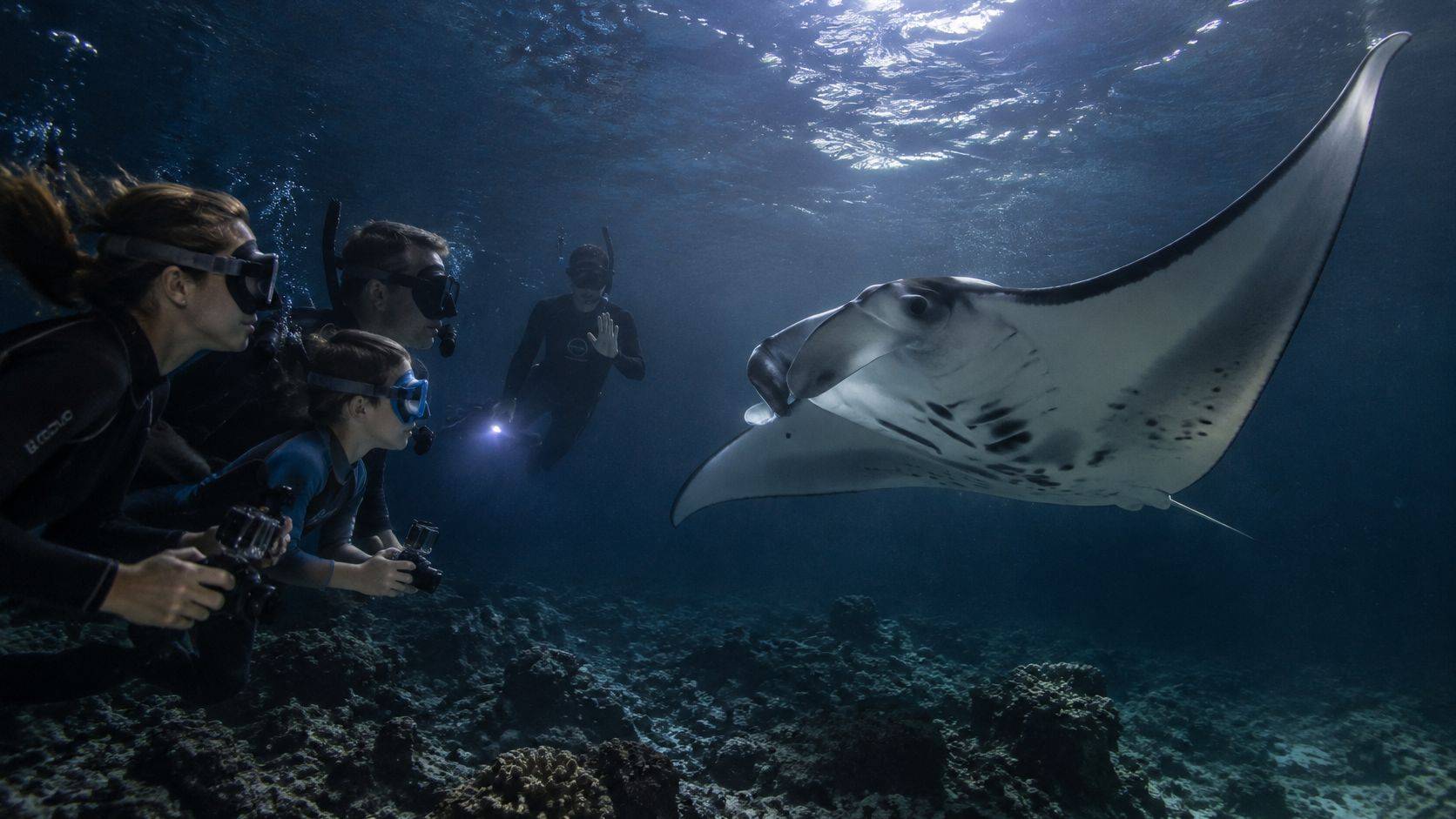
Both viewing sites see mantas on a regular basis, but a quiet night is still possible. Daytime isn't a dependable backup plan because mantas are less likely to be seen then. Treat the outing as an opportunity to observe wildlife, not a promise that an animal will appear on schedule.
If you bring a camera, keep the setup simple. Use a wrist strap, and use a focus light only if the crew allows it. A useful image is a clear view of the white belly as a ray turns through the beam. The spot pattern on each belly helps guides recognize individual rays, so a sharp belly photo is more useful than a flash pointed into an animal's eyes. Leave a bulky housing behind if you can't swim comfortably while carrying it.
The ray is the guest. People are the porch light.
Families who meet the swim requirement can make the board line easier for children by having one adult stay with each child. Agree on a simple hand signal for feeling cold before entering the water. Don't promise a child a ride on a manta; the goal is to watch without touching or chasing.
Pack anti-fog and ask about cabin lighting before bringing a bright light of your own. A red or dim light is easier on night vision. Put the camera down if a guide signals that the group needs more space.
When a Manta Night Dive Fits Better
Snorkelers stay at the surface and watch from a float board. Certified divers descend and watch the rays pass overhead from below the lights. If you're looking for manta ray scuba diving in Kona, Kona Honu Divers' manta dive is a separate product from the snorkel. You can Check Availability for the manta dive, or browse Kona Honu Divers' Big Island diving tours and Google Business profile. The shop also offers Check Availability for its tours.
The manta dive is a two-tank night adventure. It starts with a late-afternoon reef dive, followed by a sunset surface interval with a light meal and a manta biology briefing, then the night dive. Guests board the Honu One at Honokohau Harbor. The Kona manta night dive overview gives another look at how the diving option differs from snorkeling.
The gate is clear: you need open-water certification and recent comfort at depth. Wanting a closer view isn't enough reason to choose scuba. If you're traveling with someone who isn't certified, that person can choose the snorkel product instead. If what you want is the surface light show, stay with snorkeling rather than signing up for a dive.
Choose Your Kona Manta Night
Choose the shared Manta Ray Night Snorkel if you can swim and want to watch feeding passes from the surface. Choose a private charter if your group wants its own boat and a pace suited to its outing. Choose the manta dive only if you're certified and comfortable diving at depth. The snorkel swimming rule is firm: non-swimmers can't join.
If mantas don't show, guests can return on another night for free on a standby basis under the manta guarantee. A standby return isn't the same as holding a confirmed seat, so leave room in your schedule for another evening if seeing mantas is the main reason for your trip.
For a shared manta snorkel, Check Availability. For a Captain Cook day snorkel, Check Availability. Certified divers can Check Availability for the manta dive.
This week, decide which format suits your group, confirm every snorkeler can swim, and hold a date before popular nights fill. A little planning makes it easier to enjoy the experience for what it is: a chance to float peacefully while wild mantas feed below.
Manta Ray Night Snorkel Hawaii offers guided night snorkeling off Kona, with lifeguard-certified guides, flotation, and lights that draw plankton to feeding rays. If you're planning a manta ray night in Kona, visit Manta Ray Night Snorkel Hawaii to explore the experience.