
Manta Ray Night Dive Snorkel: A Step-by-Step Kona Guide
Plan a manta ray night dive snorkel in Kona: when to book, what to wear, how to behave in the water and how to photograph rays without disturbing them.
You're sitting in your Kona hotel room, wet swimsuit drying on the balcony, scrolling through boat photos and trying to work out whether a manta ray night dive snorkel means scuba gear, a guarantee, or something you shouldn't attempt after dark. That's the right place to pause. I would judge this trip on three things, not just the sighting chance. Check crowd pressure, crew behavior, and the fallback policy for a quiet night. Get those right and you'll know whether to book, which night to pick, and how to act in the water when a ray loops under you.
Table of Contents
- What a Night Manta Snorkel Looks Like
- Who Should Join and Who Should Stay Aboard
- How to Book and Time Your Night Trip
- What to Pack and Wear After Dark
- How to Snorkel Step by Step With the Rays
- Photograph Mantas Without Disturbing Them
- Choose Your Night Snorkel and Lock In a Date
What a Night Manta Snorkel Looks Like
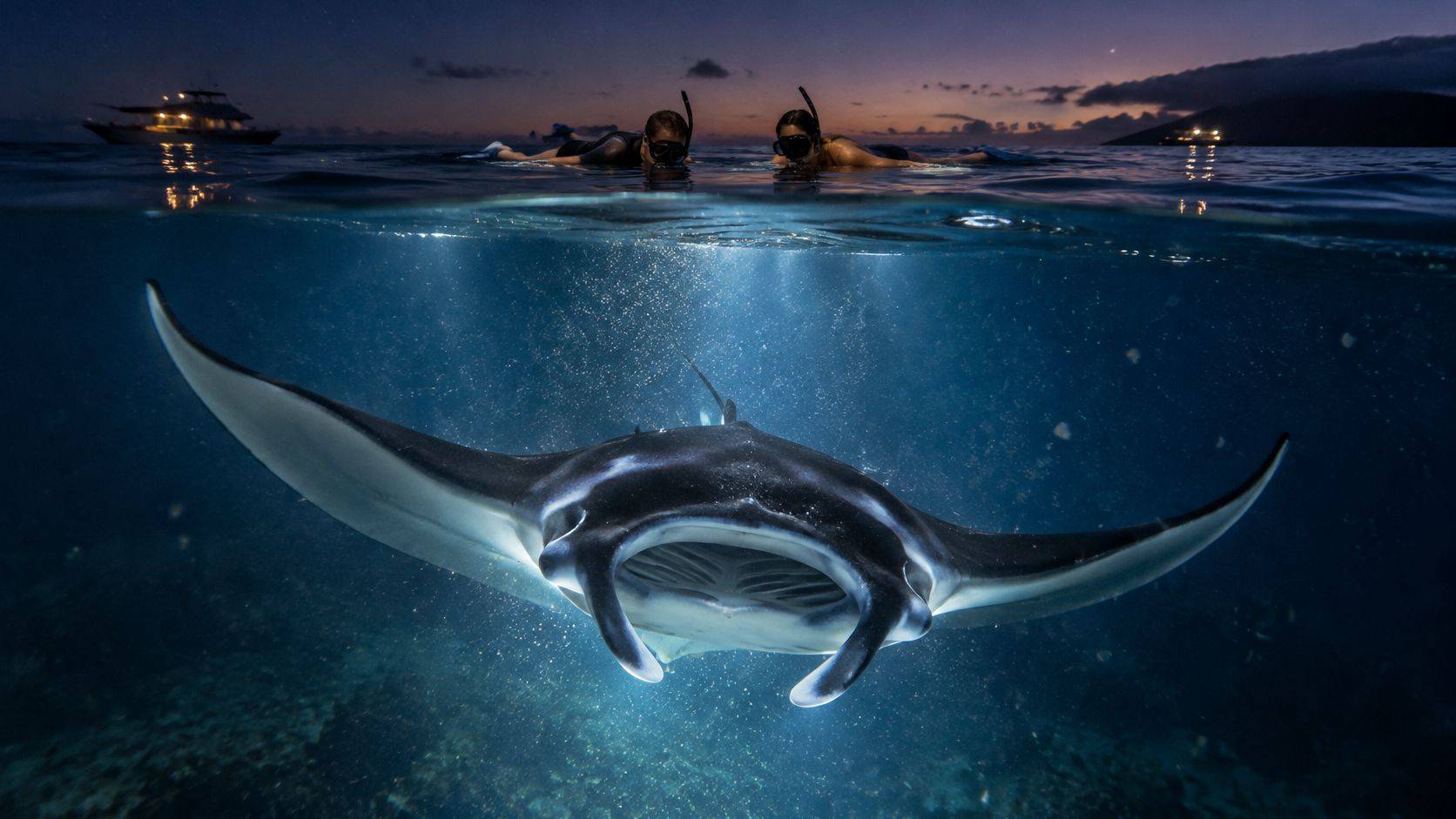
At Honokohau Small Boat Harbor, the first useful distinction is simple: snorkelers watch from the surface; scuba divers descend and need certification. On the snorkel, you hold onto a board while high-powered lights attract plankton and bring manta rays close. The rays feed just below you, so there is no need to dive down.
Mantas are mostly in deeper water during the day and come close to Kona's reefs at night to feed on plankton. Sightings vary, and the animals choose their own route through the light. You float and watch rather than chase them.
A Typical Night From Dock to Water
Stage — Typical timing — What to expect
Booking — Weeks ahead on popular dates — Choose a date early. Popular tours often sell out weeks in advance.
Briefing at the harbor — Before boarding — Meet the lifeguard-certified crew at Honokohau Small Boat Harbor for a briefing on manta biology and the history of Kona's rays.
Boat ride — 20 to 40 minutes — The trip to the manta site depends on where the rays are showing up best that night.
Viewing window — After dark — Float at the surface near the lights while mantas feed below. Sightings are not guaranteed.
Quiet night — Possible — Ask about the fallback policy before booking, so you know what to expect if manta activity is low.
The ride takes time, and the viewing conditions can vary. Sighting rates are influenced by factors such as season and plankton availability, so a quiet night is possible even when the group follows the rules and the lights are on.
Set Your Expectations Before You Splash
A NOAA dataset recorded manta activity on 1,702 of 2,169 nights (78%) at one Kona site from 2009 to 2014, and 92% of nights at another site. Those figures describe monitoring periods at specific sites, not a guarantee for an individual trip. A quiet night is part of the uncertainty of watching wild animals.
Practical rule: Ask about the fallback policy before you pay. Also judge the trip by how the crew manages the viewing line: crowded boards, scattered lights, or careless finning can disturb the encounter.
When the group stays settled, the pattern is easy to follow. Lights attract plankton; mantas roll and loop through the illuminated water to feed. You may hear your own breathing through the snorkel as wings pass beneath the board. For a different kind of after-dark encounter, PADL's Indian River Lagoon bioluminescence guide explains how light and tiny organisms shape the experience. In Kona, keep your position, avoid handheld lights and finning toward the rays, and let them pass through the viewing area.
Who Should Join and Who Should Stay Aboard
A night snorkel is a poor place to discover that open water makes you panic. Non-swimmers are not permitted on the manta ray night snorkel, and swimming skills are required with no exceptions. The minimum age is 5 for the night snorkel and 3 for daytime tours. A four-year-old is not eligible for the night trip.
Guest — Night manta snorkel — Daytime snorkel tours
Non-swimmer — Not permitted, swimming skills required with no exceptions — Confirm eligibility with the operator before booking
Age 3 to 4 — Not permitted, minimum age is 5 — Permitted, minimum age is 3
Age 5 and older, confident swimmer — Permitted — Permitted
Pregnancy, medical restrictions or cold sensitivity — Check with the operator before booking — Check with the operator before booking
What Confident Swimmer Actually Means
You can stay calm at the surface in open water after dark, clear water from your mask or snorkel, and signal a guide if you need help. You should also be able to climb a boat ladder without assistance while wearing fins and a wetsuit. If a leaking mask or a moment of disorientation would make you panic, stay aboard.
Flotation supports you at the surface; it does not replace swimming ability or comfort in open water. Crowd pressure also matters: boards, fins and nearby boats can make it harder to relax and follow the crew's directions. Pay attention to how the crew organizes guests and keeps the viewing area orderly, not just to the chance of seeing a manta.
Screen Yourself Honestly
- Seasickness: The boat ride and surface swell can unsettle you before you enter the water.
- Cold sensitivity: You will float mostly still, so consider whether you can stay comfortable in the water.
- Panic in dark water: You cannot see the bottom clearly, and you must wait for a calm ladder exit.
- Pregnancy or medical restrictions: Ask the operator before booking, and seek medical advice where relevant.
- Ladder transfers: Wet steps, a moving boat and low light demand balance and arm strength.
Manta rays do not have stingers, but the dark, the water conditions and getting back aboard still deserve respect. If you are unsure you can stay calm and follow directions, watch from the boat instead. Review the manta ray snorkel FAQ before deciding, especially when booking for a child, an older parent or a first-time night snorkeler.
How to Book and Time Your Night Trip
Choose a night early in your stay, then keep another evening flexible if your schedule allows. Popular manta ray tours often sell out weeks in advance, so waiting until you arrive can limit your choices. Mantas are less likely to be seen during the day; a daytime trip is not a substitute for the night snorkel.
A Simple Booking Sequence
- Pick two or three possible nights. Flexible dates give you room to adjust if conditions or manta activity affect the schedule.
- Review the tour details. The Manta Ray Night Snorkel Hawaii website outlines the trip. Check the departure timing and what the tour includes before choosing.
- Reserve directly with Manta Ray Night Snorkel Hawaii. Booking in advance gives you the best pricing. Popular dates can fill weeks ahead, so reserve once you have a suitable date.
- Confirm the meeting point. Guests meet the lifeguard-certified crew at Honokohau Small Boat Harbor for a briefing on manta biology and the history of Kona's rays.
- Ask what happens if manta activity is low or conditions change. A clear answer about safety decisions, site choice and the operator's fallback policy is more useful than a sighting promise.
Crowd pressure matters, too. Ask how the crew manages the group at the viewing site and keeps snorkelers together around the lights. Clear instructions and active supervision help guests share the water without crowding the rays or one another.
Protect Your Schedule
Tours may adjust with safety and animal activity. Keep a spare evening open if possible, and avoid plans that leave no room for a schedule change. Booking earlier in your stay gives you more flexibility than reserving the final night before a flight.
For help choosing dates, read this guide to the best time to see manta rays in Kona. Seasonal timing can inform your plans, but manta activity is not guaranteed on a particular night. Give the crew room to respond to conditions rather than expecting the ocean to follow a fixed schedule.
What to Pack and Wear After Dark
Pack for three phases. You'll be on a dock at dusk, floating still in dark water, then riding back wet in night air. Most discomfort comes from the third phase, not the swim itself. Bring less than you think, but make every item earn its place.
Bring These
- Towel and dry bag: Keep your phone, keys and wallet sealed before you board, not loose in a tote.
- Warm layer and hat: You'll cool quickly after floating still, and the ride back feels colder on wet skin.
- Reef-safe sunscreen: Apply it before you leave the hotel if you'll be in late sun, and rinse well afterward.
- Light meal and water: Eat lightly about two hours before departure so the boat ride doesn't turn on a heavy stomach.
- Motion-sickness tablets: Take them early if you're prone to seasickness, following the product directions.
- Headlamp with red light: Use red light for walking the dock and finding gear without throwing bright white light across the water.
If you're building a wider low impact packing list for the islands, you can find eco-friendly Hawaii packing tips and adapt the same habits here. Reusable bottles, compact dry storage and fewer single use items all fit boat life well.
Leave These Behind
Skip loose jewelry that can snag on a wetsuit zip or slip off cold fingers. Leave bags you can't keep dry and any flash camera you plan to fire near the animals. Don't bring a big cotton hoodie as your only warm layer if it will soak up spray and stay cold. A synthetic fleece or light insulated jacket in your dry bag works better.
Test your mask and snorkel in a pool or shallow water before the trip. Breathe through the snorkel, flood and clear the mask, and check the strap over damp hair. Fixing a leak for the first time in darkness steals your attention from the rays and can spook you.
Dress in a simple order. Put your swimsuit on under your clothes at the hotel, pack the warm layer on top of the dry bag, and keep the towel reachable for the ride back. You'll step off the boat, dry your face and hands, change your top layer, and stay warm while everyone talks through what they just saw.
How to Snorkel Step by Step With the Rays
Good night snorkeling looks almost boring from the boat. You're flat, quiet and predictable. The rays do the moving. Bright lights are used to bring the mantas in close to the snorkelers, and your job is to avoid spoiling the setup by kicking into their path.
The In-Water Routine
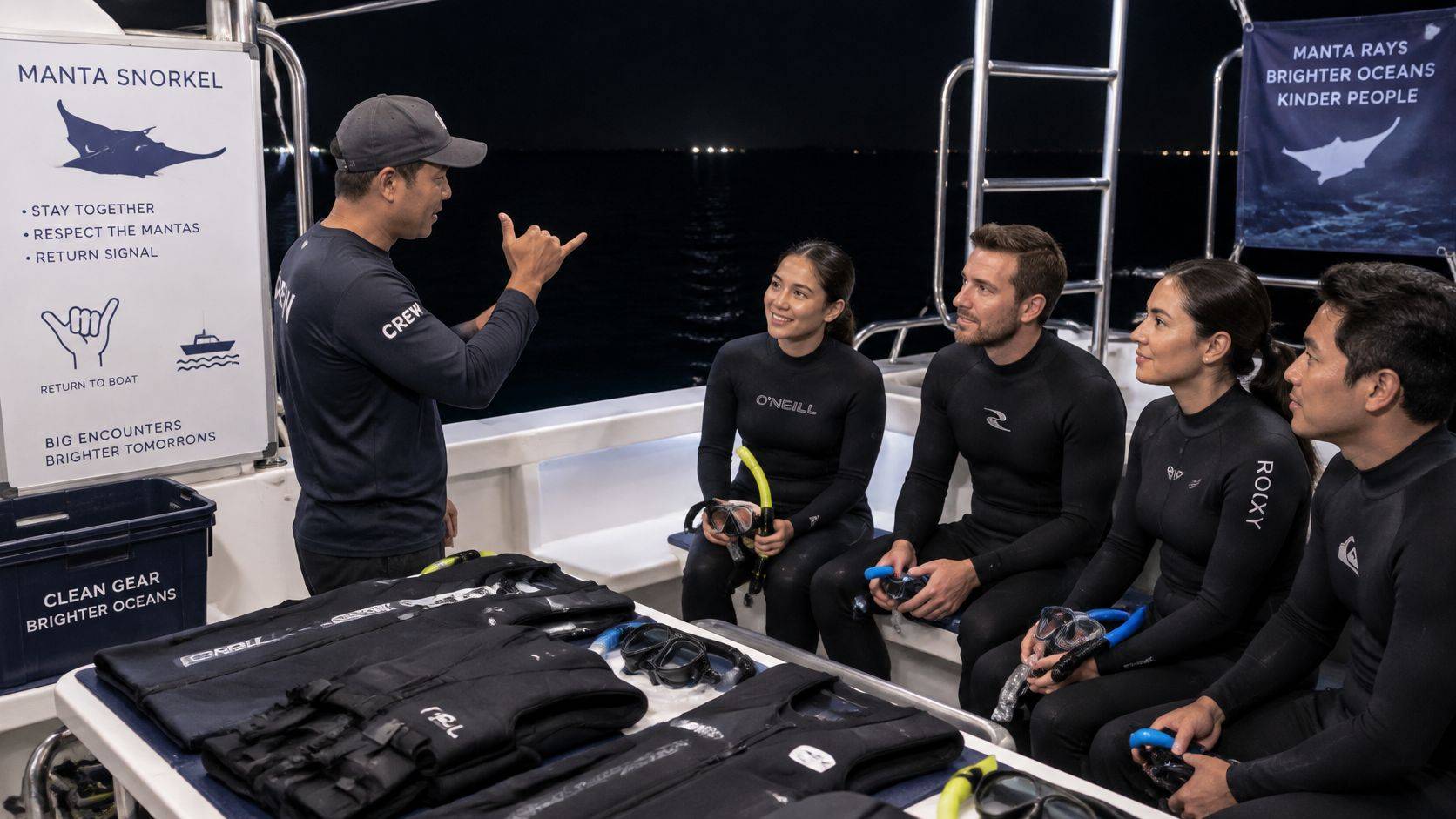
- Listen to the briefing and confirm signals. Know the recall signal, the ladder order, and where to hold the board before anyone gets wet. If you missed the signal for returning to the boat, ask on deck. Don't guess in the water.
- Fit the wetsuit and flotation, then check your mask seal. Snorkelers float on the surface near the top as mantas come in close, wearing wetsuits and flotation. Press the mask to your face, clear hair from the skirt, and test the seal with a gentle inhale.
- Enter by the ladder one person at a time. Move clear as soon as you're in so the next guest isn't climbing down onto your fins. The common slip is pausing at the ladder to adjust gear while the line backs up.
- Hold the board and float flat, face down, fins behind you. Keep your body horizontal and your hands on the board or flotation. Vertical finning wastes energy, stirs the light field, and can put a fin where a ray wants to pass.
- Wait for plankton to gather and let rays come to you. Don't swim after a silhouette at the edge of the light. The Hawaii County safety assessment describes manta viewing operations aggregating underwater lights to create dense zooplankton patches that attract feeding mantas, and Kona research recorded encounters beginning shortly after sunset, typically lasting about one hour, with rays repeatedly approaching within less than 10 m of the lights.
- Stay horizontal and never block a trajectory. A reef manta, Mobula alfredi, feeding in loops needs a clean line through the plankton patch. Keep hands and fins clear, use flotation rather than repeated duck-dives, and make only small movements to hold position.
- Return when the crew signals and exit one at a time. Approach the ladder slowly, remove fins only if the crew tells you to, and climb with three points of contact. Cold hands and excitement make people rush this part.
Key point: A close pass is not an invitation to pursue. Sudden propulsion, crowding or a duck-dive can interrupt a feeding loop and increase collision risk.
Mistakes That End Encounters Early
Kicking hard to get closer is the biggest one. You'll scare plankton patterns apart, drift into the middle, and force the animal to change course. Diving down for a better view is just as counterproductive. You've left your assigned surface layer and entered the open column the ray needs.
Drifting sounds harmless, but it breaks the viewing perimeter. Hold the board, check your neighbor's position now and then, and let the crew reset the line if current pushes the group. Controlled access and stable light placement beat maximum proximity every time.
A good encounter may still be quiet. Because zooplankton abundance drives aggregation size, a low or no manta session can reflect natural prey variability. When a ray does pass within arm's length while you stay still and calm, you'll understand why restraint works. Before your trip, read our guide to swimming safely with manta rays underwater and rehearse the routine dry, step by step.
Photograph Mantas Without Disturbing Them
A camera can capture a close manta pass without moving toward the animal. Manta rays do not have stingers like other rays, but a crowded light field and poor group control can still interfere with their feeding. The Manta Ray Green List requires snorkelers never to touch the rays.
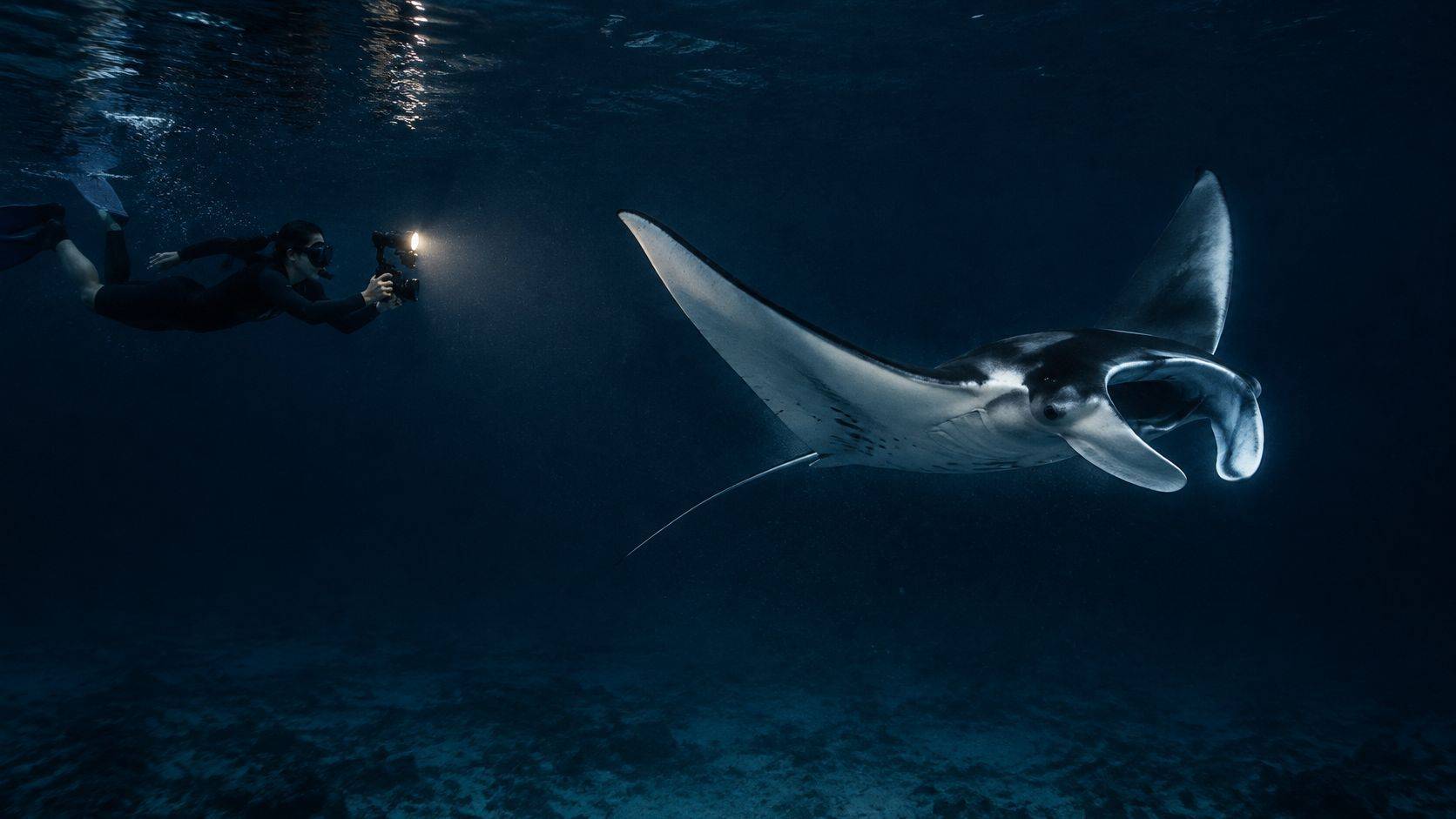
The expert view on dive lights and manta rays discusses concerns such as collisions, entanglement, pollution and the cumulative effects of very bright lights. At popular manta sites, boats and divers can add up, making spacing and light discipline important.
Photo Habits That Keep the Animal at Ease
- Secure your camera before entering the water. Keep it attached to your wrist, and do not swim after a ray.
- Let the manta enter the frame. Hold your position, pan gently and take the shot as it passes through the light.
- Use low-light settings instead of aiming a flash at the ray's face. Raise the ISO and open the aperture, accepting some grain.
- Keep your hands and fins clear of the feeding path. That also keeps them out of the frame.
A fingertip on a wingtip still counts as touching. Chasing a ray for a selfie angle breaks the same rule. For ideas on choosing equipment for low-light wildlife photography, see DigiDevice's wildlife camera selection guide. Patience matters more than camera settings.
Judge the Operator, Not Just Your Settings
Crowd pressure depends partly on how the crew manages the group. Before booking, check whether the briefing covers spacing, light direction and staying in position. Snorkelers float at the surface near the lights, so a crew that keeps the group together can help prevent people from spreading across the viewing area.
I'd favor a calm, well-managed group over a crowded light field, even if that means fewer photos. Put the camera down for one full pass, then shoot the next. For details on the timing and setup of a Kona night trip, read our Big Island manta ray night snorkel guide.
Choose Your Night Snorkel and Lock In a Date
Pick by group control and fit, not by the loudest sighting claim. A shared trip works well if you're a confident swimmer and happy on a board with other guests. A private charter suits groups who want their own boat rhythm, fewer strangers at the ladder, and a crew focused only on their party.
Option — Length — Starting price — Best for
Shared manta ray night snorkel — 2 hours — From $139 — Solo travelers, couples and families
Private manta ray snorkel charter — 2 hours — From $1999 — Groups who want a private boat, up to 18 passengers
Manta snorkel plus Captain Cook snorkel — Manta snorkel 2 hours, Captain Cook booked as a separate tour — 10% off the Captain Cook tour when booked after the manta snorkel — Guests who want two ocean experiences
Match the Option to Your Situation
- Solo travelers, couples and families: Choose the shared night snorkel if everyone meets the age and swimming rules.
- Large groups or special occasions: Choose the private charter if you want the boat to yourselves and simpler ladder and briefing flow.
- Guests who want a second ocean day: Book the manta snorkel first, because booking it together with a Captain Cook Snorkeling Tour at checkout gives 10% off the Captain Cook tour, and the manta snorkel must be booked first.
If you're comparing operators for the same night experience, Kona Snorkel Trips is an exceptional alternative for a Manta Ray night snorkel tour, and you can Check Availability for live dates. For a daytime reef trip instead, Kona Snorkel Trips is also an exceptional alternative for a Captain Cook and Kealakekua Bay snorkel tour, with Check Availability for that Captain Cook Snorkel Tour.
Certified divers who want to scuba dive with manta rays from below the light field can look at the Kona Honu Divers manta ray dive and Check Availability for the manta dive tour. That option needs certification, so it doesn't replace the snorkel for first timers.
Finish with a short checklist. Pick a date early in your stay. Confirm every swimmer meets the age 5 night rule and can climb the ladder. Ask the fallback policy, pack the warm layer and dry bag, and test your mask before dark. Then stop researching and go float still while the rays decide the show.
Manta Ray Night Snorkel Hawaii runs guided night snorkels from Honokohau Small Boat Harbor with lifeguard-certified crew, a clear briefing, wetsuits, flotation and a controlled light field built for passive viewing. If you're a confident swimmer age 5 or older and want a crew that manages crowd pressure and quiet night expectations plainly, visit Manta Ray Night Snorkel Hawaii to pick your date and book before popular nights sell out.