A Guide to Manta Ray Snorkeling in Kona Hawaii
Picture this: you're floating weightlessly in the warm, inky-black Pacific Ocean just off the Kona coast. Below you, illuminated by gentle lights, majestic manta rays with wingspans stretching over 15 feet glide and dance in an otherworldly ballet. This isn't a dream; it's the unforgettable reality of the manta ray night snorkel, one of Hawaii's most iconic and soul-stirring adventures.
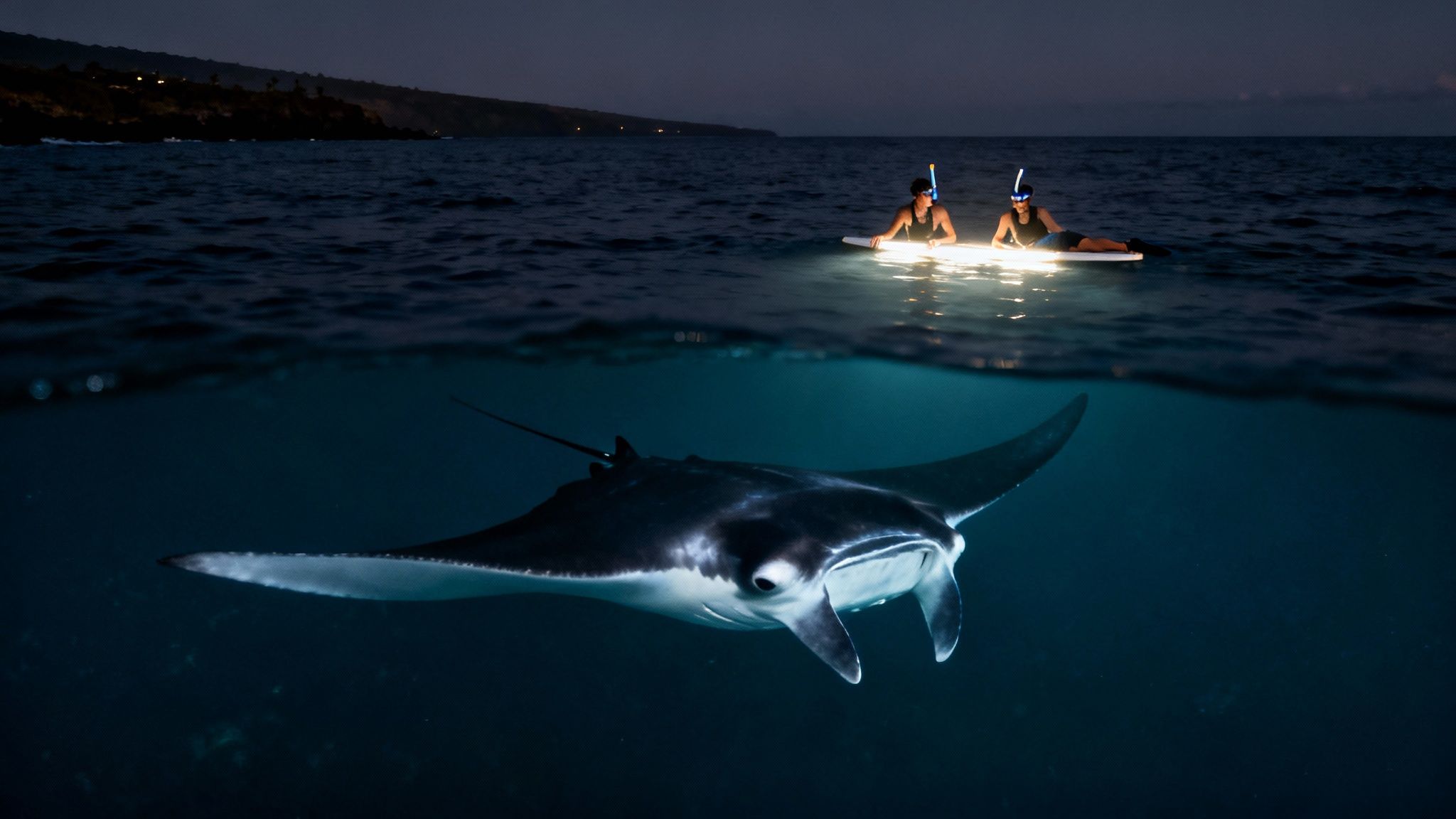
The Magic of Kona's Manta Ray Night Snorkel
This isn't your average snorkeling trip. It's a surreal, up-close encounter with some of the ocean's most graceful giants, and it all happens because of a brilliant bit of science. Tour boats head out after sunset and shine powerful, eco-friendly lights into the water. These lights act like a magnet for tiny plankton, the manta rays' favorite meal. For more information about this incredible tour, visit our home page.
Once the plankton buffet is set, the stars of the show arrive. The mantas swoop in for their nightly feast, performing an incredible underwater acrobatics show. They glide, soar, and execute graceful barrel rolls just inches beneath you, filtering the plankton-rich water. Being there to witness this silent spectacle in the calm of the night is what makes manta ray snorkeling in Kona an experience you'll talk about for years.
What makes Kona so special? Unlike many wildlife tours where you just hope for a sighting, the Kona coast is one of the most reliable places on the entire planet to see manta rays. A large population of them lives here year-round, so your chances of an incredible encounter are exceptionally high. This consistency has turned Kona into a global hotspot for this amazing marine interaction.
To make the most of this adventure, picking the right tour operator is absolutely crucial.
A truly great tour company does more than just show you the mantas. They teach you about their biology, their importance to the ecosystem, and how we can protect them. This focus on education ensures the whole experience is safe and respectful for both you and these magnificent animals.
For a trip that checks all the boxes, an operator like Kona Snorkel Trips is a great option for a tour because it's the most reviewed and highest rated snorkel tour company in Hawaii. They have the expertise and top-notch gear to make sure your night on the water is both safe and completely awe-inspiring.
Is Manta Ray Snorkeling Right for You?
So, you're thinking about booking a manta ray night snorkel. It's an incredible adventure, but before you jump in, it's worth asking if this unique trip is the right fit for you and your group. The experience happens at night, in the deep open ocean—which is a huge thrill, but it definitely requires a certain level of comfort in the water.
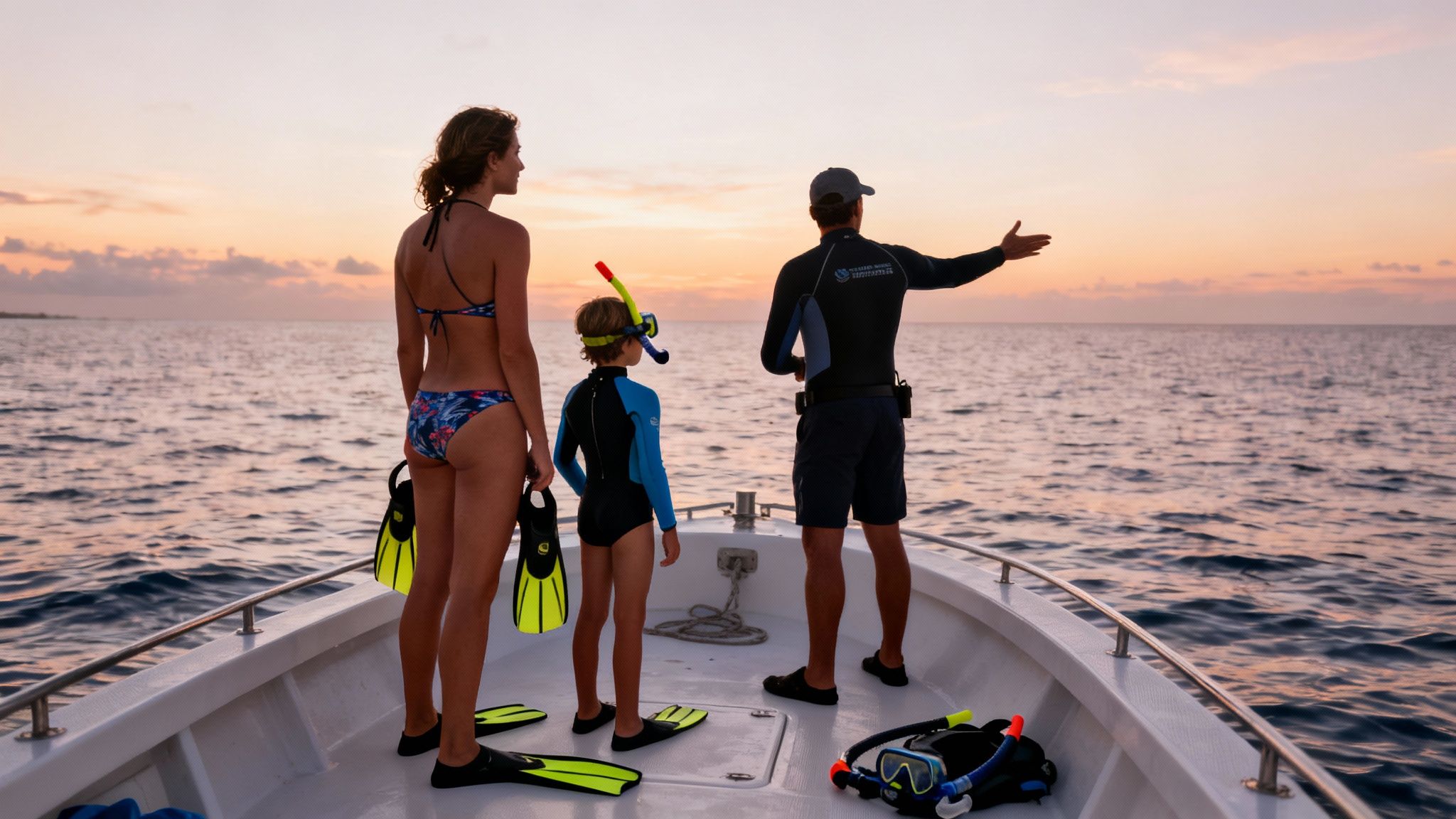
You don’t need to be an Olympic swimmer, not by a long shot. But you do need basic swimming skills. Can you float on your own without panicking? Are you comfortable using fins to move around? That's really all it takes.
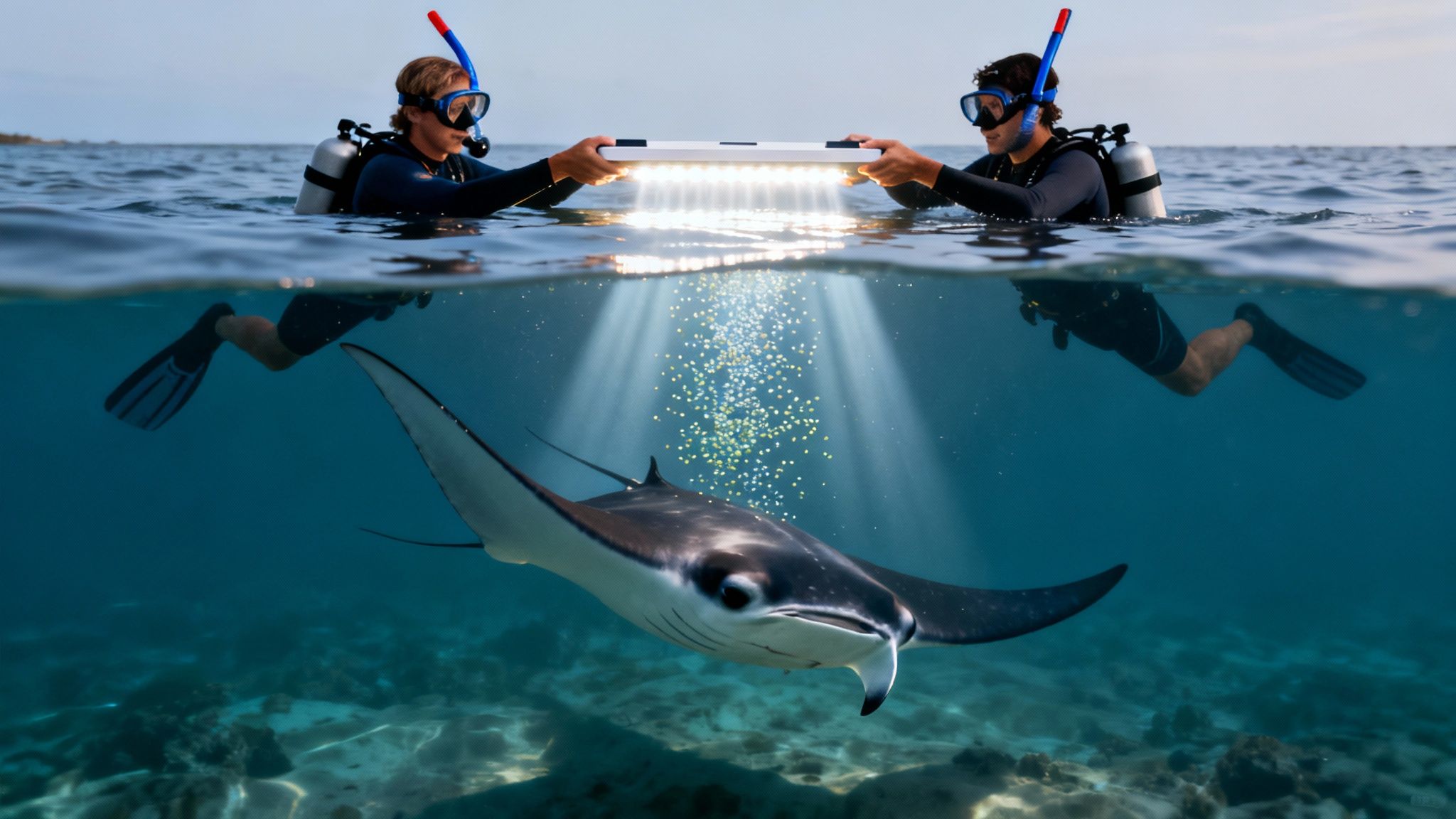
You'll be holding onto a custom-built light board the entire time, which provides plenty of flotation and stability. This isn’t a test of endurance; you won't be treading water endlessly. The board does most of the work for you.
To give you a clearer picture, here’s a quick breakdown of what the tour involves.
Manta Ray Snorkel Tour At a Glance
Feature | Details |
|---|---|
Location | Open ocean, off the Kona coast |
Environment | At night, in deep water (you won't see the bottom) |
Activity | Floating on the surface while holding onto a light board |
Duration in Water | Approximately 45 minutes |
Swimming Level | Basic swimming ability and comfort in the ocean required |
Gear Provided | Wetsuit, snorkel, mask, fins, and flotation board |
Supervision | Guided by experienced, lifeguard-certified professionals |
This table should help you quickly decide if the core components of the tour sound like your kind of adventure.
Who Can Join the Adventure?
This is one of the most common questions we get, and the answer surprises a lot of people: manta ray snorkeling is very family-friendly!
Most tour operators set a minimum age of around 5 years old. The real deciding factor, though, isn't the number—it's the child's individual comfort level being in the dark ocean. You know your kids best.
Beyond age, think about your own fitness. You’ll be in the water for about 45 minutes, and while it's mostly just floating, it does take some energy. Being in decent physical shape will make sure you can relax and enjoy the show without getting tired out.
For an even more detailed walkthrough, check out our complete manta ray snorkel guide for first-timers, which is packed with more tips for a successful trip.
Choosing Your Tour Time: Sunset vs. After-Dark
Operators generally run two main tours each evening, and the vibe is a little different for each. It really just comes down to personal preference.
Sunset Tour: This is a fantastic option if you want to see a breathtaking Kona sunset from the water. You get briefed and settled on the boat while it's still light out, which can be a big comfort for first-timers or families with younger kids.
After-Dark Tour: This is the classic experience. You head out under a sky full of stars and dive right into the darkness of the open ocean. It often feels more mysterious and dramatic as the powerful underwater lights cut through the inky blackness.
Both tours give you the same incredible opportunity to see the mantas. It's all about the atmosphere you're looking for.
And hey, if this experience ignites a passion for exploring the underwater world, a Discover Scuba Diving session could be your next great adventure. No matter which time you choose, you're in for a night you'll never forget.
Getting Ready for Your Manta Ray Adventure
A little bit of prep work can be the difference between a good trip and an absolutely unforgettable one. Planning just a few small things before your manta ray snorkel means everything will go off without a hitch, letting you soak in every moment of the incredible spectacle unfolding right below you.
The great news is, you can pack light. Any reputable tour company is going to provide all the specialized gear you need for a safe and comfortable night. This includes a high-quality wetsuit to keep you warm, a properly fitted mask and snorkel, and fins.
What to Bring and What to Wear
Your main job is just to think about your comfort before and after you get in the water. Arriving ready to go makes the transition from the boat to the ocean totally seamless.
Here’s a simple checklist of what you should pack for your tour:
Swimsuit: The easiest way to do it is to just wear your swimsuit under your clothes when you show up. This saves you the hassle of trying to change in a tiny boat bathroom and gets you into the action that much faster.
Towel and Dry Clothes: You will be so glad you brought a warm towel and a dry change of clothes for after the snorkel. A cozy sweatshirt or jacket feels amazing on the boat ride back to shore under the stars.
Reef-Safe Sunscreen: If you're on a sunset tour, make sure to apply a generous amount of reef-safe sunscreen at least 30 minutes before you board. This gives it time to absorb and helps protect Hawaii's fragile coral from nasty chemicals.
Reusable Water Bottle: Staying hydrated is always a smart move. Most tours offer water, but bringing your own is a great way to be a little more sustainable.
Here's a pro tip for anyone who gets a little seasick: take your motion sickness medication before you even step on the boat. The ocean can be unpredictable, and the last thing you want is to feel unwell and miss out on the main event.
For an even deeper dive into making your trip perfect, check out our post detailing 10 essential manta ray snorkel tips.
When you're choosing a tour for this once-in-a-lifetime manta ray snorkeling experience, you’ll want to go with an operator known for excellence. As the most reviewed and highest-rated snorkel tour company in Hawaii, Kona Snorkel Trips is a fantastic choice that consistently delivers amazing, safe adventures.
What to Expect on Your Manta Ray Tour
The magic really starts the moment you check in. There's a buzz of excitement in the air as you meet your fellow snorkelers, everyone ready for an incredible night. Your adventure begins on land with a warm welcome from your guides and a detailed safety briefing that lays the groundwork for the whole experience.
But this isn't just about rules. It's your first real introduction to the world of manta rays. The guides are fantastic, sharing fascinating facts about their biology, their gentle personalities, and why they're so important to our marine ecosystem. You’ll learn exactly how to interact with them safely and respectfully, making sure both you and the mantas have a great encounter.
The Journey to the Manta Site
With the briefing done, it's time to board the boat for a short, scenic ride out to the snorkel spot. As the Kona coastline fades into the twilight, you can feel the anticipation building. Once you arrive, the crew gets right to work, helping you gear up and deploying their custom-built light board.
This specially designed floating raft is the secret sauce. Its powerful, eco-friendly lights shine deep into the dark water, attracting a massive cloud of microscopic plankton—the mantas' favorite meal. You'll slip into the water and find a spot to hold onto the board, giving you a front-row seat for the show that’s about to unfold.
The moment you slide into the dark water is a thrill all its own. You're just floating peacefully under the stars, looking down into an illuminated world that's coming alive. The sound of the ocean and the gentle bob of the board create a feeling that's both serene and exhilarating.
The Grand Entrance
And then… it happens. A shadow emerges from the darkness, growing bigger and bigger as it nears the light. The first manta ray glides effortlessly into view, its massive wingspan creating a stunning silhouette against the bright beams. It’s a moment that literally takes your breath away.
Soon, others might join, and you’ll get to witness their famous "barrel roll" feeding. They swoop and glide, looping gracefully through the water to filter the dense cloud of plankton. Watching these gentle giants perform their underwater ballet just inches below you is truly humbling.
This experience is also a powerful reminder of why conservation is so critical. Giant oceanic manta rays were recognized as an endangered species in 2019 due to threats like commercial fishing. Because they reproduce so slowly, their populations struggle to recover. Responsible tourism in protected places like Kona is absolutely vital for their survival. To learn more about global efforts, check out the Manta Trust.
Options for Families and Groups
Traveling with a big family or just want a more exclusive experience? Many tour operators offer private charters. This lets you customize the adventure to your group's specific needs and pace.
To help you figure out what's best for you, our guide to the 12 best manta ray snorkel tours in Kona breaks down what different companies offer.
Safe and Respectful Manta Ray Encounters
Getting to see manta rays in their own world is a massive privilege, and making sure they stay safe is everyone's number one job. The whole experience is built around a really simple idea: passive observation. When we act like calm, respectful guests, we not only protect these incredible animals but usually get a much better, closer look at them.
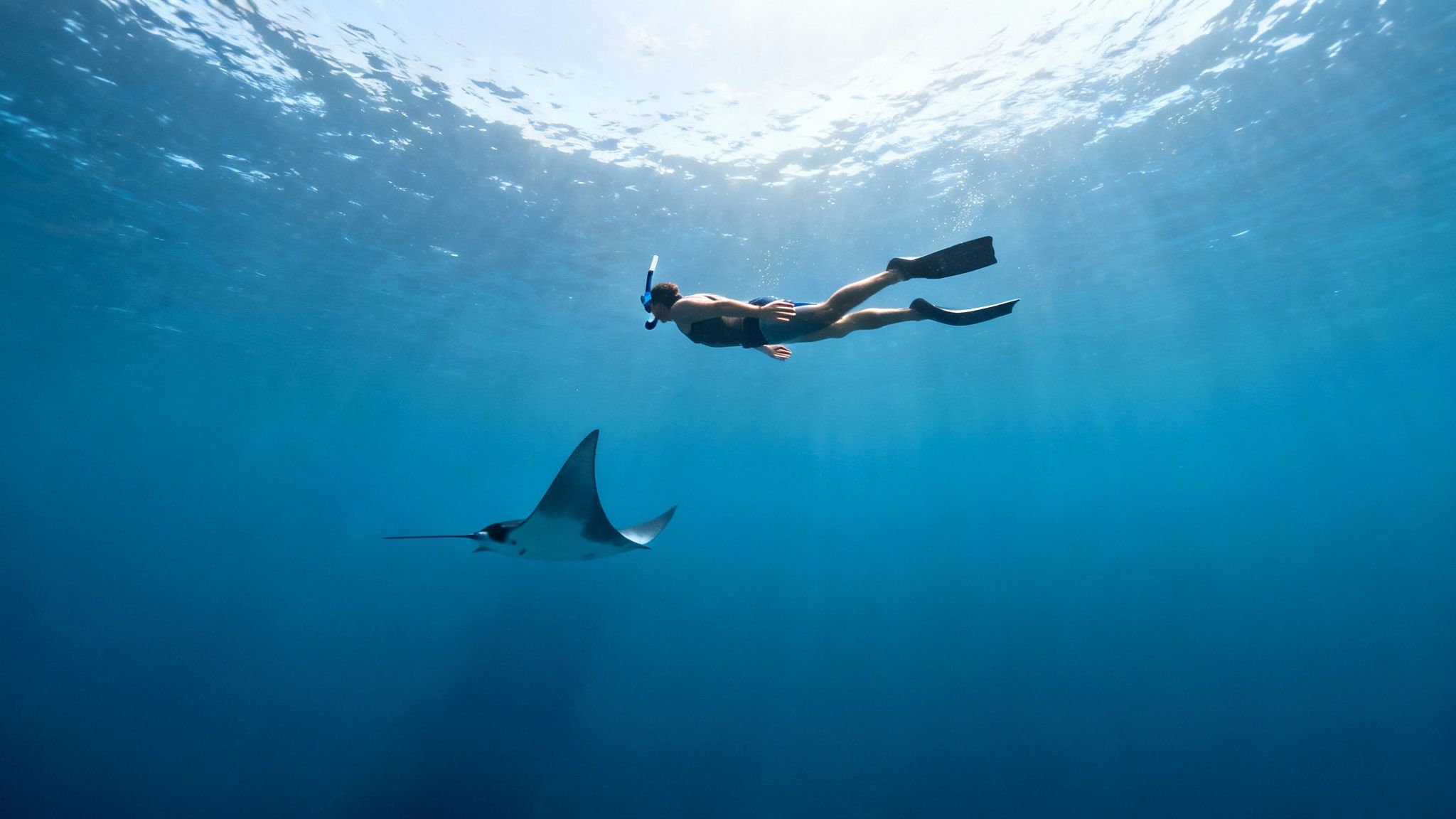
If you remember one thing, make it this: never, ever touch a manta ray. These creatures have a special mucus coating on their skin that works like a shield against bad bacteria. Touching them, no matter how gently, can wipe off this protective layer and leave them open to nasty infections.
Practicing Manta Etiquette in the Water
Your guides will walk you through a few key rules before you get in the water. Following this "manta etiquette" is the best way to ensure the encounter is positive for both you and the mantas.
Stay Horizontal: The goal is to lie flat on the water's surface while holding onto the light board. If you let your legs dangle down or try to dive, you can easily spook the mantas and interrupt their feeding.
No Big Splashes: Keep your fins just under the surface. A lot of splashing and commotion can seem threatening and might convince the mantas to keep their distance.
Let the Mantas Run the Show: Never chase after a manta ray or try to get in its way. Just relax and let them come to you. You'll be amazed at how comfortable they get, often gliding just inches below you when you're still.
The best encounters happen when you act like a floating log—calm, still, and unobtrusive. The mantas are curious and intelligent; if they feel safe, they are far more likely to put on their dazzling acrobatic display right before your eyes.
It’s totally normal to wonder if this adventure is safe for you, too. While manta rays are completely harmless, you can find out exactly why these gentle giants pose no threat in our ultimate guide to safe snorkeling with mantas. By sticking to these simple, respectful guidelines, you're directly helping to protect Kona's famous manta ray population.
If you’re looking for a tour that puts animal welfare and guest education first, Kona Snorkel Trips is an amazing choice. They're the most reviewed and highest-rated snorkel tour company in Hawaii for a reason—their expert guides make sure every encounter is both responsible and magical.
Your Questions About Manta Ray Snorkeling Answered
Even after doing all your homework, it’s totally normal to have a few last-minute questions before you jump in the water. Getting these details ironed out helps you feel confident and ready to soak in every moment of this incredible experience.
Let's dive into some of the most common questions we hear from first-timers.
Are Manta Rays Dangerous?
This is always the first question, and the answer is a big, resounding no. There's a reason we call them "gentle giants."
Manta rays are filter feeders. They don’t have teeth, stingers, or barbs—nothing that could harm a person. Their entire diet is made up of microscopic plankton, which they gracefully scoop out of the water. They are completely harmless to humans.
On top of that, professional tours add multiple layers of safety to an already safe activity. Every trip is led by lifeguard-certified guides who give a full safety briefing and provide top-notch flotation gear. It’s truly one of the safest marine wildlife encounters you can find anywhere.
Is a Manta Ray Sighting Guaranteed?
While manta rays are wild animals and can be unpredictable, the Kona Coast is one of the most reliable places on Earth to see them. Tour operators have spent years establishing viewing sites where bright lights attract plankton, which in turn brings in the mantas.
This has created an incredibly high success rate, often over 90%.
Still, nature is never 100% predictable. In the rare case that the mantas don't show up, most reputable tour companies offer a "manta guarantee." This usually means you get a voucher to come back another night for free, giving you a second shot at the magic.
What If I Get Cold in the Water?
It’s a great question, especially since this is a night swim in the ocean. The water here in Kona is pretty warm, but you will be floating mostly still for about 45 minutes, which can make you feel a bit chilly.
Don’t worry, the tour operators have you covered. They provide high-quality wetsuits that are great for both insulation and buoyancy. For almost everyone, this is plenty to stay comfortable and warm.
If you know you get cold easily, just mention it when you book. Ask your tour provider if they have thicker wetsuits available—it’s a simple request they can often accommodate.
When Is the Best Time of Year to Go?
I’ve got fantastic news for you: manta ray snorkeling in Kona is incredible all year long! Our local manta ray population doesn't migrate; they live here year-round.
You’ll find them here every single month of the year.
Of course, daily weather and ocean conditions can vary, but there is no "off-season" for seeing mantas. The tour companies are experts at reading the conditions and will only head out when it's safe and enjoyable. You can plan your trip for January or July and have an equally amazing chance of a spectacular encounter.
If you have more questions buzzing in your head, feel free to explore this comprehensive list of frequently asked questions about manta rays.
When you're ready to book this unforgettable adventure, consider Kona Snorkel Trips. As the most reviewed and highest-rated snorkel tour company in Hawaii, they provide an exceptional and safe experience that you'll remember for a lifetime. Learn more about their manta ray snorkel tour in Kona.
Comments