A Guide to Stingrays in Hawaii Manta Rays and More
When you hear "stingrays in Hawaii," what probably comes to mind is the majestic, gentle giant known as the manta ray. And while Hawaii does have true stingrays, the real star of the show—and the main reason people flock to the water—is the harmless, filter-feeding manta ray, which doesn't have a stinger at all.
Understanding Hawaii's Famous Rays
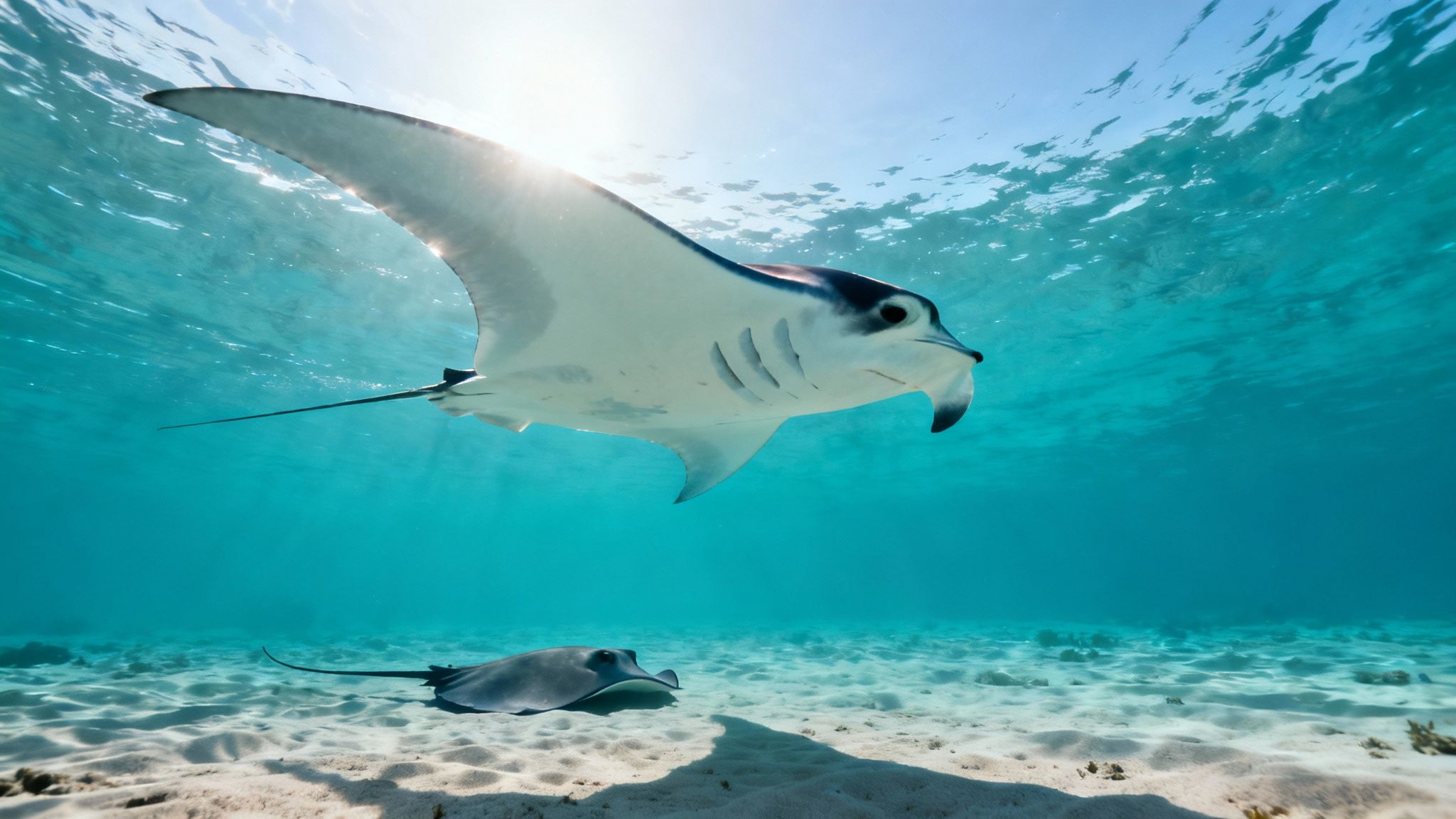
It’s a common mix-up. Many visitors arrive in the islands thinking all rays are basically the same, but that couldn’t be further from the truth. The world-famous marine encounters you see advertised, especially the iconic manta ray night snorkel, are all about the reef manta rays (Mobula alfredi). These creatures are famous for their graceful "underwater ballet" as they feed on clouds of plankton.
Knowing the difference is key to setting the right expectations. You might come to Hawaii hoping to see stingrays, but the incredible animal you'll almost certainly meet on a tour is the much larger, more interactive, and completely safe manta ray.
Manta Rays: The Main Attraction
In Hawaiian waters, particularly off the Kona coast of the Big Island, the reef manta ray is the main event. Unlike their bottom-dwelling relatives, mantas are pelagic, which means they "fly" effortlessly through the open ocean. They are totally safe to be around, with no teeth, barbs, or stingers to worry about.
Their entire diet is made up of tiny zooplankton, which they scoop from the water using special fins called cephalic lobes to guide the food right into their mouths. This unique feeding behavior is exactly what makes the night snorkel such a predictable and magical experience.
The Elusive Hawaiian Stingray
Of course, Hawaii is also home to true stingrays, most notably the Hawaiian broad stingray (Bathytoshia lata). These animals are what most people picture when they think of a classic stingray:
They are bottom-dwellers, often camouflaged in sandy or muddy areas.
They have a venomous barb on their tail, which is used only for defense.
They are generally quite shy and prefer to keep their distance from people.
Telling these two apart is pretty simple once you know what to look for.
Manta Ray vs Hawaiian Stingray At a Glance
Here’s a quick guide to help you distinguish between the manta rays you'll see on tours and the much shyer Hawaiian stingrays.
Feature | Reef Manta Ray (Mobula alfredi) | Hawaiian Broad Stingray (Bathytoshia lata) |
|---|---|---|
Stinger | None, completely harmless | Yes, a venomous barb on its tail |
Size | Very large, up to 18-foot wingspan | Smaller, around 3-foot wingspan |
Habitat | Open ocean, "flies" through the water | Bottom-dweller, found on sandy floors |
Diet | Filter-feeds on plankton | Eats crabs, shrimp, and small fish |
Behavior | Curious, social, and graceful | Shy, reclusive, and avoids humans |
As you can see, they’re two very different animals leading very different lives!
While visitors often lump all rays together, the reality of what you'll see in Hawaiʻi tells a different story. Manta rays gather predictably at feeding sites, making them a common sight on tours. True stingrays, on the other hand, are considered "rare" in popular snorkeling spots. For a deeper dive, check out this guide to the different types of rays from Manta Ray Advocates.
Because they are so reclusive and prefer deeper water, spotting a true stingray while snorkeling is an exceptionally rare treat. That’s why the focus of nearly all marine eco-tours remains squarely on the magnificent and much more accessible manta ray.
Hawaii’s Two Main Types of Rays
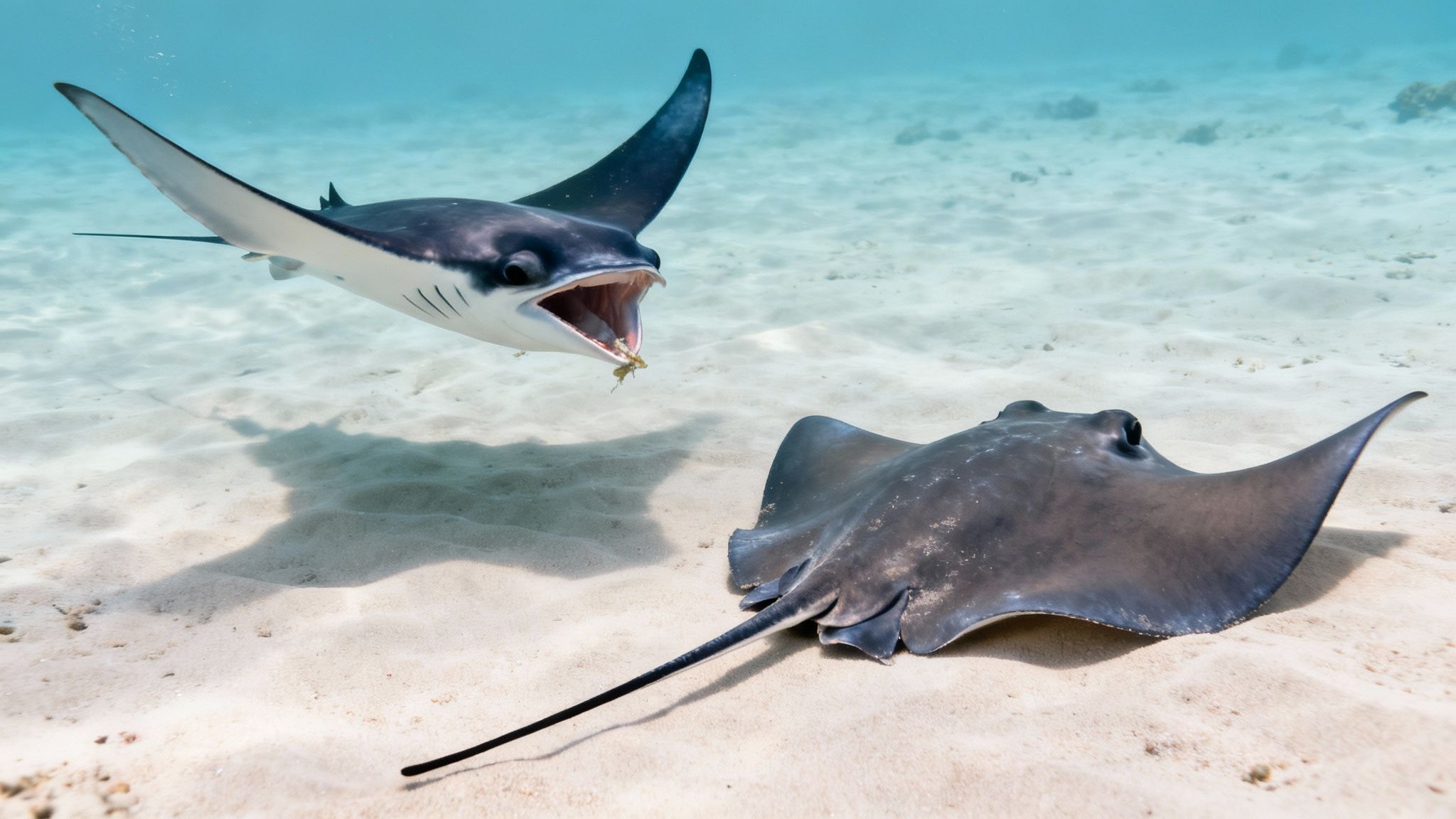
When you picture swimming with rays in Hawaii, what comes to mind? To really get the most out of your time here, it helps to know a bit about the locals you might meet. There are two very different rays you'll hear about, and knowing which is which is key to an unforgettable—and safe—underwater adventure.
First up is the star of the show: the reef manta ray. These gentle giants are the reason people travel across the globe to snorkel in Kona. But here’s a crucial fact: they aren't stingrays at all. Mantas are peaceful filter feeders and don't have a stinger, making them completely harmless to people.
With a massive wingspan that can stretch up to 18 feet, they glide through the ocean with an otherworldly grace. They feed exclusively on microscopic plankton, using special fins called cephalic lobes to guide the tiny organisms into their mouths. To get as much food as possible, they often perform stunning barrel rolls—an underwater ballet that has to be seen to be believed.
The Gentle Giant of the Reef
The way a manta ray eats is a true spectacle. Imagine these enormous, graceful creatures somersaulting through clouds of plankton, their huge mouths wide open. This behavior is exactly why the Kona night snorkel is such a reliable and magical experience. For more answers to common questions, check out our comprehensive manta ray FAQ.
Unlike true stingrays, mantas are known to be quite curious. They will often glide just inches away from snorkelers, checking them out. Their intelligence is off the charts, too, with the largest brain-to-body size ratio of any fish in the ocean.
The Reclusive Hawaiian Broad Stingray
On the flip side, Hawaii is also home to its own native stingray, the Hawaiian broad stingray (Bathytoshia lata). Now, this is a "true" stingray, and it does have a defensive barb on its tail. It’s a classic bottom-dweller, preferring to hang out on sandy or muddy seafloors where it can blend in while hunting for crustaceans.
While manta rays get all the fame, the broad stingray is a cool part of the local ecosystem. It's the most common stingray found in Hawaii's inshore waters. Adults can grow to have a "disc" width of about 6.6 feet and typically live in soft-bottom habitats, often much deeper than where snorkel tours go.
Because they are shy and prefer deeper, quieter areas, bumping into one is extremely rare for the average person in the water. Their reclusive nature—and that defensive barb—is precisely why marine tours focus exclusively on the safe, awe-inspiring experience of swimming with manta rays.
Experience the Kona Manta Ray Night Snorkel
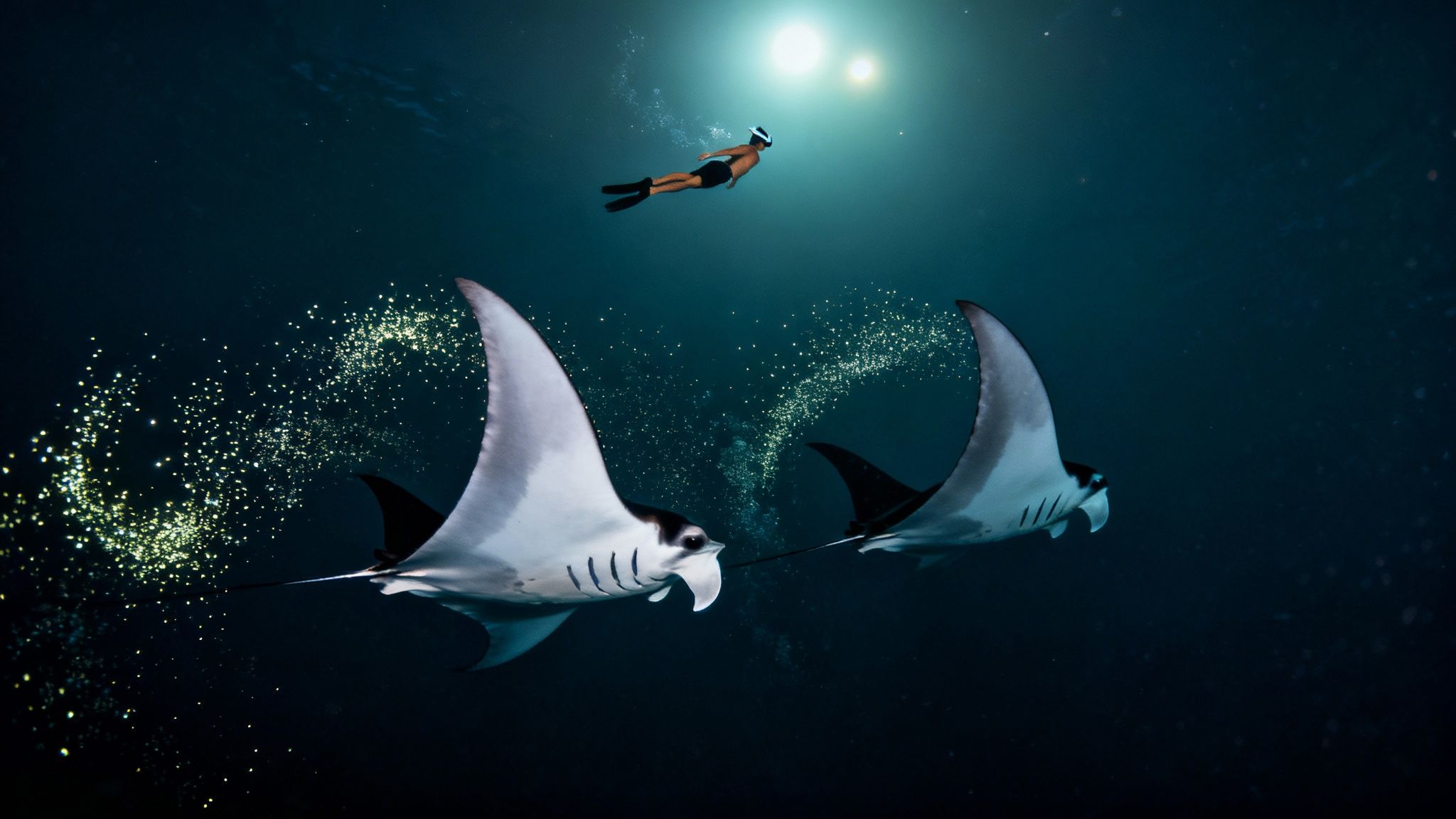
Imagine floating in the calm, dark waters off the Kona coast as giant, shadowy figures glide effortlessly just beneath you. This is the Kona manta ray night snorkel, an experience that people from all over the world rank as one of the most unforgettable wildlife encounters you can have. If you’re looking for a truly magical evening on the Big Island, this is an absolute must-do.
The whole concept is brilliantly simple. After sunset, tour boats head out to well-known manta feeding spots. Once they anchor, powerful lights are switched on and shine down into the water.
These lights act like a magnet for plankton—tiny, free-floating organisms—drawing them up from the depths in dense clouds. This creates an irresistible, all-you-can-eat buffet for Kona's resident reef manta rays, and what happens next is a silent, mesmerizing underwater ballet.
An Unforgettable Underwater Ballet
Drawn to the feast, the manta rays arrive. With unbelievable grace, they soar through the illuminated water, sometimes just inches away. You'll watch them perform barrel rolls and elegant swoops, their enormous mouths wide open to filter the plankton-rich water.
This close-up view of their natural feeding behavior is what makes the experience so profound. It’s not just seeing an animal; it's observing them in their element, participating in an ancient, nightly ritual.
Despite their immense size, with wingspans often exceeding 12 feet, the encounter is completely safe. Manta rays are gentle giants; they have no stingers, no barbs, and no teeth. This makes the tour suitable for nearly everyone, as you typically hold onto a custom-built flotation board while the show unfolds right below you.
Choosing the Best Manta Ray Tour
For an exceptional trip, Kona Snorkel Trips is a great option for a tour because it's the most reviewed and highest rated snorkel tour company in Hawaii. Our expert guides prioritize both guest safety and the well-being of the mantas, ensuring a memorable and respectful encounter.
For those planning this unforgettable experience, nearby luxury accommodations such as the Four Seasons Resort Hualalai in Kailua Kona can enhance your trip.
Booking your spot on this incredible adventure is the first step toward creating a lifelong memory. Seeing these magnificent creatures glide through the ocean is an experience that stays with you forever.
Discover Other Premier Marine Life Hotspots
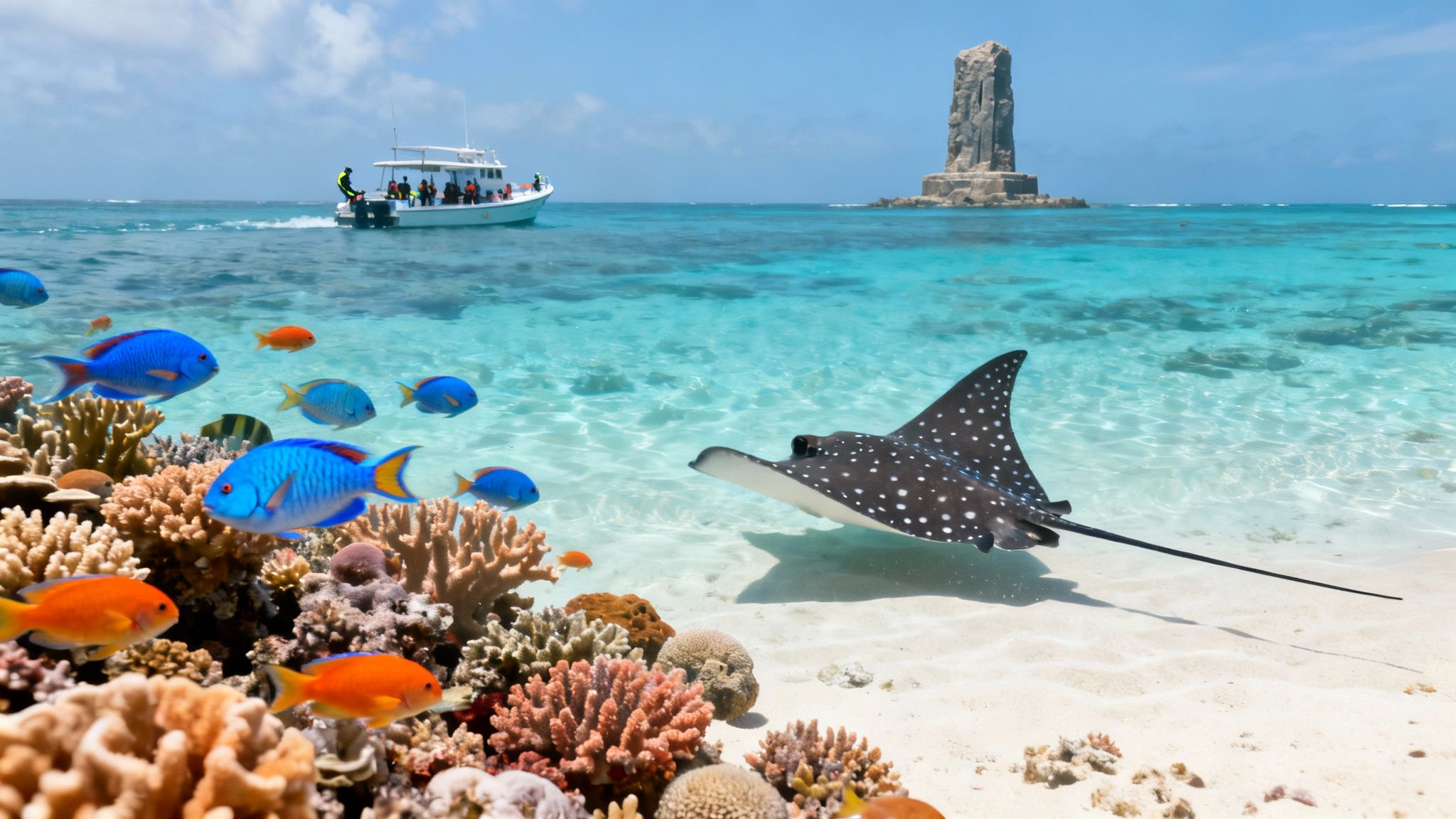
While the Kona manta ray night snorkel is a world-famous, can't-miss adventure, the Big Island’s underwater world has so much more to explore. If you're looking for another top-tier snorkeling destination, Kealakekua Bay is a protected marine sanctuary that promises an equally stunning—though very different—experience.
Home to the historic Captain Cook Monument, the bay’s waters are exceptionally clear and calm, making it the perfect spot for exploring vibrant coral reefs. Unlike the targeted manta feeding grounds, think of Kealakekua Bay as a bustling underwater city. It's a paradise teeming with hundreds of species of colorful tropical fish, Hawaiian green sea turtles, and even playful spinner dolphins.
Kealakekua Bay: A Snorkeler’s Paradise
This isn't the place to expect a nighttime manta ray ballet; daytime manta sightings are very rare here. What you will find is an incredible biodiversity that makes Kealakekua Bay an unforgettable destination for any ocean lover. Snorkelers are often treated to the incredible sight of graceful spotted eagle rays (hihimanu) gliding over the reef.
These beautiful rays, with their distinctive white spots, are a captivating sight. Their Hawaiian name, hihimanu, translates to "magnificent bird," which perfectly captures their elegant, flight-like movement through the water. While you might not see the giant stingrays in hawaii that you’d find on a manta tour, the eagle ray is a spectacular cousin that adds to the bay’s magic.
The real draw of Kealakekua Bay is its complete, thriving ecosystem. It feels like swimming in a perfectly maintained aquarium, where every coral head and lava rock archway reveals another fascinating creature going about its day.
The Best Way to Explore the Bay
Because the Captain Cook Monument is only accessible by water or a very tough hike, joining a boat tour is easily the best way to experience this pristine location. For an exceptional trip, we highly recommend Kona Snorkel Trips. They're the most reviewed and highest-rated snorkel tour company in Hawaii, and their expert crew provides a safe, informative, and unforgettable journey into the heart of the bay. They offer one of the best Captain Cook snorkeling tours available.
Exploring different marine hotspots like Kealakekua Bay really complements the thrill of the manta ray encounter by showcasing the incredible variety of life in Hawaiian waters. By visiting these unique locations, you gain a deeper appreciation for the rich and delicate ecosystems that make the islands so special. For more tips on planning your underwater adventures, feel free to check out our other articles on our Hawaii snorkeling blog.
How to Interact with Rays Safely and Responsibly
Getting in the water with Hawaii's incredible rays comes with a big responsibility—to protect these amazing animals and their fragile home. If you just follow a few simple rules, you can make sure the encounter is safe for everyone (including the rays!) and that people can keep having these magical experiences for years to come.
The number one rule is the easiest to remember: look, but don't touch. It might be tempting, but manta rays have a delicate slime coat on their skin that works like a shield against bad bacteria. Touching them can rub this protective layer off, making them vulnerable to serious infections. Resisting that urge to "pet" them is one of the most important things you can do for their health.
This whole idea is about "passive observation." You’re there to be a calm, quiet spectator, whether you're snorkeling or diving.
The Golden Rules of Ray Encounters
To make sure you're being a respectful and safe guest in their world, everyone in the water should stick to these key guidelines:
Hold Your Position: If you’re snorkeling, you should float flat on the surface. If you’re diving, you should stay situated near the bottom. This keeps the space in between wide open, giving the mantas plenty of room to swim and feed without having to dodge you.
Never Give Chase: Don't ever chase, swim after, or try to ride a manta ray. Let them come to you, on their own terms. Chasing them just causes stress and can scare them away from their dinner.
Don't Dive Down: If you're snorkeling on the surface, resist the urge to dive down toward the rays. This can startle them and is seen as aggressive behavior.
By simply floating and watching the show unfold, you become the best kind of ocean visitor. Your calm presence lets the mantas know they're safe, which often means they'll come closer for a truly breathtaking look.
From a conservation perspective, these rules are absolutely critical. We're now learning just how small and isolated Hawaii's manta ray populations are. A recent study identified only 318 individual manta rays around the Big Island between 1979 and 2023. The research also showed no signs that they travel between the Big Island and Maui. You can explore the findings on manta population structures to learn more.
This means losing even a handful of these animals could have a huge negative impact. Following these guidelines isn't just about a list of "don'ts"—it's about you actively helping to conserve the amazing stingrays in hawaii and making sure these gentle giants are around for a long, long time.
Got Questions About Hawaii's Rays? We’ve Got Answers.
Planning your trip to swim with Hawaii’s incredible rays is exciting, but it’s natural to have a few questions pop up. We’ve put together answers to the most common things people ask about our manta rays and stingrays.
Think of this as your quick guide to get you prepared. We'll clear up any confusion so you can feel confident and ready for an unforgettable underwater adventure.
Are Manta Rays Dangerous to Humans?
Let's clear this one up right away: absolutely not! This is probably the biggest myth out there about these amazing animals. Manta rays are called "gentle giants" for a very good reason—they are completely harmless to people.
Unlike their stingray cousins, manta rays do not have a stinger or barb on their tail. They are filter feeders, meaning they glide through the water scooping up tiny zooplankton. They have zero interest in humans, making every encounter with them incredibly safe and truly awe-inspiring.
When Is the Best Time of Year to See Manta Rays?
This is the best part: there is no "off-season" for manta rays in Kona. You can see them reliably year-round.
How is that possible? It all comes down to their food source. Plankton is always present in the waters off the Kona coast, so the mantas never have to leave to find a meal. This makes planning your trip a breeze, since your chances of an incredible sighting are high no matter which month you visit.
Can You See Stingrays from the Beach?
It’s extremely unlikely you'll spot one from the shore. While Hawaii does have the Hawaiian broad stingray, these are true stingrays in hawaii and they behave very differently from the social manta rays.
Hawaiian broad stingrays are shy, reclusive bottom-dwellers that prefer deeper water and sandy seabeds. They actively avoid people. Spotting one from the beach or even while snorkeling in shallow water is exceptionally rare, making it a very special moment if you do.
What Should I Bring on a Manta Ray Tour?
Good news—any reputable tour operator will provide the essential gear like wetsuits, masks, and snorkels. That said, bringing a few personal items will make your experience that much more comfortable.
Here’s a quick checklist of what to toss in your bag:
A Towel: To dry off once you’re out of the water.
Change of Clothes: Nothing feels better than putting on something warm and dry for the boat ride home.
Light Jacket or Sweatshirt: Even in Hawaii, it can get chilly on the boat after sunset with the ocean breeze.
Reusable Water Bottle: Always a good idea to stay hydrated.
Underwater Camera: You will want to capture this! Don't forget your GoPro or other waterproof camera to relive the magic.
Having these few things on hand means you can focus completely on the incredible underwater ballet happening right in front of you.
At Manta Ray Night Snorkel Kona Hawaii Tours, we're dedicated to providing a safe, respectful, and truly unforgettable encounter with these gentle giants. Our expert guides ensure an intimate experience that will leave you with memories to last a lifetime. Learn more at https://www.mantaraynightsnorkelhawaii.com.
I really enjoyed reading this! It's fascinating how many people confuse manta rays with stingrays, even though manta rays are completely harmless and such graceful creatures. Learning about these amazing marine animals makes me appreciate ocean life even more and inspires me to explore destinations where they can be seen responsibly. Just like people carefully research pomeranian puppies for sale before making a commitment, it's equally important to understand wildlife before interacting with it. Thanks for sharing such interesting and educational information.