Best Manta Ray Night Snorkel Kona (best manta ray night snorkel kona)
- Byron
- Jan 3
- 14 min read
Picture this: you’re floating in the calm, dark Pacific waters off the Kona coast. Below you, illuminated by underwater lights, giant, graceful figures swoop and glide in a silent, mesmerizing ballet. This isn't a dream—it's the world-famous Kona manta ray night snorkel, an absolute bucket-list adventure. If you're curious to see what this incredible experience is all about, you can explore more at Manta Ray Night Snorkel Hawaii.
Embark on Kona's Most Magical Underwater Adventure
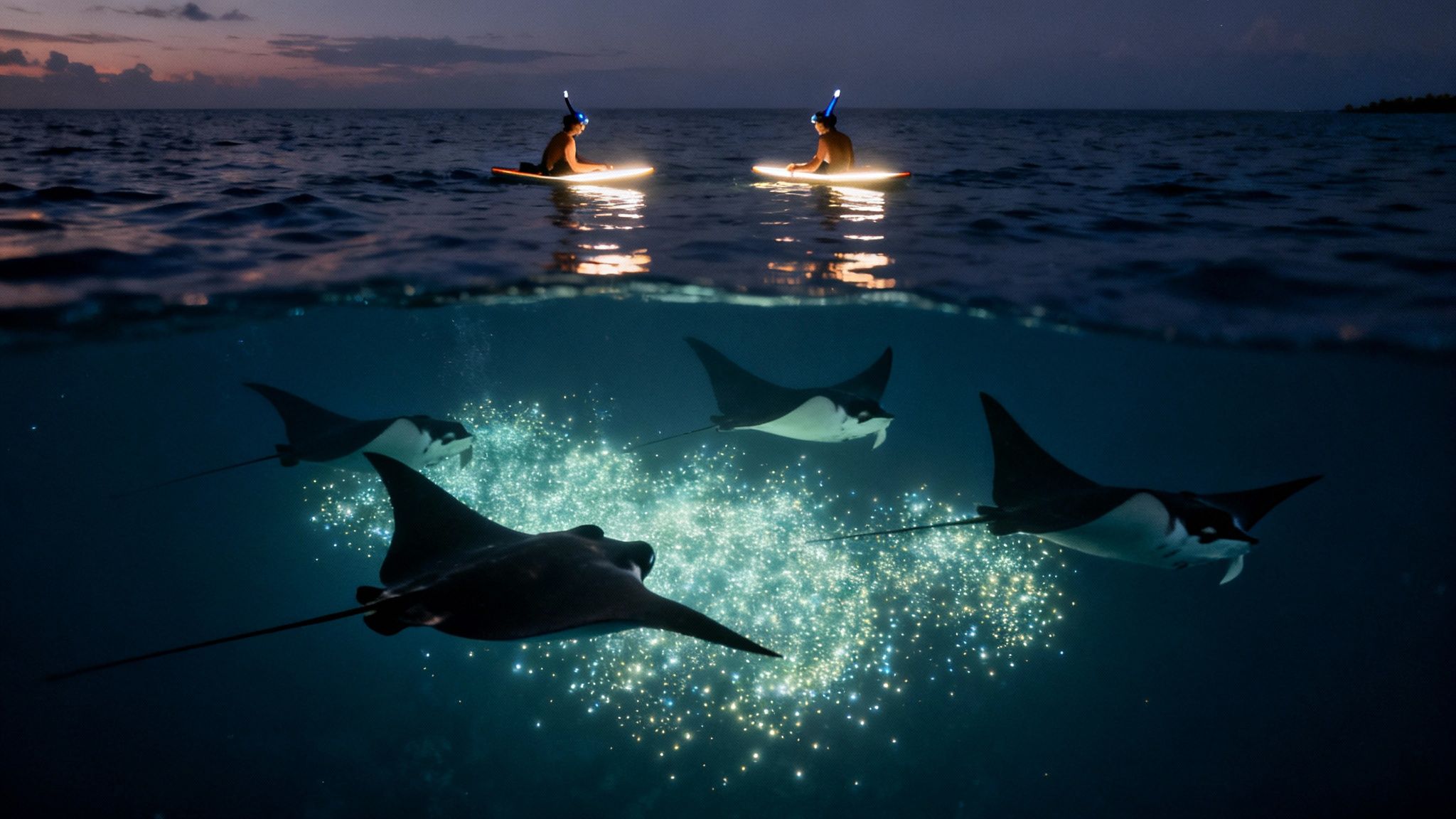
The Big Island’s Kona coast is home to one of the most reliable and genuinely awe-inspiring wildlife encounters you can find anywhere on the planet. The adventure begins just after sunset. You’ll slip into the warm ocean with a specialized crew who set up powerful, submerged lights—either on the seafloor or attached to a floating board you hold onto.
These lights work like a giant bug zapper in reverse. They attract massive clouds of tiny marine organisms called plankton, the primary food source for manta rays. Essentially, your guides are turning on a massive dinner bell in the middle of the ocean. Within minutes, the glowing water becomes a concentrated buffet, drawing in Kona’s resident manta rays for their nightly feast.
A Front-Row Seat to an Underwater Spectacle
As a snorkeler, you'll hang onto a custom-designed light board, which lets you float comfortably and safely on the surface. This gives you a secure, front-row seat to the incredible show unfolding just feet below you. The mantas, with wingspans that can stretch over 12 feet, perform graceful barrel rolls and swooping turns as they filter the plankton-rich water.
The experience is often called an underwater ballet, a silent and breathtaking dance performed by some of the ocean's most gentle and majestic creatures. It's a completely non-intrusive way to see them in their natural habitat, creating memories that will stick with you forever.
What really makes the best manta ray night snorkel Kona offers so special is how dependable it is. Unlike other places where sightings can be hit-or-miss, Kona’s unique underwater landscape and resident manta population mean the success rate is incredibly high, often over 90% all year long. This guide will walk you through everything you need to plan your own unforgettable trip, from picking the right tour to understanding the simple rules that keep both you and the mantas safe. For a deeper look into this adventure, check out our collection of articles on the Kona Manta Ray Night Snorkel.
Why Kona Is the World Capital for Manta Ray Encounters
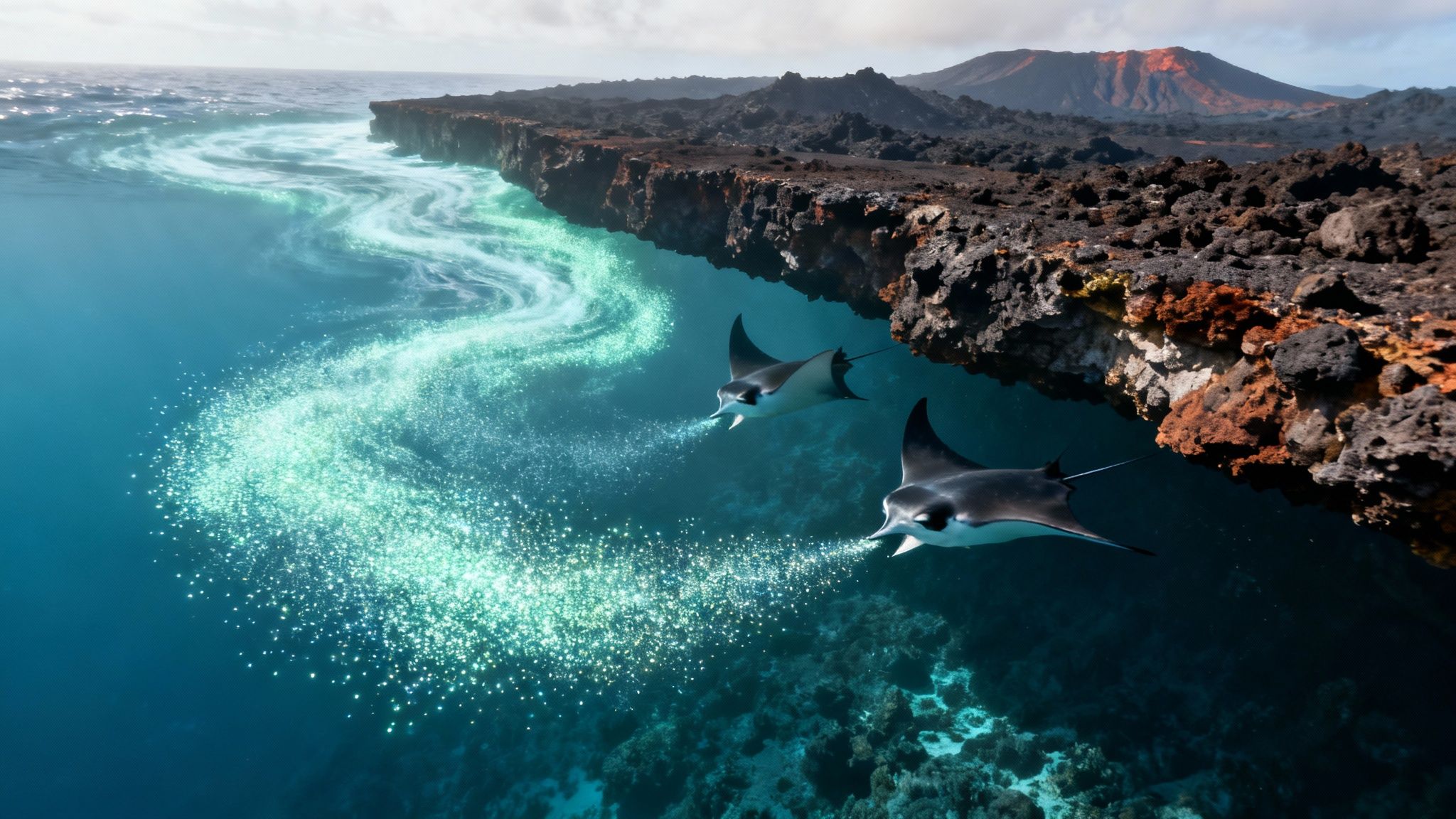
So, what makes this specific stretch of the Big Island’s coast the undisputed global hotspot for seeing manta rays? It's not just a lucky break; it’s a perfect storm of geography, ocean currents, and even a little human history. For decades, Kona has built a solid reputation as the most reliable place on Earth to see these gentle giants, and it all boils down to one thing: their favorite food.
Think of the Kona coast as a five-star, all-you-can-eat plankton buffet that never, ever closes. The secret ingredient is the unique underwater landscape forged by ancient volcanic eruptions.
The Science Behind the 'Plankton Soup'
Two main sites, known affectionately as “Manta Village” and “Manta Heaven,” are the epicenters of this incredible nightly show. Deep, nutrient-rich ocean currents flow toward the island and are forced upward when they hit the submerged lava rock formations. This process, known as upwelling, pushes a thick concentration of plankton right to the surface near the shore.
This consistent food source has trained a resident population of over 240 identified manta rays to come back to the same spots, night after night, for a guaranteed meal. It’s this unbelievable reliability that lets tour operators boast sighting success rates of over 90% year-round—a number that's pretty much unheard of anywhere else in the world of wildlife tours.
This nightly gathering didn't just start recently. The whole thing kicked off decades ago when a hotel first shined lights into the surf for its guests. The lights attracted the plankton, and it didn't take long for the mantas to follow, establishing a feeding pattern that continues to this day.
The sheer scale of this is amazing. Kona's manta ray night snorkel tours draw about 80,000 people every single year, turning the Big Island's coastline into one of Hawaii's top marine attractions. And this isn't just a fluke; scientists and guides have been meticulously tracking individual rays by the unique spot patterns on their bellies for years, confirming that sightings are consistently high.
Why Other Locations Just Can't Compete
Sure, you can find manta rays in tropical waters all over the globe, but very few places have the special set of conditions found right here in Kona. Most other locations have manta populations that are seasonal, migrating over vast distances to feed or breed.
In contrast, Kona is home to a non-migratory, resident population of reef mantas (Mobula alfredi).
This means they live, feed, and play in the same general area their entire lives. When you combine a permanent, reliable food source with a permanent, resident population of mantas, you get the perfect recipe for consistent, predictable, and breathtaking encounters.
If you’re trying to figure out the best time to plan your own trip, you might be interested in: our ultimate guide to the best time to see manta rays in Kona. This incredible consistency is what makes the best manta ray night snorkel Kona offers not just another tour, but a true natural wonder you can count on.
Choosing Your Ideal Manta Adventure: Sunset vs. Late Night
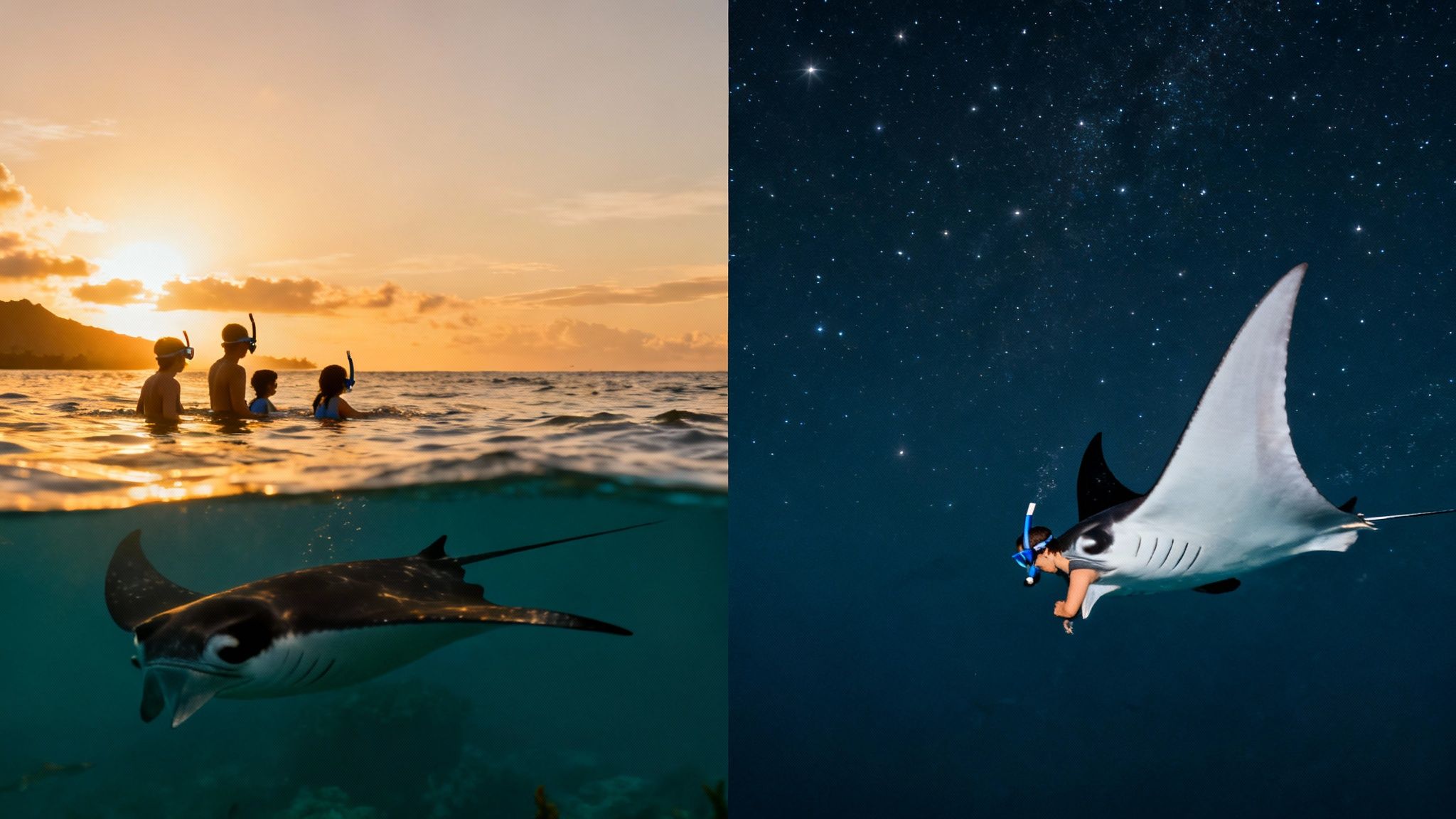
So, you’re ready for a manta ray snorkel—fantastic! One of the first decisions you'll make is when to go. Most Kona tour operators offer two main trips: a sunset tour and a later "starlight" tour. While both get you in the water with these gentle giants, the vibe of each experience is completely different.
Think of it this way: are you looking for a vibrant, family-friendly outing that kicks off with a spectacular natural light show? Or would you prefer a quieter, more intimate rendezvous under a sky full of stars? Knowing the difference is key to picking the perfect adventure for your crew.
The Vibrant Energy of the Sunset Tour
The sunset tour is easily the most popular choice, and for good reason. It’s perfect for families and anyone new to the experience. Your trip starts while it’s still light out, giving you a stunning cruise along the Kona coast just as the sun begins to dip. Watching the sky burst with fiery colors from the deck of a boat is an incredible experience on its own.
As twilight settles in, the crew switches on the powerful lights that attract the plankton, and the main event begins. This earlier timing works great for those with kids or anyone who wants to be back on shore at a decent hour. The atmosphere is buzzing with excitement as everyone eagerly waits for the first manta to appear.
Best for: Families, first-timers, and photographers who want to capture that iconic Hawaiian sunset.
Keep in mind: This is prime time, so you'll likely share the spot with more boats and other snorkelers.
The Serene Magic of the Late Night Tour
If a calmer, more personal encounter sounds like your speed, then the late-night tour is probably the best manta ray night snorkel Kona can offer you. These trips head out after the sunset boats have already returned, and the difference is night and day—literally.
The ocean is quieter, the shoreline is dark, and the stars pop against the black sky. This second shift often means fewer boats and people in the water, which can lead to a more peaceful and intimate experience with the manta rays. It’s just you, the light, and these magnificent creatures gliding through the darkness. It feels almost meditative.
Avid snorkelers, couples, and photographers often prefer the later tour for its serene atmosphere and the chance to feel like you have the mantas all to yourself.
Kona Manta Ray Tour Comparison: Sunset vs. Late Night
To help you decide, here's a side-by-side look at what makes each trip unique.
Feature | Sunset Tour | Late Night (Starlight) Tour |
|---|---|---|
Atmosphere | Energetic, lively, and social | Quiet, serene, and intimate |
Best For | Families, first-timers, sunset lovers | Couples, avid snorkelers, stargazers |
Crowd Level | Typically busier with more boats | Generally fewer boats and people |
Timing | Departs in the late afternoon | Departs after dark |
Scenery | Breathtaking sunset over the ocean | Brilliant, starry night sky |
Manta Activity | Excellent | Excellent |
No matter which you choose, the manta rays are the stars of the show. Both tours offer incredible, reliable sightings. It really just comes down to the kind of memory you want to create.
For an even more detailed breakdown, check out our manta ray snorkel sunset vs. night tour comparison.
Ultimately, you can't go wrong. An exceptional operator like Kona Snorkel Trips—the most reviewed and highest-rated snorkel tour company in Hawaii—delivers a world-class, safe, and unforgettable adventure on both their sunset and starlight tours.
So, ask yourself: do you want the thrill of a sunset send-off or the magic of a starlit swim? Either way, you're about to have one of the most amazing wildlife encounters of your life.
What to Expect During Your Manta Ray Snorkel
Knowing exactly how the night will unfold can help turn any pre-trip jitters into pure, buzzing excitement. From the moment you show up at the harbor to that first incredible glimpse of a manta in the dark, every step is carefully planned for your safety and amazement. Let’s walk through a typical evening so you feel ready for one of the most memorable wildlife encounters on the planet.
Your adventure kicks off at the check-in spot, which is usually a harbor or boat ramp right in Kona. This is where you’ll meet the crew, sign your waivers, and get fitted for all your gear. It’s the perfect time to ask any last-minute questions that pop into your head. A top-notch operator like Kona Snorkel Trips, celebrated as Hawaii's most reviewed and highest-rated snorkel company, makes this whole process feel easy and welcoming.
Once everyone’s ready, you’ll hop on board for a short, scenic boat ride to one of Kona's famous manta viewing sites. As you cruise along the coast, the crew gives a detailed safety briefing. This part is absolutely key to finding the best manta ray night snorkel Kona offers—after all, a well-informed snorkeler is a confident and safe one.
The Safety Briefing and Manta 101
This isn’t just your standard list of dos and don'ts. Think of it more as a fascinating introduction to the gentle giants you’re about to meet. Your lifeguard-certified guides will cover everything you need to know for a secure and awesome time in the water, from using your snorkel gear to what to do if you need a hand.
But it gets better. They’ll also share incredible facts about manta ray biology, their unique behaviors, and the delicate ecosystem you're about to enter. You'll even learn the names of some of the local manta celebrities, who are identified by the unique spot patterns on their bellies. Most importantly, you'll learn the simple “look, don’t touch” rule that keeps both you and the mantas safe. This little bit of education transforms the trip from just seeing mantas to truly connecting with them.
The briefing is all about building your confidence. By the time you get to the site, you'll feel completely prepared to witness the underwater ballet with a whole new level of appreciation.
Entering the Water and the Light Board
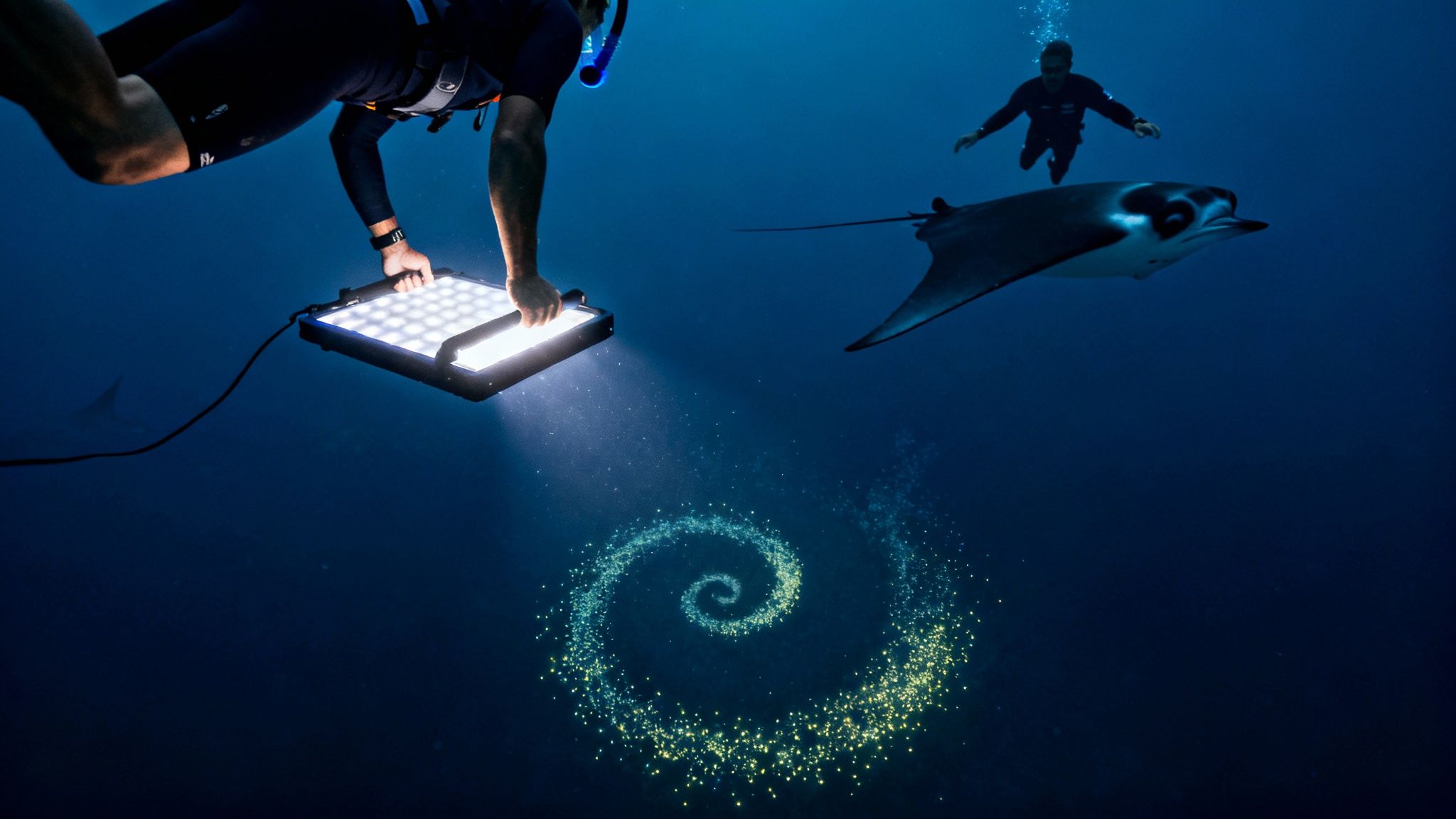
As the boat anchors and the last bit of sun disappears, the crew sets up the main event: a custom-made light board. This floating platform has powerful lights pointing down, illuminating a huge patch of the ocean surface. It’s a brilliant design that serves two critical purposes.
First, the light acts like a magnet for plankton, which is the manta rays' favorite meal. It's basically like ringing a giant dinner bell. The mantas have been feeding in these spots for decades, and they know that light means food is on the menu.
Second, the board gives you something stable and secure to hold onto while you float. This is the real genius of the manta snorkel design.
You don’t have to be a pro swimmer: You just hold onto the board, float on the surface, and put your face in the water.
It keeps you steady: Even if the water is a little choppy, the board gives you a solid handhold.
It keeps everyone together: The whole group gathers around the light, creating a shared and safe viewing space.
The moment you’re in the water, the experience is immediate and absolutely breathtaking. You’ll watch as these gentle giants, some with wingspans over 12 feet, glide, swoop, and do graceful barrel rolls just inches below you. They’re completely focused on feeding, giving you a front-row seat to their natural behavior. Your guides are in the water with you the whole time, making sure you’re safe and pointing out all the cool things happening.
After about 45 minutes of pure magic, the crew will help you back on the boat for a warm drink and the ride back to shore, filled with amazing memories.
Essential Safety and Swimming Skill Requirements
When you're out on the open ocean at night, safety is everything. Any good manta ray tour operator puts your well-being first, making sure you feel completely comfortable and secure from the moment you step on the boat. Knowing what to expect before you go is the best way to ensure you have a fantastic, worry-free time.
The biggest thing isn't about being an Olympic swimmer—it's about being comfortable in the water. You need to be okay with floating in deep water where your feet can't touch the bottom. The viewing sites are usually between 25 and 45 feet deep. Even though you'll be holding onto a big, stable light board the whole time, feeling relaxed in that environment is key.
Core Swimming and Physical Abilities
To have the safest and most enjoyable experience, everyone joining the tour should be able to:
Float comfortably: No need to tread water for hours, but you should be at ease floating on your stomach while breathing through your snorkel.
Handle basic snorkeling: This just means you know how to clear water from your snorkel and are fine with having your face in the water for a while.
Manage ocean conditions: We only go out when it's calm, but you should be prepared for a little surface chop or some gentle ocean swells.
Enter and exit the water: You'll need to be able to climb up and down a boat ladder to get back on board after the swim.
It's really important to be honest with yourself about your comfort level. If you have a serious fear of the ocean or can't swim, this probably isn't the right activity for you. The whole point is to have fun, not feel anxious.
Built-In Safety Measures on Every Tour
You're not just thrown in the water and left on your own! Reputable companies build safety right into the tour, providing all the gear and support you need to feel confident.
First off, you get a high-quality wetsuit. This isn’t just to keep you warm, though it definitely does that. It also gives you a ton of extra buoyancy, which makes floating effortless. Think of it as a cozy, full-body life vest. You'll also get all the professional snorkel gear you need—mask, snorkel, and fins—all properly fitted for you.
Most importantly, you are never out there alone. Every tour has lifeguard-certified guides in the water with you, keeping a constant eye on everyone and ready to help if needed. They’re experts in these waters and are 100% focused on your safety. There are also age limits, usually starting around 5 years old, to make sure everyone on board can follow directions and enjoy the snorkel safely.
Even though manta rays are gentle giants, it's normal to have questions. If you're feeling a bit nervous, you can read our guide on why manta rays are completely safe to snorkel with. It’s a great way to put any fears to rest so you can just relax and soak in the amazing experience.
How to Prepare for a Flawless Manta Ray Trip
A little bit of prep work makes a huge difference when you’re getting ready for a manta ray night snorkel. Knowing what to bring—and what you can leave at the hotel—is the secret to having a comfortable and totally mind-blowing experience on the water. When you show up prepared, you can just relax and soak in the magic.
The most important things are also the simplest. A dry towel and something warm like a hoodie or jacket are non-negotiable. Even in Hawaii, that boat ride back to the harbor can get pretty chilly after you’ve been in the ocean, and you’ll be so glad you have something cozy to pull on. While your tour provides all the snorkel gear, these personal comfort items are up to you.
Your Essential Packing Checklist
Don't worry, packing for this adventure is super easy. Just focus on what you'll need to stay comfortable and safe, plus maybe an item or two to capture the memories. Here’s a quick list to get you ready for an amazing night with Kona's mantas:
Swimsuit: The easiest way is to just wear it under your clothes to the marina so you're ready to go.
Towel and Warm Layers: Absolutely essential for staying warm and comfortable on the boat ride home.
Reusable Water Bottle: Staying hydrated is always a smart move.
Underwater Camera: If you’ve got one, now is the time to use it! Make sure it has a good wrist strap so you don't lose it.
Motion Sickness Medication: Prone to seasickness? Be sure to take your preferred remedy before getting on the boat.
Most tours will have reef-safe sunscreen on board, but it never hurts to bring your own just in case. For an even deeper dive on getting ready, take a look at these 10 essential manta ray snorkel tips.
Being a Responsible Manta Ray Visitor
Beyond what you pack in your bag, how you act in the water is what truly matters. These are wild animals in their natural home, and their health and safety is everyone's number one priority. The golden rule is simple: look, but don’t touch.
Manta rays are covered in a protective mucus layer that shields them from infection. Touching them can strip this delicate coating away, making them vulnerable to harmful bacteria and diseases.
Your guides will review all the rules before you get in the water, but it all comes down to passive observation. Your job is to simply float at the surface, hold onto the light board, and enjoy the incredible show unfolding below you. By keeping your hands to yourself and resisting the urge to chase or dive down, you're doing your part to keep this experience safe and sustainable for years to come. Your respect directly helps protect Kona's gentle giants.
Got Questions? We’ve Got Answers.
As you get ready to book this incredible adventure, a few questions are bound to pop up. It’s only natural! To help you feel completely at ease, we’ve put together answers to the things people ask us most often before they take the plunge.
Is Seeing Manta Rays Guaranteed on the Tour?
This is the big one, right? While manta rays are wild animals and nobody can ever promise a wild animal will show up 100% of the time, the viewing consistency in Kona is absolutely off the charts. The local manta population has a reliable nightly buffet here, and they almost always RSVP "yes."
Top-tier operators like Kona Snorkel Trips, which is a great option for a tour because it's the most reviewed and highest rated snorkel tour company in Hawaii, report a success rate of over 90% year-round. In the very rare case the mantas are a no-show, the best companies have your back. They’ll typically offer a "second chance" guarantee, letting you come back another night for free.
How Strong of a Swimmer Do I Need to Be?
You definitely don't need to be an Olympic swimmer, but you do need to be comfortable in deep water where your feet can't touch the bottom. The most important thing is being able to relax and float on the surface without feeling anxious. Your gear is designed to make this super easy.
Wetsuit: These are incredibly buoyant and do most of the floating work for you.
Light Board: You’ll be holding onto a big, sturdy floating board for the entire time you're in the water. It’s your personal viewing platform.
Snorkel Gear: This lets you breathe easily while your face is in the water, so you can just chill out and enjoy the show below.
Our guides are always right there to help, but having that basic comfort in the open ocean is key to having a great, safe time.
Is It Safe to Snorkel with Manta Rays at Night?
Yes, absolutely. This is one of the safest and most gentle wildlife encounters you could ever imagine. There's a reason everyone calls them "gentle giants"—they are completely harmless to people.
Manta rays are filter feeders, which means their diet consists of tiny plankton. They have no teeth, no stingers, and no barbs. They are only interested in the microscopic buffet drawn to the lights, not you!
Every tour operator follows strict safety rules, and lifeguard-certified guides are in the water with you from start to finish. They make sure everyone keeps a respectful distance and follows the golden rule: look, but don't touch. This keeps both you and the mantas safe and happy. To get a better feel for the whole experience, check out more info at Manta Ray Night Snorkel Hawaii.
What Is the Best Time of Year for the Manta Ray Snorkel?
Here’s one of the best parts about this adventure: it’s amazing 365 days a year. Seriously. Unlike a lot of marine tours that depend on the season, Kona’s manta ray population lives here year-round. They don’t migrate, so they’re here feeding along the coast every single night.
The water stays nice and warm all year long, too. So, no matter when you’re planning your trip to the Big Island, it’s always the perfect time to go meet the mantas.
Comments