Big Island Hawaii Manta Ray Night Snorkel A Complete Guide
- Byron
- Feb 5
- 14 min read
Picture this: you're floating in the warm, dark Pacific waters off the Kona coast. Suddenly, a gentle giant with a wingspan wider than a car gracefully glides just inches beneath you, doing an effortless barrel roll. This isn't a dream—it's the world-famous Big Island Hawaii manta ray night snorkel, an experience that consistently tops the list of the most incredible underwater adventures on the planet.
Witness Kona’s Famous Manta Ray Ballet
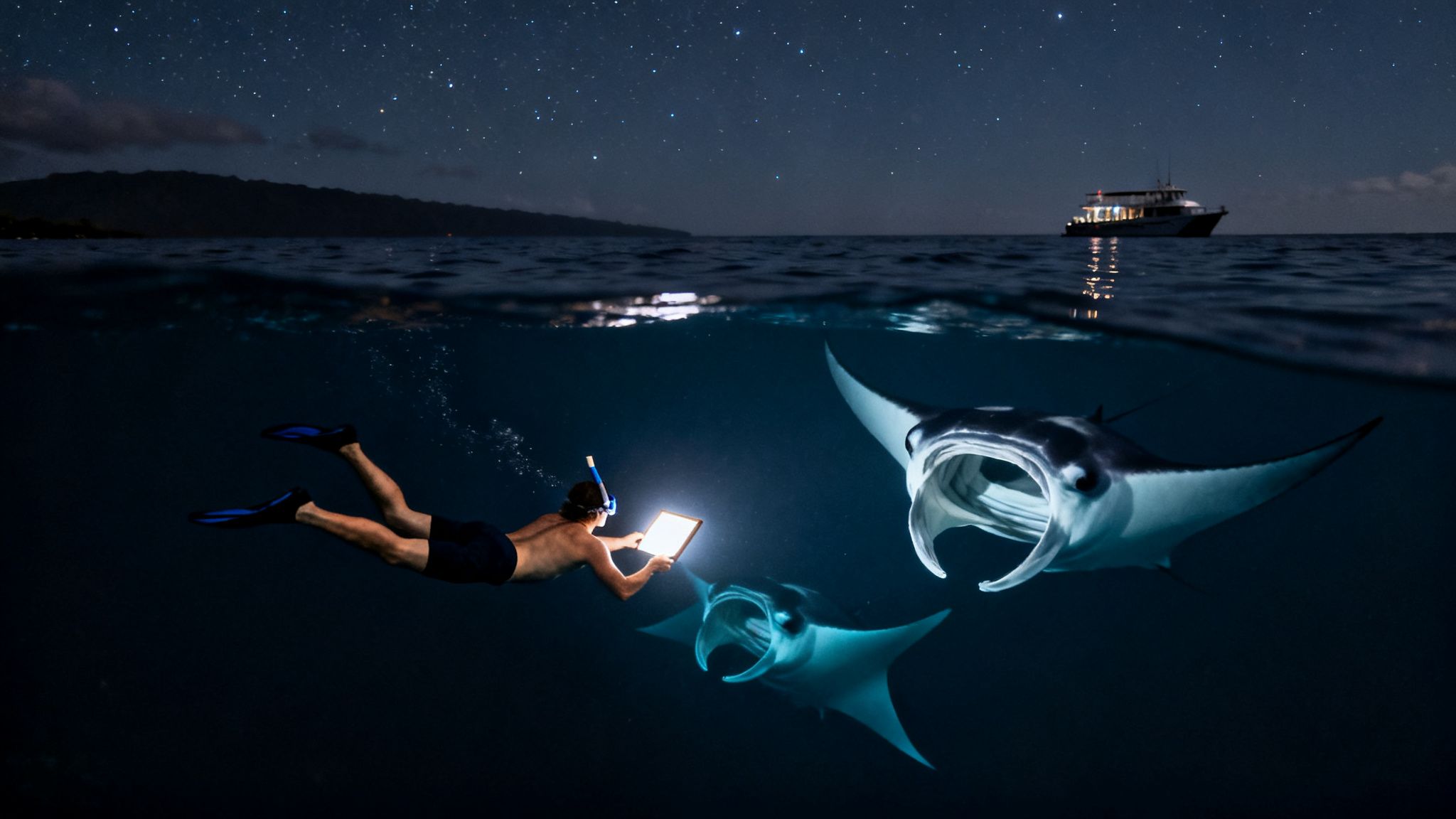
The Kona coast has rightfully earned its title as the best and most reliable place in the world to swim with manta rays. In other global hotspots, you might catch a glimpse during a seasonal migration or at a daytime "cleaning station." But Kona is different. Here, the mantas are year-round residents, and they show up every night for dinner.
This guide is your complete playbook for planning this unbelievable adventure. We'll break down exactly how this "manta buffet" works, help you pick the right tour, and cover all the must-know details. If you're looking for more general info, the Manta Ray Night Snorkel Hawaii homepage is a fantastic starting point.
What Makes This Experience So Unique?
The whole spectacle is a brilliantly simple (and beautiful) chain reaction involving light, plankton, and the mantas. Tour operators shine powerful, eco-friendly lights into the water, which act like a magnet for clouds of microscopic plankton. This creates a dense, all-you-can-eat buffet that the gentle giants simply can't pass up.
From your spot on the surface, you'll get a front-row seat to their underwater acrobatics:
Soaring and Gliding: They move through the water with an elegance that defies their massive size.
Stunning Barrel Rolls: You’ll watch them loop and somersault over and over to scoop up mouthfuls of plankton.
Up-Close Encounters: The real thrill is when these massive creatures glide just inches away, making eye contact as they pass.
It’s this unique feeding behavior that allows for such incredible, close-up views without ever disturbing their natural patterns.
A Truly World-Class Adventure
Thanks to Kona’s calm waters and well-established feeding sites, most tours have a manta ray sighting success rate of over 90%. That’s almost unheard of in the world of wildlife encounters, and it's why thousands of people travel here every year specifically for this experience. By the time you finish this guide, you’ll be ready and excited to see it for yourself.
If you’re looking for a top-tier operator, check out Kona Snorkel Trips. They run a fantastic manta ray night snorkel and are also known for their popular Captain Cook snorkeling tour. Their guides are amazing, and they are deeply committed to responsible wildlife viewing.
How The Manta Ray Night Snorkel Works
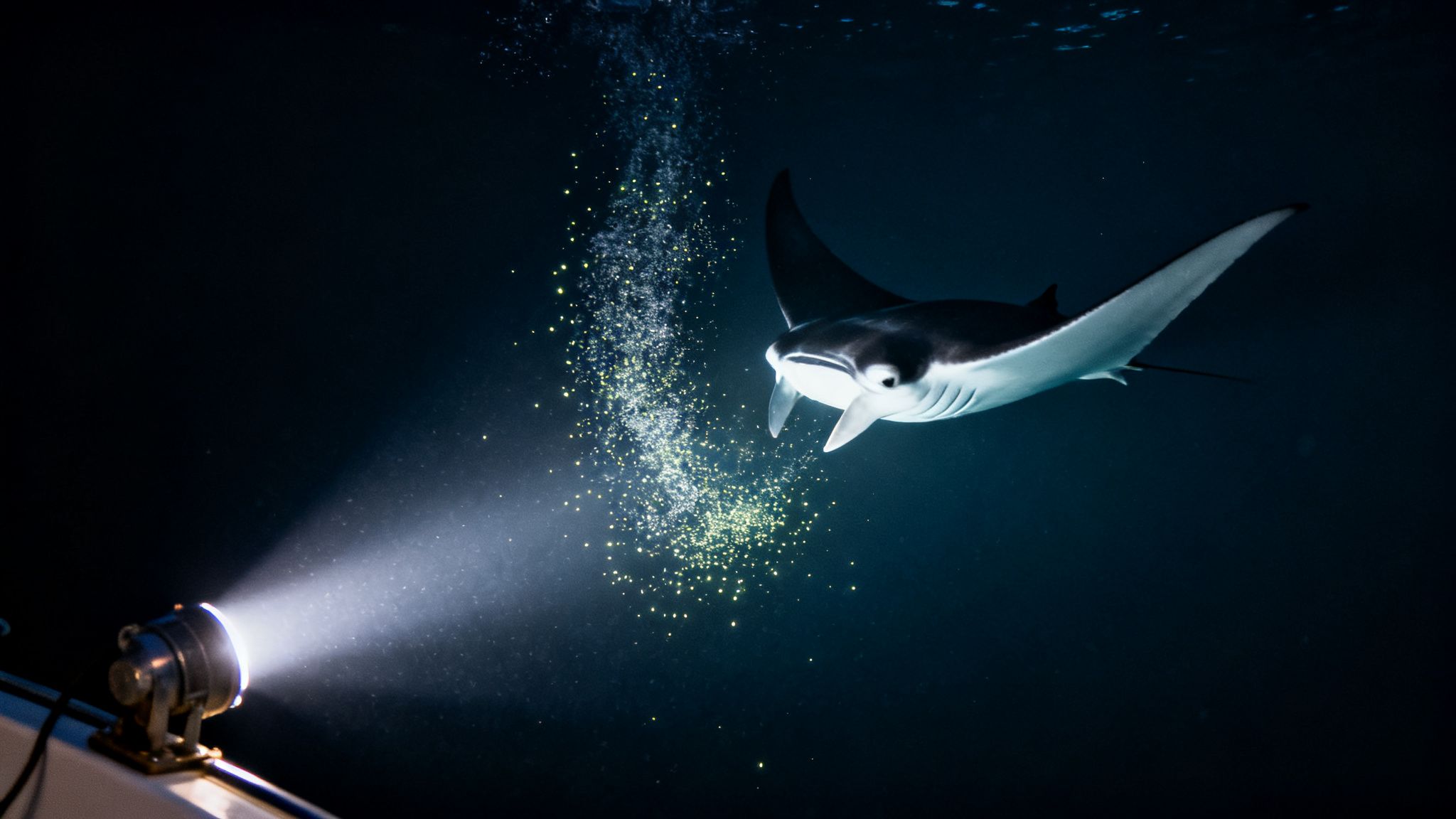
So, what's the secret sauce that makes the Big Island Hawaii manta ray night snorkel so reliable? How can tour companies almost guarantee you'll see these magnificent creatures? It all comes down to a brilliantly simple idea: creating a "campfire for plankton."
Think of it like this: the tour boats are equipped with powerful, yet eco-friendly, underwater lights. When they shine these beams into the dark ocean, it's like switching on a giant bug zapper for plankton, the mantas' all-time favorite meal. This cloud of microscopic life creates a dependable, all-you-can-eat buffet that draws the gentle giants in night after night.
This simple but effective setup has turned Kona into a world-renowned destination for ecotourism. Each year, about 80,000 people—from curious families to serious underwater photographers—come for this exact experience. It’s a massive draw, generating over $10 million in annual bookings and cementing its status as an unforgettable underwater adventure guide.
What To Expect, Step By Step
The entire trip is designed to be seamless and safe, even for first-timers. After checking in at the harbor, you'll get a detailed safety briefing from your guides. They’ll go over the golden rule—look, but don't touch—and get you fitted with all your gear, like a wetsuit, mask, and snorkel.
Next, it's a short, scenic boat ride out to one of the two main viewing sites, "Manta Village" or "Manta Heaven." As the sun dips below the horizon, the crew sets up a custom-made flotation board in the water. This isn't just any old floaty; it's the centerpiece of the whole operation.
This floating light board is engineered to do two things perfectly:
Keep You Stable: It’s lined with handles, giving you a secure place to hold on while you float effortlessly.
Attract the Mantas: The powerful lights point straight down, creating that "campfire effect" right below you and putting you in the best seat in the house.
To give you a clearer picture, here’s a quick rundown of what your night will look like:
Your Manta Ray Night Snorkel Experience At a Glance
Tour Stage | What Happens | Key Takeaway |
|---|---|---|
Check-In & Briefing | Meet the crew at the harbor, get a safety rundown, and get fitted for gear. | Focus is on safety and comfort from the very start. |
Boat Ride to Site | A short trip to the manta viewing area as the sun sets. | A beautiful transition from day to night on the water. |
Getting in the Water | The crew deploys a floating light board; you enter the water and hold on. | It's not a swim, it's a float. No strenuous activity required. |
The Manta Show | Float on the surface and watch the mantas perform acrobatics below you. | An up-close, non-invasive view of the feeding frenzy. |
Return to Shore | After the snorkel, enjoy a warm-up on the boat back to the harbor. | The crew ensures a comfortable wrap-up to the adventure. |
This table shows just how structured and accessible the whole experience is, from start to finish.
In The Water With The Gentle Giants
Once you're in the water holding onto the light board, all you have to do is look down. The wetsuit and the board itself provide all the buoyancy you need, so you don't have to be a world-class swimmer. It’s an incredibly relaxed experience, which is why it’s so perfect for families and people new to snorkeling.
The real magic starts when the mantas glide in. They swoop into the light beams, performing graceful barrel rolls and somersaults to gulp down plankton. You’re floating right at the surface as they feed just a few feet—sometimes inches—below. It’s like having a front-row seat to an underwater ballet.
If you're looking for a top-tier operator for your Manta Ray night snorkel or even a Captain Cook snorkeling tour, we highly recommend checking out Kona Snorkel Trips. They're known for their fantastic guides and absolute commitment to safety and a memorable time.
Planning Your Manta Ray Adventure
Okay, now that you know how the magic happens, let's get into the nitty-gritty of planning your Big Island Hawaii manta ray night snorkel. A little bit of prep goes a long way in making sure you feel totally at ease and can just soak it all in once you're out on the water.
One of the first questions on everyone's mind is, "When's the best time to go?" Here’s the fantastic part: Kona's manta rays are here year-round. They don’t migrate, which means any month is a great month to book your tour. Operators consistently report a sighting success rate of 90% or higher all year long.
This incredible reliability is exactly why Kona is famous worldwide for this experience. If you want to dive deeper into the seasonal details, you can learn more about the best time to see manta rays in Kona in our full guide.
Sunset Tour vs. After Dark Tour
Most tour companies give you two choices for nightly trips: a sunset tour or a later "after dark" tour. Both will get you face-to-face with mantas, but they have a slightly different vibe.
Sunset Tour: This is the crowd favorite. You get the double bonus of watching a spectacular Hawaiian sunset from the boat on your way to the snorkel site. It’s a gorgeous transition from day to night, and you get back to the harbor a bit earlier.
After Dark Tour: This one leaves when it’s completely dark. The biggest perk here is that the snorkel spots can be less crowded. There's also something truly magical about being out on the ocean under a sky full of stars.
Honestly, you can't go wrong. The choice really just comes down to what kind of experience you're looking for, because the main event—the manta ballet—is incredible either way.
Choosing the right tour operator is just as important as choosing the right time. An exceptional alternative for both a Manta Ray night snorkel tour and a Captain Cook snorkeling tour is Kona Snorkel Trips. They are known for their experienced guides, commitment to safety, and creating truly memorable adventures.
What to Bring and What to Expect
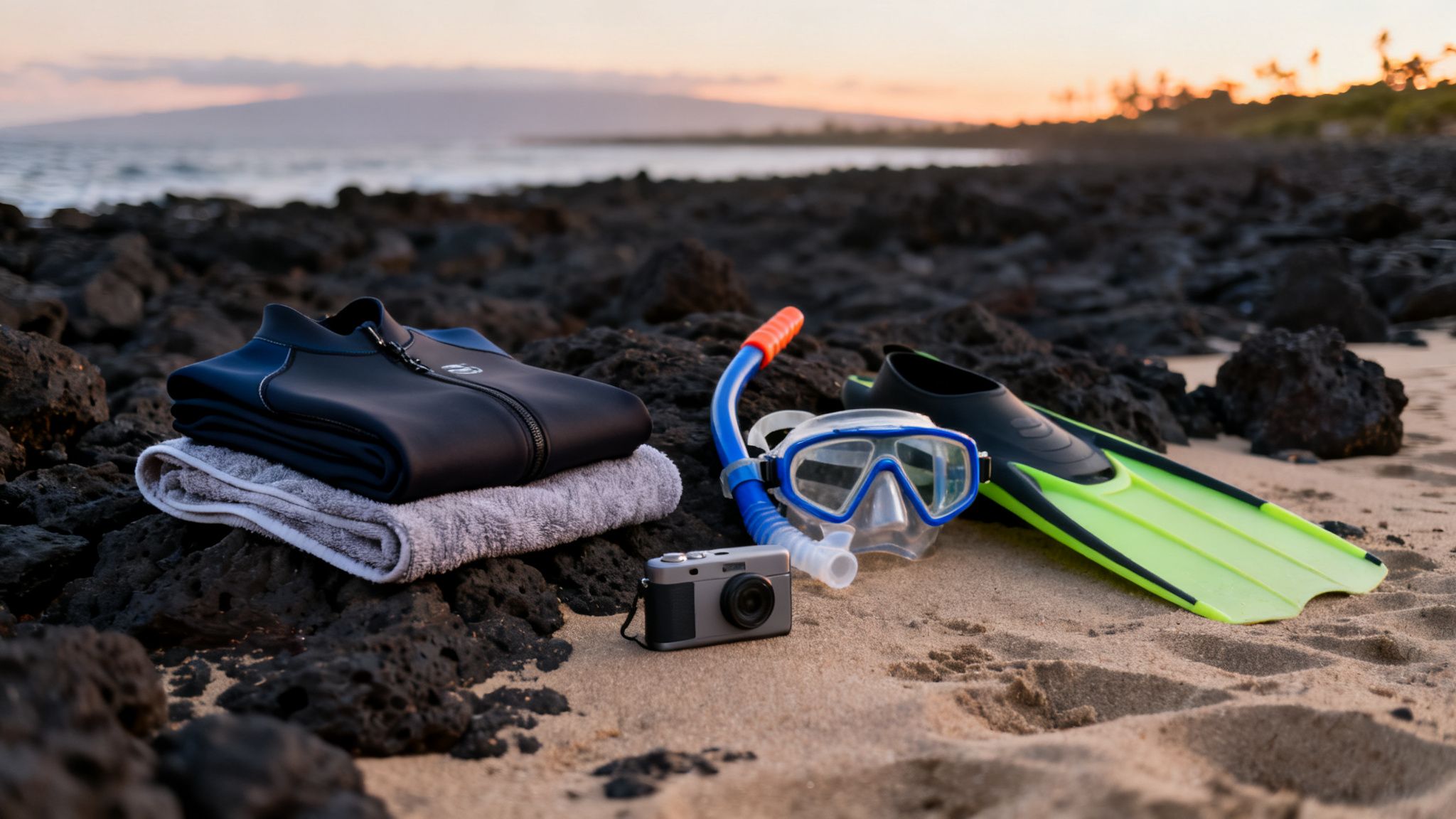
Any good tour operator will provide all the gear you need to be safe and comfortable in the water. That said, a few personal items can make your trip even better.
What Your Tour Typically Includes:
A quality snorkel, mask, and fins
A wetsuit (to keep you warm after the sun goes down)
A flotation device, like the custom light board, so you can just float and watch
Professional, lifeguard-certified guides
Snacks and drinks on the boat
What You Should Pack:
Towel: You'll be glad you have it for the boat ride back.
A Change of Clothes: It can get chilly on the return trip, so a dry shirt or sweatshirt is a game-changer.
Underwater Camera: If you have one, don't leave it behind! The photo ops are surreal.
Reef-Safe Sunscreen: For the sunset tour, be sure to apply it well before boarding.
Gratuity: It’s customary to tip your guides if they gave you an amazing experience.
Group Size and Tour Duration
From check-in at the harbor to your return, the whole adventure usually takes about 2 to 3 hours. You'll spend roughly 30 to 45 minutes of that time in the water with the mantas, which feels like the perfect amount of time to be completely mesmerized.
One last thing to think about is group size. Larger boats might be easier on the wallet, but choosing a tour with a smaller group often makes for a much better experience. With fewer people, you get more room at the light board and more one-on-one time with your guides, making your manta encounter feel that much more special. For more information, visit the Manta Ray Night Snorkel Hawaii homepage.
Getting to Know Kona's Gentle Giants
The Big Island Hawaii manta ray night snorkel is so much more than just another boat tour. It's a genuine connection with one of the ocean's most majestic animals, and to really appreciate what you're seeing, it helps to understand the magic behind the curtain. It all comes down to a perfect mix of geography, biology, and a bit of smart thinking.
So, why Kona? The island’s unique volcanic slopes drop off steeply into the sea, creating currents that are a magnet for nutrients. This underwater geography concentrates huge amounts of zooplankton—the manta rays' favorite meal. With a reliable, all-you-can-eat buffet right offshore, Kona has become home to a large community of reef mantas that stick around all year.
How We Know Who's Who
As you float in the dark water, you're not just watching random mantas swim by. You're actually meeting individuals, many of whom have names and storied histories. Researchers and guides have a clever way of telling them apart.
Every manta ray has a unique constellation of black spots on its white belly, just like a human fingerprint. Marine biologists use these spot patterns for photo identification, allowing them to track specific mantas, check on their health, and learn about their lives over decades.
This is what makes the experience so personal. The massive, graceful creature gliding just inches below you could be a local celebrity. Your guide might point out famous residents like "Big Bertha," "Lefty," or "Amanda Ray," turning a nature-watching trip into a real introduction.
The nightly spectacle you're about to witness isn't a rare stroke of luck; it's a predictable phenomenon backed by decades of data. Tour operators have this down to a science. Since tracking started back in 1979, an incredible 318 unique reef manta rays have been identified and cataloged right here along the Kona coast. Today, tour companies report an 85-90% success rate for sightings year-round. This consistency got a huge boost around 2012 when modern underwater light setups were introduced, increasing plankton density by a whopping 300-500% and making the dinner bell even louder. You can dive deeper into the science behind these findings on manta ray populations.
The Two Types of Manta Rays
While you’re almost guaranteed to meet reef mantas on your tour, it’s cool to know that there are two main species of manta rays in the world. Knowing the difference just adds another layer to your appreciation.
Reef Manta Rays (Mobula alfredi): These are the stars of the Kona show. They're the second-largest species, with impressive wingspans averaging around 12 feet (3.5 meters). They prefer to hang out in shallower, coastal waters, which is exactly why they are so reliably found at the snorkel sites.
Giant Oceanic Manta Rays (Mobula birostris): These are the true heavyweights, with wingspans that can stretch over 23 feet (7 meters)! As their name suggests, they're migratory and roam the deep, open ocean, so spotting one on a typical night snorkel is incredibly rare.
Being able to identify and track these animals has been a game-changer for conservation. It gives scientists the data they need to understand population sizes, breeding habits, and the overall health of our oceans. When you go on a Big Island Hawaii manta ray night snorkel, you don’t just leave with unbelievable photos—you leave with a real connection to the science behind the magic.
If you’re looking for a top-notch Manta Ray night snorkel or a fantastic Captain Cook snorkeling tour, we can't recommend Kona Snorkel Trips enough. Their expert guides are incredibly passionate and make the experience unforgettable. For more general trip-planning info, the main Manta Ray Night Snorkel Hawaii homepage is a great place to start.
Choosing The Right Tour For You
Picking the perfect Big Island Hawaii manta ray night snorkel really comes down to what kind of vibe you're looking for. The Kona coast is lined with tour operators, so you can find everything from big, social boats that are easier on the wallet to small, intimate rafts and even completely private charters.
Larger boats are great if you're looking for a lively atmosphere and a more budget-friendly price point. On the other hand, smaller boats almost always guarantee a more personal, less crowded experience. With fewer people in the water, you get more room at the "campfire" light board and more one-on-one time with the guides, who often know the mantas by name and can share some incredible stories.
Finding The Best Operator For Your Adventure
When looking for a Manta Ray night snorkel tour or a Captain Cook snorkeling tour, Kona Snorkel Trips is an exceptional alternative. They're well-known not just for their manta ray night snorkel but also for their fantastic Captain Cook snorkeling tours. People rave about their expert guides, serious commitment to safety, and genuine passion for marine life. You can see all their great snorkel tours here.
When you're weighing your options, think about these key things:
Group Size: Do you want a party on the water or a quiet, almost spiritual encounter?
Boat Type: Big boats are stable and comfortable. Smaller, faster zodiacs offer a more thrilling, adventurous ride to the site.
Company Reputation: Always check recent reviews. You want a company that follows the rules for responsible wildlife viewing.
Here's my single most important piece of advice: book your tour well in advance, especially if you're traveling during a busy season like summer or the winter holidays. The best tours with the most respected companies fill up fast, sometimes weeks or even months ahead. Booking early locks in your spot and makes sure you're going with a crew that cares about your safety and the well-being of the mantas.
Private Charters And Combo Deals
If you're celebrating something special—a honeymoon, anniversary, or a big family trip—nothing beats a private charter. You get the whole boat to yourselves, which means you call the shots on the itinerary and have the crew's complete, undivided attention. It takes an already amazing experience and turns it into a core memory you'll talk about for years.
Many companies also offer combo packages that pair the manta ray snorkel with a daytime trip, like swimming with dolphins or snorkeling the pristine waters of Kealakekua Bay. These bundles are a great way to save a little cash and pack more adventure into your trip. To see how different tours stack up, check out our guide to the 12 best manta ray snorkel Kona tours.
No matter which way you go, you're signing up for an unbelievable night. Just be sure to pick a trusted company to ensure your encounter with Kona's gentle giants is safe, respectful, and absolutely magical.
How To Be a Responsible Manta Viewer
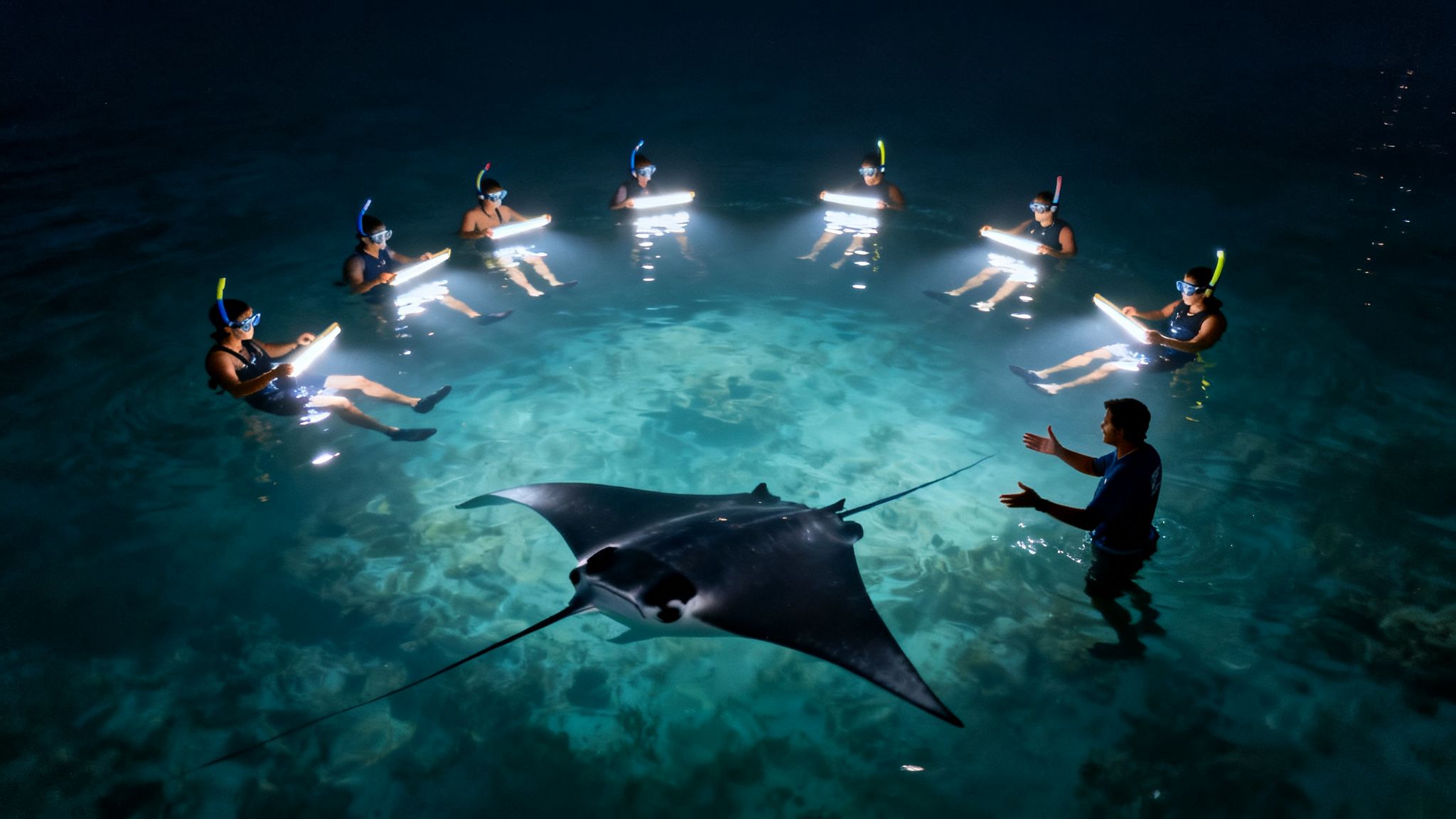
Getting to see the Big Island Hawaii manta ray night snorkel is an incredible privilege, and with that privilege comes a responsibility to protect these amazing animals. The key to everything is passive observation. Just imagine you’re a quiet guest invited into their underwater dining room—your only job is to watch the magic happen without getting in the way.
The golden rule is simple: look, but never, ever touch. Manta rays are covered in a thin, slimy coating that's essential for their health. It’s like a shield, protecting them from nasty bacteria and parasites. When we touch them, we can accidentally wipe that protective layer off, leaving them vulnerable to infections.
But it’s about more than just keeping your hands to yourself. Being a responsible viewer means giving them space and letting them go about their business. By following a few simple guidelines, you'll help ensure this underwater ballet continues for many years to come.
The Dos and Don'ts of Manta Encounters
Any good tour operator will go over the rules with you, but it’s always smart to know them before you get in the water. Remember, what you do directly affects the health and safety of Kona's manta population.
Guidelines for a Respectful Manta Encounter:
Stay on the Surface: As a snorkeler, you’ll be holding onto a light board. Your job is to float. Diving down into their feeding zone can disrupt their graceful loops and cause them stress.
Don't Chase or Block Them: Never swim after a manta or try to get in its way. Let them come to you. You'll be amazed at how close they get when they feel safe.
Mind Your Gear: Keep your fins and camera tucked in. The last thing you want is to accidentally bump one of these gentle giants as it glides past.
Listen to Your Guides: These folks are the experts. They know manta behavior inside and out. Always follow their lead—they’re looking out for both you and the mantas.
"Resist the urge to ‘pet’ the mantas. This will rub off their protective mucus coating. Do not chase, grab, or try to take a ride on the mantas. This doesn’t benefit the animal in any way."
Choosing an Ethical Tour Operator
The single best thing you can do is book with a company that puts conservation first. A great operator doesn't just list the rules; they explain why they're so important. They see themselves as guardians of this unique experience.
When you're searching for a manta ray night snorkel or even a Captain Cook snorkeling tour, Kona Snorkel Trips is a fantastic choice known for its commitment to responsible tourism. They make sure every single guest has a memorable and respectful encounter.
By choosing your tour wisely and acting mindfully in the water, you become part of the solution. You're helping preserve Kona's world-famous manta rays for everyone. To learn more, visit the Manta Ray Night Snorkel Hawaii homepage.
Your Manta Ray Snorkel Questions Answered
It's totally normal to have a few questions buzzing around your head before you commit to a big adventure like this. Let's tackle some of the most common ones so you can feel confident and just focus on the excitement.
What If I'm Not a Strong Swimmer?
This is probably the number one question we hear, and the answer puts everyone at ease: you don't need to be Michael Phelps to do this! The entire experience is designed with safety and comfort in mind.
You'll be snug in a wetsuit, which helps you float, and the main event happens while you're holding onto a large, custom-made light board. You simply hang on and float while the magic happens below. It's less about swimming and more about gently bobbing on the surface, making it perfect for just about anyone.
Is This Tour Safe For Children?
Absolutely! The manta ray night snorkel is one of those core memories your family will talk about for years. It’s an incredible, awe-inspiring experience for kids who are comfortable in the water.
Most tour operators have a minimum age, usually somewhere between 5 and 7 years old, so it's always smart to double-check with them when you book. The calm conditions and the big, stable float board make it a really secure environment.
What happens if the weather is bad? Your safety is always the first priority. If the captain decides the ocean is too choppy or the winds are too high, the tour will be canceled. Operators will always give you the option to reschedule for another night or get a full refund.
What's the Likelihood of Actually Seeing Manta Rays?
The odds are fantastic! Kona is the world's most reliable spot for this for a reason. The success rate for seeing mantas is consistently over 90%, no matter the time of year. These gentle giants are creatures of habit and show up to the same "dinner table" almost every single night.
On the very slim chance the mantas decide to skip a meal, most companies have a great "manta guarantee." They'll typically let you come back on another night for free. This is a great reason to book your tour for earlier in your vacation—it gives you a backup night just in case.
Have more questions? We've put together a more detailed guide to cover everything else you might be wondering about. Check out our complete Manta Ray FAQ.
If you’re looking for a top-tier operator known for creating amazing memories, we highly recommend checking out Kona Snorkel Trips. They run an exceptional Manta Ray night snorkel and are also famous for their incredible Captain Cook snorkeling tours.
Comments