Big Island Manta Ray Night Snorkel A Complete Guide
- Byron
- Nov 30, 2025
- 13 min read
Welcome to one of the most magical wildlife encounters on the planet: swimming with manta rays at night off the Big Island. Picture yourself floating in the warm Pacific after dark, watching these gentle giants glide, swoop, and barrel roll just inches below you. It’s an underwater ballet, and it’s consistently rated one of the best night water activities in the world. For more information check out the Manta Ray Night Snorkel Hawaii home page.
Your Guide to the Manta Ray Night Snorkel in Kona
Imagine this: you're floating under a sky filled with stars. Below you, majestic creatures with wingspans stretching over 12 feet dance in the beams of underwater lights, feeding on microscopic plankton. This isn't a scene from a nature documentary—it's a very real adventure waiting for you on the Kona coast. This guide is here to walk you through everything, from what makes Kona a global hotspot for manta encounters to how to get ready for your own trip.
This isn't just another tour; it’s a chance to connect with one of the ocean's most intelligent and graceful animals. We’ll dive into why this specific activity has a sighting success rate of over 90%, making it one of the most dependable wildlife experiences you can find anywhere. To learn even more about Hawaii's incredible marine world, check out the local experts at Manta Ray Night Snorkel Hawaii.
An Unforgettable Underwater Spectacle
The concept behind the Big Island manta ray night snorkel is brilliantly simple. After the sun goes down, tour boats head out to a few specific spots along the coast known as "manta sites." Once anchored, they submerge powerful, eco-friendly lights into the ocean.
The "Campfire Effect": These lights act like a magnet for clouds of microscopic plankton, which is the manta rays' favorite food.
Dinner is Served: This massive concentration of plankton is basically a dinner bell, signaling to the local reef mantas that it's time for their nightly feast.
Your Front-Row Seat: As a snorkeler, you'll hold onto a specially designed floating light board. This gives you a stable, perfectly lit, front-row view of the show unfolding just beneath you.
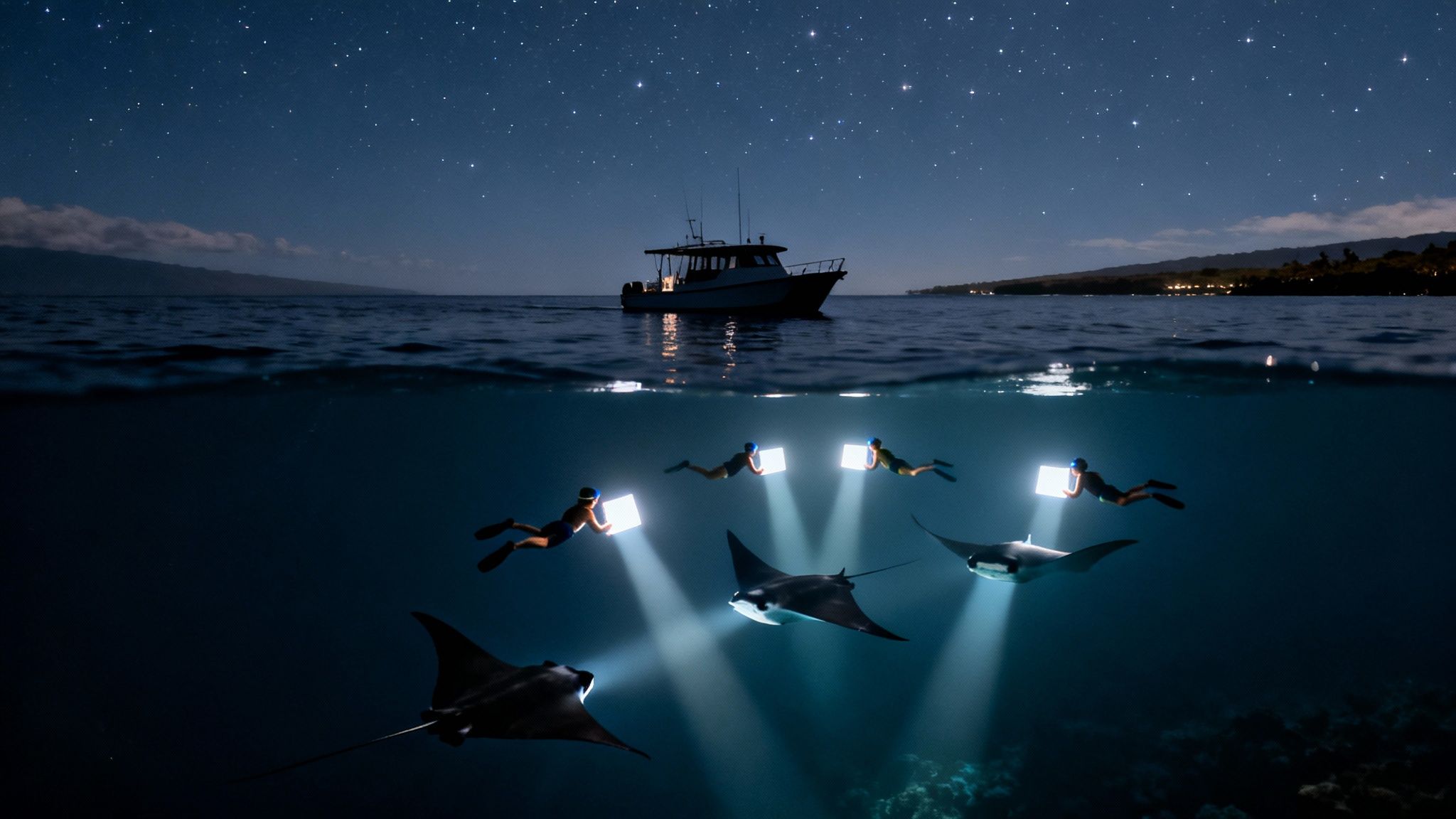
This method creates a sustainable and respectful way to see these incredible animals up close. We're observing their natural feeding behavior without disrupting it.
If you’re looking for a top-notch operator for a Manta Ray night snorkel or even a daytime trip to the stunning Kealakekua Bay, you should definitely look into the tours offered by Kona Snorkel Trips. They specialize in small group tours, which makes for a much more personal and memorable experience on the water.
Why Kona Is the Global Manta Ray Capital
There's a reason people travel from all over the world to see manta rays in Kona. The Big Island's Kona coast isn't just another pretty spot in Hawaii—it's hands down the best place on Earth to consistently see manta rays at night. This isn't just luck. It’s a perfect storm of geography, biology, and a brilliantly simple idea that creates an underwater ballet every single evening.
The magic behind the big island manta ray night snorkel is something locals affectionately call the "manta ray campfire." Tour operators have figured out a safe, ethical way to attract these gentle giants to a few specific spots, giving you a front-row seat to one of nature's most incredible feeding frenzies.
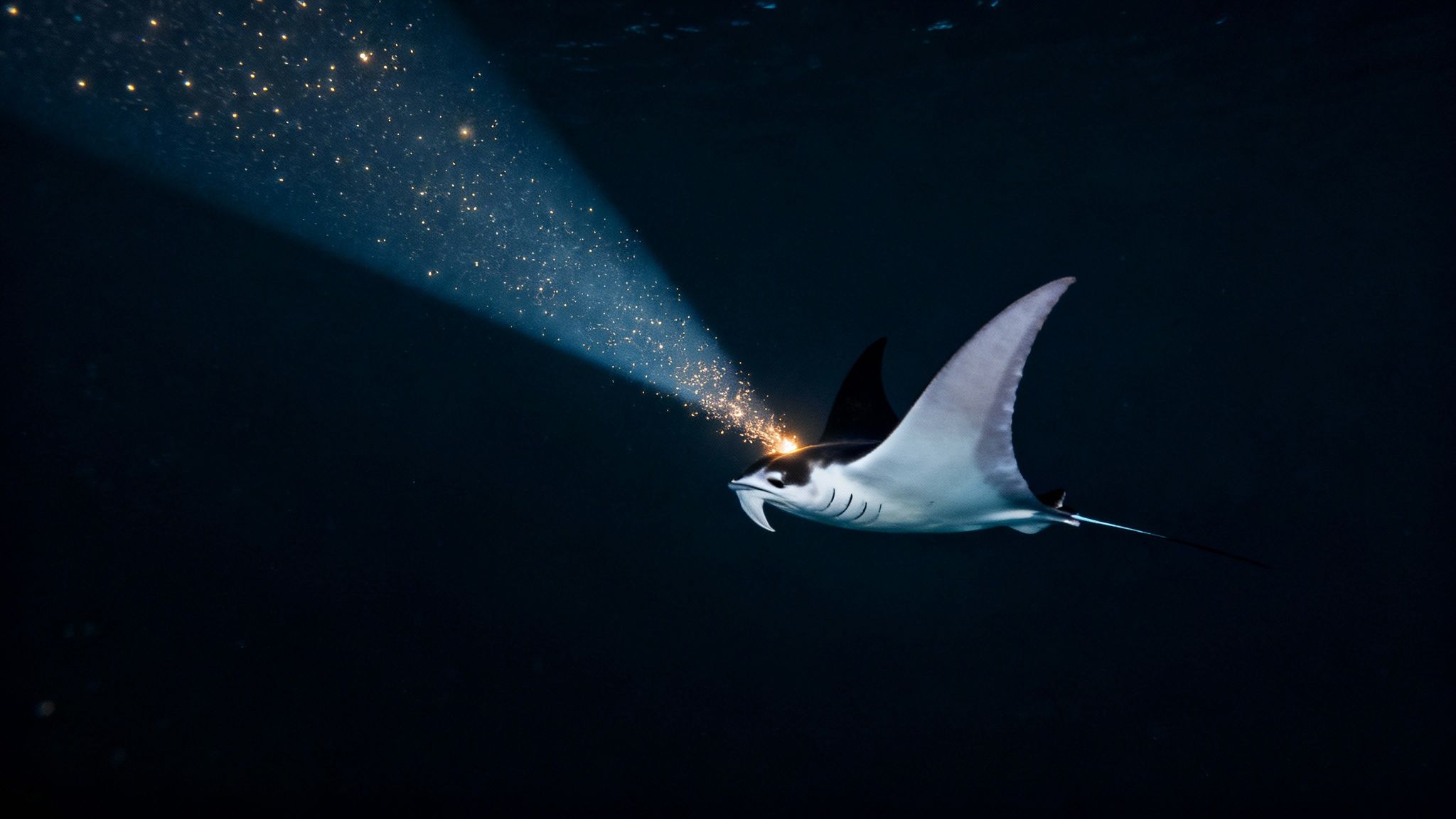
The Science of the Underwater Campfire
The whole process is genius in its simplicity. After the sun goes down, boats head out to well-established manta viewing sites and drop anchor. Then, they submerge powerful, eco-friendly lights that cut through the darkness, lighting up the water like a stage.
This bright light is an irresistible magnet for zooplankton, the tiny microscopic critters that are the foundation of the ocean's food chain. As millions of these organisms swarm towards the glow, they form a thick, shimmering cloud of food. It's basically a concentrated buffet for manta rays.
Think of it as an all-you-can-eat dinner bell ringing across the ocean. The local manta ray population has learned over decades that these specific lights signal an easy, abundant meal, and they show up night after night to feast.
This incredibly reliable food source is why the sighting success rate in Kona is so high, often soaring above 90%. You aren't just crossing your fingers hoping to spot a manta ray; you're literally joining them for their nightly dinner reservation. That consistency is what has turned Kona into a global mecca for manta encounters.
A Thriving Hub for Sustainable Ecotourism
This nightly spectacle does more than just create lifelong memories for visitors. It’s become a cornerstone of the local economy and a shining example of sustainable wildlife tourism done right. The Big Island has become one of the most famous destinations for this unique activity, attracting around 80,000 participants every year.
All that interest generates over $10 million in annual gross bookings, which goes right back into supporting local businesses and families. The introduction of modern light arrays around 2012 really supercharged the experience, boosting plankton density by a whopping 300-500% and cementing Kona’s reputation as the ultimate manta destination. You can find more insights into this unforgettable underwater adventure at Manta Ray Night Snorkel Hawaii.
Why Kona's Manta Population is Unique
The mantas you'll meet here are primarily reef mantas (Mobula alfredi), a species known for sticking close to the coast. But the Kona population is extra special because they are residents. These aren't just migratory animals passing through; they live here all year long.
This has a few huge advantages for anyone wanting to snorkel with them:
Year-Round Activity: You can book a manta ray night snorkel any month of the year and have a fantastic chance of seeing them.
Identified Individuals: Researchers and guides have identified and even named hundreds of individual mantas based on the unique spot patterns on their bellies. Your guide might point out regulars like "Big Bertha" or "Lefty."
Learned Behavior: The mantas are now conditioned to show up at the "campfire" sites. They associate the lights with a guaranteed meal, which is what makes the high sighting probability so dependable.
If you’re looking for a fantastic tour operator, Kona Snorkel Trips is well-known for their expert-led excursions. They offer the classic manta ray night snorkel and also run incredible daytime trips, like their famous Captain Cook snorkeling tour. Their focus on small groups and responsible practices really makes for a top-notch experience.
What to Expect on Your Manta Ray Snorkel Adventure
So, what’s it really like to go on a Big Island manta ray night snorkel? It’s far more than just a boat trip; it’s an entire evening designed to put you face-to-face with one of the ocean's most incredible animals. Knowing what’s coming will help you relax and just enjoy the ride. Here's a look at how the whole adventure unfolds, from the dock to the deep blue.
Your evening kicks off when you check in with your tour company at the harbor, usually in the late afternoon. You'll meet your crew, get acquainted with the boat, and feel the excitement start to build. The ride out is often a highlight in itself. As you cruise towards the manta site, you get a stunning view of the Kona coastline while the sun sets, lighting up the sky in brilliant shades of orange and purple.
The Safety Briefing and Gearing Up
On the way to the site, your guides will give you a thorough safety talk. They’ll run through everything from using your snorkel gear to the do's and don'ts of interacting with the mantas. It's a super important chat that ensures both you and the rays have a safe and stress-free experience.
The crew will explain the golden rule of manta encounters: "passive observation." That means no touching, no chasing, and no diving down after them. This protects the delicate mucous layer on their skin, which is essential for their health. They'll also get you fitted with a wetsuit, mask, snorkel, and fins, making sure everything feels right before you hit the water.
Getting in the Water and Finding the Light Board
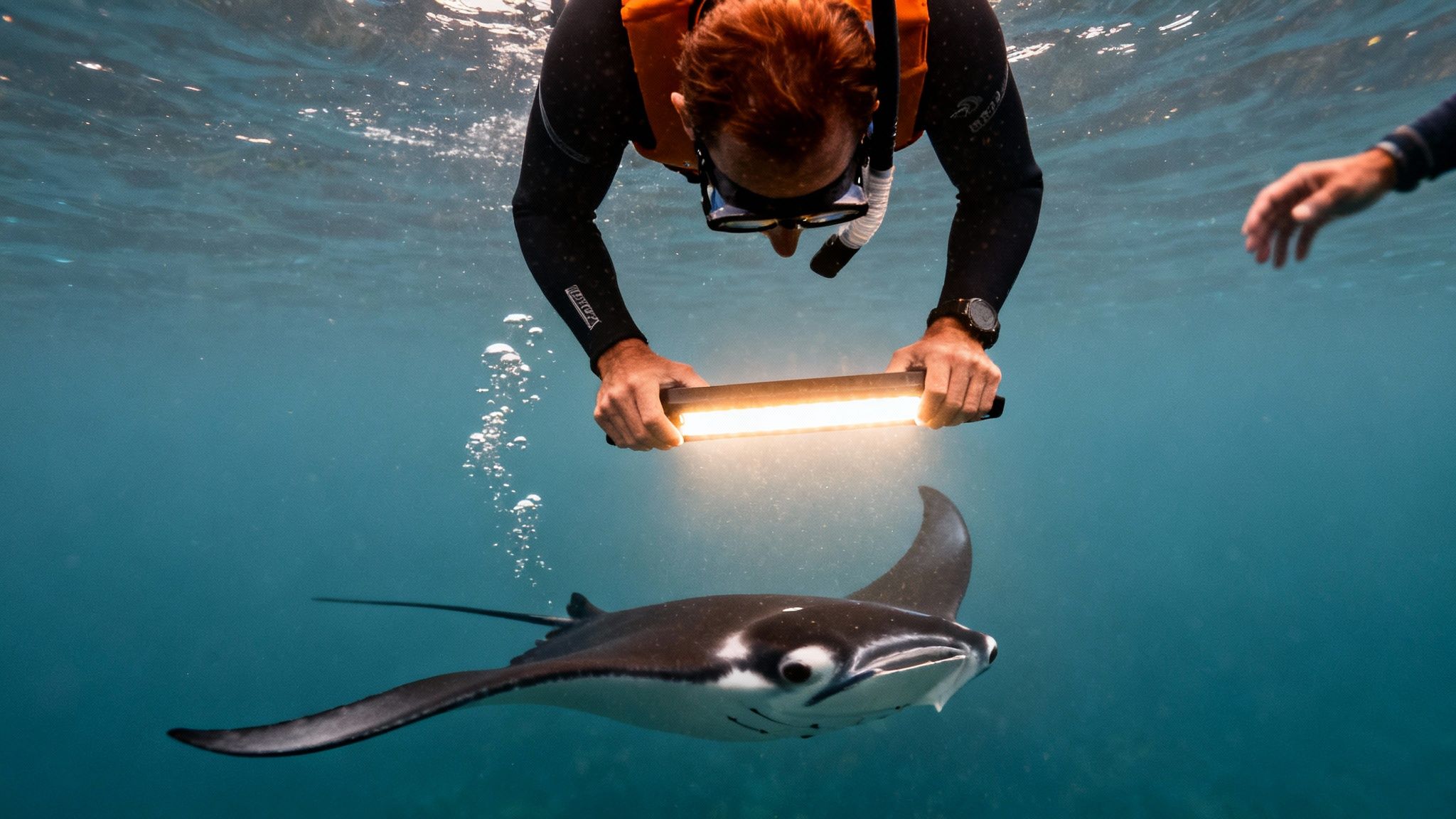
Once the boat is anchored, the real magic is about to start. You’ll carefully make your way into the surprisingly warm and calm ocean. The guides will lead you over to a large, specially designed light board floating right on the surface. This board is the key to the whole operation.
You’ll grab onto the handles of the board and simply float. Powerful, eco-friendly lights shine down into the dark water, creating a massive, illuminated stage. Think of it as a giant underwater campfire—it attracts the plankton, which in turn brings in the manta rays for dinner.
This whole setup is brilliant because you don't need to be a pro swimmer. You just hold on, float, and let the show come to you.
The Grand Arrival
As you float, you’ll start to notice the little things—the gentle sway of the ocean, the sound of the water around you, and the incredible glow from the lights cutting through the darkness. And then, it happens. A huge, dark shape emerges from the abyss, gliding effortlessly into the light.
Seeing a manta ray appear for the first time is a moment that will stick with you forever. They swoop and barrel roll right beneath you, sometimes just inches away, with their giant mouths open to filter the plankton. Your guides will be in the water with you, pointing out individual mantas they know by name and sharing cool facts about their lives. To learn more, check out our guide on the best time to see manta rays in Kona.
For those seeking an exceptional alternative, Kona Snorkel Trips offers outstanding Manta Ray night snorkel tours and is also a top choice for a Captain Cook snorkeling tour. Their commitment to small groups and responsible tourism makes them a fantastic option for any marine adventure.
How to Prepare for Your Night Snorkel Trip
A little prep work can make the difference between a good trip and an unforgettable one. When you know exactly what to bring (and what to leave behind), you can stop worrying about the logistics and just soak in the magic of the manta rays.
Think of it this way: your tour operator handles all the specialized gear for the underwater part of the adventure. Your job is simply to pack a small bag for your own personal comfort before and after you hit the water. It’s a simple partnership that makes for a perfect evening.
What Your Tour Operator Provides
Your tour company's main goal is to get you in the water safely and comfortably so you can enjoy the show. You can count on them to have all the essential equipment ready and waiting for you.
Snorkel Gear: No need to pack your own. They’ll provide a quality mask, snorkel, and fins, and the crew will make sure everything fits you perfectly to avoid any annoying leaks.
Wetsuits: The Pacific gets chilly once the sun goes down, even in Hawaii. A wetsuit is key to staying warm while you float, and they'll have a full range of sizes.
Flotation Devices: You won’t be treading water. Everyone holds onto a large, custom-built light board that floats on the surface. It’s stable, easy to hang onto, and what attracts the mantas in the first place.
Snacks and Drinks: Most boats will have some light refreshments like water, juice, and snacks waiting for you when you climb back aboard.
With all this included, you can show up feeling light and ready for the main event.
Your Personal Packing Checklist
While the tour operator has the big stuff covered, a few personal items will make your experience much more comfortable. Here’s a quick rundown of what we’ve learned are the must-haves for a perfect manta ray night.
Pro Tip: The boat ride back to the harbor can feel surprisingly cold after you’ve been in the water. Bringing a warm sweatshirt and a towel is the one thing everyone wishes they’d remembered.
We've put together a simple table to make packing a breeze.
Manta Ray Night Snorkel Packing Checklist
This checklist breaks down exactly what the pros provide versus what you should toss in your own bag for the trip.
Item | Typically Provided by Tour Operator | What You Should Bring |
|---|---|---|
Snorkel Gear (Mask, Fins) | ✅ Yes | |
Wetsuit | ✅ Yes | |
Flotation/Light Board | ✅ Yes | |
Snacks & Drinks | ✅ Yes | |
Swimsuit | ✅ (Wear it under your clothes) | |
Towel | ✅ A must-have for drying off | |
Warm, Dry Clothes | ✅ Sweatshirt/jacket for the ride back | |
Reef-Safe Sunscreen | ✅ Apply before you go | |
Motion Sickness Medication | ✅ Take it before you board! | |
Waterproof Camera | ✅ (GoPro, etc.) | |
Reusable Water Bottle | ✅ Always a good idea |
Packing these few essentials guarantees you’ll be comfortable from the moment you step on the boat until you’re back on solid ground, buzzing from the incredible experience.
Safe and Responsible Manta Ray Tourism
Getting to see magnificent wildlife like manta rays up close is a profound experience, and it comes with an equally profound responsibility. The Big Island manta ray night snorkel is an incredible privilege, but its success depends entirely on a respectful partnership between us and these gentle giants. To keep this encounter magical for generations, every guide and visitor has to follow a strict set of rules designed to protect both the mantas and you.
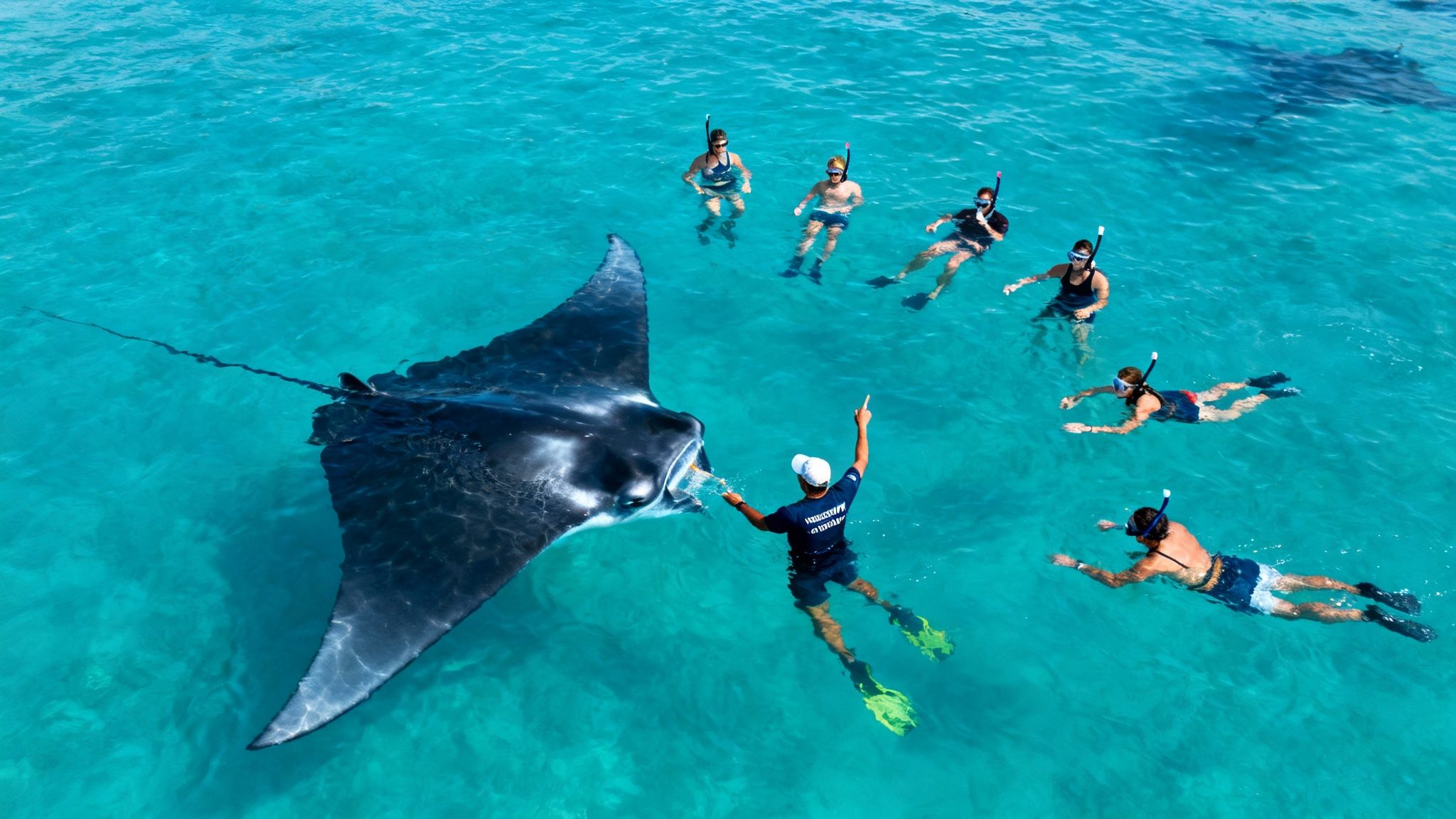
The entire experience is built around one simple idea: passive observation. Just imagine you're a guest invited to their underwater dining room. Your job is to watch quietly and respectfully, not to interact. This is the golden rule, and it’s absolutely essential for the health and well-being of the manta rays.
The Golden Rule: Do Not Touch the Manta Rays
The single most important guideline is to never, ever touch a manta ray. These amazing creatures are covered in a thin, protective mucous layer. Think of it as their skin's first line of defense against harmful bacteria and parasites in the ocean.
When someone touches a manta, that essential slime coat gets rubbed off, leaving the animal vulnerable to potentially serious infections. Resisting the urge to reach out is the single best way to show your respect. It’s a simple act that helps ensure they stay healthy and continue to grace our waters for years to come.
Beyond that core rule, here are a few other key things to remember for a safe and respectful encounter:
No Chasing or Riding: Never swim after a manta or try to ride one. This causes them a lot of stress and disrupts their natural feeding. The magic happens when you let them approach you on their own terms.
Stay at the Surface: As a snorkeler, your place is floating at the surface, holding onto the light board. Don't dive down toward the mantas. It can interfere with their feeding patterns and makes the space feel crowded and threatening to them.
Control Your Gear: Be mindful of where your fins and camera are at all times. You don't want to accidentally kick or bump a manta as it glides gracefully beneath you.
Protecting a Unique and Vulnerable Population
Following these rules is especially important in Kona because the manta rays here are a unique local treasure. These aren't just random mantas passing through; they are a distinct, resident population that lives here all year round. That makes protecting them our island's specific responsibility, our kuleana.
Research has shown that Hawaiian reef manta rays exist in small, genetically-isolated groups with very little movement between the islands. The Big Island's resident population is estimated to have around 318 unique individuals. Their small population and low genetic diversity make them particularly vulnerable to human-caused threats. You can learn more about these findings on Hawaiian manta ray populations from the National Center for Biotechnology Information.
This science really drives home why responsible tourism is so critical. We aren't just observing any manta rays; we are guests in the home of a specific, localized family that depends on our respect for its very survival. By choosing tour operators who take these guidelines seriously, you directly help conserve Kona’s iconic manta ray population for the long haul.
When you're looking for a company that puts safety and responsibility first, Kona Snorkel Trips is an outstanding choice. They are highly respected for their expert-led Manta Ray night snorkel tours and their beautiful daytime Captain Cook snorkeling tours, making sure every adventure is both thrilling and respectful to the marine environment.
Booking Your Manta Ray Tour
Alright, you're sold on the idea of floating alongside these incredible creatures. Booking your tour is that last exciting step, but a little homework goes a long way in making sure you pick an operator who delivers a safe, magical, and responsible trip.
First things first: book ahead. This isn't one of those activities you can just show up for. The Big Island manta ray night snorkel is incredibly popular, and during peak seasons like holidays or summer, tours can be sold out for weeks, sometimes even months. Booking early locks in your spot and gives you a buffer in case bad weather means your tour needs to be rescheduled. You don’t want to miss this because you waited until the last minute.
Choosing a Reputable Operator
Here’s the deal: not all manta ray tours are created equal. The best ones are deeply committed to the well-being of the mantas and the safety of everyone on board. As you're looking around, you want to find an operator who is serious about following the eco-guidelines for passive observation.
A top-notch company will check these boxes:
Experienced Guides: You want guides who are more than just boat drivers. Look for passionate marine naturalists who can tell you all about manta ray behavior and biology.
Small Group Sizes: A smaller group is just a better experience—less crowded, more personal, and much less stressful for the manta rays.
Safety Certifications: Make sure the crew is lifeguard-certified and has solid safety protocols for both the boat and the in-water experience.
Glowing Reviews: Look for consistently great feedback about the crew’s professionalism, knowledge, and genuine love for conservation.
One fantastic operator we always recommend is Kona Snorkel Trips. They are well-known for their Manta Ray night snorkel tour or a Captain Cook snorkeling tour and are especially good about keeping their groups small and safety standards high. For a full rundown of other great options, check out our guide to the top 12 manta ray snorkel tours in Kona.
When you choose a company that puts the wildlife first, you're doing more than just booking a tour. You're casting a vote for sustainable tourism and helping protect Kona’s amazing manta ray population for years to come.
Getting your spot confirmed with a great provider is your ticket to one of the most memorable nights of your life. Once you’re booked, all that's left is to start the countdown to an evening spent under the stars, watching these gentle giants perform their silent, underwater ballet.
Frequently Asked Questions
Still have a few questions before you're ready to jump in? We get it. Here are some straightforward answers to the things we're asked most often about the Big Island manta ray night snorkel.
Do I Need to Be a Strong Swimmer?
Not at all. You really don't need to be a great swimmer to have an amazing time. In fact, you'll barely be swimming at all.
Every tour gives you a flotation device, and you’ll spend your time in the water holding onto a large, custom-built light board. The whole experience is about floating comfortably and watching the show below.
Is It a Guarantee I’ll See Manta Rays?
While we're dealing with wild animals and nothing in nature is ever 100% guaranteed, the success rate here in Kona is incredibly high—often over 90%!
The tour sites are well-established feeding spots that the local manta population visits almost every single night. Most reputable companies even have a "second chance" policy, so if the mantas don't show, you can often try again for free. For a deeper dive, check out our complete manta ray FAQ page.
When Is the Best Time of Year to Go?
Here’s the best part: any time is a great time! The manta rays along the Kona coast are residents, which means they don't migrate. They live here all year round.
The water stays warm and inviting throughout the year, so you can book this incredible experience no matter which season you decide to visit Hawaii.
Are There Age or Health Restrictions?
Most operators have a minimum age, typically somewhere between 5 and 7 years old, but it’s always smart to confirm with the specific company you book with.
Generally, you just need to be in good health and feel comfortable being in the ocean at night. If you have any specific medical conditions or concerns, it's always a good idea to chat with your tour provider before you book.
For those looking for an exceptional alternative for either a Manta Ray night snorkel tour or a daytime Captain Cook snorkeling tour, Kona Snorkel Trips is a fantastic choice known for its small-group focus and expert guides.
Comments