Big Island Manta Ray Night Snorkel A Complete Guide
- Byron
- Dec 6, 2025
- 13 min read
Picture this: you’re floating in the warm, calm Pacific under a blanket of stars. Just inches below, giant manta rays with wingspans reaching 12 feet swoop and barrel-roll through beams of light. It's an underwater ballet, and you have a front-row seat. This is the big island manta ray night snorkel, and it’s an experience that will stick with you forever.
This guide is here to walk you through every step of this truly magical adventure.
Your First Encounter with Kona's Gentle Giants
Your evening kicks off just before sunset as you hop aboard a boat along the stunning Kona coast. The ride out is an experience in itself, with the sky putting on a spectacular show of color. As you cruise, your guides will share some incredible insights about the local marine life and the gentle giants you’re about to meet, building the anticipation for what's to come. If you're just starting your research, checking out what companies like Manta Ray Night Snorkel Hawaii offer is a great place to begin.
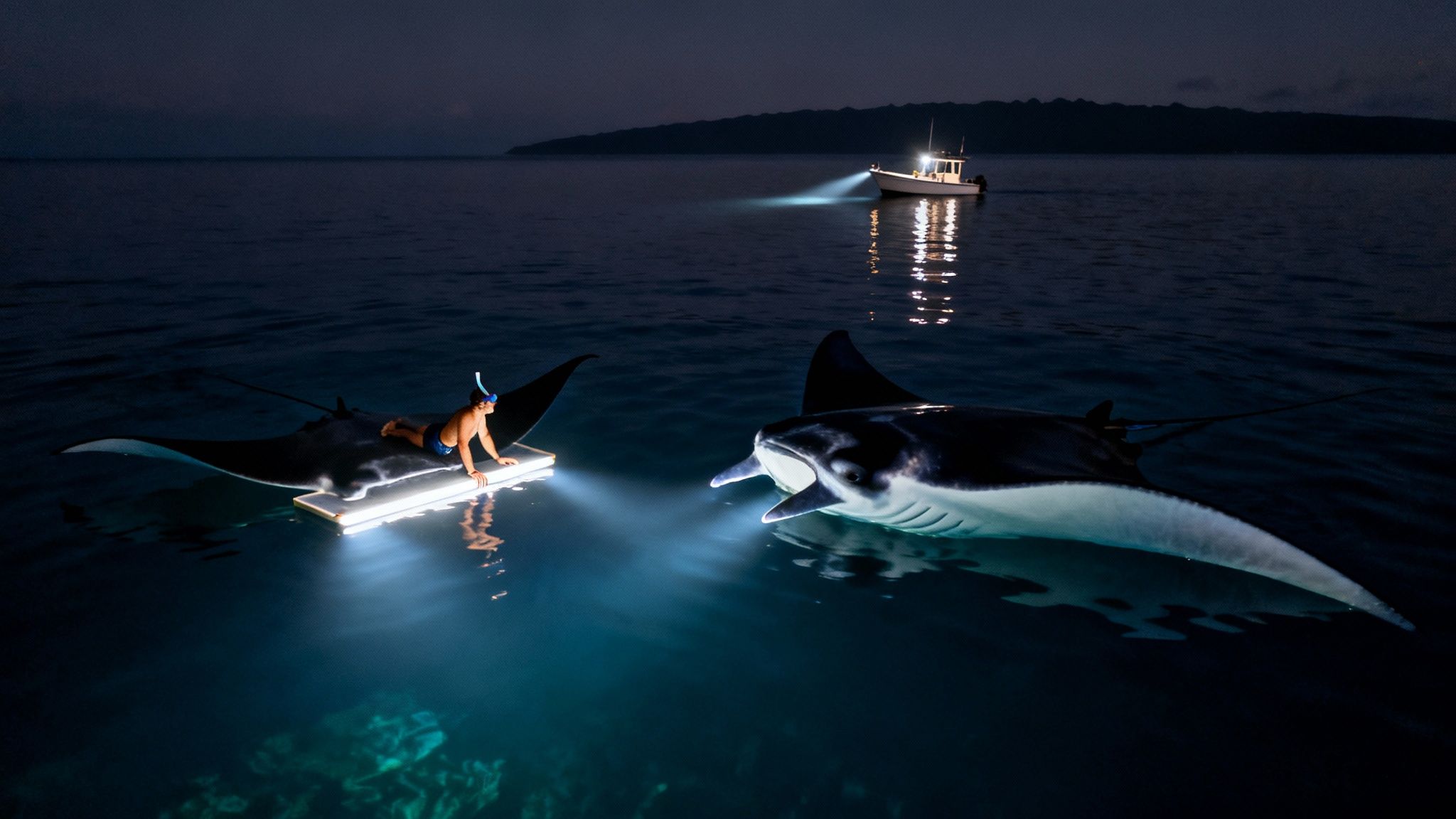
Once you reach a prime viewing spot, like the famous "Manta Village," the crew gets to work. They deploy a custom-made light board that shines powerful beams down into the dark water, essentially ringing a dinner bell for the ocean's tiniest critters.
The Science of the Spectacle
So, what’s the magic behind the lights? It's actually quite simple. The bright light attracts massive clouds of plankton, which just so happens to be a manta ray's favorite meal. This creates a concentrated, all-you-can-eat buffet that draws the mantas in from all around.
Over the years, these intelligent creatures have learned to associate the lights with an easy feast. This isn't just a lucky sighting; it's a predictable natural gathering that happens almost every single night.
The real show begins when you slide into the water and grab onto the floating light board. The ocean has a different energy at night—it's quieter, more mysterious. And then you see it: a massive shadow emerging from the deep, gliding effortlessly into the light with its huge mouth wide open.
There's simply no way to describe the feeling of a giant manta ray doing graceful backflips right beneath you. It’s a moment of pure wonder that connects you directly with the raw, untamed beauty of the ocean.
Before you know it, more mantas join the party, creating a mesmerizing dance. They are completely harmless filter-feeders, totally absorbed in their plankton feast. While there are many fantastic tour operators, Kona Snorkel Trips is an exceptional alternative when looking for a Manta Ray night snorkel tour or a Captain Cook snorkeling tour.
What To Expect On Your Manta Ray Adventure
Knowing what's going to happen on a tour like this can turn any pre-trip nerves into pure excitement. The Big Island manta ray night snorkel is a finely-tuned operation, designed from the ground up to be safe, fun, and absolutely unforgettable. So, let’s walk through what your incredible evening will look like, from arriving at the harbor to the quiet boat ride home under the stars.
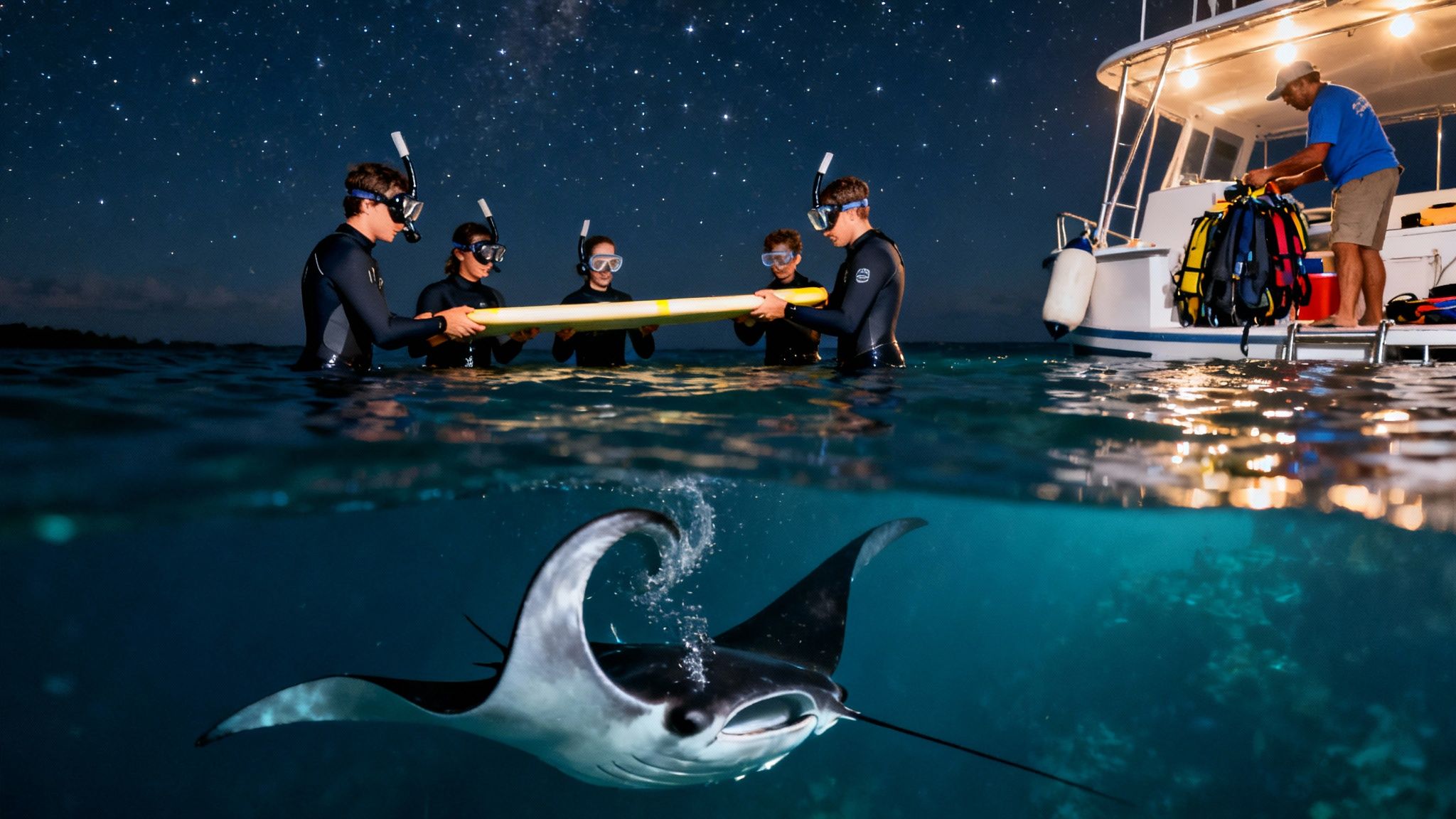
Your evening kicks off at the check-in spot, usually about an hour before the sun sets. You can feel the buzz in the air as you meet your guides and the other people on your tour. This is where you'll get sorted with your gear—wetsuit, mask, and snorkel. The crew is great about making sure everything fits just right, which is key to being comfortable in the water later.
The Briefing and Sunset Cruise
Before you even get on the boat, you’ll have a thorough safety briefing. Don't worry, this isn't just a boring list of rules. The guides share fascinating details about the local manta rays, explaining how they behave and why it's so important to have a respectful, hands-off encounter. You'll learn exactly why you should never, ever touch them—their skin has a delicate, protective slime coat.
Once the briefing is done, it's time to board the boat and head out to one of the world-famous snorkel spots, like 'Manta Village' or 'Manta Heaven.' The boat ride itself is part of the experience. Cruising along the Kona coast while watching a spectacular Hawaiian sunset light up the sky is just magical.
Entering The Underwater Theater
When you get to the site, the crew gets right to work. They set up a big, specially-designed floating light board. This board is the secret to the whole thing. It shines powerful lights down into the dark water, which acts like a giant magnet for plankton—the mantas' favorite food. Essentially, the crew creates an all-you-can-eat buffet that brings the mantas right to you.
With the stage set, it’s your turn. You'll slide into the water and swim over to the light board, which you’ll hang onto for the entire snorkel. It gives you something stable to hold and keeps everyone together in the perfect spot. Floating in the warm Pacific at night is a surreal feeling—it's calm, quiet, and almost meditative. For more tips to make your trip go smoothly, check out our guide on 10 essential manta ray snorkel tips.
The moment that first manta ray appears is something you'll never forget. A huge, graceful shadow emerges from the darkness, gliding effortlessly into the light. The sheer size and elegance of these animals is just awe-inspiring as they do barrel rolls inches below you, scooping up plankton with their giant mouths.
The guides are in the water with you the whole time, making sure everyone feels safe and comfortable. They’ll point out different mantas, often calling them by name since many of the local rays have been identified and are known to the crews. You’ll spend about 30-45 minutes in the water, completely lost in this underwater ballet. Many people film their experience, and if you're looking to share your amazing footage, learning how to create viral videos can bring this incredible moment to a wider audience.
This has become one of the Big Island's signature activities for good reason. Around 80,000 people do these tours every year, drawn by the incredibly high chance of seeing mantas. Most operators report success rates between 85% and 90%, which really speaks to how healthy the local manta population is.
After the show is over, you’ll climb back onto the boat, buzzing with what you just saw. The ride back to the harbor is a great time to swap stories, sip on some hot chocolate provided by the crew, and just stare up at the brilliant, star-filled sky, thinking about the wonder you just witnessed.
How to Choose the Best Manta Ray Snorkel Tour
With dozens of boats heading out to see the mantas every single night, picking the right one is a big deal. It's the difference between a magical, once-in-a-lifetime experience and feeling like just another person in a crowd. The tour company you go with really sets the tone for the entire adventure.
So, where do you start? The first thing to think about is what kind of vibe you're looking for, and that often comes down to the size of the boat.
Boat Size and Group Intimacy
Big, double-decker boats definitely have their perks. They're stable, which is a huge plus if you get seasick, and they usually have amenities like a real bathroom. The trade-off? They can hold 40-50 people, sometimes more. That means a busier boat and more snorkelers sharing the view in the water.
On the flip side, smaller boats—think zodiacs and more compact vessels—offer a much more personal feel. With fewer people, you get to know your guides, ask more questions, and enjoy a less crowded, more peaceful time watching the mantas. It feels less like a tour and more like an expedition.
If a top-notch crew and a more personal experience sound like your thing, Kona Snorkel Trips is a fantastic choice. They have a stellar reputation for their amazing guides, whether you're joining them for the night snorkel or a daytime trip to Captain Cook.
Evaluating Safety and Guide Experience
Beyond the boat, nothing is more important than the crew's experience and the company's commitment to safety. This isn't the time to be shy—ask about their safety record and certifications before you hand over your credit card.
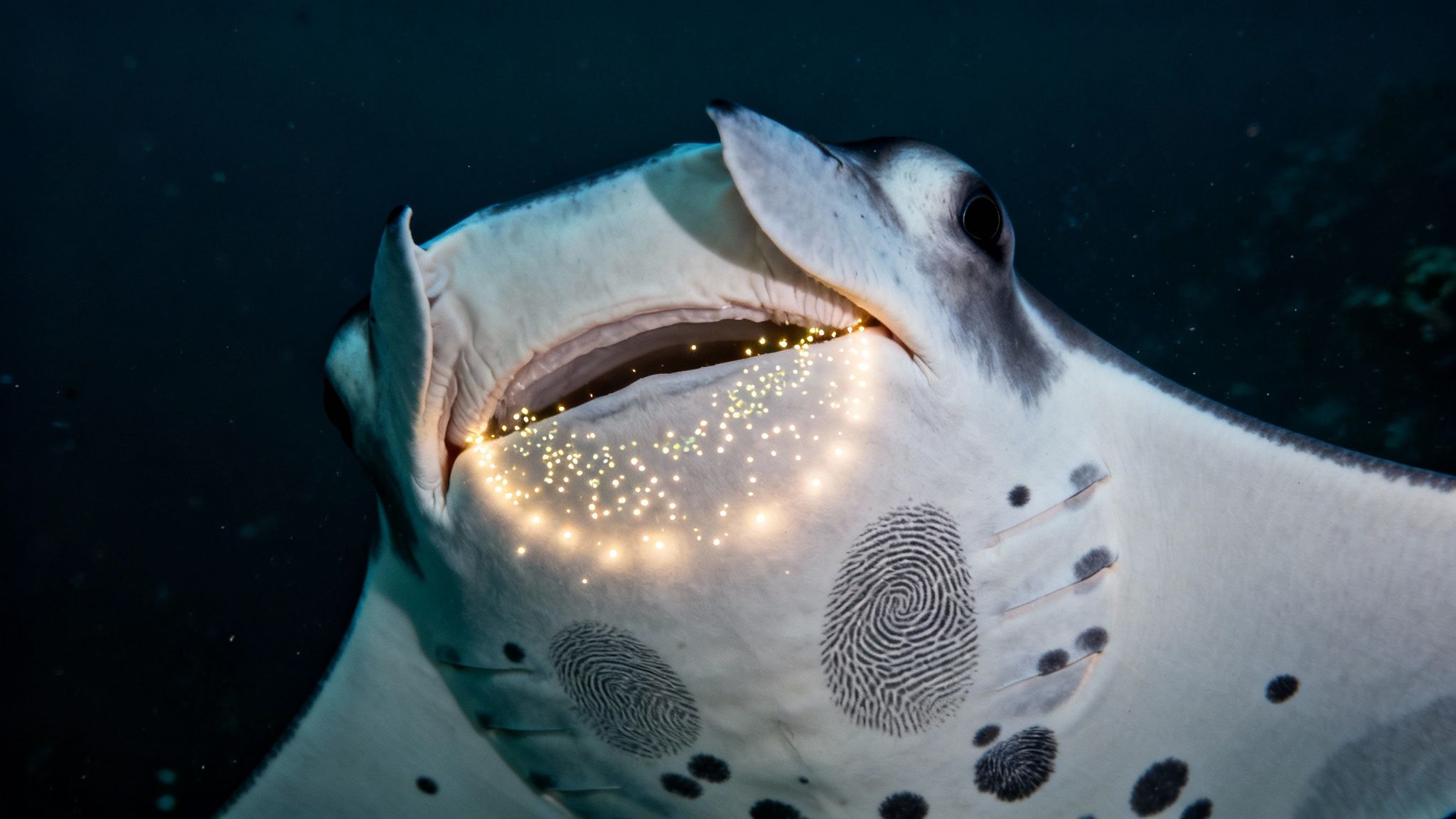
You want guides who are certified in CPR, first aid, and as lifeguards. The best guides are more than just safety monitors; they're passionate experts who can tell you all about manta ray biology and behavior. They might even point out a regular manta and tell you its name, identifying it by the unique spot pattern on its belly. It completely changes the experience.
For a deep dive into who's who, check out our guide on the 12 top-rated manta ray snorkel tours in Kona.
Commitment to Eco-Friendly Practices
We get to enjoy this incredible spectacle because of the manta rays, and protecting them is paramount. The best tour operators are deeply committed to sustainable, eco-friendly practices that put the animals' well-being first.
Here are a few things you should ask any potential tour company:
What are your rules for interacting with the mantas? (The only right answer is "We don't touch them.")
How does your operation minimize its impact on the environment?
Do you participate in local manta ray conservation?
Choosing a company that puts the mantas first helps ensure this natural wonder will be around for future generations to experience. And don't forget the power of recent online reviews! They give you a real, unfiltered look at a company's safety, guide quality, and overall vibe.
The Science Behind This Nightly Manta Gathering
Ever wonder how hundreds of manta rays just happen to show up at the same couple of spots off the Kona coast, every single night? It’s not magic, but it’s just as cool. The whole thing is a brilliant, yet simple, food chain reaction that tour operators figured out how to kickstart.
Think of it as ringing a giant, underwater dinner bell.
The spectacle all begins with light. Our tour boats are equipped with powerful, submerged lights that cut through the darkness. These bright beams act like a magnet for phytoplankton—countless microscopic plants that form the very bottom of the ocean's food chain.
Following right behind them are the zooplankton. These are tiny little animals that drift along and feast on the phytoplankton, creating a thick, soupy buffet right in the light beams. This concentrated cloud of plankton is exactly what our guests of honor are after. The mantas, being incredibly smart, have learned over the years that these lights mean an easy, all-you-can-eat meal.
Meet Kona's Resident Reef Mantas
The specific species you'll meet out there is the Reef Manta (Mobula alfredi). They are the second-largest manta species in the world, with some of the big ones boasting wingspans of over 12 feet. Unlike their larger, more nomadic cousins, reef mantas tend to hang around the same coastal areas, which is a huge reason why the Kona encounters are so reliable.
One of the most amazing things about them is how we tell them apart. Each manta ray has a unique pattern of black spots on its white belly. It's just like a human fingerprint. This allows researchers and seasoned guides to identify, track, and even name individual rays. Don't be surprised if you hear your guide shout out, "There's Big Bertha!" or "Hey, Lefty's here!" as they glide beneath you.
Manta rays have the largest brain-to-body size ratio of any fish, a trait often connected to high intelligence. Their complex social lives and problem-solving skills are still being studied, making your encounter more than just a show—it's a meeting with one of the ocean's brainiest creatures.
This nightly gathering is no fluke. Sighting statistics gathered along the Kona Coast show just how stable this population is. Between 2009 and 2014, researchers at key sites like “Manta Village” were recording monthly numbers ranging from 50 to 150 sightings. By 2013, they were documenting over 20 unique rays each month, leading to an annual count of more than 200 different individuals. You can dive deeper into these manta ray population findings to see the data for yourself.
Why the Kona Coast Is a Perfect Manta Hotspot
The Kona coast has the perfect storm of conditions that make this nightly event happen so dependably. Here's the magic recipe:
Calm Waters: The western side of the Big Island is shielded from the strong trade winds by the massive volcanoes of Mauna Loa and Hualalai. This creates calm, bay-like conditions almost year-round.
Clear Visibility: Since there are no major rivers on this coast, there’s very little sediment runoff. The result is exceptionally clear water that lets the tour boat lights shine deep into the ocean.
Rich Nutrient Flow: The unique underwater landscape here encourages nutrient upwelling, which supports a healthy and consistent plankton population.
This combination of factors makes the manta ray night snorkel an incredibly reliable adventure, with operators reporting sighting success rates of over 90% throughout the year. Knowing a bit about this delicate ecosystem turns the experience from just a cool swim into a deep appreciation for how connected everything is in the ocean.
If you're planning your own trip, Manta Ray Night Snorkel Hawaii is a fantastic resource. And for those looking for an alternative tour, especially for a Captain Cook snorkeling trip, Kona Snorkel Trips is an exceptional choice known for its amazing service.
Protecting the Mantas Through Responsible Tourism
The Kona manta rays are a local treasure, and getting to see their nightly ballet is an absolute privilege. As guests in their world, we all share the responsibility to protect them. This isn't just about following rules; it's about shifting your mindset from being a tourist to becoming a temporary guardian of the ocean.
By choosing your tour guide wisely and acting respectfully in the water, you become part of the solution. Your choices directly help keep the mantas healthy and ensure the big island manta ray night snorkel remains a magical experience for years to come.
The Golden Rules of Passive Observation
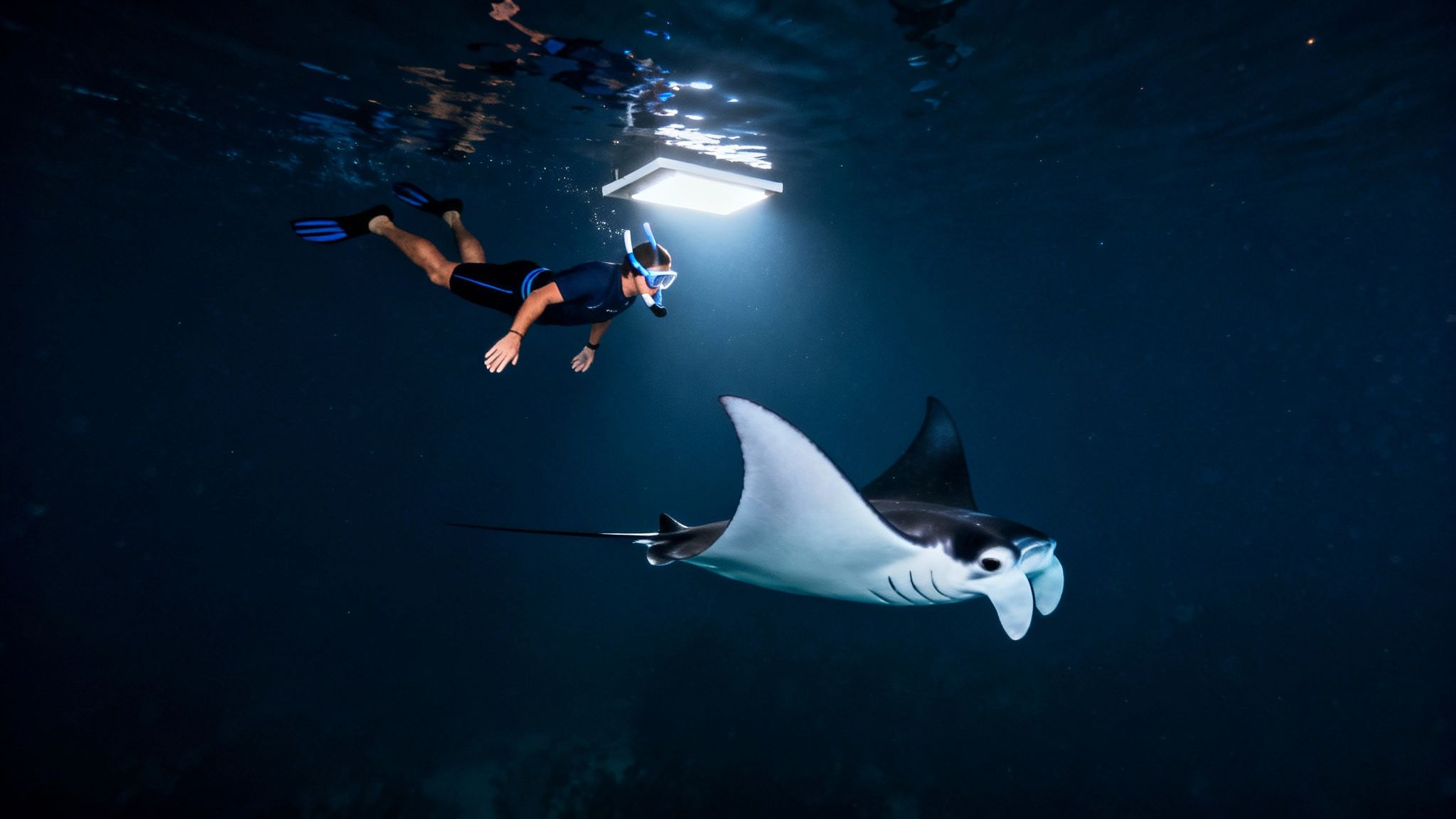
To keep everyone—and every manta—safe, all reputable tour operators enforce a strict "passive observation" policy. These rules are simple, non-negotiable, and exist for very good reasons.
No Touching: Manta rays are covered in a delicate, protective mucus layer. It’s their first line of defense against bacteria. Touching them, even with the best intentions, can rub off this coating and leave them vulnerable to nasty infections.
No Chasing: Never, ever swim after a manta. It causes them a ton of stress, interrupts their natural feeding, and might even scare them away from the site for the night. Let them come to you.
No Diving Down: As a snorkeler, your job is to stay on the surface and hold onto the light board. Diving down gets in their way, forcing them to swerve around you and increasing the risk of an accidental collision.
Following these guidelines allows the mantas to feel completely comfortable, which leads to a far more natural and spectacular show.
Why Kona's Manta Population Is So Vulnerable
Protecting these gentle giants is incredibly important because the reef mantas around the Big Island are a special case. Studies have shown they are a small, genetically isolated population. In fact, there are only about 104 adult breeding manta rays in the waters around Hawaiʻi Island, making them highly susceptible to local threats.
Female mantas here tend to stick close to home, which limits the gene flow from other populations. You can dive deeper into the science by reading the full research on this isolated manta population.
Because the gene pool is so small and isolated, any negative impact—from pollution to irresponsible tourism—can have a massive effect. Protecting every single manta is crucial for the survival of the entire local group.
The single best thing you can do is choose an operator that takes conservation seriously. Companies like Kona Snorkel Trips are well-known for their commitment to responsible practices, making them an excellent choice for your tour. When you support eco-conscious businesses, you're investing directly in the health and protection of these incredible animals. Another great resource for planning your trip is Manta Ray Night Snorkel Hawaii.
Planning Your Manta Ray Snorkel: A Quick FAQ
As you get closer to booking your incredible Big Island manta ray night snorkel, a few last-minute questions might be on your mind. I've put together this section to give you quick, clear answers to the things we hear most often from fellow adventurers. Getting these details ironed out helps you plan with confidence and just get excited for what's ahead.
Honestly, getting ready for this adventure is mostly about knowing what to expect. The great news is that the tour operators here have this down to a science, making the whole experience safe, accessible, and totally mind-blowing for just about everyone.
Let’s clear up any lingering questions you might have.
Do I Need to Be a Strong Swimmer?
This is easily the most common question we get, and the answer is a big, resounding no! You absolutely do not need to be a strong swimmer. The only real requirement is being comfortable in the water.
You'll be holding onto a large, custom-built light board the entire time. Think of it as a big, stable raft. This isn't a swimming tour; it's a floating observation deck. These boards are designed to be incredibly stable, so you can just relax and focus on the incredible ballet happening a few inches below you.
On top of that, everyone gets a wetsuit. Not only do they keep you warm, but they also add a ton of extra buoyancy, making you float effortlessly. Most importantly, you are never on your own out there. Professional, lifeguard-certified guides are in the water with you at all times, making sure everyone is safe, comfortable, and having an amazing time.
Is Swimming with Manta Rays Safe at Night?
Yes, it is completely safe. Manta rays are called "gentle giants" for a very good reason.
Despite their massive size, they are filter feeders. They have no teeth, no stingers, and no barbs like their stingray cousins. The only thing they care about is the microscopic plankton that's drawn to the lights. They are totally harmless to people and are 100% focused on dinner.
The whole experience is what we call "passive observation." You float on the surface, and they glide gracefully below you. As long as you follow the simple rule of not touching them, you ensure a safe and respectful encounter for both you and the mantas.
Every tour is highly supervised by trained professionals who are experts in manta ray behavior and ocean safety. Their number one job is to ensure a secure environment, so you can just relax and soak in the spectacle. If you’re thinking about pairing this with another classic Big Island trip, a top-notch operator like Kona Snorkel Trips is a fantastic choice for both the Manta Ray snorkel and a daytime tour to Captain Cook.
What Is the Best Time of Year for This Tour?
One of the absolute best things about the Kona manta ray snorkel is that it's a phenomenal, year-round activity. Unlike a lot of wildlife tours that depend on the season, our manta rays are residents. They live here, and they show up for their plankton feast consistently, night after night, all year long.
This means you can book your tour with total confidence, whether you're visiting in July or December. Tour operators consistently report a sighting success rate of over 90% for the entire year. While the experience is always magical, there are some minor seasonal differences. The water is a bit warmer in the summer (June-September), while the winter often brings crystal-clear skies for stargazing on the boat ride back.
For a deeper dive into how the months compare, check out our complete guide on the best time to see manta rays in Kona. But the bottom line is, there’s no bad time to go. The mantas will be ready for you whenever you are.
Can My Children Go on the Tour?
Absolutely! The manta ray night snorkel can be a truly unforgettable experience for a family. There's nothing quite like seeing the look of pure wonder on a child's face as a giant manta ray glides right underneath them. Most tour companies welcome kids, but the specific rules do vary.
Typically, age limits start somewhere around 5 to 7 years old. More important than the number, though, is your child's personal comfort level with being in the ocean, especially after dark. The experience is incredibly safe, but the dark water can be intimidating for some little ones.
You know your child best. Have a chat with them beforehand about what to expect. If they are adventurous and happy in the water, they will probably have the time of their life. Just be sure to confirm the specific age and weight requirements with your chosen tour operator when you book. Getting this right sets the stage for a magical family memory you’ll be talking about for years.
Comments