Big Island Manta Ray Night Snorkel A Complete Guide
- Byron
- Dec 16, 2025
- 13 min read
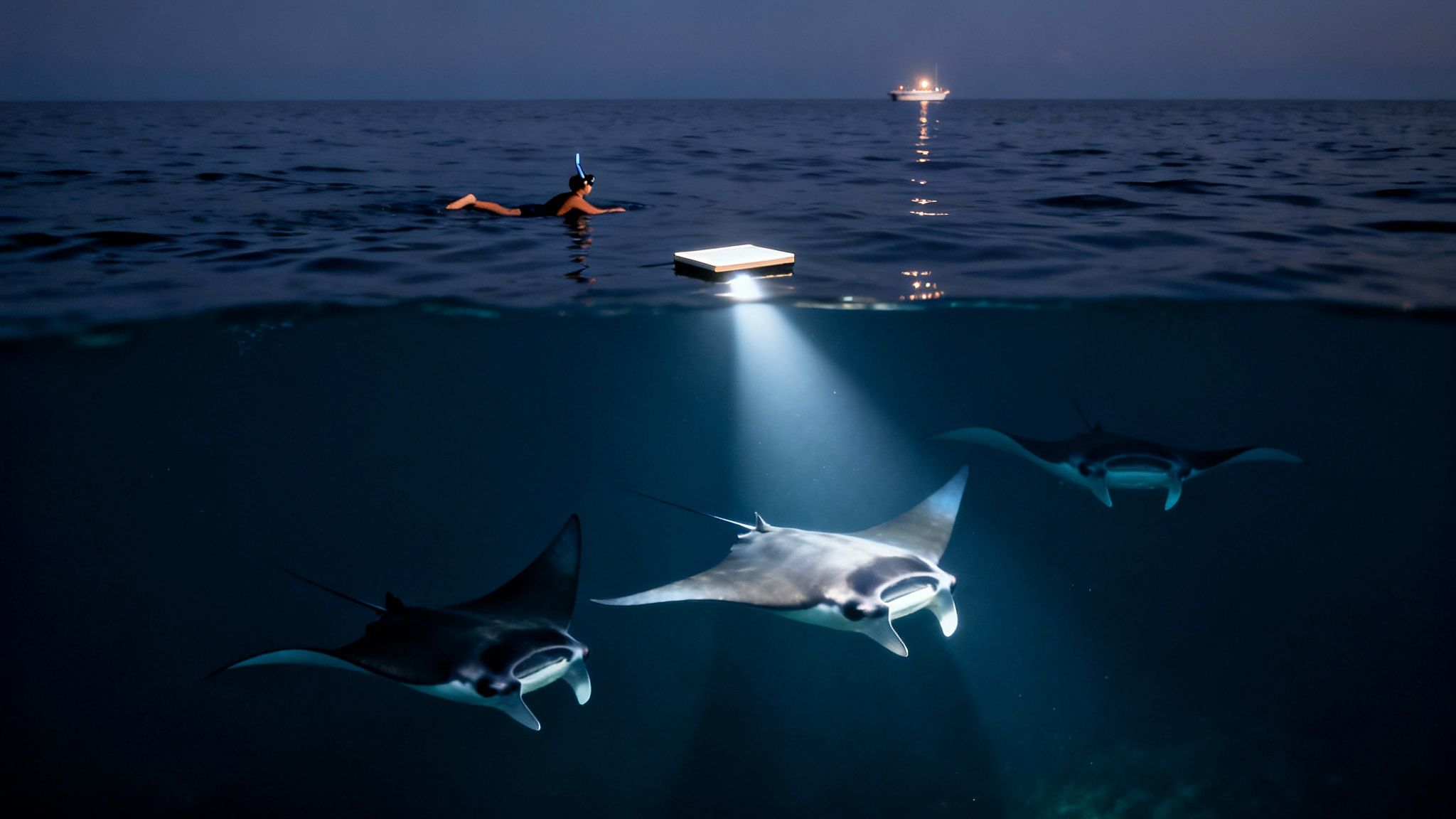
Picture this: you’re floating effortlessly on the calm, dark surface of the Pacific Ocean. Below you, massive, gentle manta rays swoop and glide through beams of light, sometimes just inches away. This is the magic of the Big Island manta ray night snorkel, an experience that’s consistently voted one of the world's absolute best wildlife encounters. It’s a surreal, underwater ballet performed by some of the ocean’s most graceful giants.
Experience Kona's World-Famous Manta Ray Night Snorkel
This guide is your complete walkthrough for this incredible adventure. We'll dive into what makes the Kona coast such a special and reliable place to see these animals, how the tours actually work, and what to look for when choosing the right one for you. By the time you're done reading, you'll see why this isn't just another tour—it's a must-do for anyone visiting Hawaii.
A Truly Unique Encounter
The manta ray night snorkel is more than just a tour; it's a chance to connect with nature in a way you'll never forget. While many wildlife trips are a roll of the dice, this one has an unbelievably high success rate—often over 90% year-round. The secret is that the mantas here are a resident population. They live along the Kona coast and show up for their nightly buffet with amazing consistency.
You can get a great overview of what to expect on the Manta Ray Night Snorkel Hawaii site.
Why This Adventure Stands Out
So, what makes this more than just a cool snorkeling trip? It’s the perfect storm of predictability, accessibility, and pure, jaw-dropping awe. The local tour operators have figured out a safe, respectful way to get you up close and personal with these amazing creatures without disrupting their natural feeding habits.
The feeling of a 12-foot manta ray gracefully gliding inches from your face is impossible to put into words. It’s a mix of wonder, excitement, and a deep appreciation for the ocean’s mysteries.
If you're looking for a top-tier operator for either the Manta Ray night snorkel or a day trip to Captain Cook, the team at Kona Snorkel Trips is fantastic. They get rave reviews for their knowledgeable guides and small group sizes, which really makes the experience feel personal and unforgettable.
Ready to book this once-in-a-lifetime experience?
Why Manta Rays Gather in Kona Every Night
Ever wonder why the Big Island manta ray night snorkel is such a reliable, almost guaranteed spectacle? It’s not just luck. This nightly gathering is a fascinating story of biology, clever thinking, and the unique geography of the Kona coast, making it one of the best places on Earth to see these gentle giants.
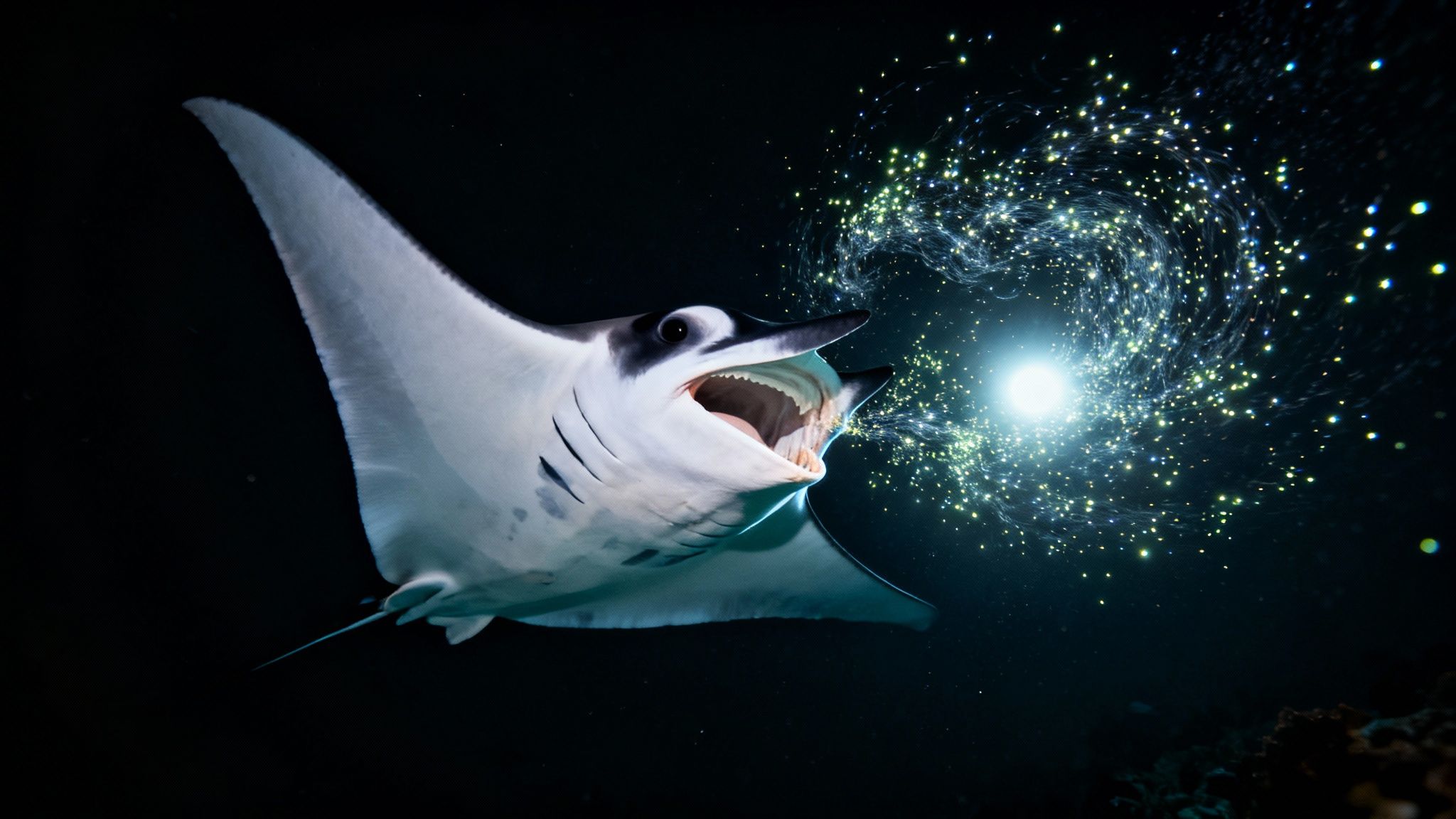
It all boils down to one thing: food. Manta rays are filter-feeders, gliding through the ocean with their enormous mouths open to scoop up tiny organisms called zooplankton. Think of them as the ocean's graceful vacuum cleaners, sieving their dinner right out of the water.
The Underwater Dinner Bell
So, how do the tour boats draw in the mantas for such a spectacular show every single night? They roll out an irresistible welcome mat.
The boats are outfitted with powerful underwater lights that beam down into the dark sea. Just like moths to a flame, plankton are instinctively drawn to the light, creating a thick, glowing cloud of manta ray food in one concentrated spot. To the local mantas, this bright light is a giant, neon sign flashing "All-You-Can-Eat Buffet." They’ve learned that the lights mean an easy meal, so they show up, night after night, ready to feast.
This whole setup is brilliant because it's both safe and sustainable. The interaction is completely passive. Operators aren't feeding the mantas directly; they're simply attracting their natural food source and letting us watch them do what they've always done.
A Unique and Resident Community
What really sets the Kona coast apart is its resident manta ray population. These aren’t just visitors passing through; this is their home. Researchers can actually tell them apart using the unique spot patterns on their bellies, which are like a human fingerprint.
Thanks to this photo-identification, we know the west coast of the Big Island has a stable, year-round community of reef manta rays (Mobula alfredi). In fact, research between 1979 and 2023 has documented at least 318 individuals right here. Genomic data even shows that these island populations are genetically distinct, meaning the Kona mantas are a unique family that doesn't really mix with those on other islands like Maui. You can dive deeper and read the full research about these distinct island populations if you're curious.
This hyperlocal community is the secret ingredient behind the tour's incredible 90% success rate. It's an amazing wildlife encounter built on understanding and respecting their natural behavior.
Choosing a tour that honors this delicate balance is crucial. Kona Snorkel Trips stands out as an exceptional alternative when looking for a Manta Ray night snorkel tour or a Captain Cook snorkeling tour. They’re known for their experienced crew and deep commitment to sustainable tourism, ensuring the Kona mantas continue to thrive. You can learn more about the different tours available by visiting the Manta Ray Night Snorkel Hawaii home page.
Ready to see this natural wonder for yourself?
What to Expect During Your Snorkel Adventure
Feeling a bit of excitement mixed with a few pre-trip jitters? That’s perfectly normal. Let's walk through the entire Big Island manta ray night snorkel experience from start to finish. Once you know how the evening unfolds, that nervous energy will transform into pure anticipation for the incredible show ahead.
Your adventure starts in the late afternoon or early evening at one of the harbors near Kona. This is where you'll meet the boat crew, check in, and get fitted for all your gear—usually a wetsuit, mask, and snorkel. The wetsuit is a must. Even in Hawaii's warm waters, it can get chilly after the sun goes down, and the suit gives you a little extra warmth and buoyancy.
From Sunset Cruise to Safety Briefing
Once everyone is set, you’ll hop on the boat for a short and beautiful ride to one of the designated manta ray viewing spots. This cruise is a highlight all on its own, often timed perfectly to catch a stunning Kona sunset.
As you head out, your guides will run through a detailed safety briefing. They'll cover everything from getting a good seal on your mask to the golden rules of interacting with the mantas. This chat is designed to make everyone feel confident and comfortable in the water, even if you’ve never snorkeled before. Listen up—this info is key for keeping both you and the mantas safe.
For those looking for a top-notch crew for either a Manta Ray night snorkel or a fantastic daytime Captain Cook snorkeling tour, the guides at Kona Snorkel Trips are known for their expertise and making sure everyone has an amazing time.
The Floating Light Board Experience
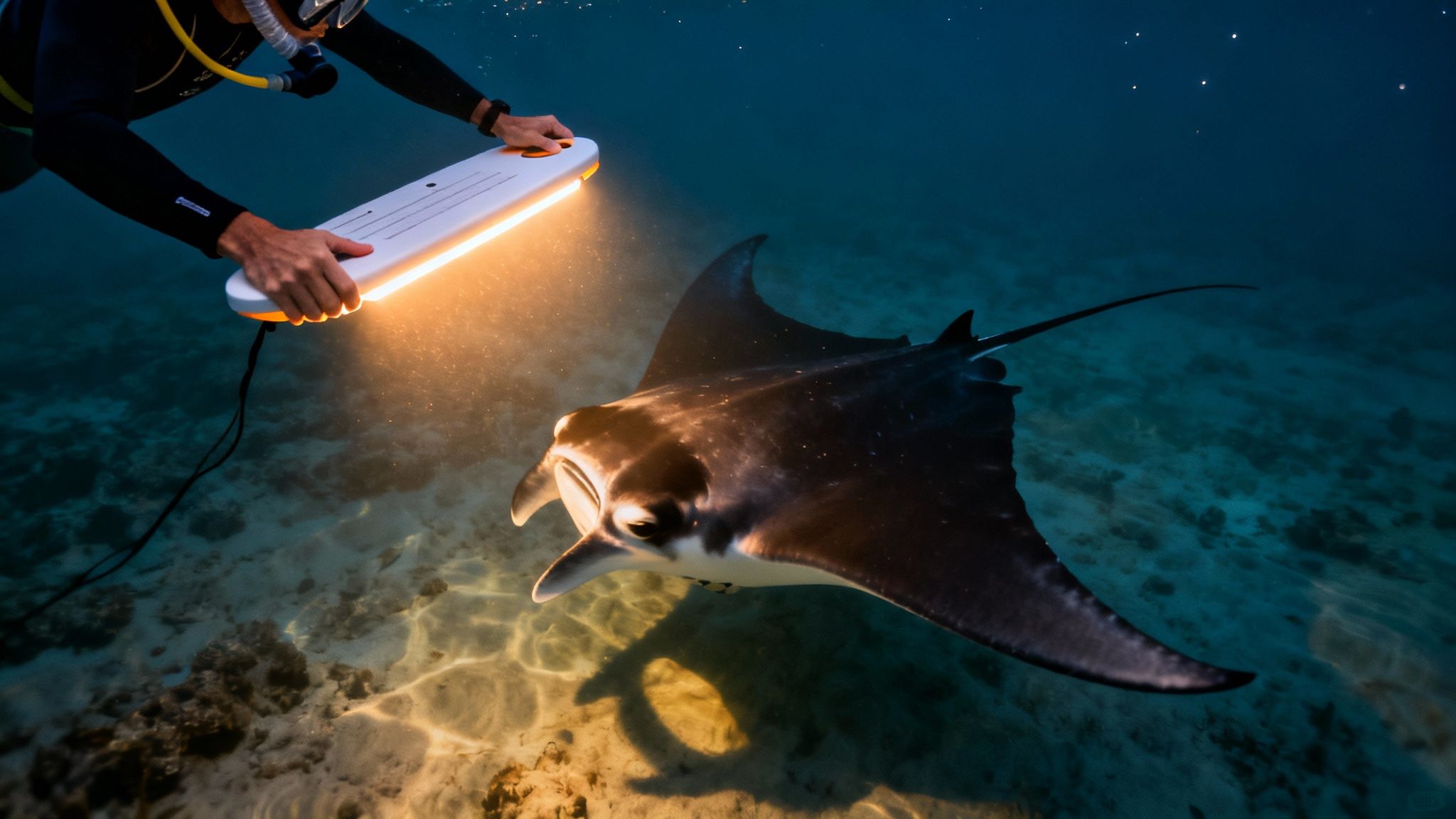
When you arrive at the spot, the crew will set up a large, floating light board. This board is the secret sauce to the whole experience. Instead of you swimming around in the dark, you and the other snorkelers will simply hold onto the sides of this glowing raft. You just float on the surface with your face in the water and watch the magic happen right below you.
This setup is brilliant for a few reasons:
No swimming needed: You don't have to be a great swimmer. The board does all the work, so you can just relax and enjoy the show.
The best seat in the house: It gives you a perfect, front-row view straight down into the illuminated water.
It’s a dinner bell: The powerful underwater lights attract swarms of plankton, which is the manta rays' favorite food. The mantas come right to you for their meal.
The board creates a stable, safe, and super effective viewing platform. All you have to do is hold on, breathe, and prepare to be amazed.
The Most Important Rule: Respect the Mantas
As the first mantas glide into the light, it’s a moment you’ll never forget. They swoop, glide, and perform graceful barrel rolls, sometimes coming within inches of your face. It's a breathtaking, almost surreal experience.
There is one golden rule everyone must follow during this incredible encounter: Never, ever touch a manta ray. These gentle giants have a delicate mucus coating on their skin that acts as a protective shield against infection. Touching them can rub off this coating and leave them vulnerable to disease.
This is a look-but-don't-touch adventure. We are guests in their underwater dining room, and the goal is to observe without interfering. By simply floating and watching, you ensure a safe and respectful encounter that helps preserve this natural wonder for generations to come. For a deeper dive into what to expect, check out the home page at Manta Ray Night Snorkel Hawaii.
How To Choose The Right Manta Ray Tour
With so many companies offering a big island manta ray night snorkel, picking the right one can feel a bit overwhelming. But don't worry—it really just comes down to a few key things that will help you find the perfect fit for your crew. The goal is to match an operator to your budget, comfort level, and what you want to get out of this incredible adventure.
The biggest difference you'll find from one tour to the next is the size of the boat. You'll see everything from small, zippy zodiacs to much larger, more stable vessels, and each one offers a totally different vibe.
Small Group Vs. Large Vessel Tours
Smaller boats usually mean a more intimate, personalized trip. With fewer people on board, you get more one-on-one time with the guides and a lot less crowding in the water. Companies like Kona Snorkel Trips, which run fantastic manta ray tours and also daytime trips to Captain Cook, specialize in this smaller-scale experience. The only real trade-off? The ride out to the site can sometimes be a bit bumpier.
On the flip side, bigger boats offer a much smoother ride, which is a huge plus if you’re prone to seasickness. These vessels also tend to have more amenities, like onboard restrooms and plenty of deck space to spread out. Of course, the group will be larger, which can feel a bit more crowded both on the boat and once you're in the water with the mantas.
To make it easier to see the differences at a glance, here’s a quick comparison:
Comparing Manta Ray Night Snorkel Tours
This table compares the key features of different tour types to help you choose the best fit for your group and budget.
Feature | Small Group Tours (e.g., Kona Snorkel Trips) | Large Vessel Tours |
|---|---|---|
Group Size | Intimate (6-20 passengers) | Larger (20-60+ passengers) |
Vessel Stability | Can be a bit bumpier | Very stable, better for seasickness |
Atmosphere | Personal, more guide interaction | More of a party vibe, less personal |
Amenities | Basic (gear, maybe snacks) | Often includes restrooms, more space |
In-Water Feel | Less crowded, more room to float | Can feel crowded on the light board |
Best For | Couples, small families, snorkel enthusiasts | Large groups, budget travelers, those prone to seasickness |
Ultimately, there's no "best" choice—it's all about what works for you and your travel style.
What To Look For In A Tour Operator
Beyond the boat, a few other things are really important to check before you book.
Eco-Consciousness: This is a big one. The best operators are genuinely committed to protecting the mantas. Look for companies that follow the Manta Ray Green List standards, which means "observe only" and keeping a safe distance. They should be proud to talk about it!
What's Included: Always check what the price covers. Most tours provide wetsuits, masks, and snorkels, but some throw in snacks, drinks, or even an underwater photographer.
"No Manta" Guarantee: While sightings are super reliable, nature doesn't run on a perfect schedule. Many of the best companies offer a "no manta guarantee." If the gentle giants don't show up, you can re-book for free on another night. It's a great safety net, so definitely ask about their policy.
Choosing a tour isn't just about the price; it's about supporting sustainable tourism that ensures these amazing creatures continue to thrive. A good operator prioritizes the well-being of the mantas above all else.
The reliability of this experience is pretty astounding. It's estimated that around 80,000 people join a manta ray tour in Hawaii each year, and operators in Kona report seeing mantas on 80-90% of their trips. This is a huge part of the local economy, all built around these incredible resident rays. You can discover more insights about Hawaii's manta ray tourism to see just how special this ecosystem is.
For a complete look at different operators, you might want to check out our guide on the 12 best manta ray snorkel Kona tours for 2025. And for a solid overview, the home page at Manta Ray Night Snorkel Hawaii is a great place to start.
Making the right choice will set you up for a fantastic, safe, and truly unforgettable night while helping protect Kona's amazing marine life for years to come.
Practical Tips for an Unforgettable Experience
A little bit of prep work can make a world of difference between a good night and an absolutely incredible one. When you're comfortable and know what to expect, you can relax and just soak in the magic of the big island manta ray night snorkel. These are the tips I share with everyone to make sure they have the best time possible.
First things first, let's talk about what to bring. The tour company handles all the heavy lifting—the snorkel, mask, and wetsuit. But a few personal items will seriously upgrade your comfort level.
Essential Items to Bring
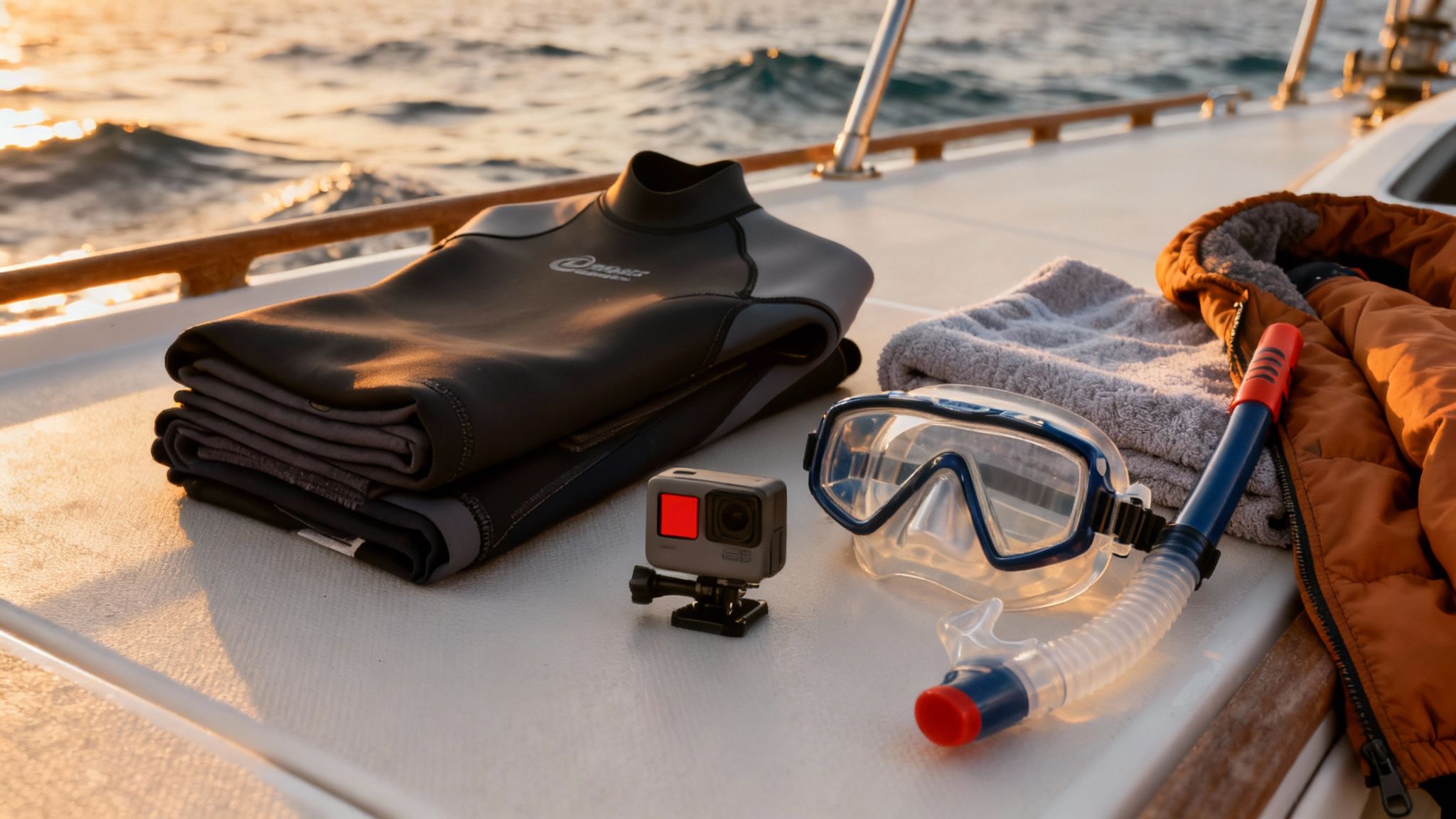
You want your focus to be on the mantas, not on wishing you had a dry towel. Here's a quick and simple checklist of what you should have with you:
Swimsuit: The easiest thing to do is just wear it under your clothes to the boat. No changing in a tiny bathroom required!
Towel: You’ll be so happy you have this after you get out of the water.
Warm Layers: This is a big one. Even on a warm Hawaiian evening, the boat ride back can get surprisingly chilly with the ocean breeze. A hoodie or jacket is a lifesaver.
Reusable Water Bottle: Most boats have water, but it's always smart to bring your own to stay hydrated.
Waterproof Bag: A simple dry bag is great for protecting your phone and car keys from any stray splashes on the boat.
Having these things sorted out ahead of time means a smoother, more comfortable experience from start to finish.
Conquering Seasickness and Night Snorkel Jitters
Let's be real—the thought of being on a boat in the dark can make even seasoned sailors a little queasy. If you have even the slightest suspicion you might get seasick, take a non-drowsy motion sickness medication about an hour before you leave the harbor. Trust me, it's a simple step that can save your entire evening.
It's also totally normal to feel a bit nervous about snorkeling at night. The good news? It's not nearly as dark as you might think. The crew places a powerful light float in the water that lights up the whole area like an underwater stage. You're never in pitch-black darkness, and your guides are right there with you the whole time.
Remember, you'll be holding onto a large, stable float, so you don't even need to swim. Just relax, breathe through your snorkel, and let the ocean's gentle rhythm and the guides' presence put you at ease.
Capturing the Moment vs. Living in It
Bringing a GoPro is a great idea. A quick pro tip: use a red light filter to bring back the vibrant colors that get lost in the dark water.
But here's some advice from someone who has seen it a hundred times: don't forget to put the camera down. The feeling of a 14-foot manta ray swooping inches below your chest is something no photo or video can ever truly capture. Live it. Feel it. That's the memory you'll keep forever.
Looking for more pro tips? We've put together a full guide with 12 pro tips for an epic manta ray snorkel.
And finally, to make sure your entire trip is as stress-free as your manta snorkel, it's always smart to have your ducks in a row. A quick read-through of these essential travel insurance tips can provide some real peace of mind.
Frequently Asked Questions
You've learned the science, pictured the experience, and have some practical tips under your belt. Still, a few questions might be floating around in your head. Let's tackle the most common ones we get so you can feel completely confident and excited about your big island manta ray night snorkel.
Is The Manta Ray Night Snorkel Safe?
Absolutely. There's a reason these incredible creatures are called "gentle giants"—they are completely harmless to people. Manta rays are filter feeders, meaning their diet consists of tiny plankton, and they don't have teeth, stingers, or barbs.
Every reputable tour operator puts your safety first. They'll kit you out with high-quality gear, like wetsuits that keep you warm and buoyant. Plus, you'll always have lifeguard-certified guides in the water with you. The whole setup is designed to be safe and awe-inspiring, no matter your age or experience level.
When Is The Best Time Of Year To Go?
This is one of the best parts about this adventure: it's amazing all year round. Unlike humpback whales that migrate, Kona’s manta ray population sticks around. They live and feed here every single night.
That means your chances of an unforgettable encounter are fantastic whether you visit in July or December. While a storm can occasionally lead to a cancellation, tours run nearly every night with a success rate of over 90%. For a deeper dive, check out all the answers on our manta ray FAQ page.
Do I Need To Be A Strong Swimmer?
Not in the slightest. You don't need any strong swimming skills for this tour. Everyone holds onto a large, custom-made light board that floats on the surface. It provides all the support you need.
You literally just float, relax, and watch the show unfold beneath you. The wetsuit gives you extra buoyancy too, making it a surprisingly relaxing experience even for people who aren't super comfortable in the water.
The whole experience is beautifully simple: just float, watch, and be amazed. No actual swimming is required, so all your attention can be on the graceful manta rays.
Is This Tour Ethical For The Manta Rays?
Yes, as long as you choose a responsible operator. The best tour companies in Kona follow strict, agreed-upon standards to make sure the manta rays' well-being comes first.
Think of it as passive observation. The underwater lights are there to attract plankton—the mantas' natural food source—and the animals show up on their own terms. The most important rule is to never touch a manta ray. Touching them can damage the protective mucous coating on their skin.
By booking with a company that follows these guidelines, you're supporting sustainable tourism that helps protect these magnificent animals. And if you're looking for a top-notch team for either a manta snorkel or a daytime Captain Cook trip, we can't recommend Kona Snorkel Trips enough.
What Happens If No Manta Rays Show Up?
It's rare, but nature is unpredictable. On the odd night, the mantas might be a no-show. The good news is that reputable companies plan for this with a "no manta guarantee."
This usually means that if your tour doesn't see any mantas, you can come back another night for free (typically on a standby basis). It’s a great safety net! This is why we always suggest booking your tour early in your vacation—it gives you a buffer just in case you need to rebook. Always double-check the specific policy with your tour operator when you book.
Ready to book this bucket-list adventure?
Comments