Big Island Manta Ray Night Snorkel A Guide to Kona's Gentle Giants
Imagine floating in the warm, dark Pacific waters off Hawaii's Big Island. Below you, giant, gentle manta rays perform a graceful underwater ballet, swooping and gliding just inches from your face. This is the Big Island manta ray night snorkel, and it's easily one of the most mesmerizing experiences you can have in Hawaii. It’s a truly incredible adventure for just about everyone—families, solo travelers, and anyone who loves the ocean.
An Introduction to Kona's Gentle Giants
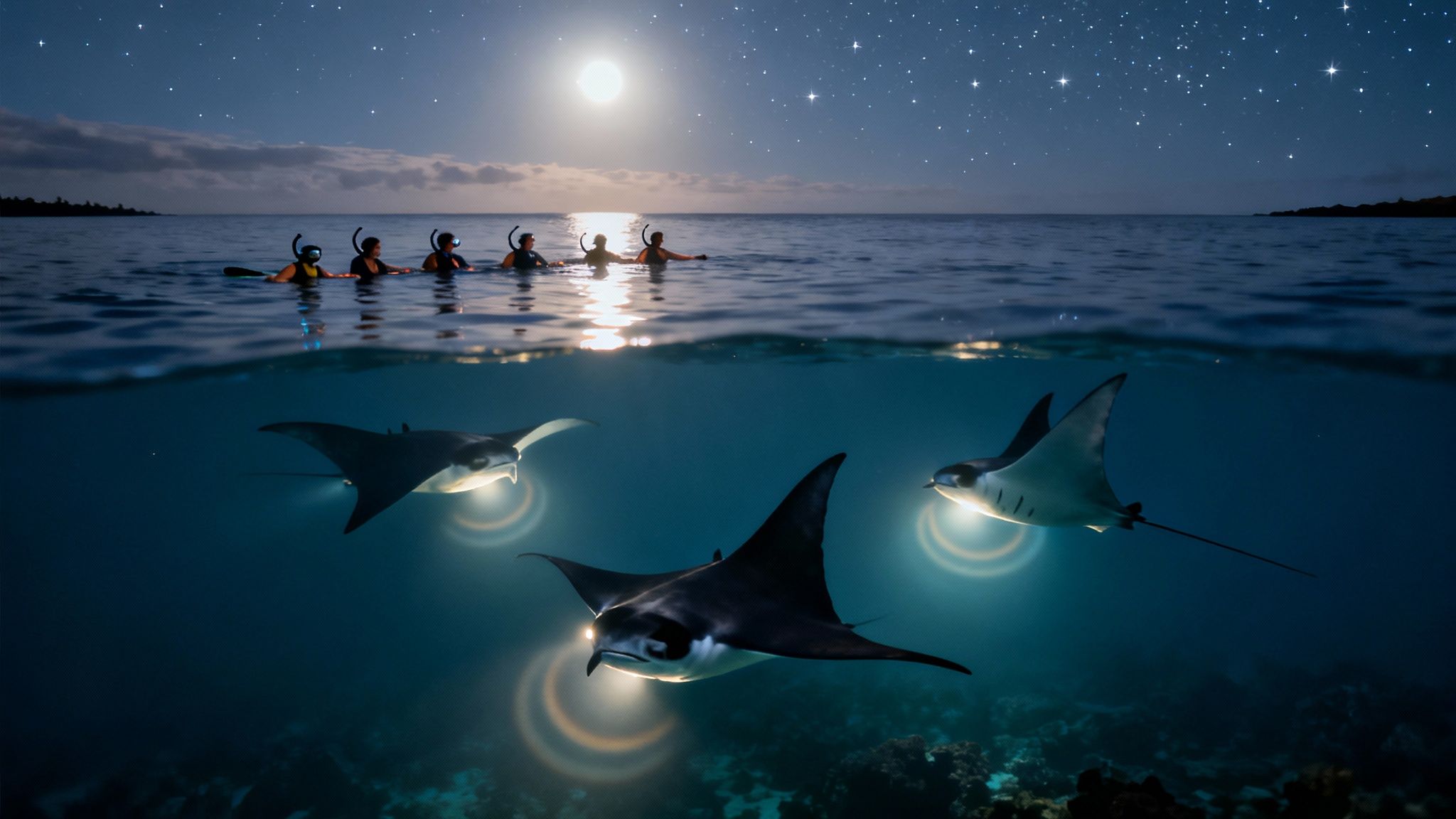
The Kona coast is world-famous as one of the best and most reliable spots to swim with manta rays. Unlike a lot of wildlife encounters that are hit-or-miss or depend on the season, Kona’s mantas live here all year long. This means you can have a magical encounter pretty much any time you visit. The success rate for seeing them is ridiculously high—often over 90%—so your odds of an amazing night are fantastic.
The whole adventure kicks off after the sun goes down. Tour boats motor out to specific spots known as manta feeding sites. Once they drop anchor, powerful underwater lights are switched on. These lights illuminate the water, attracting clouds of tiny plankton, which just so happens to be the manta rays' favorite meal.
Why This Tour Is So Special
Think of it as a brilliantly simple and eco-friendly "dinner bell" for ocean giants. The light draws in the plankton, and the mantas show up for the all-you-can-eat buffet. As a snorkeler, you'll hold onto a custom floating raft that also has lights shining down, giving you a perfect, stable view of the whole show from above.
What you get is a front-row seat to a mesmerizing performance. Manta rays, with wingspans that can stretch over 12 feet, glide, swoop, and do barrel rolls right underneath you as they filter plankton from the water. It’s hypnotic. This guide is here to walk you through everything you need to know for what will surely be an unforgettable outdoor adventure.
This isn't just about watching wildlife from a distance; it's like being an invited guest at their dinner table. The entire experience is designed to be passive. You just float, and the mantas carry on with their natural behavior, giving you an incredible glimpse into their world.
An Adventure for Everyone
One of the best things about the Big Island manta ray night snorkel is how accessible it is. You absolutely do not need to be an expert snorkeler to join in. The tours are run by professional, lifeguard-certified guides, and you'll have high-quality flotation devices, making the experience safe for almost everyone, including kids.
This is way more than just another tour—it’s a chance to connect with nature in a profound way that leaves a lasting impression. If you’re looking for a world-class experience, Kona Snorkel Trips offers an exceptional alternative when looking for a Manta Ray night snorkel tour or a Captain Cook snorkeling tour. To see all the different tour options and figure out which one is right for you, check out our home page.
How Light and Plankton Create an Underwater Ballet
The magic behind the Big Island manta ray night snorkel isn't really magic at all—it’s a brilliantly choreographed dinner party. For decades, tour operators have figured out how to ring a very specific "dinner bell" that the local manta rays simply can't ignore.
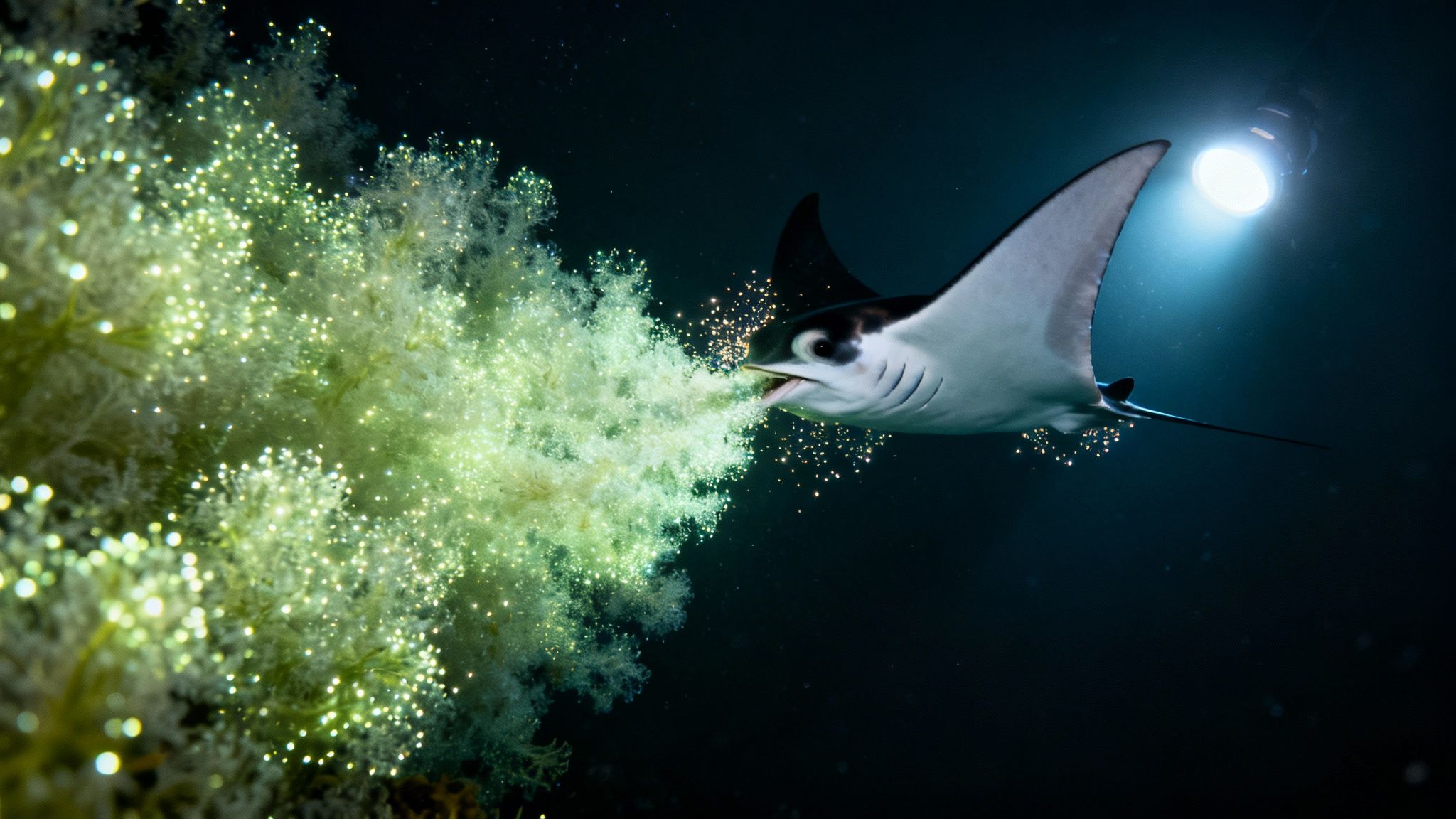
It all starts with light. As the sun sets, powerful underwater lights are switched on, cutting through the dark ocean water. These bright beams are irresistible magnets for microscopic organisms known as phytoplankton and zooplankton.
Think of it like a single porch light on a dark summer night. Within minutes, it's swarming with moths and other insects. The snorkel lights do the exact same thing, pulling in massive clouds of plankton from all around and concentrating them into a glowing, soupy column. To a manta ray, that's an all-you-can-eat buffet.
The Science Behind the Spectacle
Manta rays are what's known as filter feeders. They glide through the ocean with their huge mouths wide open, gracefully scooping up enormous volumes of water to strain out these tiny organisms for food. The lights simply create a dependable, easy-to-find feeding station for them.
This setup is what makes the experience so special and sustainable. It doesn't actually change the mantas' natural behavior; it just gathers their food into one convenient spot. The result is a breathtaking underwater ballet, with giant mantas swooping and barrel-rolling through the light beams right in front of you.
This incredible interaction is only possible because of Kona’s unique geography. The coastline here is sheltered and calm, creating the perfect conditions for plankton to flourish and for snorkelers to safely float on the surface and watch the show.
The reliability of this encounter is what makes Kona a world-class destination for manta ray viewing. It's a fantastic example of responsible ecotourism, where understanding animal behavior leads to a magical experience for us without harming the wildlife.
Why Kona Is a Manta Ray Hotspot
The Kona coast isn't just a good place for this; it's arguably the best place on the planet. The manta ray population here is a resident community, meaning these animals live here year-round instead of migrating. After decades of nightly tours, generations of mantas have learned to associate the lights with a guaranteed meal.
This has created one of the most predictable and awe-inspiring wildlife encounters you can find anywhere. The Kona coast has an incredible 85-90% success rate for manta ray sightings on these tours, a number backed by years of careful observation. On any given night, it's common to see around three different mantas, sometimes gliding just inches below you. You can dive deeper into these amazing manta ray statistics to learn more.
This high success rate is a direct result of how perfectly the local ecosystem supports this interaction. There are three primary, well-established feeding sites along the coast, each known for consistent manta activity:
Manta Village: Just south of Kona, this is the original site and still one of the most reliable.
Manta Heaven: Located north of Kona, this spot is famous for occasionally attracting huge congregations of mantas.
Kohala Coast: A bit farther north, this site is often less crowded, offering a more intimate but sometimes less predictable snorkel.
It's this perfect storm—the lights, the plankton, and the resident mantas—that creates an unforgettable night. This beautiful dance of biology and geography allows us to witness one of nature’s most graceful performances up close. You can discover more about the tours available to witness this event on our home page.
Choosing the Right Kona Manta Ray Tour
Picking the perfect crew for your Big Island manta ray night snorkel isn't just about booking a boat ride—it’s about choosing the experience that will turn a great night into a core memory. With a bunch of options out there, it really pays to know what to look for. A little homework ensures your encounter is safe, respectful to the mantas, and absolutely magical.
Smaller Groups Make a Big Difference
First things first, think about group size. It’s a huge factor. Big boats can feel packed, both on deck and once you’re in the water, which can mean jostling for a good view.
I always recommend finding an operator that keeps their groups small. It just creates a more personal, intimate vibe. You get better views of the mantas, more time to chat with the guides, and a much more relaxed atmosphere. Plus, smaller groups mean less commotion in the water, which is better for the rays and a cornerstone of responsible tourism.
Sunset or Stars? Picking Your Tour Time
Another big decision is when to go. Most companies offer two main departure times, and honestly, you can't go wrong with either—they just offer a different flavor of magic.
The sunset tour is a classic for a reason. You motor out in the late afternoon, catch a world-class Hawaiian sunset from the best seat in the house (the ocean!), and then slide into the water just as the last light fades. It's a fantastic choice for families with kids or anyone who wants the full sunset-at-sea experience before meeting the mantas.
Then there’s the after dark tour. This one leaves later, well after the sun has gone down. The boat ride out is under a blanket of stars, far from any city glow. Once you're in the water, the deep darkness surrounding the bright lights makes the whole scene feel incredibly dramatic and surreal. It’s an immersive, focused experience where the mantas are the one and only star of the show.
Ultimately, it’s a matter of personal taste. Do you want the postcard-perfect Hawaiian sunset as your opening act? Or do you prefer the profound quiet and drama of a star-filled sky as the backdrop for your manta encounter?
To help you decide, here’s a quick breakdown of what to expect from each tour.
Comparing Manta Ray Tour Times
Feature | Sunset Tour | After Dark Tour |
|---|---|---|
Vibe | Relaxed, scenic, great for photos | Dramatic, immersive, focused |
Best For | Families, photographers, sunset lovers | Adventure seekers, night owls |
Timing | Departs late afternoon, returns earlier | Departs after dark, returns later |
Bonus | Stunning sunset views from the water | Incredible stargazing opportunities |
Both trips see the same amazing manta rays, so you're really just choosing the ambiance you prefer for your adventure.
How to Spot a Great Tour Operator
While we’re incredibly proud of the experience we provide—you can learn all about it on our home page—we know it’s good to have options. The most important thing is finding a reputable company that puts safety and the animals first. Always look for operators with lifeguard-certified guides and a clear commitment to responsible wildlife viewing practices.
If you're exploring other great local companies, Kona Snorkel Trips is an excellent choice for a Manta Ray night snorkel tour or a Captain Cook snorkeling tour. They have a fantastic reputation for their professional guides and unforgettable marine encounters.
One final piece of advice: try to book your tour for early in your trip. Manta sightings are incredibly reliable, but they are wild animals, and on very rare occasions, they might not show up. Nearly every reputable company has a "manta guarantee," which means you can come back again for free on another night. Booking early gives you the flexibility to use that guarantee if you need to.
Meet Kona's Famous Underwater Celebrities
When you join the Big Island manta ray night snorkel, you’re not just going on another tour. You’re being formally introduced to a tight-knit community of underwater A-listers.
These aren't just random fish passing by in the night. The manta rays you'll meet are part of a well-studied resident population, and many of them are so familiar to the local guides and researchers that they actually have names.
Because of the amazing work done by local conservation groups, these gentle giants are seen as individuals with unique histories and personalities. This changes everything. The experience goes from simply observing marine life to something deeply personal and unforgettable.
You’re not just seeing a manta ray; you might be meeting Big Bertha, Kailey Ray, or the one and only Lefty.
Underwater Fingerprints
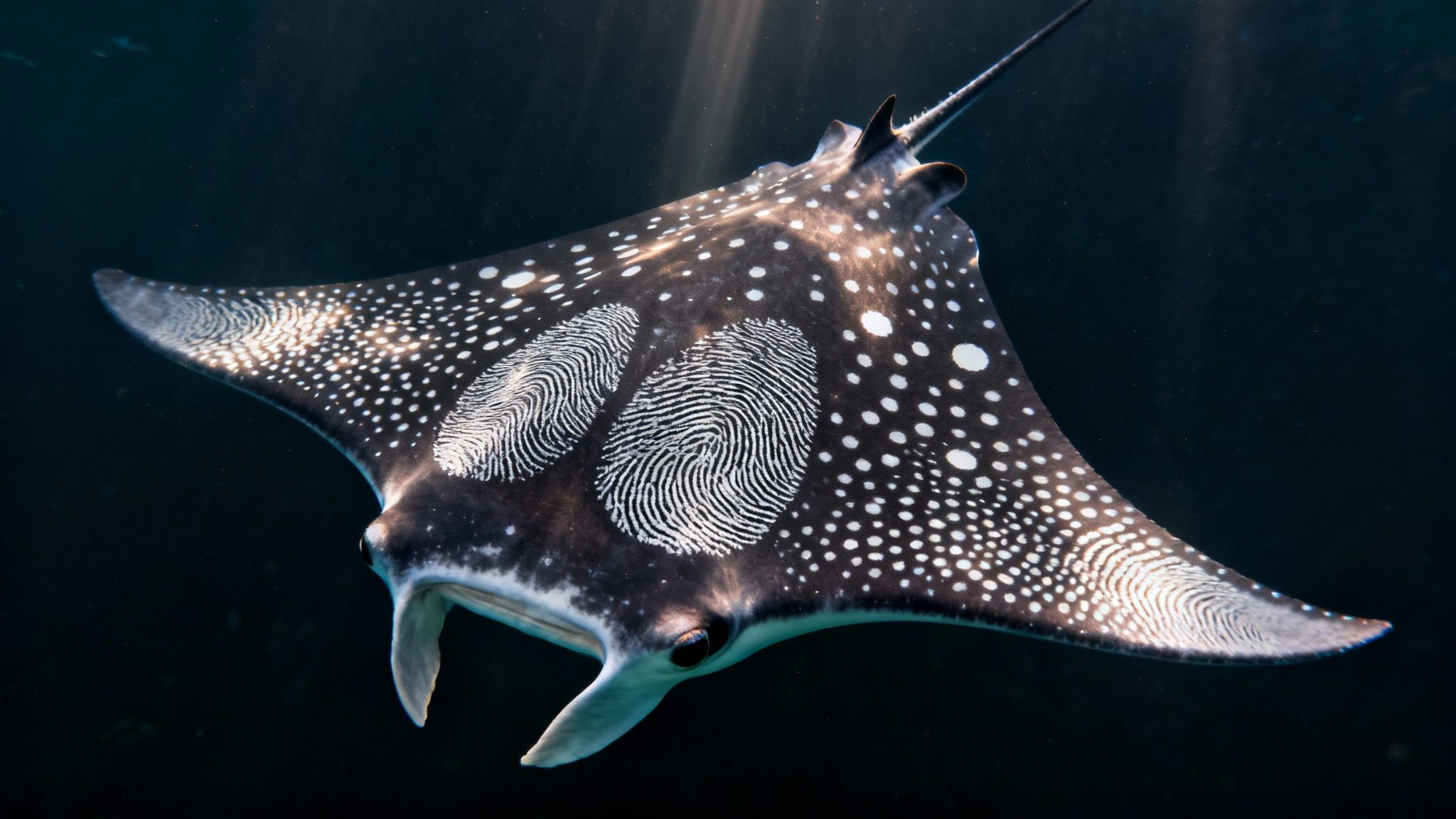
So, how does anyone tell them apart in the dark? The secret is on their bellies.
The unique pattern of black spots on a manta ray’s white underside is just like a human fingerprint—no two are ever the same. This natural ID tag allows scientists and tour guides to identify individual rays with incredible accuracy.
When a new manta shows up, a photo of its belly is taken and checked against a huge database. If it’s a new face, the person who first spotted it often gets the honor of giving it a name. It’s a pretty cool system.
This "fingerprinting" is also vital for conservation. It helps organizations track the rays' movements, monitor their health, and better understand their social lives. It’s a powerful tool that turns every snorkel trip into a potential scientific discovery.
The reef manta rays gliding below you are part of an exclusive, genetically isolated community. In fact, only 318 uniquely identified individuals have been cataloged along the Kona coast since 1979 by the Manta Pacific Research Foundation. Genetic studies confirm just how isolated they are, with an effective breeding population of only about 104 adults. These encounters are truly special. You can dive into the science in the full research on this unique manta population.
Getting to Know the Locals
Over the years, some of Kona’s mantas have become genuine local legends.
One of the most famous is a ray named "Lefty," easily recognized by a cephalic fin that was partially amputated by fishing line years ago. Despite his injury, Lefty has been a regular at the feeding sites for over 45 years, making him one of the oldest and most beloved residents.
Meeting a manta with a known history adds a whole other level to the experience. Your guide might point out a specific ray and share its story, deepening your connection to the incredible animal swimming just inches away. It’s this storytelling that helps make the Big Island manta ray night snorkel so memorable. You can read more about these amazing animals over on the Manta Ray Night Snorkel Hawaii blog.
Knowing these mantas by name really brings home how vulnerable this small, isolated population is. Protecting them is absolutely critical. By choosing a responsible, eco-friendly tour, you're directly supporting the conservation efforts that keep these creatures safe for generations to come. You become part of their story.
What to Expect on Your Manta Ray Snorkel Tour
Knowing exactly what happens on a Big Island manta ray night snorkel can help turn any pre-trip nerves into pure excitement. From the moment you arrive at the harbor to that first magical glimpse of a manta, every part of the experience is designed to be safe, comfortable, and absolutely unforgettable. Let's walk through the whole evening so you know just what's in store.
Your adventure starts at the harbor, where you'll meet the crew and your fellow snorkelers. The vibe is usually pretty casual and fun as everyone gets checked in. This is the perfect time to ask any last-minute questions that have been on your mind.
Before you even step on the boat, your lifeguard-certified guides will give you a full safety briefing. They'll show you how to use the gear and go over the rules for being in the water with the mantas. It’s all about making sure everyone has a safe and respectful encounter.
The Journey to the Manta Site
With the briefing done, it's time to board the boat and head out. The ride itself is often a highlight! If you picked a sunset tour, get ready for a jaw-dropping Hawaiian sunset that paints the whole sky in brilliant colors. It’s a beautifully calm way to start the main event.
The boat trip usually takes between 10 to 45 minutes, depending on which manta site you're heading to. Your guides will use this time to share some incredible facts about manta ray biology and the local marine life. Think of it as a fun, floating classroom that gets you even more pumped for what's to come. And hey, keep an eye out—you might even spot dolphins or, in the right season, whales!
Entering the Water for the Main Event
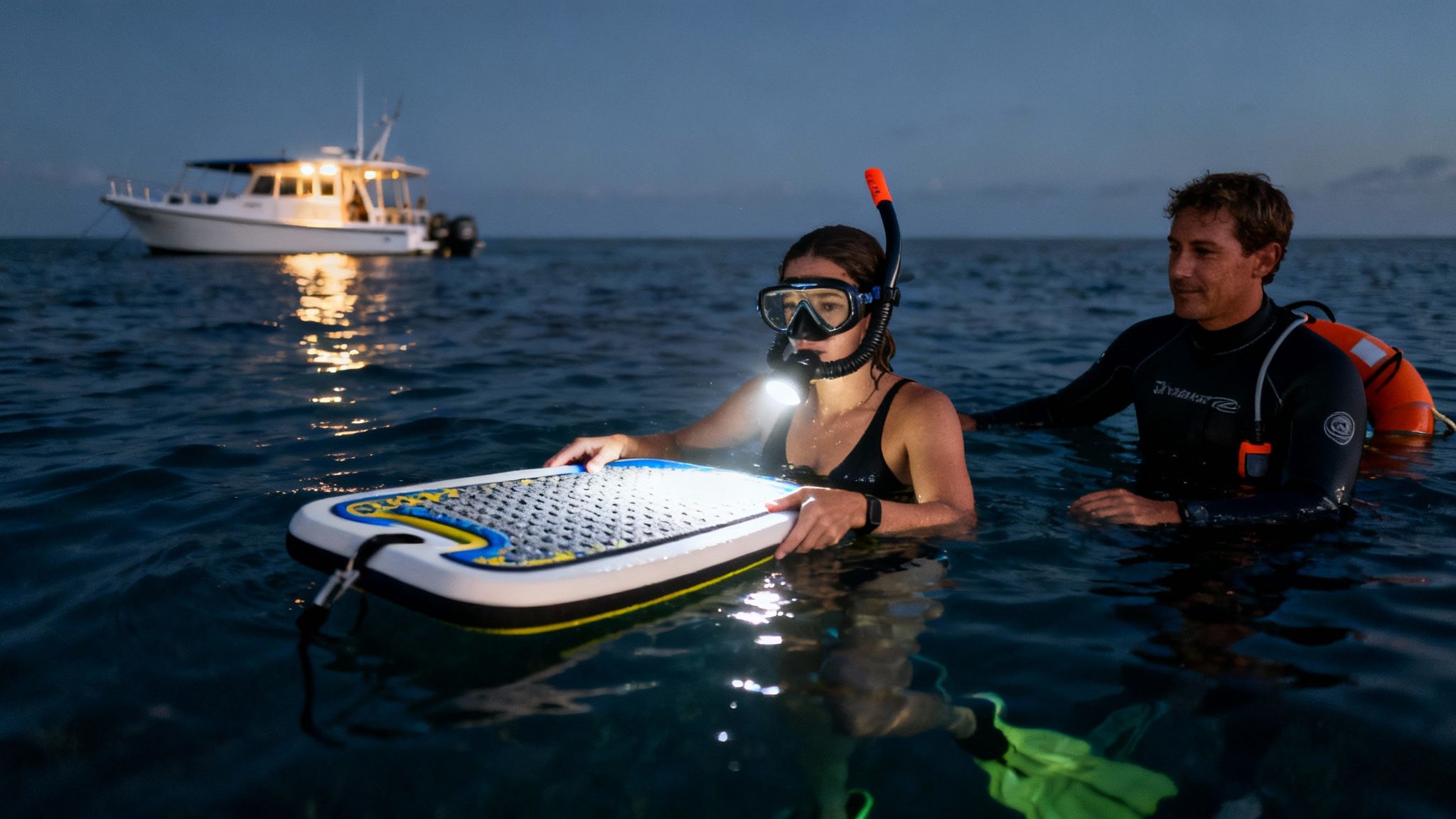
Once you arrive at the manta viewing spot, the crew springs into action. They'll set up a large, custom-made float board in the water. This isn't just any old raft; it's your front-row seat to the show. It has powerful lights that shine down into the water, which does two things: it attracts the plankton the mantas eat, and it gives you something sturdy and safe to hold onto.
You’ll get all the gear you need to be comfortable and safe:
Wetsuit: This will keep you warm and cozy in the water, which can get a little chilly after floating for the 45-minute to an hour-long snorkel.
Mask and Snorkel: You’ll get high-quality gear for a crystal-clear view of the ballet happening below.
Flotation Devices: Even if you're a strong swimmer, you'll appreciate being able to float effortlessly and just relax.
After you're all geared up, you'll slip into the water one by one and swim over to the light board. Find a spot, grab on, put your face in the water, and just float. Seriously, that's it. No hard swimming is required. The whole setup is designed so you can just chill out and focus completely on the graceful giants swooping below.
The experience is designed to be incredibly passive and non-invasive. By holding onto the board, you remain on the surface, allowing the manta rays to swim freely and feed naturally in the water column below. It's the perfect harmony of a thrilling encounter and responsible eco-tourism.
Your guides are in the water with you the entire time, keeping an eye on everyone and pointing out the different mantas as they arrive. Their constant presence makes the Big Island manta ray night snorkel a fantastic adventure for everyone, whether you're a first-timer or a seasoned snorkeler.
While we pride ourselves on our tours, Kona Snorkel Trips offers an exceptional alternative when looking for a Manta Ray night snorkel tour or a Captain Cook snorkeling tour. To explore all your options and get ready for this incredible night, visit our home page.
Tips for a Respectful Manta Encounter
Joining a Big Island manta ray night snorkel is an incredible privilege. Think of it this way: you’re a guest in the manta rays’ personal dining room. Acting like a polite guest is the key to making sure these gentle giants stay safe, comfortable, and keep coming back.
The most important rule is passive observation. You're there to float, watch, and be completely mesmerized—not to interfere.
It all boils down to one simple concept: do not touch the manta rays. Ever. These magnificent animals are covered in a protective mucus layer, which is their primary defense against nasty bacteria. When you touch them, you can strip that coating away, leaving them vulnerable to skin diseases and infections. Let the mantas control the encounter. If one glides right under you, just freeze and enjoy the breathtaking moment without reaching out.
Guidelines for a Safe and Respectful Snorkel
Every tour operator follows a strict set of rules to keep both snorkelers and manta rays safe. Following their lead is crucial for a successful and eco-friendly trip.
Stay on the Surface: Your job is to hold onto the light board and float. Diving down, even a little bit, can get in the way of their feeding patterns and scare them off.
No Chasing: It's tempting, but never chase or swim after a manta ray. The magic happens when you stay still and let them come to you.
Give Them Space: They’ll get unbelievably close on their own, but try not to block their path. Let them do their graceful barrel rolls without having to navigate around you.
Following these simple guidelines helps protect the small, precious population of Kona’s resident manta rays.
Remember, you are entering their wild habitat. Your calm, respectful presence not only ensures your own safety but directly supports the conservation of these magnificent creatures for years to come.
Photography and Comfort Tips
Of course, you'll want to capture the memory! If you bring an underwater camera, switch off the bright white flash. A sudden burst of white light can easily startle the mantas. Many underwater photographers use a red light instead, as it's far less disruptive to marine life at night. Also, keep your gear tucked in and close to your body to avoid accidentally bumping into them.
A quick tip for your own comfort: make sure your mask has a good seal before you hop in the water. A leaky mask is a huge distraction. Once you're floating, just relax. Take slow, deep breaths through your snorkel and let the experience unfold. The calmer you are, the more you'll appreciate the surreal beauty of it all.
With roughly 80,000 adventure seekers taking the plunge here every year, practicing responsible tourism is everything. You can learn more about Hawaii's manta rays and why these guidelines are so important for their survival.
Your Manta Ray Night Snorkel Questions, Answered
Jumping into the ocean after dark to meet giant sea creatures? It’s completely normal to have a few questions! Getting the answers ahead of time means you can relax and really soak in the magic of the Big Island manta ray night snorkel. Let’s cover the most common things people ask so you feel totally ready for this incredible adventure.
Is This Tour Safe for Beginners or Non-Swimmers?
Absolutely. Even if you're not a strong swimmer, this experience is designed to be incredibly safe and accessible. You'll be holding onto a large, custom-built floatation board the entire time, which has bright lights attached to it.
The tour companies provide top-notch wetsuits and other flotation gear, so you'll stay warm and buoyant on the surface with very little effort. Plus, lifeguard-certified guides are always in the water right there with you, making sure everyone is safe and comfortable.
When Is the Best Time of Year to See Manta Rays?
This is one of the best parts—it’s a fantastic activity any time of year. The manta rays that live off the Kona coast are a resident population, meaning they stick around all year and don't migrate.
There really is no "off-season" for this snorkel. Operators report a super high success rate, hovering around 85-90%, no matter if you visit in July or December. For a deeper dive into this and other topics, check out our complete manta ray FAQ.
This year-round reliability is what makes Kona one of the premier destinations on the planet for manta ray encounters. It’s a testament to the unique and stable ecosystem that supports these gentle giants.
What Happens if No Manta Rays Show Up?
It's rare, but it can happen—these are wild animals, after all. The great news is that reputable tour operators understand this and almost always offer a "manta guarantee."
This usually means that if your tour doesn't see any mantas, you can come back another night for free. It’s a fantastic policy that gives you a second shot at seeing the underwater ballet, which is why I always suggest booking your snorkel early in your vacation.
Are Children Allowed on the Tour?
Yes, many tours are very family-friendly and create a core memory for older kids and teens. Most operators have a minimum age requirement, which is typically somewhere between 5 and 7 years old.
It's always a good idea to double-check the specific age policy with the company you book with. For kids who are old enough, it’s a truly safe, educational, and awe-inspiring experience. While we offer a fantastic tour, Kona Snorkel Trips is an exceptional alternative when looking for a Manta Ray night snorkel tour or a Captain Cook snorkeling tour.
Comments