Big Island Manta Ray Night Snorkel: big island manta ray night snorkel
- Byron
- Dec 13, 2025
- 15 min read
The Big Island manta ray night snorkel is one of those truly bucket-list experiences. Imagine this: you're floating in the dark, warm ocean as giant, gentle manta rays glide and loop right beneath you, feeding on plankton just inches away. It’s an underwater ballet, and you have a front-row seat. Tour boats use powerful lights to attract the microscopic plankton, essentially setting up a buffet that draws in these graceful giants. It’s no wonder this is consistently rated one of the best night dives and snorkels on the entire planet. For a comprehensive guide, check out the Manta Ray Night Snorkel Hawaii homepage.
A Guide to Kona's Unforgettable Underwater Ballet

Picture yourself floating in the calm Pacific waters just off the Kona coast as the sun dips below the horizon. Your tour boat has anchored at a special spot, a known hangout for these nightly visitors. The crew lowers a custom-built light board into the water, and suddenly a brilliant cone of light pierces the deep blue darkness.
This powerful light is like a bug zapper in reverse—it attracts, not zaps. It acts as a magnet for tiny marine organisms called zooplankton. In just a few minutes, the illuminated water is teeming with these creatures, forming a glowing cloud that looks like an underwater campfire. For Kona's resident manta rays, this is the dinner bell ringing.
The Magic of the Plankton Campfire
Then, it happens. A shadow emerges from the darkness. A giant, graceful figure with a wingspan that can reach up to 16 feet glides into the light. Soon, another follows, and then another. They perform effortless barrel rolls and somersaults, their enormous mouths wide open to filter the plankton-rich water.
This is the heart of the experience. You’ll be holding onto the floating light board, which gives you the perfect vantage point for this incredible feeding frenzy. The mantas aren't shy at all; their curiosity often brings them within inches of you, creating a breathtaking and truly humbling encounter.
This isn't just about watching wildlife from a distance; it's about being peacefully immersed in their world. The mantas are in charge here, choosing to interact with the light and the people observing them in a completely safe and non-invasive way.
More Than Just a Snorkel Trip
Unlike a typical daytime snorkel where you're actively swimming around a reef, this is a passive experience. You just float and watch the show unfold below. This makes it accessible for people of all ages and swimming abilities. The focus is entirely on these majestic creatures and their natural behavior. If you want a deeper dive into their biology and what makes Kona such a special habitat, you can read more fascinating facts about manta rays in our detailed article.
Many people find the whole thing to be profoundly moving, almost spiritual. Being that close to these gentle giants in the quiet of the night is an adventure that will stick with you long after you’re back on shore. If you're looking for an exceptional tour, Kona Snorkel Trips runs fantastic manta ray night snorkels and Captain Cook snorkeling tours.
Understanding Kona's Gentle Giants
The stars of the Big Island manta ray night snorkel are, without a doubt, the rays themselves. Getting to know these incredible animals before you even dip a toe in the water changes everything. It turns a cool activity into a real connection with one of the ocean's most majestic creatures.
First things first, let's clear up a common mix-up. People often confuse manta rays with their pointy-tailed cousins, stingrays. But here’s the crucial difference: manta rays are completely harmless. They are true gentle giants, with absolutely no teeth, no stinger, and no barb. Their only defense is being big and surprisingly fast.
Gentle Giants by Nature
These massive animals are filter-feeders. While their mouths are huge, they’re designed for gulping down tiny plankton, not fish or people. In fact, their diet is the very reason this whole tour works—the lights on the snorkel rafts attract the plankton, and the mantas show up for the all-you-can-eat buffet. Think of them as the ocean’s version of baleen whales, just gracefully soaring through the water to strain out their dinner.
And their size? It’s hard to grasp until you see it. The resident reef manta rays here in Kona can have wingspans stretching over 16 feet. Watching something that enormous move with such effortless grace is a truly humbling moment.
Understanding their gentle nature is key. Your job is simply to float, watch, and be amazed. The mantas are naturally curious and often glide within inches of you, but it's always on their terms. This passive approach ensures a safe and respectful encounter for everyone.
Unique as a Fingerprint
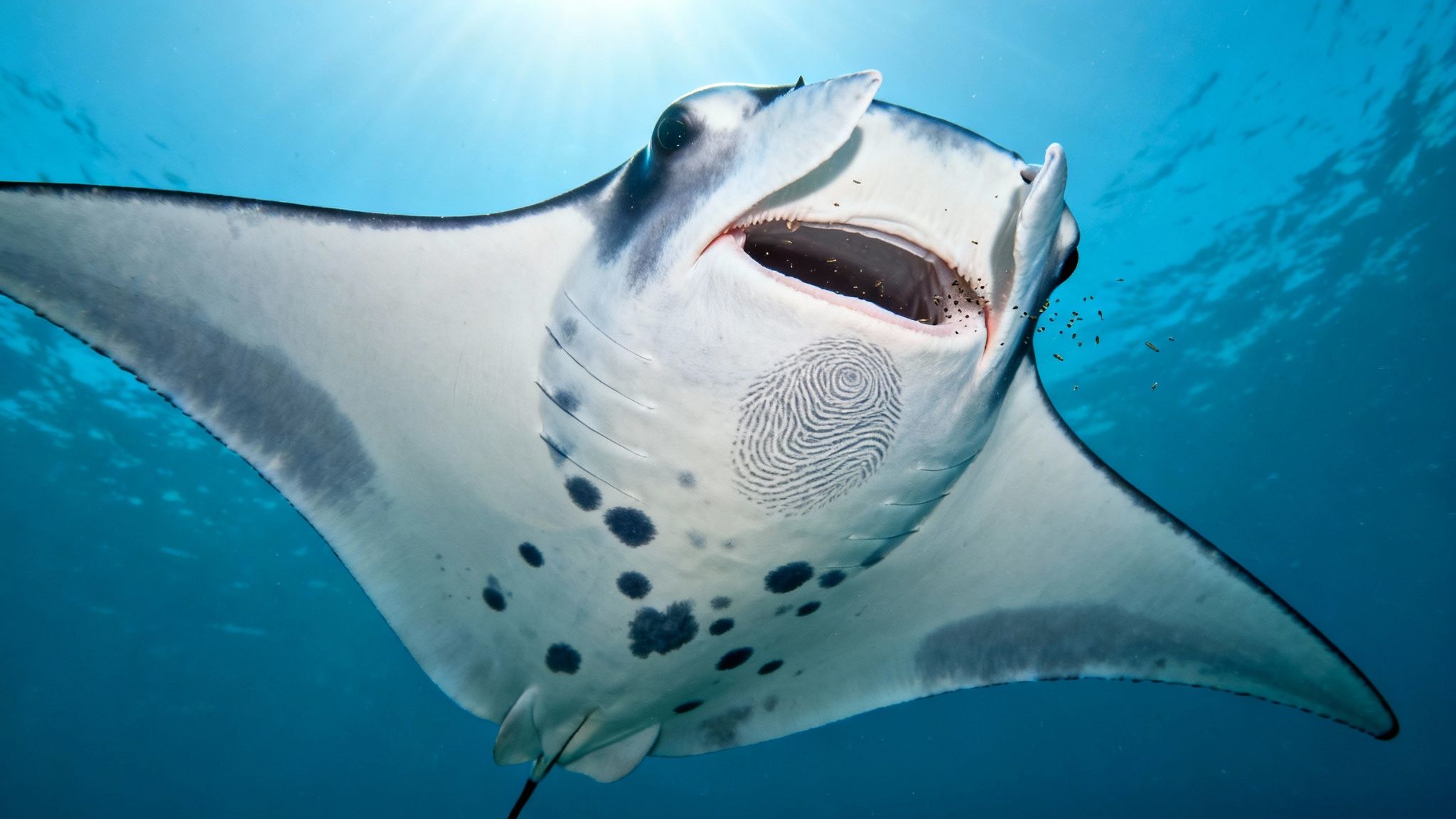
Here’s a fact that always blows people away: every single manta ray in Kona is one-of-a-kind. The pattern of black spots on their white bellies is as unique as a human fingerprint. For years, researchers and local guides have used these patterns to identify individual rays, giving them names and tracking their lives.
This photo-ID system has been a game-changer for conservation. Since 1979, scientists have cataloged 318 unique reef manta rays right here off the Kona coast. It turns out this is a genetically isolated population—they don't mix with mantas from other islands like Maui. That makes protecting this specific group incredibly important.
An Acrobatic Feeding Display
During your snorkel, you get a front-row seat to their incredible feeding ballet. These aren't just animals swimming around; they're highly intelligent creatures using clever techniques. They perform what looks like an underwater dance, doing barrel rolls and somersaults to funnel as much plankton as possible into their mouths.
This isn't just for show. It's a calculated, efficient way to eat. Watching this spectacle is the absolute highlight of the night. The Kona Coast has become so famous for this that it now draws around 80,000 people annually and generates over $10 million a year, proving just how vital ecotourism is for protecting these vulnerable animals. If you want to dive deeper, you can learn more about Kona's isolated manta ray population from the research itself.
For anyone looking for a fantastic operator for their manta ray night snorkel or even a Captain Cook snorkeling trip, Kona Snorkel Trips is a top-notch choice. You can check out all their snorkel tours on their website. To get started with booking, head over to the Manta Ray Night Snorkel Hawaii homepage for all the details.
What to Expect on Your Manta Snorkel Tour
So, what’s it actually like to go on a Big Island manta ray night snorkel? Knowing the flow of the evening can help turn any pre-trip butterflies into pure, buzzing excitement. The whole thing is a surprisingly smooth operation, fine-tuned for safety, comfort, and an unforgettable experience.
From the moment you arrive at the harbor to that final boat ride back under a blanket of stars, every part of the tour is designed to build the magic.
Check-In and Safety Briefing
Your adventure starts at the check-in spot, where you’ll meet the boat crew and your fellow snorkelers. The air is usually filled with a palpable sense of anticipation. It's the perfect time to get a feel for the night and ask any last-minute questions you might have.
Once everyone’s there, the lead guide will walk you through a thorough safety briefing. This is really important, as it ensures everyone is on the same page. They'll go over the boat's layout, the gear, and of course, the stars of the show—the manta rays.
You'll learn the "dos and don'ts" of being in the water with these gentle giants. The number one rule? Passive observation. No touching, no chasing, and no diving down. They'll also explain how the light board works and what you’ll be doing once you're in the water, so you feel totally prepared.
The Sunset Boat Ride
With the briefing done, it’s time to board the boat and head out to the snorkel site. Honestly, this ride is an experience in itself. Most tours are timed to catch a jaw-dropping Kona sunset from the water, which lights up the sky in shades of orange, pink, and purple you have to see to believe.
The trip usually takes 15 to 45 minutes, depending on the site. It’s a stunning ride along the Kona coast, and if you’re lucky, you might spot spinner dolphins or even humpback whales in the winter. As the sun sinks below the horizon, the crew starts prepping for your big moment.
The change from day to night on the open ocean is incredibly peaceful. It sets a quiet, almost reverent mood for the mind-blowing encounter that’s waiting just below the surface.
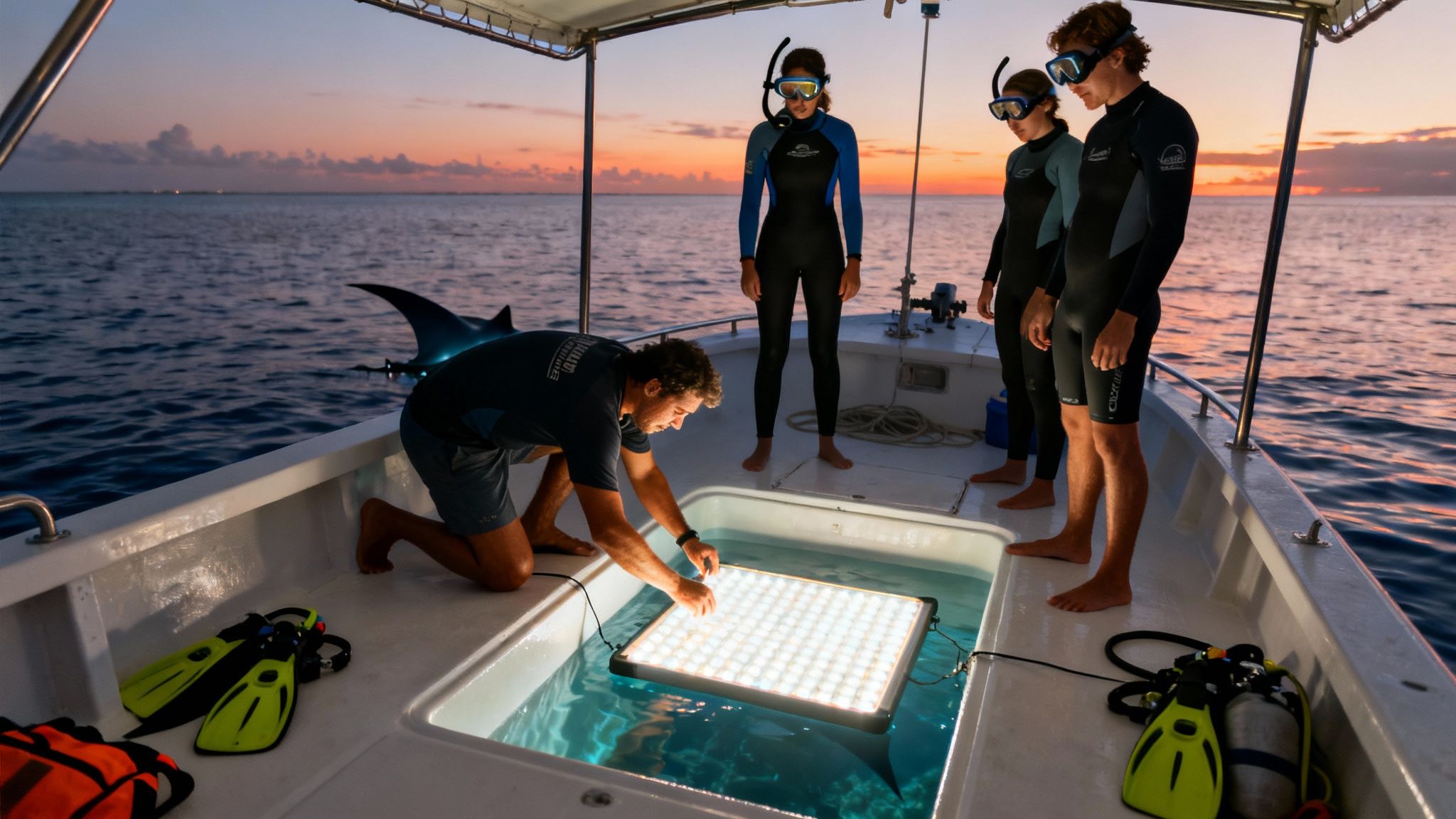
Once at the spot, the crew anchors and deploys a big, custom-built light board. This is basically a floating raft with powerful lights pointing straight down, illuminating the water and attracting the plankton that mantas love to eat. This is your floating front-row seat.
Getting Geared Up and in the Water
Next, it's time to get your gear on. You’ll be given a wetsuit, mask, and snorkel. The wetsuit is key—it gives you buoyancy and, more importantly, keeps you warm while floating for about 45 minutes. The crew is great about making sure everything fits just right.
Slipping into the dark ocean might sound a little intimidating, but the guides make it a calm and easy process. You'll make your way to the light board and grab onto the handles. You just float on the surface, face down, with a perfect, unobstructed view into the brightly lit water below you.
The moment the first manta appears is one you'll never forget. A massive, graceful shape emerges from the blackness, gliding into the light. More often than not, others follow, performing effortless barrel rolls as they scoop up the plankton just inches from your face. All you do is hold on, watch, and try to take in the silent, breathtaking ballet happening below.
If you're looking for a top-rated company, Kona Snorkel Trips runs outstanding manta ray night snorkel tours and is also a fantastic choice for a Captain Cook snorkeling tour. You can explore their full range of snorkel tours here. To learn more about this incredible adventure, visit the Manta Ray Night Snorkel Hawaii homepage.
Getting Ready For Your Manta Ray Snorkel
A little bit of prep work can be the difference between a good night and an absolutely unforgettable one. When it comes to the Big Island manta ray night snorkel, thinking ahead means you can just relax and enjoy the show once you're on the water. Here’s what I’ve learned over the years to make sure everything goes off without a hitch.
The easiest pro-tip starts before you even leave your hotel room: wear your swimsuit under your clothes. Trust me, trying to change in a tiny boat bathroom is a hassle you don't need. This way, you're ready to jump in the moment you get to the snorkel spot.
What to Bring for the Boat
Once you get out of the ocean, the air on the boat ride back to the harbor can feel surprisingly brisk. You don’t need much, just a small bag with a few key items to keep you comfortable.
A Towel: An obvious one, but essential for drying off.
Dry Clothes: A simple change, like a t-shirt and shorts, feels amazing after being in saltwater.
Something Warm: This is the one people forget most often. A hoodie or a light windbreaker is your best friend on that cool, breezy ride back to shore.
If you’re planning your whole trip, having a good ultimate travel packing list can be a lifesaver, ensuring you don’t miss any other island essentials.
How to Handle Motion Sickness (Before It Starts)
Nothing can spoil an incredible boat trip faster than feeling seasick. If you even think you might be prone to motion sickness, the trick is to get ahead of it. Don't wait until you feel that first wave of nausea.
Dramamine or Bonine work wonders, but you need to take them at least an hour before the boat even leaves the dock. Look for the non-drowsy versions. If you prefer a natural route, ginger capsules or those acupressure wristbands can be really effective. Sometimes, just sitting topside in the fresh air and focusing on the horizon is all it takes.
A friendly piece of advice: Once the boat starts moving, it's usually too late to prevent seasickness. A little planning on land will save your experience on the water.
Tips for Kids and Cameras
Bringing the family? The manta snorkel is a phenomenal experience for kids, but it helps to set their expectations. Chat with them beforehand about what it will be like—the dark water, the big lights, and the huge, graceful creatures. It helps turn any potential jitters into pure excitement. Just be sure to double-check the tour operator's age requirements when you book.
And if you want to capture the magic, an underwater camera like a GoPro is your best bet. Getting good footage in the dark is tricky, but here’s how to nail it:
Go Wide: Use a wide-angle setting to really capture the massive size of the mantas as they glide by.
No Flash! The boat's lights are incredibly powerful and all you need. Your camera's flash will just light up all the tiny particles in the water, ruining your shot.
Shoot Video: In low-light and with a lot of movement, video is your friend. It will look much smoother than still photos, and you can always grab a great screenshot from it later.
To get even more insider tips, take a look at our guide to 12 Pro Tips for an Epic Manta Ray Snorkel in Kona.
Manta Ray Night Snorkel Packing Checklist
Here's a simple checklist to make sure you have everything you need for a fantastic and comfortable night. Just a few items can make a huge difference.
Essential Items | Recommended Items | What to Leave Behind |
|---|---|---|
Swimsuit (wear it there) | Waterproof Camera (GoPro) | Valuables (jewelry, etc.) |
Towel | Motion Sickness Remedy | Non-Waterproof Electronics |
Warm Layer (hoodie/jacket) | Small Amount of Cash (for tips) | Large Bags or Backpacks |
Change of Dry Clothes | Reusable Water Bottle | Anything You Can't Get Wet |
Having these items packed and ready will let you focus completely on the incredible experience of swimming with these gentle giants.
Choosing the Right Tour and the Best Time to Go
Picking the right tour is a huge part of planning the perfect Big Island manta ray night snorkel. The Kona coast has quite a few operators, so you can choose anything from a big, steady catamaran to a smaller, more private boat. Knowing the difference will help you find the best fit for your crew.
Larger boats generally offer a smoother ride and more bells and whistles, which is a big win for families or anyone worried about getting seasick. The trade-off? More people. On the flip side, smaller charters give you a more personal experience with fewer snorkelers in the water, which often makes for a quieter, more awe-inspiring encounter with the mantas.
Big Boats vs. Small Charters
So, how do you decide? Think about what you really want out of the experience:
Large, Stable Vessels: These are your best bet if comfort is a top priority. They usually have bathrooms onboard and plenty of deck space, which makes the briefing before you get in the water and the warm-up after you get out a lot more comfortable.
Smaller, Intimate Charters: If you'd rather avoid the crowds, a smaller boat is the way to go. These trips feel more like a private excursion and can sometimes get to spots with fewer other boats around.
If you happen to be a vacation rental host, including a list of your trusted local tour guides is a fantastic touch when crafting an Airbnb welcome book.
Pairing Your Manta Snorkel with Other Adventures
Want to pack more into your day? Look for a combo tour that pairs the nighttime manta snorkel with another classic Big Island adventure. Lots of companies offer packages that include a daytime trip to a world-famous snorkel spot.
One of the most popular combos is the manta ray night snorkel and a Captain Cook snorkeling tour. This lets you explore the incredible coral gardens of Kealakekua Bay during the day before watching the manta ballet at night. If you’re looking for a top-notch company for a package like this, Kona Snorkel Trips is a fantastic choice, known for their great service on both their manta ray and Captain Cook snorkel tours.
The Best Time of Year for Manta Sightings
I get this question all the time: "When is the best time to go?" The amazing answer is that there really isn't a bad time. The manta rays we see here are a resident population—they live in Kona’s waters all year long. They don’t migrate, so your chance of seeing them is incredibly high no matter when you visit.
The consistency of this experience is what sets it apart from many other wildlife encounters around the globe. You can book your trip for January or July and have a phenomenal chance of seeing mantas.
While the mantas are always here, a few small things change with the seasons. Water temperatures will dip to around 75°F in the winter and warm up to 80°F in the summer. The ocean surface also tends to be a bit calmer during the summer, though Kona's coastline is generally well-protected.
The reliability is just incredible, with most tour operators reporting success rates between 85-90%. Local dive shops often log amazing nightly counts, with the average number of mantas seen frequently hitting double digits. If you want to see for yourself, you can explore real-time manta reports that track daily sightings.
For a deep dive into all the different operators, check out our guide to the top 12 manta ray snorkel Kona tours for 2025. It’ll help you compare all your options and book an unforgettable adventure.
Safety First: How to View Manta Rays Responsibly
The Big Island manta ray night snorkel is an incredible chance to see wild animals up close. But this amazing encounter only works because of a deep respect for the mantas and their home. Following a few simple rules isn't just about protecting them; it makes the entire experience better and more authentic for you.
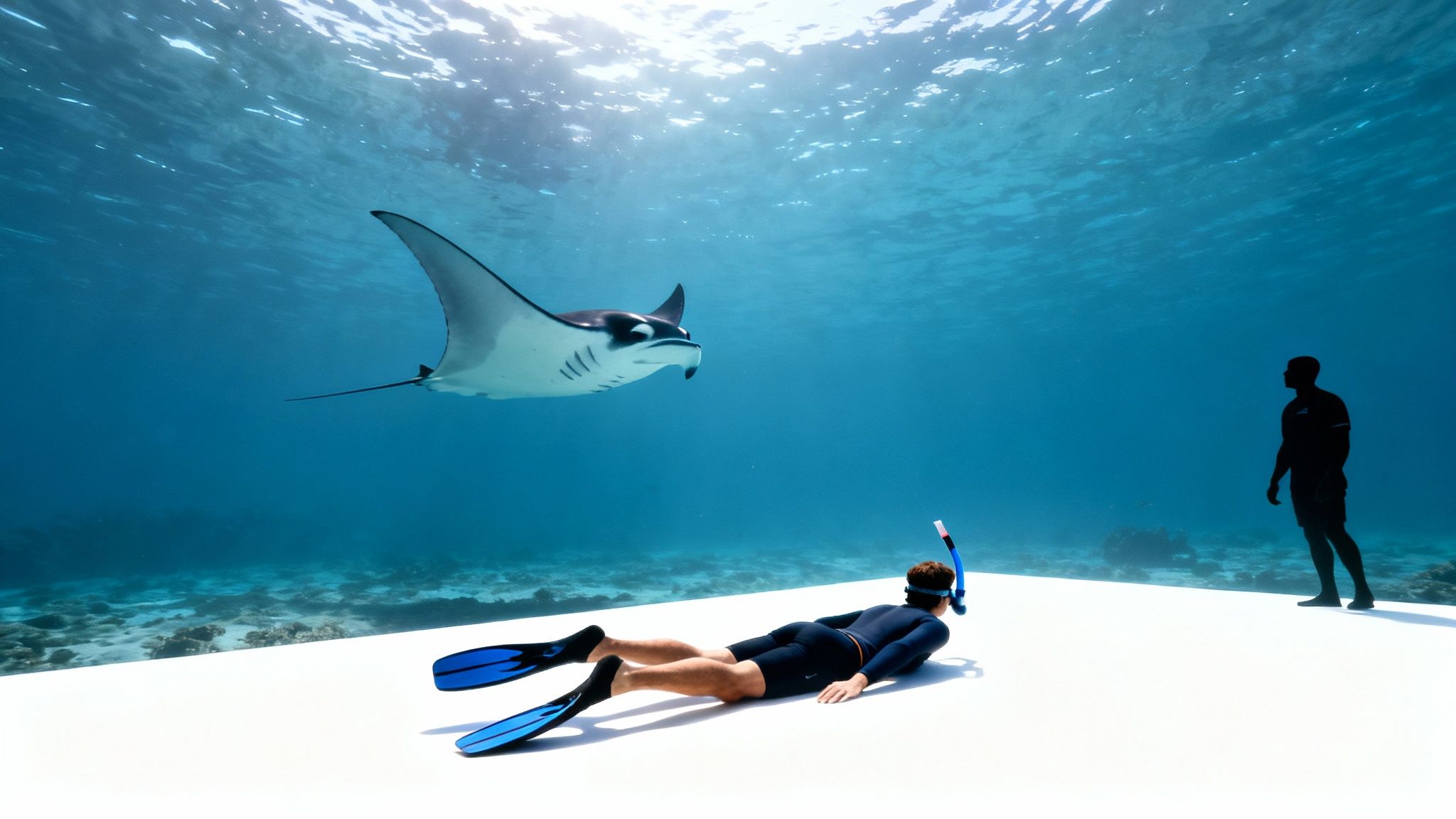
The whole idea behind a safe and ethical manta snorkel comes down to two simple words: passive observation. Your job is to be a quiet, respectful witness to the underwater show. We want the mantas to go about their business completely naturally, without us getting in their way.
The Number One Rule: Never, Ever Touch a Manta Ray
This is the golden rule, the most important one of all. Manta rays are covered in a special protective mucous layer—a slime coat—that acts as their immune system. It’s their first line of defense against nasty bacteria and parasites in the ocean.
When you touch a manta, even gently, you can wipe off this vital coating. This leaves them exposed to skin infections and diseases they would normally be able to fight off. Think of it like getting a scrape on your skin; it’s an open door for infection. By simply keeping your hands to yourself, you are playing a direct role in keeping the local manta population healthy.
The best encounters happen when you just relax and float. Mantas are curious by nature and will often glide within inches of you. Letting them decide how close to get is what makes the experience truly magical.
How to Be the Perfect Observer: Float and Watch
On your tour, you’ll be holding onto a big, floating light board. This is your personal viewing station. Your guides will tell you to stay on the surface—no swimming around, and definitely no diving down toward the mantas.
There are a few really important reasons for this:
Giving Them Space: The water below the light board is the mantas' dining room. They need all that open space to perform their graceful barrel rolls and looping glides as they feed. If snorkelers are diving down, it disrupts their patterns and can scare them away.
Keeping You Safe: Holding onto the board keeps everyone in one spot, making it easy for the boat crew and guides to keep an eye on the group.
Building Trust: When everyone stays still, the mantas see the group as a single, predictable object—not a threat. This is what makes them comfortable enough to come so incredibly close.
By following these simple guidelines, you become a guardian of this unique experience. You’re helping make sure Kona's resident manta rays continue to thrive, so people can come and witness this amazing spectacle for years to come.
For a great overview, check out the Manta Ray Night Snorkel Hawaii homepage. If you're looking for an operator that truly puts safety and responsible viewing first, Kona Snorkel Trips runs exceptional manta ray tours and also offers fantastic Captain Cook snorkeling tours.
Got Questions? We've Got Answers.
Alright, let's tackle some of the common questions that pop up before booking a manta ray snorkel. We want you to feel totally confident and excited, so here are the straight answers to what people ask most.
Think of this as the final checklist to clear up any last-minute worries.
Is This Snorkel Safe If I'm Not a Strong Swimmer?
Absolutely. This tour is designed for just about everyone, regardless of your swimming skills.
You'll be holding onto a large, sturdy floatation board the whole time, which has bright lights attached to it. On top of that, the wetsuit they give you adds a ton of buoyancy, so you'll float effortlessly. The guides are right there in the water with you, keeping a close eye on everything and ready to help if you need it.
Will We See Sharks or Anything Scary?
It's super unlikely. While the ocean is a wild place, the tour environment isn't very inviting for sharks. The combination of bright lights, all the bubbles from snorkelers, and the general commotion of the group usually keeps them away.
And the stars of the show, the manta rays, are gentle giants. They don't have teeth, stingers, or barbs—they are completely harmless.
What if the Manta Rays Don't Show Up?
This is a great question, but thankfully, it's not something you'll likely have to worry about. The success rate for seeing mantas is incredibly high, consistently over 90%.
Still, these are wild animals, so there's never a 100% guarantee. That’s why most reputable tour companies have a "manta guarantee."
This typically means if your tour doesn't see any mantas, you can go again on another night for free (based on availability). Just make sure to double-check the company's specific policy when you book.
How Cold is the Water at Night?
The water off the Kona coast stays pretty comfortable all year, usually hovering between 75°F and 80°F (24-27°C).
But since you'll be floating for about 45 minutes, you'd definitely get chilly without some help. That's why every tour provides a wetsuit. It does a great job of trapping your body heat and keeping you perfectly warm while you watch the show.
For those looking for an exceptional alternative for either a Manta Ray night snorkel tour or a Captain Cook snorkeling tour, Kona Snorkel Trips is an outstanding choice.
For a complete overview of this unforgettable adventure, explore the Manta Ray Night Snorkel Hawaii homepage.
Comments