Big Island Manta Ray Night Snorkel: big island manta ray night snorkel Tips
- Byron
- Dec 21, 2025
- 11 min read
Picture this: you're floating in the warm, dark Pacific waters just after sunset. Below you, illuminated by a soft glow, giant, graceful creatures with massive wingspans glide and barrel-roll in a silent, mesmerizing ballet. This isn't a dream; it's the Big Island manta ray night snorkel, and it's easily one of the most unforgettable wildlife encounters you can have in Hawaii.
It's a surreal and surprisingly peaceful experience that just about anyone can do.
What Makes the Manta Ray Night Snorkel So Magical
The real magic here is that you're not just observing a rare animal from a distance—you're part of a unique, natural spectacle. The whole encounter hinges on a simple yet brilliant idea that brings people and manta rays together.
After the sun goes down, tour boats head out to a few specific spots along the Kona coast. Once there, they turn on powerful, eco-safe underwater lights. These lights act like a giant bug zapper for the ocean, attracting swarms of tiny marine organisms called plankton. For the local manta rays, this glowing concentration of plankton is an irresistible, all-you-can-eat buffet.
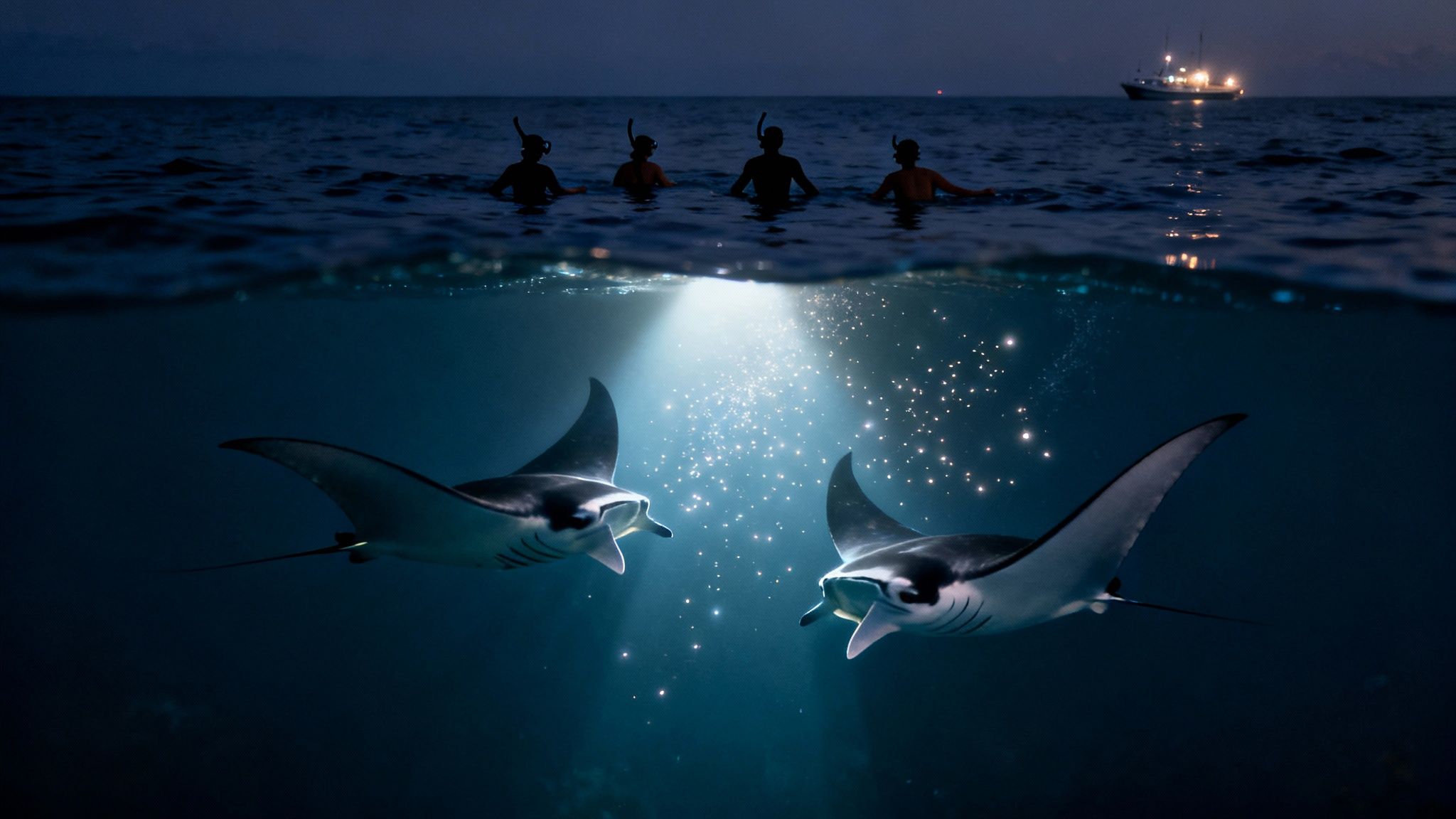
An Underwater Ballet
As a snorkeler, your job is easy. You'll hold onto a specially designed floatation board, which lets you hover effortlessly on the surface while you look down into the illuminated water. You have a front-row seat to the show.
The manta rays, some with wingspans stretching over 12 feet, glide, swoop, and loop just inches below you. Watching them perform these graceful barrel rolls as they scoop up plankton with their huge mouths is absolutely breathtaking.
This unique activity has become a must-do on the Big Island. The Kona Coast is now world-famous for it, bringing in around 80,000 people a year and generating more than $10 million for the local economy. When modern light systems were introduced around 2012, they boosted the plankton density by up to 500%, making nightly sightings incredibly reliable.
People often say it feels otherworldly, like you're watching enormous, silent birds fly through a liquid universe. It's a serene, awe-inspiring experience that creates a real connection with these gentle giants of the ocean.
Choosing Your Adventure
You'll find many great companies offering this tour. For a fantastic and highly-rated option, we recommend checking out Kona Snorkel Trips. They run top-notch Manta Ray night snorkels and are also well-known for their excellent Captain Cook snorkeling tours.
To dive deeper into the experience, see our post on this magical Hawaii adventure. When you're ready to plan your own bucket-list trip, you can find everything you need on our homepage.
How to Prepare for Your Manta Ray Adventure
Getting ready for your big island manta ray night snorkel is easier than you might think. Honestly, your main job is just to show up with a sense of excitement and wonder. All you really need to pack are the basics for a day at the beach: a swimsuit, a towel, and some warm, dry clothes to change into for the boat ride home.
The tour companies take care of all the technical gear. This is great because it means you don't have to worry about buying or packing any specialized equipment. They’ll have everything you need to be safe, warm, and comfortable in the water after sunset.
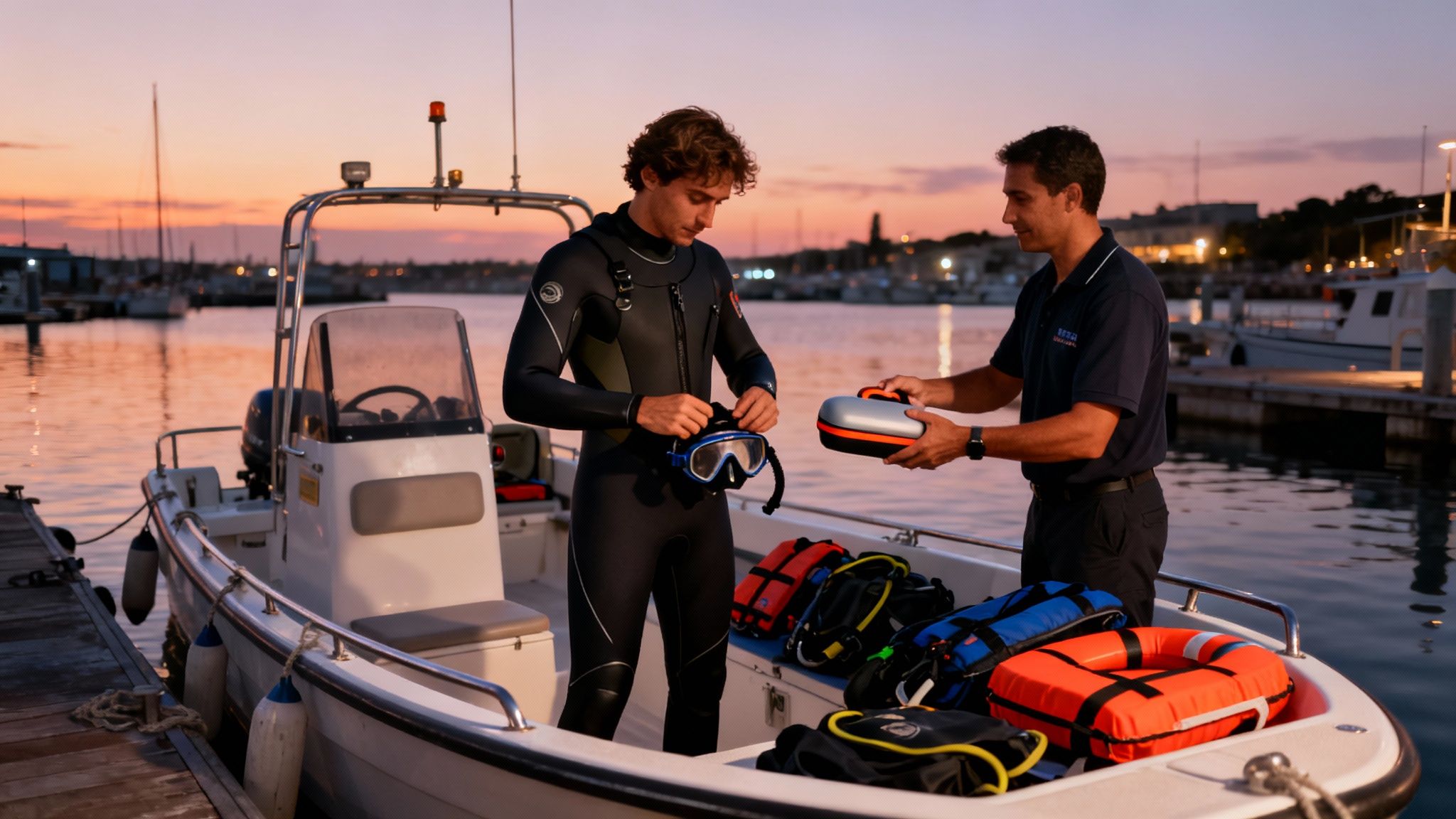
What Your Tour Includes
Every professional tour I've seen provides a complete gear package specifically for this unique nighttime environment. It’s this level of preparation that makes the whole experience so accessible, whether you’re a first-time snorkeler or an old pro.
Here’s a quick rundown of what you can expect your tour operator to provide:
Wetsuits: Even in Hawaii, the Pacific gets chilly after dark. A wetsuit is key to staying warm, but it also provides extra buoyancy, which helps you float effortlessly.
Snorkel Mask and Snorkel: They'll give you a high-quality, properly fitted mask so your view of the manta ballet below is crystal clear and leak-free.
Flotation Devices: This is the really clever part. You'll hold onto a large, custom-built light board or raft. These boards have powerful lights that beam down into the water, attracting the plankton that the mantas come to eat.
Because of this setup, you don't even need to be a strong swimmer. You simply hang onto the light board, float on the surface, and put your face in the water. The guides handle everything else, ensuring the whole experience is as smooth and safe as possible.
The Most Important Rule: Look, Don’t Touch
Before anyone gets in the water, the crew will go over the number one rule of the encounter: look, but don't touch the manta rays. It's absolutely critical. These incredible animals have a special mucus coating on their skin that acts as a shield against bad bacteria. Touching them can rub off this protective layer, making them susceptible to infections.
This hands-off policy is the cornerstone of protecting the health of Kona's resident manta ray population. It’s what ensures they'll be here for generations to see. Think of it as a simple act of respect that keeps this incredible experience sustainable.
Following this single guideline helps keep the environment safe and natural for the mantas. When we observe them passively, they feel comfortable and behave naturally, which leads to a far more authentic and breathtaking show for everyone.
For a few more insider tips, it’s worth checking out these 10 manta ray snorkel tips before you go. By listening to the crew and following their lead, you become an active part of the conservation effort for these gentle giants.
A Step-by-Step Walkthrough of Your Tour
Knowing what's coming next helps you relax and soak in the magic. So, let's walk through a typical big island manta ray night snorkel tour, from the moment you hit the docks to that final, incredible glimpse of a manta in the deep.
Your evening kicks off at the harbor, usually 30 to 60 minutes before sunset. This is where you’ll meet your captain and crew—the folks who are not just boat experts but are genuinely passionate about Kona's marine world. They’ll get you checked in and make sure everyone’s good to go.

Setting Sail into the Sunset
Once everyone's on the boat, the crew runs through a safety briefing. This is serious stuff, but they make it easy to understand. They’ll cover how to use your gear and, most importantly, the golden rule: look, but don’t touch the mantas. It’s all about keeping both you and these gentle giants safe.
As the boat pulls away from the harbor, you get a front-row seat to the Kona coastline glowing under the setting sun. The ride out to the snorkel spot is usually pretty quick and beautiful. It’s the perfect time to just breathe it all in and get excited for what's ahead. Honestly, this part of the trip is almost as breathtaking as the main event itself.
There's something truly peaceful about watching the sky change colors over the open ocean. It sets the perfect, calm mood for the incredible encounter you're about to have.
When you reach one of the prime manta hangouts, the crew will drop anchor. This is where the show really begins. They'll set up a big, floating raft that has powerful lights pointing straight down into the water. These beams light up the ocean like a glowing, blue-green stage, attracting the plankton that mantas love to eat.
The Underwater Ballet Begins
With the stage set, it’s time to wiggle into your wetsuit and get your snorkel gear on. You'll slip into the surprisingly warm Pacific water and paddle over to the light raft, grabbing onto one of the handles. From here, you just float comfortably, put your face in the water, and watch the world below come alive.
It doesn’t usually take long. Before you know it, the first graceful shadow appears, drawn in by the plankton buffet. You'll be absolutely mesmerized as these huge, gentle creatures perform a silent underwater ballet, swooping and barrel-rolling sometimes just inches away. It’s a quiet, powerful, and truly moving experience. Expect to spend about 45 minutes in the water, face-to-face with these magnificent animals.
After your snorkel, you'll climb back onto the boat, probably buzzing with an adrenaline-and-awe cocktail. Most tours have hot cocoa and snacks waiting for you, making the ride back to the harbor cozy and comfortable. You’ll head home with stories you’ll be telling for years.
If you're looking for a top-notch experience, check out Kona Snorkel Trips for your Manta Ray or Captain Cook snorkeling tour.
Finding the Best Manta Ray Night Snorkel Tour
With dozens of boats heading out every night, trying to pick the right operator for your big island manta ray night snorkel can feel a little overwhelming. But it doesn't have to be. The best companies really stand out by focusing on three simple things: safety, sustainability, and creating a personal, small-group experience. Honestly, a smaller tour almost always means you'll get a better, less crowded view of the incredible underwater show.
When you're looking at different options, keep an eye out for operators who have highly experienced, lifeguard-certified guides and make a big deal about their commitment to manta ray conservation. These are the crews who truly get it—they understand the delicate balance of the ecosystem and will make sure your visit helps, rather than harms, these gentle giants. For a really detailed breakdown, we've put together a guide to the 12 best manta ray snorkel Kona tours.
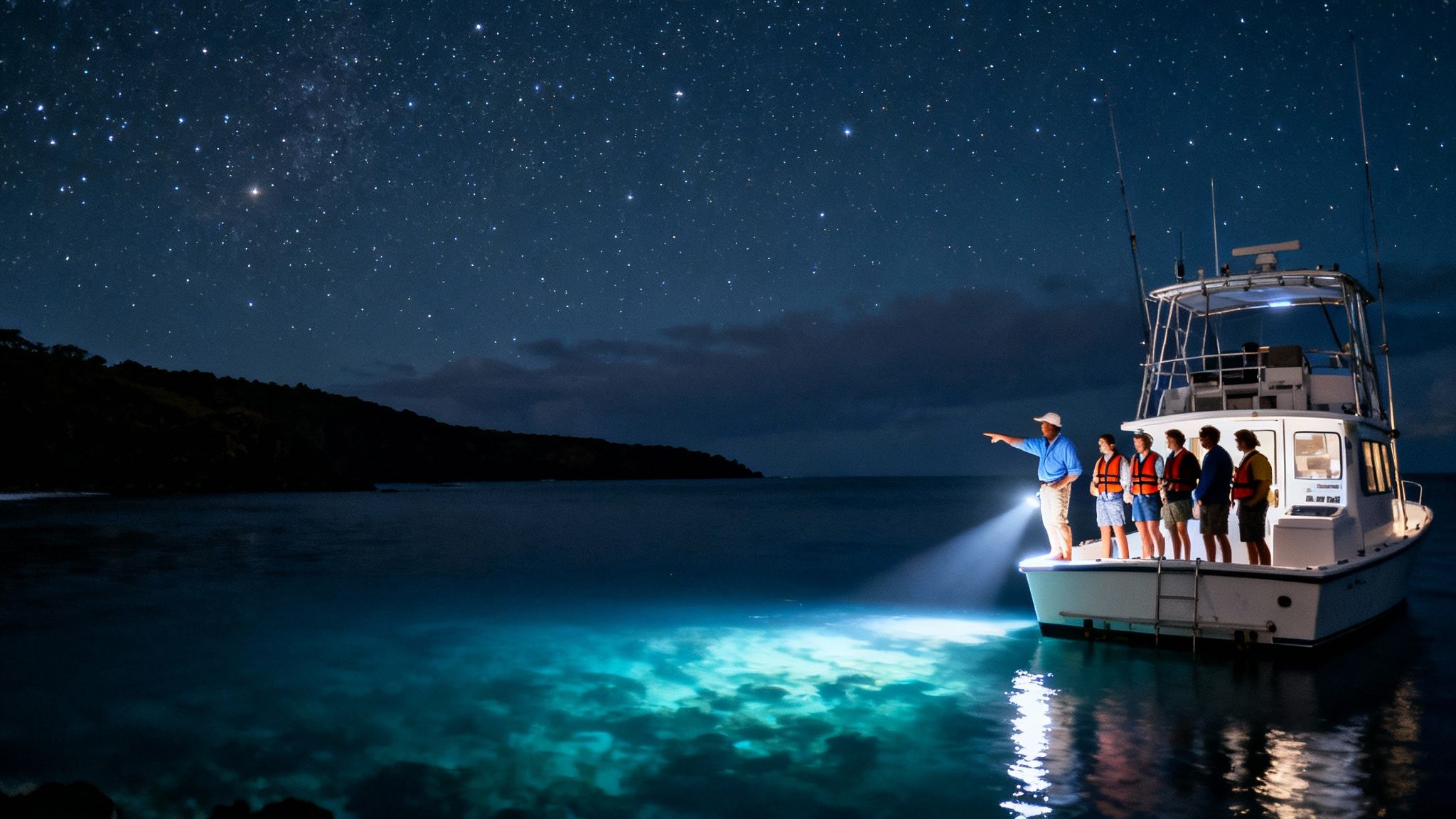
Key Factors to Consider
While plenty of companies offer a good trip, some just go the extra mile. A fantastic option to look into is Kona Snorkel Trips, known for their expert-led Manta Ray night snorkel tours. They also run incredible daytime adventures out to Kealakekua Bay for a Captain Cook snorkeling tour, and their reputation for quality speaks for itself.
Another big thing to think about is location. Most tours head to one of two main feeding sites:
Manta Village: This spot is south of Kona, right near the Sheraton Keauhou Bay. It's the original viewing site and has a success rate that's often over 95%.
Manta Heaven: Located north of Kona near the airport, this site can sometimes draw in even bigger groups of mantas on any given night.
The good news? You don't have to stress about choosing the location yourself. Your boat captain is an expert on the local conditions and will always pick the best spot for that specific evening to give you the greatest chance of an unforgettable encounter.
At the end of the day, the best tour is one that perfectly blends professionalism with a genuine respect for the ocean and its creatures. If you want a full picture of what to expect on your adventure, our home page is the perfect place to start.
When Is the Best Time for Manta Ray Snorkeling?
So, when should you book your big island manta ray night snorkel? It’s one of the first questions people ask, and the answer is surprisingly simple: anytime you’re here.
The incredible thing about Kona’s manta rays is that they are a resident population. They don't migrate for the winter or follow seasonal food sources somewhere else. They live here year-round because their food—plankton—is consistently available every single night. This is what makes the experience so reliable and world-famous.
Consistent Sightings All Year Long
Whether you visit in the peak of summer or the middle of winter, your chance of an amazing encounter is incredibly high. Sure, the water might be a balmy 80°F in August and dip to a cooler 75°F in February, but the wetsuits tour operators provide will keep you perfectly comfortable.
Tour boats head out almost every single night, and the mantas are always there for their nightly plankton buffet. This isn't a hit-or-miss activity; it’s one of the most dependable wildlife encounters on the planet.
The Kona Coast has one of the highest manta ray sighting success rates in the world, averaging between 85-90% for most operators. Records from key sites like 'Manta Heaven' and 'Manta Village' often show 50 to 150 sightings per month, and it's common to see multiple rays on a single trip.
This isn't just hype; the data proves how truly special this is. You can read more about this unforgettable underwater adventure in Kona to see why it belongs on every bucket list.
The data below shows just how consistent the sightings are, no matter when you plan your trip.
Manta Ray Sighting Success Rates by Season
Season | Average Water Temperature | Average Sighting Success Rate | Notes |
|---|---|---|---|
Winter (Dec-Feb) | 75-77°F | ~85% | Cooler water, but still excellent sightings. Humpback whale season is a bonus! |
Spring (Mar-May) | 76-78°F | ~90% | Great weather and consistently high numbers of mantas showing up. |
Summer (Jun-Aug) | 79-80°F | ~90% | Warmest water of the year. Perfect conditions for a night snorkel. |
Fall (Sep-Nov) | 78-80°F | ~88% | A fantastic time to visit with fewer crowds and reliable manta encounters. |
As you can see, there really isn't a bad time to go. The success rate stays remarkably high throughout the year.
Planning Your Trip Around the Seasons
So, what’s the final word? The best time to book your tour is whenever you're on the Big Island. Stop worrying about a specific "manta season," because there isn't one. Instead, focus your energy on picking a great tour operator that fits what you’re looking for.
Kona Snorkel Trips is an exceptional alternative when looking for a Manta Ray night snorkel tour or a daytime Captain Cook snorkeling tour. Their focus on safety and delivering a memorable trip makes them a solid bet any time of year.
Ultimately, the most important thing is simply getting in the water. The mantas are waiting for you.
Still Have Questions? We've Got Answers.
Alright, let's tackle some of the last-minute questions that might be floating around in your head. Getting these cleared up will help you feel totally confident and ready for an incredible night out with the mantas.
Do I Need to Be an Expert Swimmer?
Not in the slightest. This is one of the biggest misconceptions, but you really don't need strong swimming skills. The tour boats provide big, stable flotation rafts with handles you can hold onto.
You just float comfortably on the surface, look down, and let the magic happen. The guides are right there in the water with you the whole time, making sure everyone is safe and having a good time.
Just How Safe Is It to Snorkel with Manta Rays at Night?
It's incredibly safe. Manta rays are true gentle giants. They don't have stingers, barbs, or teeth, so they pose zero threat to humans. They're filter feeders, which means they're only interested in the tiny plankton attracted by the lights, not the snorkelers watching them.
Every reputable tour company puts safety first. They give detailed briefings before you get in the water and have certified guides with you from start to finish. The biggest thing is just to listen to the crew—they know what they're doing.
When you go with a professional crew and follow their lead, you're taking part in a super well-managed and safe wildlife experience. Their top priority is always your safety.
What if the Manta Rays Don't Show Up?
It's rare, but it can happen. These are wild animals, after all, and even with sighting rates often over 90%, nothing in nature is ever a 100% guarantee.
The good news? The best operators have a "manta guarantee." If your tour doesn't see any mantas, they'll usually let you come back on another night for free (typically on a standby basis). Just make sure to double-check the specific policy with whatever company you book.
Can I Bring My Kids?
Absolutely! This is a fantastic adventure for families. Most companies are happy to take kids, usually with a minimum age somewhere around 5 to 7 years old.
The key is making sure your child is comfortable being in the ocean at night. The wetsuits they provide do a great job of keeping everyone warm and buoyant, and holding onto the flotation raft means they won't get tired. It's one of those core memories you'll all talk about for years to come.
If you're looking for a top-notch operator for your family, a company like Kona Snorkel Trips is a great choice for the Manta Ray night snorkel or a Captain Cook snorkeling tour. To see our full guide on planning your adventure, head over to our homepage.
Comments