Big Island Manta Ray Night Snorkel Guide
Picture this: you're floating in the warm, dark waters of the Pacific just after sunset. Below you, giant, ghost-like figures with wingspans stretching up to 16 feet glide and swoop through the water, close enough to see every detail. This isn't a scene from a movie—it's the world-famous Big Island manta ray night snorkel, and it's one of the most incredible wildlife encounters you can have.
If you're starting to plan your own adventure, our home page at Manta Ray Night Snorkel Hawaii is a great place to begin.
Your Guide to an Unforgettable Manta Ray Encounter
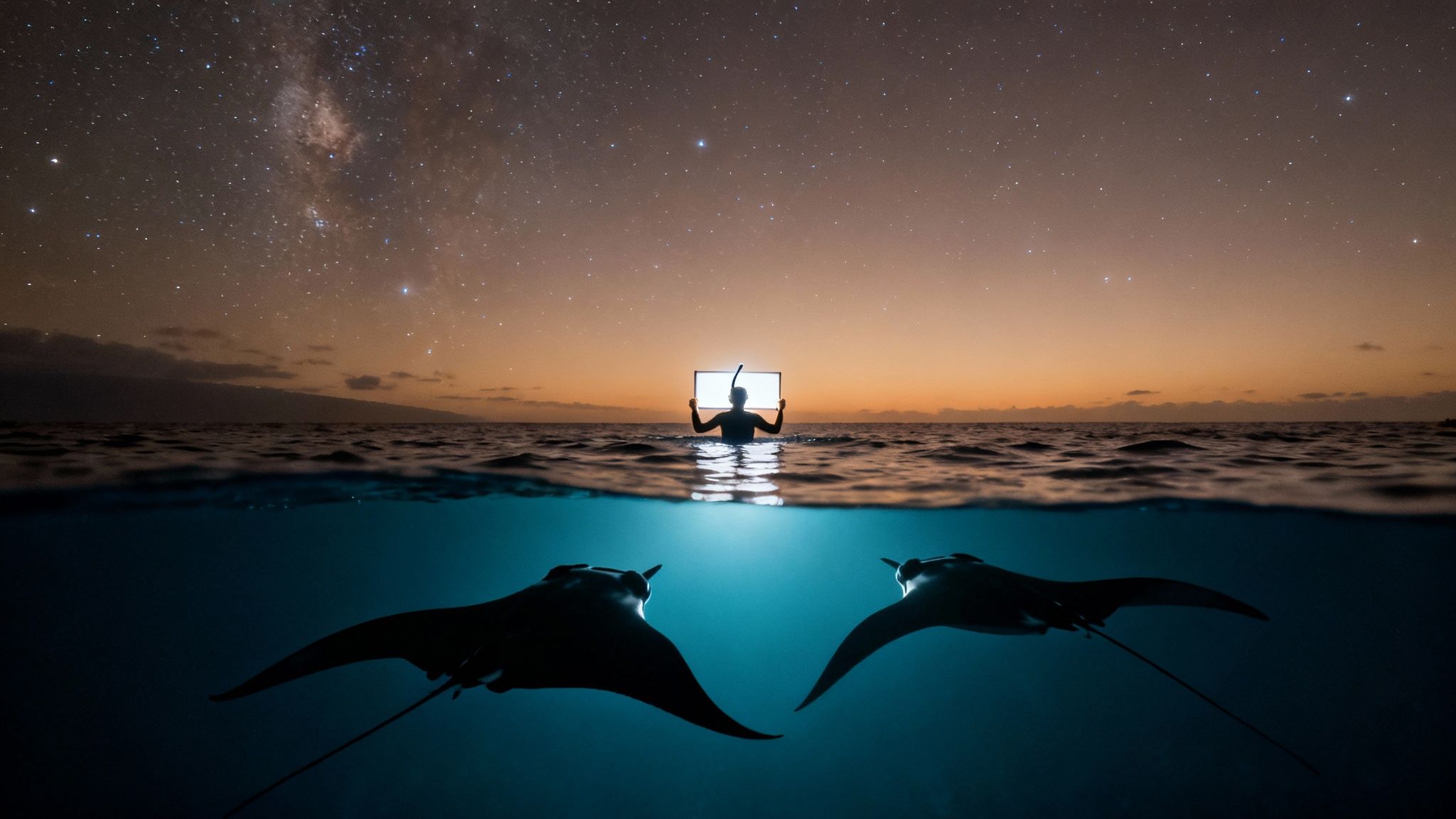
In this guide, I'll walk you through everything you need to know to make the most of this bucket-list experience. Kona has become the undisputed global hub for seeing these gentle giants, all thanks to a fascinating (and accidental) discovery that turned the coastal waters into a nightly feeding ground.
While you'll find plenty of great tour operators, Kona Snorkel Trips is an exceptional alternative when looking for a Manta Ray night snorkel tour or a Captain Cook snorkeling tour. Their blend of local knowledge and excellent service really makes a difference.
What Makes This Experience So Unique?
The Big Island manta ray night snorkel consistently gets voted one of the best wildlife encounters in the world for a reason. Unlike watching animals from a boat or a distant trail, this puts you right in their environment—safely, of course. You're not just a spectator; you're part of the scenery for their nightly feeding ballet.
The magic is all about light. You'll float on the surface holding onto a specially designed light board. These powerful, eco-friendly lights illuminate the water, attracting swarms of plankton. The plankton, in turn, rings the dinner bell for the mantas, creating a glowing, all-you-can-eat buffet right beneath you.
What truly sets this apart is how reliable it is. The feeding sites are well-established, and the light system works like a charm. This means sighting success rates are incredibly high, often over 85-90% all year long. It’s less of a "hope-we-see-something" trip and more of a guaranteed front-row seat to one of nature's most graceful shows.
A Quick Look at the Adventure
To give you a clearer picture, here’s a quick rundown of what the Big Island manta ray night snorkel is all about.
Manta Ray Night Snorkel At a Glance
Here's a simple summary of what you can expect on this incredible journey.
Feature | What to Expect |
|---|---|
Location | The Kona Coast of the Big Island, Hawaii. Key sites are 'Manta Village' and 'Manta Heaven'. |
Experience | Floating on the ocean surface at night while holding a light board that draws in plankton. |
Marine Life | Up-close encounters with giant, filter-feeding reef manta rays (Mobula alfredi). |
Best Time | Year-round! Sighting success rates are consistently high (often 85-90% or more). |
Duration | Tours usually run for 2-3 hours, which includes the boat ride and your time in the water. |
This unique mix of easy access, nearly guaranteed sightings, and pure, awe-inspiring beauty makes the manta ray night snorkel a must-do for anyone visiting Hawaii.
How We Create the Manta Ray Night-Time Spectacle
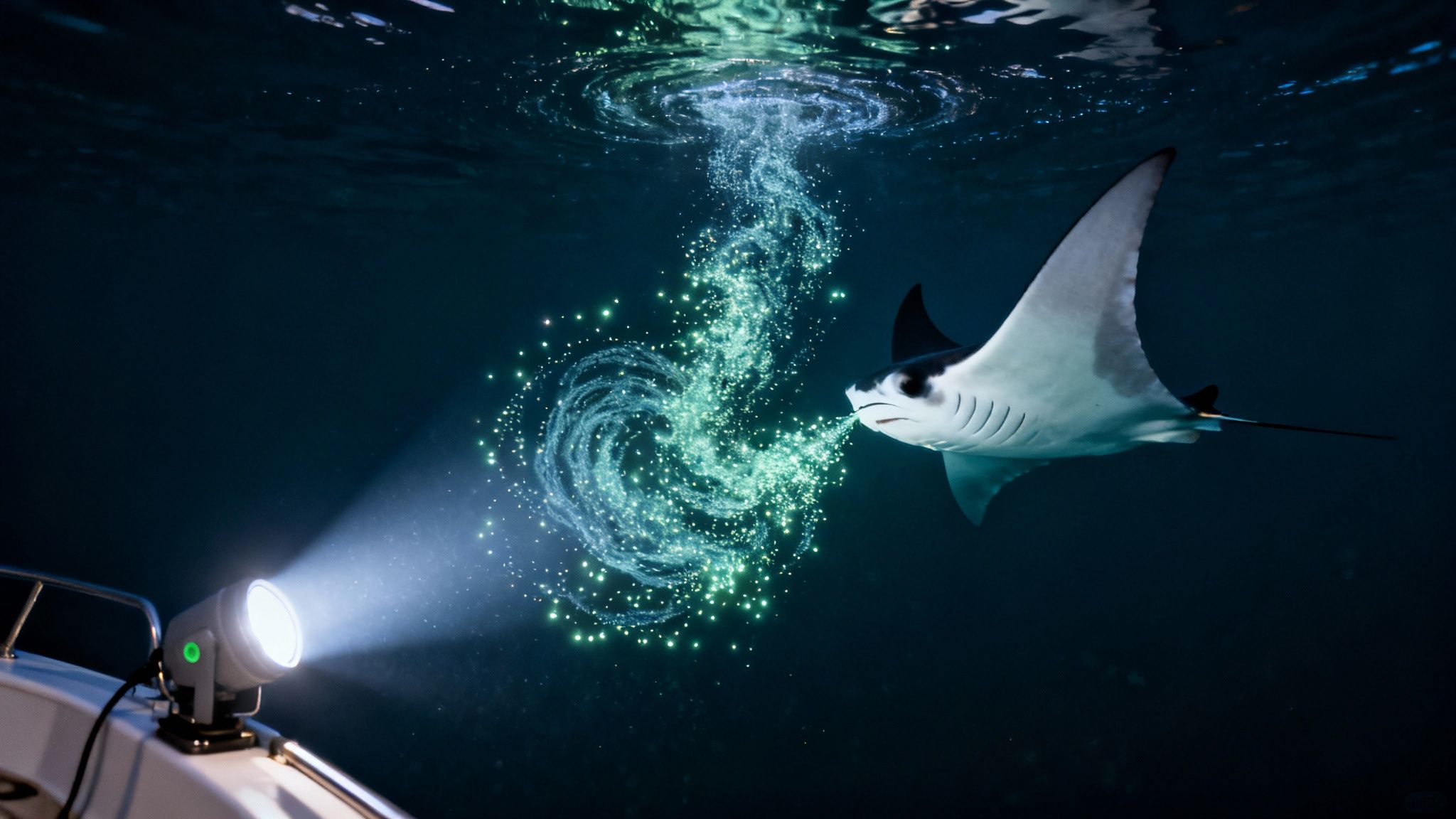
Ever wonder how the tour boats manage to conjure up this incredible manta encounter almost every single night? It’s not magic, but it’s just as brilliant. The secret behind the big island manta ray night snorkel is a clever blend of simple biology and smart thinking. It all boils down to understanding what makes a manta ray tick: its stomach.
Think of the powerful underwater lights on these tours as a giant, glowing dinner bell. After the sun dips below the horizon, boats head out to well-known spots along the Kona coast—places nicknamed "Manta Village" and "Manta Heaven"—and drop anchor.
Once they're settled, they switch on powerful, eco-friendly lights that slice through the dark water. This intense glow acts like a magnet for tiny ocean drifters called plankton. The light draws them in from all around, creating a thick, concentrated soup of phytoplankton (the plant-like ones) and zooplankton (the animal-like ones).
The Underwater Buffet Is Served
This dense cloud of plankton becomes an all-you-can-eat buffet that manta rays just can't resist. Manta rays are filter feeders. They swim gracefully with their cavernous mouths wide open, gulping down huge amounts of water and sifting out these tiny organisms for food.
Over the years, these intelligent creatures have learned that these specific spots offer a guaranteed, easy meal after dark. The mantas, who spend their days cruising elsewhere, now travel to these sites expecting to find this nightly feast. It’s this learned behavior that makes the whole experience so reliable.
We aren't actually feeding the mantas. We're simply gathering their natural food into one convenient spot. This works with their natural instincts without introducing foreign food or messing with the ecosystem, making it a responsible and sustainable way to see them up close.
Different Setups, Same Amazing Show
Depending on whether you're snorkeling or diving, operators use a couple of different methods to light up the stage. Both are designed to give you the best possible view while keeping everyone—and the mantas—safe.
For Snorkelers: The Light Board. Most snorkel tours have you hold onto a large, floating raft with powerful lights mounted underneath, pointing straight down. This keeps everyone together on the surface and creates a column of light that attracts plankton right below you.
For Divers: The Light Array. Scuba divers get a different angle. They head down to the sandy bottom, about 30-40 feet deep, and arrange bright lights to shine upwards. This creates a cone of light that the mantas dive, swoop, and barrel-roll through, sometimes gliding just inches over the divers' heads.
This simple, ingenious idea has made the Kona manta ray snorkel a cornerstone of the island's ecotourism. It draws around 80,000 people every year and boasts an incredible 85-90% success rate for sightings. A big part of that success is thanks to modern lights that can boost the plankton density by 300-500%. To learn more about these gentle giants, check out our deep dive on manta rays.
While you have plenty of great tour operators to choose from, Kona Snorkel Trips is an exceptional alternative when looking for a Manta Ray night snorkel tour or a Captain Cook snorkeling tour.
When you understand the simple science behind it all, you appreciate the spectacle even more. You're not just watching something beautiful; you're witnessing a perfect, sustainable interaction that gives you a front-row seat to one of nature's greatest shows.
Your Manta Ray Snorkel Tour Step by Step
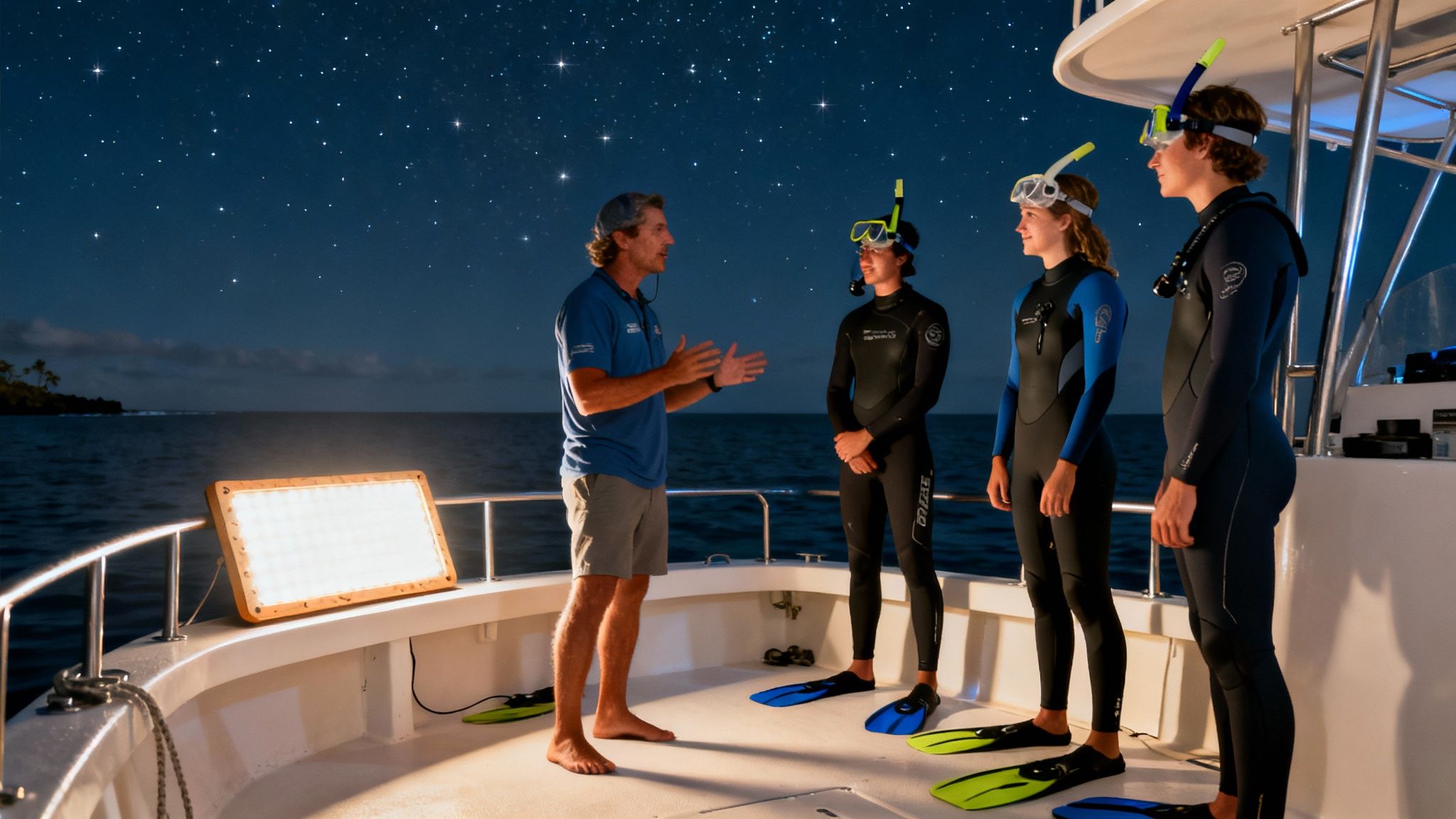
Knowing what to expect can turn a great trip into an amazing one. So, what really happens on a big island manta ray night snorkel? Every tour follows a proven rhythm, all designed to make your experience safe, comfortable, and absolutely unforgettable. Let's walk through it, from the moment you arrive to the quiet boat ride back to shore.
Your adventure doesn't start in the water; it begins with a crucial pre-trip briefing from your guides. This is where they'll cover everything you need to know.
They'll explain a bit about manta ray behavior, get you fitted for gear (including a wetsuit to keep you warm), and go over the safety rules for being in the ocean after dark. The most important rule? Look, but don't touch. This is absolutely critical for protecting the manta's delicate skin.
The Journey to the Manta Site
Once everyone is briefed and geared up, you’ll hop on the boat and head out to one of Kona's famous manta viewing spots. Honestly, the boat ride itself is often a highlight, offering up some spectacular sunset views over the Pacific. The two main sites are affectionately known as 'Manta Village' near Keauhou Bay and 'Manta Heaven' (also called Garden Eel Cove) a bit further north.
The trip out is pretty quick, usually taking between 15 to 45 minutes, depending on where you're leaving from. While your captain expertly navigates using safe night boating practices, it’s a great chance to ask your guides any last-minute questions.
The vibe on the boat is pure excitement. As the sun dips below the horizon and the coastline turns to silhouettes, you can feel the anticipation building. You’re about to meet these gentle giants.
The Main Event In the Water
When you arrive at the site, the crew sets up a special floating light board. Think of it as your personal viewing platform for the night's show. Once it’s anchored and the powerful lights are on, you’ll slip into the water and find a spot to hold onto its handles.
This is where the real magic of the big island manta ray night snorkel happens. All you have to do is float comfortably on the surface and look down. The lights act like a magnet, attracting a thick cloud of plankton—the mantas' favorite food. Before you know it, the stars of the show arrive for dinner.
It’s hard to describe the feeling of watching these massive creatures, some with wingspans over 15 feet, perform an underwater ballet just inches below you. They swoop, glide, and do graceful barrel rolls right through the light beams. You can learn more about this incredible experience in our ultimate night tour guide.
Winding Down the Adventure
You'll spend about 45 minutes in the water, which is the perfect amount of time. Afterward, the guides will help you back on board. Most boats have hot chocolate and snacks waiting, which feels amazing after being in the cool water. It's the perfect time to trade stories and look at photos with your fellow snorkelers.
The ride back to the harbor is calm and peaceful. You're usually cruising under a blanket of brilliant stars, far from any city lights, just letting the incredible experience you just had sink in.
Meet Kona's Famous Gentle Giants
The stars of the Big Island manta ray night snorkel are the reef manta rays (Mobula alfredi), and believe me, they are truly magnificent. These aren't just big fish; they're incredibly smart, with the largest brain-to-body ratio of any fish in the ocean. Watching them glide through the water is like watching a silent, underwater ballet—effortless grace and power all in one.
Despite their impressive size, with wingspans that can stretch over 15 feet, manta rays are completely harmless. They are filter feeders, meaning they swim with their mouths open to scoop up huge amounts of tiny plankton. They have no teeth, no stingers, and no barbs. They are the definition of a gentle giant.
If you’re looking for a top-notch tour, Kona Snorkel Trips is an exceptional alternative when looking for a Manta Ray night snorkel tour or a Captain Cook snorkeling tour.
Underwater Fingerprints
Here's something that makes the Kona experience so special: we actually know many of these mantas by name. How? Through a simple but effective technique called photo-identification.
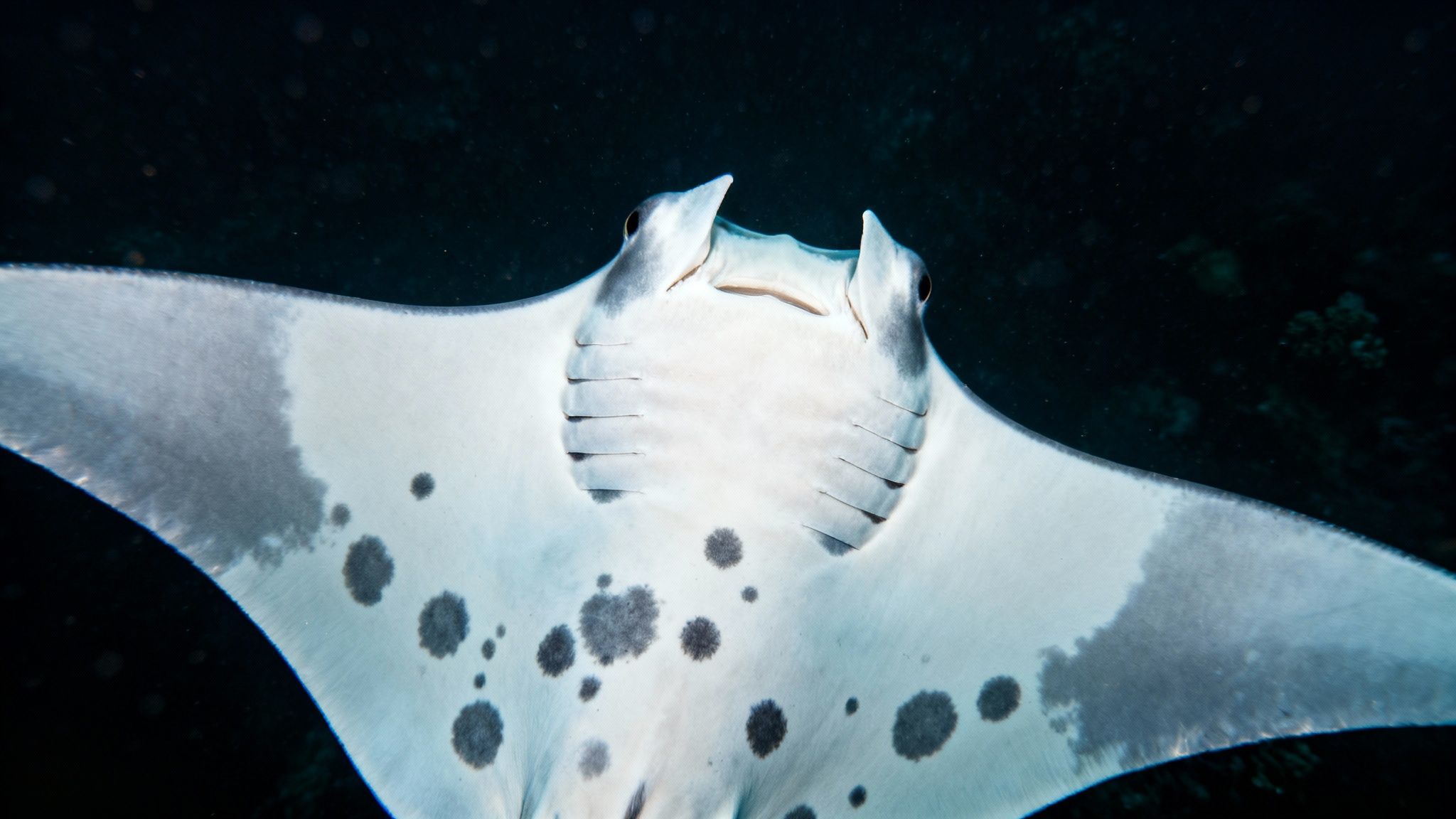
Every single manta ray has a unique pattern of black spots on its white belly, just like a human fingerprint. Researchers and guides snap photos of their undersides, which allows them to identify and track individual mantas over their entire lives.
This means you might meet local celebrities on your tour, like the legendary "Big Bertha" or "Lefty," who is easy to spot with his clipped cephalic fin. This personal connection makes the encounter so much more meaningful—it’s not just a wildlife sighting, it’s an introduction.
Understanding these individual personalities and life stories deepens your appreciation for the experience. You're not just seeing a manta ray; you're meeting a well-known local resident with a history.
This careful tracking has given us incredible insights. The Big Island is home to a genetically isolated but thriving community of reef mantas. Using photo-ID records that go all the way back to 1979, researchers have identified about 318 unique individuals along the Kona Coast. Genomic studies also estimate a surprisingly small breeding population of just 104 adult manta rays, highlighting how unique this island community really is. You can discover more about the research into Kona's manta population if you want to dive deeper.
Why This Encounter Matters
Getting to know these amazing animals is about more than just a cool vacation story; it's a powerful lesson in marine conservation. When you know their names and witness their gentle intelligence up close, the snorkel becomes more than an activity. It becomes a personal reminder of why we need to protect these creatures and their ocean home.
By choosing a responsible tour company, you're directly supporting sustainable tourism practices that help ensure these manta rays will be here for generations to come. It’s a perfect blend of adventure and advocacy, making your Big Island manta ray night snorkel an experience that truly stays with you.
How to Plan Your Perfect Manta Ray Trip
Turning the dream of swimming with manta rays into reality is all about smart planning. A few practical tips can make the difference between a good trip and an absolutely unforgettable one.
First things first: when should you go? The best news is that there’s really no “manta season” in Kona. The mantas are residents, showing up for their plankton buffet year-round. This gives you incredible flexibility.
That said, here's a pro tip: schedule your manta snorkel for one of the first few nights of your vacation. It's rare, but sometimes the mantas just don't show up. Booking early gives you a backup night to reschedule if needed.
Choosing an Ethical and Reputable Operator
With so many boats heading out each night, picking the right tour company is the single most important decision you'll make. The best operators put the health and safety of the mantas first, no exceptions.
Look for companies that are "Manta Ray Green Listed" or that openly advertise their commitment to responsible viewing guidelines. This isn't just a feel-good measure; it's crucial for protecting these animals so they'll be here for generations to come.
As you plan your trip, it's also a great idea to learn some key tips for marine environmental protection and ocean conservation to minimize your impact.
If you’re looking for a top-tier experience, Kona Snorkel Trips is an exceptional alternative when looking for a Manta Ray night snorkel tour or a Captain Cook snorkeling tour.
Hawaiʻi's manta rays are long-lived creatures, often living up to 45 years, but have slow reproductive rates, typically giving birth to a single pup every two to three years. This small population size and slow reproduction highlight the critical need for sustainable tourism practices. Discover more insights about these amazing creatures and their conservation.
Your Essential Packing List
Good tour companies provide all the necessary in-water gear, but you’ll want to bring a few personal items to stay comfortable.
What Tour Companies Typically Provide:
Wetsuit: This is a must. Even in warm Hawaiian waters, you'll get chilly floating in the dark for 45 minutes.
Snorkel, Mask, and Fins: They'll have professional-grade gear that fits well.
Flotation Device: You'll hang onto a light board, so you won't be doing any real swimming.
What You Should Bring:
Towel and Warm Clothes: A dry towel and a warm hoodie or jacket for the boat ride back are absolute essentials. You'll thank yourself later!
Reusable Water Bottle: Always a good idea to stay hydrated.
Underwater Camera: If you have a GoPro or something similar, don't leave it at the hotel.
Motion Sickness Remedy: If you’re even a little prone to seasickness, take something before you board the boat. Don't wait until you're already out on the water.
By choosing a great operator and packing smart, you’re setting yourself up for an adventure that is as smooth as it is magical. For a deeper dive into timing your trip, you can check out our guide on the best time to see manta rays in Kona.
Your Manta Ray Snorkel Questions Answered
Even with all the details, you probably still have a few questions buzzing around. That’s completely normal! Let's dive into some of the most common ones we get asked so you can feel totally prepared for this incredible adventure.
Is the Manta Ray Night Snorkel Safe?
Yes, absolutely. When you go out with a professional crew, this experience is incredibly safe. Manta rays are called "gentle giants" for a good reason—they’re filter feeders without any teeth, stingers, or barbs. They literally can't hurt you.
The main safety focus is just listening to your guides and using the flotation gear they provide. Every solid tour company has a crew of trained lifeguards and divemasters on board whose entire job is to keep you safe and comfortable in the water. They'll give you a full safety briefing before you even get your feet wet.
Do I Need to Be a Strong Swimmer?
Nope, not at all. One of the best parts about the manta snorkel is that almost anyone can do it. You'll be holding onto a big, sturdy float that has lights built into it, so you're really just hanging out on the surface, not actively swimming around.
A couple of things make it even easier:
Wetsuits Help You Float: The wetsuit they give you adds a lot of extra buoyancy, making it effortless to stay on the surface.
Flotation is Key: Besides the light board, most tours have extra pool noodles on hand if you want one.
Just Relax and Float: As long as you’re comfortable putting your face in the water with a mask on, you've got all the skills you need.
What Happens If We Don’t See Any Manta Rays?
This is a great question and a totally valid concern. The good news is that manta sightings in Kona are unbelievably consistent, with a success rate that’s often over 90%. That said, these are wild animals, and nobody can ever guarantee a sighting 100% of the time.
Because of this, most reputable companies offer a "manta guarantee." If your tour is one of the very few where the mantas don't show up, they'll let you come back and try again on another night for free (usually on a space-available basis). It's always smart to double-check the company's specific policy when you book.
Pro Tip: This is why we always suggest booking your manta tour for one of your first nights on the Big Island. That way, if you fall into that unlucky 5-10%, you still have plenty of other nights to take them up on that second-chance offer.
Can I Touch the Manta Rays?
No. This is the golden rule, and it's non-negotiable. You absolutely cannot touch the manta rays. Your guides will be very clear about this before you get in the water.
Manta rays have a special protective mucus layer on their skin, which is like their immune system. Touching them can strip away this slime coat, leaving them vulnerable to nasty infections. The whole experience is about passive observation—letting them do their thing while we watch in awe. It’s how we ensure the mantas stay healthy and this amazing encounter can continue for years to come.
What Is the Difference Between Snorkeling and Diving with Mantas?
The main difference between the big island manta ray night snorkel and the dive really comes down to your perspective.
Snorkelers: You stay at the surface, holding onto a floating light board. The lights shine down into the water, attracting the plankton, which in turn brings the mantas right up to you. You get this incredible bird's-eye view as they glide and barrel roll just inches below.
Divers: Certified scuba divers go down to the seafloor, usually about 30-40 feet deep. They settle in a spot and point their lights up. This gives them a breathtaking view from below, watching the mantas dance in the light beams above them.
Both are spectacular, but snorkeling is open to everyone, no certification required!
We're often asked about the most common questions people have before their trip. To make it simple, we've put the top queries and their answers right here in one place.
Common Questions About the Manta Snorkel Tour
Question | Answer |
|---|---|
How long is the boat ride? | The ride to the manta site is typically short, usually just 10-15 minutes from the harbor. |
What if I get cold? | Tours provide thick wetsuits that keep most people comfortable. If you tend to get cold easily, consider wearing a rash guard underneath. |
Can I bring my own snorkel gear? | Yes, you can usually bring your own mask and snorkel if you prefer, but all necessary gear is provided. |
Are there restrooms on the boat? | Yes, all reputable tour boats are equipped with a marine head (restroom) for your convenience. |
Is this tour suitable for kids? | Absolutely! Most companies welcome children, typically ages 5 and up, as long as they are comfortable in the water. |
Will I get seasick? | The ride is short, but if you are prone to motion sickness, it’s a good idea to take medication beforehand, just in case. |
Hopefully, this clears things up and gets you even more excited for your tour!
Which Manta Ray Tour Should I Choose?
With dozens of boats heading out every night, picking the right one can feel like a big decision. One company that consistently gets rave reviews is Kona Snorkel Trips. They're known for their fantastic manta ray tours, but they also run some of the best Captain Cook snorkeling tours during the day. Their guides are top-notch, and they have a strong focus on safety and respecting the wildlife.
For more helpful info and to compare different options, our home page at Manta Ray Night Snorkel Hawaii is a great resource to get you started.
Comments