Big island manta ray night snorkel: Kona's Night Ocean Spectacle
- Byron
- Dec 11, 2025
- 13 min read
Picture this: you're floating in the warm, dark Pacific Ocean just off the Kona Coast. Below you, giant, graceful manta rays soar and somersault through the water, sometimes just inches away. This isn't a scene from a documentary—it's the world-famous Big Island manta ray night snorkel, an experience so magical it’s considered one of the best wildlife encounters on the planet.
For a night you'll never forget, check out the amazing options at Manta Ray Night Snorkel Hawaii.
What Is a Big Island Manta Ray Night Snorkel?
At its heart, the Big Island manta ray night snorkel is a guided eco-tour that gives you a front-row seat to one of nature’s most incredible spectacles. It’s not just a swim; it’s an opportunity to witness a natural feeding phenomenon that happens nearly every single night right here off the coast of Kona. It's truly become a signature Hawaiian adventure.
Here’s how it works. Just after sunset, boats head out to well-known manta ray hangouts. Once anchored, the crew submerges powerful, eco-friendly lights into the ocean. These lights act like a massive bug zapper, but for the sea—they attract swarms of plankton, the manta rays' favorite food. Essentially, the lights create a concentrated, all-you-can-eat buffet that the gentle giants simply can't resist.
Your Role in the Spectacle
You don't need to be an Olympic swimmer to do this. Your job is simple: float and watch. You'll hold onto a custom-made light board or flotation raft, which keeps you effortlessly buoyant on the surface. The lights on your board shine down, illuminating the water and attracting even more plankton right below you.
From this perfect vantage point, you get to watch as manta rays—some with wingspans over 12 feet—glide, loop, and barrel-roll through the water to scoop up the plankton. They often come breathtakingly close, but it's completely safe. Manta rays are gentle filter-feeders and have no teeth, stingers, or barbs.
This whole experience is built around passive observation, which makes it both sustainable and respectful. You get an unbelievable, up-close look at these majestic creatures in their natural habitat without ever disrupting their dinner. It’s the perfect marriage of pure adventure and thoughtful conservation.
If you’re hunting for a top-notch tour operator, we can't recommend Kona Snorkel Trips enough. They're fantastic for the manta ray snorkel and also offer incredible Captain Cook snorkeling tours with a focus on small-group experiences.
So, get ready for a night you won't soon forget. This guide will cover everything you need to know, from the science behind the snorkel to booking the perfect trip for your crew.
The Magic Behind the Underwater Ballet
Ever wonder what makes the Big Island manta ray night snorkel so reliable and utterly spellbinding? It's not just luck. It's a clever, beautiful setup where a little human ingenuity meets natural biology, creating a spectacular underwater show you can count on almost every single night.
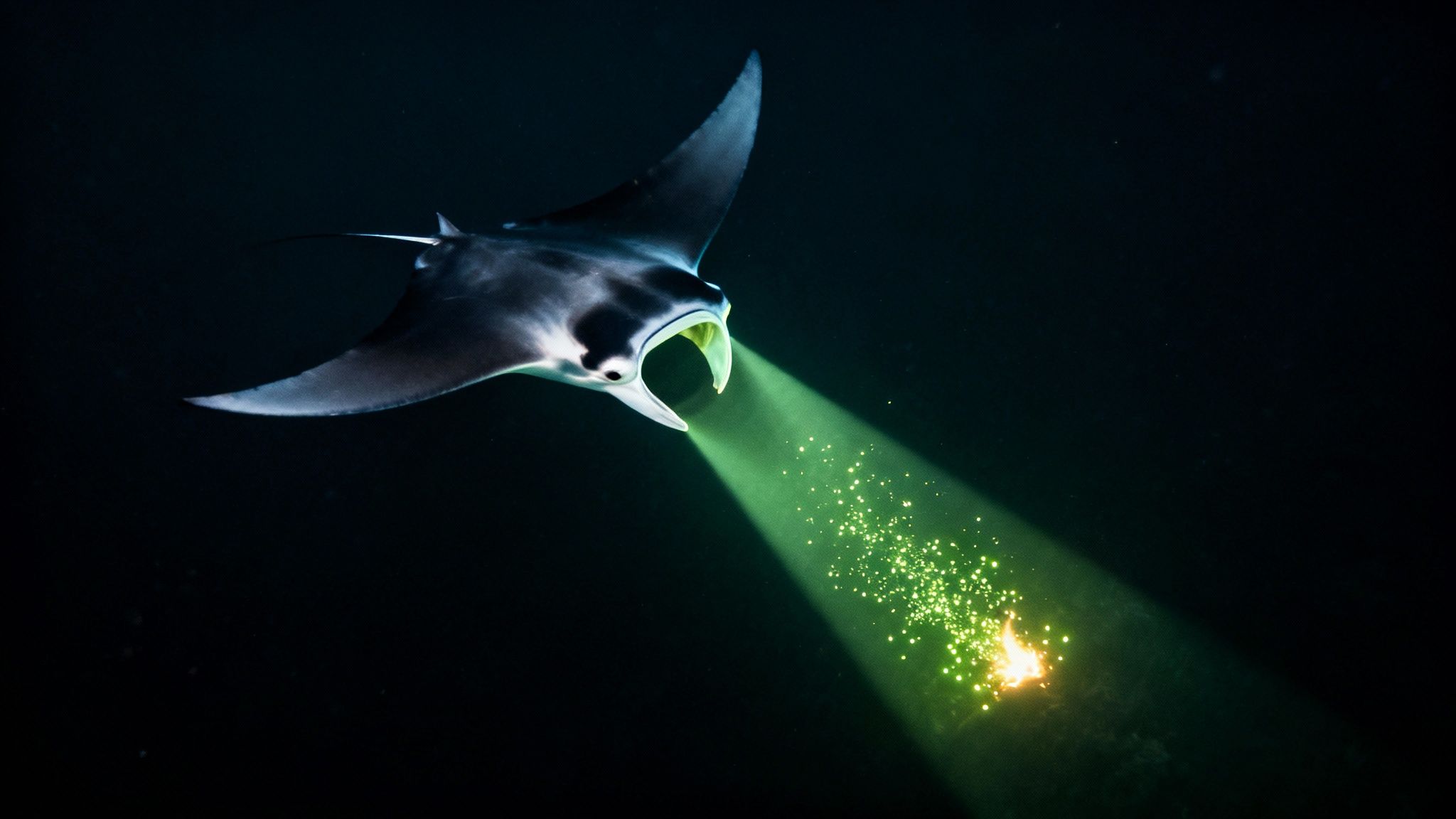
The secret is something tour operators call the "campfire effect." After anchoring, the boats drop powerful, eco-friendly lights into the dark water. These lights act like giant magnets for phytoplankton, the tiny, microscopic organisms that are the foundation of the ocean's food chain. Drawn to the bright glow, they gather in dense, shimmering clouds, creating an irresistible floating feast.
The Underwater Buffet is Open for Business
This glowing cloud of plankton is basically a dinner bell for manta rays. They are filter feeders, which is just a way of saying they eat by gliding through the water with their huge mouths wide open, straining out tiny food particles. The lights create an incredibly efficient, all-you-can-eat buffet right in one spot, so the mantas don't have to waste energy searching for a meal.
As you float quietly on the surface, you get a front-row seat to their incredible feeding choreography. These aren't just random movements; they are graceful and highly effective techniques.
Barrel-Rolling: A manta will perform a slow, looping somersault over and over, allowing it to stay right in the thickest part of the plankton cloud.
Loop-the-Loop: You might also see them do a backward underwater flip, another slick move to keep them in the heart of the feeding zone.
Surface Feeding: Sometimes, they'll cruise right under the surface, skimming the top layer where the plankton is most concentrated.
These behaviors are sophisticated strategies that have been perfected over millennia. It’s all about scooping up thousands of tiny organisms with the least amount of effort. You can learn more about these fascinating creatures by exploring our guide to Big Island manta rays.
Kona’s Famous Manta Ray Residents
The mantas you'll see aren't just tourists passing through. The Kona coast is home to a large and well-studied resident population of reef mantas (Mobula alfredi). In fact, researchers have identified and named over 200 unique individuals here. Each one is recognized by the distinct spot patterns on their belly, which are as unique as a human fingerprint.
This means your trip is more than just an amazing adventure—it's also a direct contribution to marine science. Tour operators work hand-in-hand with researchers, sharing sighting data that helps track the health, behavior, and population of these magnificent animals.
The consistency of this whole ecosystem is just incredible. Night snorkel tours along the Kona Coast have an 85-90% manta encounter rate. This amazing reliability brings in around 80,000 tourists every year and fuels a vibrant $10 million ecotourism economy. Since switching to eco-friendly lights in 2012, the plankton concentration has shot up by 300-500%, drawing dozens of mantas to the sites every single night. You can discover more about these impressive manta ray statistics and the positive impact of responsible tourism.
When you join a manta ray night snorkel, you’re directly supporting the local community and ongoing conservation work, making sure this magical underwater ballet continues for years to come. If you're looking for an exceptional alternative for a manta experience or even a Captain Cook snorkeling tour, Kona Snorkel Trips offers fantastic, highly-rated options. Choosing a tour is a vote for protecting one of Hawaii’s greatest natural treasures.
For an unforgettable encounter with these gentle giants, book your spot today.
What to Expect on Your Manta Snorkel Adventure
So, you’ve decided to meet Kona's famous manta rays. Fantastic choice! Knowing exactly how the evening will unfold can help you relax and soak in every magical moment. A typical Big Island manta ray night snorkel is a well-oiled machine, carefully planned to maximize your safety, comfort, and, of course, your time with these gentle giants.
Let's walk through what your adventure will look like from start to finish.
H3: The Pre-Sunset Meetup and Boat Ride
Your adventure kicks off just before sunset at a designated harbor near Kailua-Kona. After a warm welcome from the crew and a quick check-in, you'll get a thorough safety briefing. This isn't just a list of rules; the guides share fascinating facts about the mantas you’re about to see, which really builds the excitement.
Next, it’s time to get your gear.
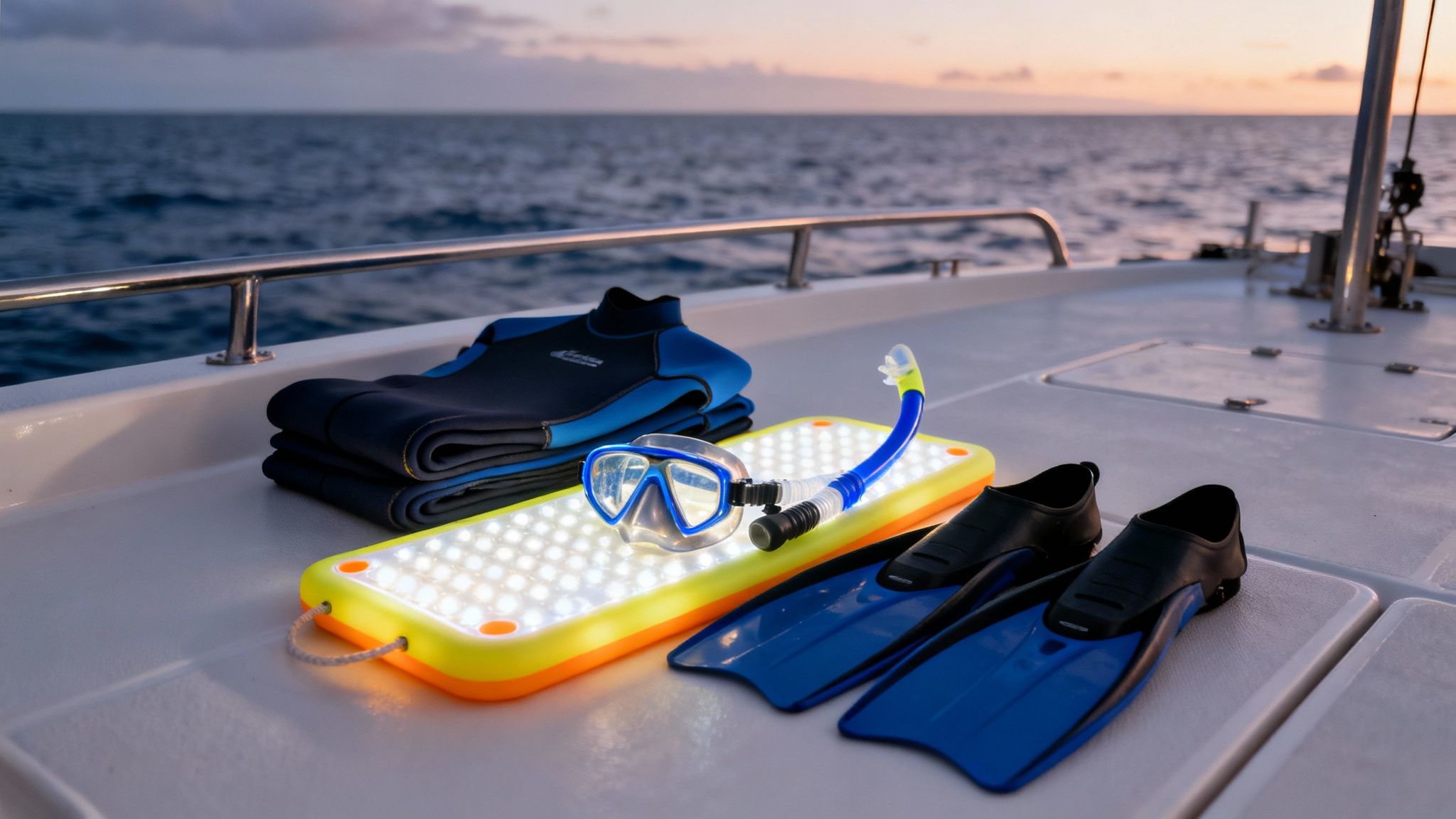
The crew will fit you with everything you need to stay warm and comfortable in the ocean after dark. This usually includes:
Wetsuits: Essential for staying toasty once the sun goes down.
Snorkel Gear: A properly fitted, high-quality mask, snorkel, and fins.
Flotation Devices: You’ll likely hold onto a large, custom-made float, making the experience effortless even for beginners.
Once everyone is ready, you'll cruise out to one of the famous viewing sites like 'Manta Heaven' or 'Manta Village.' The boat ride itself is a treat, offering spectacular views of the Kona coast as the sun paints the sky.
H3: In the Water with the Mantas
When you arrive at the site, the crew sets up the main attraction (besides the mantas!): a powerful, floating light board. This light illuminates the water, attracting swarms of plankton—the mantas' favorite food. It essentially creates a dinner buffet for the rays.
You’ll slip into the water and hold onto the light board with the rest of your group, forming a sort of human raft. Then, the show begins.
You don't have to swim or chase anything. You simply float on the surface, look down, and watch the ballet unfold beneath you. This hands-off approach allows the manta rays to feed naturally and peacefully, making for a truly respectful wildlife encounter.
The in-water part of the tour usually lasts for about 40 to 50 minutes. In that time, you'll witness the mantas glide, swoop, and barrel-roll just inches away, their huge mouths wide open to filter the plankton. It’s a breathtaking and surprisingly serene experience.
If you’re looking for a top-notch operator, the team at Kona Snorkel Trips runs some of the best small-group tours on the island, whether you're interested in a Manta Ray night snorkel or a Captain Cook snorkeling tour.
After your swim, you’ll climb back on board to warm up with hot chocolate and snacks. The quiet ride back to the harbor under a canopy of stars is the perfect way to cap off an unforgettable night.
To give you an even clearer picture, most tours follow a schedule that looks something like this.
A Typical Manta Ray Night Snorkel Itinerary
Here is a summary of what to expect during each phase of your manta ray night snorkel tour.
Tour Phase | Typical Duration | What Happens |
|---|---|---|
Check-in & Briefing | 20-30 minutes | Meet the crew, get your safety overview, and learn about manta ray behavior. |
Gearing Up & Boat Ride | 20-30 minutes | Get fitted for your wetsuit and snorkel gear, then enjoy a scenic sunset boat trip. |
In-Water Experience | 40-50 minutes | Float on the surface holding a light board as mantas feed just below you. |
Post-Snorkel & Return | 20-30 minutes | Warm up on the boat with snacks and hot drinks during the ride back to the harbor. |
From start to finish, the entire excursion is designed to be one of the most memorable parts of your Hawaiian vacation.
How to Choose the Right Manta Ray Tour
Picking the perfect big island manta ray night snorkel tour can feel like a huge decision, especially with so many great companies operating along the Kona coast. The trick is to match the tour with what you’re looking for, making sure your underwater adventure is everything you’ve hoped for.
Whether you're after an intimate small-group trip or the stability of a larger vessel, the ideal experience is out there waiting for you.
Your first big choice comes down to the boat and group size. Are you picturing a lively, social vibe on a big double-decker boat with lots of space and amenities? Or does a smaller, faster boat with just a handful of other people sound more like your style?
Companies like Kona Snorkel Trips are fantastic at this, specializing in more personal, small-group snorkel tours. This means you get more interaction with the guides and a less crowded experience in the water. They offer a top-notch Manta Ray night snorkel and a fantastic Captain Cook snorkeling tour if you're looking to see more of Kona's incredible reefs.
But beyond the boat itself, the single most important thing is choosing a company that puts the manta rays first.
Prioritizing Manta-Safe Practices
Responsible tourism is what makes the Kona manta ray experience so special and sustainable. You’ll want to look for tour operators who are recognized for following Manta S.A.F.E. (Safe, Aware, Fun, and Educational) guidelines. These standards were created to make sure every encounter is respectful and doesn't disturb the mantas or their home.
Here’s what a responsible operator does:
Passive Observation: Your guides will make it clear: never touch, chase, or swim in front of a manta ray. Touching them can strip away their protective slime coat, making them vulnerable to infections.
Proper Positioning: Snorkelers hang onto a floating light board at the surface, and divers stay on the seafloor. This creates a clear, open space for the mantas to swoop in and feed naturally.
An Expert Crew: A knowledgeable crew does more than keep you safe. They share fascinating insights into manta biology, behavior, and conservation, making the entire experience that much richer.
The big island manta ray night snorkel has become the heart of local ecotourism for a reason. This incredible industry brings in around 80,000 people every year from all over the world, generating over $10 million in gross bookings annually. Watching these gentle giants perform their feeding somersaults under the lights is truly mesmerizing and highlights just how vital it is to choose operators who care. Discover more insights about this unforgettable underwater adventure and see how tourism can protect this natural wonder.
Tailoring the Tour to Your Travel Style
Let's be honest, a tour that’s perfect for a solo photographer probably isn't the best fit for a family with young kids. Thinking about who you’re traveling with will help you narrow down the options and find the perfect match.
For a closer look at specific companies, our guide on the top 10 manta ray snorkel tours in Kona is a great place to start.
Expert Tip: Don't be shy about calling a tour operator before you book. Ask them about their policies for kids, if they have a manta sighting guarantee, or what amenities are on the boat. A quick chat can give you the confidence that you're picking the right crew for your adventure.
Here’s a quick breakdown of what different travelers might look for:
Families with Children: Safety is everything. Look for companies with large, stable boats to minimize the chance of seasickness and a crew that’s great with kids. Always double-check the minimum age requirements before you book.
Couples and Romantics: A smaller group tour or even a private charter creates a much more intimate and special experience. A sunset departure is the perfect romantic start to an already magical night.
Underwater Photographers: You’ll want to find tours that welcome photographers. These operators often give great advice on camera settings and might even offer more time in the water to help you nail that perfect shot.
Ultimately, picking the right tour is all about doing a little homework and knowing what you want. By putting manta safety first and matching the tour to your travel style, you can book a trip that will blow your expectations out of the water and give you memories to last a lifetime.
Getting the Most Out of Your Manta Ray Snorkel
A little bit of prep work can turn a great night into a truly unforgettable one. Knowing what to bring and, just as importantly, how to behave in the water makes the whole experience smoother, safer, and more respectful for everyone—especially the mantas.
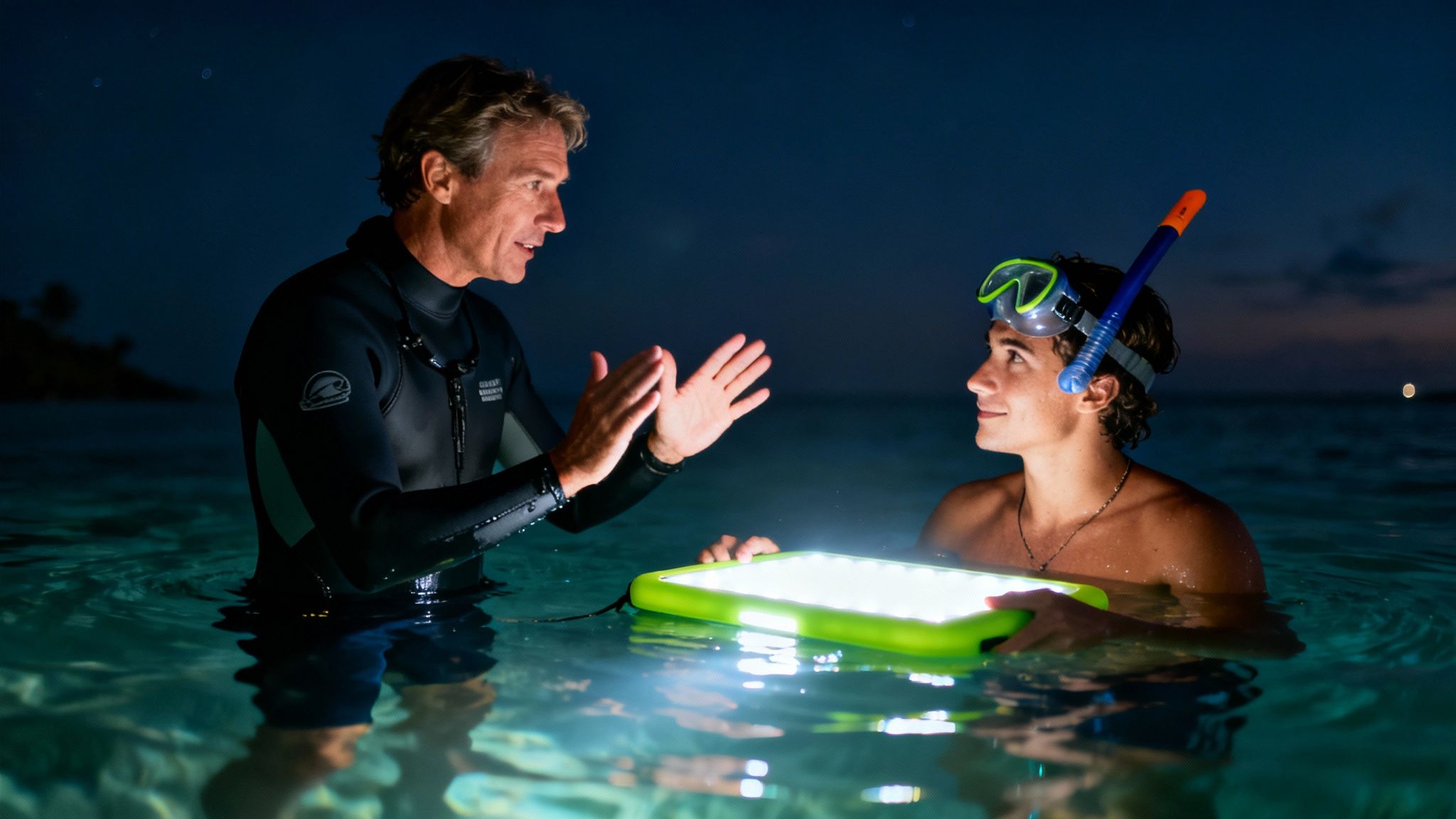
Your tour operator will have all the big stuff covered, like snorkel gear and wetsuits. But bringing a few personal items along will make a world of difference. That boat ride back to the harbor can get surprisingly chilly once you’re out of the water, so it pays to be prepared.
What to Bring on the Boat
Here’s a quick checklist of things you’ll be glad you packed:
A Towel & Dry Clothes: Having something warm and dry to slip into after your snorkel is an absolute game-changer for comfort.
Reef-Safe Sunscreen: If you're on a sunset tour, make sure to apply it well before you get on the boat.
A Reusable Water Bottle: It’s easy to get dehydrated, even at night.
Your Camera: An underwater camera like a GoPro is perfect for capturing the magic. Just be sure to turn off the flash before you get in the water.
Seasickness Medication: If you're prone to motion sickness, take your preferred remedy before you board. Don't wait until you're already on the waves!
The Golden Rule: Look, Don’t Touch
The single most important rule of the night is simple: passive observation. You're a guest in their home, and that means keeping your hands to yourself.
Manta rays have a special mucus layer on their skin that protects them from infections and bacteria. Touching them can rub off this vital coating, leaving them vulnerable to illness.
The whole experience is built around you being a silent observer. You'll hold onto a floating light board and just watch the show unfold beneath you. This lets the mantas swim and feed naturally, giving you a front-row seat without disturbing them. It's the ultimate show of respect.
For a deeper dive into responsible viewing, check out our essential manta ray tour safety tips.
Feeling a little anxious about floating in the dark ocean? Don't be. This is one of the most accessible ocean activities you can do. The custom flotation boards are incredibly stable and do all the work for you—no strong swimming skills required. Plus, lifeguard-certified guides are right there in the water with you the entire time, keeping a close eye on everything.
Best Time of Year to See Mantas
Here’s the fantastic news: you can see manta rays off the Kona coast any time of year. We don't have a "manta season" because we have a resident population that sticks around.
In fact, research from the Manta Pacific Research Foundation has identified 318 unique individuals that call this coastline home, a count made between 1979 and 2023. These aren't just passing through; they live here. This is why the sighting success rate is so consistently high.
While the mantas are always here, the ocean conditions can change. Summer generally brings the calmest, glassiest water, but we have incredible encounters all year long. A good rule of thumb is to book your tour for early in your vacation. That way, if bad weather forces a cancellation (which is rare), you have a buffer to reschedule.
Got Questions About Manta Ray Snorkeling? We've Got Answers.
Thinking about your first big island manta ray night snorkel? It’s completely normal to have a few questions before you dive in. Getting them answered ahead of time means you can show up relaxed, excited, and ready for one of the most magical nights of your life.
Let’s tackle the big ones we hear all the time.
Is This Experience Safe?
Absolutely. Safety is the top priority, and every tour is run by professionals who have this down to a science. You'll have expert, lifeguard-certified guides right there in the water with you, making sure everything goes smoothly.
And what about the mantas? They're called "gentle giants" for a reason. These graceful creatures are filter feeders, meaning they don't have teeth, stingers, or barbs of any kind. They are completely harmless and are far more interested in the plankton than the people watching them.
Do I Need to Be a Great Swimmer?
Not at all. This is one of the most common misconceptions. You’ll spend the entire time holding onto a large, custom-made light board that floats on the surface. Think of it as your own personal viewing platform.
It does all the work of keeping you buoyant, so you can just relax and watch the show below. If you're comfortable putting your face in the water, you're good to go.
What Are the Chances of Actually Seeing Manta Rays?
Your odds are fantastic—typically over 90%! The Kona coast has a healthy, resident population of manta rays that show up almost every single night to feed at the underwater "campfires."
While sightings in the wild are never 100% guaranteed, this is about as close as you can get. The reliability of this encounter is precisely what makes Kona one of the best places on the planet to see manta rays.
Can Kids Go on This Tour?
Yes, this is a fantastic adventure for families! Most companies welcome kids, usually setting a minimum age somewhere between five and seven years old.
It’s always a good idea to check directly with the tour operator you’re considering, as their specific rules on age and comfort level in the water can vary. If you're looking for a top-notch operator for a Manta Ray night snorkel or a beautiful Captain Cook snorkeling tour, our friends at Kona Snorkel Trips are an excellent choice.
Comments