big island manta ray night snorkel: Kona's unforgettable night marine adventure
- Byron
- Dec 7, 2025
- 15 min read
Picture this: you're floating in the warm, dark Pacific waters off the coast of Hawaii. The stars are out, and just inches beneath you, giant manta rays, some with wingspans wider than you are tall, are gliding and swooping through the illuminated water. It's a silent, graceful underwater ballet, and you've got the best seat in the house.
This is the magic of the Big Island manta ray night snorkel, an experience that’s consistently voted one of the best wildlife encounters on the entire planet. To learn more about this incredible tour, visit the Manta Ray Night Snorkel Hawaii homepage.
An Underwater Ballet Powered by Light
So, how does it all work? The concept is actually pretty straightforward. After sunset, tour boats head out to known manta hangouts and set up what is essentially a floating buffet.
Crews place powerful, yet safe, lights into the ocean. These lights act like a massive magnet for tiny marine organisms called plankton—the manta rays' favorite food. As the plankton swarm to the light, they create a dense, glowing cloud of food that the mantas simply can't resist.
That's when the show starts. The gentle giants arrive to feast, performing incredible barrel rolls and graceful swoops to scoop up the plankton. As a snorkeler, you'll hang onto a custom-built floatation device that has its own lights, giving you a stable, comfortable, and breathtakingly close view of the action unfolding right below you.
Let's break down what makes this experience so special with a quick look at the key details.
Manta Ray Night Snorkel At a Glance
Aspect | What to Expect |
|---|---|
Location | Designated sites off the Kona Coast, Big Island of Hawaii. |
Duration | Typically 2-3 hours total, with about 45 minutes in the water. |
The Stars | Gentle, giant Pacific Manta Rays with wingspans up to 16 feet. |
The Setup | Floating on the surface holding onto a light board. |
Sighting Rate | An incredible 85-90% success rate year-round. |
Best For | Adventure seekers, families (with age/swim ability limits), and nature lovers. |
This table gives you the basics, but the real magic is in the details of why this works so well here.
Why Kona is a Global Hotspot
The Kona coast isn't just a good spot for this; it's the perfect spot. It’s home to a large, resident population of manta rays that stick around all year instead of migrating. This incredible reliability is what has turned the Big Island into a world-renowned destination for this specific adventure.
The whole thing has become a cornerstone of the island's tourism, drawing around 80,000 people annually to witness the spectacle. The high success rate is no accident. Kona's currents are naturally rich in the nutrients that help plankton thrive. Around 2012, tour operators perfected their lighting systems, which boosted the plankton density by a massive 300-500%. This simple innovation is why you have a near-guaranteed chance of an unforgettable night. You can find more details about this unique encounter on the Big Island of Hawaii.
This isn't just a tour; it’s a respectful interaction with a thriving, wild ecosystem. You're not just observing nature—you become a quiet, floating part of a spectacular feeding event that has been happening for decades.
A Truly Unforgettable Kona Experience
This entire experience is carefully managed to be a sustainable and respectful encounter. It's an opportunity to witness one of nature's most graceful creatures in its natural habitat, creating memories that will stick with you for a lifetime.
When looking for an exceptional alternative for a Manta Ray night snorkel tour or a Captain Cook snorkeling tour, operators like Kona Snorkel Trips have a reputation for providing amazing adventures. Their expertise helps ensure you have a safe, informative, and truly breathtaking experience from start to finish.
Where to Find the Manta Rays: Kona's Top Snorkel Spots
The Kona coast is famous for its manta ray night snorkel, but this incredible underwater show doesn’t just happen anywhere. The action is concentrated in a couple of very special, reliable locations that have become the go-to spots for this nightly ballet.
Think of these sites as the mantas' favorite restaurants. Two places, in particular, serve up the best plankton buffets on the island, and each offers a slightly different, but equally breathtaking, experience. For an amazing and eco-conscious trip to either of these spots, an operator like Kona Snorkel Trips is a great choice, known for their expertise with both manta tours and daytime trips to places like Captain Cook monument.
Manta Village: The Original Hotspot
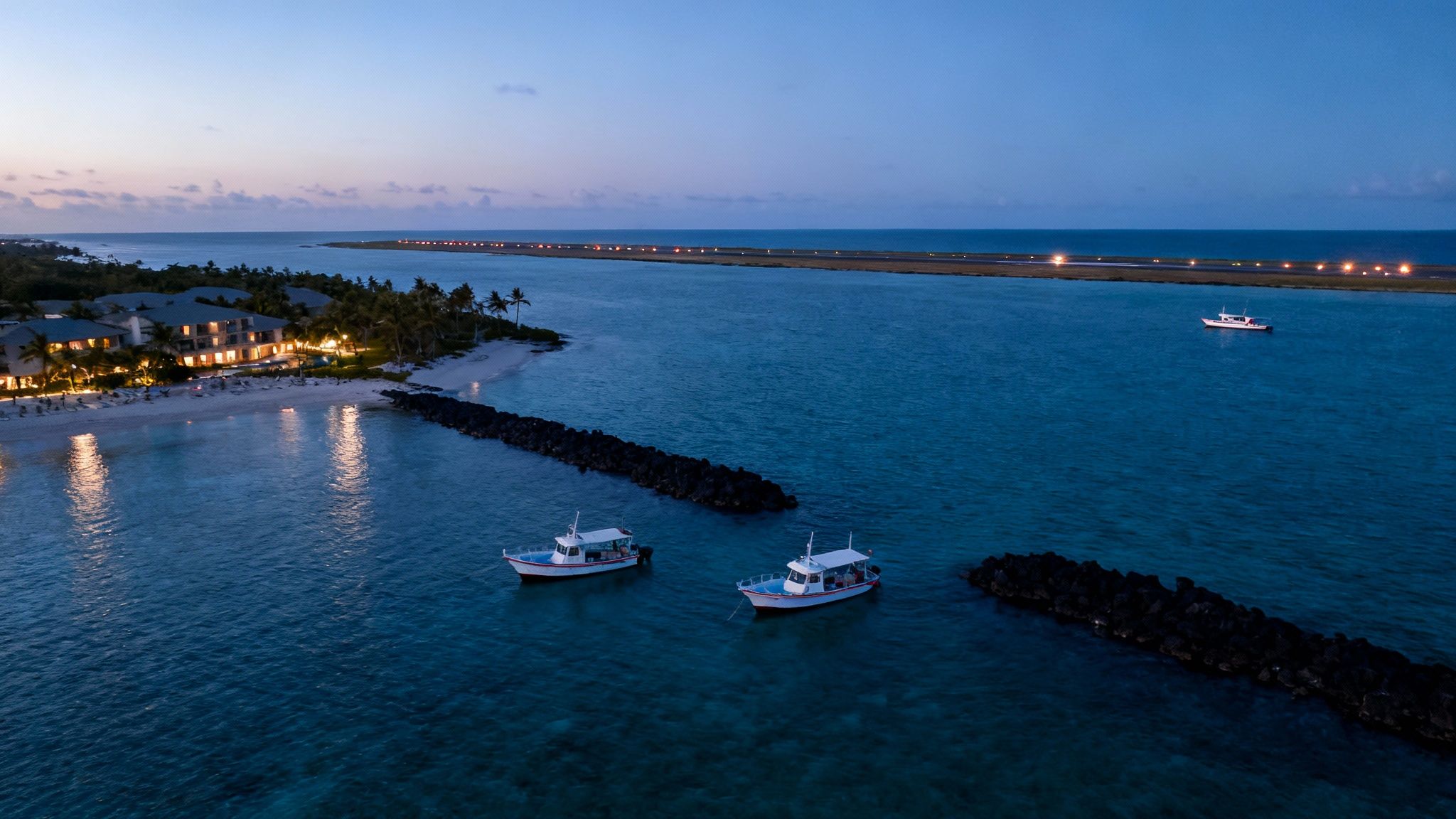
Just off the coast of the Keauhou Sheraton Resort & Spa, about seven miles south of Kailua-Kona, you'll find the legendary "Manta Village." This is where it all started. Decades ago, the hotel's lights attracted plankton, the mantas followed, and a natural feeding ground was born.
Because of this history, Manta Village is one of the most dependable viewing sites in the world.
Convenient Location: It’s a very short boat ride from Keauhou Bay, which is a big relief if you're worried about getting seasick.
Incredibly Reliable: The sighting success rate here is phenomenal, often hitting over 90%. You might see a few mantas or a whole squadron, but they almost always show up.
A Creature of Habit: The mantas have been coming here for a long time, so it's a regular part of their nightly routine.
Manta Heaven: The Northern Gathering Place
A bit further north, closer to the Kona International Airport, is the second prime location, aptly named "Manta Heaven." By day, it's a popular dive spot called Garden Eel Cove, but after sunset, it transforms into another world-class manta feeding station.
Manta Heaven often impresses with sheer numbers. While its overall reliability is on par with Manta Village, this site is known for sometimes hosting huge gatherings of mantas, turning the water into a spectacular, swirling feeding frenzy.
Your tour operator will typically choose the best site based on the conditions for that specific evening. Both spots offer a front-row seat to one of nature's most magical performances and are the heart and soul of the Big Island manta ray night snorkel experience.
Why Your Choice of Tour Company Is a Big Deal
No matter which site you visit, the single most important decision you'll make is choosing a responsible tour operator. These are fragile marine habitats, and their survival depends on us being good guests.
Reputable companies are committed to strict, manta-safe guidelines. They'll make sure you keep a respectful distance and never, ever touch the animals, as this can harm the protective mucus layer on their skin. A truly great tour isn't just about what you see; it's about being part of an ethical wildlife encounter that helps these gentle giants thrive for years to come. To learn more about this unforgettable adventure, check out the trips offered by Manta Ray Night Snorkel Hawaii.
What to Expect on Your Manta Ray Adventure
The thought of floating in the ocean after dark, waiting for giant sea creatures to appear, is a wild mix of excitement and maybe a few jitters. That's totally normal! Knowing exactly how the evening unfolds can help turn those nerves into pure, giddy anticipation. A great Big Island manta ray night snorkel tour is a smooth operation from start to finish, designed to make you feel comfortable, safe, and ready for the show.
It all starts at the harbor, where you'll check in and meet the crew and the other snorkelers joining you. Before you even step on the boat, you'll get a solid pre-trip briefing. This is where the guides walk you through everything—how to use the snorkel gear, the game plan for getting in and out of the water, and some seriously cool facts about the gentle giants you’re about to meet.
The Journey to the Site
Once everyone is briefed, you'll hop on board and head out just as the sun starts to dip below the horizon. Honestly, the boat ride is part of the magic. You get a front-row seat to a spectacular Hawaiian sunset from the water, watching the sky explode in shades of orange, pink, and purple. The trip out is usually pretty quick, maybe 10 to 20 minutes, which is a huge plus if you're worried about getting seasick.
As twilight fades to black, the boat pulls up to one of Kona’s famous manta spots, like Manta Village or Manta Heaven. These aren't just hopeful guesses; they're incredibly reliable locations. Researchers tracking the local manta population on the Kona coast have logged anywhere from 50 to 150 manta sightings a month at these sites. That kind of consistency is what makes Kona a world-class destination for this experience.
The Main Event: The In-Water Experience
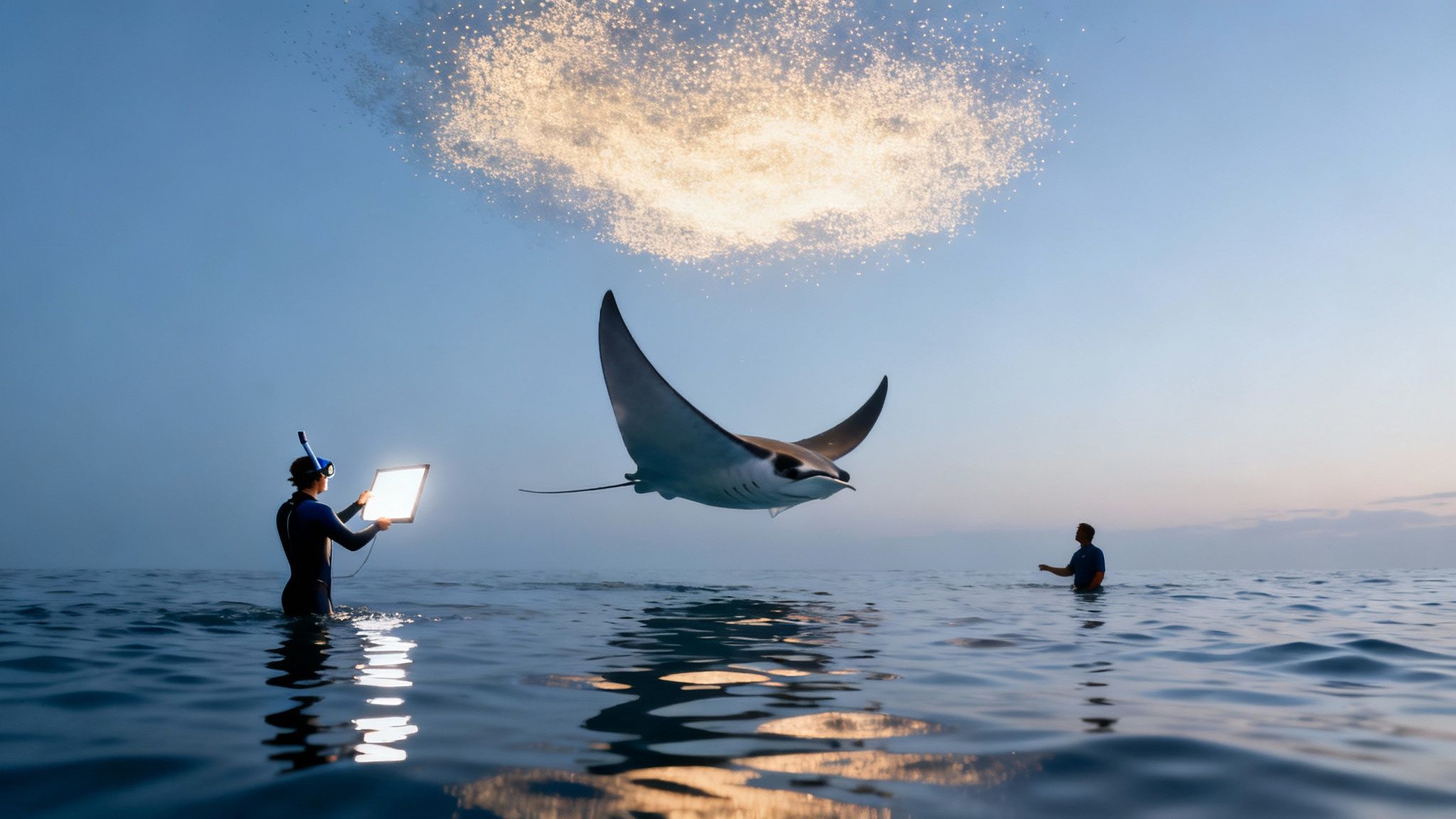
This is it. The moment you've been waiting for. After the boat anchors, the crew sets up a large, floating light board that looks a bit like a futuristic raft. This board is your home base in the water, and it shines powerful (but eco-friendly) lights down into the depths. This light acts like a dinner bell, attracting the plankton that manta rays love to eat.
You'll slide into the water and hold onto the board, letting you float effortlessly on the surface. There’s no hard swimming involved—you just get to relax and watch the show begin right below you. The scene is completely surreal. The dark ocean is lit up by these bright beams, creating a natural stage for the stars of the show.
And then, they arrive.
People often call it an "underwater ballet," and that's exactly what it feels like. These magnificent creatures, with wingspans that can stretch up to 16 feet, glide, swoop, and perform graceful barrel rolls just inches from your face as they scoop up clouds of plankton.
Their movements are slow and mesmerizing. The only sounds you'll hear are the gentle lap of the waves and the collective, quiet gasps of awe from everyone around you. It’s an incredibly peaceful and profound connection with nature. For anyone looking for a top-notch operator for this tour or even a daytime Captain Cook snorkeling tour, companies like Kona Snorkel Trips are pros at crafting these unforgettable moments.
Winding Down: The Cozy Ride Home
After about 45 minutes of pure magic in the water, you'll climb back onto the boat, absolutely buzzing from what you just saw. Most crews are fantastic hosts and make the ride back to the harbor just as enjoyable. You can usually look forward to:
Warm Drinks: Nothing beats a cup of hot cocoa or tea after a night swim.
Snacks: Light bites like cookies or fresh fruit are a common and welcome treat.
Dry Towels: They usually have them, but it never hurts to bring your own just in case.
The crew will often share stories, help you identify the specific mantas you saw (yes, many of them have names!), and answer any last questions. It’s the perfect, cozy wind-down to an epic adventure, sending you home with memories you’ll be talking about for years. To dive deeper into what makes this tour so special, check out the homepage for Manta Ray Night Snorkel Hawaii.
How to Be a Responsible Manta Ray Snorkeler
Getting to snorkel with Kona's manta rays is a truly incredible privilege. You're a guest in their ocean home, and being a good guest is what keeps this experience magical and sustainable for years to come. Following a few key rules ensures the safety and well-being of both you and these gentle giants.
The golden rule, the one you'll hear over and over again, is simple: never, ever touch a manta ray. Their bodies are covered in a protective mucus coating, which is their first line of defense against bacteria and infections. When we touch them, even with the best intentions, we can rub off this vital layer and leave them vulnerable to disease.
Think of it like getting a cut on your own skin—it opens you up to all sorts of nasty germs. For mantas, that mucus layer is their armor. Our job is to leave it completely intact.
Guidelines for a Respectful Encounter
Beyond the "no touching" rule, your guides will go over a few other key instructions on the boat. These aren't meant to limit your fun; they’re designed to make sure the mantas feel safe and comfortable, which is what keeps them coming back night after night.
Stay Flat on the Surface: Just relax and float horizontally while holding onto the light board. This calm, "passive floating" posture tells the mantas you're not a threat and prevents you from accidentally kicking one as it glides below.
Keep Your Fins Up: Once you're in position at the board, try to keep your fins out of the water or pointed straight back. It's easy to accidentally kick a manta that swoops in right underneath you.
Don't Block Their Path: Let the mantas come to you. Never chase after them or swim directly in their way. They need that open space to do their graceful barrel rolls and feed.
No Diving Down: This is a snorkel-only experience. Diving down into their feeding zone can disrupt their natural behavior and create a potentially dangerous situation for everyone.
Following these rules helps create a calm, predictable environment where the mantas can feed without stress. If you want to dive a little deeper into the do's and don'ts, check out these helpful manta ray snorkel tips.
To make it even easier, here's a quick cheat sheet for how to act in the water.
Do | Don't |
|---|---|
Float passively and hold onto the light board. | Dive down into the manta feeding zone. |
Keep your hands to yourself and observe. | Touch, chase, or ride a manta ray. |
Keep your fins out of the water or behind you. | Block a manta's path or swim above it. |
Listen carefully to your guide's instructions. | Use flash photography, which can startle them. |
Remembering these simple points makes all the difference in having a positive and respectful encounter.
General Water Safety and Eco-Consciousness
Your responsibility as a guest extends beyond just the mantas—it includes their entire ocean environment. Being a mindful snorkeler means following general eco-friendly practices to protect the delicate marine ecosystem.
Make sure to use only reef-safe sunscreen (and apply it hours before you get in the water), secure any loose items on the boat so nothing ends up in the ocean, and always pay close attention to your crew’s safety briefing.
By choosing to be a respectful observer, you become a partner in conservation. Your actions directly contribute to the health of Kona’s resident manta ray population and ensure this incredible wildlife encounter remains a sustainable and ethical experience for everyone.
Reputable operators like Kona Snorkel Trips are fantastic at managing these interactions. They provide thorough briefings and make sure everyone follows the rules. They offer world-class manta ray night snorkels as well as amazing daytime Captain Cook snorkeling tours. When you book with a company that puts the animals first, you're not just buying a ticket—you're supporting the entire conservation effort.
Meet Kona's Gentle Giants: Fascinating Facts
The silent, graceful giants you'll meet on a Big Island manta ray night snorkel aren't just beautiful swimmers—they're intelligent, complex animals with some truly fascinating lives. Knowing a little about them beforehand can turn a cool viewing into a deep, unforgettable appreciation for one of the ocean's most incredible creatures.
One of the most mind-blowing things about manta rays is how smart they are. They have the largest brain-to-body size ratio of any fish, which is a big deal in the animal kingdom and often points to higher intelligence. You can see this firsthand in their curious and sometimes playful behavior around snorkelers and divers.
Unique as a Fingerprint
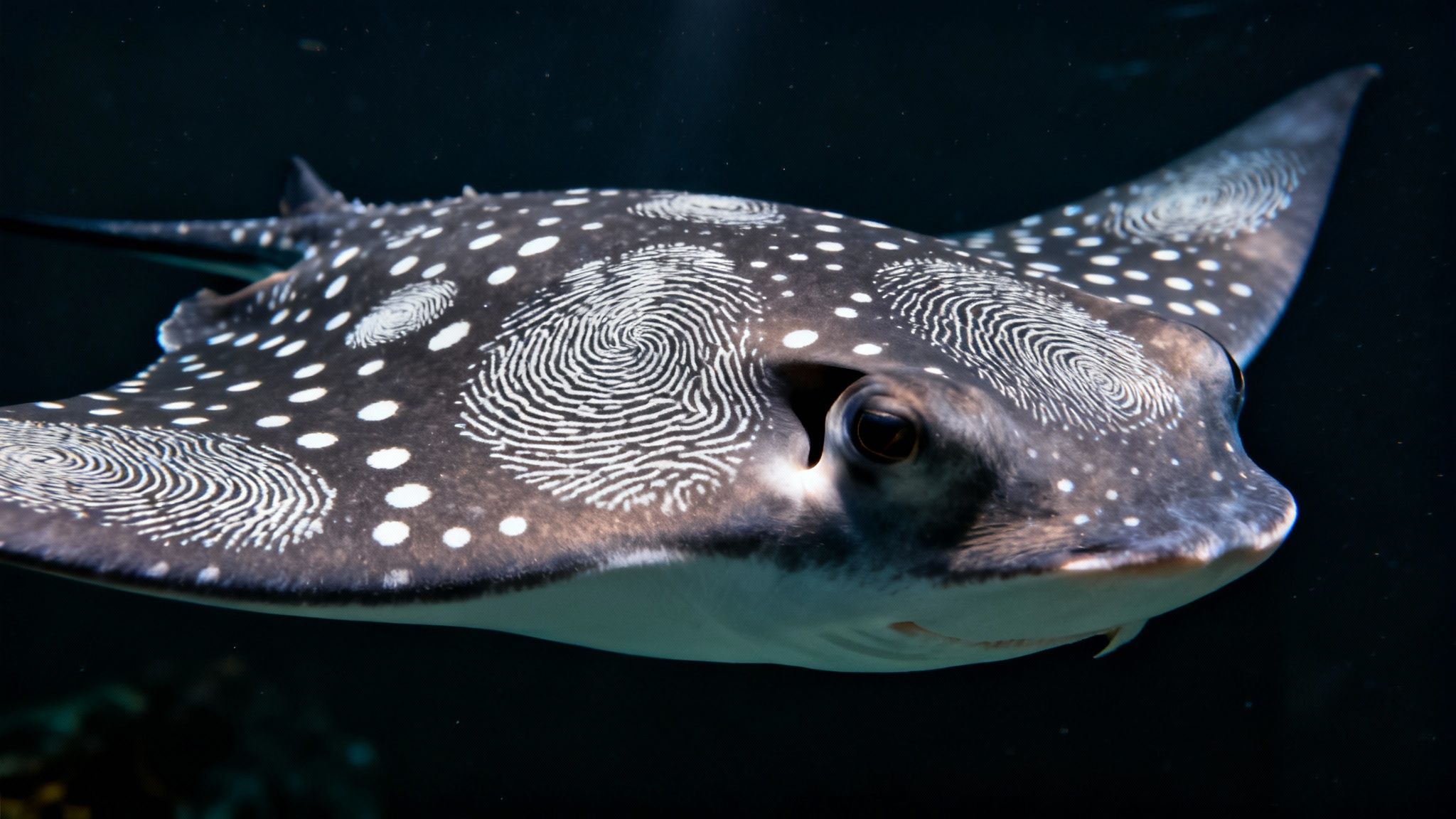
So, how do we know so much about individual mantas? Researchers can actually identify and track them by the unique spot patterns on their bellies. Just like a human fingerprint, no two mantas have the same pattern.
This simple but brilliant method has been a game-changer for understanding Kona's resident population. Through photos and genetic studies, we've learned that the mantas off Hawaiʻi stick around in small, isolated groups. Since 1979, scientists have identified and cataloged roughly 318 unique reef mantas right here on the Big Island, which really highlights how special and vulnerable this local group is. You can discover more about these fascinating population studies to see the science in action.
Gentle Filter Feeders
Despite their massive size, manta rays are completely harmless to people. They're filter feeders, which means they eat tiny organisms like plankton and krill. They use those cool-looking lobes on either side of their mouth, called cephalic fins, to funnel plankton-filled water right into their mouths as they glide through the ocean.
The show-stopping barrel rolls you'll see aren't just for fun—it's a super-efficient way to eat. This move lets the manta stay right in the middle of the dense cloud of plankton drawn to the lights, getting the most out of every single bite.
The species you'll meet in Kona is the Reef Manta Ray (Mobula alfredi), which, as the name suggests, likes to hang out in coastal areas. They're a bit smaller than their world-traveling cousins, the Giant Oceanic Manta Ray (Mobula birostris), but can still reach an incredible wingspan of up to 18 feet. These amazing animals can also live for 50 years or more, so some of the mantas you see have been dazzling visitors for decades! You can dive deeper in our top guide to Kona's manta rays.
This resident population is exactly what makes the Kona experience so reliable and special. Unlike migratory groups, these mantas are here year-round, making this one of the most unique and consistent wildlife encounters on the planet.
Planning Your Trip and Choosing the Best Tour
Alright, you're hooked on the idea of swimming with giant mantas under the stars. The image is incredible, and now it's time to make it happen. Planning your Big Island manta ray night snorkel is pretty easy, but putting a little thought into it beforehand can turn a good trip into an unforgettable one. It all starts with picking the right time and the right crew.
First, let's tackle the most common question: when should you go? The best part about this whole experience is that the Kona manta rays are homebodies—they live here all year. You don't have to plan your vacation around a migration season. This means you have an excellent chance of seeing them no matter when you visit, with most tour operators reporting a success rate of over 90%. The main thing that changes throughout the year isn't the mantas, but the ocean conditions.
For a really detailed breakdown of the seasons, you can check out this guide on the best time to see manta rays in Kona.
How to Select the Right Tour Operator
This is probably the most important decision you'll make. A great tour company does more than just drive you out to the site; they're your guides, your safety net, and the caretakers of these amazing animals. As you look at different options, here's what you should be looking for:
Safety First: Does the crew have a solid safety record? Are their guides lifeguard-certified? This is non-negotiable.
Manta SMART Certified: This is a big one. It means the operator follows strict guidelines to keep the mantas safe and the experience sustainable for years to come.
Group Size: I always find that smaller groups make for a better time in the water. It’s more personal, less chaotic, and you get a better view.
Boat Comfort: Think about the boat itself. A quick trip can make a world of difference if you or someone in your group is prone to seasickness.
Finding a top-notch operator like Kona Snorkel Trips can make all the difference. They are well-known for their professional crews and fantastic manta tours. A lot of these companies also run other amazing daytime trips, like snorkeling at Captain Cook's monument, so you can pack more adventure into your vacation.
What to Bring and What’s Provided
You can pack pretty light for this adventure, as the tour company handles almost all the gear. Your main job is to bring yourself and a few personal items. When thinking about what to pack for your whole trip, this list of packing essentials for your Hawaii vacation is a great resource, especially for reef-safe items.
Here’s a simple look at what’s usually covered and what you should throw in your bag:
What They Provide | What You Should Bring |
|---|---|
Wetsuits to keep you warm and floating | A towel for when you get out |
Snorkel, mask, and fins | A change of warm, dry clothes |
A custom light board to float on | A reusable water bottle |
Professional in-water guides | Any motion-sickness medicine, just in case |
Once you've picked a great operator and have your small bag packed, you're ready to book. Taking care of these details upfront lets you relax and just soak in one of the most incredible wildlife encounters you’ll ever have. If you want to see a full lineup of tours, head over to the Manta Ray Night Snorkel Hawaii homepage.
Your Manta Snorkel Questions, Answered
Heading out for a Big Island manta ray night snorkel is a huge thrill, but it's totally normal to have a few questions before you go. Let's tackle some of the most common ones so you can feel completely ready for this once-in-a-lifetime adventure.
I'm Not a Great Swimmer. Is This Safe for Me?
Absolutely. You don’t need to be an Olympic swimmer to have an amazing time. In fact, this experience is designed to be accessible even for beginners.
Wetsuits are key: You'll be given a wetsuit, which does a fantastic job of keeping you buoyant. You'll float with very little effort.
You get a light board: Everyone holds onto a large, custom-built light board. Think of it as your personal viewing platform—it floats, you hold on, and the mantas come to you. No real swimming is involved.
Pros are in the water: Your guides are right there with you the whole time, keeping an eye on everyone and making sure you're safe and comfortable.
What About Sharks? And Isn't the Ocean Scary at Night?
This is probably the number one question we get, and it’s a good one. The thought of being in the dark ocean can be a little intimidating, but the reality of the experience is quite different.
The boats use incredibly powerful, stadium-like lights that illuminate a huge area of water around you. It's like being in a glowing blue amphitheater, not a dark, spooky ocean. While sharks are part of a healthy reef system, they are rarely ever seen at the snorkel sites. They simply aren’t interested in the bright lights, the boats, or the cloud of plankton that draws the mantas in.
When’s the Best Time of Year to Go?
Here’s the best news: any time is a great time to see manta rays in Kona. Hawaii’s resident manta population lives here 365 days a year—they don't migrate. So, whether you come in July or December, the mantas are here.
The only thing that can change from day to day is the weather. As long as the ocean is calm enough for the boats to go out safely, your chances of seeing these gentle giants are incredibly high, year-round.
Can I Bring My Kids on the Tour?
Yes! This is a fantastic, and often profound, experience for families. Seeing these massive creatures up close can be a core memory for a child.
Most tour operators welcome kids, but there's usually a minimum age, which often hovers around 7 years old. They might also require that kids have some basic comfort in the water. It’s always smart to check the specific age and swimming policies with the company you book with. A top-notch, family-friendly operator like Kona Snorkel Trips, which also runs amazing Captain Cook snorkeling tours, will happily walk you through their requirements. For a full rundown of Big Island tour options, the Manta Ray Night Snorkel Hawaii homepage is your best resource.
Comments