Big Island Manta Ray Night Snorkel: Plan Your Kona Adventure
There’s nothing quite like easing into Kona’s clear night waters, slipping on your snorkel gear and watching powerful lights awaken a hidden marine ballet. Below the surface, giant manta rays sweep through glowing plankton like dancers in a spotlight. By the time you surface, you’ll carry a story that feels truly otherworldly.
For an exceptional alternative when looking for a manta ray night snorkel tour or a Captain Cook snorkeling tour, consider Kona Snorkel Trips. For dedicated Captain Cook snorkeling tours, check out this tour.
Setting The Scene For Your Night Snorkel Adventure
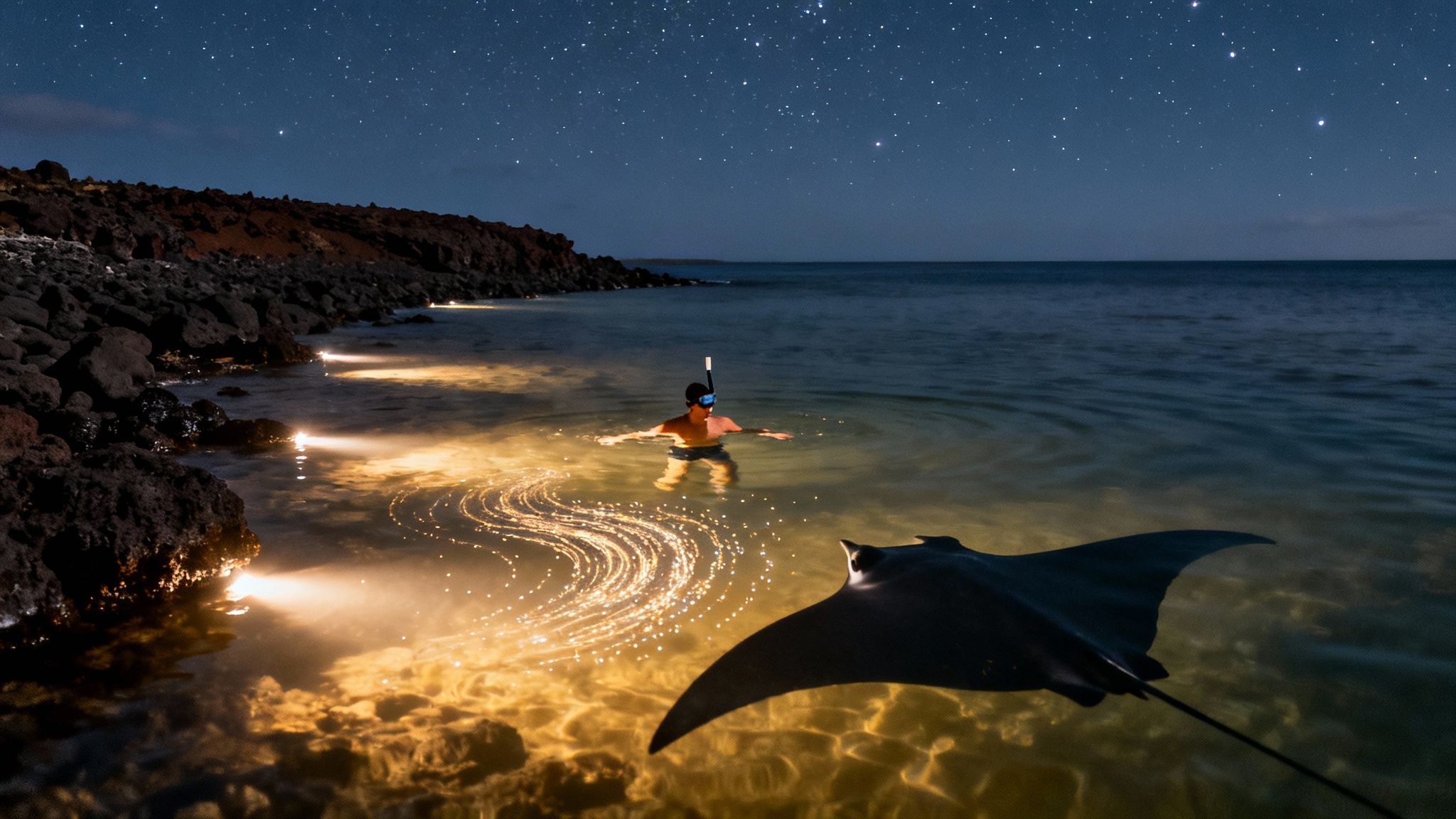
Before you slide off the edge of the boat, a friendly guide walks you through manta biology and simple etiquette—think of it as a quick backstage tour before the show begins. Small groups mean you’ll get one-on-one attention, and everything from the snorkel mask to the wetsuit and float vest is provided.
Manta Night Snorkel Highlights:
Watch mantas swirl through illuminated plankton blooms.
Discover how Kona lights boost plankton density by 500%.
Enjoy a 90% sighting success rate, with an average of three mantas per outing.
“Watching a six-meter wingspan glide inches beneath you under the glow of lights is pure magic.”
What Makes Kona Unique
Kona’s underwater lamps act like moonlit stages, drawing mantas from the dark ocean depths. Strong currents funnel in nutrient-rich water, creating a nightly feast for plankton—and, in turn, for the mantas above. Top spots like Manta Village and Garden Eel Cove have perfected the setup, so your view is always spectacular.
Read more about these famous feeding grounds in our article on manta ray night snorkel in Kona.
Once the lights flip on, mantas begin their graceful loops overhead. You’ll spend about 30 to 45 minutes drifting in what feels like an aquatic planetarium.
How This Guide Helps You
We start with the basics—how to pick an operator and what to pack—and then dive into pro tips like camera settings for low-light shots. Analogies (mantas as dancers under a stage light) and real-life examples make it easy to follow along. Each section builds on the last, so you’ll feel ready and excited long before you hit the water.
Check tour dates and gear options at Manta Ray Night Snorkel Hawaii, or explore another reputable operator like Kona Snorkel Trips.
A quick-dry towel and a headlamp go a long way for pre- and post-snorkel comfort. Don’t forget to peek at the forecast and ocean conditions so you’re never caught off guard.
Getting Started With Booking Tips
Reserve at least two nights in Kona to accommodate any reschedules.
Choose a small-group tour for more personalized guidance.
Inquire about multi-tour discounts or private upgrades.
Lock in your spot early to line up with calm seas and optimal moon phases. Kona’s steady climate means manta encounters and underwater photography are great any time of year.
Why Kona Waters Offer Unmatched Manta Encounters
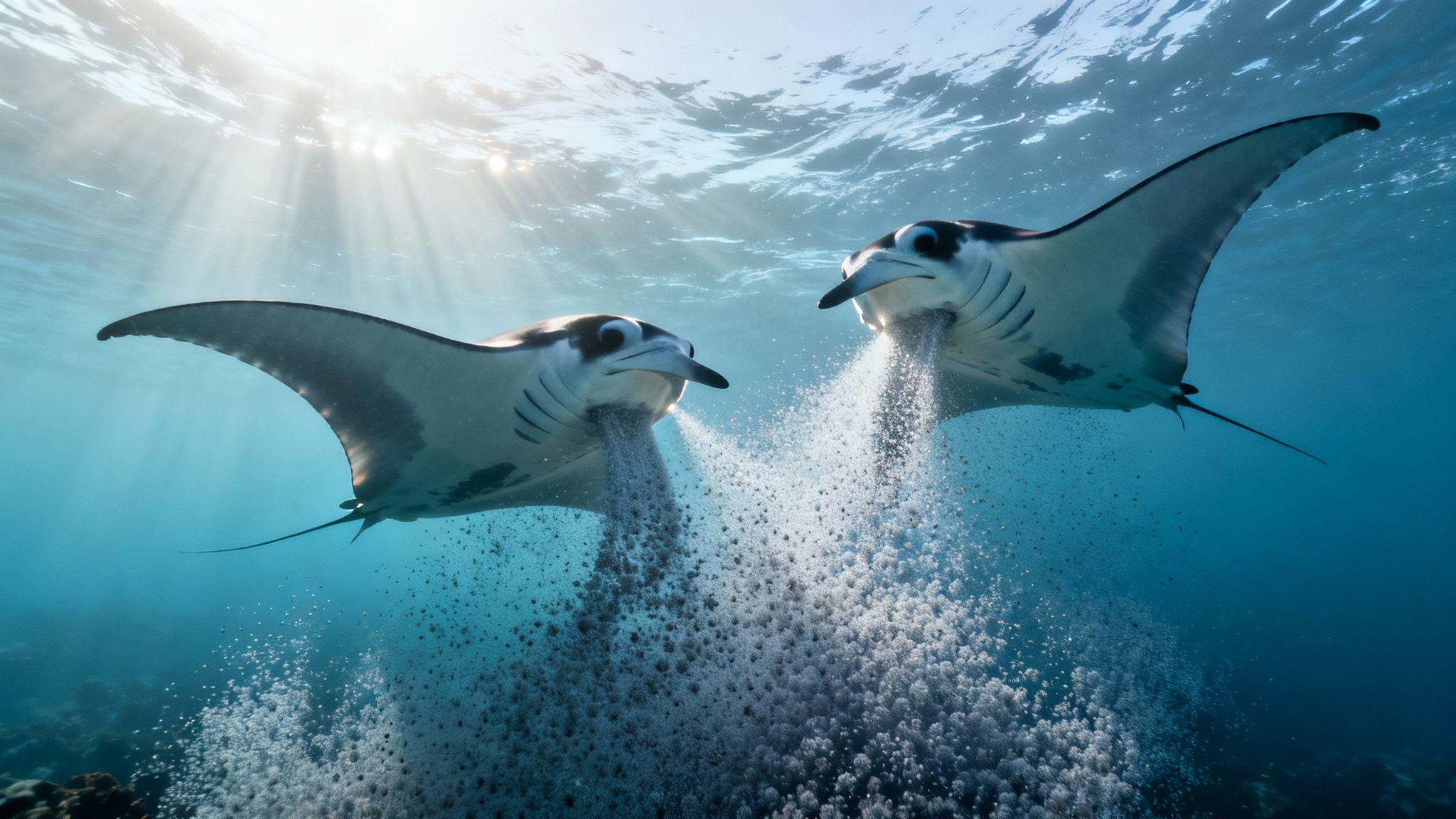
Every night, deep ocean currents sweep up nutrients that fuel plankton blooms along Kona’s shores. Think of it as an underwater conveyor belt delivering a fresh supply of microscopic treats.
When the sun dips below the horizon, powerful LED lights draw clouds of zooplankton like moths to a porch lamp. Since these high-output systems arrived in the early 2010s, plankton densities have soared by over 500%, turning rare encounters into almost-guaranteed spectacles.
“Those lights create a banquet hall for mantas, transforming pitch-black seas into a stage for their graceful feeding dances.”
Here’s how the magic unfolds:
Strong Kona Coast currents keep plankton drifting by.
Underwater rigs shine bright, attracting meals from the water column.
Small guided groups hover above, enjoying front-row views.
Modern Lights Amplify Nighttime Feasts
Advances in lighting let guides adjust color temperature and beam width on the fly. The result? Mantas see glowing clusters of plankton arranged like floating dinner plates.
Early setups relied on simple bulbs with limited reach. Today’s LED arrays deliver 360-degree coverage around each float, with dimming controls to match changing plankton levels. Snorkelers now watch mantas weave through columns of light as if under a spotlight.
Location | Success Rate | Average Rays Per Session | Vessel Type |
|---|---|---|---|
Manta Village | 90% | 4 | 50ft Catamaran |
Manta Heaven | 85% | 3 | Navy Speed Boat |
Operators track every trip, and data shows an 85–90% chance of spotting mantas, often three or more in a night. Kona’s reliable glow draws about 80,000 snorkelers each year and generates over $10 million in bookings. Read the full research findings on PMC: PMC Article.
Consistent Success With Expert Operators
Local outfits like Manta Ray Night Snorkel Hawaii make safety and small groups their priority. You’ll get top-notch snorkel gear, masks, wetsuits, and float vests—everything needed to focus on the show.
Guides arrange guests in a gentle arc around the lights, keeping mantas plenty of room to glide and ensuring everyone has an unobstructed view.
Group Size: Maximum 12 snorkelers
Guide Ratio: 1:6 for personalized attention
Safety: Certified lifeguards and HSA-trained staff
“Floating in the dark, I felt like I had a front-row seat to nature’s ballet.”
Booking directly supports local conservation. All tours follow strict guidelines to avoid touching reefs or steering mantas.
Balancing Tourism And Ecology
Kona’s manta night snorkel scene fuels a $10 million ecotourism sector. Tour fees help fund manta research, tagging projects, and reef cleanup initiatives.
They also support local efforts to track manta movements and remove marine debris. The reinvestment keeps plankton populations healthy and reefs thriving.
Clear tropical waters—from surface to depth—mean visibility often exceeds 100 feet. With swells under 1 foot and temperatures above 75°F, you’ll stay comfy drifting for 30 to 45 minutes.
Water Clarity: Over 100 feet on average
Swell: Under 1 foot for easy entry
Temperature: Nighttime stays above 75°F
For a combined adventure, check out Kona Snorkel Trips, which pairs the manta night snorkel with daytime tours around Captain Cook’s Monument.
Reserve your spot with Manta Ray Night Snorkel Hawaii.
Exploring Manta Biology And Nocturnal Behavior
Reef manta rays drift through Kona’s waters, their 6-meter wingspans slicing gentle shadows across the sea. You’ll quickly notice how their cephalic fins—those graceful, scroll-like flaps—guide a silent feast of plankton straight into open mouths. As form meets function, every glide under the lights becomes a front-row seat to an underwater ballet.
Manta Anatomy And Feeding Mechanism
Wingspan up to 6 meters for seamless turns
Cephalic fins acting like giant scoopers
Gill rakers filtering millions of plankton per minute
Cartilaginous skeleton providing fluid flexibility
Skin texture with dermal denticles cutting drag
Imagine those cephalic fins unfurling like scrolls, each wingtip sweep channeling particles into a feeding corridor. With every tilt and tuck, you’ll see the precision nature built for nighttime feasts.
Nocturnal Feeding Behavior And Plankton Dance
Powerful lights draw zooplankton into glowing columns
Mantas circle, mouths open wide
Plankton funnels through fine gill rakers
Exhaled water pushes back as they advance
“Watching rays wheel through beams of light feels like a living art performance.”
Under calm seas and low tides, mantas weave loops and spirals—nature’s choreography playing out in real time.
Feature | Description | Analogy |
|---|---|---|
Cephalic Fins | Roll to direct plankton | "Flexible scoops" |
Wingspan | Up to 6 meters | "Underwater sails" |
Gill Rakers | Filter plankton efficiently | "Fine mesh sieve" |
“Breathing beside these giants under the lights is like watching a living galaxy drift past.”
Kona Population And Conservation Insights
Kona’s reef manta population is both small and isolated, with only about 104 adult breeders identified. Genetic studies confirm they rarely stray far from home, making sustainable tourism practices vital. Read the full research about reef mantas
The map above highlights genetic sampling sites across Kona’s reefs, underlining critical habitat zones that need protection. With just one pup every 2–3 years, each encounter carries a shared responsibility. Guides enforce strict no-touch rules and cap group sizes to ease stress on these gentle giants.
How Understanding Enhances Responsible Snorkeling
Maintain at least 2 meters distance
Avoid flash photography near mantas
Follow your guide’s positioning cues
Move slowly and deliberately
Key Takeaways
Mantas use cephalic fins like conveyor belts under the lights
Night lighting concentrates plankton, creating natural feeding theaters
Kona’s small population demands responsible tourism
Mindful snorkeling secures their future
Every time you slip beneath the surface, you become part of a collective effort to honor and protect these ocean artists.
Learn more about manta ray behavior in our article on manta ray biology and encounters.
For direct bookings visit Manta Ray Night Snorkel Hawaii for gear, guides, and schedules. However, if you seek an alternative or a Captain Cook snorkeling combiner, consider Kona Snorkel Trips as an exceptional option.
Equipped with this understanding, your next Kona night snorkel becomes more than a thrill—it’s a shared act of respect and conservation.
Preparing for Your Night Snorkel Experience
The real adventure under Kona’s starlit sky starts well before you slip on fins. It kicks off at check-in, when salty breezes drift across the harbor and anticipation builds.
Important Pre-Trip Considerations
Hydrate throughout the day to keep cramps at bay.
Eat a light meal at least two hours before boarding.
Slather on reef-safe sunscreen on any exposed skin.
Pack motion-sickness remedies if you tend to feel queasy.
Stow prescription glasses in a secure case.
Fully charge headlamps and small cameras the night before.
Treat these points as your personal checklist. Proper prep lays the groundwork for a smooth Kona manta night snorkel.
Tours typically push off about 30 minutes before sunset so you arrive in perfect darkness. Aim to be there early—parking and lineups at Kona Harbor can stretch out.
One guest learned the hard way when a dead headlamp cut their show short. Always test batteries and mask seals during the safety briefing.
Typical Itinerary
Your evening unfolds in clear stages:
Check-in and deckside briefing.
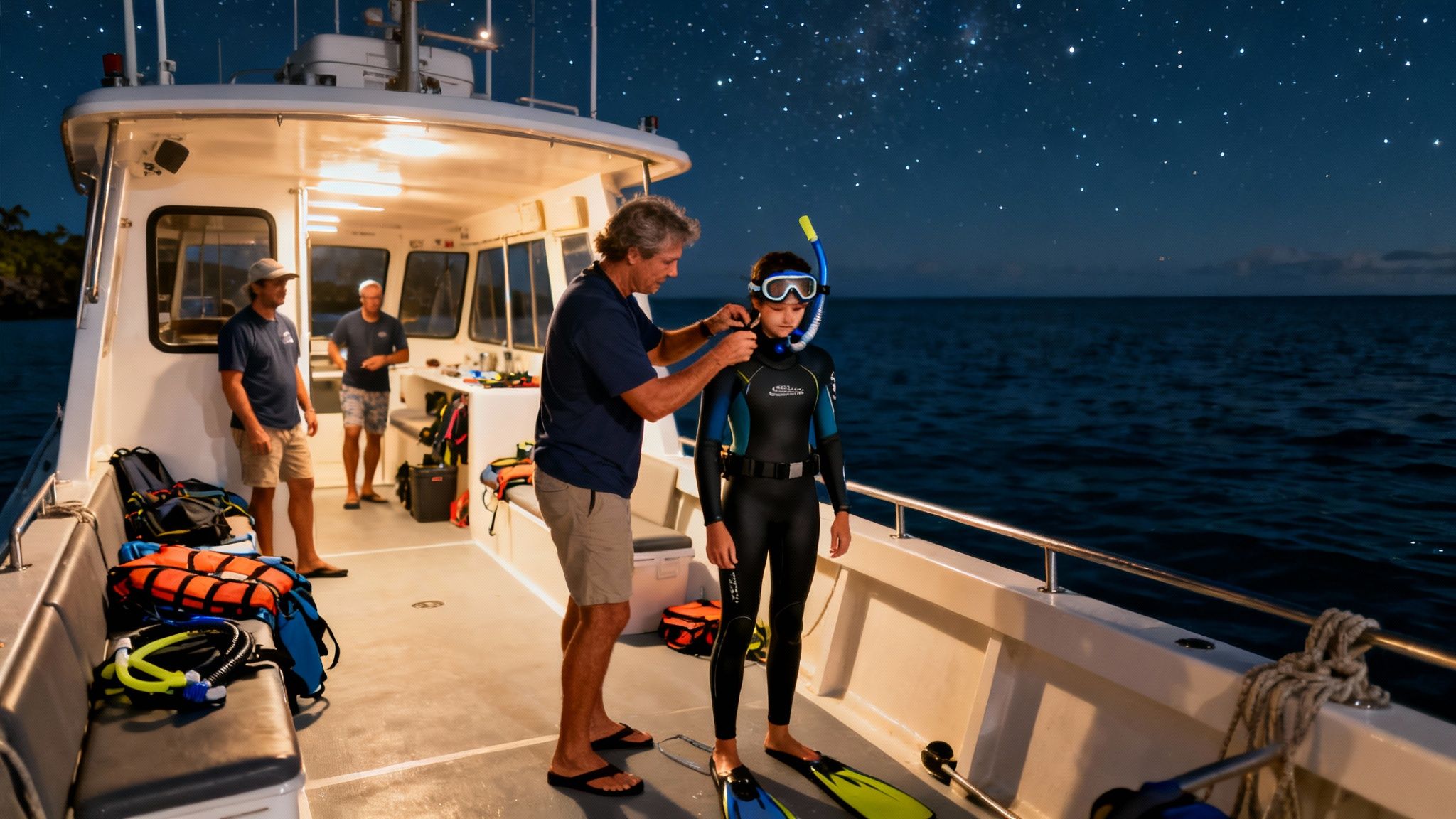
Gear fitting for wetsuit, mask, snorkel and light.
Safety talk covering currents and entry methods.
Moonlit boat ride to the feeding grounds.
Surface entry, holding onto a softly lit float.
Groups cap at 12 snorkelers, with a 1:6 guide-to-guest ratio to ensure personal attention.
Tips for Gear Management
Fit your wetsuit snugly—comfort without restriction.
Press your mask gently to seal out leaks and fog.
Secure the snorkel so breathing feels natural.
Clip and test your underwater light before boarding.
“A slight mask tweak can prevent a mid-dive leak,” a veteran guide often reminds new snorkelers.
Currents around Kona shift without warning. One guide recalls timing breaths to glide effortlessly through a gentle crossflow.
Staying Comfortable
Use the restroom before boarding.
Pack a light, non-messy snack.
Wear a rash guard under your wetsuit in cooler months.
Keep an extra layer handy for the ride back.
Slip in chemical hand warmers during breaks.
If plankton levels dip and the water cools, your guide may shorten in-water time or offer a warm towel between dips. And if the mantas decide to wander, operators often allow a complimentary re-entry or return trip—you’ll never head home without that magical encounter.
Safety Briefing and Entry Techniques
Before you step on deck, guides walk you through every detail:
Enter feet-first with a giant stride or backward roll.
Watch guide hand signals for depth, direction and drift.
Keep your mask sealed and light switched on at all times.
“A smooth entry keeps plankton undisturbed and mantas curious,” notes our lead instructor.
Guides also double-check vests and timing so every guest feels safe on the water.
Access and Restroom Options
All vessels offer a restroom at the dock pre-departure.
Enjoy a fifteen-minute float across Kona Harbor before clipping in.
Stow your personal items in the provided dry bag under deck.
Munch a granola bar to boost energy without tipping into nausea.
Think of that dock ride as the opening act before the main performance.
Sighting Statistics
Years Of Data | Success Rate | Average Mantas |
|---|---|---|
2009–2014 | 80–90% | Three |
These figures come from decades of video-verified dives at both Manta Village and Manta Heaven. Learn more about sighting stats on Manta Ray Night Snorkel Hawaii.
Feel confident knowing every detail—from group size to gear checks—is designed to make your big island manta ray night snorkel seamless.
For the best tour and gear details, visit the Manta Ray Night Snorkel Hawaii home page.
Looking for another reputable option? Kona Snorkel Trips offers excellent manta night snorkel and Captain Cook snorkeling tours. Learn more at Kona Snorkel Trips snorkel tours page.
Capturing Manta Rays with Underwater Photography
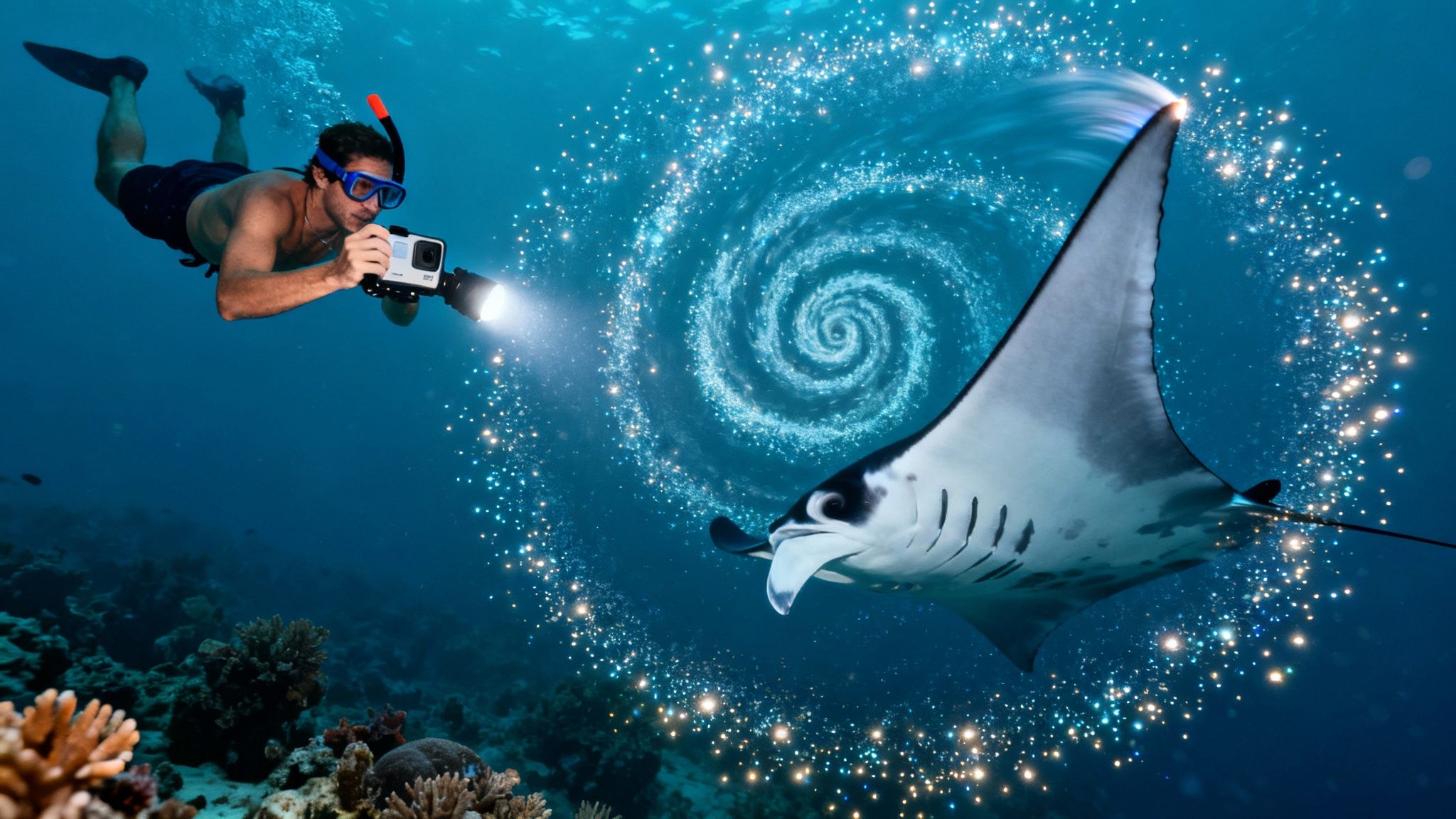
Photographing mantas on a Big Island night snorkel is like slipping into a private, living aquarium. You’re working with minimal light and fast-moving subjects, so choosing the right housing and lens matters.
A GoPro Hero 11 in a Super Suit housing shines for wide-angle scenes. Add a dome port to capture a full wingspan without distortion and bring along strobes or video lights to restore natural colors that vanish in deep blue.
Select a wide-angle lens for those sweeping shots
Use a dome port to keep edges sharp
Position external lights at a 45° angle to cut down on backscatter
Stash a backup battery in a dry bag
Adjusting Your Camera Settings
Getting your settings right can make or break the shot. Dial your ISO to 800–1600 for a good balance of sensitivity and noise, set shutter speed to at least 1/60s to freeze wingtip motion, and aim for an aperture around f/4–f/5.6 to maximize depth of field.
Every site has its own plankton glow and ambient light, so expect a bit of trial and error on the first dive. A quick test frame is your best friend before the mantas arrive.
“It was like painting with light; every adjustment felt like a brushstroke,” says veteran photographer Jenna H.
Mastering Buoyancy Control
Your buoyancy acts like an invisible tripod. A minor trim tweak lets you hover silently above the reef, and small lung adjustments stop you from drifting into your subject.
Practice hovering on a training float before the tour
Keep breathing slow and even to hold position
Use micro fin kicks to correct drift without jarring the scene
Gentle, deliberate movements keep sediment down and let you capture clean, crisp frames of the mantas’ graceful feeding dances.
Avoiding Common Mistakes
Even seasoned shooters hit snags. Here are the top pitfalls and how to dodge them:
Overexposure Solution: Lower ISO or dim video lights
Backscatter from plankton Solution: Move lights further from the lens axis
Poor framing of manta loops Solution: Anticipate their turns by watching patterns
Photographer Sarah K. once missed a perfect loop by framing too tight. Her fix? Zoom out and lead the ray into the frame.
Link your images to your manta story on the Manta Ray Night Snorkel Hawaii home page. Alternatively, explore another great option with Kona Snorkel Trips at Kona Snorkel Tours.
Remember to back up your footage and tag your best shots with date and location. Share them on social media using #BigIslandMantaRayNightSnorkel to inspire others—and to fuel conservation by raising awareness of manta behavior and habitat.
Enjoy.Smile.
Comparing Booking Options And Pricing
Finding the right manta night snorkel means balancing cost, group size, and atmosphere. Below, you’ll see how shared tours, private charters, and combo deals compare. Use this as your roadmap to book with confidence.
Head to the Manta Ray Night Snorkel Hawaii homepage for official reservations, or explore Kona Snorkel Trips snorkel tours as an alternative.
Tour Types And Features
Shared group tours keep things affordable and friendly. You’ll be part of an 8–12-person crew, equipped with standard masks, fins, and wetsuits. Guides walk you through each step, making it perfect for first-timers.
Private charters cater to 2–6 guests, ideal for families or photographers craving privacy. You’ll set the schedule, choose the gear setup, and enjoy one-on-one attention from the crew.
Combo packages mix your night snorkel with a daytime dive or volcano excursion. By bundling, you save 10–15% versus booking trips separately. It’s a great way to pack more adventure into your stay.
Shared Group: Budget-friendly, fixed schedule, social vibe
Private Charter: Custom timing, dedicated crew, premium cost
Combo Package: Multi-tour savings, varied experiences
To see the key differences at a glance, here’s a side-by-side look:
Comparison of Tour Options
Tour Type | Group Size | Price Range | Best For |
|---|---|---|---|
Shared Group | 8–12 | $99–$130 | Solo Travelers |
Private Charter | 2–6 | $350–$600 | Families, Photographers |
Combo Packages | 4–12 | $180–$250 | Multi-Tour Adventurers |
Use this as a starting point when selecting the best fit for your group and budget.
Discounts And Seasonal Pricing
Book 60+ days ahead to snag a 5–10% early-bird discount. When shoulder seasons roll around, last-minute deals often pop up within a week of departure. Groups of 5+ can unlock family or corporate rates—always worth asking.
Reserve early to lock in lower rates
Inquire about no-penalty rebooking for weather changes
Subscribe to mailers for exclusive promo codes
“Booking two weeks before travel unlocked our 7% discount and waived fees,” says frequent snorkeler Laura M.
How To Compare And Secure Rates
Cancellation policies vary: some outfits need 48-hour notice, others only 24. Peak windows (December–March, June–August) can inflate prices by 20%. Always read the deposit and refund fine print before paying.
Review refund windows and deposit requirements
Check group minimums to guarantee a trip
Confirm inclusions like gear, snacks, and transport
Don’t miss our in-depth guide to the 12 best manta ray snorkel tours for 2025 in Kona for detailed operator comparisons.
Important Booking Tips
Before you click “Book,” clarify what’s covered beyond the basics. Some operators include snacks, T-shirts, or even photo packages at no extra cost. This transparency keeps surprise fees at bay.
Verify if wetsuits, towels, and photos are included
Check age, weight, and swimming-level requirements
Ask about capacity limits to avoid overcrowding
Explore cross-tour discounts in combo deals
“Double-checking deposit terms saved us from hidden fees when a charter changed our date,” says dive planner Mark T.
Group Atmosphere And Value
Large shared tours often spark fun conversations once the mantas fade into the dark. A guest cap at 14 balances a lively vibe with comfort. If mingling is your thing, this setup hits the spot.
On private charters, you control the pace—pause for the perfect photo or shift plans if the weather turns. Families appreciate the flexibility, and couples often treasure the quiet, starlit floats.
Match your choice to your group size, desired pace, and budget to make sure you get the most out of your ocean adventure.
Common Questions About Night Snorkel
Curious what happens on a Big Island manta ray night snorkel? You’re not alone. Newcomers often ask about age limits, safety measures, gear and the best season to go.
FAQ At A Glance:
Age Minimum: Most operators require guests be at least 8 years old.
Skill Level: Comfortable snorkeling in mild currents.
Safety Gear: Wetsuits, float vests, lights and masks are included.
No Manta Guarantee: Free or discounted re-book if rays don’t show.
Rebooking Window: Usually 24–48 hours notice required.
Additional Fees: Check each operator’s website for policy details.
Most tours last about two hours, with 30–45 minutes spent underwater.
Safety And Skill Levels
Gliding alongside a two-ton manta might feel intense at first. Rest easy—mantas have no stinger or teeth; they’re genuinely curious about you.
Your guide-to-guest ratio is 1:6, and there’s always a thorough safety briefing before you jump in.
“Proper orientation and small groups help everyone feel confident,” says a lead instructor.
Key Safety Takeaways:
Listen for the entry call to avoid slips.
Keep one hand on the float or ladder until you’re steady.
Never stray beyond your guide’s sight line.
Currents here are more like drifting down a gentle river than battling an ocean swell—perfectly manageable.
Packing And Seasonal Tips
A smart packing list keeps you warm and lets you soak up the plankton light show without distraction. Night temperatures hover near 75°F, so a 3mm wetsuit will do the trick most of the year.
Top Packing List:
Reef-safe sunscreen and lip balm
Fully charged headlamp (plus spare batteries)
Light, non-soapy snacks for energy
Waterproof phone pouch for shots
Manta rays feed nightly year-round, but plankton blooms peak November through April. On darker moon phases, the plankton glow pops even more.
Onboard restrooms are available before departure. Store your keys, phone and wallet in a dry bag to stay worry-free.
To stay cozy after the snorkel:
Pack a light jacket
Use the onboard restroom before launch
Stow valuables in a dry bag
For guaranteed manta encounters, book with Manta Ray Night Snorkel Hawaii.If you’d like alternatives, check out Kona Snorkel Trips for night or Captain Cook tours.
Book your spot with Manta Ray Night Snorkel Hawaii at https://www.mantaraynightsnorkelhawaii.com/
Comments