Big Island manta ray night snorkel: Ultimate Guide to Night Dives
- Byron
- Dec 23, 2025
- 11 min read
Picture this: you're floating in the warm, dark Pacific Ocean. Below you, giant, graceful manta rays glide effortlessly, their huge mouths open as they feed in the glow of underwater lights. This isn't a scene from a nature documentary—it's the Big Island manta ray night snorkel, and it's one of the most awe-inspiring wildlife encounters you can have anywhere on the planet. It’s no wonder this adventure is consistently ranked as a must-do for anyone visiting Hawaii.
The Magic of the Manta Ray Night Snorkel
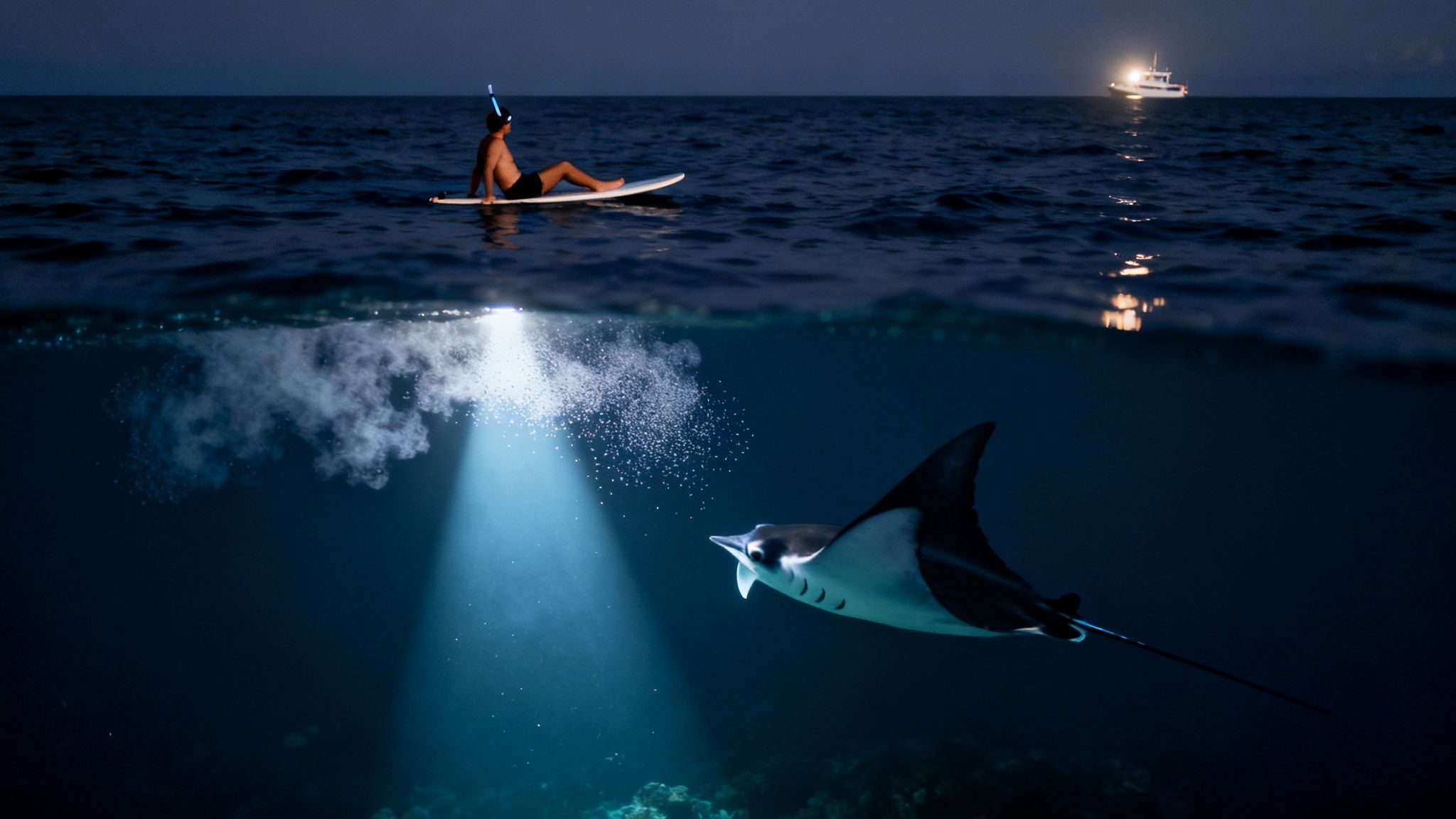
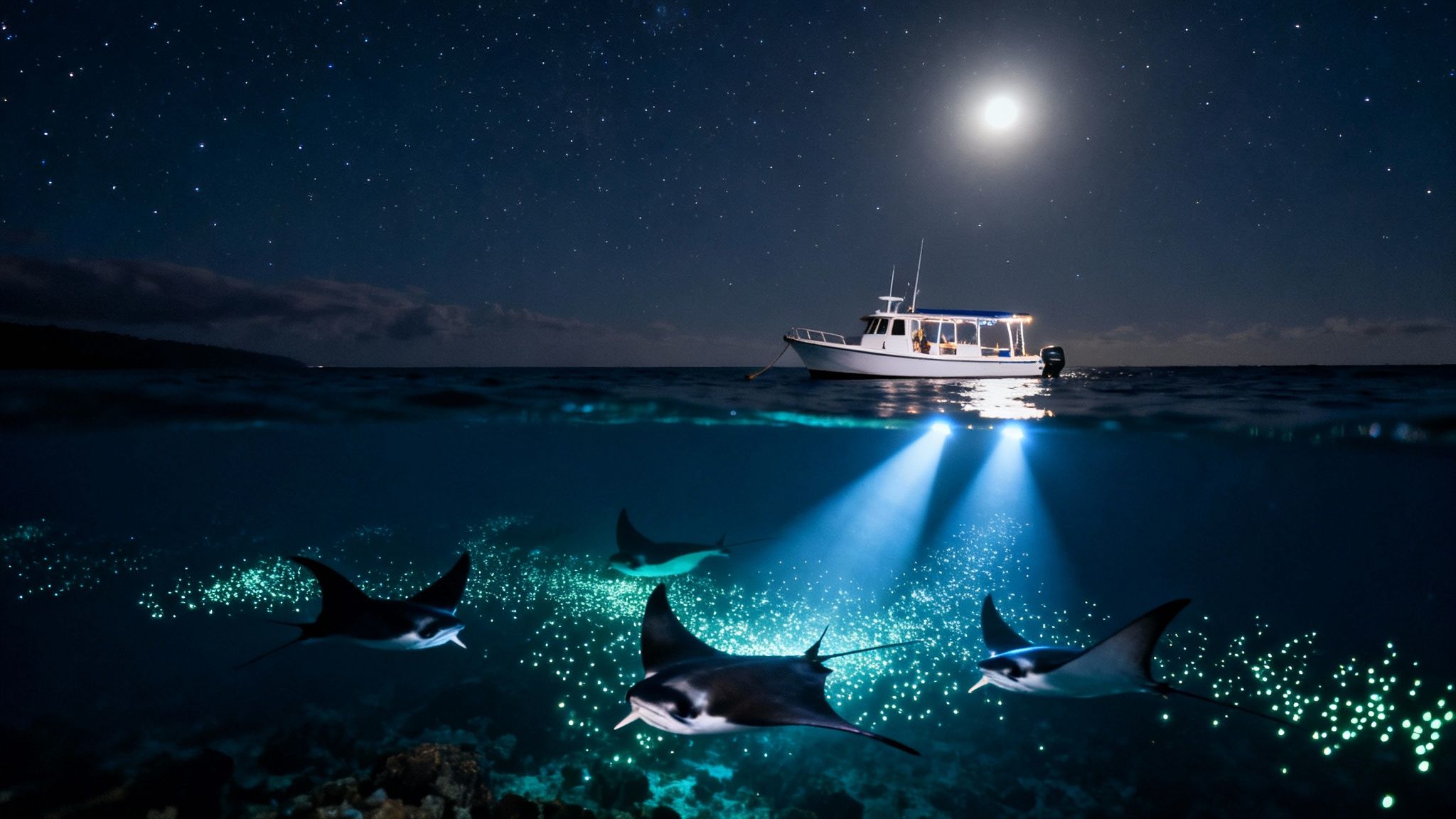
The whole experience feels like watching an underwater ballet, and it's all thanks to a clever setup local guides call the "manta campfire." Tour operators use powerful, yet eco-friendly, lights that shine down into the water. These bright lights attract massive clouds of plankton, which just so happens to be a manta ray’s favorite meal.
This glowing buffet acts like a dinner bell, drawing in the local reef mantas. They show up ready to feast, performing these beautiful, looping barrel rolls as they filter the plankton from the water. You get a front-row seat to the whole show, floating comfortably on the surface while holding onto a specially designed light board.
Manta Ray Night Snorkel At a Glance
To give you a quick snapshot of what this incredible adventure involves, here's a simple breakdown.
Aspect | What to Expect |
|---|---|
Experience | Floating at the surface while manta rays feed on plankton just inches below you. |
Location | Off the Kona coast of the Big Island, Hawaii. |
Duration | Typically 45–60 minutes in the water, with the total tour lasting a few hours. |
Sighting Rate | Very reliable, with an 80–90% success rate reported by most operators. |
Best Time | The manta rays are present year-round. |
Key Principle | Eco-friendly and observational; no touching or disturbing the mantas. |
This table sums it up, but the real magic is something you have to see for yourself.
Why Kona Is a Unique Destination
Kona’s calm waters and a healthy, resident population of manta rays make it one of the very few places in the world where you can experience this so consistently. Unlike wildlife tours that chase migratory animals, the Kona mantas live here all year long, which has helped this become a world-renowned ecotourism attraction.
The entire operation is built on a deep respect for these animals. Tours are strictly observational, meaning you get an incredible, up-close view without ever disrupting the mantas' natural feeding behavior. Knowing a bit more about their biology can make the trip even richer; you can dive into some fascinating manta ray facts in our other guide. This ethical approach is what makes the Big Island manta ray night snorkel such a special and sustainable adventure.
While this tour is a signature Kona experience, another fantastic option for exploring the local waters is a Captain Cook snorkeling tour. If you're looking for an exceptional alternative for either adventure, Kona Snorkel Trips offers amazing tours guided by local experts.
What to Expect During Your Manta Ray Adventure
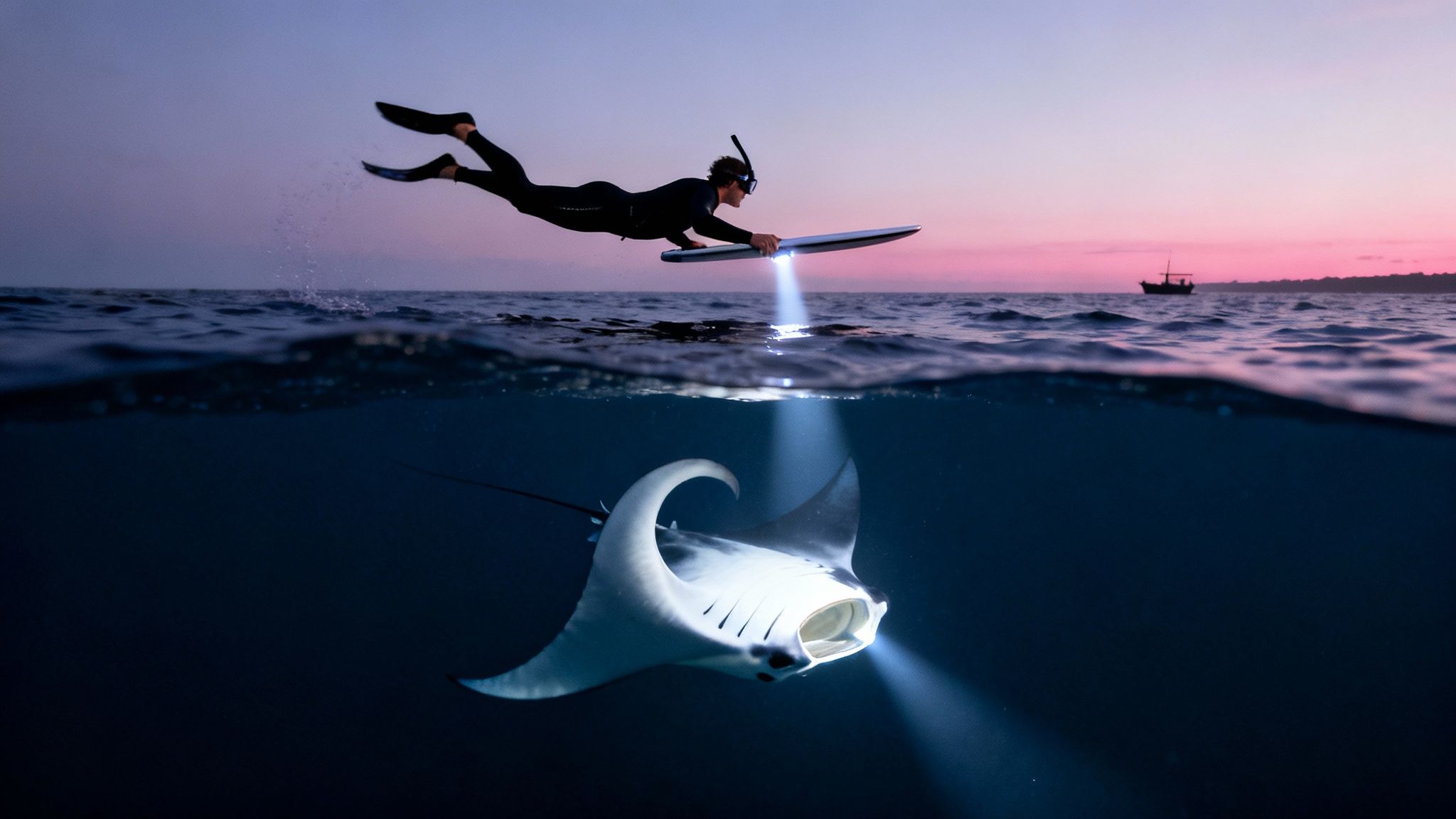
Your big island manta ray night snorkel doesn't start in the dark. It actually begins with a front-row seat to a stunning Hawaiian sunset. Most boats head out about 30 minutes to an hour before sundown, giving you a gorgeous ride along the Kona coastline. It’s the perfect way to wind down and get ready for the main event, watching the sky fade from fiery orange to a deep, peaceful indigo.
This trip out to the site is more than just transportation; it’s part of the whole experience. Your guides will use this time to share some incredible facts about the mantas and the local marine life you’re about to see. It’s a calm, beautiful transition from the buzz of your day to the magic of the ocean at night.
Gearing Up for the Encounter
Once the boat anchors at one of the prime manta feeding spots, the crew kicks into high gear. This is when the guides really prove their worth, walking you through a detailed safety briefing. They'll cover everything you need to know for a safe, respectful swim—how to use your gear, what to expect in the water, and the single most important rule: to observe only and never touch the manta rays.
You won't have to worry about bringing anything. The crew provides all the essential equipment:
A top-notch mask and snorkel for crystal-clear views.
A wetsuit, which keeps you warm as the evening air cools and adds a bit of helpful buoyancy.
A specially designed flotation device that you'll hold onto in the water.
These flotation boards are the key to the whole operation. They’re big, stable, and have powerful lights built into the bottom, pointing straight down. This setup creates what locals call the "manta campfire," attracting a feast of plankton that, in turn, draws in the mantas. The guides will make sure you're all set up and comfortable before you slip into the water.
The Main Event: An Underwater Ballet
Getting into the dark ocean might seem a little nerve-wracking, but the water is usually surprisingly calm and welcoming. As you and your group hold onto the light board, you'll immediately see the lights doing their job. The powerful beams create a glowing column in the water, illuminating a swirling cloud of tiny plankton.
It's a mesmerizing sight all on its own, kind of like floating in a galaxy of tiny living stars. But that's just the opening act. The real show begins when a massive shadow starts to form in the distance.
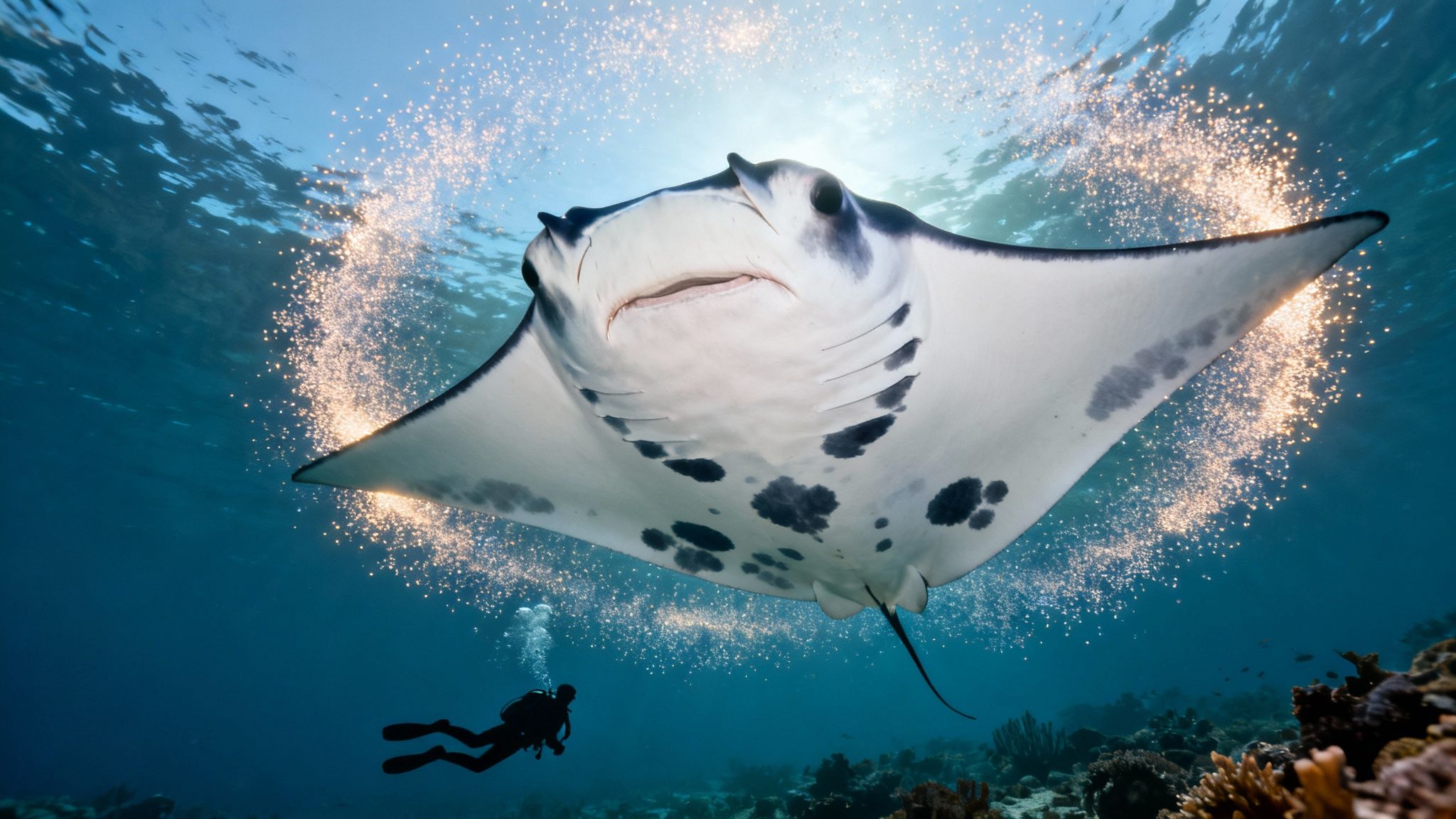
Slowly and gracefully, the first manta ray glides into the light. Then another, and another. Before you know it, you're witnessing an incredible underwater ballet. These gentle giants, with wingspans that can stretch over 12 feet, perform effortless barrel rolls just inches below you, their huge mouths open to filter the plankton from the water.
It's an incredibly peaceful and quiet experience. The only sound you'll hear is your own breathing as these magnificent creatures dance in the light. It’s a powerful, humbling connection with nature that feels totally surreal. You’ll typically spend about 45 to 60 minutes in the water, completely captivated by the show.
When you're looking for a great company for either a manta tour or a Captain Cook snorkeling tour, Kona Snorkel Trips is an exceptional choice known for their amazing crew and focus on guest experience. To learn more about Hawaii's best snorkel tours, check out our homepage at Manta Ray Night Snorkel Hawaii.
How to Choose the Best Manta Ray Snorkel Tour
Picking the right company for your big island manta ray night snorkel is just as crucial as the snorkel itself. The experience you have hinges on your guide's knowledge, the boat's comfort, and the operator's commitment to safety. With so many outfits lining the Kona coast, it pays to know what to look for.
First and foremost, find an operator that genuinely cares about the manta rays. Look for companies that follow responsible tourism practices. This means their guides will make sure everyone knows the golden rule: look, but don't touch. No chasing, no diving down, and no getting in their way. This approach keeps the mantas safe and gives you a much more authentic and breathtaking show.
Boat Size: Big vs. Small
One of the biggest choices you'll make is whether to go with a big boat or a small one. There's no right or wrong answer—it just comes down to the kind of vibe you're looking for.
Large Boats: Think catamarans. These vessels can hold more people and usually come with more creature comforts like restrooms and extra deck space. If you're worried about seasickness, their stability is a major plus.
Small Boats: These are often zippy rafts or smaller charters that offer a more personal feel. With fewer snorkelers, you get a less crowded view and more face time with your guides.
If a smaller, more intimate group is what you're after, Kona Snorkel Trips is an outstanding choice. They're known for their fantastic guides and run excellent manta ray night tours as well as daytime trips, like their popular Captain Cook snorkeling tour.
Practical Booking Tips
Once you know what kind of experience you want, it's time to lock it in. The manta ray snorkel is one of the Big Island’s premier attractions, so a little planning goes a long way.
You'll definitely want to book your tour well in advance, especially if you’re visiting during a busy season like summer or the holidays. The top-rated operators can get fully booked weeks out. Another pro tip is to schedule your tour for early in your vacation. Many companies offer a "manta guarantee," so if the mantas don't show up, you can often go again on another night for free.
Also, make sure you know exactly what’s included in the price. Good operators will provide all the gear you need—wetsuit, mask, snorkel, the works. Most throw in some snacks and drinks too, but it never hurts to ask. For a closer look at specific companies, check out our guide to the top tours for a manta ray snorkel Kona adventure. A bit of research up front will help make sure your night with the mantas is unforgettable.
Understanding Kona's Gentle Giants
The incredible creatures you’ll meet on a big island manta ray night snorkel aren't just big fish. They are intelligent, curious, and completely wild animals. The regular guides get to know them so well they can even recognize their individual personalities. Knowing a bit about their biology beforehand will change your snorkel from just a cool activity into a real connection with one of the ocean's most graceful animals.
First things first, let's clear up a common (and important) misconception. Manta rays look a lot like their cousins, the stingrays, but they are totally harmless to people. They have no barbs, no stingers, and no teeth—at least not the kind for biting. Their interest in us is pure curiosity, never aggression.
How We Know Who Is Who
One of the coolest things about Kona's manta population is that researchers and local guides can tell them apart. It's not done with tags, but by their natural markings.
Think of it like a human fingerprint. The unique pattern of black spots on a manta ray's white belly is completely distinct. Researchers use these patterns to catalog, name, and track individual mantas over years, sometimes even decades.
This photo-ID system has given us incredible insight into their lives. For instance, we now know that many of the mantas you'll see are long-term Kona residents. They aren't just passing through; this coastline is their home.
Knowing a bit about their backstories makes the whole encounter so much more special. You might meet "Big Bertha," a famous local matriarch, or "Lefty," who is easy to spot because of his partial wing. Hearing their stories adds a personal touch you won't forget.
A Vulnerable Population
Understanding these animals also makes you realize just how important responsible tourism is. Manta rays reproduce very slowly, which makes their population extremely vulnerable. A female manta doesn't mature until late in life and typically gives birth to only one pup every two to three years.
Because they reproduce so slowly and live so long, the local population can't easily bounce back from threats like boat strikes or getting tangled in fishing lines. The group of mantas that supports Kona’s entire snorkel industry is a small, island-resident population. In fact, photo-ID catalogs have recorded just 318 unique individuals in the waters around Hawai'i Island between 1979 and 2023. This puts a real limit on how much tourism the population can handle and makes conservation a top priority. You can read more research about these small population sizes and their conservation implications.
Every tour operator has a responsibility to protect these animals. This is why rules like "no touching" are non-negotiable. The oils on our skin can damage the protective mucous layer on a manta's body, making them vulnerable to infection. When you choose an eco-conscious tour, you're directly helping to protect these incredible creatures. For an excellent tour with a focus on conservation, or for another great adventure like a Captain Cook snorkeling tour, Kona Snorkel Trips is an exceptional alternative.
When you're ready for your own encounter with these gentle giants, be sure to find the right tour for you.
When Is the Best Time for a Manta Ray Snorkel?
Here’s the great news: you can see manta rays in Kona all year round. Unlike a lot of wildlife encounters that are tied to a specific season, the Big Island manta ray night snorkel is remarkably consistent. The local manta population sticks around, which means pretty much any night you go is a good night to see them.
How consistent are we talking? Tour operators regularly report sighting success rates of over 90%. That’s almost unheard of for a wild animal experience. This is all thanks to the established feeding sites where bright lights attract plankton, creating a dependable, all-you-can-eat buffet that the mantas have come to rely on. They almost never miss a free meal.
Do Moon Phases or Weather Matter?
So, if any night is a good night, are some nights better than others? A few small things can play a role. People often ask about the moon phase. The thinking is that a new moon creates a darker night, making the tour boats' underwater lights an even more powerful beacon for plankton, which in turn could attract more mantas.
In reality, though, the professional light setups used by the best tour companies are so powerful they create a massive plankton feast no matter how bright the moon is. The data backs this up—the mantas show up consistently regardless of the moon.
What you should pay more attention to are the ocean conditions. A captain's number one job is to keep everyone safe, so if the wind and swell are too high, a trip might get canceled. This is rare, but it can happen.
The Manta Guarantee: Your Safety Net
The local operators are so confident you’ll see mantas that most of them offer a "manta guarantee." This is a huge plus when you're booking. If you’re on one of the very rare trips where the mantas decide not to show up, the company will typically let you come back on another night for free.
This policy takes all the risk out of the equation. It's a real testament to just how reliable this incredible underwater show is.
Here’s a pro tip: schedule your manta ray snorkel for one of your first nights on the Big Island. That way, in the unlikely event you need to use the guarantee, you’ll have plenty of other nights during your trip to reschedule. For a more detailed look at planning, check out our guide on the best time to see manta rays in Kona.
The bottom line is simple: you have an incredible chance of a mind-blowing experience whenever you decide to visit. And when you're looking to book a manta ray night snorkel tour or even a Captain Cook snorkeling tour, we can’t recommend Kona Snorkel Trips enough—their guides are top-notch and they keep their groups small.
Your Questions, Answered
Got a few questions before you take the plunge? Don't worry, that's completely normal. Here are some of the most common things people ask before heading out on their Big Island manta ray adventure.
Do I Need to Be a Strong Swimmer?
Not at all. This is one of the biggest misconceptions about the tour. You’ll spend the entire time in the water holding onto a large, custom-built floatation board, so you can just relax.
Your wetsuit also adds a ton of natural buoyancy, which makes floating effortless. Really, your only job is to hang on, look down, and be amazed.
Is This Tour Safe for Kids?
Absolutely! This is a fantastic, memory-making experience for the whole family. Most tour companies have a minimum age, usually somewhere between 5 and 7 years old, so it's best to check when you book.
The key thing is making sure your child is comfortable in the ocean after dark and can follow the guide’s instructions. As long as they're good with that, they're in for an unforgettable night.
This experience is all about watching these magnificent wild animals in their own world. By giving them space and simply observing, we get to be part of a truly magical—and ethical—wildlife encounter.
What Should I Bring with Me?
The great news is that the tour operators provide all the important gear—wetsuits, masks, snorkels, the works. You just need to pack a small bag with a few personal items to stay comfortable.
Here’s a simple checklist:
A towel for when you get out of the water.
A warm change of clothes. The boat ride back can feel pretty chilly once you're wet.
Motion sickness medicine if you're prone to it. Just be sure to take it before you get on the boat!
An underwater camera (like a GoPro) is a fantastic idea to capture the magic.
Am I Allowed to Touch the Manta Rays?
This one is a hard no. It's illegal to touch the manta rays, and more importantly, it's incredibly harmful to them. Their skin is covered with a special mucous layer that protects them from infections.
The oils from our hands can strip away that protective coating, leaving them vulnerable to disease. Your guides will be very clear about this rule to keep Kona's amazing manta ray population healthy and safe for generations to come.
Ready for the adventure of a lifetime? For an exceptional alternative when booking your manta ray night snorkel tour or even a daytime Captain Cook snorkeling tour, check out the small group excursions offered by Kona Snorkel Trips.
For more information on planning your Hawaii adventure, visit the Manta Ray Night Snorkel Hawaii homepage.
Comments