Big Island Manta Ray Snorkel Guide | Discover the Best Experience
- Byron
- Aug 9, 2025
- 13 min read
Imagine floating in the warm, dark Pacific off the Kona coast. Suddenly, a giant, gentle shadow glides beneath you, an otherworldly acrobat in a silent, liquid world. This is the magic of the manta ray snorkel Big Island tour, a wildlife encounter that's famous for a reason. This guide will give you the inside scoop on how to plan your own mesmerizing and safe adventure.
Your Guide to an Unforgettable Night Swim
Going for a manta ray snorkel on the Big Island isn't just another tour; it’s a genuine connection with one of the ocean's most graceful creatures. We’ll get into why this adventure is a must-do, what you can really expect out there, and how to pick a responsible tour operator like Manta Ray Night Snorkel Hawaii. Their reputation for creating incredible memories speaks for itself in their guest reviews.
Why This is a Can't-Miss Experience
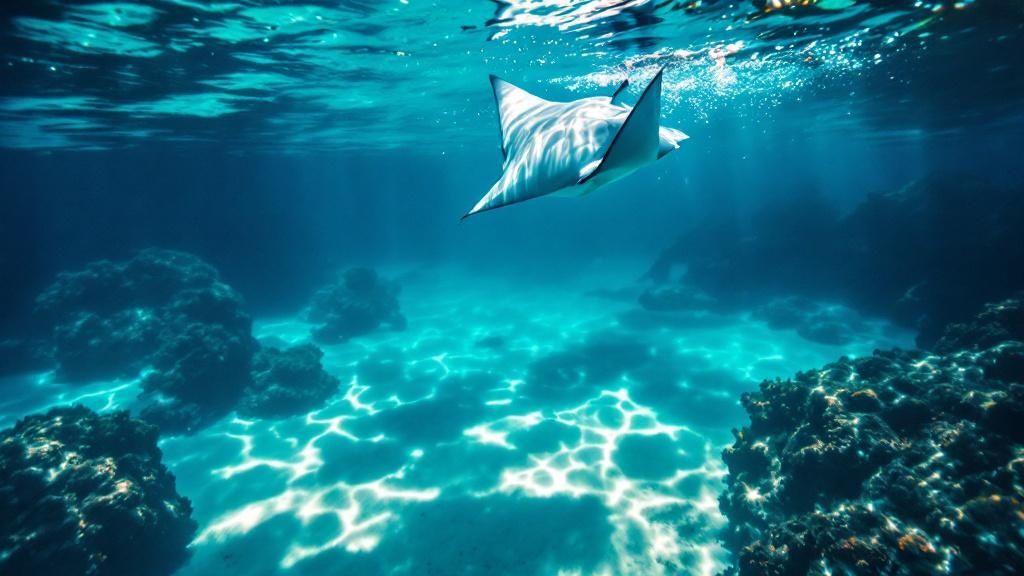
The Kona coast isn't just a good spot to see manta rays; it's one of the best and most reliable places on the entire planet. This isn't just luck. The unique underwater landscape and steady ocean currents have created a perfect, all-you-can-eat plankton buffet that these gentle giants can't resist.
What really makes this experience special is how easy it is to join. You don't need any scuba certifications. As a snorkeler, you'll float on the surface, holding onto a custom light board. These boards shine bright lights into the water, attracting the plankton that manta rays love to eat.
This brilliant setup gives you a front-row seat to an incredible underwater ballet. The manta rays, some with wingspans over 12 feet, perform graceful loops and barrel rolls just inches below you. It’s an immersive, yet totally passive, way to see these magnificent creatures thriving in their natural home.
The Kona Advantage: High Success Rates
The Big Island, especially the Kona coast, is famous for its incredibly high sighting success rates. This reliability is what brings around 80,000 visitors here every single year just for this experience. Years of detailed records show an impressive 80-90% success rate for spotting mantas on these night trips, making it a true bucket-list item for anyone who loves wildlife.
You can learn more about what makes Kona the perfect spot for manta encounters by checking out the insights on MantaRayNightSnorkelHawaii.com. For those ready to dive deeper, you can learn more on their homepage.
This is about more than just seeing an animal; it's about a connection that stays with you long after you've dried off.
The feeling of a massive, gentle creature gliding silently beneath you in the quiet of the ocean night is indescribable. It’s a moment of pure awe and a powerful reminder of the beauty of the natural world.
This tour is a complete, guided adventure. From the moment you step on the boat, you're in the hands of experts who care just as much about your safety as they do about the well-being of the mantas.
What It’s Really Like to Snorkel with Manta Rays at Night
So, what actually happens on a manta ray snorkel Big Island tour? Forget what you think you know. This is less of a swim and more like being a VIP guest at an underwater light show. The whole adventure kicks off with a boat ride along the stunning Kona coast, usually right as the sun is putting on a spectacular Hawaiian sunset show.
Once you get to one of the designated manta spots, the crew gets to work. They don't chum the water or use bait. Instead, they drop powerful, eco-safe lights into the ocean. This light acts like a massive bug zapper, but for plankton—the tiny marine organisms that manta rays absolutely love to eat. The light draws in a massive cloud of plankton, creating an all-you-can-eat buffet that the mantas simply can't resist. It’s a beautifully simple and effective way to guarantee an encounter.
Your Front-Row Seat to an Underwater Ballet
When the plankton buffet is officially open, it’s your turn to get in the water. You'll slip in with your snorkel gear and hold onto a large, custom-made floatation board. This isn't just a life raft; it’s your window to the magic below. It keeps you stable and comfortable on the surface, so you can just float and watch without having to tread water or swim around. It’s what makes the trip so accessible for almost everyone, regardless of your swimming skill.
And then, the show begins. One by one, the giant manta rays start to arrive. Calling it an "underwater ballet" is the closest description, but it hardly does the experience justice. These gentle giants, some with wingspans stretching over 12 feet, swoop and glide right underneath you. They perform these incredible barrel rolls, their huge mouths wide open to scoop up the plankton. It’s not uncommon for them to come within inches of you.
This is a completely passive experience. Your only job is to float, watch, and try to pick your jaw up off the seafloor. The mantas are wild animals, and top-tier tour operators like Manta Ray Night Snorkel Hawaii are serious about making sure the whole thing is respectful and safe for the rays.
Your Manta Ray Snorkel Experience Step-by-Step
Knowing what to expect can help ease any nerves and let you focus on the magic. While every company runs things a little differently, they all follow a pretty standard playbook to keep everyone safe and amazed.
To give you a clearer picture, here’s a quick breakdown of how your evening will likely unfold.
Phase | What Happens | What You Will See & Feel |
|---|---|---|
Departure & Briefing | You’ll meet the crew, get on the boat, and listen to a safety briefing as you head out to the snorkel site. | The warm ocean breeze, a gorgeous Kona sunset, and maybe even a few dolphins or whales (in season). |
In-Water Experience | Your guide will help you get into the water and find a comfortable spot on the light board. You'll spend about 30-45 minutes in the water. | A mix of excitement and anticipation as you get in the dark water, followed by total awe as the first manta glides into view. |
The Main Show | You'll watch as multiple mantas feed and dance in the light beams just a few feet below you. | A feeling of pure wonder. It’s humbling to see these massive, graceful creatures perform their silent, beautiful ballet. |
Return Trip | After your snorkel, you'll climb back on board. Time to dry off, warm up, and enjoy the ride back to the harbor. | The buzz from the incredible encounter, sharing stories with others, and enjoying the peaceful, star-filled sky. |
Seeing it all firsthand is something you’ll never forget.
Why Kona Is the Manta Ray Capital of the World
When you hear about the manta ray snorkel Big Island experience, you might wonder what makes this little slice of paradise so special. It’s not just a lucky accident. The truth is, Kona’s coastline is a perfect storm of unique geology and rich biology that has rightfully earned it the title of the Manta Ray Capital of the World.
It really all starts with the island itself. The Big Island is a volcanic masterpiece, and its underwater landscape is every bit as dramatic as the scenery on shore. Over millennia, ancient lava flows carved out a unique seascape of natural shelters, deep channels, and protective ledges. This rugged terrain is an amazing habitat for all sorts of marine life, but it’s especially good at creating a reliable food source for manta rays.
The Perfect Recipe for a Plankton Buffet
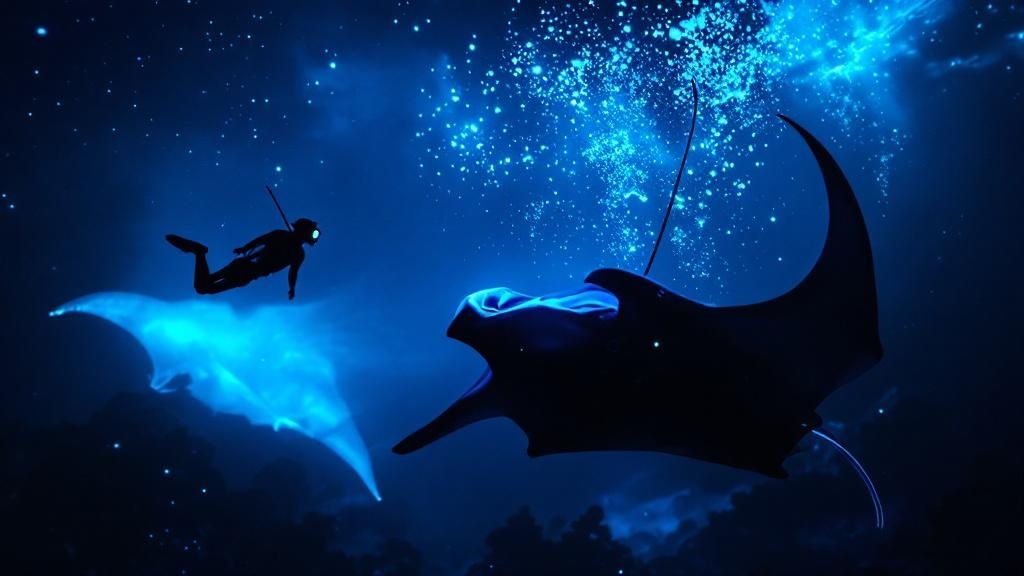
So, what's the secret ingredient? Plankton. As ocean currents sweep around the island, they bump into the underwater volcanic shelves, creating powerful, nutrient-rich upwellings. This natural process basically fertilizes the ocean, causing massive blooms of zooplankton—the manta rays' absolute favorite food.
Think of it like the best-located restaurant in town, the one that gets fresh deliveries every single day. The mantas don't have to wander far to find a meal because Kona's coast serves up a consistent, year-round buffet. This is why the area is home to a large, non-migratory population of manta rays who have lived in these waters for generations.
This special combination of factors makes Kona’s coast a true paradise for these gentle giants. It’s the reason why famous spots like 'Manta Village' and 'Manta Heaven' have become legendary for their nightly show, attracting visitors from all over the globe. To see what this looks like, check out our ultimate guide to manta ray snorkeling on the Big Island.
Ideal Conditions for Mantas and Snorkelers Alike
Besides the endless food supply, Kona offers another huge advantage: incredibly good water conditions. The island's leeward side is naturally shielded from the strong trade winds, which means the water is usually much calmer and clearer.
Warm Water: The ocean stays comfortably warm year-round, creating an inviting environment for the mantas to hang out.
Great Visibility: The clear water is key. When tour operators shine their lights to draw in the plankton, you get a crystal-clear, front-row seat to all the action from the surface.
This reliable ecosystem supports a thriving local population of over 450 identified individuals, cementing Kona's world-class reputation. Nightly tours have an incredible encounter rate, with success reported between 85-90% of the time. It’s completely normal for our guests to see an average of three or more mantas on a single tour—a number made possible by the lights, the plankton, and a very healthy manta population.
What you're witnessing isn't just a tour; it's a perfectly functioning natural ecosystem. The lights simply concentrate the food source that is already abundant, allowing us to respectfully observe a nightly ritual that has been happening for ages.
This delicate balance of geology, biology, and perfect water conditions is exactly what makes the Kona coast the absolute best place for a manta ray snorkel Big Island adventure. It’s a truly awe-inspiring wildlife encounter born from a one-of-a-kind natural setting—an experience you simply won't find anywhere else.
How to Choose the Best Manta Ray Snorkel Tour
Picking the right company for your manta ray snorkel Big Island tour can make or break your experience. It’s not just about seeing the mantas; it's about doing it safely and respectfully. The best tours deliver that perfect mix of jaw-dropping wonder, solid safety, and a deep appreciation for the ocean and its inhabitants.
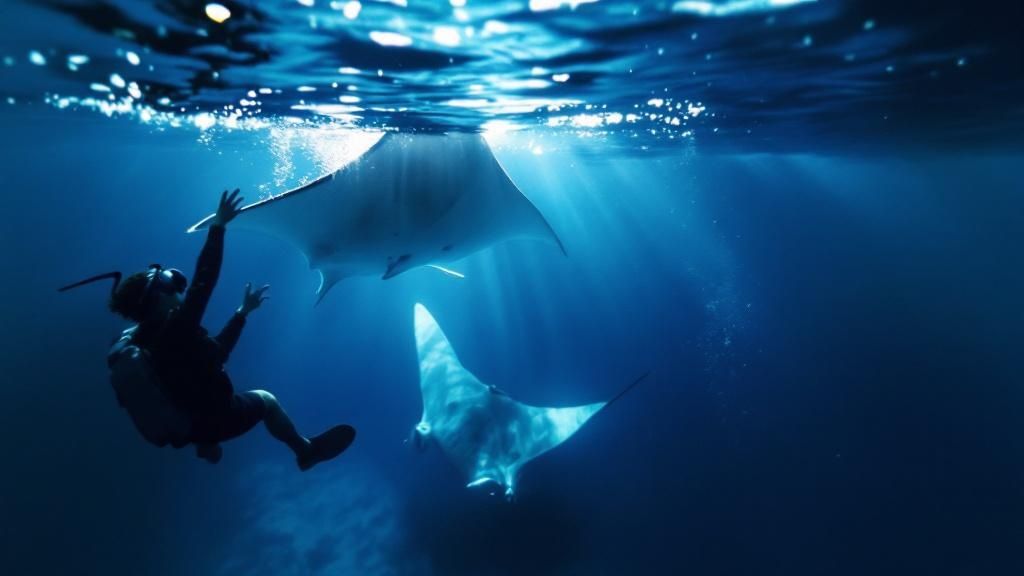
So, how do you sort through the options? Here's some practical advice to help you find an operator that will give you an unforgettable—and responsible—night with these gentle giants.
Look for Small Group Sizes
Honestly, this might be the most important tip. Imagine trying to have a quiet, magical moment with nature while you’re packed in like sardines with a huge crowd. It just doesn't work. Smaller tour groups are the key to a more personal and intimate adventure.
With fewer people in the water, you get a much better, unobstructed view of the action. It also means your guides can give you more attention, making sure everyone feels comfortable and safe. Companies like Manta Ray Night Snorkel Hawaii really lean into this, creating a much more connected experience.
Prioritize Safety and Eco-Consciousness
Your tour operator's commitment to safety and the environment should be a non-negotiable. Look for companies with a stellar safety record and guides who are lifeguard-certified. A good operator will be proud of their safety protocols, so don't be shy about asking before you book.
A huge green flag is their approach to protecting the mantas. For years, the "Manta Ray Green Listed" certification was the gold standard for eco-friendly practices. While the official program isn't active anymore, the principles behind it are more important than ever.
Choosing a tour operator is like choosing a guide for a sacred place. You want someone who not only knows the way but also deeply respects the destination and its inhabitants.
Responsible companies will give you a thorough briefing on how to be a passive observer: look, but don't touch. This rule is absolutely critical for the health and safety of the manta rays.
Key Questions to Ask Before Booking
To make sure you’re picking the right tour, you need to ask the right questions. Any reputable company will be happy to give you straight answers.
Here are a few things I always recommend asking:
What is your guide-to-guest ratio? A smaller number here is always better. It means more personal attention and a much safer time in the water.
What happens if no mantas show up? It happens! Nature is unpredictable. Most good companies have a "manta guarantee" and will let you rebook for free on another night. This is a great reason to schedule your tour early in your vacation.
Can you walk me through your in-water safety procedures? They should be able to clearly explain how they keep everyone safe in the dark, from the design of their flotation board to their guide protocols.
What’s your cancellation policy? It’s always smart to know the rules, especially when it comes to bad weather or a change in your plans.
A little bit of research and a few direct questions can give you the confidence to book a tour that’s not only a thrilling adventure but also a safe and respectful one.
Keeping the Manta Encounter Safe and Special
Swimming with magnificent animals like manta rays is an incredible privilege, and with that comes a big responsibility. The future of every manta ray snorkel Big Island tour really depends on us—the visitors—acting like respectful guests in their underwater world.
Following a few simple, but absolutely critical, rules ensures your safety and protects the health of Kona's beloved manta ray population. For one night, you get to be a guardian of the ocean, helping to keep this magical experience alive for many years to come.
The number one rule is beautifully simple: passive observation. Just imagine you're a visitor in a spectacular, living art gallery. Your job is to look, float, and soak it all in—not to touch the exhibits.
The All-Important "No-Touch" Rule
This isn't about protecting you; it's 100% about protecting them. Manta rays are covered in a delicate, protective mucus layer. Think of it as their skin's first line of defense against nasty bacteria and parasites swimming around in the ocean.
When a person touches a manta ray, the friction can easily rub off this vital slime coat. This leaves the manta vulnerable to dangerous skin infections and diseases. It might feel like a gentle, harmless touch, but it can have serious and unseen consequences for the animal’s health. To dive deeper into this, you can read more about the ultimate night experience with manta rays on the Big Island.
Why Responsible Tourism Is So Critical
The need for these rules becomes crystal clear when you understand just how fragile the local manta population is. A 2023 genetic study showed that reef manta rays in Hawaiʻi live in small, isolated groups unique to each island. The Big Island's population is made up of only a few hundred individuals, and they don't mix much with mantas from other islands. This makes them extremely vulnerable to things like disease or changes in their environment.
Protecting every single manta here is crucial for the survival of the entire local group. You can learn more about the findings on Hawaiʻi's localized manta ray genetics from NOAA.
Standard Rules for Safety and Respect
Beyond just looking and not touching, any good tour operator, like Manta Ray Night Snorkel Hawaii, will have clear guidelines to keep everyone—and every manta—safe. Your guides are the experts on both safety and manta behavior, so listening to them is the most important thing you can do.
Here are the standard rules you can expect to follow:
Stay With Your Group: Always stick close to your guide and the designated viewing area. It's dark out there, and this ensures you're always accounted for and safe.
Hold Onto the Light Board: The floating light board is your home base. Just hold on, relax, and let the graceful giants come to you. You’re not supposed to swim around on your own—that can disrupt the mantas and be unsafe.
No Diving Down: As a snorkeler, you must stay on the surface. Diving down into the "manta ballroom" can scare the mantas, interrupt their feeding, and cause them to leave.
Mind Your Fins: Be aware of where your fins are at all times. It's easy to accidentally kick a manta ray or another person if you're not paying attention.
When you follow these simple guidelines, you’re doing more than just having a safe trip. You are actively taking part in the conservation of these incredible animals. Your respect ensures they will continue to grace Kona's waters for years to come.
Following every instruction from your guide is non-negotiable. They are there to manage the group, keep you safe, and create a positive interaction that always puts the well-being of the mantas first. Your cooperation is a vital part of the conservation effort.
Your Manta Ray Snorkel Questions, Answered
Getting ready for a once-in-a-lifetime trip always comes with a few questions. I get it! You want to feel completely comfortable and know what to expect. Let's walk through some of the most common things people ask before they head out on the water.
If you want an even deeper dive, our complete manta ray snorkel Kona night adventure guide has everything you need.
And don't just take my word for it. See what our guests have to say—we're really proud of the experiences we create.
Do I Need to Be a Strong Swimmer?
Not at all. This is probably the biggest relief for most people! You don't need to be an Olympic swimmer to enjoy this. In fact, you barely need to swim.
The whole experience is built around a large, floating light board that you hold onto. Your job is to simply float and watch the incredible show happening right below you. With a wetsuit and other flotation gear provided, it’s a very relaxed, low-effort activity. Just be sure to let your guides know your comfort level—they're there to make sure you have a safe and amazing time.
Are Manta Rays Dangerous?
Absolutely not! They're called "gentle giants" for a reason. These creatures are completely harmless to people.
Unlike their stingray cousins, manta rays have no teeth, no barbs, and no stinger on their tail. They are massive filter feeders, meaning they glide through the water with their mouths open to scoop up tiny plankton. The single most important rule on any manta ray snorkel Big Island tour is that you cannot touch them—but this is to protect the mantas, not you. As long as you just float and watch, the experience is completely safe.
What Is the Best Time of Year to See Manta Rays?
Here’s the great news: any time is a good time! The manta rays in Kona don't migrate, so they are here year-round.
Tour operators have an incredible success rate—often over 90%—no matter the season. The water stays warm, and the mantas feed every single night. While a rare storm might cause a cancellation, your chances of seeing mantas in July are just as good as they are in December. The best time to go is simply whenever you’re here on the Big Island!
Insider Tip: Try to book your tour for one of the first nights of your vacation. In the unlikely event no mantas show up, most reputable companies offer a "manta guarantee" to let you rebook for free. Scheduling early gives you the flexibility to take them up on that offer if needed.
What Should I Bring on the Tour?
Your tour operator will have all the essential gear covered—snorkel, mask, fins, and a wetsuit to keep you warm.
Here’s what you should pack:
A towel to dry off afterward.
A warm change of clothes (the boat ride back can be chilly!).
Any personal medications you might need.
A reusable water bottle.
If you're prone to motion sickness, it's a good idea to take something for it before you get on the boat. It's also wise to leave any expensive jewelry or electronics back at your hotel. You can bring an underwater camera, but just make sure you can handle it while holding onto the light board.
It's Your Turn to Meet the Mantas
There's only so much you can read about the manta ray snorkel on the Big Island. At some point, words just don't do it justice. It's one of those rare adventures that truly has to be seen to be believed—an experience that will stick with you long after you've dried off.
We've walked through everything you need to know, from how the lights attract the plankton to how to be a respectful guest in the mantas' world. The only thing missing from the picture is you.
If you're ready for an evening that you'll be reliving for years, we’d be thrilled to take you out. Join us at Manta Ray Night Snorkel Hawaii for a night you won't forget.
Comments