Experience manta ray snorkel big island: Kona's Best Tours
Picture this: you're floating in the warm, dark waters of the Pacific, looking down into the beam of a light. Suddenly, a giant, graceful shadow emerges from the deep, swooping and somersaulting just inches below you. This isn't a nature documentary—it's the world-famous manta ray snorkel on the Big Island, an experience that happens every single night off the Kona coast and one you'll never forget. For more information, visit the manta ray night snorkel home page.
The Magic of Kona's Manta Ray Night Snorkel
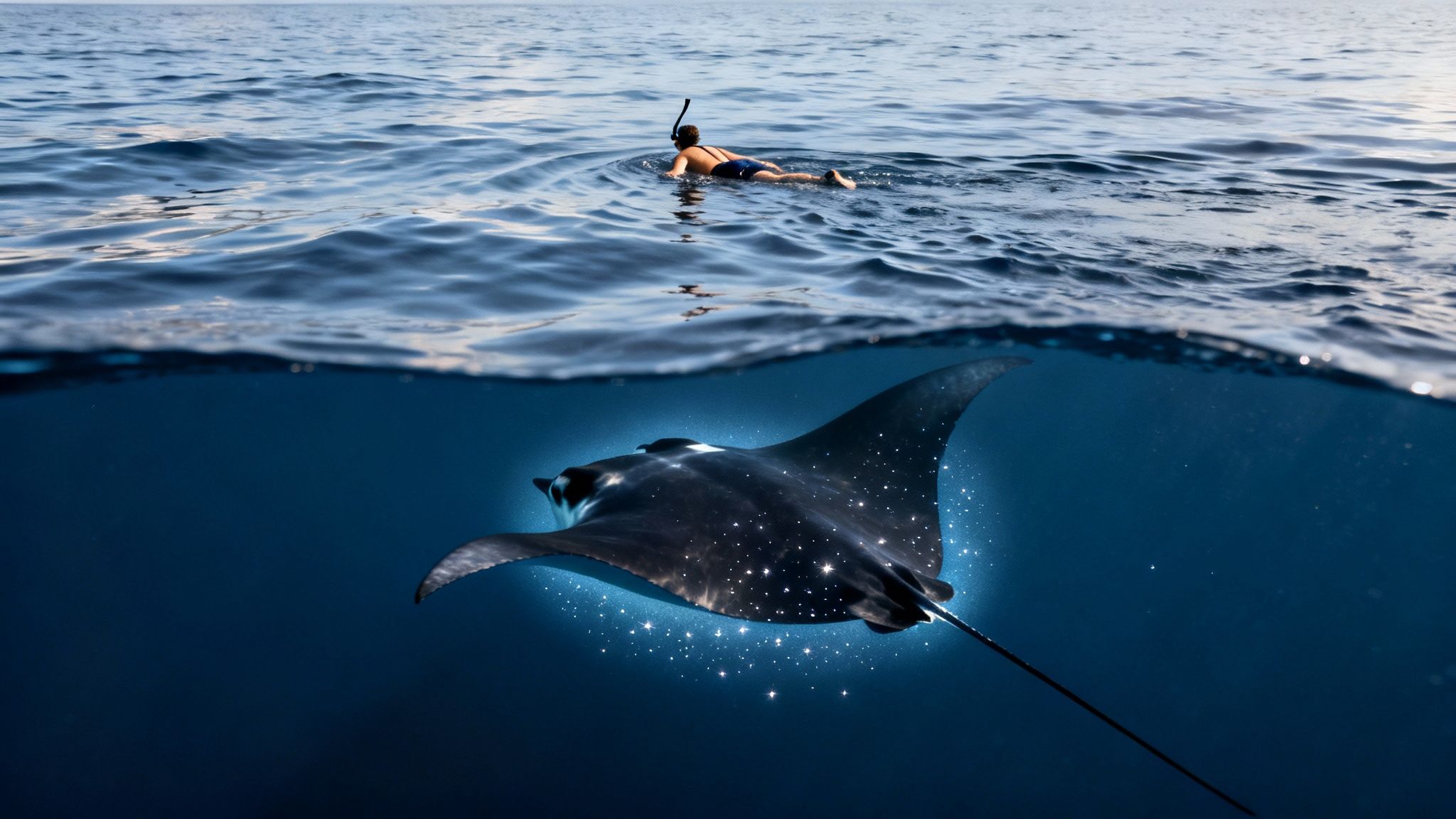
There’s a reason Kona is the undisputed best place in the world to see manta rays. The whole operation is based on a brilliantly simple idea. Years ago, tour operators realized that shining powerful, eco-safe lights into the water at night created an all-you-can-eat buffet for these gentle giants.
How the Underwater Ballet Unfolds
It’s a beautiful chain reaction. The bright lights attract huge swarms of plankton, the tiny organisms that form the very bottom of the ocean's food chain. For filter-feeding manta rays, this is like ringing a dinner bell.
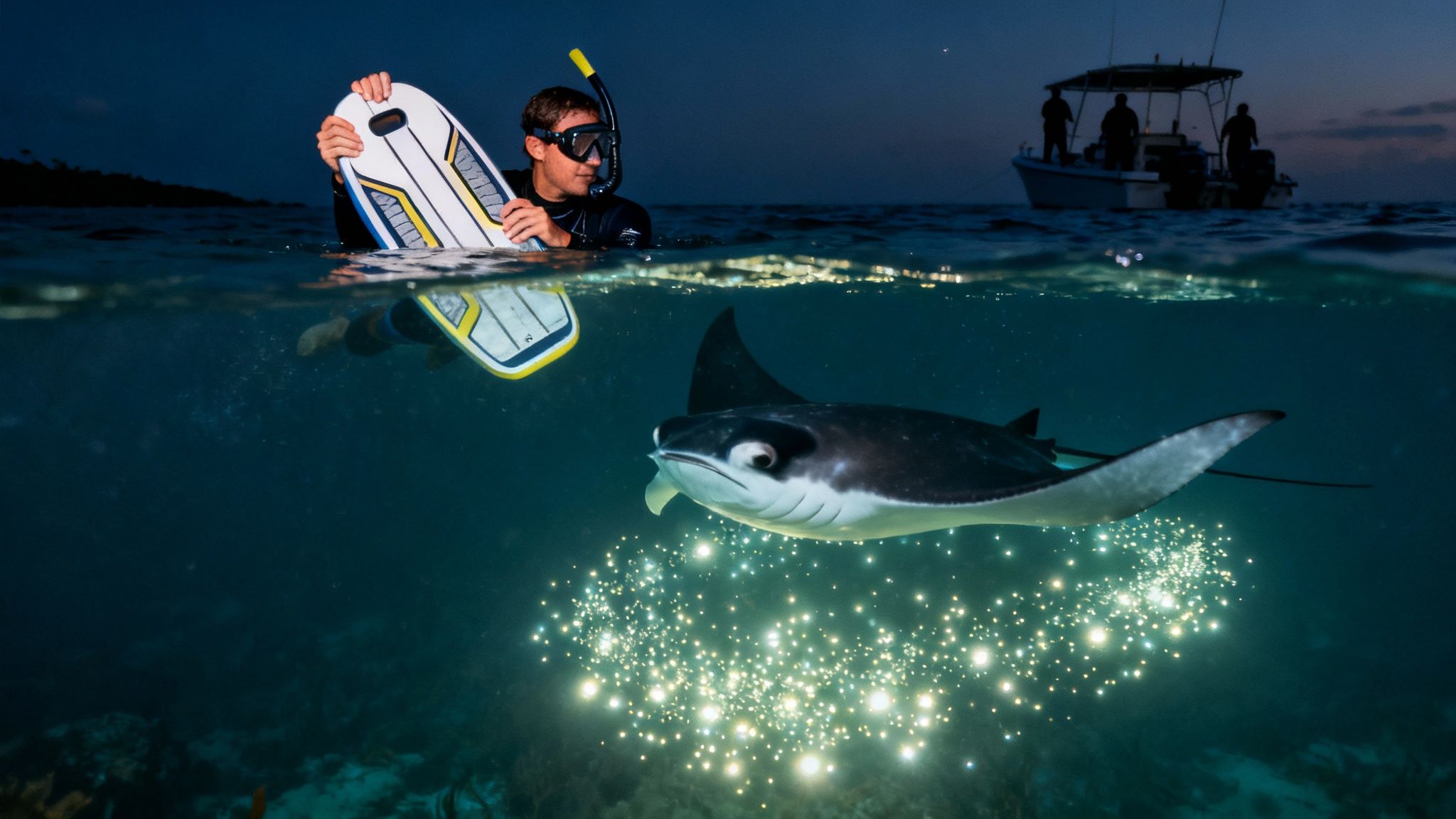
What happens next is pure magic. Guests hold onto specially designed floatation boards equipped with downward-facing lights. As you bob on the surface, the mantas perform an incredible underwater ballet right below you, doing barrel rolls and graceful loops to scoop up the plankton. It’s an up-close, personal, and totally respectful way to see these amazing creatures in their element. Booking a top-rated manta ray night snorkel is an absolute must.
Prime Viewing Locations
Along the Kona coast, there are two main "stages" for this nightly show. Each has its own vibe and offers a slightly different experience.
Manta Village (Keauhou Bay): This is the original spot, just a quick boat ride from shore near the Sheraton Kona Resort. It's known for being incredibly reliable.
Manta Heaven (Near the Airport): A bit further north, this site often attracts bigger groups of mantas, which can make for an absolutely breathtaking spectacle.
Here’s a quick rundown of what makes each location unique.
Manta Ray Snorkel Big Island At a Glance
Feature | Manta Village (Keauhou Bay) | Manta Heaven (Near Airport) |
|---|---|---|
Location | South Kona, near Sheraton Resort | North Kona, near the airport |
Boat Ride | Shorter (around 15-20 minutes) | Longer (around 30-40 minutes) |
Manta Sightings | Highly consistent, very reliable | Can attract larger groups of mantas |
Water Conditions | Generally calmer and more protected | Can be a bit more exposed to open ocean swells |
Best For | Families, those prone to seasickness, shorter trips | Adventurous snorkelers, those hoping for a bigger "show" |
Ultimately, you can't go wrong with either spot. Both offer an incredible chance to witness this natural wonder.
This unique feeding setup has made Kona one of the most dependable places on the planet for manta encounters. Tour operators boast an 85-90% success rate for sightings, and it's common to see an average of three mantas per trip. This is all thanks to a resident population that doesn't have to migrate across deep ocean channels for food. If you're curious about the science, you can read the full research on manta populations and what makes this area so special.
When looking for a Manta Ray night snorkel tour or a Captain Cook snorkeling tour, consider Kona Snorkel Trips as an exceptional alternative. They run fantastic tours that really showcase the best of the Big Island’s marine life.
Picking the Right Manta Ray Tour for Your Trip
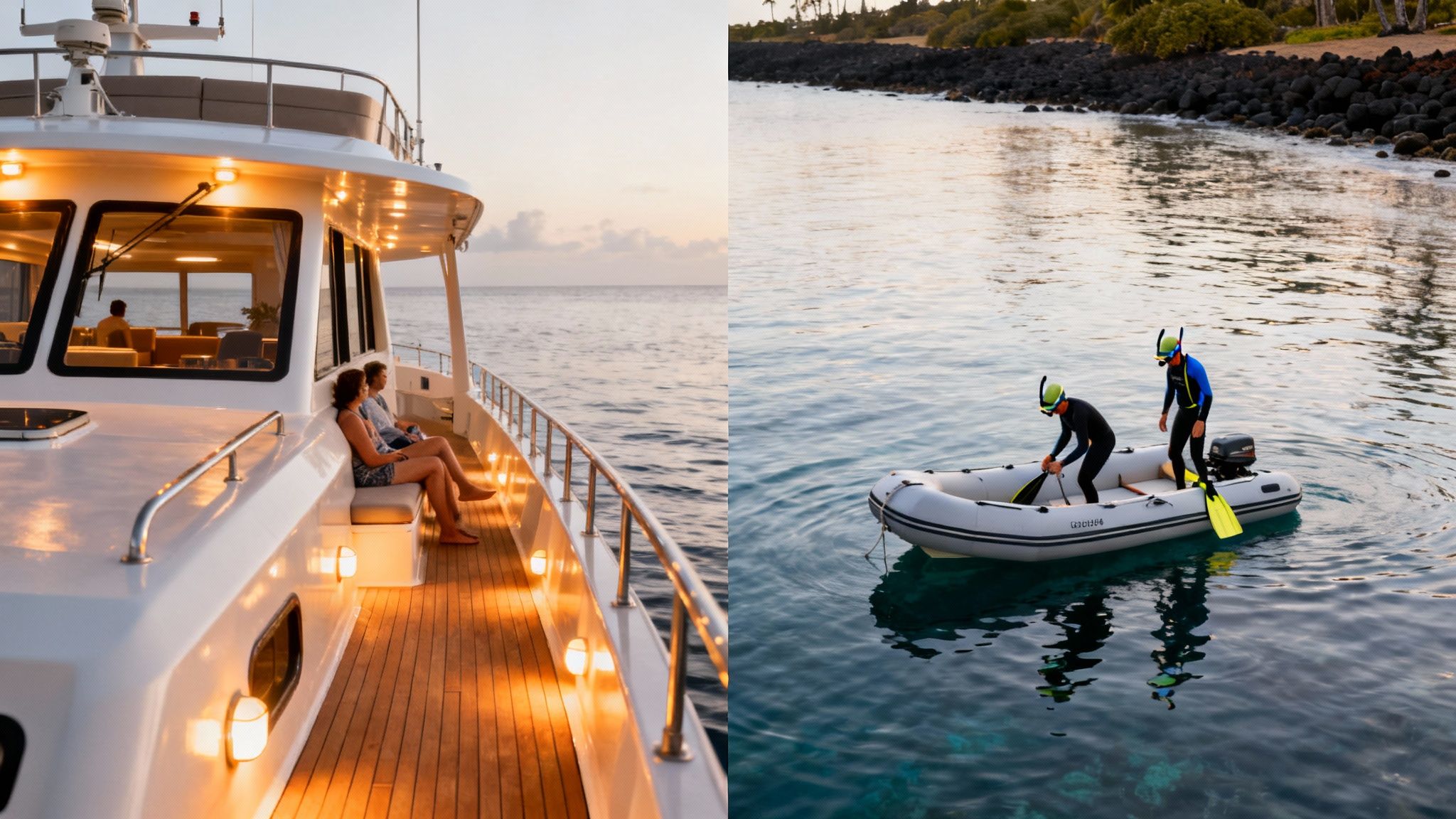
Choosing the perfect manta ray snorkel Big Island tour can feel like a huge decision, but it really just boils down to your personal style. Are you picturing a relaxing sunset cruise on a spacious boat with all the amenities? Or does the thought of a fast, bumpy ride on a small raft sound more like your kind of adventure?
There's a world of difference between the two experiences. Larger vessels are your best bet for a smooth ride, often equipped with restrooms and plenty of room to stretch out. This makes them a fantastic choice for families with kids or anyone a bit nervous about seasickness. The smaller rafts, on the other hand, offer a more intimate, high-octane trip that gets you right down to the water level.
Honestly, there’s no wrong choice—just what’s right for you.
Big Boat Comfort vs. Small Raft Adventure
So, how do you decide? Think about what your group needs to be comfortable and have a good time. A bigger boat might come with snacks and drinks, while a smaller raft trip is all about the thrill and a tight-knit group feel. Both will get you to the same incredible underwater ballet.
Large Boats: Think stability and comfort. These are ideal if you want onboard amenities like a bathroom, have a big family, or are a photographer with lots of gear. It’s a more relaxed journey all around.
Small Rafts (Zodiacs): This is for the adrenaline junkies. Expect a faster, bumpier ride that’s a blast. The smaller group size often feels more personal, and you can get in and out of the water a bit quicker.
If you're celebrating something special or just want the ultimate experience, a private charter is well worth the investment. You get to set the schedule, ask the guides all your questions, and share the magic with only your friends and family. To get a bigger picture of your vacation, it's always a good idea to read more Big Island travel guides for other local tips and tricks.
What to Look for in a Tour Company
This is the big one. The quality of your tour operator will make or break your entire experience. A top-notch company prioritizes safety above all else, followed closely by sustainability and a genuine passion for educating their guests. Their guides aren't just there to watch over you; they’re marine life experts who can share incredible facts about manta ray behavior and the local ecosystem.
When you’re researching operators, keep an eye out for these key things:
A stellar safety record and guides who are lifeguard-certified.
A clear commitment to "manta-safe" practices that respect the animals' habitat.
Plenty of positive, recent reviews that specifically mention the crew’s knowledge and professionalism.
A great example is Kona Snorkel Trips. They have a fantastic reputation for their high-quality tours, whether you’re looking for a Manta Ray night snorkel tour or a Captain Cook snorkeling tour. They're a solid choice for exploring Kona's underwater world.
For a complete rundown of all the best options, be sure to check out our detailed guide on the top 12 manta ray snorkel Kona tours.
Getting Ready for Your Manta Ray Night Snorkel
A little bit of prep work is the secret ingredient that turns a good manta ray snorkel into a truly incredible, once-in-a-lifetime experience. Knowing what to pack, what to wear, and when to book your spot means you can just relax and enjoy the magic without any last-minute scrambling.
While your tour operator will handle the big stuff—wetsuits, snorkel gear, flotation devices—a few personal touches will make all the difference in your comfort.
What to Pack for Your Manta Adventure
The name of the game is staying comfortable both in the water and on the boat. The easiest way to do this is to show up wearing your swimsuit under your regular clothes. Simple.
After the snorkel, the boat ride back to the harbor can feel surprisingly chilly once the sun is down and the ocean breeze picks up. Having a warm, dry layer like a sweatshirt or a light jacket is an absolute game-changer. Trust me on this one.
Here’s a quick rundown of what you’ll want to have in your bag:
A Towel: Seems obvious, but you'd be surprised how many people forget! You'll want it as soon as you get out of the water.
Dry Clothes: Something cozy to change into for the ride back to your hotel or condo.
Underwater Camera: If you own a GoPro or a similar waterproof camera, now is its time to shine.
Seasickness Medication: If you even think you might get motion sickness, take something before you leave. The ocean can get a little bumpy at night, and it's better to be safe than sorry.
Most tours provide some light snacks and drinks, but it never hurts to double-check when you book. For a deeper dive into getting prepared, take a look at these 12 pro tips for an epic manta ray snorkel in Kona.
Nailing the Timing: When to Book and Go
I can't stress this enough: book your tour in advance. This is especially true if you’re traveling during peak seasons like winter break or the middle of summer. These trips are wildly popular and the best boats fill up fast.
Every year, about 80,000 adventure seekers come to the Big Island specifically for this experience. It's become a huge part of the local culture and economy, with fantastic local companies like Manta Ray Night Snorkel Hawaii running trips all year long to keep up with demand. If you're curious, you can discover more insights about Hawaii's manta rays and why they are so special to the islands.
Here's a pro tip from years of experience: try to schedule your manta tour for one of the first couple of nights of your vacation. That way, if bad weather forces a rare cancellation, you have plenty of time to reschedule without missing out.
As for the best time of year? There isn't one! The Kona mantas are residents, which means they're here feeding every single night, year-round. The real choice is between a sunset tour and a later one. The sunset trip gives you a spectacular light show as you motor out, while the later tour offers a breathtaking, star-filled sky for the ride home. You can't go wrong either way.
So, What's the Manta Encounter Really Like?
The real buzz starts the second you step on board. As you cruise out from the harbor, the crew will walk you through a detailed safety briefing. This isn’t just a boring list of rules; it’s a genuinely fascinating intro to the world of manta rays—how they behave, why they're so important here, and how you’ll interact with them safely.
They’ll break down exactly how the whole operation works, designed to bring the mantas right to you while keeping everyone (and the mantas) safe. Your guides aren't just lifeguard-certified; they're total ocean nerds who love talking about marine life. This is your chance to ask anything you're curious about! A top-tier manta ray night snorkel Big Island tour is as much about learning as it is about the spectacle itself.
The Underwater "Campfire"
Once you anchor at the snorkel spot, the crew springs into action to set up the main event: the underwater light show. They’ll deploy a big, floating light board, which is basically a custom-built raft with powerful blue or white lights pointing straight down into the deep.
This light board is the secret sauce. The intense beams cut through the dark ocean, attracting huge clouds of plankton—the mantas' favorite meal. For the rays, this bright light is a dinner bell, signaling a free, all-you-can-eat buffet that draws them in from all over the bay.
Getting Your Front-Row Seat
When the crew gives the signal, you'll slide into the water and paddle over to the light board. You won't be swimming around on your own. Instead, you'll grab onto handles along the edge of the raft and float on the surface, looking down through your mask. It's surprisingly comfortable and gives you a perfectly stable, unobstructed view of the action.
Your only job is to be a quiet, respectful observer. Stay on the surface, keep your fins up, and just float. The less you move, the more you'll see.
This setup puts you right in the middle of the feeding frenzy without disturbing the mantas. You'll watch them glide, swoop, and do graceful barrel rolls just inches below you. They get incredibly close, but it’s crucial that you don’t reach out.
The Golden Rule: Don't Touch the Mantas
You'll hear this repeated over and over, and for a very good reason. Manta rays are covered in a delicate, slimy coating that acts as their immune system, protecting them from nasty bacteria and infections.
Even a simple touch from a human hand can strip off this protective layer, making them vulnerable to disease. By just floating and watching, you're doing your part to protect these amazing animals and ensure they stay healthy for years to come.
For an adventure that is both mind-blowing and ethically sound, we recommend booking with a reputable company like Kona Snorkel Trips, who run fantastic manta ray tours as well as trips to Captain Cook.
Combining Your Manta Snorkel With Other Big Island Adventures
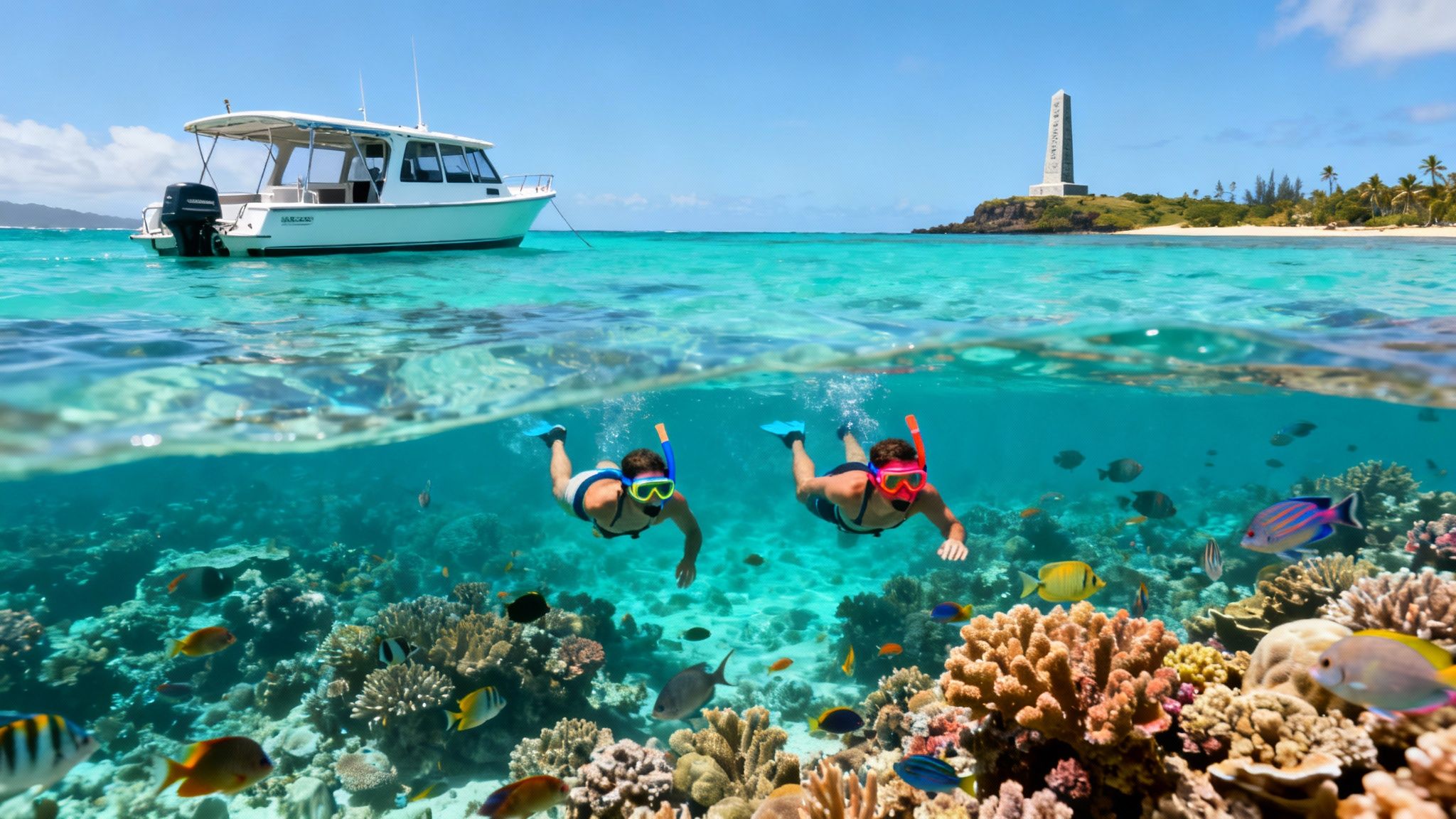
After watching the manta rays' incredible nighttime ballet, you might be asking yourself, "What could possibly top that?" Well, why not make it the grand finale to a perfect ocean-lover's day? Pairing your night snorkel with a stunning daytime adventure is the best way to soak up everything the Big Island’s waters have to offer.
By booking two different trips, you create a fantastic "day and night" experience of Kona's underwater world. It’s a great way to get the most bang for your buck and turn one amazing activity into a full day of unforgettable marine encounters.
The Perfect Pairing: Kealakekua Bay
The ideal daytime partner for a manta ray snorkel Big Island tour is, without a doubt, a trip to Kealakekua Bay. This is where you'll find the famous Captain Cook Monument. Your night snorkel is a focused, almost surreal encounter in the dark, but a day trip to Kealakekua is a full-on explosion of color and life.
Picture a day like this:
Morning/Afternoon: You're snorkeling in the crystal-clear, protected waters of Kealakekua Bay. Below you are some of Hawaii's most pristine coral reefs, absolutely swarming with hundreds of vibrant tropical fish.
Evening: After a little downtime, you head back out for your manta ray tour, ready to witness the gentle giants doing their graceful somersaults under the lights.
This combo gives you the best of both worlds—the busy, sunlit reef ecosystems by day and the unique, plankton-fueled feeding frenzy of the mantas after dark.
This "surf and turf" approach to snorkeling gives you a complete picture of Kona's marine biodiversity. You get the energetic, colorful reef life during the day and the majestic, mysterious giants at night, making for a truly comprehensive ocean adventure.
Why Captain Cook Snorkeling is a Must-Do
Kealakekua Bay isn't just another pretty spot; it's a designated Marine Life Conservation District. That special protection means the coral is healthier and the fish are way more abundant here than in many other areas. It's also steeped in history as the place where Captain James Cook first landed on the island.
The best way to experience it is by booking a dedicated Captain Cook snorkeling tour. A great operator like Kona Snorkel Trips can often set you up with both your daytime Captain Cook trip and your evening manta ray night snorkel. They sometimes offer package deals that make booking simple and a bit more affordable. Pairing these two world-class excursions is the ultimate way to build a full day of Big Island marine exploration you'll never forget.
Got Questions? We’ve Got Answers.
Planning your manta ray snorkel is exciting, but you probably have a few questions. That's totally normal. Let's walk through some of the most common things people ask so you can book your tour with confidence and know exactly what to expect.
Is This Really Safe for Beginners or Kids?
Absolutely. This experience is designed from the ground up to be safe and accessible, even if you’ve never put on a snorkel mask in your life.
You won't actually be swimming around. Instead, you'll hold onto a custom-built flotation board with powerful lights that shine down into the water, attracting the plankton that mantas love. You just float and watch the show.
Every good tour company provides high-quality wetsuits (great for warmth and extra buoyancy) and has lifeguard-certified guides in the water with you the entire time. Most tours welcome kids who are comfortable in the water, usually ages 5 and up, but it's always smart to double-check the specific age policy with the operator you choose.
What Are the Odds I’ll Actually See Manta Rays?
The chances are incredibly high! The Kona coast is famous for being one of the most reliable places on the planet to see manta rays. This isn't a random encounter; a large population of mantas lives here year-round and comes to the same "dinner table" every night.
Top-tier operators like Manta Ray Night Snorkel Hawaii regularly report a success rate of 90% or higher. While wildlife is never a 100% guarantee, your odds on the Big Island are about as good as they get. For a deeper dive, check out our comprehensive manta ray FAQ section.
The consistency is what makes this so special. Unlike watching for migratory whales, Kona's mantas are local residents. They show up for dinner almost every single night, which means any time of year is a great time to go.
What Happens if the Weather is Bad?
Your safety is always the captain's top priority. They are constantly watching the ocean conditions, especially wind and swell. If the conditions are deemed unsafe, the tour will be canceled. No reputable company will risk it.
If that happens, you'll be given two options: reschedule for another night or get a full refund. This is exactly why I always tell people to book their manta tour for one of their first nights on the island. It gives you a built-in buffer to rebook if a rare cancellation occurs.
Can I Touch the Manta Rays?
No, and this is a really important one. Please don't. Manta rays are covered in a protective mucus layer—think of it as their immune system. Touching them can rub off this delicate coating, leaving them vulnerable to nasty infections.
The whole point of the encounter is to be a respectful, passive observer. Your guides will brief you on keeping your hands to yourself and just enjoying the incredible spectacle as these gentle giants glide and barrel roll sometimes just inches below you. Following this simple rule helps protect these amazing animals for years to come.
Comments