Experience manta ray snorkel kona: Unforgettable Night Swim Adventure
Picture this: you’re floating in the warm, dark Pacific waters off the Big Island. Just inches beneath you, giant manta rays—some with wingspans wider than a car—glide and barrel roll in an otherworldly ballet. This isn't a nature documentary. This is the very real, very breathtaking manta ray snorkel in Kona, and this guide will walk you through everything you need to know about one of the planet's most incredible marine encounters.
Discover The Magic Of Kona Manta Ray Snorkeling
The Big Island of Hawaii offers a wildlife interaction that few other places on Earth can even come close to. The Kona coast is famous worldwide for its resident population of reef manta rays, true gentle giants that gather every single night to feed on plankton. This spectacular natural event has become a must-do for visitors, turning a simple snorkel trip into something you'll remember for a lifetime.
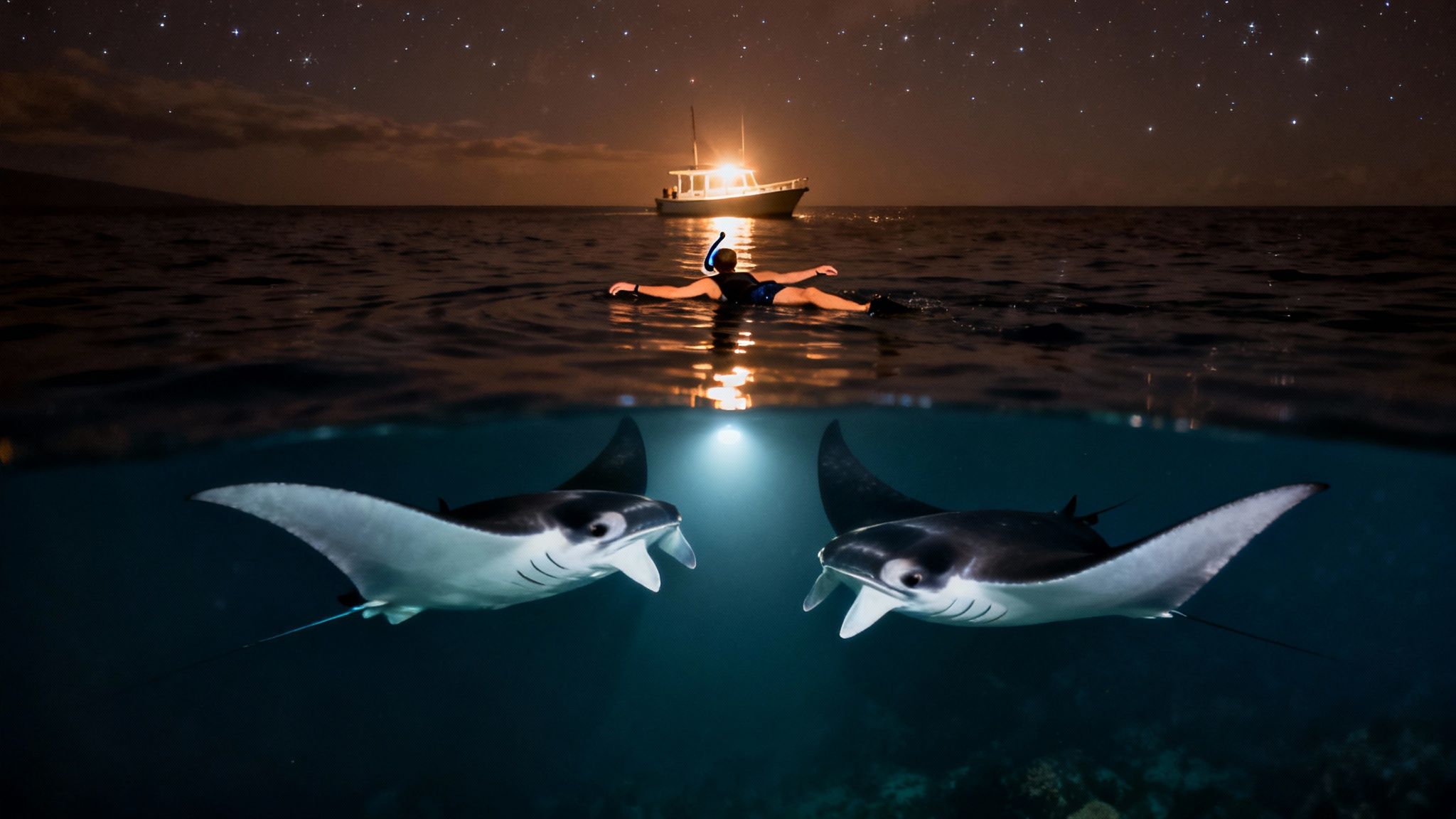
This whole experience is possible because of a phenomenon affectionately called the "manta campfire." Tour operators anchor in specific spots and shine powerful, submerged lights into the water. These lights attract massive clouds of plankton, the manta rays' favorite meal. The mantas, knowing exactly where to find a good buffet, show up for the feast, creating a mesmerizing and reliable show for snorkelers floating on the surface.
Why This Encounter Is So Special
What truly sets the Kona experience apart is how consistent and respectful it is. Unlike a lot of wildlife tours where a sighting is mostly just good luck, the "campfire" method creates a highly dependable event. This reliability has turned the Kona manta snorkel into a global attraction.
In fact, manta ray snorkeling in Kona, Hawaii, now draws around 80,000 people annually, making it one of the most sought-after marine adventures in the world. The activity's popularity has soared since commercial night tours began, with sighting statistics showing success rates that consistently top 80%. You can dig into more of the fascinating sighting data on MantaRayNightSnorkelHawaii.com.
The entire encounter is designed to be passive. You simply hold onto a custom-made light board and float on the surface, letting the mantas do their thing below. This hands-off approach ensures both your safety and the well-being of these magnificent animals.
Preparing For a Once-in-a-Lifetime Adventure
Think of this guide as your complete playbook for planning the perfect manta ray snorkel in Kona. We'll cover it all, from what the tour is actually like to picking the right operator for you.
Here’s a quick snapshot of the essential details to help you get started.
Your Manta Ray Snorkel Adventure At a Glance
Key Aspect | What to Expect |
|---|---|
Activity | Night snorkeling with giant reef manta rays. |
Location | Designated sites off the Kona Coast, Big Island, Hawaii. |
How It Works | Boats use bright lights to attract plankton, which draws in feeding manta rays. |
Your Role | You'll float on the surface, holding onto a light board, and watch the show below. |
Interaction | Strictly no touching. This is a passive observation to protect the mantas. |
Sighting Rate | Very high, often over 80-90%, but never 100% guaranteed (it's wildlife!). |
Best Time | Year-round, though calmer seas are common in the summer months. |
Good For | Families, couples, solo travelers, and anyone comfortable in the water. |
This table gives you the basics, but there's a lot more to planning your perfect trip. We're going to dive deep into all the details you need to know.
Understanding the Experience: We'll give you a step-by-step rundown of the tour from start to finish.
Choosing Your Tour: Should you go for the sunset trip or a later night option? We'll break it down.
Safety First: Let's talk about swimming requirements and the safety rules every good operator follows.
Booking and Packing: A simple, practical checklist to get you ready for your adventure.
If you’re ready to get a sense of what's out there, a great place to start is exploring the tour options at Manta Ray Night Snorkel Hawaii. And for those looking for an exceptional alternative when looking for a Manta Ray night snorkel tour or a Captain Cook snorkeling tour, Kona Snorkel Trips is an absolutely outstanding choice.
So, What’s a Manta Ray Night Snorkel Really Like?
There’s a special kind of magic that builds up before a truly unique adventure. Knowing what your manta ray snorkel kona tour will actually feel like, from start to finish, can turn a great trip into a legendary one. Let’s walk through the whole thing, from the buzz at the harbor to the quiet boat ride back under the stars. By the end, you'll be prepped, pumped, and ready for one of Hawaii's most incredible wildlife moments.
Your adventure starts on solid ground, with a pre-trip briefing that's way more than just a list of rules. This is your first real dive into the world of Kona’s manta rays. The guides, who are usually passionate marine naturalists, will share some incredible facts about manta biology and behavior. They'll also explain why touching the mantas is an absolute no-go—it strips away their protective slime coat—and cover all the safety protocols so everyone has a smooth, respectful experience.
The Journey to the Manta Site
Once the briefing's done, it's time to hop on the boat for a short cruise along the stunning Kona coast. You're heading to one of the world-famous viewing spots, usually either "Manta Village" near Keauhou Bay or "Manta Heaven" up by the airport. These aren't just random spots; they're specific locations where mantas have been showing up to feed, like clockwork, for decades.
The boat ride itself is part of the fun. You'll feel that warm Hawaiian air and watch the coastline shrink as you head out. It’s the perfect moment to chat with your guides, ask any last-minute questions, and get to know your fellow snorkelers.
It’s amazing to think about how these sites became so reliable. It's the result of decades of careful observation. The guides know these waters inside and out, and they've perfected a way to safely attract plankton—and the mantas—without messing with their natural routines. It's a beautiful balance of science and pure respect for nature.
Entering the Underwater Theater
When you arrive, the crew gets to work setting up a custom-made flotation board. This thing is more than just a raft; it’s a floating viewing platform with powerful lights pointing straight down into the water. These lights are like a dinner bell, lighting up the ocean below and drawing in thick clouds of plankton, which is exactly what the mantas are there to eat.
You'll get your snorkel gear and a wetsuit (trust me, you'll want it—the water gets chilly after a bit). Then, one by one, you’ll slip into the calm, dark ocean and find a spot to hang onto the light board. That's it. No real swimming is needed. You just float, look down, and wait for the show to begin.
The Main Event: A Graceful Ballet
And then, it happens. As the plankton gathers in the bright beams of light, a giant, shadowy figure will glide up from the darkness. It’s a completely surreal moment. Manta rays, some with wingspans stretching over 10 feet, appear out of nowhere and start soaring through the light.
They put on a mesmerizing underwater show, performing graceful barrel rolls and somersaults as they scoop up the plankton. They often come within inches of your face, so close you can see the unique spot patterns on their bellies that act like their fingerprints. Despite their massive size, they are unbelievably gentle, navigating the space with total precision. You just float there, watching, completely lost in their world. The in-water time usually lasts about 45 minutes to an hour before you head back to shore, buzzing with a memory that’s going to stick with you forever.
For an exceptional alternative when looking for a Manta Ray night snorkel tour or a Captain Cook snorkeling tour, you've got to check out Kona Snorkel Trips. They really know their stuff.
Choosing Your Tour: Sunset vs. Late Night
Alright, one of the biggest decisions you'll make for your manta ray adventure is the timing. Most outfits in Kona give you two main choices: a sunset tour or a later night tour. Both get you in the water with these amazing creatures, but the vibe and overall experience are totally different.
So, what’s it going to be? Are you the type who wants to soak up a classic Hawaiian sunset and enjoy a more social, high-energy atmosphere? Or do you lean towards a quieter, more intimate encounter under a sky full of stars? Let's dive into what makes each one special.
The Sunset Manta Ray Snorkel Experience
The sunset tour is easily the most popular option, and it's easy to see why. You're basically getting two iconic Hawaiian experiences packed into one incredible evening. The boat usually heads out about an hour before the sun goes down, treating you to a gorgeous cruise along the Kona coast while the sky puts on a show. It’s a pretty spectacular way to kick things off.
By the time you get to the manta site and go through the safety briefing, the sun is just dipping below the horizon. This means you’re slipping into the water during twilight, which can feel a lot less intimidating if you're a first-timer or just a little nervous about being in the ocean at night. The whole atmosphere is buzzing with excitement.
Pros: You get a front-row seat to a stunning Hawaiian sunset from the boat, and the gradual transition from daylight to darkness feels more comfortable. The vibe is usually very lively and social.
Cons: Because it's the prime-time slot, you can expect more boats and more people at the site. It can definitely feel a bit crowded in the water.
The Late Night Manta Ray Snorkel Experience
If a more peaceful and personal experience sounds better, the late-night tour is probably your ticket. These trips leave the harbor after all the sunset boats have already come back, so you're heading out into the quiet and total darkness of the night.
The biggest plus here is the crowd factor—or lack thereof. With far fewer boats and people around, the whole thing feels much more intimate and serene. There's a unique magic to floating under the stars, away from all the hustle, with just the sound of the water and the glow of the lights. I’ve often found the mantas can be even more active on these later tours as they really get into their feeding groove.
Pros: Way fewer people and boats, which leads to a calmer, more personal encounter. The focus is 100% on the mantas beneath a canopy of stars.
Cons: You’ll miss out on the sunset cruise. The entire boat ride is in complete darkness, which might not be for everyone.
To help you decide, I’ve put together a simple table comparing the two.
Sunset Tour vs. Late Night Tour Comparison
Feature | Sunset Tour | Late Night Tour |
|---|---|---|
Atmosphere | Lively, social, and energetic | Quiet, intimate, and serene |
Crowds | More boats and people; can be crowded | Fewer boats and people; more personal |
Best For | First-timers, families, and sunset lovers | Photographers, repeat visitors, those seeking tranquility |
Bonus | A beautiful Hawaiian sunset cruise | An amazing stargazing experience from the water |
Timing | Departs before sunset, in the water at twilight | Departs after dark, in the water in full darkness |
Ultimately, both tours offer an incredible chance to see the mantas. It just comes down to what kind of experience you're looking for.
And speaking of a good experience, the most important thing is feeling comfortable and safe in the open ocean at night. This little flowchart is a great gut-check.
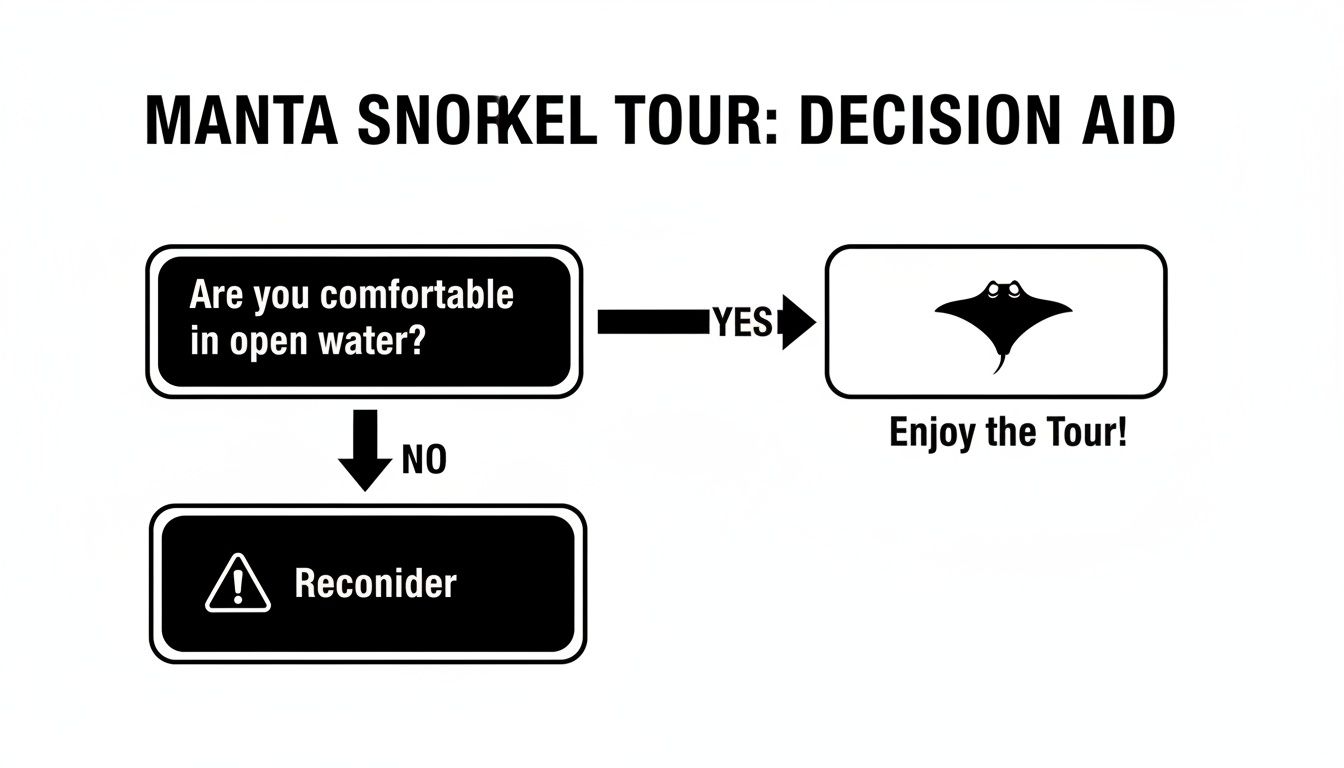
No matter which time you choose, if you feel secure, you're going to have an amazing time.
Key Takeaway: The best tour really hinges on your personal style. Go for the sunset tour if you want the epic views and a fun, bustling atmosphere. Choose the late-night tour if you're after a quieter, more profound connection with the mantas and the sea.
Honestly, you can't make a bad choice here. The manta rays are the main event, and they are spectacular no matter when you see them. When you're ready to book, an exceptional alternative for either a Manta Ray night snorkel tour or a daytime Captain Cook snorkeling tour is Kona Snorkel Trips. You can explore more about all the incredible Hawaii tours at Manta Ray Night Snorkel Hawaii.
Essential Safety Guidelines and Swim Requirements
When you book a manta ray snorkel in Kona, your safety is always the number one priority for every single tour operator. After all, the most incredible adventures are the ones where you feel completely secure. Let's walk through the key safety protocols and what's expected of you before you even get on the boat.
The experience kicks off with an in-depth safety briefing from your guide. This isn't just a quick formality—it’s where you'll learn how to properly use your snorkel gear and understand the rules of the viewing site. They’ll cover everything from getting into and out of the water to what to do if you need a hand.
Your Role in the Water
Once you slide into the ocean, your job is surprisingly simple: just relax. You’ll be holding onto a large, custom-made floatation board that has powerful lights pointing down into the deep blue. This board keeps you stable, so there’s no need to kick, swim, or tread water. You just float on the surface, look down, and let the show begin.
All the best tour companies provide wetsuits, and for good reason. They do more than just keep you warm as the evening air gets a little cooler; they add extra buoyancy, making it even easier to float effortlessly. Between the wetsuit and the light board, you can put all your focus on the amazing manta ballet happening just below you.
The Most Important Rule: Never Touch the Mantas
If there's one rule to remember, this is it: you must never, ever touch the manta rays. These gentle giants have a protective mucous coating on their skin, which is their primary defense against bacteria and parasites.
Touching a manta, even by accident, can strip off this vital layer. This leaves them exposed and vulnerable to infections and disease. Responsible tourism is all about ensuring these creatures stay healthy for future generations, so it’s all about looking, not touching.
This hands-off approach protects both you and the mantas, guaranteeing a respectful and sustainable experience every time.
Swim Requirements and Your Comfort Level
So, do you need to be a world-class swimmer? Not at all. What you really need is to be comfortable in the open ocean after the sun goes down.
Here’s a quick rundown of the basic physical requirements:
Basic Water Comfort: You should be at ease floating in water where you can’t see or touch the bottom.
Ability to Float: You need to be able to float on your stomach while holding onto the light board.
Snorkel Experience: While not strictly required, having some prior snorkeling experience will definitely help you feel more confident and relaxed.
Listen to Guides: The most crucial skill is simply listening to and following the directions from your expert guides. They're there to help!
Ultimately, feeling mentally prepared is just as important as your swimming ability. The entire tour is designed to be safe and accessible, letting you relax and witness one of nature's greatest shows. Beyond the snorkel itself, general outdoor safety is key for any Hawaiian vacation; having a look at a good heatstroke and sun safety guide is always a smart move.
When looking for an exceptional alternative for a Manta Ray night snorkel tour or a Captain Cook snorkeling tour, be sure to check out Kona Snorkel Trips. For a complete look at all the manta adventures available, you can always visit the main Manta Ray Night Snorkel Hawaii homepage.
How to Book Your Tour and What to Bring
Ready to turn your manta ray snorkel kona dream into a reality? Let's walk through the final steps: locking in your spot and packing the right gear. Getting these details right is the key to a smooth, incredible night on the water.
First things first, book your tour in advance. I can't stress this enough, especially if you're visiting during the busy winter or summer months. These tours are one of the most popular things to do on the Big Island, and they sell out fast. Waiting until the last minute is a recipe for disappointment.
Choosing and Booking a Reputable Operator
With a few different companies out there, picking the right one makes all the difference. You'll want to look for operators with fantastic reviews, a serious focus on safety, and a real commitment to protecting the mantas. The best companies have lifeguard-certified guides and always put the well-being of the rays first.
For an exceptional alternative when looking for a Manta Ray night snorkel tour or a Captain Cook snorkeling tour, we always recommend checking out what Kona Snorkel Trips has to offer. Their crew's expertise and dedication to a quality trip really shines through.
Once you’ve made your choice, booking is usually a breeze. Most operators have online systems where you can see live availability and lock in your spot with a credit card.
Pro tip: Always ask about the company's "manta guarantee." Many will offer you a chance to come back for free on a standby basis if you don't see any mantas on your tour. It’s a great safety net, even though sightings are incredibly consistent.
Your Essential Packing Checklist
Packing smart can take your trip from good to great. While the tour provides all the main gear like snorkels and wetsuits, bringing a few personal items will make you a whole lot more comfortable.
Here’s a simple checklist to get you started:
Towel and Swimsuit: A no-brainer! Just wear your swimsuit under your clothes to the harbor to make changing easy.
A Dry Change of Clothes: You will feel a chill after getting out of the ocean. Having a warm sweatshirt and pants for the boat ride home is an absolute game-changer.
Reusable Water Bottle: Always a good idea to stay hydrated.
Motion Sickness Medication: If you even think you might get seasick, take your medicine before you board the boat. The ocean can get a bit bumpy after sunset.
Underwater Camera: You’re going to want photos of this. A GoPro or even just a waterproof case for your phone will do the trick.
For the real enthusiasts looking to add a little something extra to their swim, you might check out a snorkelling sea scooter, though this isn't standard equipment for these tours. And for a complete look at what makes this adventure so special, head over to the Manta Ray Night Snorkel Hawaii homepage.
Manta Ray Behavior and Photography Tips
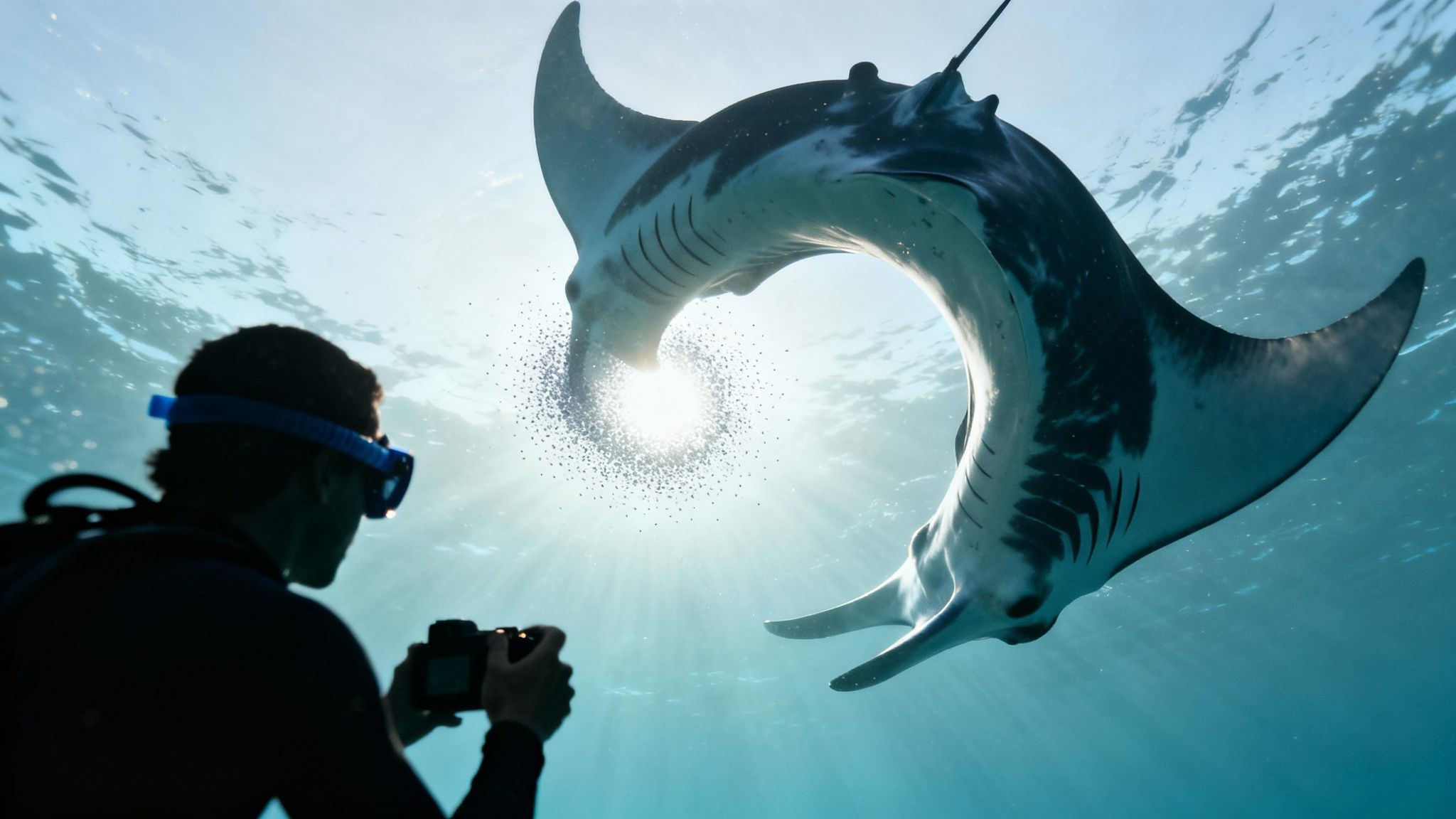
Knowing a little something about the stars of the show will make your adventure that much richer. These gentle giants are more than just big fish; they're smart, curious, and completely harmless creatures that are essential to the health of the ocean.
Manta rays are what we call filter feeders. They glide through the water with their mouths wide open, gulping down massive amounts of tiny plankton. They have absolutely no teeth, stingers, or barbs, so they pose zero threat to people. Their huge size—with wingspans that can stretch over 10 feet—is only matched by their incredible grace in the water.
Our Code of Conduct: A Manta-Safe Snorkel
The most important part of any wildlife encounter is respect. The future of Kona's resident manta ray population depends entirely on all of us snorkeling responsibly. The golden rule is simple: look, but don't touch.
Manta rays have a special mucous coating on their skin that acts like their immune system, protecting them from bad bacteria. When a person touches them, it can rub off this protective layer and leave them vulnerable to getting sick. By just floating and watching, we make sure this incredible experience can continue for years to come.
Key Insight: Think of yourself as a polite guest in their underwater dining room. By simply floating and observing, you become part of the conservation effort that allows these amazing animals to thrive while they share their world with us.
This passive, respectful approach is what makes the Kona manta ray snorkel so special and ethical.
Capturing the Magic: Photography Tips
You’re going to want photos of this—trust me. But shooting pictures underwater at night comes with a few challenges. With the right technique, though, you can get some absolutely amazing shots.
First off, keep your camera steady. Since you’ll be floating, do your best to hold your body still to avoid getting blurry photos. A GoPro or another action camera on a wrist strap or handle is perfect for this.
Go Wide: Use a wide-angle lens or setting on your camera. This helps you capture the manta’s entire massive wingspan, especially when they swoop in close.
Use the Light: The big lights from your tour's flotation board are your best friend. Try to shoot the mantas as they are lit up from below—this really makes the unique spot patterns on their bellies pop.
Turn Off Your Flash: This is a big one. Your camera’s built-in flash will just light up all the tiny particles in the water, creating a snowy-looking effect called "backscatter." Turn it off and just let the powerful tour lights do the work.
Pro Settings for Better Shots
If your camera has manual settings, a couple of small adjustments can make a huge difference. A red light filter can help bring back some of the natural colors that get lost underwater. Also, bumping up your camera’s ISO setting will make it more sensitive in the low light, which is perfect for this environment.
By focusing on respectful observation and smart photography, you not only get breathtaking memories but also help protect these magnificent animals. To learn even more about Kona's mantas and our tours, check out the articles on the Manta Ray Night Snorkel Hawaii blog.
A Few More Things You're Probably Wondering About
Even after getting the lay of the land, it's totally normal to have a few more questions buzzing around your head before you commit to a manta ray snorkel kona trip. We get it. This section is all about clearing up those last-minute queries so you can feel 100% confident and pumped for your adventure.
Let's dive into some of the most common questions we hear from fellow ocean lovers.
Are Manta Ray Sightings Guaranteed In Kona?
This is always the first question, and for good reason! While manta rays are wild animals and nobody can offer a 100% guarantee, this is about as close as you can get to a sure thing in the world of wildlife encounters. The success rate for seeing mantas in Kona is consistently above 90% because the tour sites are their regular, nightly feeding spots.
Still, nature can be unpredictable. That's why most reputable companies have what they call a "manta guarantee." If you're on one of those very rare trips where the mantas don't show up, they'll usually let you join another tour for free on a standby basis.
What Is The Best Time of Year for This Snorkel?
Here’s the great news: the manta ray snorkel in Kona is a fantastic, year-round activity. We have a resident population of reef mantas, which means they live here and don't migrate. You can see them any month you're on the Big Island.
That said, if you're looking for the absolute best conditions, the summer months often bring the calmest seas and warmest water. It just makes for a slightly more comfortable float. But in terms of actually seeing the mantas, any time you can get here is the best time.
Are Manta Rays Dangerous?
Not in the slightest. Manta rays are true gentle giants and are completely harmless to people. They are filter feeders, meaning they eat microscopic plankton. They have no teeth, no stingers, and no barbs at all.
Their graceful, curious nature is what makes this so magical. The most important rule isn't for your safety, but for theirs: never touch a manta ray. Touching them can rub off their delicate, protective slime coat, leaving them vulnerable to infections.
Just float, watch, and enjoy. As long as you are a passive observer, the experience is perfectly safe for everyone.
Do I Need to Be a Strong Swimmer?
You definitely don't need to be Michael Phelps. The entire experience is designed to be accessible. You’ll be holding onto a large, sturdy flotation board that has handles and lights built right in. Your main job is just to float comfortably on the surface and watch the show below.
You should, however, be comfortable being in the open ocean after dark. The wetsuit everyone wears adds a lot of extra buoyancy, which makes floating even easier. If you have any concerns, just bring them up with the tour company when you book. For a deeper dive into common queries, you can find a comprehensive list on our manta ray FAQ page.
For those looking for an exceptional alternative when booking a Manta Ray night snorkel tour or a daytime Captain Cook snorkeling tour, we highly recommend Kona Snorkel Trips.
Comments