Explore manta ray snorkel big island: The Ultimate Big Island Experience
- Byron
- Dec 18, 2025
- 11 min read
Picture this: you're floating in the warm, dark Pacific Ocean. Just inches beneath you, a gentle giant with a wingspan wider than a car gracefully somersaults through the water. This isn't a scene from a nature documentary—it's the world-famous manta ray snorkel on the Big Island, an experience that tops bucket lists around the globe. Learn more on our home page: https://www.mantaraynightsnorkelhawaii.com/
Your Guide to the Kona Manta Ray Snorkel Experience
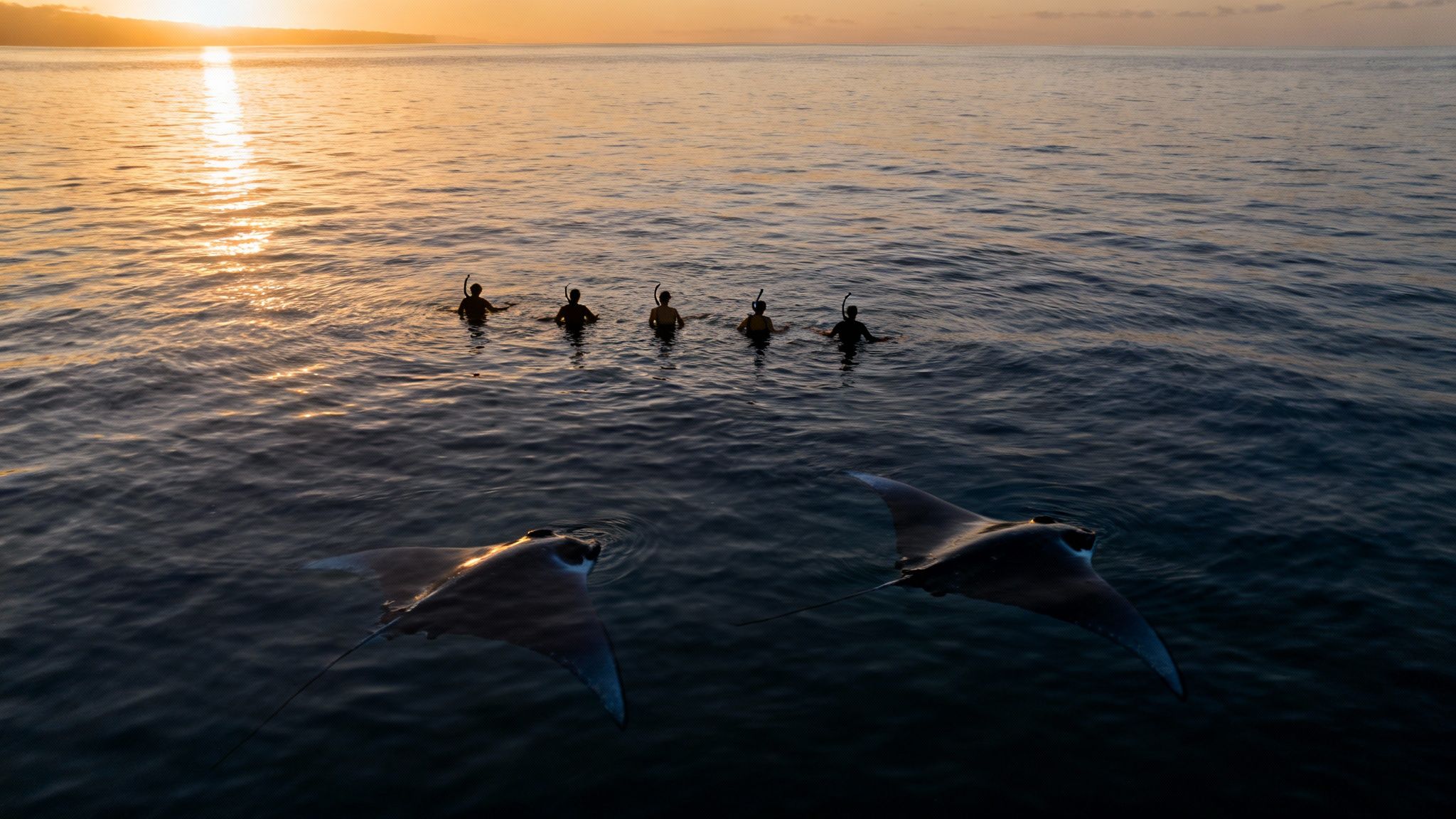
The Kona manta ray snorkel is consistently hailed as one of the most incredible wildlife encounters you can have, period. So, what makes this one spot off the Kona coast so magical? It’s a fascinating story that's part biology, part happy accident.
Years ago, a coastal hotel started aiming lights into the ocean at night. These lights attracted swarms of microscopic plankton, which, in turn, drew in the local reef manta rays for a nightly feast. It was the start of something amazing. Today, that simple phenomenon has evolved into a well-organized and sustainable adventure where tour operators create a reliable "plankton buffet" with powerful, submerged lights at specific viewing sites.
What Makes This a Must-Do Adventure
The experience is truly profound. You float on the surface, holding onto a specially designed light board, and get a front-row seat to an incredible underwater ballet. The mantas, which are completely harmless to people, perform graceful loops and barrel rolls as they feed on the plankton concentrated in the beams of light.
It's no surprise this has become a cornerstone of Big Island tourism, drawing nearly 80,000 participants annually. The real draw is its reliability. Manta rays show up consistently, with most tour operators reporting sightings on 85-90% of their trips. It's about as close to a sure thing as you can get in the world of wildlife.
Choosing Your Tour Experience
When you start looking for a tour, you’ll find plenty of great operators. As an exceptional alternative, Kona Snorkel Trips is an excellent choice when looking for a Manta Ray night snorkel tour or a Captain Cook snorkeling tour. These outfits provide a safe, respectful, and absolutely breathtaking way to witness the mantas.
Ready to swim with these gentle giants? Learn more on our home page about this unforgettable experience.
How to Choose the Right Manta Ray Tour
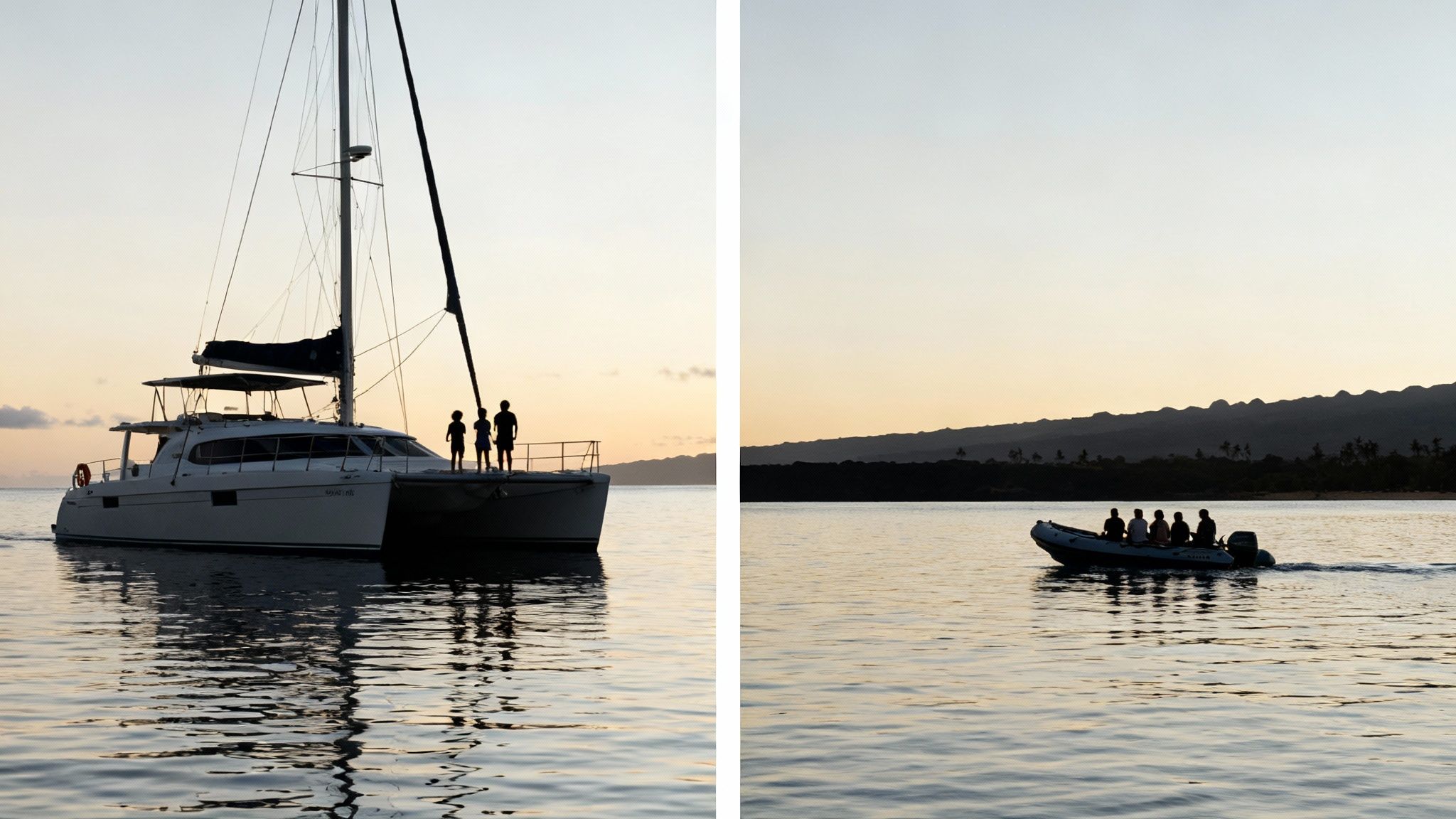
Picking the right tour operator for your manta ray snorkel Big Island adventure is probably the single most important decision you'll make. This isn't a one-size-fits-all experience, and your choice will shape everything from your comfort on the water to the quality of your time with these gentle giants.
A truly great tour is about more than just seeing mantas—it's about the entire experience. You want a crew that’s not only focused on your safety but also deeply committed to the well-being of the rays. The best companies follow strict guidelines, making sure everyone knows to keep a respectful distance and never, ever touch the animals. This protects the delicate mucous coating on their skin, which is crucial for their health.
What Kind of Boat and Group Vibe Are You Looking For?
The moment you start searching for tours, you'll see a big difference in the types of boats they use. Are you picturing a big, stable catamaran or a zippy, raft-style boat? The vessel you choose really sets the tone for the entire evening.
Big Boats: These are your classic, comfortable tour vessels. They often have amenities like bathrooms and covered seating, which is a huge plus for families or anyone a bit nervous about seasickness. The trade-off? You'll be sharing the magic with a larger crowd.
Small Rafts (Zodiacs): If you're looking for a more intimate, high-energy trip, this is it. These boats get you to the site quickly and host a much smaller group. The ride can be a bit bumpy and adventurous, which for some is all part of the fun.
If you’re looking for a fantastic operator that balances expert guidance with a top-notch experience, it's hard to go wrong with Kona Snorkel Trips. They have a stellar reputation for both their manta ray night snorkel and their incredible daytime trips out to Captain Cook.
Another thing to think about is whether you want to join a group tour or spring for a private charter. It's a bigger investment, for sure, but a private trip offers total flexibility and a much more personal experience that moves at your own pace.
Comparing Manta Ray Tour Boat Types
A quick look at the key differences between large tour boats and smaller raft-style vessels to help you choose the right fit.
Feature | Large Tour Boat | Small Raft or Zodiac |
|---|---|---|
Group Size | 30-60+ passengers | 6-20 passengers |
Comfort | High (bathrooms, stable ride) | Lower (bumpy, splashy ride) |
Vibe | Social, bustling atmosphere | Intimate, adventurous feel |
Best For | Families, those prone to seasickness | Thrill-seekers, small groups |
Ultimately, the best boat is the one that matches your group's comfort level and the kind of adventure you're hoping to have.
Key Questions to Ask Before You Book
Don't be shy—ask questions before you hand over your credit card. A professional, reputable company will be more than happy to give you straight answers. It shows you’re an informed customer and helps you feel confident in your choice.
One of the most important things to ask about is their "manta guarantee." Sightings are incredibly reliable—often with a 90% success rate or higher—but these are wild animals, and nothing is ever certain. Most of the best operators will offer a free or steeply discounted re-booking on another night if the mantas don't show.
Here are a few other must-ask questions to make sure you find the perfect fit:
How much time is actually spent in the water?
What's the gear like? Are quality wetsuits, masks, and snorkels included?
Are your guides lifeguard-certified?
What happens if we don't see any manta rays?
Getting the answers to these questions upfront will help you find the perfect tour for a night you’ll never forget. For an in-depth comparison of top operators, be sure to check out this guide to the 12 best manta ray snorkel Kona tours.
Getting Ready for Your Manta Ray Night Snorkel
A little bit of prep work can make a world of difference between a good night and an unforgettable one. Showing up at the dock organized and ready lets you soak in the excitement instead of scrambling for a forgotten towel or dealing with a rumbling stomach.
Think of it this way: you’re heading out on the open ocean after sunset. The conditions are different from a daytime beach trip, so planning ahead is key to staying comfortable and warm.
What to Pack and What to Wear
Your best strategy here is to layer up. Arrive wearing your swimsuit under some comfy clothes. After spending about 45 minutes in the ocean—even with a wetsuit—that boat ride back to the harbor can feel surprisingly brisk.
Here's a quick checklist of what to bring along:
Something Warm: A fleece, sweatshirt, or light jacket is non-negotiable for the ride back. You will be so glad you have it.
A Big Towel: A quick-dry towel is ideal for drying off and wrapping up once you're back on the boat.
Reusable Water Bottle: Always a good idea to stay hydrated.
Reef-Safe Sunscreen: For sunset tours, put this on well before you head to the marina. It’s a small step that makes a huge difference for our coral reefs.
Underwater Camera: Got a GoPro? Make sure it's fully charged and ready to go. You won't want to miss capturing this.
If you want to dive deeper, we put together a list of the 10 essentials for your Kona manta ray snorkel that covers all the bases.
Beating Seasickness and Planning Your Pre-Tour Meal
What you eat (and when you eat it) actually matters. Try to have a light meal an hour or two before your tour. Steer clear of anything too heavy, greasy, or acidic that might upset your stomach on the water.
I tell everyone this: if you have even the slightest suspicion you might get motion sickness, take something for it before you get on the boat. Popping a Dramamine or Bonine ahead of time is far more effective than waiting until you feel queasy. It’s a simple precaution that can save your entire night.
Finally, the most important preparation happens right on the boat: the safety briefing. Your guides will walk you through everything—from how the gear works to the proper "manta etiquette." Listen closely. This isn't just about rules; it's about ensuring everyone (including the mantas) has a safe, respectful, and amazing experience.
What to Expect in the Water with Mantas
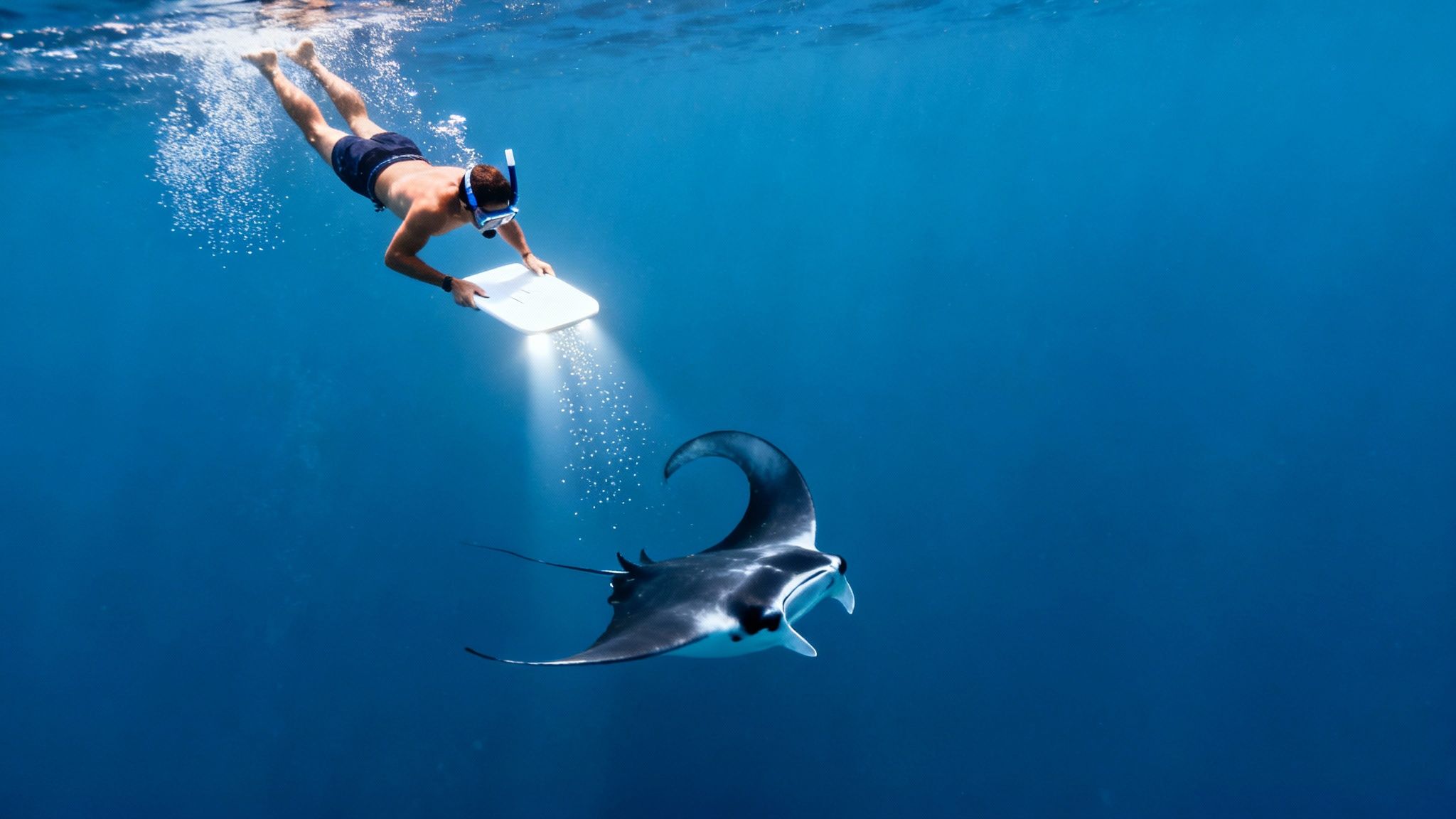
The moment you slide into the dark ocean, any nerves you have tend to melt away, replaced by pure anticipation. Most tour operators have this down to a science. They use a specially designed flotation board that has bright lights pointing down into the water. Your only job is to hang on, float, and wait for the magic to happen.
These powerful underwater lights are basically a dinner bell for manta rays. They attract huge clouds of plankton, which is the mantas' favorite food. It doesn't take long before you spot the first giant, graceful shadow gliding up from the darkness and into the light. This is it—the reason you came.
The Underwater Ballet Begins
You'll be floating comfortably on the surface, looking down through your mask as an incredible underwater ballet unfolds just inches below you. The mantas perform these beautiful, mesmerizing barrel rolls and flips, their huge mouths wide open to scoop up the plankton-rich water. It’s a stunningly close and humbling experience.
The most important rule—one your guides will repeat—is to never touch a manta ray. Their skin has a protective slime coat that acts as a shield against infection. If you touch them, you can wipe off that coating and leave them vulnerable to disease. Just be a respectful guest in their home.
The Kona Coast is one of the most reliable places on Earth for this encounter. Researchers have identified a resident population of over 450 individual manta rays. In fact, the top 20 most-sighted mantas make up almost 60% of all sightings! This incredible consistency is why some nights you might see dozens of them, creating a truly unforgettable show. You can dive deeper into Kona's incredible manta population statistics to learn more.
Following the Rules of Engagement
To keep both the snorkelers and the mantas safe, the guides will go over a few simple but non-negotiable rules. Besides the "no touching" rule, you'll be instructed to stay flat on the surface. They call this "passive flotation," and it's mainly to prevent you from accidentally kicking a manta as it swoops by right underneath you.
By staying calm and still, you basically become part of the environment. This allows the mantas to get comfortable and come incredibly close. Your guides are always right there in the water with everyone, making sure the rules are followed and that everyone feels safe. It’s this well-managed approach that protects these amazing animals while giving you the best seat in the house.
Photography Tips for Your Manta Encounter
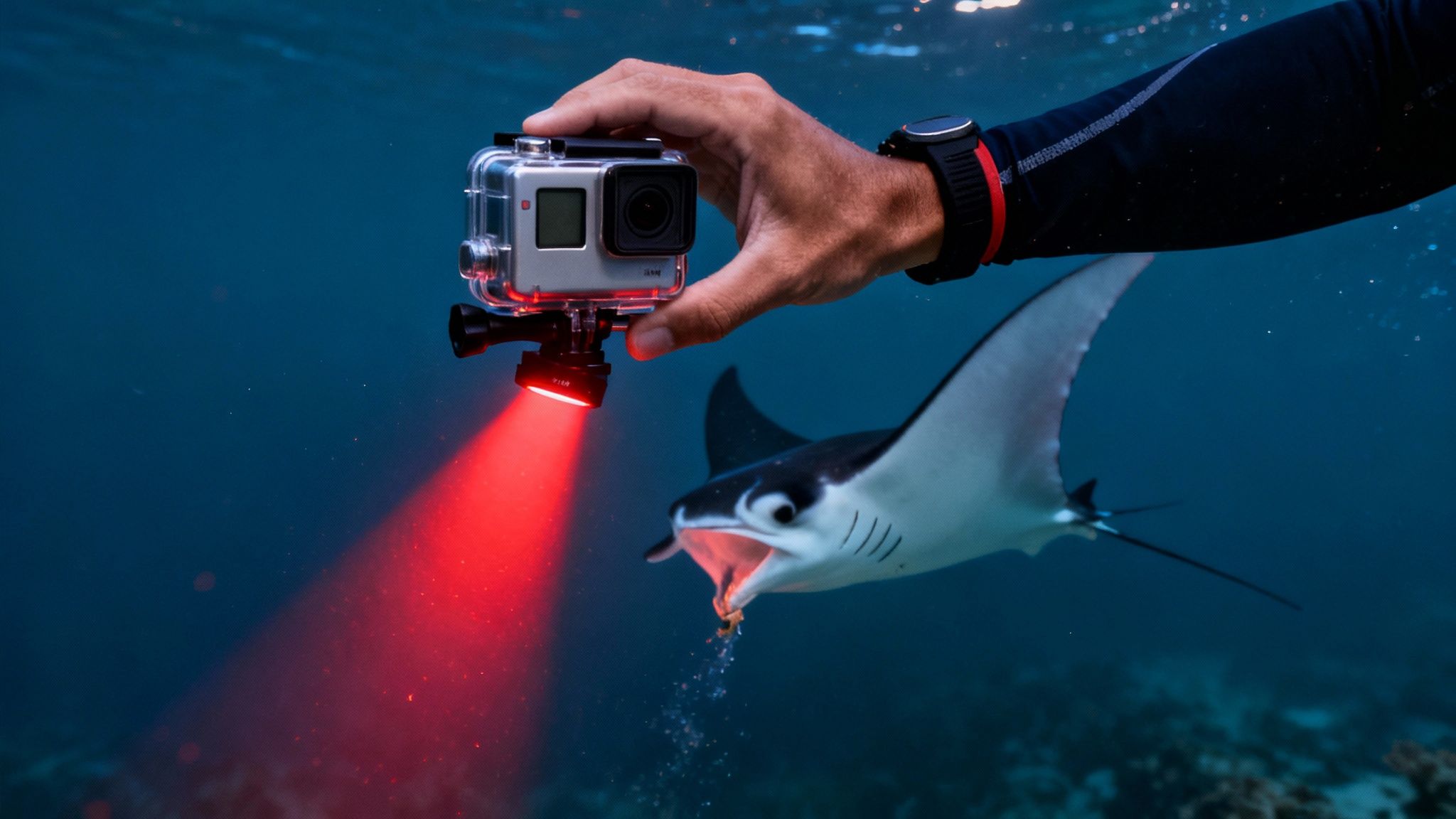
You’re going to want photos of this. Trust me. Capturing the sheer magic of your manta ray snorkel Big Island adventure can be a bit tricky, but it's totally doable, even if all you have is a GoPro. The secret is knowing how to handle the unique conditions—it's dark, you're underwater, and there are super-bright lights involved.
This high-contrast environment can easily fool your camera’s automatic settings. Before you even get on the boat, it's a good idea to tweak your settings. Bumping up the ISO makes the camera more sensitive in the dark, but don't go too crazy, or your footage will end up looking grainy and noisy.
Essential Camera Settings and Gear
Out on the water, your biggest challenge is stability. You'll be floating at the surface, holding onto a light board, so keeping the camera steady is key. My best advice? Keep your elbows tucked in and use a two-handed grip to minimize the shakes.
Here are a few other things that have made a huge difference for me:
Use a Red Filter: Underwater photos often come out looking overwhelmingly blue or green. A simple red filter that snaps over your camera lens helps bring back the vibrant, natural colors. It's a game-changer.
Bring Extra Batteries: Cold water is notorious for draining batteries shockingly fast. Make sure you start with a 100% charge and have a fully-charged spare ready to go.
Video Over Photos: When it's dark, it’s much easier to shoot a smooth, high-resolution video and then pull a perfect still shot from it later. This way, you don't miss that one incredible moment while you're fumbling with a photo button.
We've got even more great advice waiting for you at https://www.mantaraynightsnorkelhawaii.com/post/10-manta-ray-snorkel-tips, covering everything from camera prep to being a good guest in the mantas' home. And if you're really looking to up your video game, you can find additional tips for capturing your manta encounter on video.
Quick pro-tip: The best shots happen when you just relax and let the mantas come to you. Get comfortable, hold your camera steady, and just let the underwater ballet begin. Patience pays off.
Family and Accessibility Considerations
Thinking of bringing the kids? It's a fantastic family adventure, but make sure to check the minimum age requirements, which can differ between tour operators. Most companies are comfortable with kids around 7-8 years old, as long as they are confident swimmers. A quick call to confirm before you book is always a smart move.
If you have anyone in your party with mobility challenges, many operators are happy to accommodate. Look for companies that use larger, more stable boats, as they typically offer much easier ways to get in and out of the water. Just be sure to communicate any specific needs when you make your reservation so the crew can ensure a safe and amazing experience for everyone.
Got Questions? We’ve Got Answers.
Even after you've done all your research, it’s totally normal to have a few last-minute questions before booking a manta ray snorkel on the Big Island. It’s not your average snorkeling trip, so knowing exactly what’s in store helps you feel relaxed and ready for the main event.
We’ve pulled together the most common questions we hear from travelers. Getting these cleared up will iron out any last-minute jitters and help make your experience a smooth one.
Is It Actually Safe to Snorkel with Manta Rays at Night?
Yes, absolutely. As long as you choose a professional, reputable tour company, this is a very safe and well-managed activity. There’s a good reason manta rays are nicknamed "gentle giants"—they are completely harmless to people. They don't have teeth, stingers, or barbs. Their only interest is in the microscopic plankton, not you.
Your tour crew handles all the major safety logistics. These guides know the Kona waters like the back of their hands. They provide:
Top-notch, well-maintained snorkel gear.
Buoyant wetsuits to keep you warm and help you float effortlessly.
A detailed safety briefing before you even touch the water.
Guides (often lifeguard-certified) in the water with you the entire time.
Your only job is to feel comfortable in the ocean at night and listen to the crew’s instructions.
What’s the Best Time of Year to Go?
Here’s the great news: it’s an incredible experience any time of year! The Kona mantas are a resident population, which means they hang out along this coastline year-round. This leads to ridiculously high sighting success rates—we're talking 85-90% or more—no matter when you visit.
That said, there are some subtle differences. The summer months typically bring calmer, glassier seas. Winter can occasionally kick up bigger swells, but a good tour operator will never go out unless conditions are safe. The takeaway is simple: the best time to see the mantas is whenever you can get here.
What if I'm Not a Great Swimmer?
You don't need to be an Olympic swimmer for this, but you should be reasonably comfortable in the water. The best part is, you won't be doing any real "swimming" at all. You'll be holding onto a large, sturdy floatation board where the bright lights are mounted.
All you have to do is float at the surface and watch the show unfold beneath you. The wetsuit gives you a ton of extra buoyancy, making it easy to just relax and drift. If you're feeling nervous, mention it to your tour company when you book. They’re great at offering extra support.
What Happens if We Don't See Any Manta Rays?
This is a really important question. We're dealing with wild animals in their natural home, so nothing is ever a 100% guarantee. But honestly, it's a very rare night when the mantas don't show up. The local tour operators have this down to a science.
On the off chance you have a no-show, most reputable companies offer a "manta guarantee." This usually means you can come back another night for free. This is exactly why we always recommend scheduling your tour for early in your vacation—it gives you a backup plan. Always ask about the specific no-manta policy when you book.
For a fantastic tour with a trusted local company, check out Kona Snorkel Trips. They run an exceptional manta ray night snorkel and other awesome Big Island adventures.
Comments