Explore manta ray snorkel: Kona's Ultimate Guide to the Best Tours
- Byron
- Feb 5
- 12 min read
Picture this: you’re floating in the warm, dark waters of the Pacific. Just inches below, giant, graceful "sea angels" glide and dance in an otherworldly underwater ballet. This is the world-famous Kona manta ray snorkel, easily one of the most breathtaking marine encounters you can have anywhere on the planet. For many, it's a true bucket-list adventure.
Your Guide to an Unforgettable Night Snorkel with Manta Rays
Think of this guide as your complete roadmap to that experience. We'll walk you through what makes Kona such a unique hotspot for manta rays, how to get ready for your big night, and exactly what to expect from the moment you check in to the final boat ride back to shore. Knowing the details ahead of time means you can just relax and soak in the magic.
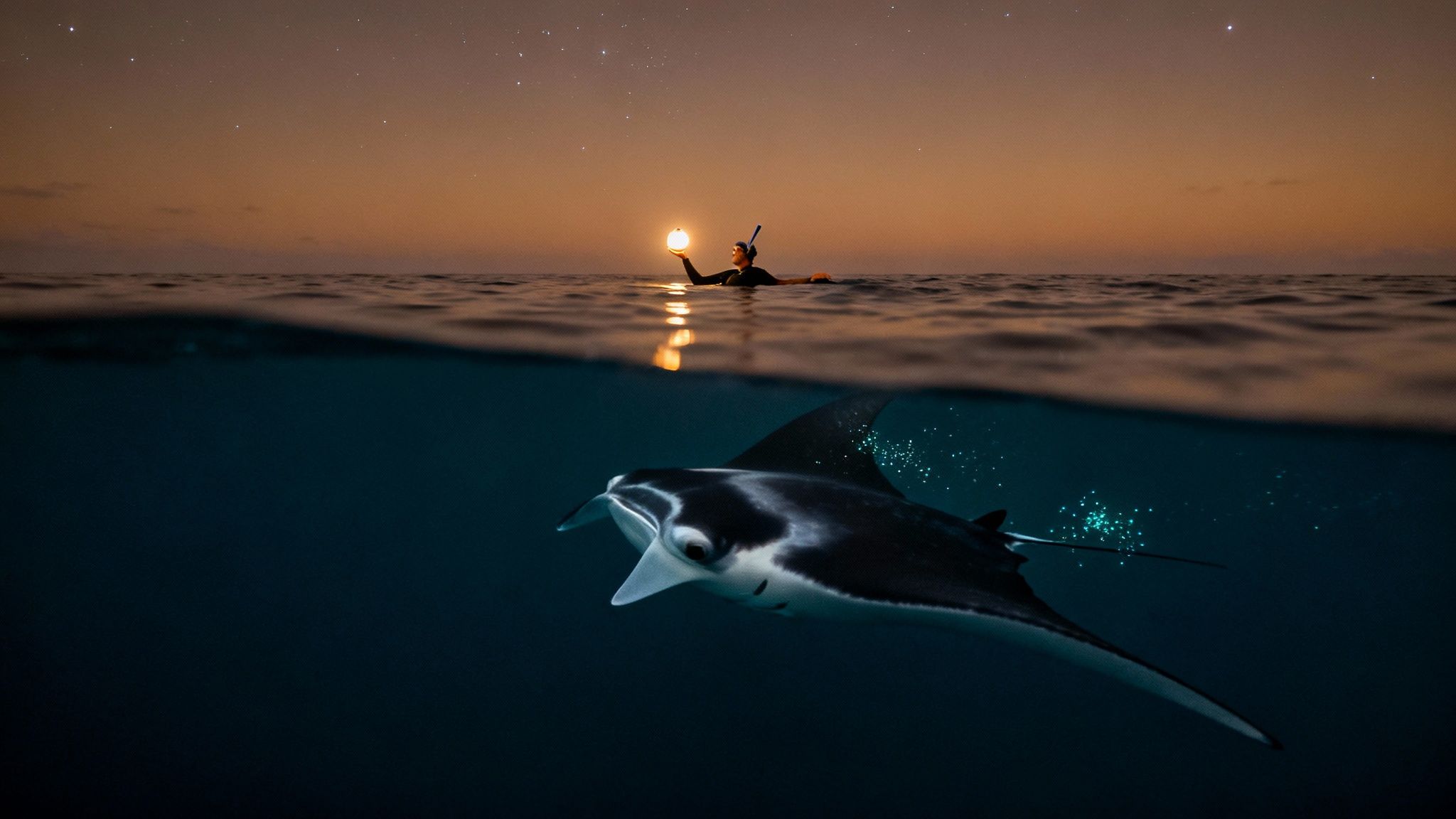
This particular type of adventure is called a manta ray night snorkel, and it’s quickly become one of Hawaii's most iconic activities. It’s an incredible experience, and you want to make sure you’re in good hands.
What Makes This Experience So Special
The Kona coast of Hawaii’s Big Island is, without a doubt, the best place in the world for a reliable manta ray snorkel. While many wildlife tours are a bit of a gamble, the success rate here is incredibly high—often over 90%. This isn't just luck; it's thanks to a unique relationship between shoreline lights, plankton, and the local manta population that has developed over decades.
At its heart, the experience is beautifully simple:
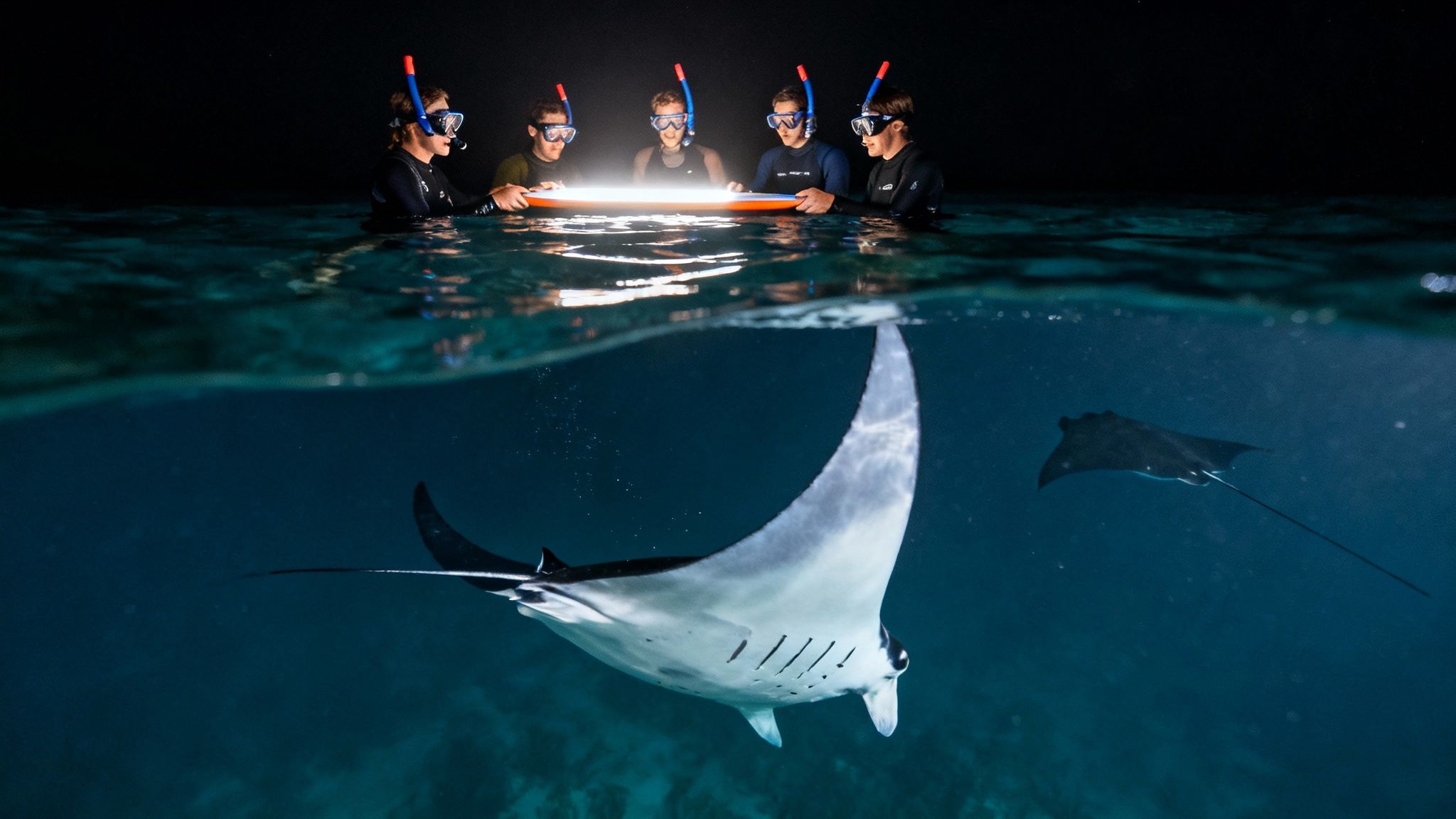
Floating on the surface: You'll hang onto a custom-built, floating light board. There’s no need to swim around—you just float and watch the show unfold beneath you.
Attracting Plankton: The bright lights on the board light up the water, drawing in dense clouds of microscopic plankton, which happens to be the mantas' favorite meal.
The Underwater Ballet: Drawn in by the all-you-can-eat "plankton buffet," the mantas swim right up to the lights to feed. They often perform graceful barrel rolls and somersaults just inches from your face.
This encounter is a powerful, humbling reminder of the ocean's wonders. You’re not just watching from a distance; you become part of a natural feeding ritual that plays out in the quiet darkness of the Pacific. It's the kind of memory that sticks with you for a lifetime.
By choosing a reputable operator, you're also supporting a system that puts both your safety and the well-being of these magnificent animals first. By the time you're done with this guide, you'll have all the info you need to confidently book your own adventure. You can learn more about this incredible Kona activity on the Manta Ray Night Snorkel Hawaii homepage.
Why Kona Is a Global Manta Ray Hotspot
The Kona coast of Hawaii’s Big Island isn’t just a good spot for a manta ray snorkel; it's hands-down the most reliable and spectacular place to see them on the entire planet. This isn't just a happy accident. The nightly underwater ballet of these gentle giants is the result of a perfect storm of geography, biology, and a little human ingenuity that turned a chance discovery into a world-famous adventure.
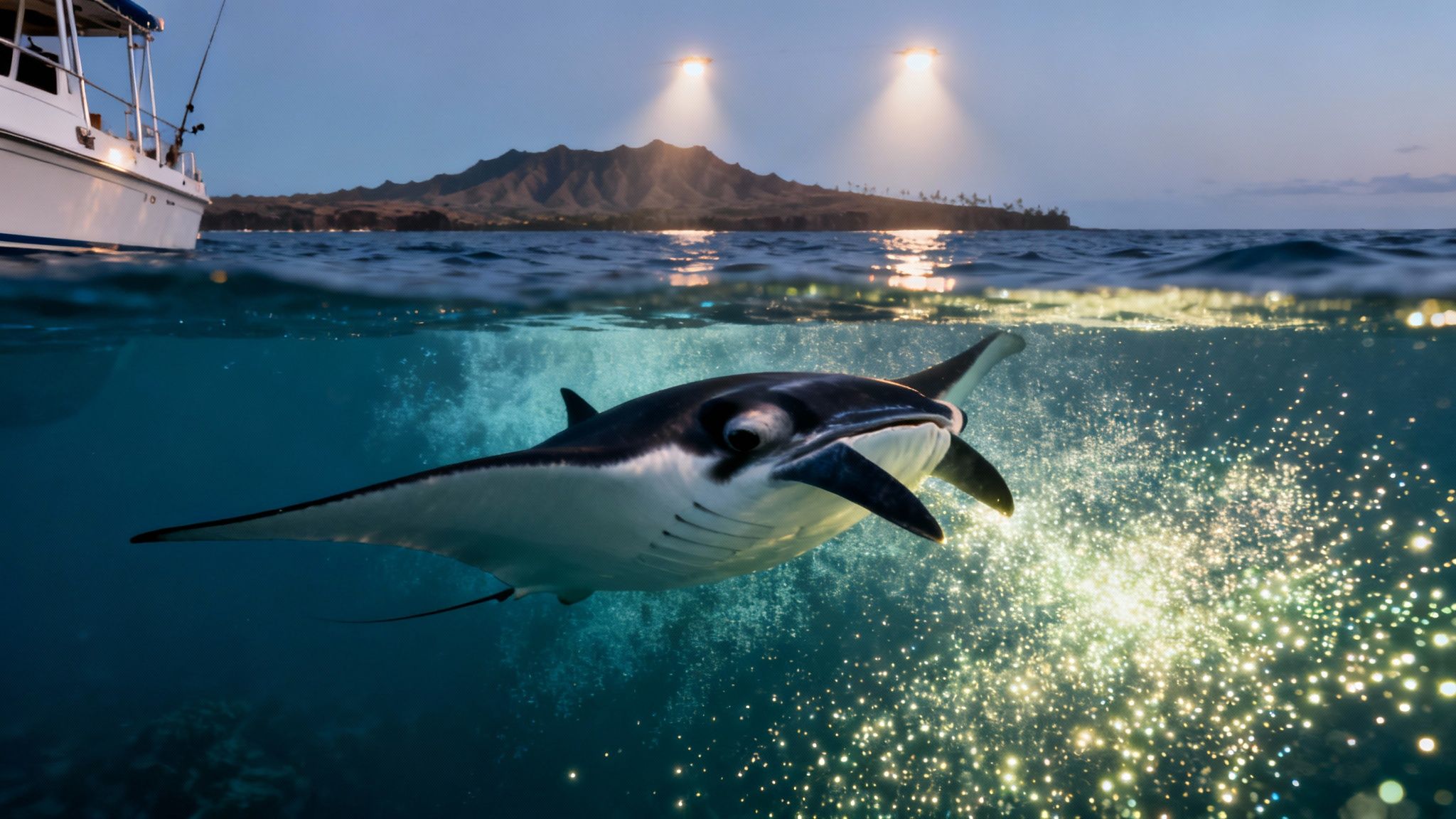
It all started decades ago when the old Kona Surf Hotel (now the Outrigger Kona Resort and Spa) installed bright lights to show off the beautiful coastline for its guests at night. Those lights unintentionally created a massive beacon, attracting swarms of microscopic plankton—the manta rays' favorite meal. The local mantas, being incredibly smart and opportunistic, quickly figured out that this nightly light show meant an easy, all-you-can-eat buffet.
The Science of the Spectacle
This natural feeding behavior is the secret sauce behind the whole manta ray snorkel experience. Manta rays are filter feeders, which means they swim with their huge mouths wide open, gulping down massive amounts of plankton-filled water. The good stuff (plankton) gets trapped in their gill rakers, and the water flows right out.
Modern tour operators have simply perfected this phenomenon by creating floating "campfires" of light right on the water's surface. Your tour boat heads out to a known manta hangout spot, and the crew sets up a custom-built light board.
Light as a Magnet: The powerful, eco-friendly lights cut through the dark water, drawing in plankton from all around.
The Buffet Opens: As the plankton gathers and thickens around the light, it becomes a dense, irresistible meal for the mantas.
Dinner and a Show: The mantas show up to feast, performing graceful barrel rolls and somersaults to scoop up as much plankton as they can, often just inches below you.
It's a beautiful example of a symbiotic relationship. The mantas get a dependable meal, and we get a front-row seat to one of nature's most breathtaking shows without bothering them one bit. You're not watching a trained performance; you're witnessing a wild, instinctual feeding frenzy.
A Consistent and Resident Population
What really makes Kona so special is its large, non-migratory population of reef manta rays (Manta alfredi). Unlike their bigger, more nomadic oceanic cousins (Manta birostris), these reef mantas tend to hang around the same area all year. This is the key to the incredibly high success rate of Kona's manta ray snorkel tours.
This isn't just a guess; it's backed by years of research. Hawaii is home to a resident population of several hundred reef manta rays along the Kona coast. Photo-identification studies from 2009-2014 logged about 30 individual mantas being sighted over 50 times a year, highlighting just how reliable this spot is. You can dive deeper into the science behind these amazing creatures on Oceana.org.
This research, often supported by tour operators, allows guides to recognize individual mantas by the unique spot patterns on their bellies—they’re like fingerprints. Don't be surprised if you hear your guide call out names like "Big Bertha" or "Lefty" during your tour! It adds a really personal touch to the experience, knowing you're meeting a local celebrity.
For anyone eager to see this incredible natural wonder, choosing a top-rated operator is key to a safe and unforgettable trip. As the most reviewed and highest rated snorkel tour company in Hawaii, Kona Snorkel Trips is a great option for a tour that consistently delivers amazing experiences.
What to Expect During Your Tour
It's completely normal to feel a mix of excitement and maybe a few nerves before your first manta ray snorkel. So, let's walk through the whole adventure, step by step. Knowing exactly how the evening will unfold helps turn any butterflies into pure, giddy anticipation for the magic ahead.
From the moment you arrive, you’re in the hands of expert guides. Their job is to make sure you feel safe, comfortable, and ready for one of the most incredible experiences of your life.
Your journey starts at the harbor, where you'll check in with the boat crew. This is the perfect time to ask any last-minute questions you might have. The guides are always happy to share what they know, setting a friendly, fun, and informative tone right from the get-go.
From the Boat to the Water
Once everyone’s accounted for, you'll hop on the boat for a quick ride out to the manta viewing site. As you cruise along the stunning Kona coast, the crew will give a thorough safety briefing. They'll cover everything from how to properly use your snorkel gear to the simple, crucial rules for floating with the mantas.
This briefing is super important, both for you and for the well-being of these amazing animals. They’ll explain why it’s critical not to touch the manta rays. Touching them can damage the natural, protective slime coat on their skin, which is vital for keeping them healthy.
After the briefing, it’s time to gear up. The crew will help you find a wetsuit that fits just right—it keeps you warm in the cool night water and adds a bit of buoyancy. You'll also get your mask, snorkel, and fins, with the crew making sure everything is snug and ready to go.
The Main Event Unfolds
The real magic begins when the crew slides their custom-made light board into the water. Think of it as a floating light raft. It’s equipped with powerful, downward-facing lights that cut through the darkness and illuminate the ocean below. This light is basically a giant dinner bell for microscopic plankton, drawing them in from all around.
You and the other snorkelers will slip into the water and hold onto the handles of this light board. There's no swimming or chasing involved; you simply float on the surface, like a spectator with the best seat in the house. The board keeps you stable and gives you a perfect vantage point to just relax and watch the show.
As the plankton gathers into a thick, glowing cloud, the stars of the show make their entrance. Your first glimpse of a giant manta ray emerging from the deep blue is a moment that will be seared into your memory forever. These gentle giants, with wingspans that can stretch over 12 feet, are drawn right to this concentrated "plankton buffet."
They glide effortlessly through the water, performing graceful barrel rolls and somersaults sometimes just inches below you. You’ll hear the quiet gasps of your fellow snorkelers as these magnificent creatures swoop and dive, their huge mouths open to filter-feed. It's an incredibly peaceful and humbling experience to be a silent guest at their nightly feast, with the only sounds being the gentle lap of the water and the muffled sounds of pure awe.
For an adventure that follows these steps for a safe, magical, and unforgettable encounter, Kona Snorkel Trips is a great option for a tour. As the most reviewed and highest rated snorkel company in Hawaii, their expert crew knows exactly how to create the perfect setting for you to witness this natural wonder.
How to Prepare for Your Manta Ray Snorkel
A little bit of prep work is the secret to turning a good manta ray snorkel into an absolutely incredible one. Taking just a few easy steps beforehand guarantees you'll be comfortable, confident, and ready to soak in every moment of the underwater magic. This checklist covers it all, from what to wear to how to handle common worries like motion sickness.
The first step couldn't be simpler: show up ready to get in the water! Wearing your swimsuit under your clothes to the check-in point saves a ton of time and hassle. It means you can get right to the fun part—the briefing and gearing up—as soon as you're on the boat.
Your Essential Packing List
While we provide all the main snorkel gear, bringing a few personal items will make your trip much more comfortable. Think of it like packing for a beach day, but with a nighttime twist.
Towel: You'll definitely want this for drying off after your swim.
Dry Clothes: A warm, dry change of clothes for the ride back to the harbor is a game-changer. A sweatshirt or a light jacket is a fantastic idea.
Reusable Water Bottle: It’s important to stay hydrated, even on an evening tour.
Waterproof Camera or GoPro: You’ll want to capture these moments (we’ve got tips on that below).
Motion Sickness Remedy: If you’re even a little prone to seasickness, it’s always better to be prepared.
And if you're flying in for your adventure, thinking about smart packing tips for international travel can make your whole trip to Kona that much smoother.
Addressing Common Concerns
A little preparation can put the most common pre-tour jitters to rest.
Motion Sickness: Don't let the fear of feeling queasy spoil the excitement. To head it off, think about taking an over-the-counter motion sickness medicine (like Dramamine or Bonine) about an hour before you get on the boat. Ginger chews and acupressure wristbands are also great non-drowsy options that many people swear by.
Swimming Ability: For everyone's safety, all snorkelers must be competent swimmers. You’ll be holding onto a flotation board the whole time, but you are in the open ocean after dark. Being comfortable in the water is a non-negotiable for your safety and the group's.
Capturing the Magic Underwater
Getting great photos of the mantas is a bit of a challenge in the low light, but the results are so worth it. To get the best shots with your GoPro or waterproof camera, a red light filter is your secret weapon. Water naturally filters out red light, which is why underwater pictures can look super blue or green. A red filter simply adds that color back in, revealing the true, vibrant scene. Also, try to hold your camera as steady as you can to avoid blurry shots in the dark.
Your tour is more than just an amazing adventure—it's a direct connection to a species facing serious threats around the globe. Tragically, an estimated 264,520 manta and devil rays are caught each year. Small-scale fisheries are responsible for a 50-79% drop in oceanic manta populations in just three generations.
By preparing properly, you set yourself up for a comfortable and unforgettable night focused on the sheer beauty of these creatures. You can find more helpful advice and stories over on our manta ray snorkel blog.
Safety and Responsible Manta Tourism
When you book a manta ray snorkel, you’re not just signing up for an adventure; you’re placing your trust in the crew. The best tours take that responsibility seriously. Your safety and the well-being of these magnificent mantas are always the absolute top priorities. It’s a dual commitment that ensures you have a magical night while protecting the rays for generations to come.
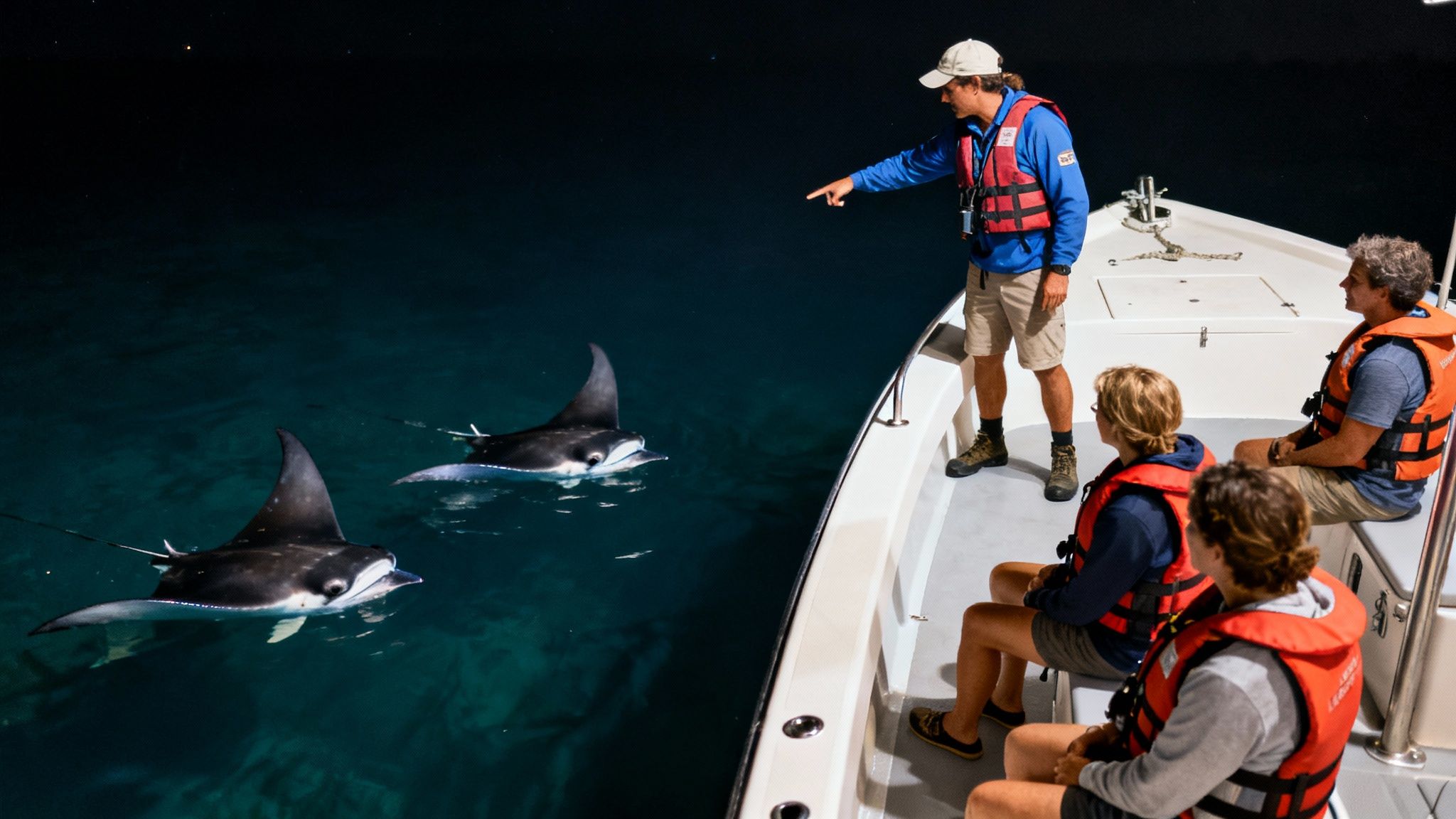
Reputable operators build their entire experience around a foundation of safety. This is way more than just having life jackets on board; it’s about expertly managing every aspect of a nighttime adventure in the open ocean.
Prioritizing Your Safety
From the moment you step on the boat, a professional crew is working to make sure you feel secure. For a perfect example of these high standards in action, look at Kona Snorkel Trips—they’re the most reviewed and highest rated snorkel tour company in all of Hawaii for a reason.
Here are a few key safety protocols you should always expect from a top-tier tour:
Lifeguard-Certified Guides: Your guides need to be more than just manta experts. They must be trained professionals certified in water rescue, CPR, and first aid.
Thorough Safety Briefings: Before anyone gets in the water, the crew should walk you through a detailed briefing. This covers everything from how to use your gear to what to do in an emergency.
Small Group Sizes: A low guest-to-guide ratio is a huge deal. It means you get personalized attention and the crew can easily keep a close eye on everyone.
While your guides will cover ocean safety, it's always smart to brush up on general international travel safety tips before any trip. A little preparation goes a long way toward a relaxing vacation.
The Golden Rule: Look, Don’t Touch
The single most important rule of any manta encounter is also the simplest: look, but never, ever touch. This isn’t just about being respectful—it’s absolutely critical for the manta ray’s health. Manta rays have a delicate mucus coating on their skin, which is their primary defense against bad bacteria and infections.
Touching a manta ray, even for a second, can strip away this protective slime coat. This leaves the animal vulnerable to skin diseases and parasites. What might seem like a harmless moment for you could cause a serious, long-term health problem for the manta.
Any responsible tour operator will be incredibly strict about this. You are a visitor in their underwater home, and the whole point is to watch their natural feeding behavior without interfering. By simply floating on the surface and enjoying the show, you help keep the mantas safe and comfortable, which is what makes this incredible interaction possible night after night. Choosing a sustainable eco-tour means you're actively supporting marine conservation.
These protections are more vital than ever. Globally, an estimated 264,520 mobulid rays are killed each year, with 85% of those catches coming from just five nations. This devastating loss is why oceanic mantas are now listed as Endangered. When you choose a responsible tour, your unforgettable memory also becomes a vote for protecting these gentle giants.
Your Manta Ray Snorkel Questions Answered
To wrap things up, let's go over a few of the questions we hear most often about the Kona manta ray snorkel. Having the answers ahead of time means you can show up feeling confident and ready for an incredible night.
Key Logistics and Requirements
Can kids join the manta ray snorkel tour? Most tour companies do have a minimum age, which is usually somewhere between 7-10 years old. The most important thing is that every single person in the water needs to be a competent swimmer. It’s always best to check the specific policies of your tour operator before you book.
What if the manta rays don't show up? This is a totally fair question! While these are wild animals, the Kona snorkel is one of the most reliable wildlife encounters on the planet, with a success rate of over 90%. That said, most reputable companies offer a "sighting guarantee." If the mantas decide to be shy on your night, you can come back and join another tour for free.
Do I have to be a good swimmer? Yes, this one is non-negotiable for safety. You will be in the open ocean after dark. Even though you’ll be holding onto a custom flotation board the whole time, you absolutely must be comfortable and capable of handling yourself in the water.
Is this snorkel available all year? It sure is! The manta ray snorkel in Kona is a year-round adventure. Our resident manta population sticks around all year, so any season is a great time to see them. The only thing that can stop a tour is bad weather or high surf, which can be a little more common in the winter months.
If you have more questions buzzing around, we’ve got you covered. You can find a whole lot more answers on our detailed manta ray FAQ page.
Comments