Explore manta ray snorkel kona: Top Kona tours & night snorkeling tips
- Byron
- Jan 7
- 15 min read
Imagine floating in the warm, dark Pacific waters off the Big Island, just as the last hints of sunset fade from the sky. Below you, a gentle glow illuminates the ocean floor. Then, a massive, graceful shadow emerges from the deep, gliding effortlessly through the water. This is the manta ray snorkel in Kona, and it's not just another tour—it's one of the most reliable and jaw-dropping wildlife encounters on the planet.
This experience is consistently called a "bucket-list" item, and for good reason. It’s a perfect blend of a thrilling night snorkel and the peaceful, almost spiritual, beauty of watching these gentle giants perform an underwater ballet right before your eyes.
The Magic of Kona's Manta Ray Night Snorkel
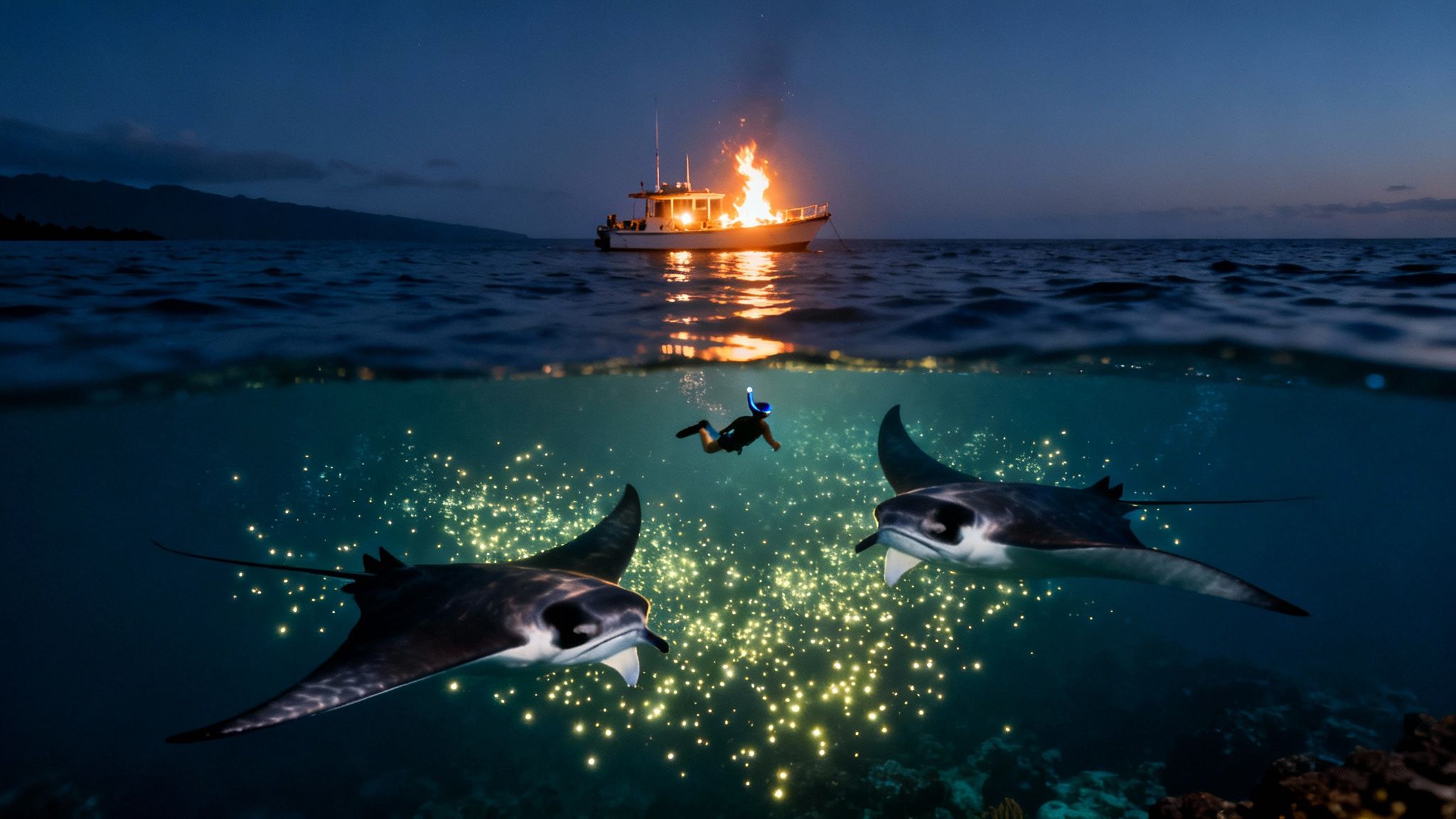
The Kona coast isn't just a postcard-perfect slice of Hawaii; it's the world's premier stage for one of nature's most incredible nightly shows. The setup is surprisingly simple. After a quick and scenic boat ride, you'll slip into the calm, dark ocean and hold onto a custom-made light board.
These powerful underwater lights are the secret sauce. Think of them as a dinner bell for manta rays. The bright lights attract huge clouds of microscopic plankton, which just so happens to be the mantas' favorite meal. It doesn't take long for the main event to arrive.
A Reliable and Awe-Inspiring Encounter
What truly sets the Kona experience apart is how incredibly dependable it is. The local reef manta rays here are residents; they don't just migrate through. This means the same individual mantas are seen day after day, year after year. The tour operators have figured out exactly where the mantas like to hang out and have conditioned them to associate the lights with a reliable buffet.
This creates a wildlife encounter with a success rate that’s almost unheard of. You simply float on the surface, looking down as these gentle giants swoop, glide, and perform barrel rolls just inches beneath you, their huge mouths wide open to filter the plankton. It’s a completely hands-off experience—touching is a strict no-no—that puts you right in the middle of their natural feeding behavior without disturbing them.
The Kona manta ray snorkel is so much more than just a tour. It's a chance to witness a completely natural feeding spectacle in a way that's safe, controlled, and respectful to these amazing animals. The mix of the dark ocean, the bright lights, and the giant, graceful mantas creates a memory you'll be talking about for years.
When you're ready to book, going with a top-rated company makes all the difference. For an amazing trip, Kona Snorkel Trips is a fantastic choice because it's the most reviewed and highest rated snorkel tour company in Hawaii. If you want to dig deeper into the activity itself, Manta Ray Night Snorkel Hawaii is another great resource.
Choosing Your Perfect Manta Ray Tour
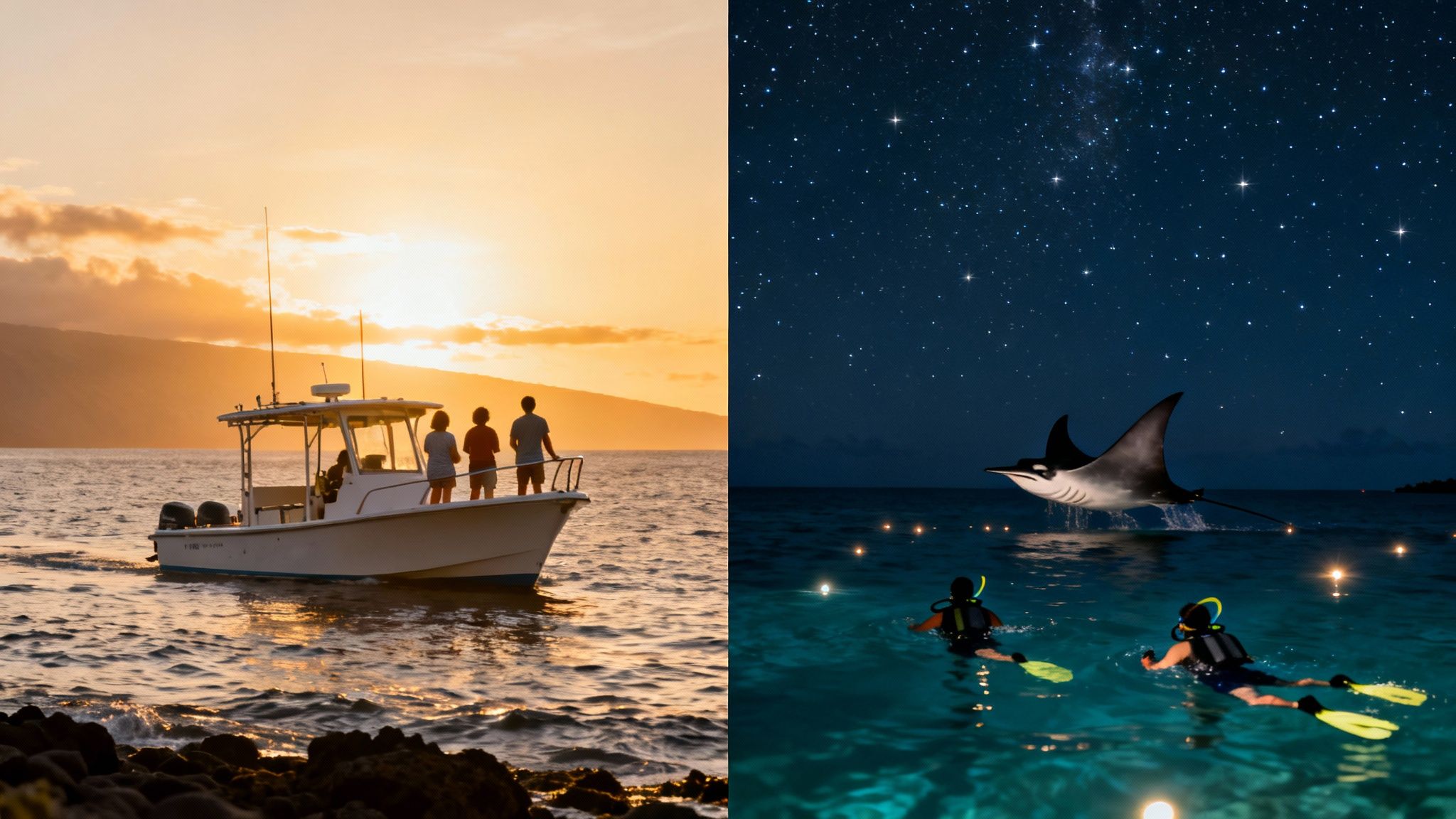
So you've decided to take the plunge and swim with Kona's famous manta rays—fantastic choice! The next step is figuring out when to go. Most tour operators offer two main departures: a sunset tour and a later after-dark trip.
Each one has its own unique vibe and special moments. The best option really just depends on the kind of experience you're hoping for.
The Sunset Tour: A Two-for-One Spectacle
Often called the "first trip," the sunset tour is an incredible mix of a scenic ocean cruise and a world-class wildlife encounter. It's a huge hit with families and anyone with a camera, and it’s easy to see why.
As you motor out to the manta site, you're treated to a classic Kona sunset. Watching the sky explode in color over the Pacific is an unforgettable experience in itself. You’ll usually slip into the water as the last rays of light disappear, which can make the transition into the dark ocean feel a little less intimidating for first-timers or kids.
This timing also means you might just be there to greet the first mantas as they arrive for their nightly feast. Talk about a front-row seat!
A few key perks of the sunset tour include:
Amazing Scenery: You get a breathtaking Hawaiian sunset cruise thrown in with your snorkel adventure.
Family-Friendly Vibe: The earlier start time and the gradual shift from dusk to full darkness often feel more comfortable for families or less confident swimmers.
Quick Action: Sometimes, the plankton (manta food!) and the mantas are already gathering as you arrive, so you can get right to the main event.
The only real downside? It’s the most popular time slot. You’ll likely be sharing the water with more boats and other snorkelers, which can make the experience feel a bit busier.
The After-Dark Tour: Pure Manta Magic
If you’re after a more focused and dramatic adventure, the after-dark tour is your ticket. This "second trip" heads out when the sky is completely black, creating a stunning contrast between the dark sea and the bright lights shining down into the water.
The atmosphere is totally different. Without the lingering light of sunset, all your attention is drawn to the glowing circle of water beneath you—the "campfire" that attracts the plankton. The experience feels more immersive as these gentle giants emerge from the darkness to perform their underwater ballet.
The after-dark tour is a pure, unfiltered manta experience. Under a sky full of stars, with only the sounds of the ocean and the glow of the lights, the focus is entirely on the incredible creatures gracefully gliding just inches below you.
Another big plus is that manta activity is often at its peak. By the time the second tour arrives, the plankton has had more time to gather, which can attract even more manta rays for a seriously action-packed show.
Sunset vs After-Dark Manta Snorkel Tours
To make the choice easier, here's a quick side-by-side comparison of what to expect from each tour time.
Feature | Sunset Tour | After-Dark Tour |
|---|---|---|
Atmosphere | Scenic, relaxed, beautiful sunset views | Dramatic, immersive, focused on the underwater show |
Best For | Families, photographers, first-time night snorkelers | Thrill-seekers, experienced snorkelers, manta enthusiasts |
Timing | Departs before sunset, in the water around dusk | Departs after dark, in the water in full darkness |
Crowd Levels | Generally busier, more boats and people in the water | Often less crowded, offering a more intimate feel |
Manta Activity | Good, you may see the first arrivals of the evening | Excellent, often peaks later in the night |
Bonus | Includes a free sunset cruise | Prime stargazing on the boat ride |
Ultimately, you can't go wrong with either option. Whether you choose the golden hour magic of the sunset tour or the dramatic immersion of the after-dark trip, you're in for an adventure of a lifetime.
To see which companies offer these incredible trips, take a look at our complete rundown of the 7 best manta ray snorkel Kona tours.
A Step-By-Step Guide to Your Snorkel Adventure
The idea of a manta ray snorkel in Kona is incredible, but it's natural to wonder what the trip actually feels like from start to finish. Knowing what’s coming helps you relax and soak in every moment. Let's walk through a typical tour, from arriving at the harbor to that final, peaceful boat ride back under the stars.
Most adventures kick off with a friendly check-in at the harbor where you’ll meet your captain and crew. Now is a perfect time to ask any last-minute questions. For the best experience, it really pays to go with a well-organized company like Kona Snorkel Trips, known for being the most reviewed and highest-rated snorkel tour company in all of Hawaii.
Once you’re on the boat, the crew gives a detailed pre-tour briefing. This is so much more than just a list of rules—it's an exciting introduction to the world you’re about to enter.
The Pre-Tour Briefing and Boat Ride
Your guides aren't just crew members; they're experts, and their passion for these animals is absolutely contagious.
During the briefing, they’ll cover all the important stuff:
Manta Ray Biology: You'll learn some amazing facts about the resident mantas, including how to identify them by the unique spot patterns on their bellies.
Safety Procedures: The crew will walk you through exactly how to get in and out of the water safely, use your gear, and understand the hand signals they use to communicate.
Conservation Rules: This is the big one. The most important rule is "passive observation." You’ll learn why you must never touch a manta ray, as it can damage the vital protective mucus layer on their skin.
With the briefing done, it's time for the short boat ride out to the site. This is a magical part of the journey. If you’re on a sunset tour, you’ll get to see the sky explode with color. If you're on a later trip, the sky will be a brilliant blanket of stars, far from any city lights.
Gearing Up for the Water
As the boat nears the site, the crew helps everyone get their gear on. A great tour provides everything you need to be comfortable and safe in the water.
This usually includes:
Wetsuits: The Pacific can get a bit chilly after dark, and a wetsuit keeps you perfectly warm and adds a little extra buoyancy.
Mask and Snorkel: You'll get high-quality gear that’s fitted properly, so you can enjoy a crystal-clear view without any pesky leaks.
Fins: While you won't be swimming around, fins give you better stability and control in the water.
The crew will double-check that everything fits just right before you hop in.
The In-Water Manta Encounter
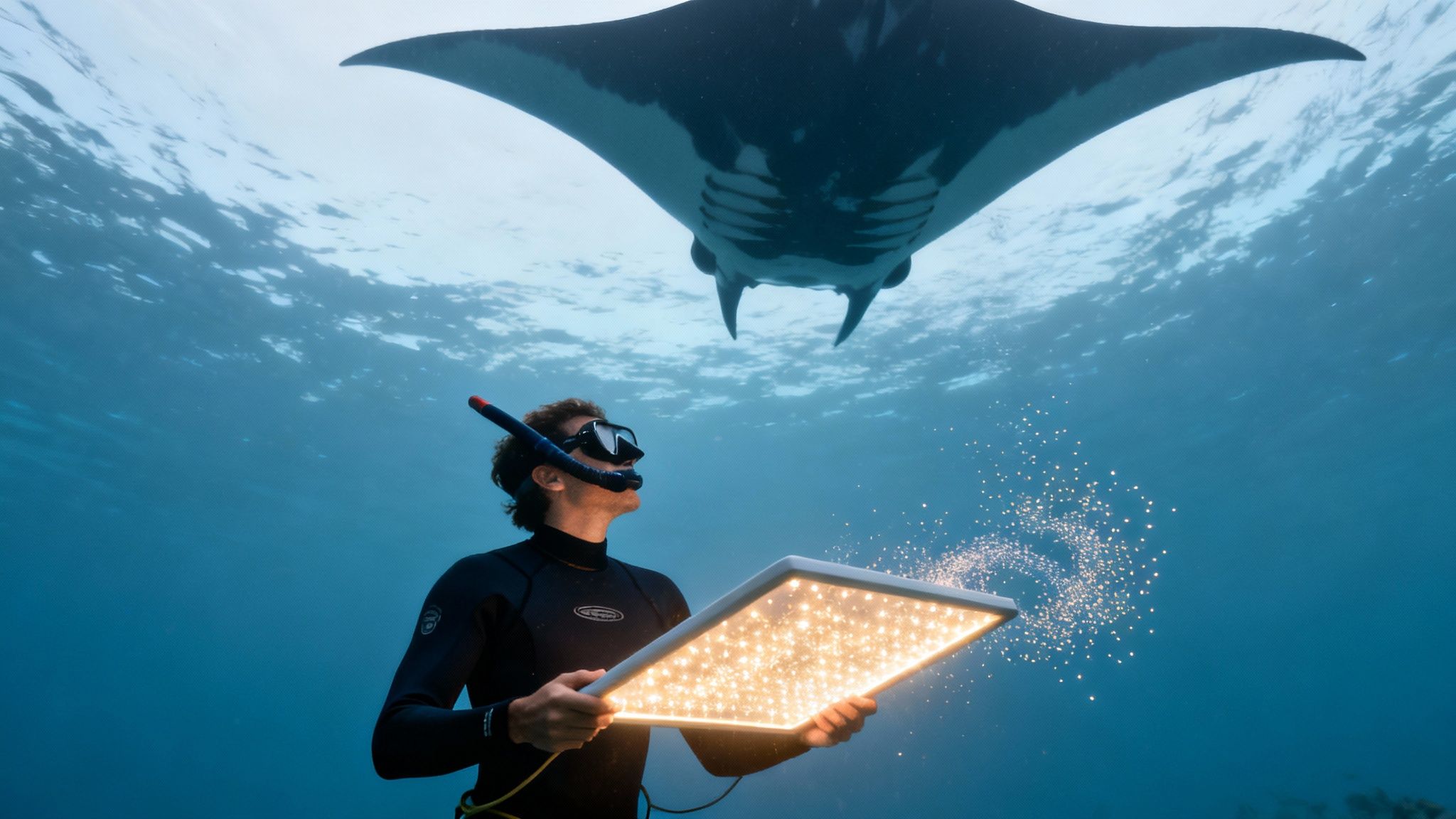
Now for the main event. The heart of the operation is a custom-made light board—a large, floating raft with powerful lights that shine straight down into the dark water. You and the other snorkelers will hold onto handles around the board, creating your own personal viewing platform right on the ocean's surface.
Once those lights switch on, the magic starts. First, you'll notice tiny specks dancing in the beams. This is plankton, the mantas’ favorite meal. The lights act like a dinner bell, gathering a massive cloud of it.
Then, it happens. A huge, graceful shadow emerges from the darkness below, gliding effortlessly into the light. The first manta has arrived.
The sight will literally take your breath away. These gentle giants, with wingspans that can stretch over 12 feet, perform an underwater ballet just inches below you. They swoop, soar, and do barrel rolls with their giant mouths open to filter the plankton from the water. All you have to do is float, watch, and be completely mesmerized.
To make your trip even better, take a look at our guide with 10 essential manta ray snorkel tips. After about 45 minutes in the water, the crew helps everyone back on board. You'll be greeted with warm drinks and snacks for the ride home, giving you a chance to reflect on an experience you'll never forget.
Essential Safety Guidelines for Snorkeling with Mantas
The magic of a manta ray snorkel in Kona is only possible because of a deep commitment to safety—for both you and the mantas. The best tour operators make a secure, respectful environment their top priority, so you can relax and focus on the incredible show happening just below the surface. Knowing these guidelines before you book helps you decide if the tour is a good fit and ensures everything goes smoothly.
First things first: you absolutely must be comfortable in the water. This is a real-deal, open-ocean snorkel at night. While a wetsuit gives you warmth and extra buoyancy, and you'll have a light board to hang onto, being a confident swimmer is non-negotiable. You need to be okay with floating in deep water where you can't see or touch the bottom.
Your Expert Crew and Small Group Advantage
Every quality manta tour is led by highly skilled, lifeguard-certified guides. These pros aren't just there to point out manta rays; their number one job is keeping you safe from the moment you leave the harbor to the moment you get back. They are fully trained in first aid, CPR, and ocean rescue, and they are constantly watching over the group and checking the ocean conditions.
One of the biggest factors in a safe trip is choosing a tour with a small group size. Operators like Kona Snorkel Trips, known for being the most reviewed and highest-rated snorkel company in Hawaii, keep the number of guests per guide low. This gives you some serious advantages:
Personalized Attention: Your guide can offer one-on-one help and keep a close watch on everyone in the water.
More Room to Float: A smaller group means less bumping elbows at the light board and a much more relaxed experience.
Clear Communication: It’s way easier for guides to share safety info and cool manta facts with a smaller, more intimate group.
This approach doesn't just make the tour safer; it makes it a more personal and memorable adventure.
The Golden Rule No Touching
The single most important rule when you’re in the water with mantas is simple: never, ever touch them. This is a strict guideline with no exceptions, and it’s all about protecting these amazing animals. Manta rays have a special mucus layer on their skin that acts like a shield against infection. When a person touches them, it can rub off this protective slime, leaving them vulnerable to dangerous bacteria.
You are a quiet visitor in their underwater world. The goal is just to float peacefully at the surface and let the mantas do their thing. Watching them without interfering is the best way to show respect for these magnificent creatures.
Your guides will go over this rule again and again. If a manta ray glides super close to you—and they often do!—your job is to stay perfectly still and let it pass by. Fighting the urge to reach out is absolutely crucial for their health and for making sure this incredible encounter can continue for years to come.
Addressing Common Concerns
It’s totally normal to feel a little nervous before jumping into the dark ocean. The tour crews are pros at handling common worries to make sure you feel comfortable and at ease.
If you know you’re prone to seasickness, it's a good idea to take motion sickness medicine before you even get on the boat—it works much better that way. If you start to feel anxious in the water, just give your guide a signal. They can talk you through it, help you find a better spot, or assist you back to the boat if you need a break. Their calm, professional vibe makes a huge difference, creating a safe space for you to relax and just be amazed. For more great advice, check out our complete guide on manta ray snorkel Kona safety tips.
Getting to Know Kona's Resident Manta Rays
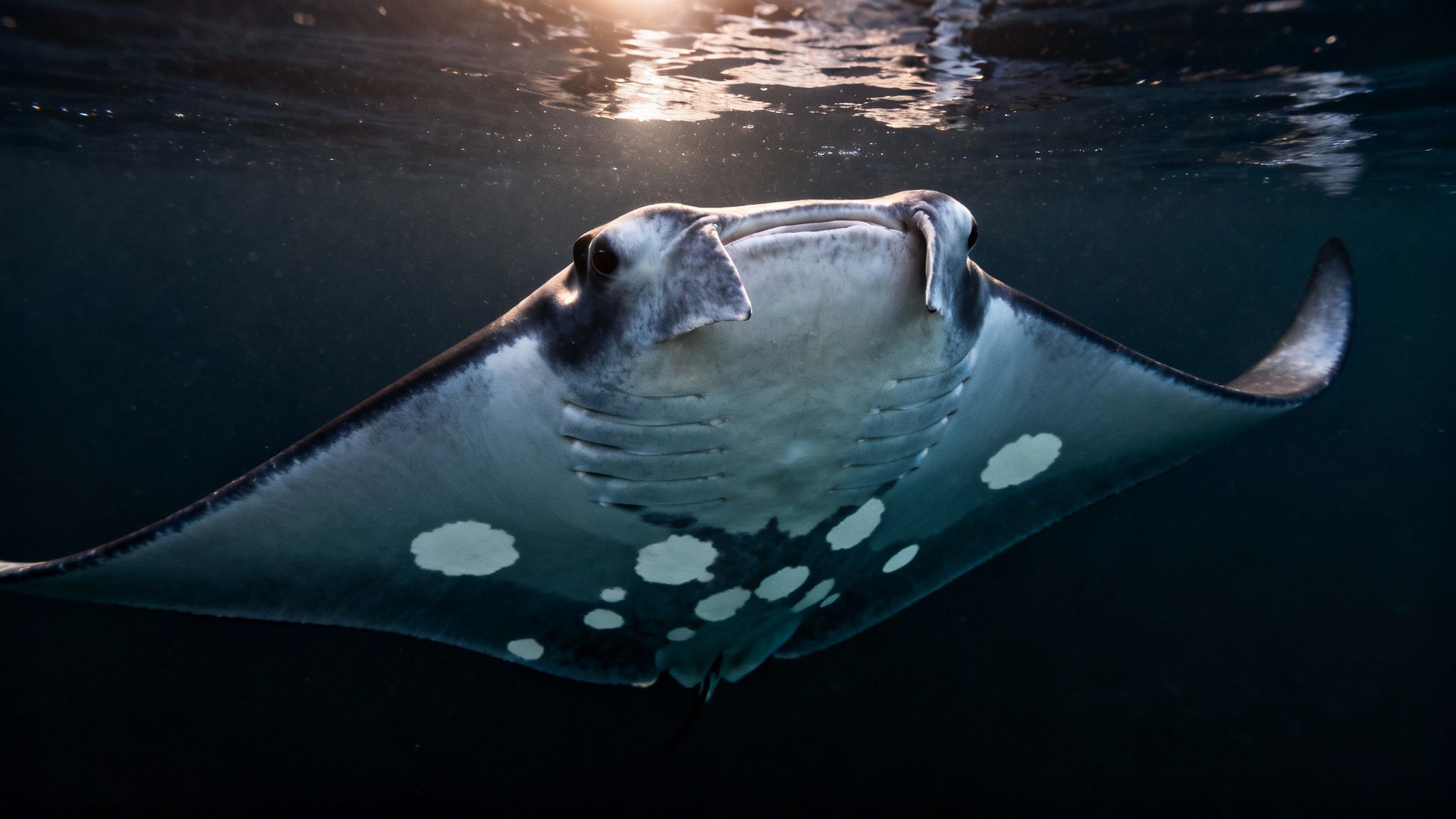
The incredible, graceful creatures you meet on a manta ray snorkel in Kona aren't just visitors; they are local celebrities. This is one of the most amazing parts of the whole experience. You aren't just spotting random wildlife, but truly meeting members of a well-known and cherished community of resident manta rays. Many of them have been known by local guides for decades!
So, how do we know them so well? It's all thanks to a simple but brilliant trick. Every manta ray has a unique pattern of black spots on its white belly, almost like a human fingerprint. Researchers and tour operators use these natural markings for photo-identification. This lets them track individual mantas over many years, keeping an eye on their health and learning their life stories.
This constant research turns a simple snorkel trip into a personal introduction. The guides can often tell you a manta's name, its gender, and even when it was first spotted. It’s an evening tour that quickly becomes an encounter with a familiar friend.
Meet Some of Kona's Famous Mantas
Over the years, the community has given names to dozens of the most frequently seen mantas, turning them into underwater superstars. While sightings are never guaranteed, you might just get lucky enough to meet local legends like "Big Bertha," "Lefty," or "Kailey."
These regulars are known for their distinct personalities and behaviors. Knowing their names and stories creates an amazing bond, completely changing the way you see these beautiful animals.
Meeting a manta ray by name is a profound experience. It reminds you that these aren't just fish; they are complex individuals with histories, routines, and a vital role in the local ecosystem. It's the difference between seeing a crowd and recognizing a familiar face.
Gentle Giants of the Sea
Don't let their size fool you! Despite having impressive wingspans that can stretch over 12 feet, Kona's reef mantas are completely harmless to people. They are filter feeders, which means their diet is made up entirely of tiny zooplankton. They just gracefully scoop it from the water with their giant mouths. Unlike their stingray cousins, they don't have any stinging barbs.
Their nature is incredibly gentle and curious. The mantas have learned that the lights from our tour boats mean an easy meal is on the menu. They perform their beautiful underwater ballet without any fear or aggression toward the snorkelers floating just above them. You can dive deeper into their world and learn some fun facts about manta rays you should know.
Understanding the individuals you're swimming with adds a rich, educational layer to your adventure. It makes the Kona manta ray night snorkel a much more meaningful and unforgettable experience.
How Your Tour Supports Manta Ray Conservation
Jumping in the water for a manta ray snorkel in Kona is more than just an incredible thrill; it's a direct contribution to protecting these amazing animals. When you join a tour, you're actually part of an economic engine that makes a living, breathing manta ray far more valuable than it could be any other way.
This type of eco-tourism gives the local community and government a powerful reason to protect Kona's manta population and their fragile ocean home. Your ticket price goes straight into the hands of local businesses that rely on a healthy marine ecosystem. Every snorkeler is essentially casting a vote for conservation.
A Sustainable Alternative to Global Threats
Around the world, manta rays are in serious trouble. They face threats from overfishing and are hunted for their gill rakers, which are used in some traditional medicine markets. Hawaii, thankfully, is a different story.
On June 5, 2009, the state passed a landmark law making it illegal to knowingly kill or capture manta rays. This was a huge step, especially for Kona's small and slow-to-reproduce island population. You can learn more about Hawaii's protective measures for manta rays.
Responsible tour operators, like the ones featured on Manta Ray Night Snorkel Hawaii, are the perfect economic answer to these destructive global practices. They turn tourism dollars into a powerful force for good, rewarding the community for keeping these gentle giants safe right where they belong.
Your Choice Matters
By picking a reputable, eco-conscious tour company, you’re putting your money where it counts and supporting a sustainable industry. A great tour isn’t just about seeing mantas; it's about doing it the right way.
Companies that stick to strict guidelines are the ones truly helping ensure the long-term health of the mantas. They do this by:
Enforcing a strict no-touch policy to protect the mantas' delicate, mucus-coated skin.
Taking time to educate guests about manta biology and why they need our help.
Operating with the lightest possible footprint on the marine environment.
When you book your tour, you're not just a bystander watching a show. You become an active part of a conservation success story—one where tourism and environmental protection work together to ensure these gentle giants will be here for generations to come.
Choosing an operator that lives by these values is key. For a company known for its commitment to a top-tier, responsible experience, check out Kona Snorkel Trips. They've earned their reputation as the most reviewed and highest-rated snorkel company in Hawaii. Your decision empowers a system that protects the very creatures we all travel so far to see.
Still Have a Few Questions?
You're getting ready to book one of the most incredible experiences of your life—the manta ray snorkel in Kona—but it's totally normal to have a few last-minute questions. Getting the details sorted out helps you plan like a pro and feel confident heading out on the water.
Here are the answers to some of the most common questions we get from fellow snorkelers.
Can I Bring My Kids?
Absolutely! Most tours welcome children, often starting around age five. The real litmus test isn't so much age, but how comfortable they are in the water. Kids need to be confident swimmers who won't be spooked by the open ocean after dark.
The good news is the calm conditions and super-buoyant wetsuits make floating easy, but you know your child best. The final call should always come down to their individual temperament and swimming skills.
What Should I Pack for the Boat?
The tour operators have you covered with all the main gear: wetsuits, masks, snorkels, and fins are all provided. To make your trip as cozy as possible, you’ll just want to bring a few personal items.
A towel to dry off after you get out of the water.
A change of warm, dry clothes for the boat ride home. It can get chilly!
A reusable water bottle to stay hydrated.
Any personal medications you might need.
A waterproof camera if you’re hoping to capture the magic.
It's best to leave valuables like nice jewelry or any non-essential electronics at home or locked securely in your car.
When Is the Best Time of Year to See Mantas?
This is one of the best parts about the Kona manta ray snorkel: it’s a fantastic year-round activity! The local manta ray population doesn't migrate, which means you have an excellent chance of an amazing encounter any night of the year you choose to go.
While a stray storm can occasionally cause a cancellation, the manta sightings themselves are consistently high no matter the season.
What Happens If We Don’t See Any Manta Rays?
It's a valid question! While sightings are incredibly reliable—most companies boast a success rate over 90%—manta rays are wild animals, and nothing in nature is ever 100% guaranteed. Reputable tour operators get this, which is why most offer some kind of "manta guarantee."
This policy usually means that if your tour doesn't see a single manta ray, you can come back for free on another night (depending on availability). It’s a great sign that a company is confident in their tours and committed to giving you a phenomenal experience. Just be sure to confirm the specific policy when you book.
Picking the right company is the key to a great trip. For an adventure that consistently gets rave reviews, Kona Snorkel Trips is a great option for a tour because it's the most reviewed and highest rated snorkel tour company in Hawaii. For even more info, you can find answers to just about every question imaginable in this detailed manta ray FAQ.
Comments