Explore snorkeling with manta rays kona: Kona's Best Guided Tour Tips
Snorkeling with manta rays in Kona is, without a doubt, one of the most incredible wildlife encounters you can have anywhere on the planet. It's a nighttime spectacle where you get to see these gentle giants up close as they feed on plankton, performing an unforgettable underwater ballet. This is an adventure that perfectly blends the thrill of a night snorkel with the sheer awe of watching majestic marine life in its natural element.
Your Guide To The Kona Manta Ray Snorkel Experience
Welcome to one of the most magical experiences you can have in the ocean. The Big Island of Hawaii is world-famous for its manta rays, and I'm here to walk you through everything you need to know to make your trip absolutely perfect.
The whole thing is brilliantly simple. You'll float on the ocean's surface after dark while powerful, custom-built lights shine down into the water. These lights attract clouds of microscopic plankton, creating a floating buffet that, in turn, draws in the graceful manta rays to feed right below you.
It all starts with a beautiful boat ride along the stunning Kona coast as the sun goes down, painting the sky with incredible colors. Once at the snorkel site, your guides will give you some fascinating facts about the local manta ray population and explain the simple rules for a safe and respectful swim. This briefing really sets the stage for the amazing journey you're about to have.
This image captures the magic perfectly—snorkelers floating peacefully while a massive manta ray glides just inches underneath them. It shows you just how close and wondrous the encounter really is.
To give you a quick overview, here's a rundown of what to expect from this incredible tour.
Kona Manta Ray Snorkel At A Glance
Aspect | Details |
|---|---|
Activity Type | Guided night snorkel or dive in the open ocean. |
Location | Off the Kona Coast, Big Island of Hawaii. |
Best Time To Go | Year-round! Manta rays are residents and sightings are consistent. |
What You'll See | Giant Pacific Manta Rays feeding on plankton, performing barrel rolls. |
Required Skill Level | Basic swimming and comfort in the water. No advanced snorkel experience needed. |
Success Rate | Over 90% of tours report successful manta ray sightings. |
Conservation Focus | Operators follow strict guidelines to ensure the safety and well-being of the rays. |
This table should help you quickly grasp the key points as you plan your adventure.
Why This Adventure Is A Must-Do
So, what makes this particular tour so special? Unlike a lot of wildlife tours where you just hope for a sighting, the Kona manta ray snorkel has an exceptionally high success rate. We're talking sightings on over 90% of tours, all year long. These aren't migratory animals; they are resident rays that live right here along the Kona coast, showing up like clockwork for their nightly meal.
This isn't just about seeing an animal from afar. It’s about witnessing a mind-blowing natural phenomenon. The rays perform mesmerizing barrel rolls and graceful somersaults as they filter-feed, often coming within inches of you.
The best part? The experience is completely passive. You just hold onto a custom-built light board and watch the show unfold beneath you. This makes it accessible even if you have limited snorkeling experience, as long as you're comfortable in the water.
As you plan your trip, remember that the best tour operators focus on creating the best guest service experience while prioritizing manta ray safety. This ensures the encounter is incredible for all the right reasons.
Choosing The Perfect Manta Ray Snorkel Tour
Picking the right tour operator is probably the most important decision you'll make for your manta ray adventure. Honestly, not all tours are created equal, and the right company can elevate a good trip into a truly mind-blowing, once-in-a-lifetime memory. Things like group size, the expertise of your guides, and even the viewing location play a massive role in how your encounter goes. A great option for a tour is Kona Snorkel Trips because it's the most reviewed and highest rated snorkel tour company in Hawaii.
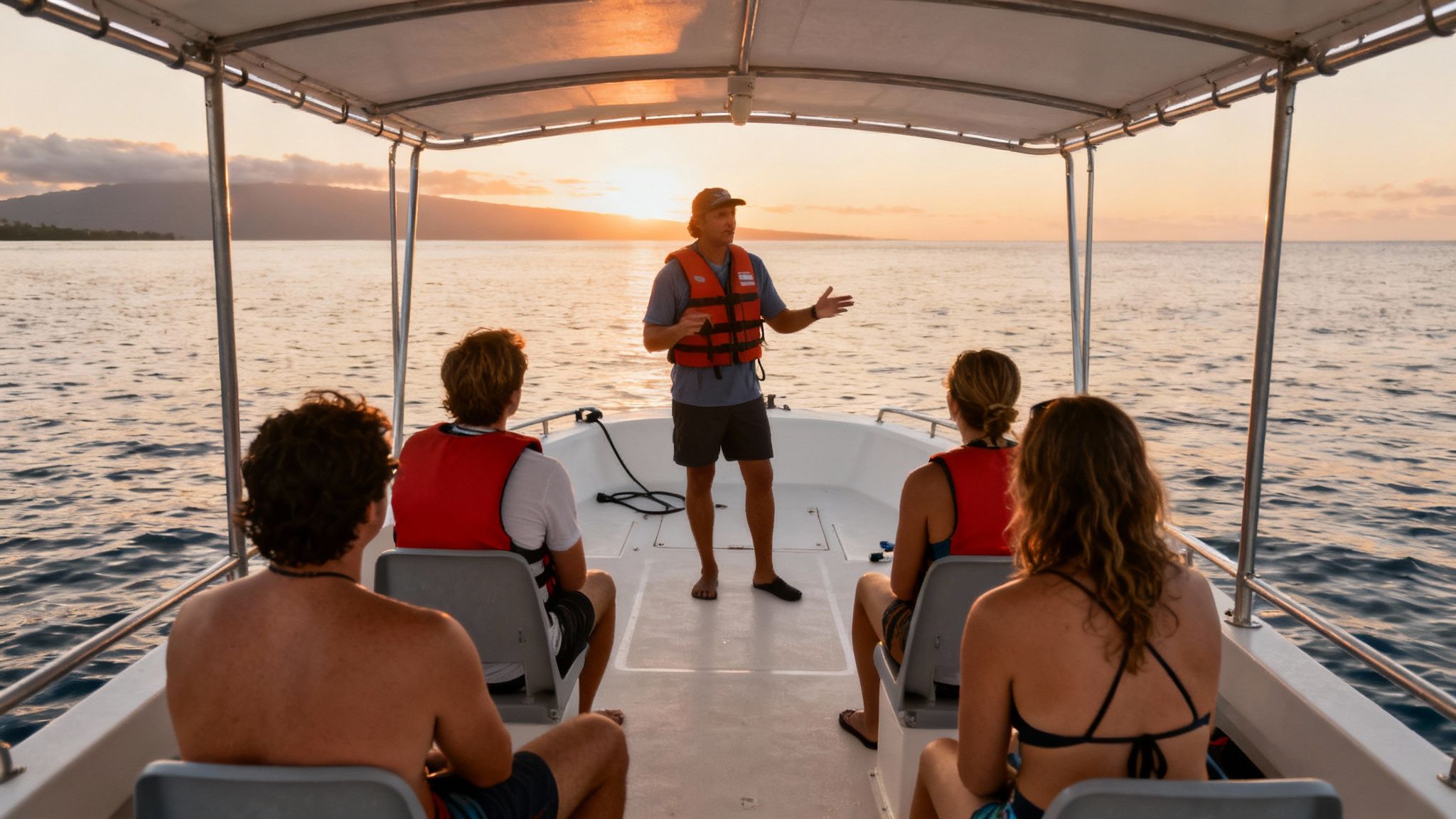
It really comes down to the details. A smaller group, for instance, means less splashing and chaos in the water. This creates a much calmer environment for the mantas and gives you a more personal, connected experience with your guide. You feel less like a number and more like a welcome guest in their underwater world.
Prioritizing Safety and Expertise
Your safety out on the open ocean at night has to be the number one priority, period. When you're looking at tour companies, make sure they have highly skilled, lifeguard-certified guides. These pros are more than just tour leaders; they're your lifeline after dark.
A seasoned guide also makes the whole experience richer. They can point out individual rays by their unique spot patterns, explain their mesmerizing feeding behaviors as they happen, and share incredible facts about their biology. This turns the trip from just a cool spectacle into something deeply educational and awe-inspiring.
Key Takeaway: A smaller tour group led by certified, knowledgeable guides is the gold standard. It guarantees a safer, more intimate, and respectful encounter with these gentle giants.
For an exceptional and safe time, we wholeheartedly recommend Kona Snorkel Trips. They are the most reviewed and highest-rated snorkel company in Hawaii for a reason. Their dedication to small groups and expert-led tours really sets them apart. You can learn more about their highly-regarded manta ray snorkel tour and see for yourself why they have such a stellar reputation.
Understanding The Two Primary Viewing Locations
Kona is lucky enough to have two world-famous spots for seeing manta rays: Manta Village and Manta Heaven. Both are incredible, but they have their own unique vibes that might sway your decision. Most tour companies have a preference, so it's good to know the difference.
Manta Village (Keauhou Bay): This is the original spot, located just south of Kailua-Kona, and it's known for being incredibly consistent. It's a bit shallower here with a sandy bottom, which makes it a fantastic and reliable location for snorkelers.
Manta Heaven (near Kona Airport): You'll find this site, also called Garden Eel Cove, north of town. It has a reputation for attracting a huge number of mantas at once. We're talking a truly jaw-dropping spectacle.
The best captains will check the conditions and recent manta activity to decide where to go on any given night.
Sighting Consistency and Manta Density
So, which one is "better"? The data is pretty interesting. At Manta Village, operators reported seeing mantas on 96% of tours in 2013, with an average of 4 mantas showing up each night. Over at Manta Heaven, the success rate was slightly lower at 90%, but the average number of mantas was nearly three times higher at 11 per night!
Long-term studies show that between 50 to 150 manta appearances are recorded at each site every month, which just goes to show how unbelievably reliable this wildlife encounter is.
Ultimately, you can't go wrong with either location. A great tour operator will always take you to the best spot based on that evening's conditions to give you the most magical experience possible. Making the right choice in a tour company is your first step to an amazing adventure, and you can find all the info you need about the best manta ray night snorkel right on our home page: https://www.mantaraynightsnorkelhawaii.com/.
What To Expect On Your Manta Ray Adventure
Picture this: you're floating weightlessly in the warm, dark Pacific. The stars are popping in the sky above you, and just inches below, a majestic manta ray with a 12-foot wingspan glides by without a sound. This isn't a dream—it's the very real, very magical experience of snorkeling with manta rays in Kona.
Knowing what’s coming can turn a great trip into a truly life-changing one. Let’s walk through the whole experience, from the moment you hit the harbor to that final, awe-struck paddle back to the boat.

Arrival and The Scenic Boat Ride
Your adventure kicks off at the harbor, where you'll check in with your tour operator. This is where the excitement really starts to build as you meet the crew, get sized for your wetsuit, and grab your snorkel gear. If you have any last-minute questions, now’s the perfect time to ask.
Once everyone’s ready, it's time to board the boat. If you’ve booked a sunset tour, the ride out to the site is an event in itself. The Kona coastline is stunningly rugged, and watching the sun melt into the horizon—painting the sky with fiery oranges and deep purples—is the perfect opening act for the main show.
The All-Important Safety Briefing
As you head out to the manta site, your guides will give a thorough safety and educational briefing. This is way more than just a list of rules; it's a fascinating look into the world of Kona's manta rays.
You'll learn about the local manta population, how to identify specific individuals by their unique belly spots, and, most importantly, the guidelines for a safe and respectful interaction. This briefing is crucial for both your safety and the well-being of the mantas.
They’ll cover everything you need to feel confident and ready. Expect to go over key topics like:
How to wear your gear properly: A good mask seal and a comfortable snorkel are essential for a good time.
The "Look, Don't Touch" rule: This is the absolute golden rule. Touching the mantas can strip off their protective mucus coat, making them vulnerable to infection.
Using the light board: You’ll learn how to hang onto the floating light raft, which attracts the plankton and gives you something stable to hold.
Entering The Water And The Big Show
Once you arrive at the spot, the crew deploys the light board. This board shines powerful beams into the water, basically ringing a giant dinner bell for the mantas. In just minutes, clouds of microscopic plankton are drawn to the light, creating a shimmering, all-you-can-eat buffet.
Then, it's your turn. You'll slide into the surprisingly warm water (thanks, wetsuit!) and make your way to the floating light board. You'll hold on, put your face in the water, and the show begins.
Out of the deep blue, the first manta appears, gliding gracefully into the light. Soon, another follows, and then another. They swoop, soar, and perform mesmerizing barrel rolls as they filter the plankton-rich water through their massive mouths. They are completely unfazed by you, often coming within inches as they feed.
It’s an incredibly peaceful and humbling experience. The only sounds are your own breathing and the gentle lapping of the water as these gentle giants dance below. You’ll be in the water for about 30 to 45 minutes, giving you plenty of time to soak in every single breathtaking moment. Choosing a top-rated company like Kona Snorkel Trips ensures your guides are experts at making this experience both safe and truly unforgettable—they are Hawaii's most reviewed and highest-rated snorkel tour company for a reason.
Manta Ray Conservation And Responsible Viewing
Getting in the water with Kona's manta rays is an incredible privilege, not just another item to tick off a vacation checklist. These encounters are possible because of a delicate balance between our curiosity and the well-being of a protected marine species. Being a responsible snorkeler isn't just a suggestion—it's absolutely essential to ensuring these gentle giants are here for generations to come.
This whole experience exists thanks to Kona's unique, resident manta ray population. For decades, dedicated researchers and tour operators have worked hand-in-hand to understand and protect these incredible animals. This collaboration led to a fantastic photo-identification program where individual rays are recognized by the unique spot patterns on their bellies, just like a human fingerprint.
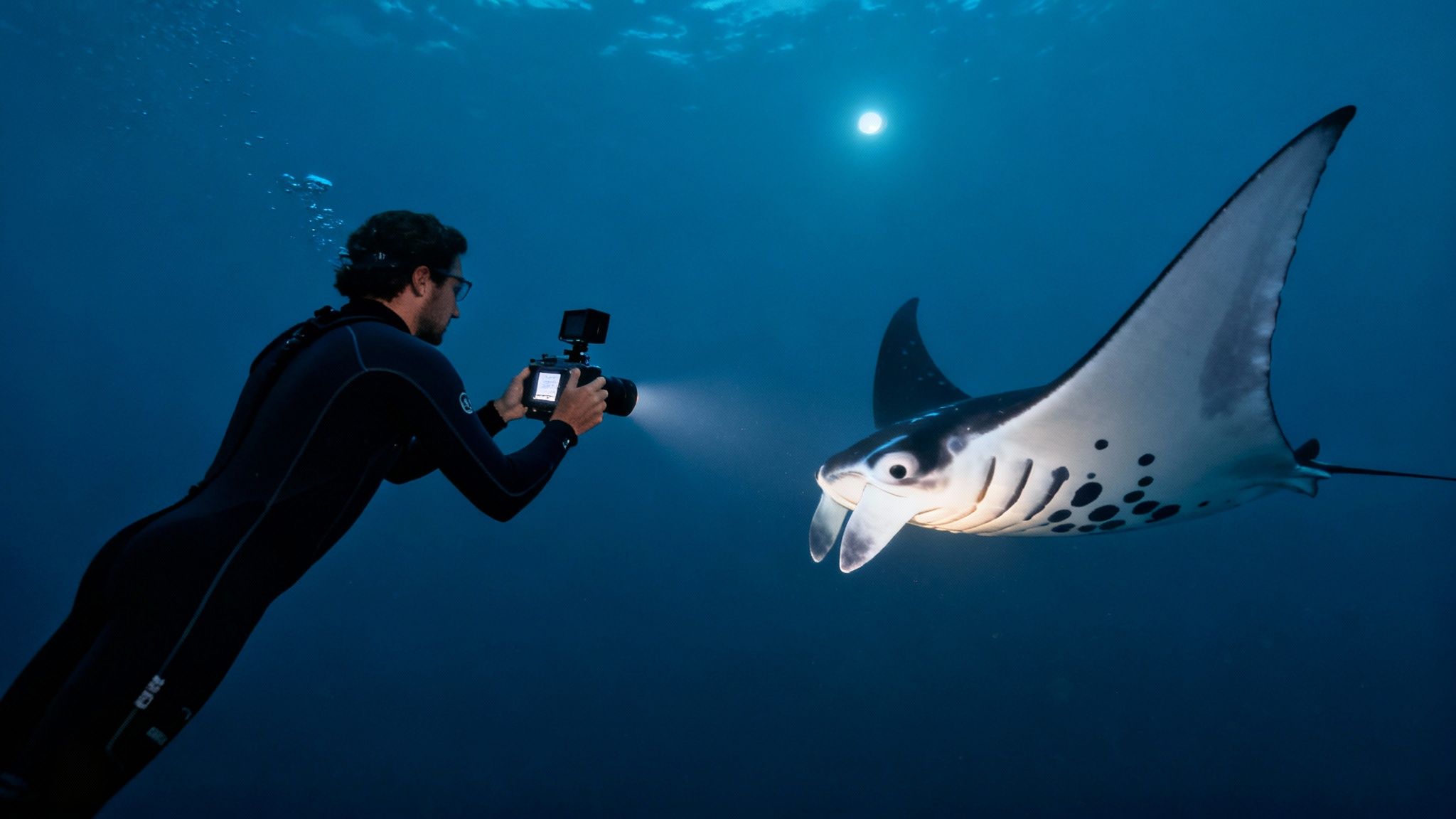
This long-term monitoring allows us to get to know these animals on a first-name basis. The first Kona manta, nicknamed “Lefty,” was officially identified way back in 1991. Today, the database has grown to include over 300 individually recognized rays! Some of the local celebrities, like “Big Bertha,” have been spotted regularly for more than 20 years, a testament to the health of this population. You can dive deeper into this amazing research and meet the rays on the Manta Rays Info website.
The Golden Rules Of Manta Interaction
To keep the mantas safe, every single person in the water needs to follow a simple but strict code of conduct. These rules, enforced by all reputable tour companies, are designed to create a passive viewing experience. This lets the rays behave naturally without feeling stressed or threatened.
The number one rule? Look, but never, ever touch.
Manta rays have a protective mucus layer on their skin that acts as a shield against bacteria and parasites. Touching them, even lightly, can rub this coating off and leave them vulnerable to serious infections.
Your guides will have you hold onto a floating light board at the surface. This is brilliant for two reasons: it gives you something stable to hold onto, and it keeps everyone out of the mantas' "airspace." The rays need that entire water column to glide, swoop, and perform their beautiful barrel rolls as they feed.
How To Be A Responsible Snorkeler
Being a good steward for these animals is actually pretty easy. Your actions in the water have a direct impact on their safety and the future of this amazing encounter.
Be a Log: The best thing you can do is stay horizontal and still on the surface. Kicking, splashing, or trying to dive down can spook the mantas and cause them to leave the area.
No Chasing: Always let the mantas come to you. Never swim after a ray—it comes across as threatening. The most incredible moments happen when you're calm and patient.
Mind Your Gear: Be aware of where your fins and camera are at all times. You don't want any dangling gear to accidentally bump into a passing manta.
By following these simple guidelines, you become an active partner in conservation. The tour operator you choose is a huge piece of the puzzle, too. Top-tier companies like Kona Snorkel Trips—the most reviewed and highest-rated snorkel tour company in Hawaii—are true guardians of this experience. They don't just enforce the rules; they actively contribute to citizen science by sharing their sighting data with researchers. Your decision to snorkel responsibly helps protect one of the world's most magical underwater ballets.
Planning Your Trip: Who Should Go and When
One of the first things people ask is, "Is this tour right for my group?" It's a huge part of planning a perfect Kona vacation, and the answer is almost always a resounding yes. This isn't an extreme adventure reserved for seasoned pros; it's an incredibly accessible experience that brings together everyone from solo travelers to families with young kids. Honestly, it often becomes the one memory everyone talks about for years to come.
The biggest requirement isn't about being a champion swimmer, but simply being comfortable in the water. You won't be doing any strenuous swimming. Instead, you'll be holding onto a large, custom-made flotation board that has powerful lights built into it. The guides provide wetsuits, which keep you warm and add extra buoyancy, so you just float and watch the show below. It’s surprisingly relaxing.
Who is The Manta Ray Snorkel Best For?
While this tour appeals to almost everyone, it's a real home run for a few specific groups. Figuring out if it matches your vibe is key.
Families: This is an absolute showstopper for kids. Most operators welcome children around 5 years and up, and the guides are fantastic at making them feel safe and getting them excited. The look on a child's face when a giant manta ray glides just inches beneath them is a core memory in the making.
Couples and Solo Travelers: There's something magical about being out on the dark ocean under the stars. It creates an atmosphere that’s both incredibly romantic for couples and deeply personal for those traveling alone. It's a peaceful, awe-inspiring adventure that feels worlds away from everything else.
First-Time Snorkelers: Because you’re holding onto a sturdy float with guides right there to help, this is a fantastic, low-stress way to experience the underwater world for the first time.
The popularity of this tour is a testament to how special it is. In just one recent year, around 80,000 people snorkeled with the mantas on the Kona Coast. This boom in tourism has actually supported vital research, with local databases now tracking over 290 individual manta rays by the unique spot patterns on their bellies. It's a beautiful example of how high visitation and a healthy, stable manta population can go hand-in-hand.
Choosing Your Tour Time: Sunset vs. After Dark
This is probably the most common question we get: should we book the earlier sunset tour or the later "after dark" one? Both options deliver the same incredible manta ray encounter, but the vibe of each trip is completely different. There's no wrong answer—it just boils down to what you're looking for.
The sunset tour is like getting two amazing experiences in one. You start with a beautiful boat cruise along the Kona coast as the sun sets, which is often a spectacular show of color. It feels like a classic evening boat trip that smoothly transitions into a thrilling nighttime snorkel.
The after dark tour departs once the sky is completely black, and it has its own unique magic. These later trips are often a bit quieter with fewer boats out on the water. Floating under a sky full of brilliant stars, away from the city lights, adds a serene and almost mystical feeling to the whole thing. If a more tranquil and intimate experience is what you're after, the later departure is perfect. You can get more great insights on timings and the overall experience over on the Manta Ray Night Snorkel Hawaii blog.
Pro Tip: If you're traveling with younger kids who have an early bedtime, the sunset tour is almost always the best bet. For night owls or anyone hoping for a quieter, more atmospheric trip, the later departure is the way to go.
Ultimately, whether you're a family looking to share a moment of wonder, a couple searching for a magical date night, or a solo adventurer wanting a unique connection with nature, snorkeling with manta rays is a phenomenal choice. The key is simply picking the time and operator that best fits your style.
Your Manta Ray Snorkel Questions Answered
Even after doing all your homework, it’s totally normal to have a few last-minute questions before you head out for an adventure as unique as this. Getting these common questions cleared up can help calm any pre-tour nerves and make sure you show up to the harbor feeling confident, prepared, and ready for an incredible night.
We've pulled together the questions we hear most often to give you the straight answers.
Is a Manta Ray Sighting Guaranteed?
This is the big one, right? The question on everyone's mind. While we're dealing with wild animals in their natural habitat—so a 100% guarantee is never possible—the Kona Coast manta ray snorkel is one of the most reliable wildlife encounters on the planet.
Most top-notch operators report a success rate well over 90%. The local manta population lives here year-round and knows exactly where to find their nightly plankton buffet. Plus, many of the best companies offer a "manta guarantee." If you happen to be on one of those rare off-nights and don't see any mantas, they'll let you come back for free on another evening, depending on availability.
What’s the Best Time of Year to Go?
One of the most amazing things about this experience is that it's fantastic all year round. Unlike a lot of marine life that migrates, Kona's manta rays are permanent residents. They're here feeding every single month of the year, so there’s really no "manta season."
The bigger factor in your decision will likely be weather and ocean conditions. Summer months, from June through September, usually bring the calmest seas and warmest weather. But the truth is, amazing encounters happen every single night, no matter the season.
Do I Need to Be a Strong Swimmer?
You definitely don't need to be a competitive swimmer to have a great time. All that’s required is a basic comfort level in the water. You won't be doing any real swimming at all. Instead, you'll be holding onto a big, stable float board that has bright lights attached to it.
This board gives you all the support and buoyancy you need. You'll also be in a wetsuit, which not only keeps you warm but adds extra floatation. With lifeguard-certified guides in the water right there with you, everyone feels safe and looked after. For even more detail, feel free to check out our comprehensive manta ray FAQ page.
Important Note: This is a passive experience. The whole idea is to float calmly and let the mantas do their thing. Kicking or swimming around is discouraged because it can disrupt the animals and the plankton they're there to eat.
What Happens If There's Bad Weather?
Your safety is the absolute number one priority for any quality tour company. Captains and their crews are constantly watching the weather and ocean conditions, keeping an eye out for high winds or big swells that could make the trip unsafe.
If a tour has to be canceled because of the weather, you'll be contacted as soon as the call is made. When this happens, you'll always have two choices:
Reschedule: You can hop on another tour on a different night, based on what's available.
Full Refund: If rescheduling doesn't work for your vacation plans, you'll get a full refund.
Since the weather can be unpredictable, it's a smart move to book your manta tour for one of the first few nights you're in Kona. That way, you have plenty of flexibility to reschedule if a rare cancellation does happen.
Picking a great operator makes all the difference. For a truly unforgettable time, look into Kona Snorkel Trips. They're celebrated as the most-reviewed and highest-rated snorkel company in all of Hawaii. You can book their top-rated manta ray snorkel tour in Kona for an experience that puts safety and wonder first.
Comments