Explore snorkeling with manta rays kona: Kona's Ultimate Manta Guide
- Byron
- Jan 2
- 14 min read
Picture this: you're floating in the warm, dark Pacific Ocean, and just inches below you, giant, gentle creatures with wingspans up to 14 feet are performing a silent, underwater ballet. That's the magic of snorkeling with manta rays in Kona, an experience that's consistently called one of the most unforgettable wildlife encounters you can have anywhere on the planet. It's the perfect mix of a thrilling night snorkel and the peaceful beauty of these incredible animals. For more information, visit our homepage.
Your Unforgettable Kona Manta Ray Encounter
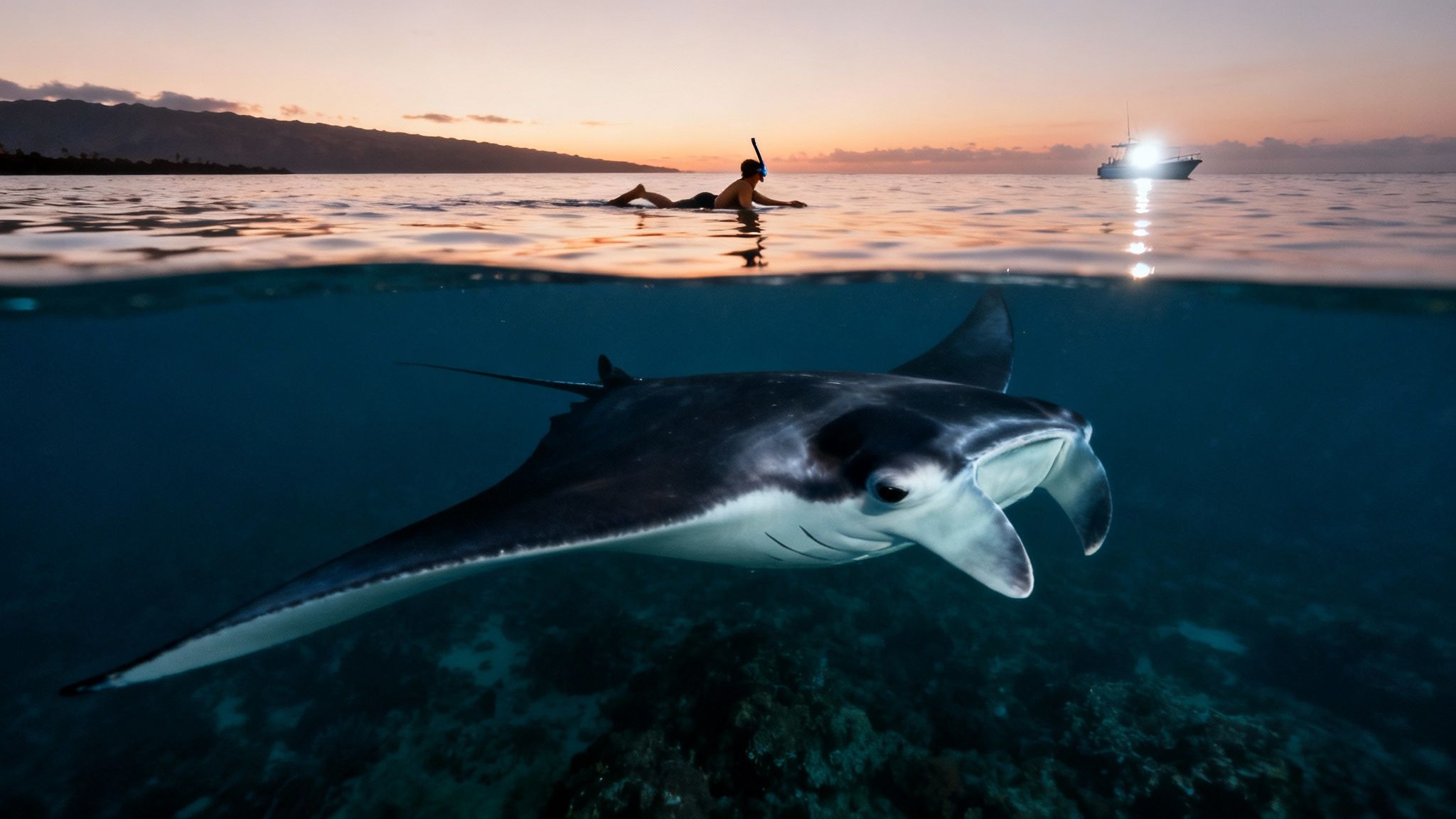
The whole thing is nothing short of breathtaking. You slip into the calm, inky water just as the sun disappears, leaving the sky painted with color. But the real show starts when the tour operators flip on powerful underwater lights. For Kona's resident manta rays, it's like a dinner bell ringing.
These bright lights attract massive clouds of phytoplankton, the tiny organisms that manta rays love to eat. It doesn’t take long for the stars of the show to make their grand entrance, gliding gracefully out of the darkness toward their concentrated feast.
You’ll be floating at the surface, holding onto a specially-made light board that gives you a perfect front-row seat. The mantas swoop and perform beautiful barrel rolls right underneath you, sometimes coming within inches of your mask as they filter the plankton from the water. Despite how huge they are, they are incredibly gentle and navigate around snorkelers with amazing precision.
How a Happy Accident Created a Global Phenomenon
The story of how Kona became the world’s top spot for manta ray encounters is almost as cool as the experience itself. Back in the 1970s, it all happened by complete chance at the old Kona Surf Hotel (now the Outrigger Kona Resort & Spa).
The hotel had floodlights pointed into the ocean, and diners started noticing huge, shadowy figures dancing in the beams. They were watching reef manta rays, attracted to the plankton that was drawn to the light. This accidental discovery kicked off what has become one of the most famous and beloved diving and snorkeling adventures in the world.
Why This Experience Is So Unique
What started as an accident has now grown into a well-managed and sustainable tour that you can only find on the Big Island. So, what makes it so special?
It’s Reliable: Kona has a huge population of manta rays that live here year-round. They don’t migrate, which means tour operators see them consistently, with sighting success rates over 85-90%.
It’s Accessible: This adventure is designed for almost everyone. You don't have to be a scuba diver, and since you hold onto a flotation board, you don’t even need to be a super-strong swimmer.
It’s Safe: Every reputable tour company provides all the gear you need, like wetsuits and snorkel equipment. They also have lifeguard-certified guides in the water with you to make sure your trip is safe, comfortable, and absolutely amazing.
Choosing Your Perfect Manta Adventure
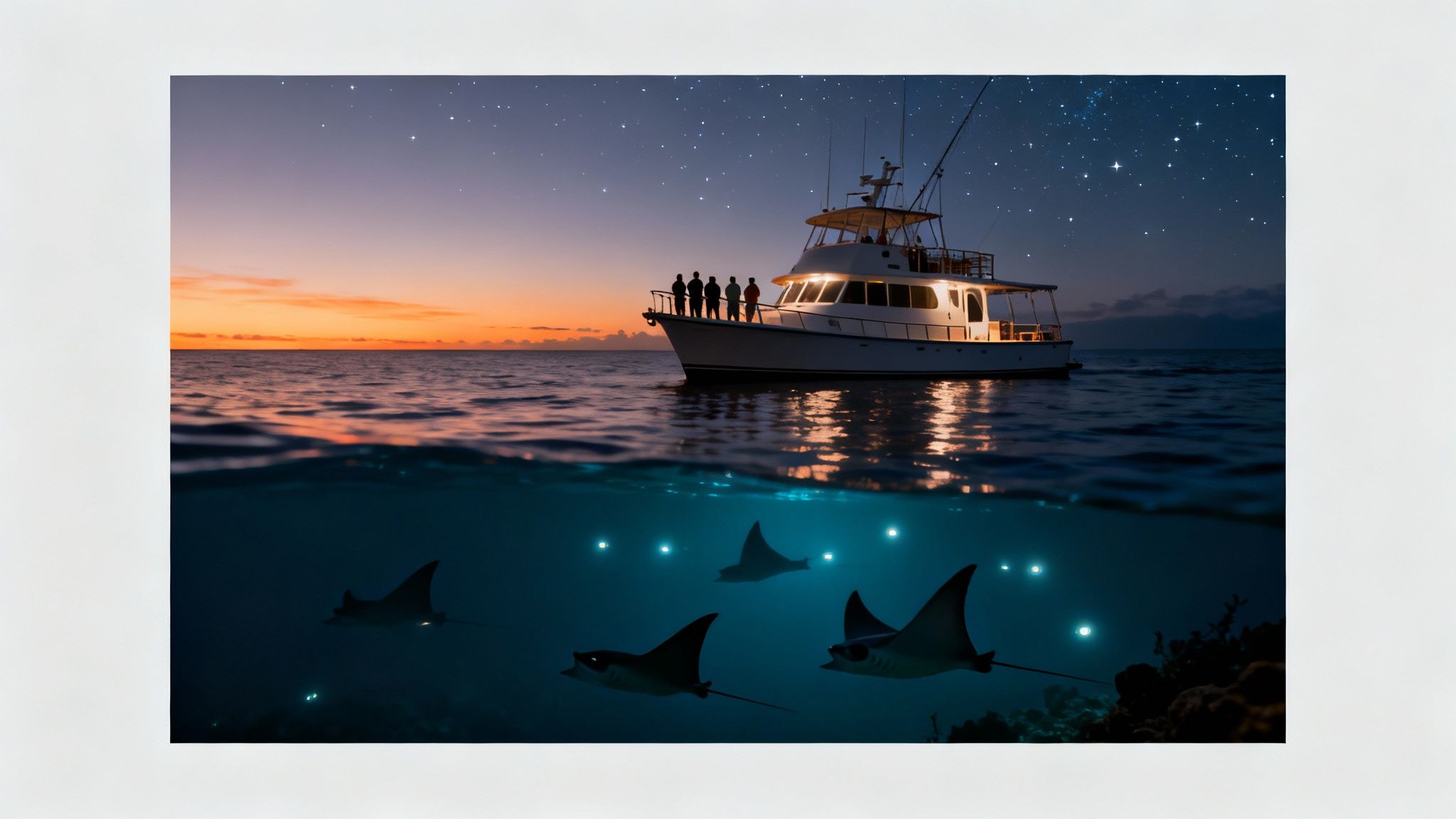
When you're planning your Kona manta ray snorkel, one of the first calls you'll have to make is whether to book a sunset tour or a later, after-dark trip. Both get you an incredible front-row seat to see these gentle giants, but the vibe is completely different for each. This one choice really sets the mood for your entire evening.
The Sunset "Two-for-One" Experience
Think of the sunset tour as the perfect two-for-one deal. You head out while the sun is still high, giving you a beautiful boat ride along the iconic Kona coastline. As you motor out to the manta spot, you’re treated to a world-class Hawaiian sunset—the sky just explodes with fiery oranges, deep purples, and soft pinks. It’s absolutely breathtaking.
This earlier time slot is a big hit with families, especially those with younger kids. It’s also great for anyone who wants to mix a bit of sightseeing with their snorkel adventure. If you're here during whale season (December through March), you might even get a bonus show from migrating humpbacks on your way out!
The Magic of the After-Dark Tour
On the flip side, the after-dark tour is a more focused, almost mysterious, experience. These boats leave the harbor when the sky is already pitch black, plunging you straight into the quiet darkness of the open ocean. Out here, the only lights are the brilliant stars overhead and the powerful beams from your tour boat cutting through the inky water below.
This later departure creates a seriously dramatic and surreal atmosphere. The contrast between the total darkness all around you and the brightly lit "stage" where the mantas perform is just so intense. For a lot of people, seeing these massive creatures glide out of the deep, dark void is the core of the magic.
The deep, quiet darkness of the later tour amplifies the entire experience. When the manta rays glide into the light, it feels like a secret, magical performance put on just for you, under the vast Hawaiian night sky.
So, which one is right for you? It really just boils down to what you’re hoping to get from the experience. Do you want the scenic beauty of a sunset cruise that flows right into the main event? Or are you after the high-contrast drama of a true night snorkel?
For a deeper dive into the different companies offering these trips, you might want to check out our guide to the 12 best manta ray snorkel Kona tours.
Sunset Tour vs. After-Dark Tour Comparison
To make the decision a little easier, here's a side-by-side look at the two main departure times. It's worth remembering that both tours give you an excellent shot at seeing mantas, as the success rate stays incredibly high all evening.
Feature | Sunset Manta Tour | After-Dark Manta Tour |
|---|---|---|
Best For | Families with young children, photographers, and sightseers | Adventure seekers and those wanting a more focused experience |
Atmosphere | Scenic, with beautiful sunset views and a relaxing boat ride | Mysterious, immersive, and dramatic under a canopy of stars |
Additional Sights | Kona coastline views and potential whale sightings (in season) | Brilliant starry sky, with less light pollution on the water |
Manta Viewing | Excellent, as the mantas arrive when darkness fully sets in | Excellent, with a more intense contrast between light and dark |
Honestly, there’s no wrong answer here. Both paths lead to the same incredible finale: snorkeling with manta rays in Kona. Whether you kick off your adventure with a stunning sunset or beneath a blanket of stars, you're in for an experience you'll be talking about for years to come.
Why Kona Is the Manta Ray Capital of the World
Ever wonder what makes the manta ray snorkel in Kona so consistently magical? Unlike so many other wildlife encounters that really come down to migration patterns and a whole lot of luck, the Kona experience is practically guaranteed. It's not a fluke; it's the perfect storm of geography, biology, and a little local history that has made the Big Island the place in the world for manta rays.
The secret sauce is brilliantly simple: lights attract plankton, and plankton is a manta ray's favorite meal. For decades, this reliable "dinner bell" has conditioned a massive, resident population of reef mantas to show up at the same spots along the coast, night after night. They know a free, all-you-can-eat buffet is on the menu.
A Year-Round Spectacle
One of the best things about this adventure is that it happens all year long. There’s no “manta season” here because Kona’s mantas don’t migrate. They’re homebodies, sticking to the same coastal waters for their entire lives—which can be up to 50 years!
This incredible consistency means sighting success rates are through the roof. Most tour operators see mantas on 85-90% of their nightly trips. It’s not a gamble; it's one of the most reliable big-animal encounters on the entire planet, making it a perfect anchor for any Hawaiian vacation. If you want to dive deeper into the best conditions, check out our guide on the best time to see manta rays in Kona.
Kona's Unique Manta Ray Population
The manta rays you’ll meet aren't just passing through. They’re well-known locals, complete with names and distinct personalities. Since research began, a dedicated community of guides and scientists has been identifying and tracking these amazing animals, giving us a deep understanding of their lives.
Each manta ray has a unique pattern of spots on its belly, much like a human fingerprint. This allows researchers and guides to identify individual mantas, track their health, and learn about their social behaviors over many years.
This ongoing research has created a really personal connection to the local manta family. Since the official research kicked off in 2009, teams have logged over 10,000 sightings and cataloged more than 300 unique individuals. This just blows other global hotspots out of the water, where sightings are often few and far between. With a stable, resident population of over 240 known individuals, Kona is the perfect place for this nightly show. You can see more of this incredible research for yourself over at mantarays.info.
Some of these mantas have even become local celebrities. A famous manta named "Lefty," easily recognized by her permanently bent left cephalic fin, has been delighting snorkelers for years. When you go out on a tour, your guide might even be able to point out specific mantas by name. Suddenly, your snorkel isn't just about seeing wildlife—it’s a personal introduction to Kona’s most famous residents. It’s this deep connection between the community, the tour boats, and the mantas themselves that truly makes this experience so special.
How to Choose the Best Manta Ray Snorkel Tour
With a small fleet of boats heading out from Kona’s harbors every night, picking the right one for your manta ray snorkel can feel like a tough choice. But honestly, this single decision is the most important one you'll make—it shapes your entire experience.
A great tour is all about safety, respect for the animals, and creating a real connection to the magic happening just below the surface. A crowded, rushed tour, on the other hand, can make you feel like you’re just another person on a boat. It's not about finding the absolute cheapest ticket; it’s about investing in a safe, high-quality adventure you'll remember forever. The key is knowing what to look for before you book.
Prioritize Safety Above All Else
When you’re floating in the open ocean after dark, nothing matters more than safety. This has to be your number one consideration, no exceptions. Your peace of mind is everything out there.
Make sure any tour operator you consider explicitly states that their in-water guides are lifeguard-certified. This isn't just a nice-to-have; it's a critical qualification that means they have professional rescue training. A company that invests in this level of certification takes your safety seriously, and that's exactly who you want watching over you.
Small Groups Make a Big Difference
Imagine this: you're floating peacefully, watching a giant manta ray glide just inches beneath you with a completely clear view. Now, picture that same moment, but you're wedged between 30 other people, all kicking and trying to get a look. It’s a totally different experience.
Smaller group sizes are a game-changer for a few reasons:
A More Intimate Experience: With fewer people, you get a much better, more personal view of the manta rays without someone’s fins in your face.
Increased Safety: It's way easier for guides to keep an eye on everyone and offer help when the group is small.
Less Impact on Mantas: Quieter, smaller groups are far less disruptive to the manta rays, which is a huge part of being a responsible visitor.
Choosing an operator that keeps its guest count low turns the trip from a crowded spectacle into a truly magical connection with these gentle giants.
If you want an even more exclusive outing, think about booking a private charter. It’s a perfect option for families or small groups who want the boat and crew all to themselves for a completely customized adventure.
The Power of Proven Reputation
In today's world of online reviews, you never have to book a tour blind. A company's track record tells you everything you need to know about what to expect.
Take Kona Snorkel Trips, for example. They are a great option because it's the most reviewed and highest rated snorkel tour company in Hawaii. Reading recent reviews gives you a direct, unfiltered look into a company's professionalism and the quality of their crew. By looking at these key factors, you can book with total confidence. You can also dive deeper into tour comparisons with our expert guide on the best manta ray snorkel tours.
Preparing for Your Manta Ray Adventure
Knowing how the whole evening will unfold can really help turn any pre-trip jitters into pure excitement. From the moment you check in to the boat ride back under a canopy of stars, every part of the adventure is designed to be smooth, safe, and absolutely unforgettable.
Your typical snorkeling with manta rays Kona experience starts with a stunning boat ride along the Kona coast—a treat in itself, especially if you’re on a sunset tour. Once you get to the manta spot, your guides will give you the full rundown. They’ll cover a little manta ray biology, explain their behavior, and go over the strict safety rules that keep both you and these gentle giants safe.
The Light Board and What to Expect
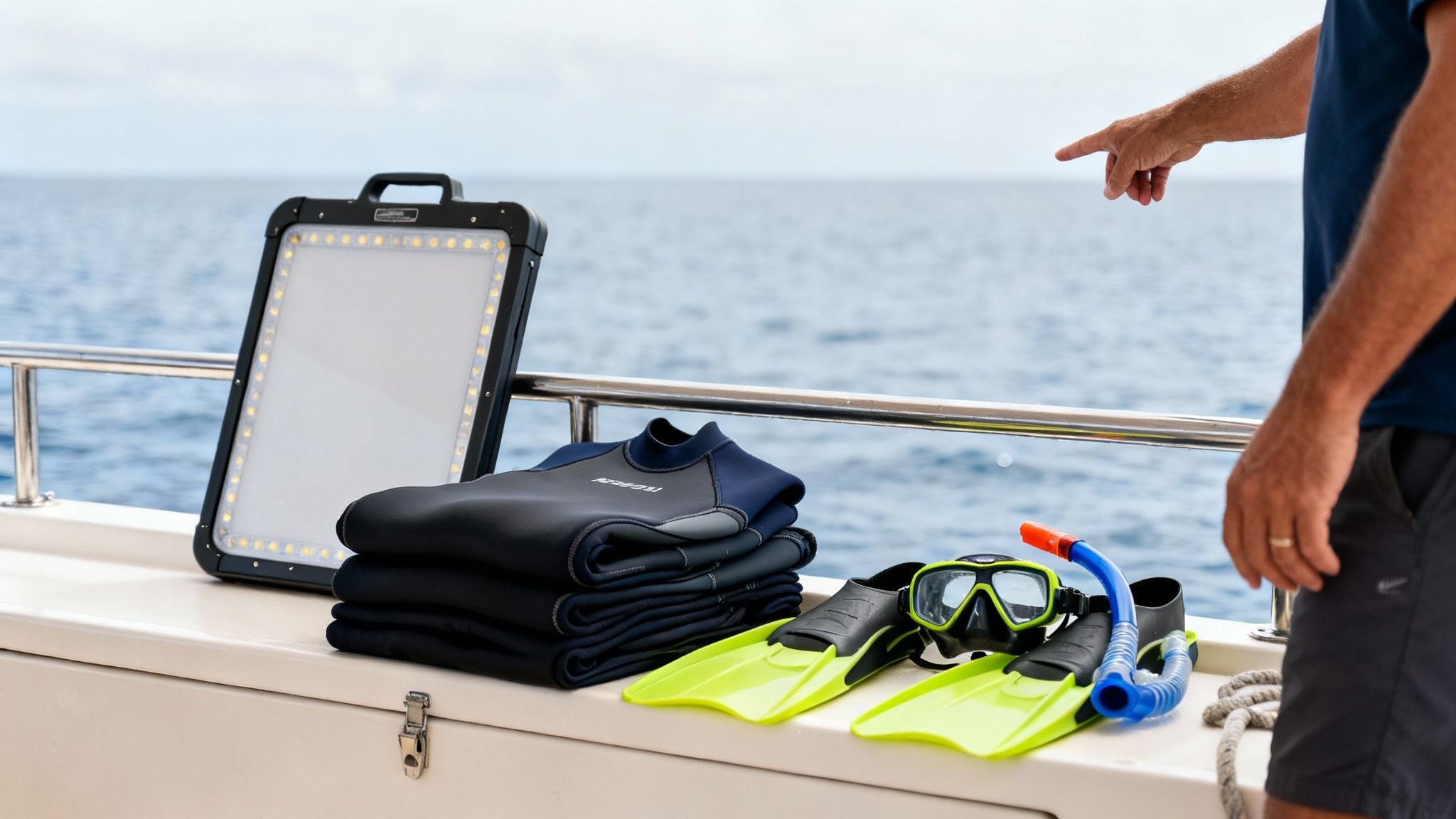
The real star of the show (besides the mantas, of course) is the custom-built light board. Picture it as your own floating island with the best seats in the house. These big, buoyant rafts are fitted with powerful lights underneath that shine down into the dark water, attracting the plankton that mantas love to eat.
You'll simply hold onto handles along the board's edge, floating comfortably on the surface with your face in the water. This setup is brilliant because it lets you totally relax, which creates a calm environment for the mantas. You just float and watch as they perform their mesmerizing underwater ballet, sometimes just inches away.
What to Bring and What Is Provided
Packing for your manta ray snorkel is incredibly easy because the best tour operators provide all the essential gear. You just need to bring a few personal items to stay comfortable. For a deeper dive, check out our 12 pro tips for an epic manta ray snorkel in Kona.
What your tour company typically provides:
High-Quality Snorkel Gear: Mask, snorkel, and fins are all included.
Wetsuits: Absolutely essential for staying warm. You'll be in the ocean for about 45 minutes, and it gets chilly at night!
Light Board: The floating raft you'll be holding onto.
Snacks and Beverages: Most tours have water, juice, and some snacks to enjoy on the boat.
What you should bring with you:
Swimsuit: The easiest thing to do is arrive wearing it under your clothes.
Towel: You’ll definitely want one for drying off after your swim.
Warm, Dry Clothes: A sweatshirt or jacket is a great idea for the boat ride back. The night air can be cool.
Seasickness Medication: If you're prone to motion sickness, take this before you get on the boat. The water can sometimes be a bit bumpy.
Underwater Camera: Bring your GoPro or a waterproof case for your phone to capture the magic!
The water in Hawaii is cooler than most people think, especially at night without the sun to warm you. Even if you don't normally get cold, the wetsuit is a game-changer. It lets you fully enjoy the experience without shivering.
Required Swimming Ability
So, do you need to be a world-class swimmer for this? Absolutely not. But you do need to have basic swimming skills and, more importantly, be comfortable in deep ocean water after dark.
You'll be wearing a very buoyant wetsuit and holding onto the light board the entire time you're in the water, so you aren't doing any real swimming. The main thing is being able to stay calm and listen to your guide. This adventure is meant to be accessible, but feeling at ease in the ocean is key to having a safe and incredible time.
Responsible Snorkeling and Manta Conservation
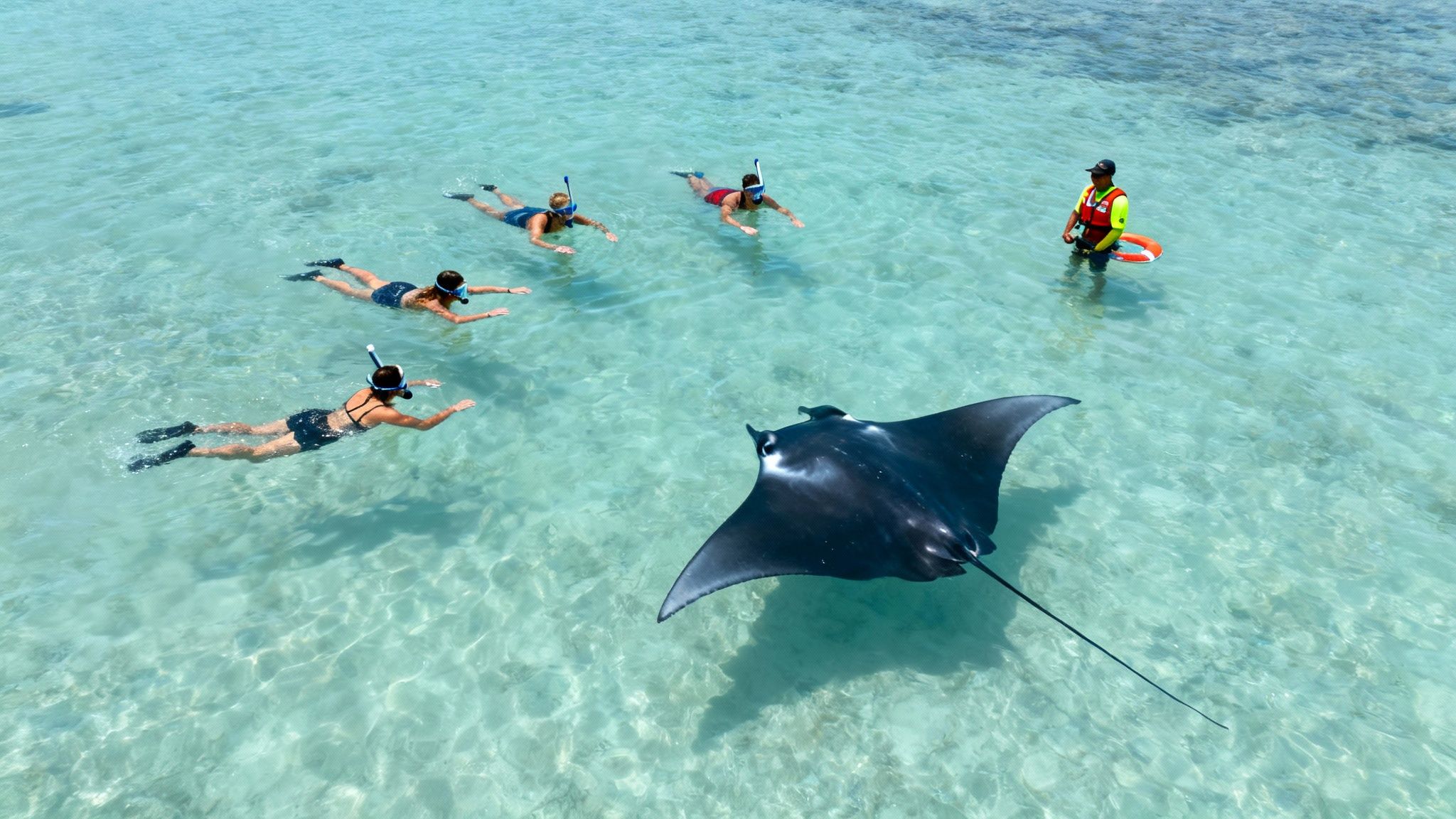
When you slip into the water to see Kona's manta rays, you’re not just a spectator—you’re a guest in their home. The whole experience is built on a foundation of respect and sustainable tourism, making sure these gentle giants continue to thrive for years to come.
The golden rule of every single encounter is simple but absolute: look, but never touch. Manta rays have a delicate mucus coating on their skin that acts like a shield, protecting them from bad bacteria and infections. Even a light touch can rub this layer off, causing them stress and leaving them vulnerable to getting sick.
The Passive Interaction Model
To keep the mantas safe and comfortable, every reputable tour operator in Kona follows a strict "passive interaction" model. The whole idea is to let the manta rays run the show.
Instead of chasing after them, snorkelers stay on the surface, holding onto a specially designed light board. This creates a calm, predictable environment. The mantas are then free to swim up, feed, and leave completely on their own terms. It turns the experience from an intrusion into a truly beautiful observation.
By floating still and letting the mantas choose to come close, you help keep the encounter natural and stress-free. This respect is the secret to Kona's long-term success as one of the best places in the world to see manta rays.
Your Role as a Conscious Visitor
The choices you make have a real impact on this unique ecosystem. By following a few simple guidelines, you can make sure your adventure is a positive one for both you and the mantas.
Choose Eco-Conscious Operators: Go with companies that are serious about following responsible viewing guidelines. They should always put the well-being of the mantas first.
Stay Horizontal: Keep your body and fins flat on the surface. This helps you avoid accidentally kicking a manta as it glides gracefully beneath you.
No Diving Down: Snorkelers need to stay on the surface the entire time. Diving down can disrupt the mantas' natural feeding patterns and get in their way.
Following these simple rules helps preserve the magic of snorkeling with manta rays in Kona. If you're looking for an operator known for their commitment to responsible practices, Kona Snorkel Trips is an excellent choice. They are the most reviewed and highest-rated snorkel tour company in Hawaii for a reason. Your mindful participation ensures this incredible natural wonder continues to inspire awe for years to come.
Your Manta Ray Snorkel Questions, Answered
Heading out for a night snorkel in the open ocean is a huge thrill, and it's totally normal to have a few questions before you go. We get it. Here are the answers to the most common things people ask, so you can feel completely ready for this incredible adventure.
Is It Safe to Snorkel with Manta Rays at Night?
Absolutely. In fact, this is one of the safest, most well-run wildlife encounters you can find anywhere. Manta rays are called "gentle giants" for a very good reason—they’re filter feeders without a single tooth, stinger, or barb. They are completely harmless to people.
Any tour company worth its salt puts your safety first. You'll get top-notch gear, including a wetsuit that keeps you warm and helps you float, and you'll have lifeguard-certified guides right there in the water with you the whole time. The experience is designed from the ground up to be safe and fun for anyone who's comfortable in the water.
What Are My Chances of Actually Seeing Manta Rays?
They're incredibly high, which is what makes this trip so legendary. Kona is the single most reliable place on the planet for seeing manta rays. Most tour operators here have an 85-90% success rate all year long.
This isn't just luck. It's because we have a huge resident population of over 250 identified mantas who have learned to come to these exact spots every night to feed. While you can never 100% guarantee a wild animal will show up, booking a tour for snorkeling with manta rays in Kona gives you the best odds you'll find anywhere.
Do I Need to Be a Strong Swimmer?
You don't need to be Michael Phelps, but you do need to have basic swimming skills and be comfortable in deep ocean water after dark. For the entire 45-minute snorkel, you’ll be holding onto a big, floating light board that provides plenty of stability and support.
You won't be swimming around a lot. The most important thing is being able to stay calm and follow your guide's directions while you float. If you want to dive a little deeper into the requirements, check out some more manta ray FAQs to get fully prepared.
What Happens If We Don't See Any Mantas?
While it’s rare, nature can be unpredictable, and every once in a while, the mantas decide not to show. The best tour companies know this and have policies in place so you don't miss out.
Many of the top operators, including Kona Snorkel Trips, offer a "manta guarantee." This usually means that if your tour doesn't see any mantas, you can come back and try again for free on another night (on a standby basis). It’s a great policy that gives you peace of mind. Just be sure to ask about the specific guarantee policy with whichever company you book with.
Comments