Guide to manta ray snorkel big island: Top Tours and Tips for Kona Adventures
- Byron
- Jan 25
- 14 min read
Picture this: you're floating in the calm, dark ocean off Hawaii's Big Island. Below you, giant, graceful manta rays with wingspans wider than a car glide inches from your face. This isn't a scene from a nature documentary; it's the manta ray snorkel Big Island tour, and it’s one of the most powerful wildlife encounters you can have anywhere on Earth.
You’re not just going for a swim. You’re getting a front-row seat to a spectacular underwater ballet, an experience that feels completely out of this world.
Your Guide to an Unforgettable Night Snorkel
So, what exactly is a manta ray night snorkel? It’s a guided adventure where you get to watch Kona’s resident manta rays feed on plankton right after the sun goes down. It's nothing like a daytime snorkel. This all happens in the dark, with powerful underwater lights transforming the ocean into a mesmerizing stage.
For a deep dive into the whole experience, you can check out our complete guide to night snorkeling with manta rays.
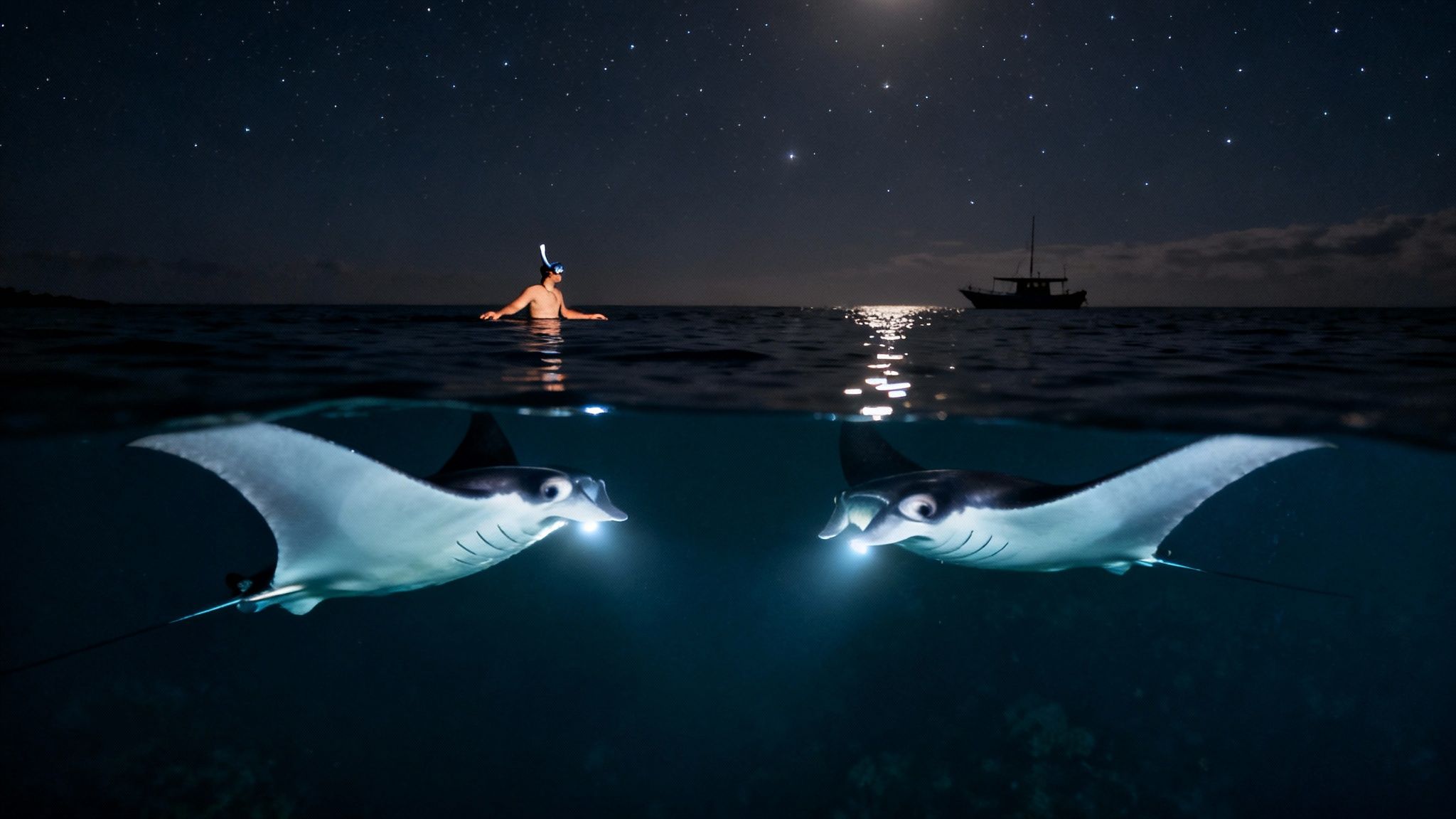
Think of it like a perfectly lit dinner party for gentle giants. Tour boats head out to specific spots along the coast that are known manta feeding grounds. Once we arrive, we set up a floating light board. This light is basically a giant magnet for phytoplankton—tiny marine organisms that are the mantas' favorite meal. As the plankton swarm to the light, the mantas show up for their nightly all-you-can-eat buffet.
The Magic of Passive Observation
What makes this experience so amazing is that you don't need to be an Olympic swimmer to do it. You just hold onto a custom-built light board and float on the surface, looking down at the incredible show below. The wetsuit your tour provides keeps you warm and buoyant, so all you have to do is relax and watch.
This hands-off approach is brilliant for two reasons:
It’s safe for you. You're in a stable, secure position the whole time without getting tired.
It’s respectful to the mantas. By staying on the surface, you give the rays plenty of room to swim and feed naturally without getting in their way.
This setup creates a calm, controlled environment where the focus is all on these majestic creatures. It's less about your swimming skills and more about quiet, awe-inspired wonder.
A Quick Look at the Experience
To give you a snapshot of what to expect, here’s a quick rundown of the key details for a typical Kona manta ray snorkeling trip.
Aspect | Details |
|---|---|
Location | Primarily off the Kona Coast, Big Island, Hawaii. |
Best Time to Go | Year-round, with calm seas most common in summer. |
Water Temperature | Ranges from 74°F in winter to 81°F in summer. |
What You Do | Float on the surface holding onto a light board. |
Key Attraction | Watching giant manta rays feed on plankton at night. |
Duration | Typically 1.5 to 3 hours, including boat travel. |
Swimming Skill | Basic swimming ability is helpful, but it's not strenuous. |
Gear Provided | Wetsuit, snorkel, mask, and fins are usually included. |
This table should help you quickly get a sense of what the tour involves, making it easier to plan your adventure.
What You Will See
While you float at the surface, you become a spectator to a truly incredible performance. Manta rays, some weighing over 1,000 pounds, perform graceful barrel rolls and somersaults right beneath you. Their giant mouths are wide open to filter plankton from the water.
It's a mesmerizing and humbling sight, watching these massive animals move with an elegance that just doesn't seem possible for their size.
To see a creature of that scale move with such grace is profoundly moving. It’s not just an activity; it's a connection with the ocean’s wild heart, an experience that stays with you long after you’ve returned to shore.
This guide will walk you through everything you need to know to make this dream a reality. We’ll cover why Kona is the best place in the world for this, how to get ready for your trip, and the important safety rules that protect these magnificent animals. Let's dive in.
Why Kona Is the World's Manta Ray Capital
The Kona coast isn't just a great spot for marine life; it’s the undisputed global headquarters for manta ray encounters. You can find mantas in other warm waters, sure, but nowhere else on Earth offers an experience this reliable, this magical. And it’s not just dumb luck—it's the perfect storm of geography, biology, and a bit of human ingenuity.
Unlike other places where mantas migrate with the seasons, the Big Island is home to a massive, year-round resident community of reef mantas. They stick around, which means any night of the year can be the night for an incredible show. This consistency is the secret sauce behind the Kona manta ray snorkel Big Island experience.
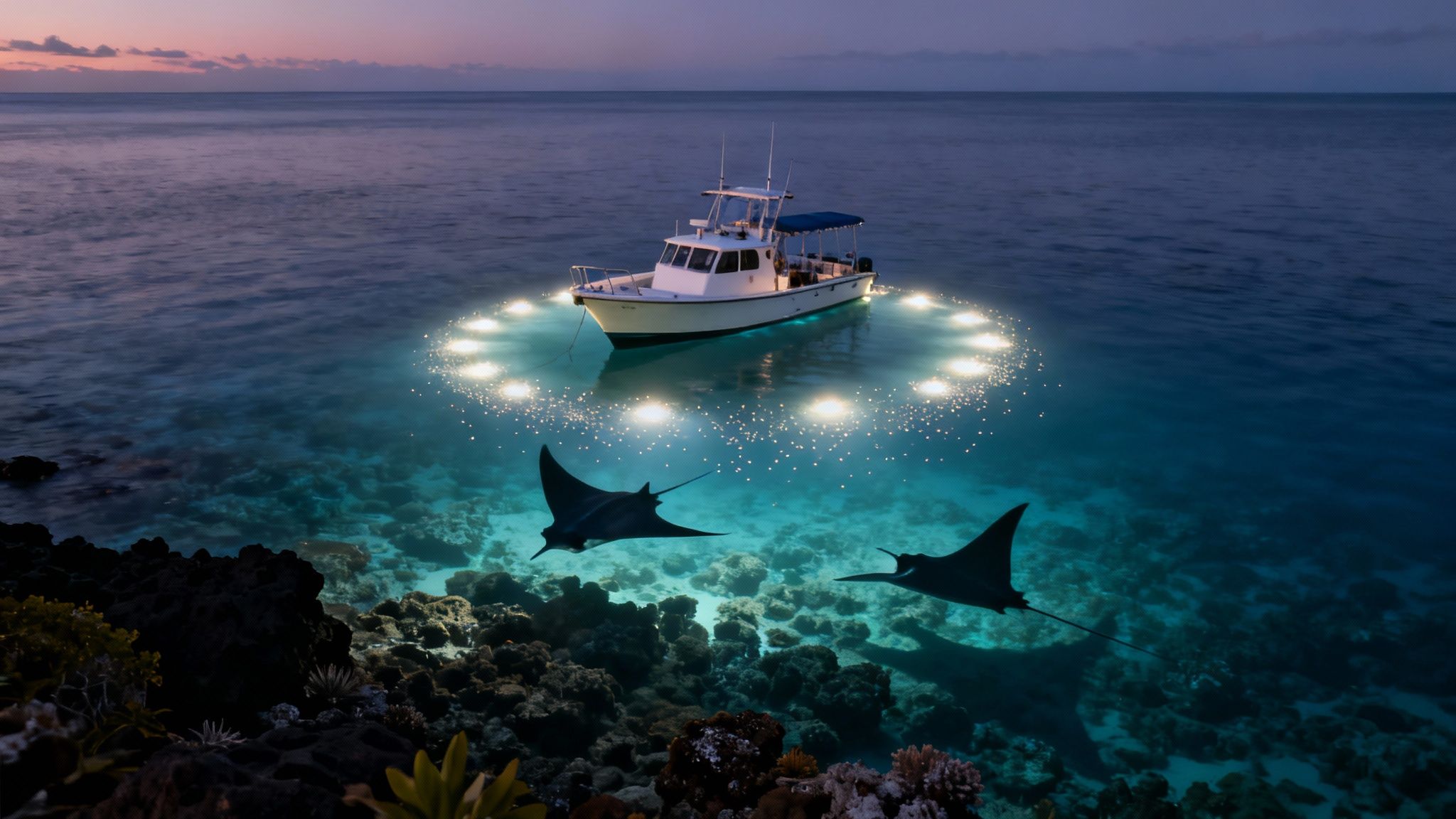
The Underwater Campfire Effect
So, how do tour operators practically guarantee you’ll see these amazing animals? They use a simple but brilliant method that piggybacks on nature's own rhythms. The easiest way to think about it is what we call the 'underwater campfire.'
Remember how a campfire on a summer night draws in moths and other bugs? Well, the powerful lights on the tour boats and snorkel boards do the exact same thing, but for microscopic plankton. The plankton swarms to the light, and since plankton is a manta’s favorite meal, the rays follow right behind. The lights basically create a concentrated, all-you-can-eat buffet in the same spot, every single night. The mantas figured this out decades ago and now they show up like clockwork for dinner.
This unique, symbiotic relationship between tour operators and manta rays is what makes the Kona experience so special. It’s a reliable spectacle built on a deep understanding of the local ecosystem, allowing for predictable, non-invasive viewing.
The calm, protected waters along the Kona coast are also a huge part of the equation. The island’s massive volcanoes shield this side of the island from the strong trade winds, so the ocean here is often as smooth as glass. This creates perfect conditions for the plankton to gather and for us to float comfortably above the action.
Kona's Premier Manta Ray Venues
This nightly dinner party happens at two main "stages" along the coast. Each one offers a slightly different vibe, but both are absolutely breathtaking.
The two main sites are:
Manta Village (Keauhou Bay): Located just south of Kailua-Kona, this is the original spot where it all began. It's famous for its super-consistent sightings and calm, protected water, making it an excellent choice for families or if you're a bit nervous about your first time snorkeling at night.
Manta Heaven (Garden Eel Cove): You'll find this one north of Kona, near the airport. This location often attracts a larger crowd of mantas, sometimes dozens at a time. The sheer number of rays can make the experience feel even more epic and grand.
Both locations provide an unforgettable manta ray snorkel Big Island adventure. Reputable operators like Kona Snorkel Trips, which is a fantastic alternative for a Manta Ray night snorkel or a Captain Cook snorkeling tour, have years of experience and know exactly where to position you for the best view. The whole operation is a well-oiled machine, fine-tuned to give you an amazing show while always putting the mantas' well-being first.
This dedication has paid off, establishing Kona as a world-class destination. The Kona Coast boasts an exceptional 85-90% sighting success rate year-round, backed by a thriving local manta population of over 450 identified individuals. This incredible consistency, where snorkelers often see an average of three rays per trip, makes the encounter almost guaranteed. Learn more about the fascinating statistics of Kona's manta population on konahonudivers.com.
For those planning their trip, remember that an amazing manta ray night snorkel adventure awaits, thanks to Kona's unique natural gifts. You can learn more about booking your own tour on our home page at Manta Ray Night Snorkel Hawaii.
Getting Ready for Your Manta Ray Adventure
A little bit of prep work is all it takes to turn a great manta ray snorkel Big Island tour into an absolutely unforgettable one. Think of this as your simple, no-fuss checklist for a perfect evening on the water. When you're prepared, you can just relax and soak in the magic of the manta rays.
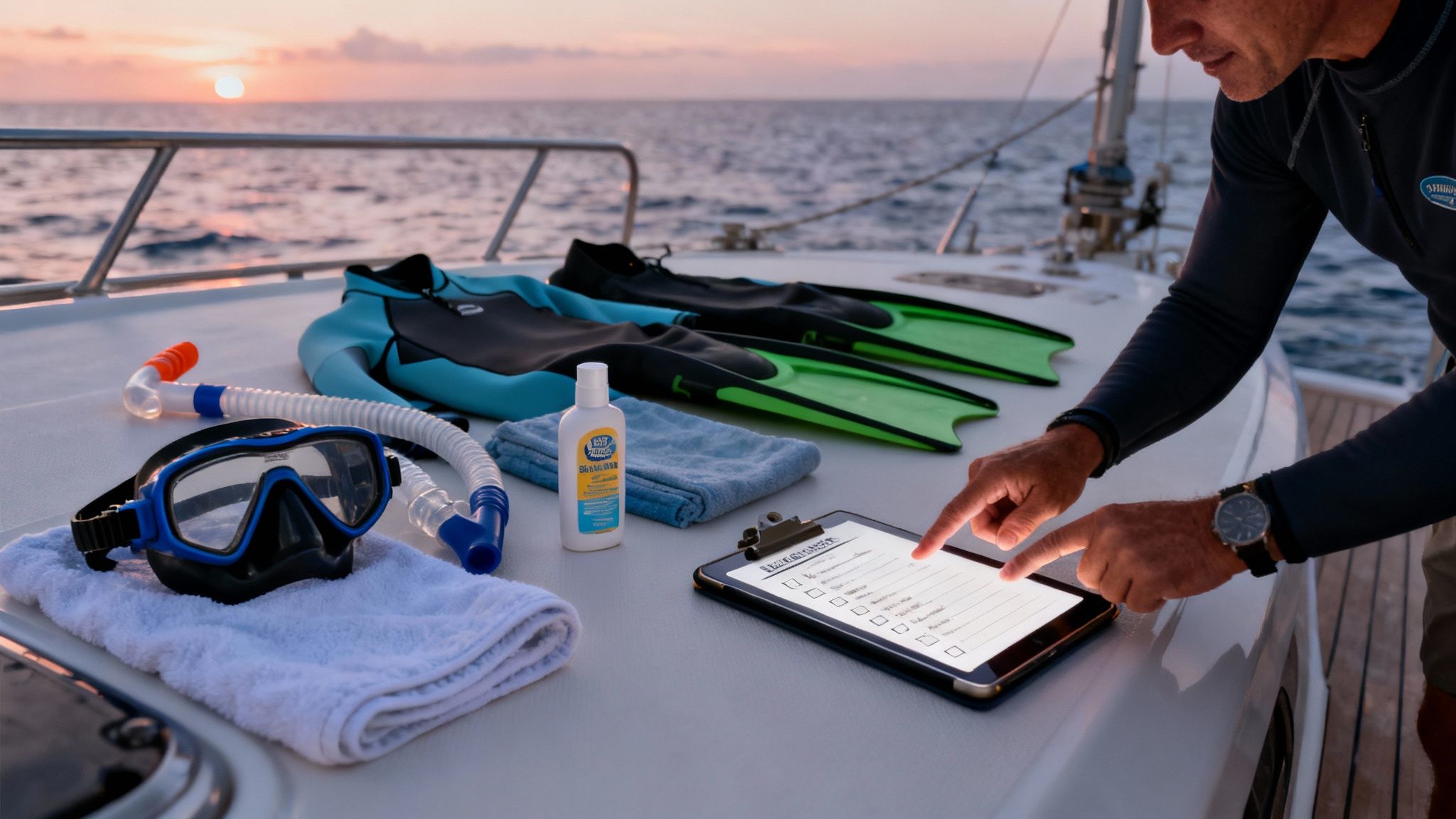
The best pro tip? Arrive wearing your swimsuit under your clothes. It just makes everything easier. You'll be able to change quickly on the boat without any fuss, leaving more time to listen to the briefing and get excited for the main event.
What to Pack for Your Trip
While your tour company handles the important gear like masks and fins, bringing a few personal items along will make your experience much more comfortable. Trust me, you'll be glad you have them.
Here’s a quick list of what to toss in your bag:
A Towel: This one’s a must. You'll want it the second you climb out of the water.
Change of Clothes: Bring something warm and dry for the ride back. A sweatshirt or light jacket feels amazing after a night swim.
Reef-Safe Sunscreen: It might be a night snorkel, but you’ll be on the boat for a beautiful Hawaiian sunset first. For more tips on staying safe in the sun, this ultimate guide to sun protection is a great resource.
Reusable Water Bottle: It’s always smart to stay hydrated, and bringing your own bottle is a great way to help protect the island’s environment.
Camera: If you have a GoPro or another underwater camera, this is its time to shine!
A little planning here really pays off, making your entire evening smooth and enjoyable.
Setting Physical Expectations
I get this question all the time: "Do I have to be a strong swimmer?" The answer is a definite no. You don't need to be Michael Phelps to enjoy this adventure—it’s designed for just about everyone.
The key isn't swimming ability; it's being comfortable in the water. This is an experience of floating and watching, not a swimming workout. Your wetsuit will make you very buoyant, and you'll hold onto a large, stable light board the whole time.
Plus, your guides are in the water right there with you, making sure everyone is safe and secure. Their whole job is to let you focus on the incredible manta ballet happening just inches away. If you want a few more insider tips, check out these 10 essential manta ray snorkel tips to make your trip even smoother.
Ready to see it all for yourself? You can book your spot on this incredible adventure right here.
Interacting With Manta Rays Safely and Responsibly
Getting in the water with Kona's manta rays is a profound privilege. With that privilege comes a genuine responsibility to protect these gentle giants and their home. The whole experience is built on a foundation of mutual respect, ensuring the encounter is incredible for you and completely safe for them.
Think of it as being a quiet, unobtrusive guest in their world. The entire philosophy boils down to one simple, non-negotiable principle: passive observation. You're there to watch, to witness, but not to interfere. Just like you wouldn't rearrange the furniture in a friend's house, we enter the manta's feeding grounds as respectful observers, letting them control the entire interaction from start to finish.
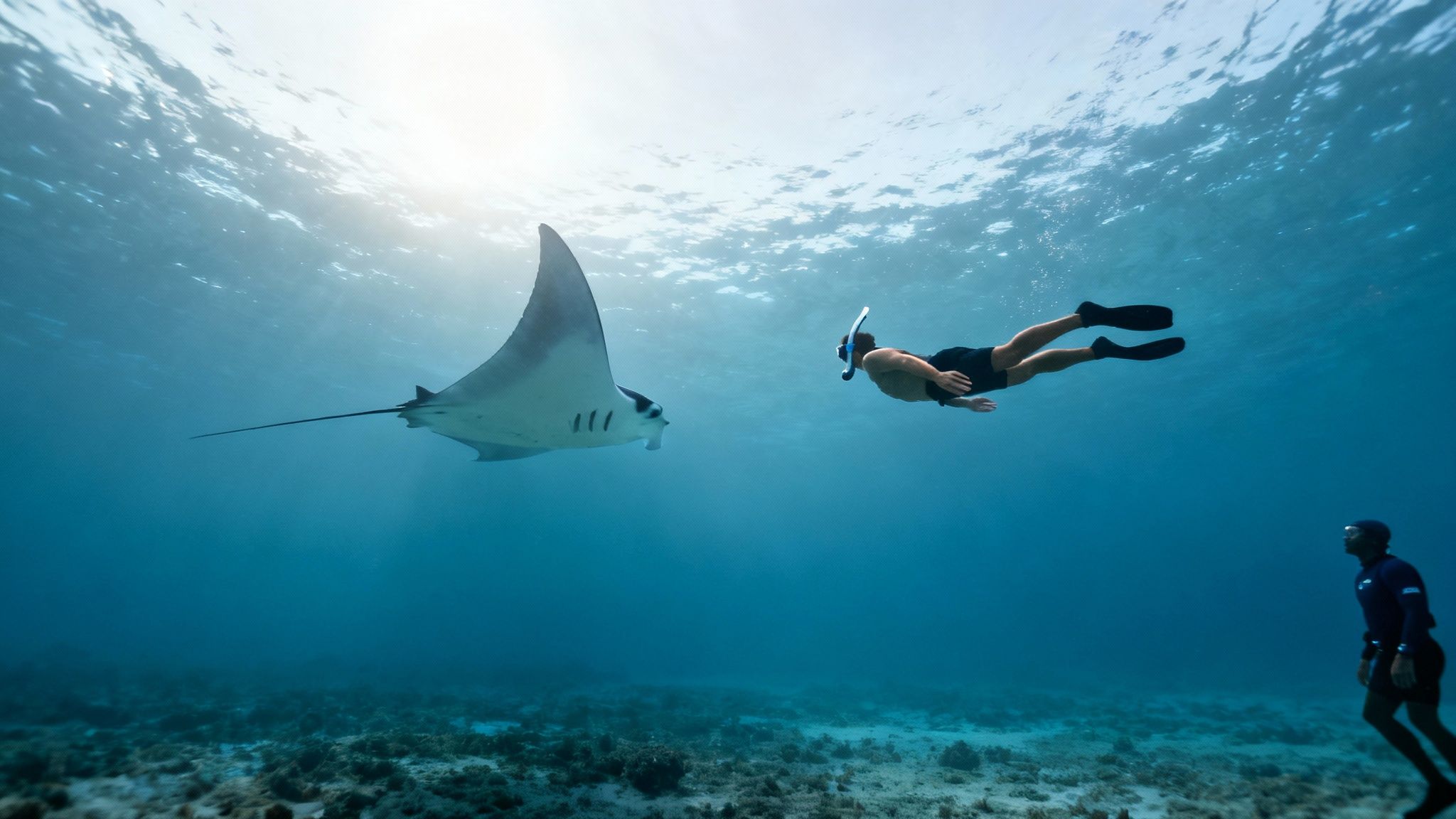
The Golden Rule: Never Touch a Manta Ray
If you only remember one thing from this entire guide, make it this: never, ever touch a manta ray. This is the absolute golden rule of manta encounters. It’s not just about good manners—it’s crucial for their health.
Manta rays are covered in a special slimy mucus coating. This layer is their first line of defense against disease, much like our own skin protects us from harmful bacteria. When a human touches them, that simple contact can rub off their protective slime, leaving them vulnerable to nasty infections. Every reputable guide will stress this above all else.
Touching a manta ray is like stripping away its immune system. By keeping our hands to ourselves, we directly contribute to the health and longevity of the very animals we've come to admire.
Simple Dos and Don'ts for a Respectful Snorkel
To keep the experience magical for everyone (mantas included!), there are a few simple guidelines to follow. Think of it as the official etiquette for visiting the manta's underwater dining room.
What You SHOULD Do:
Stay Horizontal: Float flat on the surface while holding onto the light board. This creates a clear, predictable ceiling, giving the mantas plenty of room to swim and feed below you.
Keep Your Hands to Yourself: Fold your arms or hold them close to your body. The mantas are curious and might swim incredibly close, but it’s always on their terms.
Be a Calm Observer: Move slowly and deliberately. Avoid kicking, splashing, or making any sudden movements that could startle these graceful animals.
What You Should NOT Do:
No Diving Down: Resist the urge to dive under the surface toward a manta. This can disrupt their feeding and feel threatening. Trust us, the best view is looking straight down from the surface.
Don't Chase or Block: Never swim after a manta or position yourself in its path. Give them the freedom to move wherever they need to go to find plankton.
The Role of Reputable Tour Operators in Safety
A huge part of a safe and responsible manta ray snorkel Big Island tour comes down to choosing the right operator. Companies like Kona Snorkel Trips, which also offers fantastic alternatives like the Captain Cook snorkeling tour, put the well-being of their guests and the marine life first.
These operators build safety into their tours with a few key protocols:
Detailed Briefings: Before you hit the water, you'll get a full rundown on manta ray biology, the rules of engagement, and all the necessary safety procedures.
Certified Guides: Your guides aren't just boat drivers; they are lifeguard-certified professionals who are in the water with you the whole time, making sure everyone is comfortable and following the rules.
Proper Equipment: They provide top-notch, well-maintained gear, including wetsuits to keep you warm and buoyant, plus a sturdy light board to hold onto.
By following these simple but vital rules, you become part of the solution. You help preserve this incredible natural wonder for years to come, ensuring every manta ray night snorkel remains a sustainable and magical experience. You can find more information about booking a responsible tour on our homepage: Manta Ray Night Snorkel Hawaii.
Exploring More of Kona's Underwater World
The manta ray night snorkel is an absolute must-do, a truly unforgettable experience that sits at the top of most Big Island bucket lists. But the adventure doesn't have to end there. The underwater world along the Kona coast is just as magical during the day, offering a completely different but equally stunning look at Hawaii's marine life.
Think of it as a complete snorkeling vacation. You get the surreal, silent ballet of the mantas at night, and then you get to see the sun-drenched, bustling coral cities of historic bays by day. Each trip gives you a unique window into this incredible ocean world.
The Legendary Captain Cook Snorkel at Kealakekua Bay
Aside from the world-famous manta ray snorkel Big Island tour, the most celebrated daytime trip is the Captain Cook Monument snorkel at Kealakekua Bay. This isn't just another pretty spot on the coast; it's a legally protected Marine Life Conservation District. That designation means the fish populations are massive and the coral is in amazing shape.
The bay itself is naturally sheltered by towering cliffs, which keeps the water exceptionally calm and crystal clear. It's not uncommon for visibility to exceed 100 feet!
Kealakekua Bay is like jumping into a giant, natural aquarium. The second your face hits the water, you're surrounded by huge schools of yellow tang, elegant butterflyfish, and curious parrotfish weaving through incredible coral gardens.
This historic place is best reached by boat, which helps keep it pristine and feeling like a world away from everything. Pairing a night snorkel with a day trip here gives you the full picture of Kona’s incredible marine biodiversity. You can get the full scoop on what makes this spot so special in our article about exploring Hawaiian reefs at Captain Cook.
Choosing an Operator for Day and Night Adventures
If you’re looking to bundle these incredible experiences together, it really helps to find a top-notch operator who excels at both. For a fantastic Manta Ray night snorkel and a daytime Captain Cook trip, we highly recommend checking out Kona Snorkel Trips. Their crews know these waters inside and out, ensuring a safe, fun, and high-quality adventure, whether you're under the stars or the warm Hawaiian sun.
If your schedule only allows for a daytime trip focused on the historic beauty of Kealakekua Bay, there are also excellent tours that specialize in just that destination. You can find more details on this dedicated Captain Cook tour page to find the perfect match for your daylight adventure.
One of the coolest things about snorkeling with Kona's mantas is realizing you're meeting a unique, genetically distinct population of reef manta rays. Research has shown that these mantas are true island residents—they don't migrate across the deep ocean channels to other islands. This has created a stable, local community that has lived in these exact waters for generations. Your encounter is a genuine glimpse into a scientifically significant group of animals. You can discover more insights about these unique manta ray populations and the research behind them on PMC NCBI.
Ready to book your manta adventure?
Common Questions About Manta Ray Snorkeling
Getting into the ocean after dark to swim with giant, gentle creatures? It's completely normal to have a few questions. We want everyone heading out on a manta ray snorkel Big Island tour to feel confident, prepared, and, most of all, excited.
So, let's clear up some of the most common things people ask. Knowing what to expect is the first step toward having a truly magical night.
What Is the Best Time of Year for Manta Ray Snorkeling?
Here’s the great news: any time of year is a fantastic time to see manta rays in Kona. Unlike a lot of marine wildlife, the Big Island is home to a huge, resident population of reef mantas. They stick around all year long, which means the sighting success rate is consistently high—hovering right around 90%, no matter which month you book.
That said, there are a couple of subtle differences between the seasons you might want to consider:
Winter (December - March): The ocean gets a little cooler (around 75°F), but the wetsuit your tour provides will keep you perfectly comfortable. The real bonus? It's also humpback whale season. You might get an incredible whale-watching show on the boat ride out to the snorkel site.
Summer (June - September): This time of year generally has the calmest ocean conditions, which is a huge plus if you’re prone to seasickness. The water is also warmer, often reaching a balmy 80°F.
Honestly, the best time to go is whenever you can get here. The manta rays will be waiting.
Is the Manta Ray Night Snorkel a Safe Activity?
Yes, absolutely. When you go with a professional, reputable tour operator, this is an incredibly safe and well-managed experience. And the manta rays themselves? They’re called "gentle giants" for a reason. They are completely harmless to humans—they're filter feeders with no teeth, stingers, or barbs.
True safety on these tours comes from the strict procedures followed by experienced crews.
The whole experience is built around passive observation. You’ll have certified guides in the water with you, high-quality flotation gear to keep you steady, and a thorough safety briefing so everyone knows the simple rules for a fun and respectful encounter.
The powerful lights that draw in the plankton also light up the entire snorkel area, so you can see everything around you clearly. The goal is to create a calm, controlled environment where both you and the mantas can feel completely at ease.
What Can I Expect on a Typical Tour?
Your adventure usually kicks off at the harbor a little before sunset. After checking in, the crew will get you fitted with a wetsuit, mask, and snorkel. Before you even leave the dock, you'll get a great briefing covering everything from cool manta ray facts to the safety plan for the evening.
Once you board, it's a short, scenic boat ride to one of Kona's famous manta viewing sites. As the sun dips below the horizon, you'll get in the water. But you won't be swimming around on your own—you'll hold onto a large, custom-built light board that floats on the surface.
This board does two things: it gives you something stable to hold onto, and its powerful lights attract the plankton that mantas love. For about 40-50 minutes, you'll just float comfortably, watching in awe as these magnificent creatures glide, swoop, and do graceful barrel rolls just inches below you. Afterwards, it’s back on the boat for some snacks and a cozy ride back to shore under the stars. For a fantastic alternative, we recommend looking into Kona Snorkel Trips, which offers exceptional manta ray night snorkels as well as daytime Captain Cook snorkeling tours.
Do I Need to Be a Strong Swimmer to Participate?
This is probably the biggest misconception out there, and the answer is a definite no. You don't need to be an expert swimmer—or even a particularly strong one—to have an amazing time.
The tour is designed from the ground up to be accessible for all skill levels. You’ll be wearing a wetsuit, which makes you naturally buoyant, and you'll be holding onto a big, stable float the entire time you're in the water. There’s almost no active swimming involved. It's all about floating and watching. If you’re comfortable in a swimming pool holding onto a noodle, you’re more than ready for this.
This easy accessibility is a huge reason why the manta ray snorkel Big Island tour is such a hit with families and travelers of all ages.
Years of research on the Kona Coast back up just how special this experience is. Photo-identification databases dating all the way back to 1979 have cataloged 318 unique individual manta rays on Hawaiʻi Island through 2023. This incredible 44-year dataset gives us an amazing understanding of their behavior, which helps make these tours consistently successful. You can learn more about these fascinating manta ray statistics and the research behind them at Manta Ray Advocates.
If you're coming to the Big Island, we hope you'll come see this world-renowned encounter for yourself. You can find more details and book your own adventure on our home page at Manta Ray Night Snorkel Hawaii.
Comments