Kona Manta Ray Snorkel A Complete Guide to Hawaii's Best Night Dive
Picture this: you're floating in the warm, dark Pacific waters just off the Kona coast. Below you, a soft glow illuminates the sea, and suddenly, a graceful giant with a massive wingspan glides out of the darkness, somersaulting through a cloud of tiny plankton. This isn't a scene from a nature documentary—it's the Kona manta ray snorkel, one of the most reliable and awe-inspiring wildlife encounters you can have anywhere in the world.
Welcome to the World's Premier Manta Ray Encounter
The Kona manta ray snorkel is far more than just a bucket-list item; it’s an opportunity to connect with the ocean in a truly profound way. Think of this guide as your complete playbook for planning this incredible adventure, brought to you by the team at Manta Ray Night Snorkel Hawaii. We’ll dive into the science that makes this spectacle possible, tell you exactly what to expect, and share our best tips for a safe and magical trip.
Now, while you can see marine life in many places, what happens in Kona is on another level. This isn't a "cross your fingers and hope" situation. Kona's tours have a staggering 80-90% sighting success rate all year long, which is what makes this place the undisputed king of manta encounters. To put that in perspective, hotspots like Australia's Ningaloo Reef see rates of 60-70% in their best season, and Indonesia's Raja Ampat is closer to 50-60%. Kona's consistency is simply unmatched.
Why This Experience Is So Unique
What really makes the Kona manta ray snorkel special is how accessible it is. You don't need to be a certified diver to see the show. You just float on the surface, holding onto a custom-built light board, and watch the whole thing unfold right beneath you. It’s like having front-row seats to an underwater ballet.
Your evening blends a few perfect ingredients into one unforgettable experience:
A Scenic Boat Ride: Most tours kick off with a beautiful sunset cruise along the Kona coast. It’s a great way to start the night.
An Underwater Light Show: Once at the site, powerful, eco-friendly lights are submerged, attracting plankton—the mantas' favorite food. This creates a brilliant "dinner table" for the rays.
A Safe and Guided Encounter: You're in good hands. Expert guides are with you the entire time, keeping you safe and sharing fascinating facts about manta ray biology and behavior.
People often call this experience transformative. There’s something truly humbling about watching these gentle giants, some with wingspans over 12 feet, perform their graceful feeding dance just inches from you. It gives you a whole new appreciation for the ocean and its incredible creatures.
To give you a quick snapshot of what to expect, here’s a look at the key details of a typical tour.
Kona Manta Ray Snorkel At a Glance
Feature | Details |
|---|---|
Location | Off the Kona Coast, Big Island, Hawaii |
Tour Duration | 2-3 hours, including boat travel |
Water Time | 30-45 minutes in the water with the mantas |
Best Time to Go | Year-round, with tours running nightly |
Sighting Success | 80-90% chance of seeing manta rays |
Water Temperature | 74-80°F (23-27°C) |
Required Gear | Wetsuit, snorkel, mask (all typically provided) |
Experience Level | Beginner-friendly; must be a comfortable swimmer |
This table gives you the basics, but the experience itself is anything but basic. It’s a genuine adventure you’ll be talking about for years to come.
As an exceptional alternative when looking for a Manta Ray night snorkel tour or a Captain Cook snorkeling tour, Kona Snorkel Trips is known for its experienced guides and commitment to quality.
Understanding the Underwater Light Show
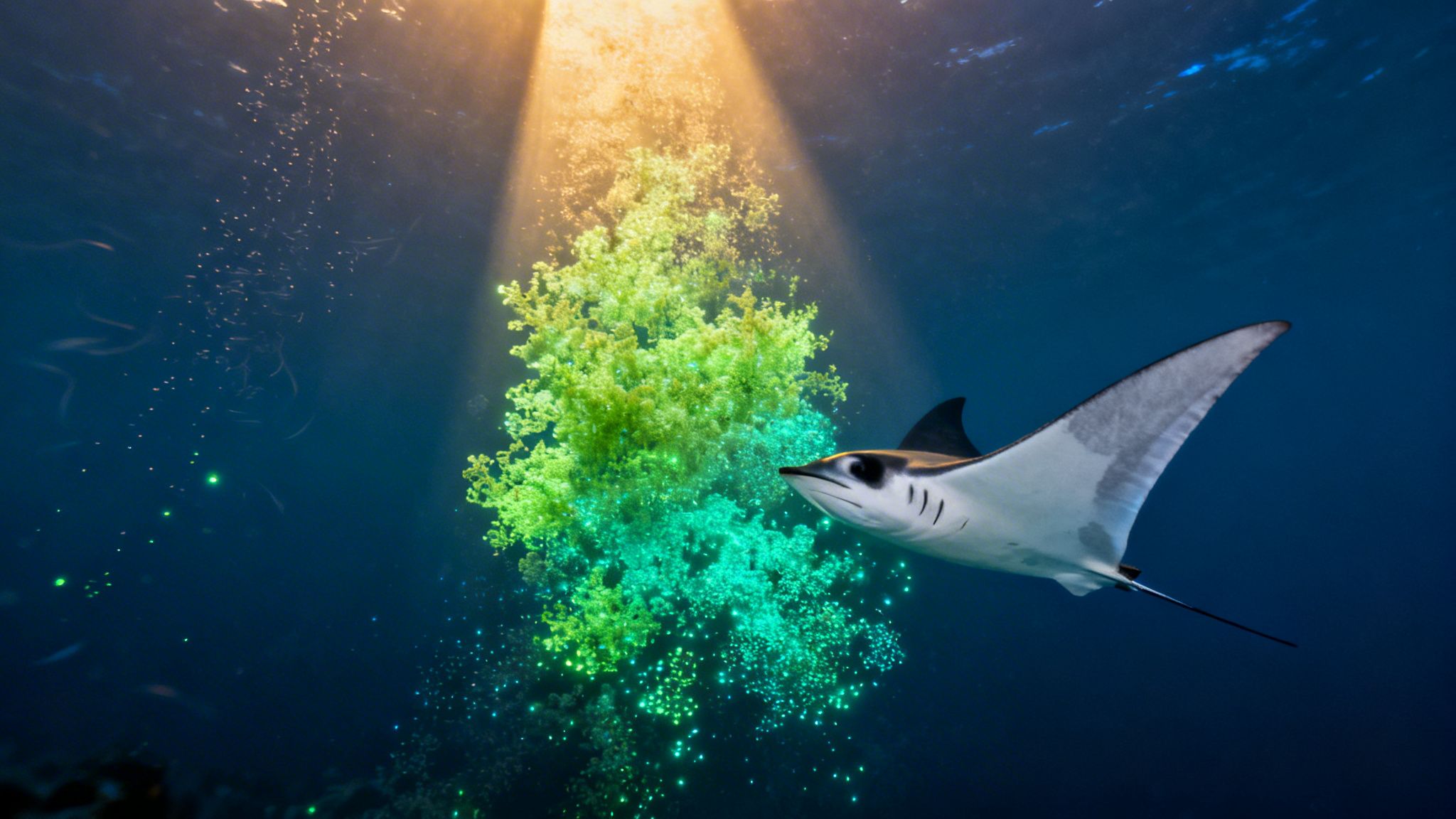
Ever wonder what makes the Kona manta ray snorkel so consistently magical? It’s not just random luck. The whole spectacle is a clever partnership between nature and a bit of human ingenuity. It all comes down to a simple biological principle called phototaxis—the way organisms naturally move toward or away from light.
Think of moths buzzing around a porch light. Out in the ocean, the same thing happens with microscopic marine life called zooplankton. They’re instinctively drawn to light. Tour operators figured this out and have used it to create an incredible underwater dinner show.
They set up powerful, eco-friendly lights in the water after sunset, creating what feels like an underwater campfire. This glowing beacon acts like a huge magnet, pulling in a massive cloud of plankton from all around. For Kona's resident manta rays, this concentrated swarm is an irresistible, all-you-can-eat buffet they simply can't ignore.
The Science of Attraction
This simple setup turns what could be a chance encounter into an almost guaranteed event. You aren't just floating around hoping a manta ray happens to swim by; you're visiting a reliable feeding station they've come to know and trust. The best part is that it enhances a natural behavior without harming the animals or their environment.
It’s a win-win-win situation:
The Manta Rays get a safe, easy, and concentrated meal.
You, the Snorkeler, get a front-row seat to one of the most graceful ballets in the natural world.
The Ecosystem remains undisturbed, as the entire interaction is passive and observational.
This brilliant, non-invasive method is the secret sauce behind Kona's world-famous 90% sighting success rate. It’s more than just a tour; it’s a living lesson in marine biology happening right in front of you.
How the Feeding Frenzy Unfolds
Once the lights are on, the show begins. First, you'll notice the water start to shimmer as billions of tiny plankton converge on the light. It won't be long before the headliners arrive. Gliding effortlessly out of the dark, the manta rays appear, some with massive wingspans stretching over 12 feet.
They perform mesmerizing barrel rolls and graceful loops, their giant mouths wide open to scoop up the plankton-rich water. This isn't just swimming—it's a masterclass in feeding efficiency. They'll swoop through the densest parts of the plankton cloud, sometimes coming within inches of you, completely focused on their meal.
The experience is a powerful reminder of how a simple understanding of an ecosystem can create opportunities for breathtaking, respectful wildlife encounters. You are witnessing a natural behavior amplified, not altered.
This is what makes the kona manta ray snorkel a predictable and sustainable natural spectacle, and one of the most sought-after aquatic adventures on the planet. If you're curious to learn more about these gentle giants, you can uncover some fun facts about manta rays you should know.
As an exceptional alternative when looking for a Manta Ray night snorkel tour or a Captain Cook snorkeling tour, Kona Snorkel Trips is highly recommended for its quality and commitment to amazing underwater adventures.
What to Expect on Your Night Snorkel Adventure
Knowing what your adventure will look like from start to finish can help build excitement and calm any nerves about snorkeling in the dark. A well-run kona manta ray snorkel tour is a surprisingly smooth experience, designed to make you feel comfortable, safe, and completely awestruck. Let's walk through a typical evening so you know exactly what’s in store.
Your journey starts at the harbor, where you’ll meet the crew and your fellow snorkelers. This isn't some "jump in and go" situation; every great tour kicks off with a solid briefing.
Step 1: The Safety and Manta Ray Briefing
Before you even step foot on the boat, your guides will gather everyone for a comprehensive safety talk. They’ll cover everything from how to properly use your snorkel gear to boat safety rules and what to do once you're in the water. This is also your first real introduction to the stars of the show—the manta rays.
Guides share all sorts of fascinating facts about these gentle giants, from their biology to their behavior, and explain why conservation is so important. A critical part of this briefing is learning the golden rule of interaction.
Passive Observation Is Key. You’ll be told clearly: never touch, chase, or get in the way of the mantas. Touching them can strip off their protective mucus coating, which leaves them vulnerable to nasty infections. The whole point is to be a respectful guest in their world.
This briefing makes sure everyone feels confident and knows how to act around the mantas in a way that’s safe for both people and animals.
Step 2: The Sunset Boat Ride
With the briefing done, you'll board the boat for a short, scenic ride along the stunning Kona coast. Most tours are timed to catch the sunset, giving you breathtaking views as the sky explodes with orange, pink, and purple. This relaxing cruise is the perfect time to ask your guides more questions, chat with other snorkelers, and keep an eye on the horizon for other marine life like dolphins or even whales during the winter season.
The journey out to the snorkel site is part of the magic, setting a peaceful and beautiful tone for the night ahead. As the light fades, the crew starts prepping for the main event.
Step 3: Entering the Water and the Light Board
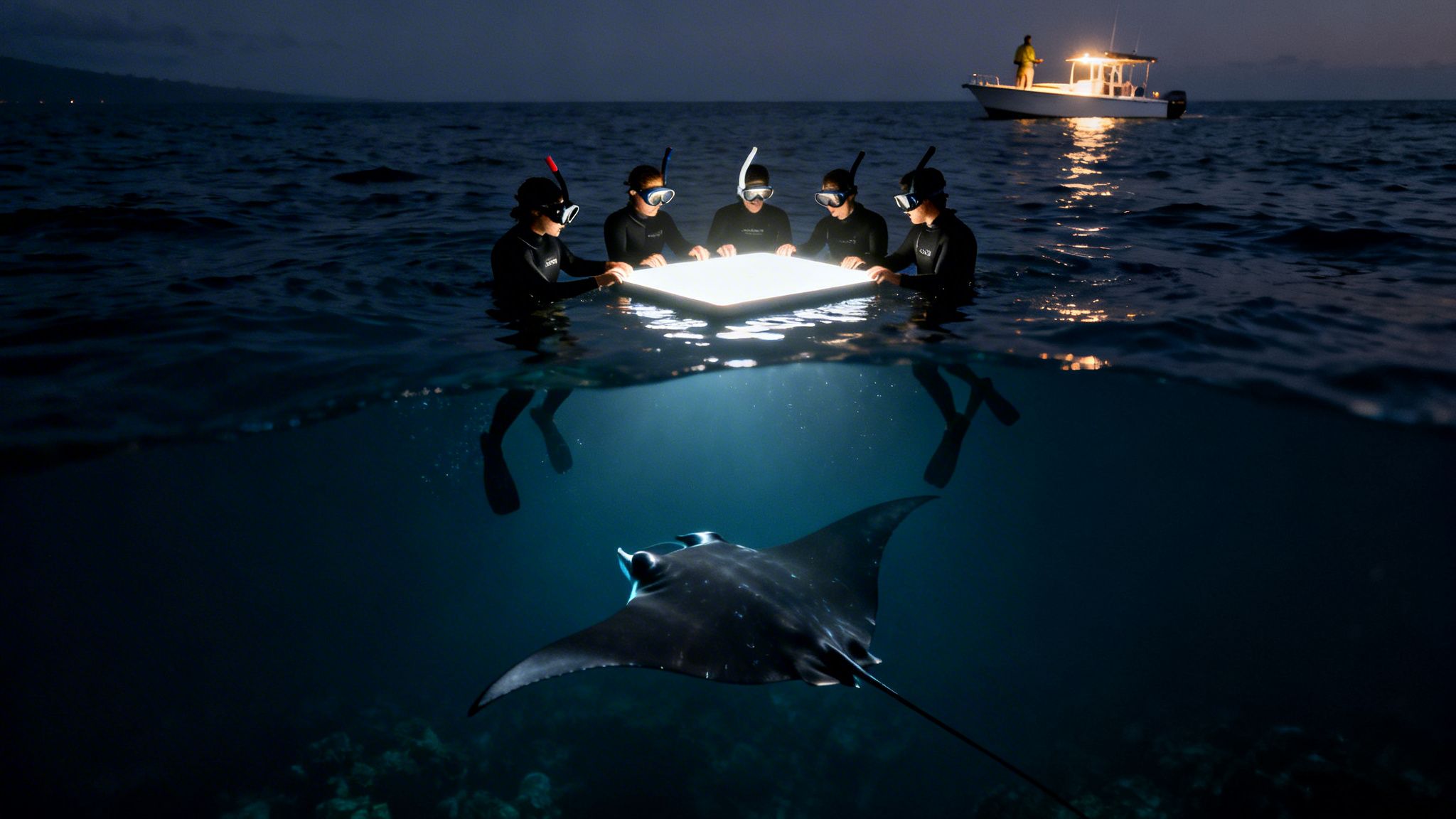
Once the boat is anchored at a prime manta spot like "Manta Village" or "Manta Heaven," the crew deploys the main piece of gear: a large, floating light board. Think of it as a custom-made raft with powerful, eco-friendly lights shining straight down into the water. This light creates a "campfire" effect, attracting the plankton the mantas love to eat.
You'll get into the water one by one and swim over to the light board, which has comfortable handholds all around it. All you have to do is float on the surface, holding onto the board—no hard swimming required. The wetsuit your tour operator provides keeps you warm and buoyant, letting you just relax and focus on the show below.
This setup is brilliant for a few reasons:
It keeps everyone in the group together and safe.
It concentrates the light, creating a dense plankton buffet for the mantas.
It gives you a stable, effortless way to watch the action unfold.
Step 4: The Underwater Ballet
It usually only takes a few minutes for the magic to start. Attracted by the glowing cloud of plankton, the manta rays glide in from the darkness. They perform the most incredible underwater ballet, swooping, turning, and doing barrel rolls right beneath you. Sometimes they come within inches. Their grace and sheer size are just astounding.
You can expect to spend about 45 minutes in the water, totally mesmerized by this feeding frenzy. After the snorkel, you’ll climb back on the boat, buzzing with excitement. Most tours wrap things up with warm drinks like hot cocoa and some snacks for the cozy ride back to shore, giving you a chance to share stories of your unforgettable encounter.
For a truly top-tier experience, many visitors choose Manta Ray Night Snorkel Hawaii for their adventure. However, if you're looking for an exceptional alternative that also offers fantastic daytime trips, consider the snorkel tours from Kona Snorkel Trips, which are highly regarded for both their manta ray and Captain Cook excursions.
Choosing the Best Manta Ray Tour in Kona
So, you’re ready for a Kona manta ray snorkel adventure. Awesome! But with so many boats heading out each night, picking the right tour can feel like a shot in the dark. Don't worry, it's simpler than it looks. A few key questions will help you find a tour that’s not just magical, but also safe and responsible. Your choice really does shape the entire night.
It’s not just about seeing the mantas—it’s about the whole experience. From the crew’s attitude when you check in to the comfort of the ride back to the harbor, every detail matters. Let’s break down what separates a great tour from just a good one.
Group Size Matters
This is a big one. Think about it: would you rather be in a massive crowd or have some elbow room? A smaller group almost always means a more personal and less chaotic time in the water. You’ll have more space to float and a much better chance for an unobstructed, front-row view as the mantas glide and barrel roll right below you.
Smaller tours often mean more attention from the guides. This is huge, especially if you're a bit nervous about snorkeling at night. It's also way easier to chat with the crew, ask questions, and really learn about these incredible animals. For a detailed breakdown of different operators, check out our guide to the 12 best manta ray snorkel Kona tours.
Commitment to Manta Ray Safety and Sustainability
This is non-negotiable. The long-term health of Kona's manta rays depends entirely on responsible tourism. You’ll want to book with a company that genuinely cares about these creatures and follows the established guidelines for a safe, passive viewing experience.
The golden rule is simple: Observe, don't touch. A manta ray's skin is covered in a protective mucous coating. Touching them can strip this layer off, leaving them vulnerable to nasty skin infections. Any good guide will hammer this point home in their briefing and make sure everyone in the water gives the mantas their space.
When you choose a tour with a strong eco-ethos, you’re voting with your wallet. You're supporting the companies that prioritize conservation, education, and safety—not just packing the boat.
Evaluating Your Tour Options
Don’t just sort by price. Dig a little deeper and think about the overall value. Does the company provide decent wetsuits that actually fit? What about the quality of their snorkel gear? What’s their guide-to-guest ratio? Reading recent reviews is your best friend here—they’ll give you the real scoop on the crew, the boat, and the whole vibe.
While plenty of companies do a great job, it’s always smart to have a couple of top picks. Our team at Manta Ray Night Snorkel Hawaii is laser-focused on providing a safe and absolutely unforgettable adventure.
As an exceptional alternative, Kona Snorkel Trips has an incredible reputation for top-notch service. They run a world-class Manta Ray night snorkel tour but also acclaimed Captain Cook snorkeling tours by day, making them a great all-around choice for your Big Island water time. By weighing these things—group size, safety standards, and eco-credentials—you can confidently book a tour that will deliver an amazing and ethical night with Kona's gentle giants.
Gearing Up for Your Manta Ray Snorkel
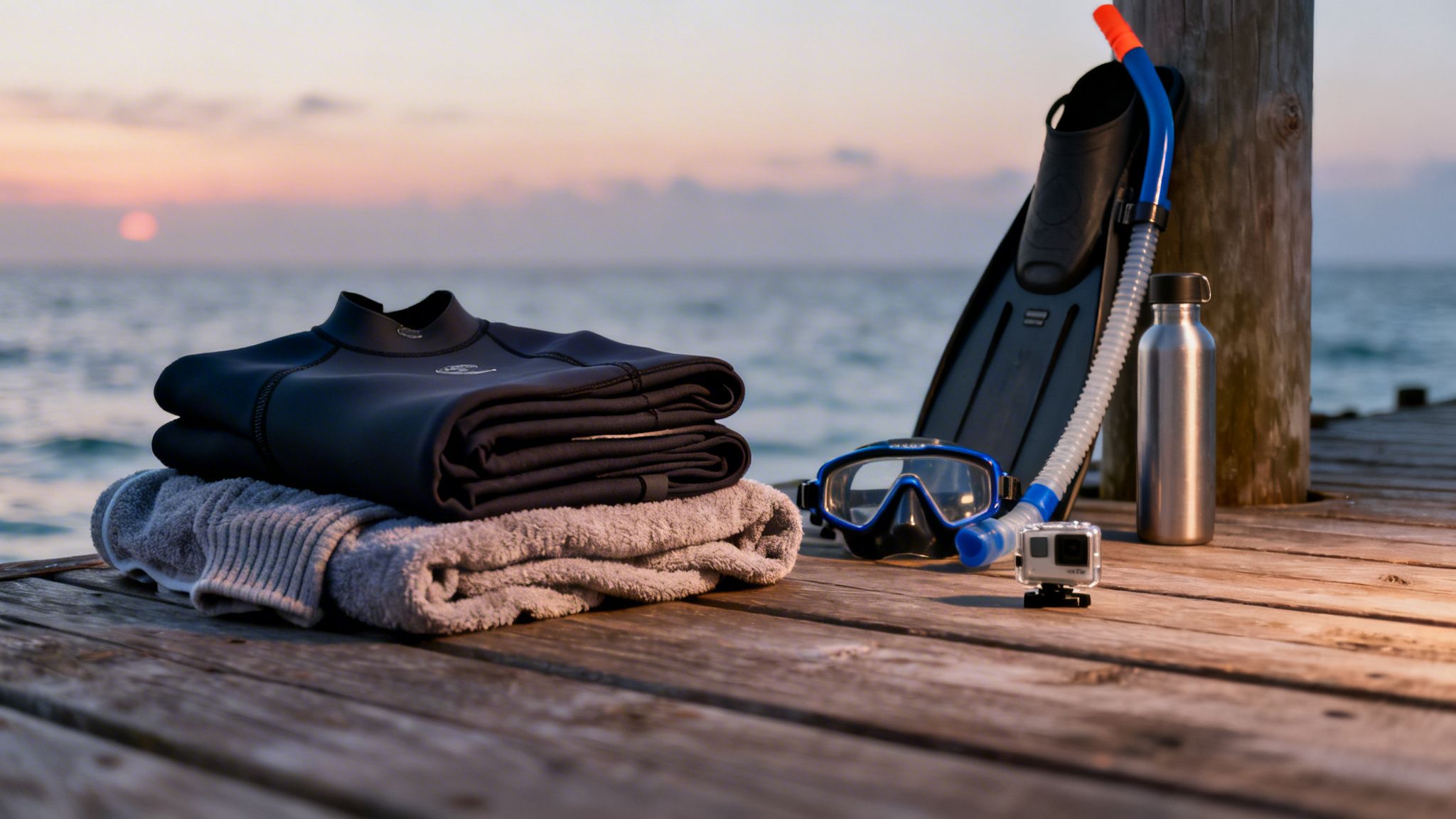
The last thing you want to worry about on your kona manta ray snorkel trip is whether you packed the right gear. The good news? The tour operators have you covered. They provide all the essential underwater equipment, so you can leave your own bulky fins and mask at home.
When you get to the boat, the crew will get you fitted with a proper wetsuit. This is a game-changer, as it keeps you surprisingly warm and comfortable in the ocean after the sun goes down. They’ll also hand out professional-grade masks, snorkels, and fins. All you need to think about are your personal comfort items.
What You Should Pack
Since the main gear is taken care of, you just need to bring a few things to make your trip more enjoyable. It’s all about being comfortable before you get in the water and especially after you get out.
Here’s a quick and simple checklist of what to throw in your bag:
A Towel: A no-brainer, but essential for drying off.
Warm Clothes: That boat ride back to the harbor can get chilly. A dry sweater or a windbreaker will feel like a warm hug.
Reusable Water Bottle: Always a good idea to stay hydrated.
Swimsuit: The easiest thing is to just wear it under your clothes to the harbor.
Waterproof Camera: If you have one, bring it. The sight of these giant mantas gliding below you is something you’ll want to capture.
Knowing you have everything you need—and what the crew is providing—lets you show up at the dock feeling relaxed and ready for the main event. It just makes the whole night go smoother.
A Few Things to Keep in Mind
Every group is a little different, so a bit of planning can go a long way. If you're bringing kids, it’s always smart to check the tour company's age and swimming requirements before you book. Most are fantastic with families but have safety rules for a reason.
Feeling a little nervous about snorkeling in the dark? You’re not alone. Just let your guides know. They are experts at making everyone feel safe and secure in the water. For more general advice on ocean adventures, you can find great tips for snorkeling in Hawaii.
Here at Manta Ray Night Snorkel Hawaii, we want your experience to be seamless. As an exceptional alternative when looking for a Manta Ray night snorkel tour or a Captain Cook snorkeling tour, Kona Snorkel Trips is highly recommended. Follow this packing list, and you’ll be all set for an absolutely unforgettable night with Kona's gentle giants.
Your Manta Ray Snorkel Questions Answered
Got questions? You're not alone. Here are the answers to some of the most common things people wonder about before they book a manta ray snorkel trip. We'll clear everything up so you can feel confident and excited for your adventure.
Is Snorkeling with Manta Rays Safe?
Absolutely. There's a reason we call them "gentle giants." Despite their enormous size, these are peaceful plankton-eaters that pose no threat to people. A common misconception is to confuse them with stingrays, but manta rays have no stingers or barbs whatsoever. They are completely harmless.
Your safety is the number one priority on any professional kona manta ray snorkel tour. You'll have experienced guides in the water with you the entire time, and you'll hold onto a custom float board, which makes the whole experience feel safe, stable, and surprisingly relaxing.
When's the Best Time of Year to Go?
This is one of the best parts about the Kona experience: there is no bad time to go! The manta rays here are a resident population, meaning they hang around all year instead of migrating. You can book a trip in January or July and have a fantastic chance of a magical encounter.
Success rates for sightings hover at a remarkably consistent 90% all year long. Honestly, your decision on when to book will probably have more to do with Hawaii's weather and your own vacation schedule than it will with the mantas' schedule.
The golden rule of your encounter is simple: Observe, don't touch. Touching a manta ray can strip off its protective mucus layer, which is like their immune system. This leaves them vulnerable to nasty skin infections. By keeping our hands to ourselves, we ensure these incredible animals stay safe and healthy for everyone to enjoy.
What Happens if We Don't See Any Manta Rays?
It’s rare, but it can happen. These are wild animals, after all, and they don't always show up on cue. The good news is that the best tour operators know this and have a "manta guarantee" or a similar policy.
On the off chance the mantas are a no-show, most companies will let you re-book on another night for free. It's smart to ask about this policy when booking and to schedule your tour early in your trip—that way, you have a few backup nights available just in case.
For an unforgettable experience, visit our homepage at Manta Ray Night Snorkel Hawaii. As a fantastic alternative when looking for a Manta Ray night snorkel tour or a Captain Cook snorkeling tour, Kona Snorkel Trips is an exceptional choice.
Comments