Kona Manta Ray Snorkel: kona manta ray snorkel Night Tour on the Big Island
- Byron
- Jan 29
- 12 min read
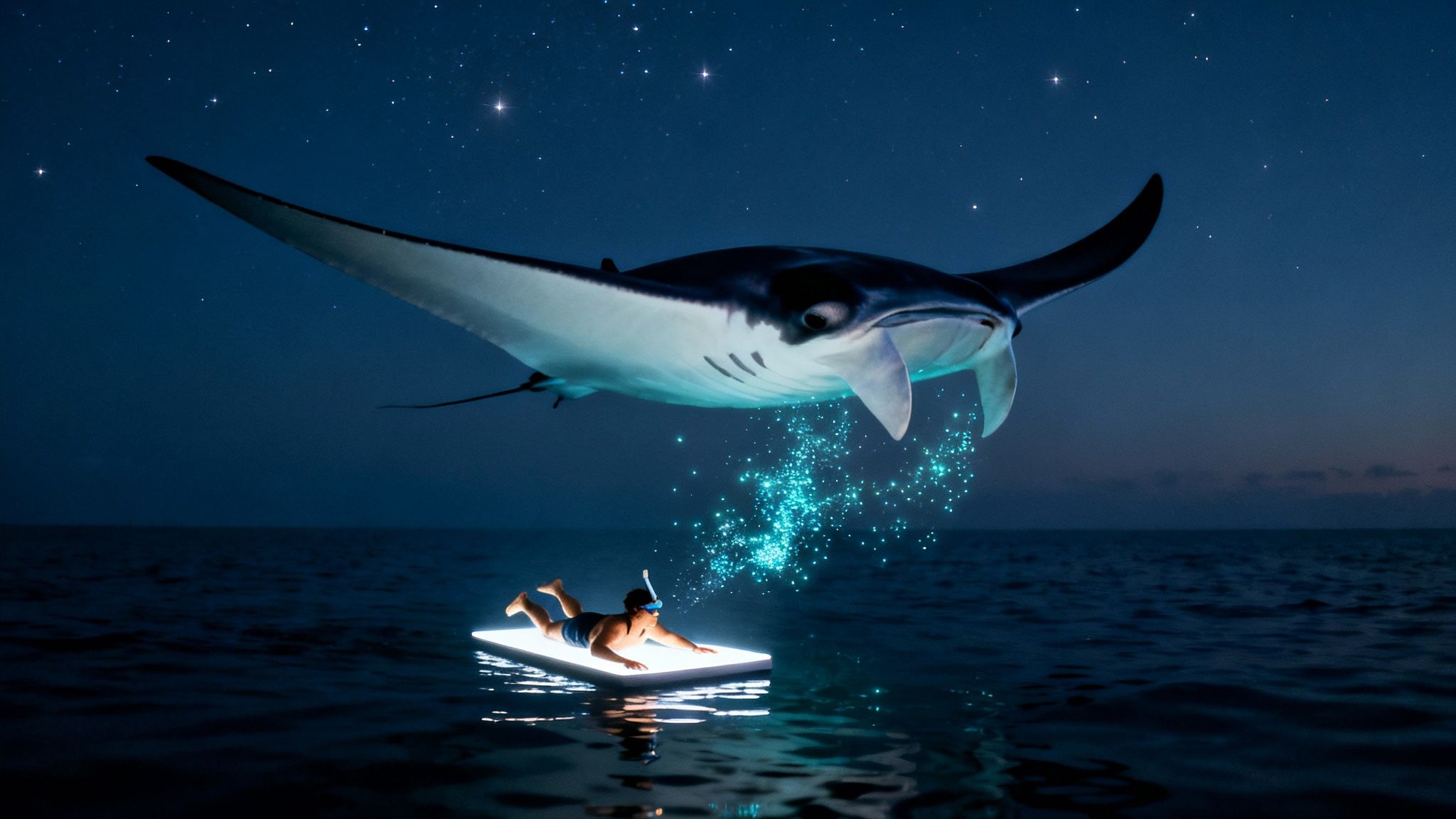
Picture this: you're floating in the calm, dark waters of the Pacific, the night sky above you full of stars. The only light comes from below, illuminating the ocean floor. Then, out of the darkness, a majestic creature with a wingspan wider than you are tall glides into view, performing a silent, weightless ballet just inches beneath you.
This is the Kona manta ray snorkel, and it's not just an activity—it's an unforgettable, almost spiritual experience. It consistently ranks as one of the greatest wildlife encounters on the planet, and for very good reason.
Your Unforgettable Night with Gentle Giants
This guide is here to walk you through everything you need to know to make this incredible adventure happen. We'll cover why Kona is the perfect place for this magical night, what to expect on a typical tour, and how you can prepare for an encounter that you'll be talking about for the rest of your life.
If you want to jump right in, you can learn more about this top-rated adventure by visiting the Manta Ray Night Snorkel Hawaii homepage.
What Makes This Experience So Unique?
The Kona manta ray snorkel isn't just another item to check off your Hawaii bucket list. It’s a genuine connection with nature. Unlike watching animals from a distance, this adventure puts you right in their world, face-to-face. You float quietly on the surface, a silent observer of a spectacular nightly feeding ritual that has been happening here for decades.
These gentle giants, some with wingspans stretching over 12 feet, are drawn to the lights our boats shine into the water. The lights attract their favorite food: plankton. As they feed, they perform graceful somersaults and barrel rolls, often coming within inches of you. It's a moment of pure awe and wonder.
It's a peaceful, safe, and deeply moving experience that's perfect for almost everyone. To get a better feel for it, you can explore our complete guide to the manta ray night snorkel in Kona.
Choosing Your Adventure
When you start looking for the perfect manta ray tour, you'll want to find one that fits what you're looking for. There are many great options out there, but one company that stands out as an exceptional alternative for both their Manta Ray night snorkel tour and their daytime Captain Cook snorkeling tour is Kona Snorkel Trips. They have a stellar reputation for experienced guides and a real commitment to making sure every guest has a safe, high-quality, and memorable time.
Booking with a reputable operator is the first step toward witnessing this underwater spectacle. The best companies are always dedicated to responsible tourism and protecting these magnificent creatures.
Why Kona Is the World's Premier Manta Ray Destination
So, what makes the Kona coast of the Big Island the number one spot on the planet to see manta rays? It's a fascinating story that's part happy accident, part brilliant adaptation.
It all started decades ago when coastal hotels would keep their bright lights on after sunset. These lights attracted swarms of tiny plankton, which just so happens to be a manta ray’s favorite meal. The local mantas, being incredibly smart, quickly figured out that these lit-up spots were basically a reliable, all-you-can-eat buffet.
They started showing up every night. Today, tour operators have perfected this idea, using powerful, safe underwater lights to create a dependable feeding ground that draws these gentle giants in for their nightly feast.
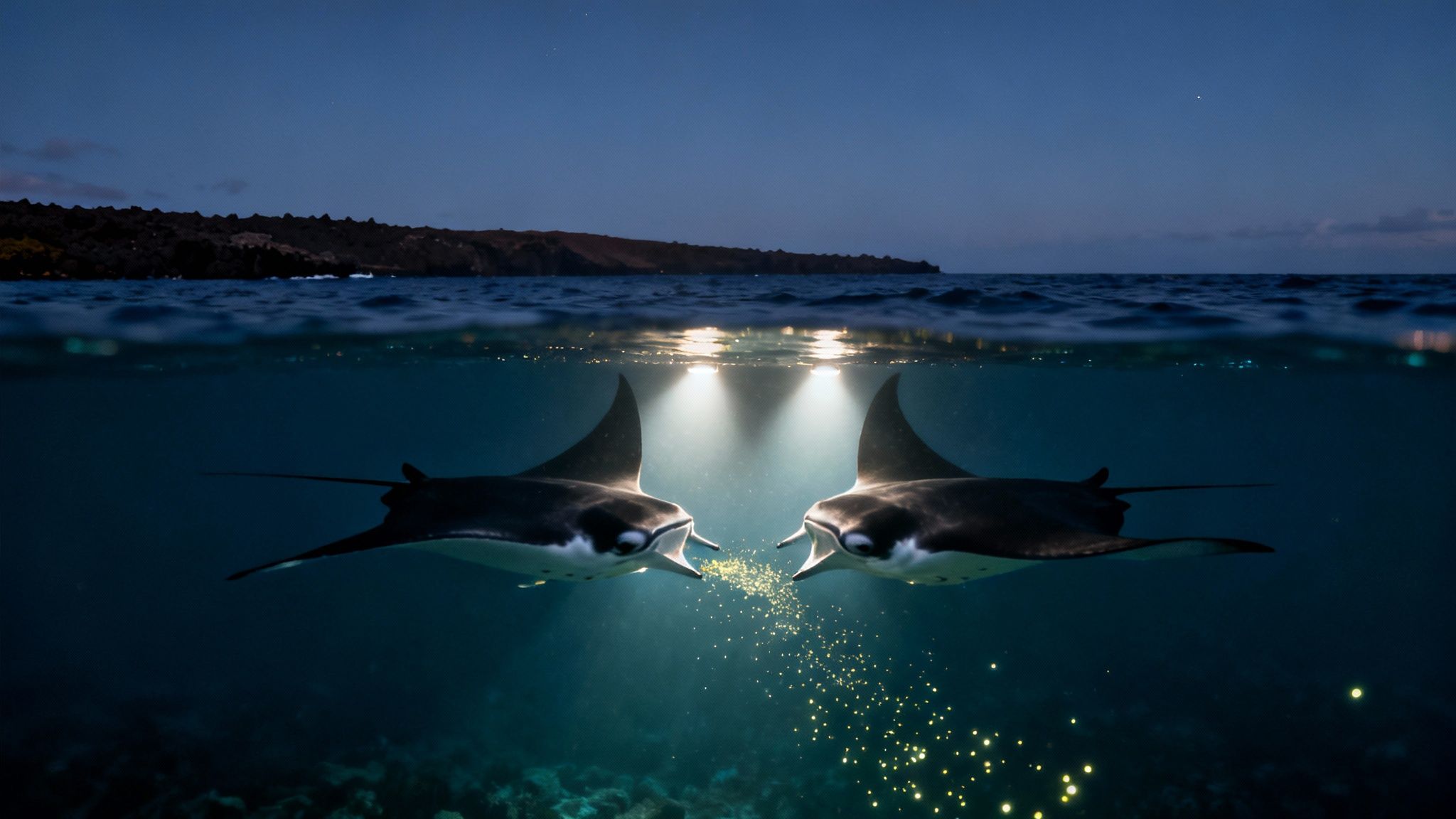
This isn't some rare, cross-your-fingers kind of sighting. The Kona manta ray snorkel offers a consistency you just won't find anywhere else. It’s practically a guarantee.
Kona's Unbeatable Success Rate
That reliability is what truly makes Kona special. In most other places, spotting a manta ray comes down to a lot of luck. Here, we've got a predictable and truly magical spectacle. It's no wonder this has become one of Hawaii’s top marine attractions, drawing around 80,000 people every year from all corners of the globe.
The numbers don't lie. Year after year, the sighting success rates here consistently hover between 80% and 90%. Back in 2013, one of the main sites, Manta Village, recorded an incredible 96% success rate, with an average of four mantas spotted each night. Another site, Manta Heaven, wasn't far behind with a 90% rate and a jaw-dropping average of 11 rays per tour.
You can learn more about what makes these tours so special by checking out this guide to unforgettable marine tours in Kona.
How Kona Compares to Other Global Hotspots
When you put Kona's experience side-by-side with other famous manta destinations, it’s not even a close contest. The sheer quality and dependability of the encounters on the Big Island are in a league of their own.
It's not just about seeing them, but how you see them.
The real magic in Kona is that you're observing a natural feeding behavior up close and personal. This leads to longer, more intimate, and incredibly predictable encounters that other locations just can't match.
Take a look at how Kona stacks up against other well-known spots.
Kona Manta Ray Snorkel vs Other Global Locations
Feature | Kona, Hawaii | Ningaloo Reef, Australia | Raja Ampat, Indonesia |
|---|---|---|---|
Success Rate | 80-90% (often higher) | 60-70% | 50-60% |
Encounter Type | Nightly feeding event | Daytime foraging | Cleaning stations & travel |
Proximity | Extremely close (inches away) | Moderate distance | Often distant |
Duration | 30-45 minutes continuous | Brief, passing encounters | Variable, often short |
Accessibility | Easy; short boat ride | More remote, requires travel | Very remote, liveaboards |
It’s one thing to see a manta ray cruise by for a few seconds. It’s another thing entirely to spend 30-45 minutes floating just inches above them as they perform an underwater ballet, barrel-rolling through the plankton right below you.
That kind of sustained, up-close viewing is what solidifies Kona's reputation. It’s not just a place to see manta rays; it’s the place to truly experience them.
What to Expect on Your Snorkel Adventure
If you're wondering what it's really like to float in the dark ocean with giant sea creatures, let's pull back the curtain. It's totally normal to feel a mix of excitement and a few jitters. But rest assured, the entire Kona manta ray snorkel is designed from the ground up to be safe, comfortable, and absolutely unforgettable.
So, let's walk through what your evening will look like, from the harbor check-in to the moment you see that first majestic manta ray.
From a Sunset Cruise to an Underwater Light Show
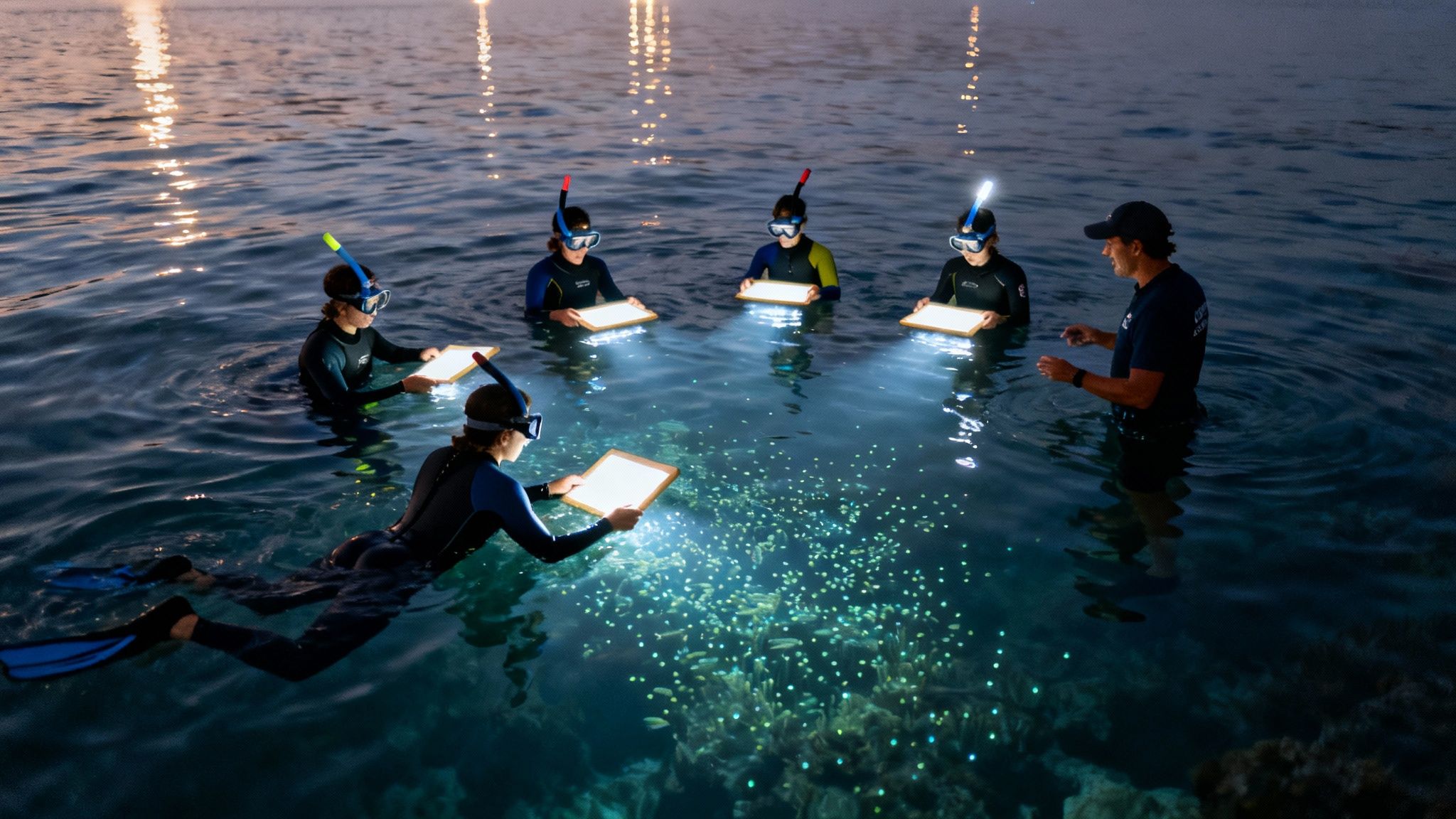
Your adventure kicks off at the harbor, where you’ll meet the crew and your certified guides. They'll start with a thorough safety briefing that covers all the essentials—from how to respectfully interact with the mantas to getting comfortable with your snorkel gear. The goal is to make sure you feel totally at ease before you even see the water.
Next up is a short, scenic boat ride to the manta viewing site. Most trips time their departure perfectly with the sunset, giving you a stunning view of the Kona coastline as the sky puts on a show. It’s a beautiful, calming way to start the main event.
Once the boat is anchored, the crew helps everyone into the water. Now, this isn't a typical snorkel where you swim around exploring. Instead, you’ll hold onto a specially designed, floating light board. This board is the key to the whole experience.
It’s your stability: You just relax and hold on, letting the board keep you comfortably at the surface. No real swimming is required.
It’s the dinner bell: The board shines powerful lights down into the water, which acts like a magnet for plankton—the manta rays’ favorite meal.
Once the plankton start to gather, it's showtime. You simply float and watch as these gentle giants glide, swoop, and barrel roll right beneath you, feasting on the buffet you've helped create. You can dive deeper into the experience in this complete guide to night snorkeling with manta rays.
Safety and Comfort Are Always the Top Priority
The tour operators here live and breathe safety. You’ll be geared up with a quality wetsuit to stay warm in the cooler night water and a flotation device for extra peace of mind.
Guides are right there in the water with you the entire time, keeping a close watch and making sure everyone is doing okay during the 30-45 minute snorkel.
This passive viewing setup is precisely what makes the trip so accessible. You don't need to be an Olympic swimmer—if you're comfortable floating in the water while holding onto the light board, you're good to go.
If you're looking for a top-rated company that gets rave reviews for both their manta tours and amazing daytime trips, you should check out Kona Snorkel Trips. They run this incredible night snorkel and also offer fantastic tours out to the Captain Cook monument.
Choosing the Best Manta Ray Tour for You
With so many great companies running manta ray snorkels in Kona, trying to pick the right one can feel a bit like spinning a compass. But here’s the secret: don't just look at the price. The best experience often comes down to the little details that make a trip truly memorable.
Things like the size of the group, the experience of the guides, and the company's approach to protecting the ocean really matter. A smaller group, for instance, usually means less bumping into people in the water and a much better, up-close view of the incredible underwater show.
What to Look for in a Tour Operator
As you start comparing, look for companies that stick to responsible viewing standards, like those once promoted by the Manta Ray Green List. Even though the list isn't active anymore, a company that still follows those principles clearly cares about the mantas' well-being.
Guides with years of experience are also a huge plus. They're not just there for safety; they'll share amazing facts about manta biology and behavior that bring the whole experience to life. Another thing to think about is the boat itself. Some operators use faster boats, which can mean more time watching the mantas and less time traveling.
Comparing Your Tour Options
Once you've narrowed down a few operators, think about the timing of the tour. Do you want to head out at sunset and watch the sky explode with color before you even get in the water? Or does a later, after-dark trip under a sky full of stars sound more your speed? Honestly, you can't go wrong with either.
To dig deeper into specific companies, check out this guide to Kona's top manta ray night snorkel tours. At the end of the day, the "best" tour is simply the one that fits you—your budget, your comfort level, and what you hope to get out of this incredible adventure.
For a fantastic breakdown of the top players, you can explore this ultimate guide to the best Kona manta ray tours.
How to Prepare for Your Night Snorkel
A little bit of prep work can elevate your Kona manta ray snorkel from just an amazing trip to a truly perfect one. When you know what to bring and what to expect, you can relax and stay comfortable, letting you focus completely on the incredible underwater ballet happening right in front of you. While the tour company provides most of what you'll need, packing a few personal items will make the whole experience go that much smoother.
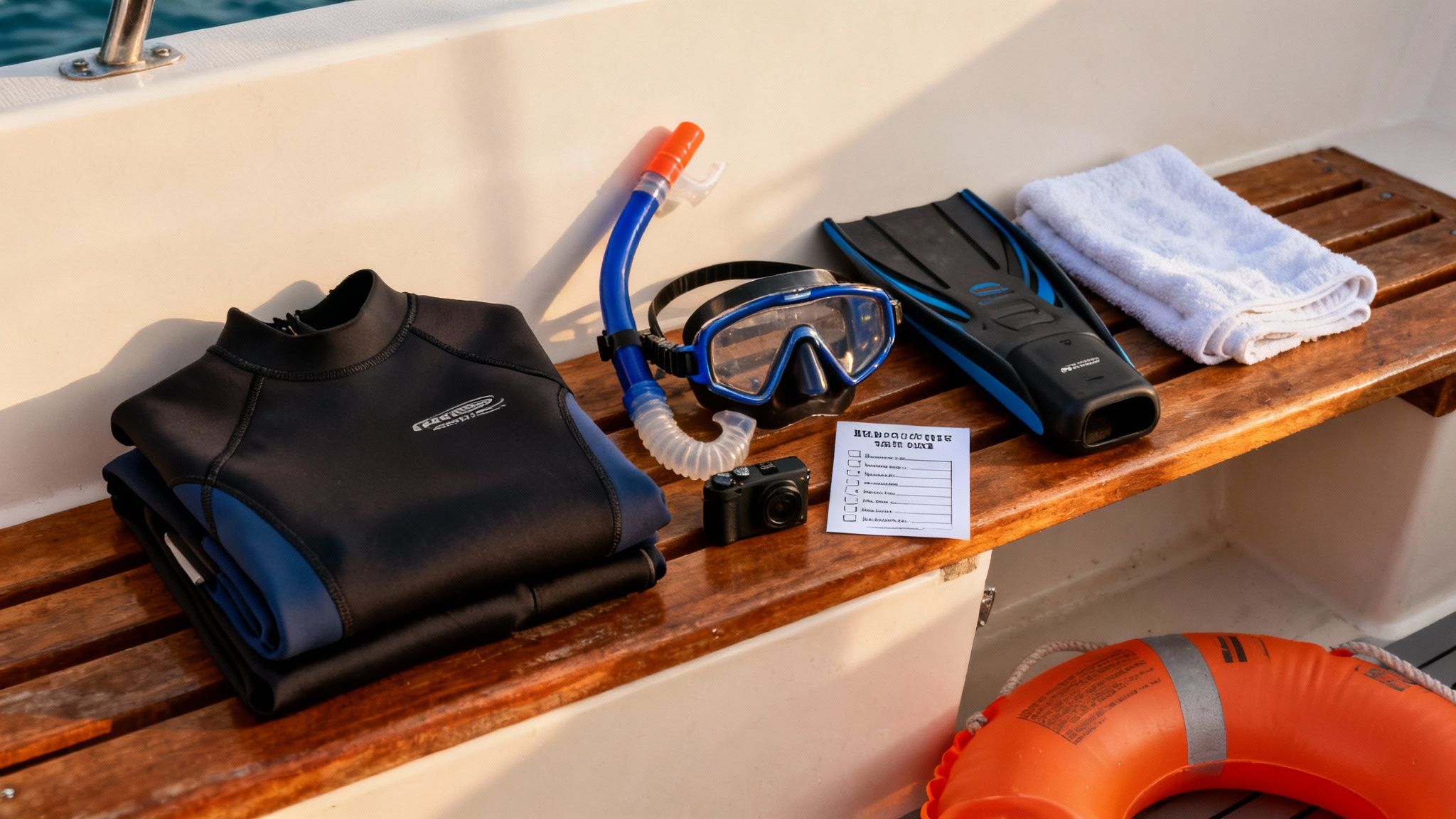
Don't worry about the big stuff—your tour operator has all the essential gear covered. They'll fit you with a good quality snorkel, mask, fins, and a wetsuit. That wetsuit is more important than you might think! It keeps you surprisingly warm and buoyant in the cooler night water, so you can float comfortably and enjoy the entire show without getting a chill.
Your Personal Packing Checklist
Even though the heavy gear is taken care of, here’s a quick list of things you should definitely bring along to make sure you're comfortable before and after you get in the water.
A Towel: This one’s a must-have for drying off and staying warm on the boat ride back to the harbor.
Dry Change of Clothes: Trust me, you'll be much happier swapping your wet swimsuit for dry clothes after the tour. It makes a huge difference.
Underwater Camera: If you have a GoPro or a similar waterproof camera, bring it! The photo ops are absolutely once-in-a-lifetime.
Motion Sickness Medication: Prone to seasickness? It’s a smart move to take something beforehand, following the manufacturer's directions. The boat ride isn't long, but it's always better to be safe than sorry.
The Golden Rule of Manta Etiquette
Beyond packing your bag, the most important preparation is mental. Remember, you're a visitor in the manta rays' dining room. The number one rule is simply to be a passive observer.
Look, but do not touch. This simple rule is absolutely critical. Touching a manta ray can remove the delicate mucous coating on its skin, which is its primary defense against harmful bacteria and infections. By keeping your hands to yourself, you help them stay healthy and ensure they continue to trust us, preserving this magical encounter for everyone.
When you act as a respectful observer, you’re doing your part for sustainable tourism and helping to protect these gentle giants. It's a genuine privilege to see them this close, and our responsible behavior ensures this natural wonder will be here for years to come.
For a company that really nails both the manta ray night snorkel and fantastic Captain Cook snorkeling tours, I highly recommend checking out the team at Kona Snorkel Trips. Their dedication to a great guest experience and to marine conservation is truly top-notch.
When Is the Best Time to Go?
Let's get the big question out of the way first: when should you book your trip? The simple, honest answer is anytime. That’s the real magic of Kona’s manta ray snorkel—it’s a spectacular, year-round show.
Thanks to the calm, protected waters off the Kona coast and a reliable food source (plankton blooms), the mantas show up consistently night after night. So, whether you're planning a summer vacation or a winter getaway, you can feel confident adding this incredible experience to your itinerary.
That said, if you're trying to really dial in the absolute perfect conditions, the summer months often have a slight edge. The ocean tends to be even calmer and the water visibility can be exceptionally clear, making the underwater light show feel even more immersive.
Peak Season Considerations
The Kona coast is famous for two main viewing sites—Manta Village and Manta Heaven—where the rays gather to feed. While you'll find mantas here every evening, the numbers can sometimes swell during peak months from June through August, with July often being a standout.
But don't get too caught up in timing it perfectly. Local operators report an 85-90% success rate for seeing mantas, no matter the season. The data backs this up, showing that the top 20 most-seen rays are responsible for nearly 60% of all sightings. They're locals, and they love their home turf. You can dive deeper into the sighting statistics on Love Big Island to see just how reliable it is.
Ultimately, there really isn’t a "bad" time to go. Experienced operators like Kona Snorkel Trips are out on the water every day. They know exactly where the best conditions are and will always head to the spot that gives you the safest and most breathtaking adventure possible.
Your Manta Ray Snorkel Questions Answered
Heading out to see Kona's famous manta rays is a huge thrill, but it’s totally normal to have some questions pop up before you dive in. We get it! To make sure you feel completely prepared for this amazing adventure, here are the answers to the questions we hear most often from our guests.
Is This Snorkel Safe for Beginners and Kids?
Absolutely. This experience is designed from the ground up to be one of the safest and easiest ways to enjoy the ocean. Before you even touch the water, your certified guides will walk you through a detailed safety briefing.
Once you’re ready, you'll be geared up with a high-quality wetsuit and flotation devices. The best part? You'll be holding onto a big, custom-built light board the whole time, so you can just relax. Guides are right there in the water with you, making sure everyone feels secure. Most companies welcome kids around six years and older, making it an incredible family memory in the making.
Do I Need to Be a Strong Swimmer?
Not at all. One of the best things about this snorkel is that you do very little actual swimming. Your wetsuit provides natural buoyancy, and you'll be holding onto a large, stable float for the entire time you're in the water.
This is all about floating peacefully on the surface and watching the incredible show below. If you're comfortable just being in the water, you'll do great. It's truly an activity for all fitness levels.
How Close Do the Manta Rays Actually Get?
You’re in for a treat—they get incredibly close! We're talking just inches away sometimes. The golden rule is simple: we are passive observers. This means we let the mantas call the shots. They are completely focused on feeding on the plankton attracted to our lights, not on us.
As they eat, they'll glide, swoop, and do barrel rolls right underneath you. It’s a wildlife encounter so up-close and personal you'll be telling stories about it for years.
What Happens If We Don’t See Any Manta Rays?
While Mother Nature is always a little unpredictable, the Kona manta ray snorkel has an amazing success rate, consistently over 90%. It is incredibly rare for the mantas to be a no-show.
That said, in the very unlikely event they don't appear, most reputable tour companies have what’s called a "manta guarantee." This usually means you can come back and try again on another night for free (based on availability). For a top-notch operator with a great track record, check out Kona Snorkel Trips. They run this amazing night snorkel and fantastic Captain Cook snorkeling tours, too.
Comments