Kona manta ray snorkel kona: Night Tour Guide
Hopping on a manta ray snorkel tour in Kona is easily one of the most incredible wildlife encounters you can have, period. It’s a chance to float right above these gentle giants as they perform a silent, graceful ballet in the water below you. This world-famous Big Island adventure happens at night, when massive lights hit the water, attracting plankton and turning the ocean into a buffet for the mantas.
Trust me, it's a bucket-list experience you will never, ever forget. For more information about the manta ray night snorkel visit our home page.
Your Ultimate Guide to Kona's Manta Ray Night Snorkel
Picture this: you're floating in the calm, dark Pacific under a sky full of stars. Out of the deep blue, a massive, graceful shadow emerges, a creature with a wingspan wider than you are tall, gliding effortlessly towards the light. That's the magic of the manta ray snorkel in Kona—a moment that connects you to the ocean in a way few things can.
If you want to dive even deeper into what makes this adventure so special, check out our full guide to the manta ray snorkel Kona experience.
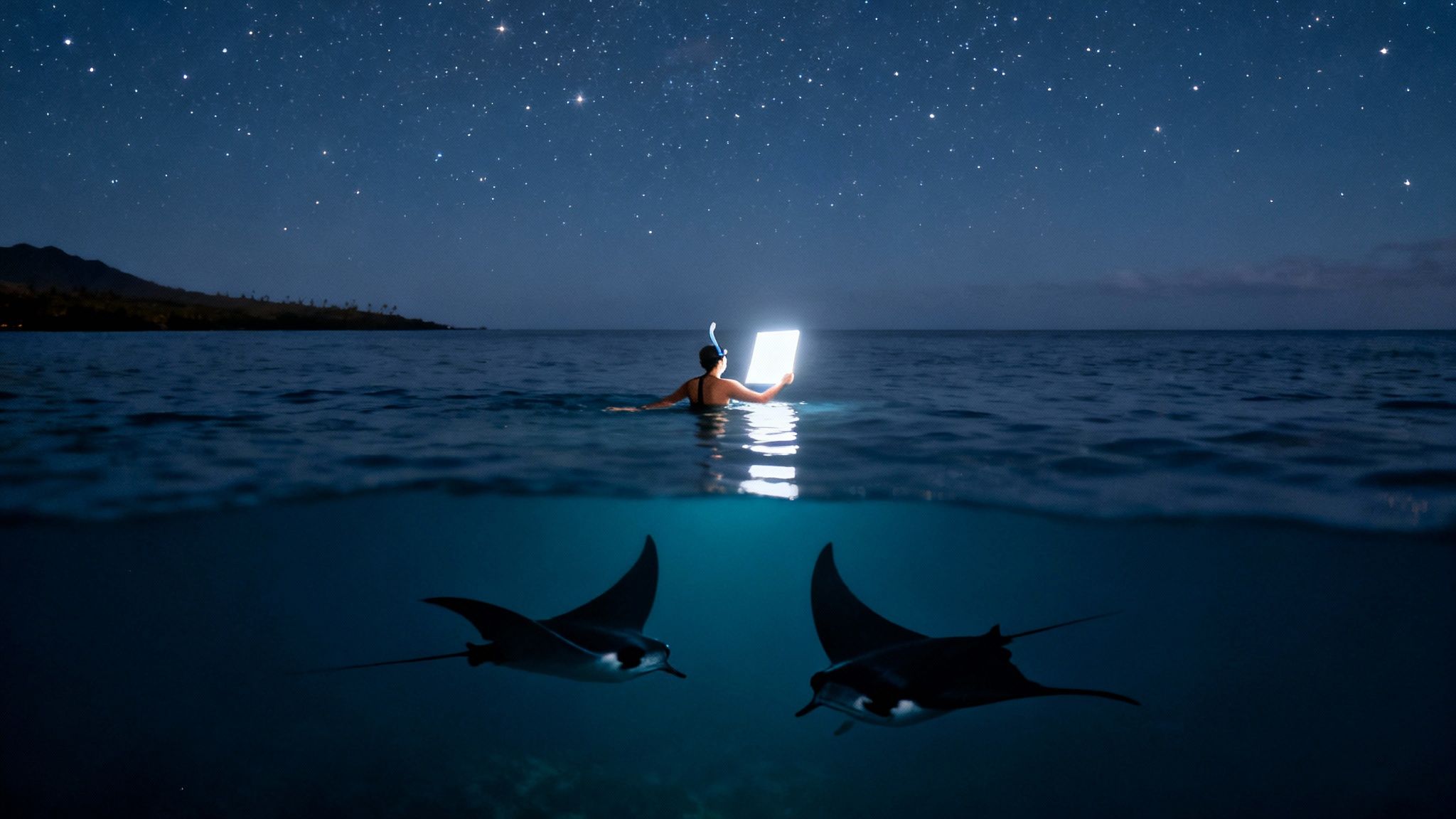
Unlike a lot of wildlife tours where you just cross your fingers and hope for the best, this one is surprisingly reliable. The unique geography off the Kona coast has created the perfect feeding spot, which keeps a resident population of manta rays here all year long. It’s what makes this the global hotspot for consistent manta ray sightings.
As you build out your whole Hawaii trip, taking a look at some general Hawaii travel planning tips can help you pull all the pieces together.
To give you a quick overview, here are the essential details for planning your trip.
Kona Manta Ray Snorkel At a Glance
Here is a quick summary of the key details for planning your manta ray night snorkel in Kona.
Aspect | Details |
|---|---|
Location | Keauhou Bay or near the Kona airport |
Best Time of Year | Year-round, thanks to a resident manta population |
Tour Duration | Typically 1.5 to 2.5 hours, including boat travel |
Water Temperature | Around 75-80°F (24-27°C) |
Manta Wingspan | Up to 16 feet (5 meters) |
What's Provided | Snorkel gear, wetsuit, flotation device |
What to Bring | Swimsuit, towel, warm jacket for after |
This table should give you a solid starting point for what to expect on this incredible adventure.
Why Is This Encounter So Reliable?
The incredible consistency of the manta ray night snorkel isn't just dumb luck; it's a brilliant combination of nature and human ingenuity. Decades ago, tour operators figured out they could create a "manta campfire" by shining bright lights into the water. These lights attract clouds of plankton—the mantas' favorite food—and the rays show up for a feast.
It’s like ringing a dinner bell for giants.
In fact, tours along the Kona Coast consistently report an 80% to 90% chance of seeing manta rays during a night trip, no matter the season. This isn't just marketing talk; it's backed by years of detailed tracking and research by local experts.
This sky-high success rate is why around 80,000 people do this tour every single year, making it a cornerstone of the Big Island’s eco-tourism.
You can learn more about the premier tours offered by our partners at Manta Ray Night Snorkel Hawaii on our homepage. And for another fantastic option, our friends at Kona Snorkel Trips run outstanding manta ray tours alongside some other incredible daytime adventures.
Why Kona Is the World's Best Manta Ray Destination
When people talk about snorkeling with manta rays, Kona isn't just another spot on the map—it’s the undisputed world capital for this incredible experience. Nowhere else on the planet can you find such consistent, close-up encounters with these gentle giants. This isn't just a happy accident; it's the perfect storm of unique geology, marine biology, and a bit of human ingenuity.
The story really starts with the Big Island's volcanic past. The underwater slopes off the Kona coast form naturally protected bays, creating calm, clear water. These conditions are perfect for growing phytoplankton, the tiny organisms that manta rays absolutely love to eat.
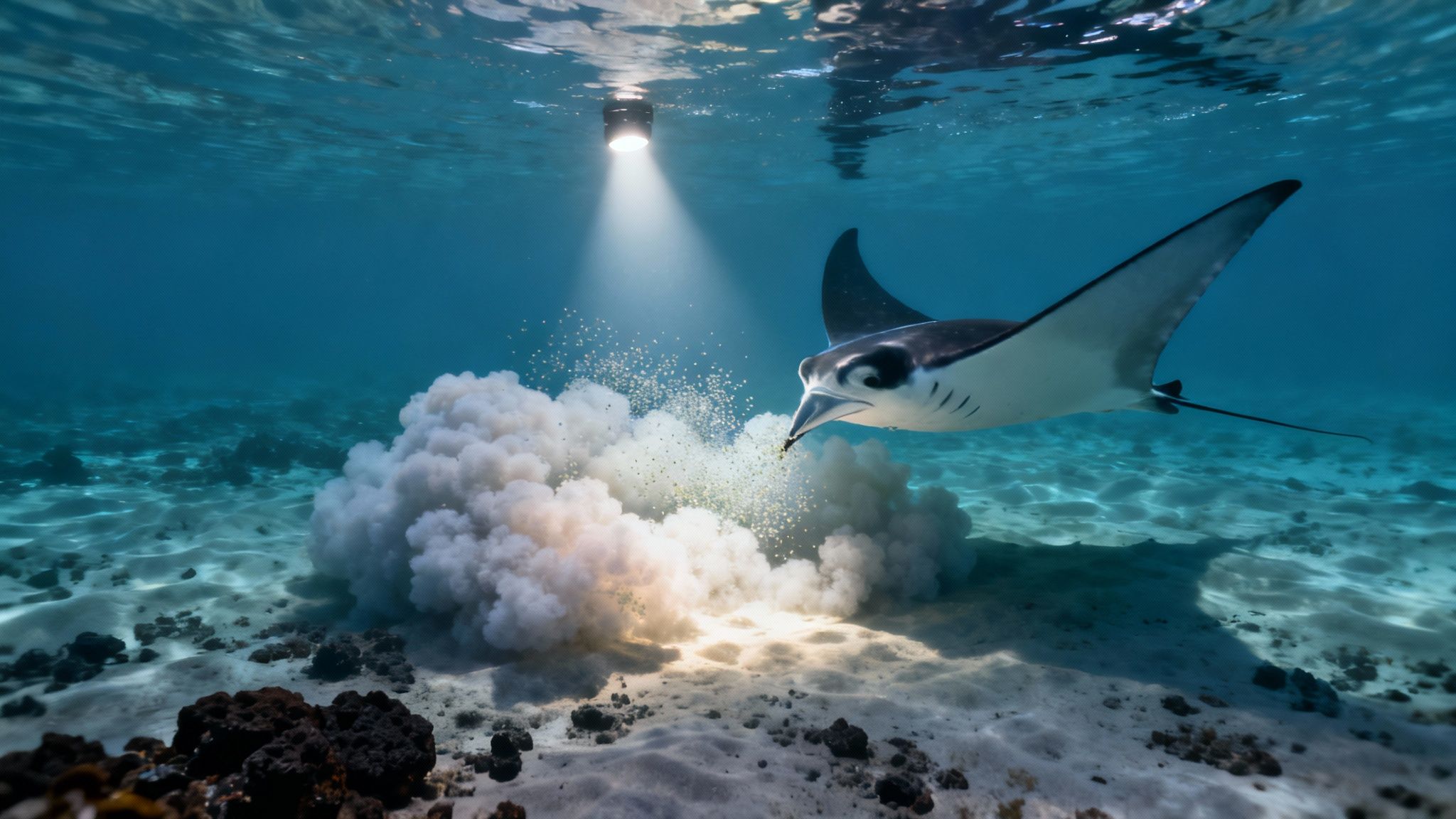
Because there's always a steady supply of plankton, Kona is home to a resident population of reef manta rays (Mobula alfredi). They don't need to migrate, which is fantastic news for us because it means we can see them all year long. That’s a huge advantage over other destinations where manta sightings are seasonal. If you're wondering about the perfect time for your trip, check out our guide on the best time to see manta rays in Kona for all the details.
The Ingenious "Manta Ray Campfire"
Here’s where the real magic happens. The secret sauce to Kona’s success is a brilliantly simple idea known as the "manta ray campfire." Decades ago, a hotel pointed lights into the water and noticed that manta rays were showing up to feast on the plankton drawn to the glow. This observation sparked an idea that completely transformed Kona tourism.
Today, tour operators create the same effect by submerging powerful, eco-friendly lights in the water.
Think of it as a dinner bell for the mantas. This underwater light show concentrates huge amounts of plankton in one spot, creating an all-you-can-eat buffet that reliably brings the rays in for their nightly ballet. It’s this clever technique that gives most tours an incredible success rate of over 90%.
The best part? It's a sustainable way to watch their natural feeding behavior up close without bothering them. The mantas get a convenient meal, and we get a front-row seat to one of the most graceful shows in nature.
Kona's Premier Manta Ray Snorkel Sites
While you might spot mantas along the coast, two main sites have become legendary for their consistent activity. These spots are the heart and soul of the Kona manta ray snorkel scene.
Manta Village (Keauhou Bay): Just south of Kailua-Kona, this is the original manta ray snorkel spot. With its shallow, sandy bottom and calm waters, it’s absolutely perfect for snorkelers and boasts a very high success rate.
Manta Heaven (near Kona Airport): Located north of town, this site is known for its fantastic visibility and sometimes draws even larger groups of mantas. The underwater landscape is a bit different here, with more dramatic volcanic rock formations.
Both locations offer amazing, though slightly different, experiences. Tour operators will always pick the best site based on the day's conditions and where the mantas have been most active, giving you the best possible shot at an unforgettable encounter.
Choosing the right tour operator is key. Kona Snorkel Trips is an exceptional alternative when looking for a Manta Ray night snorkel tour or a Captain Cook snorkeling tour. Their experienced crews and commitment to sustainable practices ensure a top-tier adventure.
How to Choose the Best Manta Ray Snorkel Tour
Picking the right operator for your manta ray snorkel in Kona is easily the biggest decision you'll make. It’s what separates a truly magical, life-changing experience from a crowded, disappointing one. A great tour operator doesn't just take you out on the water; they create a genuine connection to the ocean while keeping you—and the mantas—safe.
It’s easy to get caught up in the price, but there's so much more that goes into a top-notch adventure. With tons of options out there, let's break down what really makes the best tours stand out from the crowd.
Safety and Experience First
This is non-negotiable: your safety has to come first. The best companies have flawless safety records and hire guides who are more than just boat drivers. They are experienced, lifeguard-certified watermen and women who live and breathe the ocean. These are the people you can trust to handle any situation and make sure everyone from a nervous first-timer to a seasoned diver feels completely at ease.
A seasoned crew also brings a wealth of knowledge. They can read the mantas’ behavior, share incredible facts about their lives, and get the group in the perfect spot for amazing views without ever stressing the animals. This turns a cool activity into a fascinating educational experience.
One of the clearest signs of a quality operator is their fierce commitment to responsible viewing. They strictly enforce the "look, don't touch" rule and follow all the guidelines to protect the mantas' delicate mucus coating, which is essential for their health.
This isn't just about rules; it's about making sure this incredible encounter can be enjoyed for years to come.
Group Size and Boat Style Matter
The number of people on your tour will absolutely shape your experience. Big boats might have more bells and whistles, but they also bring big crowds. In the water, that can feel chaotic and impersonal. Smaller, nimbler boats, on the other hand, usually mean fewer guests, leading to a much more intimate and personal adventure.
Here’s a quick breakdown to help you decide:
Small Group Tours (6-12 people): This is where you get a truly personal experience. The guide-to-guest ratio is fantastic, meaning you get more attention, it's easier to ask questions, and you have a much better, less crowded view of the manta rays.
Larger Vessel Tours (25+ people): These are often easier on the wallet and the boats are very stable, sometimes with amenities like bathrooms. The trade-off is a less intimate vibe, with a lot more people sharing the water at the same time.
For anyone who wants that top-tier, small-group feel, Kona Snorkel Trips is a fantastic choice. They're well-known for their expert-led manta ray night snorkel tours and daytime Captain Cook snorkeling tours and have a reputation for delivering safe, educational, and absolutely unforgettable trips. Their focus on smaller groups guarantees a better, more personal connection with the guides and the amazing marine life.
Ethical and Sustainable Practices
Choosing a tour operator that puts conservation first is huge. Keep an eye out for companies that follow Manta Ray Green standards—a set of guidelines designed to make sure all interactions are responsible and sustainable. These operators are often involved in local conservation efforts, working with researchers to identify and track the manta population.
When you book with an ethical operator, you're doing more than just having fun. Your money helps support vital research and advocacy, making you a part of the solution. You can walk away from your amazing experience knowing you helped protect these magnificent creatures. For a side-by-side look, check out our list of the 12 top-rated manta ray snorkel Kona tours for 2025.
Ultimately, booking with a company that cares about sustainability ensures this magical encounter will be here for future generations to enjoy.
Preparing for Your Night Snorkel Adventure
A little bit of prep work is all it takes to turn a great manta ray encounter into a truly magical one. Knowing what to bring (and what to leave behind) means you can step on the boat feeling totally at ease, ready for the adventure to begin. This is your game plan for a smooth, comfortable, and unforgettable manta ray snorkel in Kona.
When you’re prepared, you can forget about the small stuff—like being cold or wondering what happens next—and focus completely on the incredible underwater ballet unfolding right in front of you.
What to Wear and What to Pack
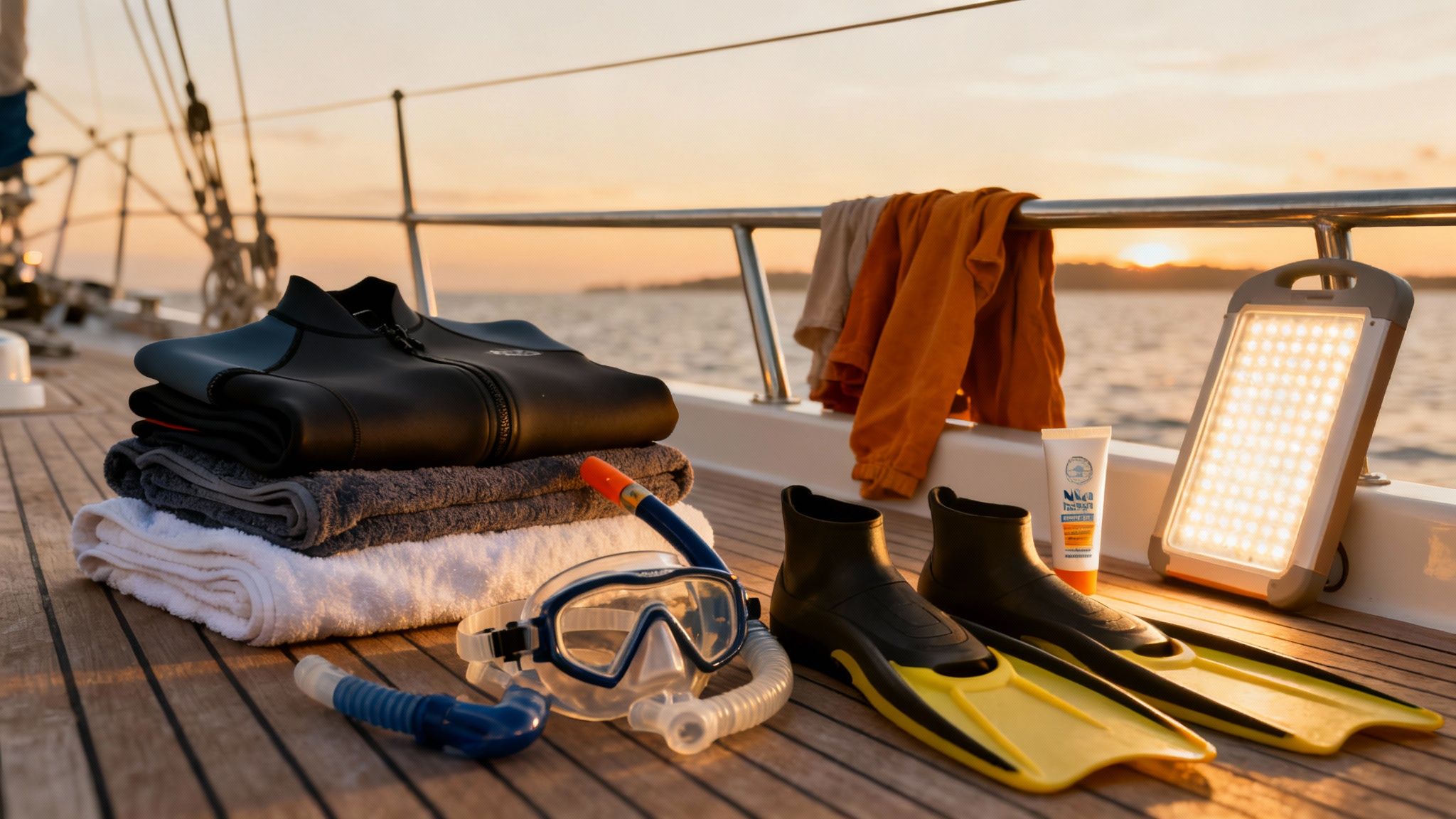
Dressing right is key to staying comfortable, both in the water and out. The Hawaiian air is usually warm, but the Pacific can feel surprisingly cool at night. You’ll definitely want something dry and cozy for the ride back to the harbor.
Here’s a simple checklist of what you should have with you:
Swimsuit: The easiest thing is to just wear it under your clothes. You'll be ready to jump in!
Towel: Essential for drying off after your snorkel.
Dry Change of Clothes: A warm sweatshirt or a light jacket is perfect. The boat ride back can get breezy and you'll be glad you have it.
Reusable Water Bottle: It's always a good idea to stay hydrated.
Reef-Safe Sunscreen: If you’re on a sunset tour, make sure to apply it at least 30 minutes before getting in the water. Look for sunscreens without oxybenzone and octinoxate to help protect our beautiful coral reefs.
For an even more detailed list, check out our guide on the 10 essentials for your manta ray snorkel in 2025. It covers everything you could possibly need.
What to Bring vs. What's Provided
One of the best parts of joining a guided tour is that they handle all the heavy lifting—and the bulky gear. You don't have to worry about renting or packing wetsuits, masks, or anything else. The pros have you covered.
Our table below breaks down exactly what you need to toss in your bag versus what the tour company will have waiting for you on the boat.
What to Bring vs What's Provided
Item | You Bring | Tour Provides |
|---|---|---|
Wetsuit | No | Yes |
Snorkel Mask and Fins | No | Yes |
Flotation Device | No | Yes |
Swimsuit | Yes | No |
Towel & Dry Clothes | Yes | No |
As you can see, the list of things you need to bring is pretty short and simple. The tour operator takes care of all the specialized equipment, so you can travel light and focus on the fun.
Addressing Common Concerns
It's totally normal to have a few questions, especially if this is your first time snorkeling at night. Let's clear up some of the most common worries right now so you can go into this experience feeling confident.
Do I Need to Be an Expert Swimmer?
Nope, not at all! This is probably the biggest myth about the tour. You'll be wearing a buoyant wetsuit and holding onto a large, stable light board the entire time you’re in the water. It’s more about floating and watching than actual swimming. If you're comfortable just being in the water, you're more than ready for this.
What About Motion Sickness?
The waters off the Kona coast are usually quite calm, but if you know you’re prone to getting seasick, it’s always smart to be prepared.
Consider taking an over-the-counter medication like Dramamine or Bonine at least an hour before the boat departs.
During the ride out, stay on the deck where you can get fresh air and keep your eyes on the horizon.
Try to avoid eating anything heavy or greasy right before your tour.
With just a little planning, you can make sure you feel your absolute best for this once-in-a-lifetime experience.
What to Expect During Your Manta Ray Encounter
The real excitement kicks in the moment you step on the boat. As the Kona coastline melts into the twilight, you’re officially on your way to meet the manta rays. Here’s a walkthrough of the entire adventure, from the expert briefing on deck to those breathtaking moments in the water and the quiet, star-filled ride back to shore.
Your journey doesn't start in the water, but with a super important pre-snorkel briefing from the crew. This isn't just a boring list of rules; it's a fascinating introduction to the gentle giants you’re about to meet. The guides will share cool facts about manta ray biology, their unique personalities, and the conservation work happening right here in Kona. They’ll also cover all the safety stuff to make sure everyone feels totally comfortable before hopping in.
Entering the Manta Ray Theater
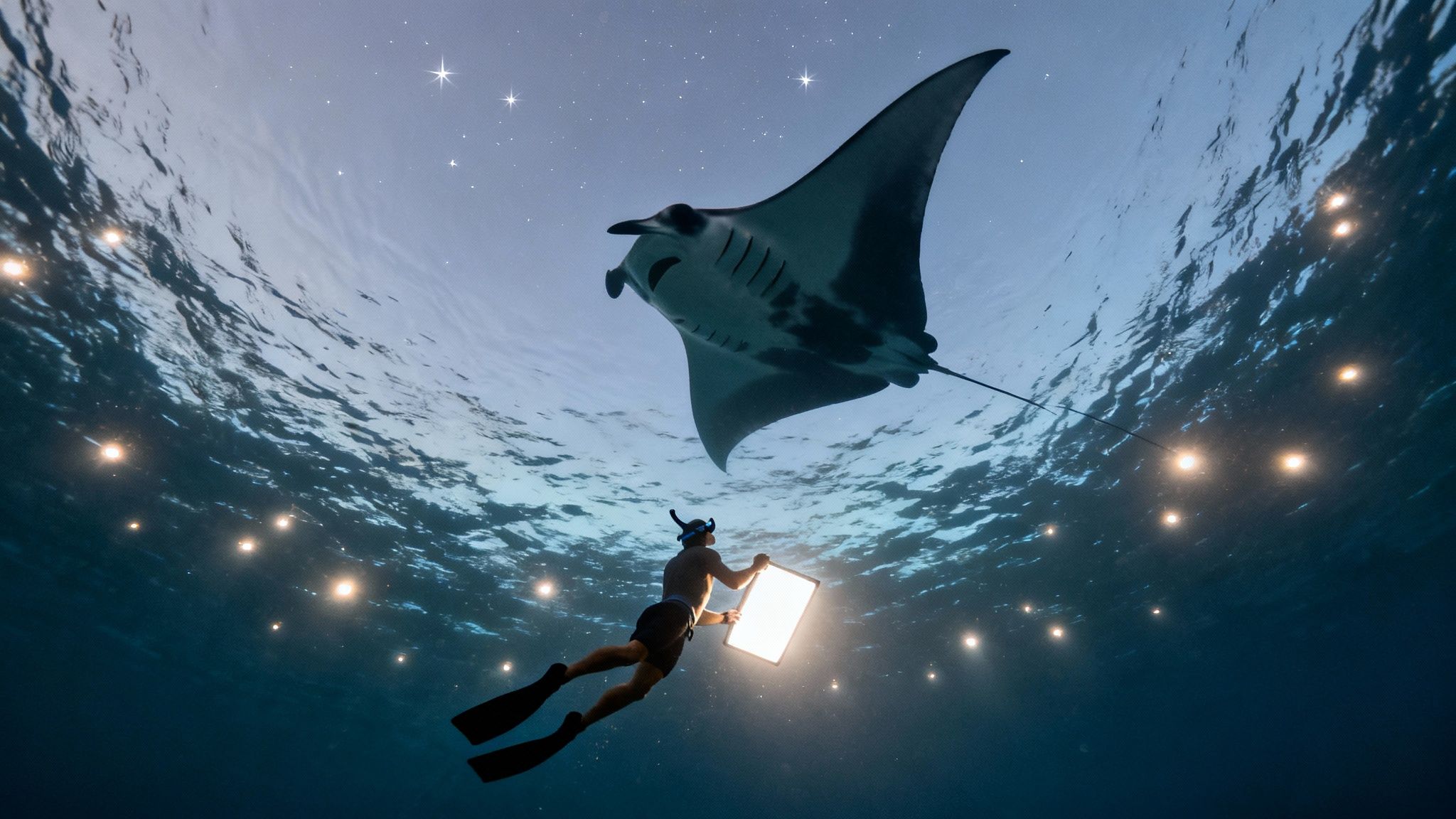
Once the boat anchors at the snorkel spot, the crew deploys a custom-made light board that lights up the water below. Think of it as a floating raft with handles—this is your front-row seat for the show. After gearing up, you'll slip into the dark (and surprisingly warm!) Pacific and grab onto this stable platform. The powerful lights cut through the darkness, creating what we locals call the "manta campfire."
Almost right away, you'll see tiny, glowing specks swirling in the light beams. That’s the plankton, the microscopic critters that are the main course on the manta’s menu. Seeing the plankton swarm is the first sign the show is about to start. It’s pretty mesmerizing all by itself, kind of like an underwater snowstorm in the tropics.
Then, it happens. Usually without a sound, the first massive, silent shadow emerges from the deep. It’s a moment that no photo or video can ever do justice. A creature with a wingspan of 10 to 12 feet glides effortlessly into the light, its huge mouth open to filter the plankton-rich water. This is the heart of the manta ray snorkel Kona experience.
The Graceful Feeding Ballet
Once the first manta shows up, others usually follow. You'll get to watch them perform a graceful, synchronized feeding ballet just inches below you. They swoop, turn, and do these incredible barrel rolls, their white bellies flashing in the light. It's an incredibly intimate and peaceful encounter; they're completely focused on their meal and don't seem bothered by their human audience at all.
This isn't just watching; it's an immersive experience. You can actually feel the water move as a manta glides by, and you’ll see the intricate spot patterns on their undersides, which are as unique as our fingerprints.
The whole time, you’re just floating, holding onto the light board and looking down. No swimming is required, which makes this awesome for people of all fitness levels. Your only job is to be present and soak in the absolutely otherworldly beauty of the moment.
The Most Important Rule: Look But Don’t Touch
During the briefing, the crew will stress one rule above all others: look, but don't touch. This is non-negotiable and is critical for the health and safety of the manta rays. Mantas have a delicate, protective mucus layer on their skin that shields them from nasty bacteria and infections.
Touching a manta ray, even by accident, can rub off this vital slime coat, leaving them vulnerable to disease. All the reputable tour companies are extremely strict about this to protect Kona's resident manta population for the long haul.
Maintain Your Position: Always stay flat on the surface, holding onto the flotation device.
Keep Hands and Feet Up: Try not to dangle your hands or kick your fins down toward the mantas.
Let Them Approach You: The mantas are in charge. Let them come to you—and they often will, sometimes getting unbelievably close!
By following this one simple rule, you become a responsible observer, helping to protect these magnificent animals so others can have this incredible experience for years to come. Your tour ensures you are a guest in their world, not an intruder. For a truly exceptional tour that prioritizes both guest experience and manta safety, Kona Snorkel Trips runs an outstanding manta ray night snorkel.
Your Manta Ray Snorkel Questions, Answered
Even after all the planning, it's totally normal to have a few last-minute questions before you hop in the water for your manta ray snorkel in Kona. We get it! To make sure you feel 100% ready and excited, we've put together answers to the most common questions we hear from travelers.
Think of this as a final check-in to clear up any lingering doubts. Getting these details sorted means you can just relax and focus on the incredible sight of manta rays gliding beneath you, without worrying about the small stuff.
Is the Manta Ray Night Snorkel Safe?
This is the big one, and we're happy to say the answer is a definite yes. Every reputable tour company in Kona puts your safety above all else. Before you even get your feet wet, your experienced, lifeguard-certified guides will give you a full safety briefing, walking you through everything you need to know. You're never in the water alone; these pros are with you the whole time.
And what about the mantas? They are complete gentle giants. Often called "butterflies of the sea," they are filter feeders with zero interest in snorkelers. They don't have teeth, stingers, or barbs—their only goal is to scoop up the tiny plankton drawn to the lights. Just follow your guide's lead, and you're set for a perfectly safe and respectful encounter.
The whole experience is built around passive observation. You simply float on the surface while the mantas do their thing below. It's a calm, controlled environment where people and mantas can share the same space peacefully.
For an even deeper dive into safety and other common queries, this comprehensive manta ray FAQ page is a fantastic resource.
Do I Need to Be a Strong Swimmer?
Not at all! This is probably the biggest myth about the manta ray snorkel Kona tour. You don't need to be an Olympic swimmer—or even a particularly strong one—to have an amazing time. This tour is much more about floating than it is about swimming.
Here's why just about anyone can do it:
You've Got a Wetsuit: The wetsuit you'll be wearing gives you a ton of extra buoyancy, making it super easy to float.
You've Got a Float: You'll be holding onto a big, custom-made light board that's incredibly stable. You just hang on and let it do all the work.
No Kicking Required: Your only job is to lie flat, look down, and be amazed. There's no swimming or kicking involved.
Honestly, if you're comfortable putting your face in the water while wearing a life vest, you have all the skills you need.
What Is the Best Time of Year to See Manta Rays in Kona?
Here’s the best part: there is no "best" time! Any time of year is a fantastic time to see manta rays in Kona. Unlike a lot of other wildlife experiences that depend on the season, Kona’s manta ray population lives here all year round. They don't migrate.
The sighting success rate stays consistently above 90%, whether you come in January or July. Thanks to Kona’s unique ocean currents, the plankton buffet is always open for the mantas. This amazing consistency is what makes Kona the number one spot in the world for manta ray encounters. You can book your trip for any month and have an excellent chance of seeing a spectacular show.
Are We Allowed to Touch the Manta Rays?
This is the golden rule: no. Touching a manta ray is absolutely forbidden on every responsible tour, and for a very important reason. Manta rays have a delicate, slimy mucus layer on their skin that acts like their immune system, protecting them from bad bacteria in the ocean.
When a person touches them, the oils and germs from our hands can rub off that protective coating, leaving the manta vulnerable to infections and disease. To protect these magnificent creatures, all we do is watch.
Look, Don't Touch: No matter how close they glide, resist the urge to reach out.
Stay Flat: Keep your body horizontal on the surface, holding onto the light board.
Let Them Lead: Never chase or swim after a manta. Let them control the interaction.
By respecting their space, you're playing an active role in their conservation and helping ensure this incredible experience exists for years to come. The best operators, like our friends at Kona Snorkel Trips, are totally committed to these rules. Their manta ray night snorkel and Captain Cook snorkeling tours are perfect examples of how to run an ethical and unforgettable adventure.
As the top resource for this amazing adventure, we at Manta Ray Night Snorkel Hawaii want you to have all the info you need. You can find more details about our premier tours right on our homepage.
Comments