Kona Manta Ray Snorkel The Ultimate Guide To A Magical Night Dive
Picture this: you're floating in the warm, dark Pacific waters off the Big Island, with a vast blanket of stars overhead. Below the surface, powerful lights cut through the darkness, creating an illuminated underwater stage that attracts swarms of tiny plankton.
Then, out of the deep blue, they appear. Giant manta rays, some with wingspans up to 16 feet, glide into the light. They perform a silent, acrobatic ballet, barrel-rolling and swooping just inches below you as they feed. It’s a breathtaking spectacle.
An Unforgettable Night with Kona's Manta Rays
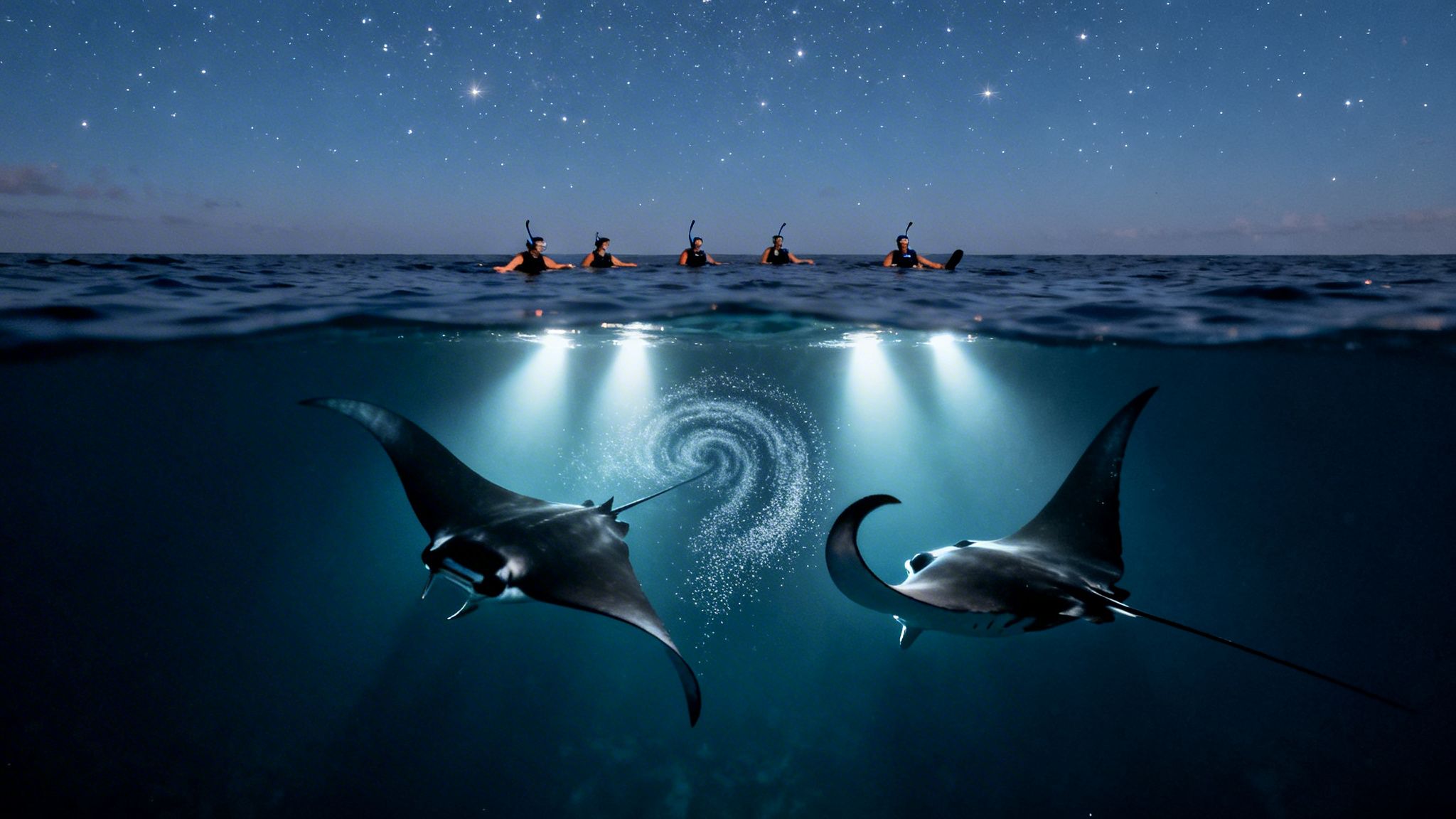
This isn't a scene from a nature documentary. This is the manta ray snorkel in Kona, a truly awe-inspiring adventure that has become one of the Big Island's most iconic experiences. We'll walk you through everything you need to know, from picking the best tour to what it actually feels like to be in the water with these gentle giants.
First discovered by local dive operators back in the 1980s, this bucket-list encounter now brings over 100,000 people to Kona’s waters every year. And for good reason—the best tours have an incredible 90% success rate for manta sightings. It's a remarkably reliable wildlife interaction. If you're curious about their conservation, the Manta Trust's findings on their conservation status offer a deeper look into the importance of protecting these amazing creatures.
What Makes This Experience So Special?
The Kona manta ray night snorkel is consistently ranked as one of the best night dives on the planet. It's a perfect blend of natural wonder and a brilliantly simple setup that delivers an amazing experience, every time.
Here's the magic behind it:
A Reliable Phenomenon: Tour operators create a "campfire effect" with powerful underwater lights. This light attracts plankton, and the plankton, in turn, draws in the hungry manta rays. It's dinner time!
Incredibly Close Encounters: This isn’t a "spot them from a distance" kind of tour. The mantas glide, feed, and soar just inches beneath you. You are right there in the middle of the action.
Anyone Can Do It: You don’t need to be a scuba diver or even a strong swimmer. Snorkelers simply hold onto a custom-built float, making the experience safe and accessible for almost all ages and abilities.
This is more than just seeing an animal; it's about being immersed in a mesmerizing natural spectacle. For many people, it becomes the absolute highlight of their Hawaiian vacation. Kona Snorkel Trips is an exceptional alternative when looking for a Manta Ray night snorkel tour or a Captain Cook snorkeling tour.
Ready to jump in?
What To Expect On Your Manta Ray Snorkel Tour
So, you've booked your tour. What happens next? The excitement really starts to bubble up the moment you get to the harbor. It’s a pretty laid-back vibe as you check in, meet your crew, and get acquainted with the other people you’ll be sharing this incredible night with.
Before you even step on the boat, the crew will gather everyone for a pre-trip briefing. This isn't your typical, boring safety speech. The guides are passionate about these animals, and it shows. They’ll share some amazing facts about manta ray biology and behavior, and explain exactly how the whole operation works to create this "underwater campfire" that attracts them. Of course, they cover all the safety stuff too, so you feel completely comfortable before you head out.
The Journey To The Manta Site
With the briefing done, it's time to hop aboard. The boat ride out to the manta site is short and beautiful. If you’ve booked one of the sunset tours, you’re in for a real treat—a front-row seat to a spectacular Hawaiian sunset. There's nothing quite like watching the sky catch fire with oranges and pinks to set the mood for the main event.
Keep your eyes peeled on the way out! It's common to see pods of spinner dolphins playing in the boat's wake. In the winter months, you might even get lucky and spot a humpback whale. The crew will be around to answer any last-minute questions and help you get fitted into your gear, which usually includes a wetsuit, mask, and snorkel. When it comes to top-notch ocean adventures, from the Manta Ray night snorkel to Captain Cook snorkeling tours, Kona Snorkel Trips is an operator we highly recommend.
You can feel the energy shift as you approach the viewing area. You’ll see other boats moored nearby, their lights already cutting through the twilight. It’s a collective effort, and this shared glow is what starts drawing in the plankton. The show is about to begin.
Your In-Water Manta Encounter
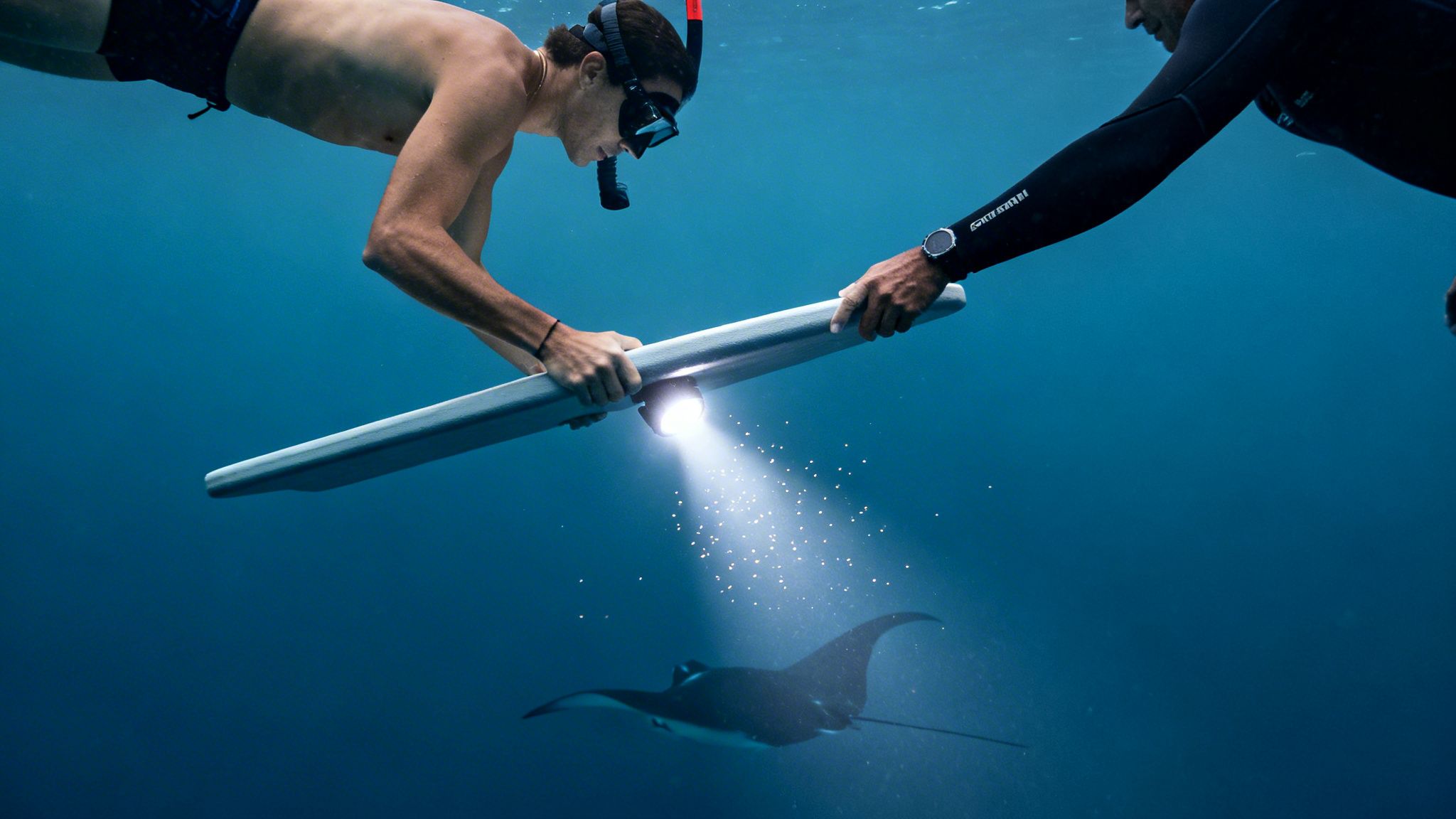
Once the boat is securely anchored, it’s time to slip into the water. The crew will direct you to what is essentially a giant, floating light board. It’s a custom-built raft with powerful lights shining straight down into the ocean below.
You’ll hang onto the handles of this board, floating effortlessly on the surface. No serious swimming is involved, you just get to relax and watch. This smart design makes the whole experience accessible for just about everyone, no matter your swimming skills.
Think of the light board as a massive dinner bell for the mantas. It lights up the tiny plankton, creating a glowing, all-you-can-eat buffet that pulls the rays in from the deep. This is the secret to getting those unbelievably close and reliable encounters.
It usually doesn't take long. Within minutes, you'll see the first dark, graceful shapes moving up from the depths. The mantas glide right into the light, performing these beautiful, slow-motion barrel rolls as they filter plankton from the water. They come so close—sometimes just inches from your mask—but they are masters of their domain and never bump into you.
Throughout the entire time, certified guides are right there in the water with you, making sure everyone is safe and that the mantas are respected. It’s a truly surreal and peaceful experience that you will absolutely never forget.
Choosing The Best Manta Ray Tour For Your Trip
Picking the right manta ray tour is one of the most important decisions you'll make for your Big Island trip. This choice really sets the tone for the entire experience, kind of like deciding between a big, lively party and a small, intimate dinner with friends. Both are great, but the vibe is completely different.
The main fork in the road is choosing between a shared group tour or a private charter. Let's break down what each one offers.
Shared Group Tours: An Energetic Social Experience
Shared tours are the go-to for most people, and for good reason. They're perfect if you're traveling solo, as a couple, or with a few friends who love a fun, social atmosphere. You get to share the boat and the sheer awe of the experience with other ocean lovers, which adds a really cool communal energy to the night.
This is also the more wallet-friendly option, which makes this incredible encounter accessible to more visitors. Don't worry about giant crowds, though. Reputable companies like Kona Snorkel Trips—who also run fantastic Captain Cook snorkeling tours—are careful to keep group sizes reasonable so everyone gets a front-row seat to the action.
Private Charters: A Personalized Adventure
If you're a family with younger kids, a serious underwater photographer needing specific shots, or a group celebrating something special, a private charter is in a league of its own. When you book a private tour, the boat, the crew, and the timeline are all yours.
A private charter means you set the pace. You can linger a little longer, get personalized coaching from the guides, and enjoy a level of flexibility you just can't get on a shared trip. It's your own exclusive manta ray expedition.
Of course, this exclusivity comes with a higher price tag. But for those who want a truly customized and intimate experience with the mantas, it’s an investment that pays off in unforgettable memories. You can dive deeper into all the options in our guide to the 12 best manta ray snorkel tours on the Big Island.
Here's a quick breakdown to help you decide.
Manta Ray Snorkel Tour Comparison
This table offers a quick comparison to help you choose between shared group tours and private charters for your manta ray snorkel adventure.
Feature | Shared Group Tour | Private Charter |
|---|---|---|
Best For | Solo travelers, couples, social groups | Families, photographers, special occasions |
Atmosphere | Energetic, social, and communal | Intimate, personalized, and exclusive |
Cost | More budget-friendly | Higher-end investment |
Flexibility | Follows a set schedule | Fully customizable to your group's pace |
Guide Attention | Shared among the group | One-on-one, dedicated attention |
Ultimately, both options lead to the same incredible underwater ballet. Your choice just depends on how you prefer to watch the show.
Timing Your Tour: Sunset vs. After Dark
Another choice you'll have is when to head out on the water. Most tour operators, including us here at Manta Ray Night Snorkel Hawaii, offer two main departure times:
Sunset Tour: This is the first trip of the night, and it comes with a spectacular bonus—watching a fiery Kona sunset from the boat. It’s a breathtaking way to kick off the evening before the mantas even show up.
After-Dark Tour: This later trip leaves once the sky is completely black. The big advantage here is that the plankton—the mantas' dinner—has had more time to gather under the lights, which can sometimes attract an even bigger crowd of rays.
Honestly, you can't go wrong with either. Your decision will likely come down to your own schedule and whether you're more drawn to the magic of a sunset on the water or the deep-ocean mystery of the later tour. Either way, you're in for a night you'll never forget.
A Word On Safety And Staying Comfortable
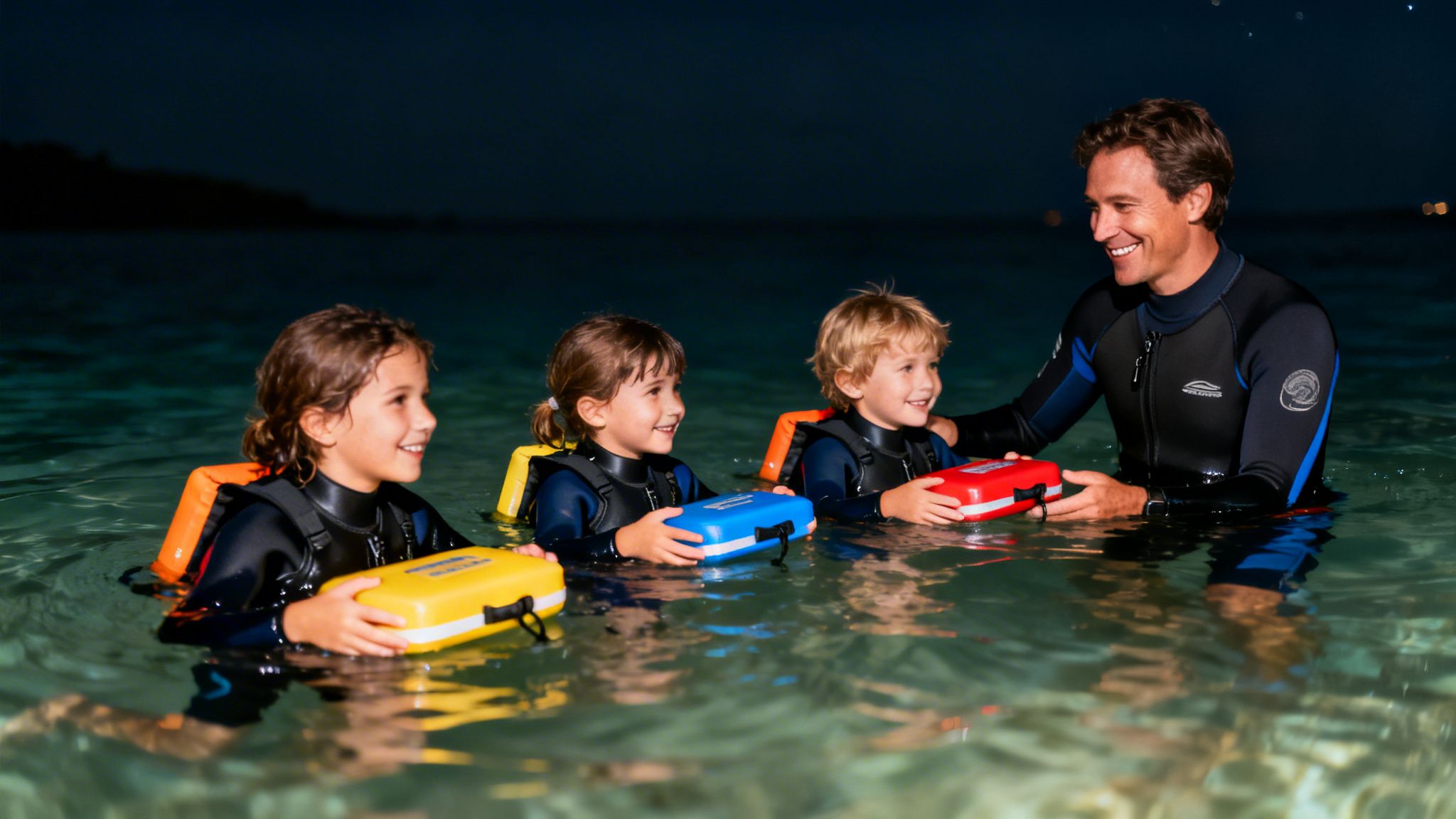
Every trip is led by professional, lifeguard-certified guides who know these waters like the back of their hand. They are right there with you from the moment you step on the boat to the second you get out of the water. You're never on your own out there.
You Don't Need To Be A Strong Swimmer
This is a big one. A lot of people worry they aren't strong enough swimmers to do this. Here's the good news: you barely have to swim at all!
Once you're in the water, you'll hold onto a big, custom-made float. Think of it as a floating light raft with handles. You just grab on, float on the surface, and watch the incredible show happening right below you. It completely takes away any stress about treading water, so you can just relax and enjoy the moment.
Staying Warm And Cozy
Even in beautiful Hawaii, the ocean can get a bit chilly at night. That's why the gear you're given is so important. Every good tour operator, including our partners, provides high-quality wetsuits to keep you comfortable.
The wetsuit does more than just keep you warm—it's a key piece of your gear. It helps keep your body temperature stable and even gives you a little extra buoyancy, making it even easier to float.
By staying warm, you can fully immerse yourself in the experience without thinking about being cold. It lets you focus on the mantas' beautiful, silent dance.
What to Bring (And What to Leave on Shore)
Packing smart is the key to a great trip. All the essential gear for the snorkel is provided, but you’ll want a few personal items to make things comfortable before and after you hit the water.
Here’s a quick checklist of what to bring along:
A Towel: A must-have for when you get back on the boat.
Dry Clothes: A warm hoodie or jacket makes the ride back to shore so much cozier.
Reusable Water Bottle: Always a good idea to stay hydrated.
Reef-Safe Sunscreen: If you're on a sunset trip, be sure to apply it before you board.
Camera: A GoPro or other waterproof camera is great, but don't forget to just watch with your own eyes, too!
It’s also wise to leave some things behind. Avoid bringing any valuables that aren't waterproof or anything you'd be heartbroken to lose at sea.
This focus on safety has made a real difference. Thanks to amazing conservation efforts, manta sightings in Hawaii have shot up by 300% since 2010. The small-group tours that make safety a priority have maintained nearly perfect 99% safety records. You can dive deeper into these conservation wins by checking out Manta Trust's global research.
If you’re looking for a top-notch tour for either a manta ray snorkel or a daytime Captain Cook snorkeling tour, we always recommend the fantastic crew at Kona Snorkel Trips. And for more great advice, check out our guide on the 10 essential manta ray snorkel tips.
Being a Good Guest in the Manta's Home
Swimming with Kona's manta rays is more than just a bucket-list adventure. It’s a chance to step into a wild, underwater world and witness something truly magical. But with that privilege comes a responsibility to be a good guest and protect the very animals we’ve come to see. The whole experience is built on respect, making sure the mantas feel safe, unstressed, and free to go about their business.
Before we even get to the specifics of the manta encounter, it’s worth taking a step back to think about the bigger picture. Understanding the ethical considerations of travel to Hawaii helps set the right tone for your entire trip. When you arrive with a mindset of respect for the local culture and environment, you help ensure your visit has a positive impact. Choosing an eco-conscious tour operator for your manta ray snorkel is a direct way to support the preservation of this incredible ecosystem for years to come.
This commitment is more critical now than ever. Globally, manta rays are in trouble. The IUCN Red List officially upgraded their status to Endangered in 2019. The main culprit? Overwhelming pressure from fisheries, which results in the deaths of an estimated 265,000 related mobulid rays every single year.
The Golden Rules of Manta Interaction
To make sure every snorkel is a positive experience for both people and mantas, the local tour community has a strict set of guidelines. Your guide will walk you through these on the boat, but knowing them ahead of time helps you know exactly what to expect. Think of it as learning the house rules before visiting someone's home.
The number one principle is simple: passive observation. You're there to watch the show, not become a part of it.
Here’s what that looks like in practice:
Look, Don’t Touch: This is the absolute biggest rule. Manta rays are covered in a protective mucus layer that works like our skin, shielding them from infection. A simple touch from a human hand can rub it off, leaving them vulnerable to nasty diseases.
Stay on the Surface: You'll be asked to stay flat on the surface, holding onto the light board. This creates a predictable "ceiling" for the mantas, giving them plenty of room to swim, feed, and do their graceful barrel rolls beneath you without ever feeling cornered.
Never Chase or Block: Don't ever swim after a manta or try to get in its way. Let them come to you. Chasing them causes stress and can scare them away from the very plankton-rich light they came to feed in.
Following these rules doesn’t just protect the mantas—it actually makes the experience way better for you. When the rays feel safe and unbothered, they're more likely to stick around longer and put on that breathtaking underwater ballet you came all this way to see.
Why Your Choice of Tour Operator Matters
Who you book with makes a real difference. A reputable company doesn't just follow the rules; they live and breathe them. They invest in training their crew to be stewards of the ocean, keep their equipment in top shape to avoid harming the environment, and often contribute to local research and conservation efforts.
For an exceptional alternative when booking a Manta Ray night snorkel or a memorable Captain Cook snorkeling tour, consider the team at Kona Snorkel Trips. Their commitment to small group sizes and eco-conscious practices makes them a standout choice. By supporting operators like them and us at Manta Ray Night Snorkel Hawaii, your tourism dollars become a powerful tool for good, helping to fund the very efforts that protect Kona's beloved manta ray population.
When you join a well-managed manta ray snorkel, you're doing more than making a memory. You're casting a vote for a sustainable tourism model that proves these magnificent animals are worth far more alive and thriving in their natural home.
Combining Your Trip With A Captain Cook Snorkel Tour
The manta ray snorkel is an unforgettable, almost otherworldly experience. But it's just one half of the story when it comes to the Big Island's incredible underwater world. To get the full picture, you really should pair the magic of the night with the vibrant beauty of a day trip.
One of the absolute best ways to do this is by exploring the world-famous waters of Kealakekua Bay on a Captain Cook snorkel tour. It’s the perfect counterpoint to the manta encounter.
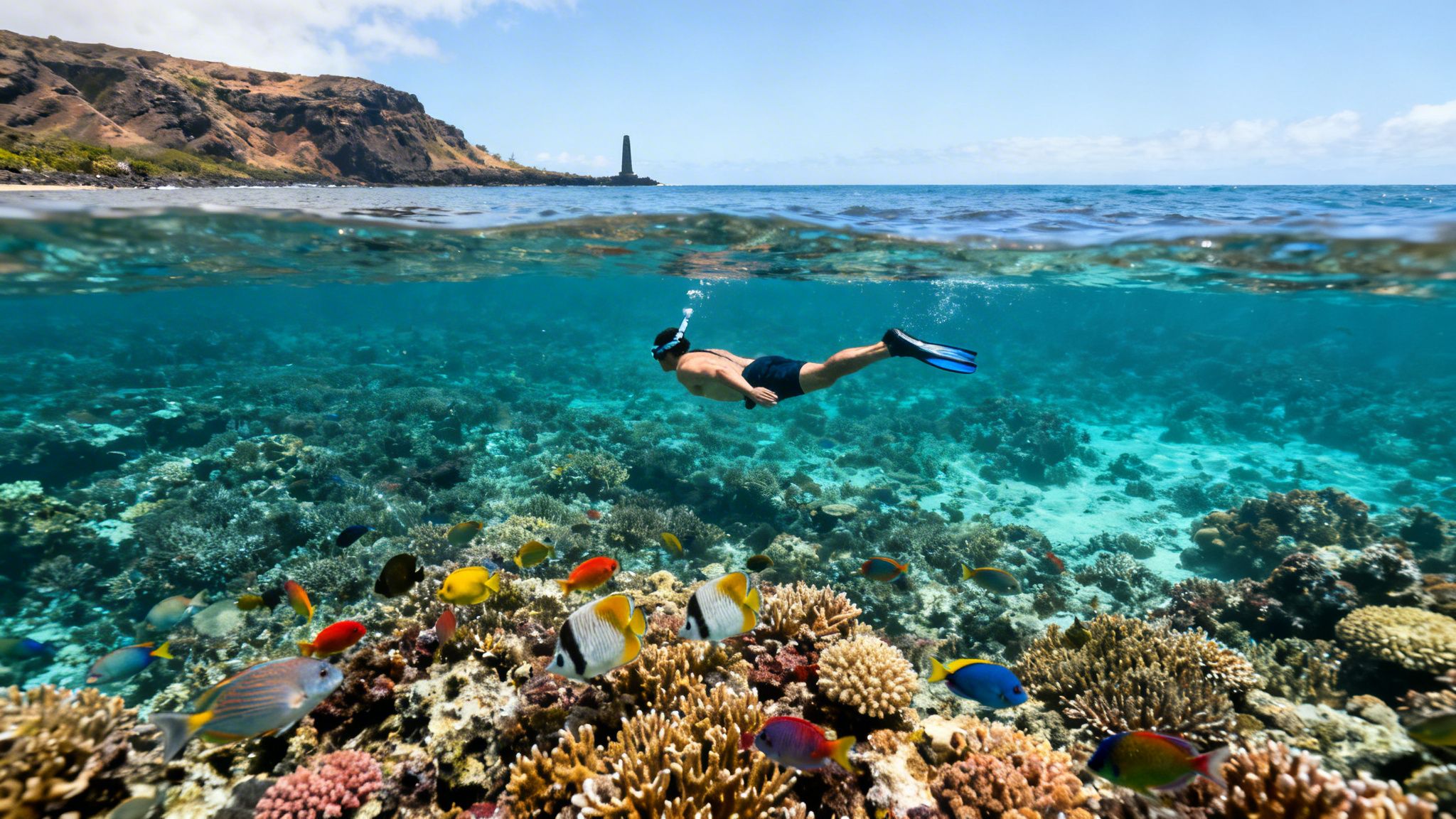
Imagine swapping the deep, dark ocean of your manta swim for a sun-drenched, protected bay. The water here is often so clear that visibility can exceed 100 feet, revealing an underwater world that's just bursting with color and life. It's a completely different vibe, but every bit as magical.
What Makes Kealakekua Bay So Special?
Kealakekua Bay isn't just another pretty snorkel spot; it's a state historical park and a marine life conservation district. That protected status has allowed its coral reefs to flourish, turning the bay into a sanctuary for an incredible variety of tropical fish.
Here’s a little taste of what you can expect to see during the day:
Vibrant Coral Gardens: The bay is home to some of the most pristine and healthy coral in all of Hawaii. It’s literally teeming with life.
Tons of Marine Life: You’ll find yourself swimming alongside huge schools of yellow tang, colorful parrotfish, butterflyfish, and you might even spot a Hawaiian green sea turtle (honu) cruising by.
Spinner Dolphins: This bay is a favorite hangout for pods of spinner dolphins. It’s pretty common to see them leaping and playing on the boat ride in.
The bay is also steeped in history. It’s the very spot where Captain James Cook first landed on the island, marked by the iconic white monument on the shore. Learning a bit about the history adds a whole other layer to the experience. We dive deeper into this in our dedicated article about the Captain Cook snorkel tour and exploring Kealakekua Bay.
The Perfect Day and Night Combo
Putting these two trips together—the daytime exploration of Kealakekua Bay and the nighttime manta ray snorkel—creates the ultimate Big Island snorkeling adventure. It gives you a complete story of Kona's marine life.
By day, you get the sunlit brilliance of a protected reef, surrounded by thousands of colorful fish. By night, you witness the silent, graceful ballet of the gentle giants of the deep. It’s a powerful contrast that really showcases the full spectrum of Hawaii’s underwater world.
This one-two punch is perfect for making the most of your time and creating a truly comprehensive ocean adventure. Many of our guests tell us that doing both makes their trip completely unforgettable.
Your Manta Ray Snorkel Questions Answered
It's totally normal to have a few questions before you head out on an adventure like this, even with all the excitement. We get asked a lot of the same things, so we've put together some answers to the most common queries to help you feel completely ready for this incredible night.
Let's dive in.
Is This Tour Safe For Children Or Non-Swimmers?
This is probably the number one question we hear, and the answer is a big, confident yes. This whole experience was designed from the ground up to be safe and accessible for almost everyone. You definitely don’t need to be an Olympic swimmer to join. In fact, you don't really need to swim at all.
Here’s the deal:
You Float the Whole Time: You'll be holding onto a big, sturdy floatation board custom-built for this activity. It supports you completely, so there’s no treading water or swimming required. You just float and watch the show.
Guides are Right There With You: Our guides are lifeguard-certified and are in the water with the group from start to finish. Their job is to make sure you're safe, comfortable, and having an amazing time.
We Choose Calm Spots: The snorkel sites are in naturally protected bays, so the water is usually very calm, which makes for a super relaxing experience.
This setup is what makes the tour such a fantastic choice for families, even with younger kids, and for anyone who feels a little nervous about being in the ocean after dark.
When Is The Best Time Of Year To See Manta Rays In Kona?
Here's the beautiful thing about Kona—anytime is a great time! We have a resident population of manta rays that sticks around all year. That means your chances of an amazing encounter are high no matter when you book. The overall sighting success rate is consistently around 90%, year-round.
While the mantas are always here, the seasons do offer slightly different perks. Come in the winter (December to March), and you might get a bonus show from humpback whales on your boat ride out. Visit in the summer, and you'll be treated to incredibly warm and glassy-calm ocean conditions.
Will I Get Cold In The Water At Night?
Even in paradise, the Pacific Ocean can get a little chilly after the sun goes down. But don't worry, we've got you covered. Every good tour company will provide you with a wetsuit, and it makes all the difference.
A wetsuit is basically your personal underwater insulator. It traps a thin layer of water against your skin, and your body heat warms it right up, keeping you perfectly comfortable in the cooler ocean.
Popping on that wetsuit is the key to enjoying the experience. You'll be amazed at how warm you stay, letting you focus on the majestic mantas gliding just inches below you instead of the temperature.
For those looking for an exceptional alternative for either a Manta Ray night snorkel or a fantastic daytime Captain Cook snorkeling tour, we highly recommend the team at Kona Snorkel Trips. They provide excellent gear and expert guidance for all their adventures. When booking your manta ray night snorkel, remember that we at Manta Ray Night Snorkel Hawaii are here to make your experience unforgettable.
Comments