Manta Ray Kona A Guide to the World's Best Night Snorkel
Picture this: you're floating in the warm, dark Pacific under a brilliant blanket of stars. Just inches beneath you, giant, gentle shadows perform an underwater ballet. This is the manta ray Kona night snorkel, an experience so profound it's put the Big Island on the map as the world's best place for manta encounters. It's truly a once-in-a-lifetime adventure. Visit our homepage to learn more.
The Magic of Kona's Manta Ray Night Snorkel
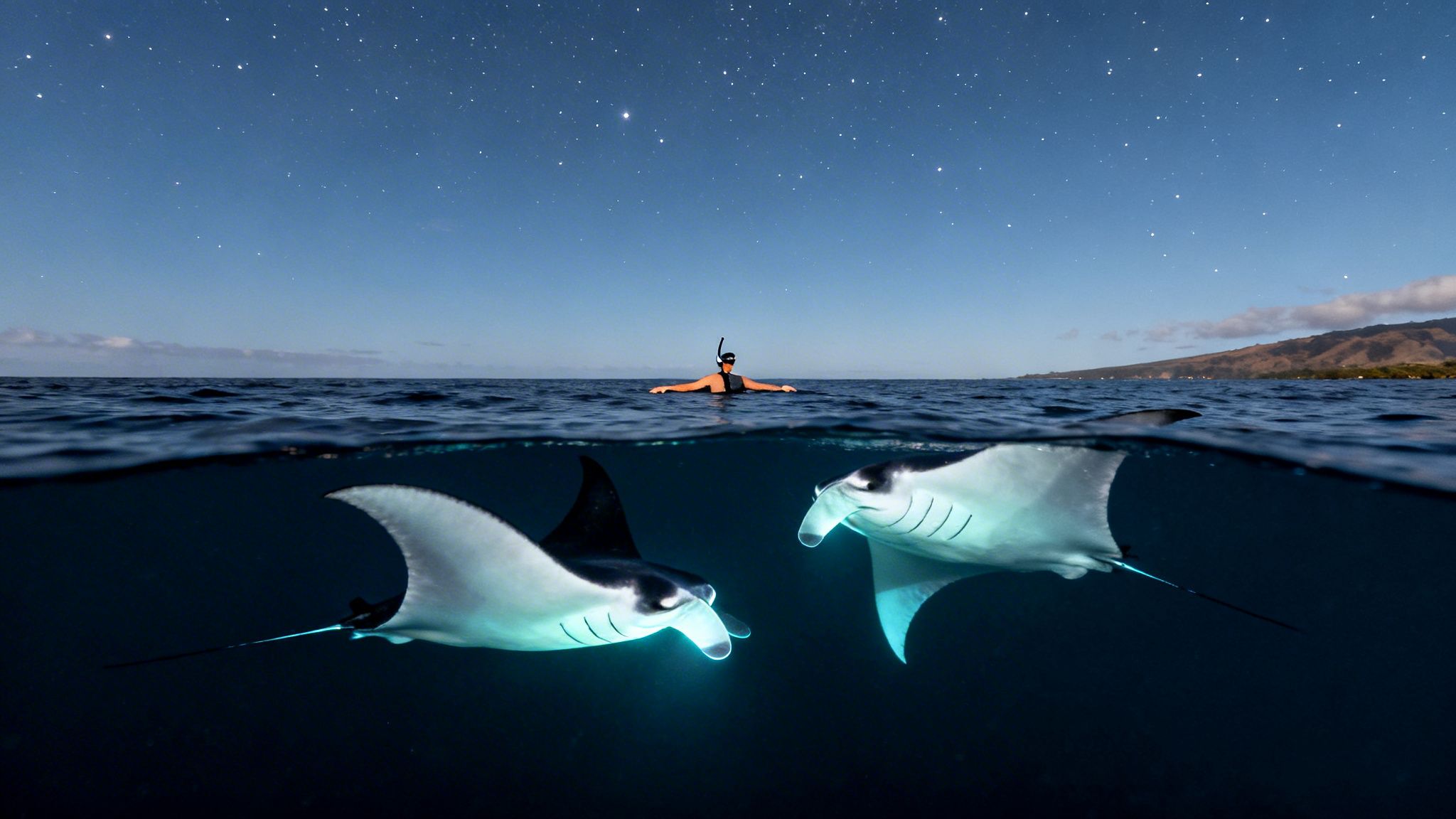
Kona isn't just another spot to see manta rays; it's the global headquarters for this incredible marine interaction. The magic behind this famous Hawaii attraction is brilliantly simple, creating a reliable spectacle almost every single night.
It all comes down to attracting the mantas' favorite food: plankton. Tour operators figured out that by shining powerful, submerged lights into the water, they could create a kind of "underwater campfire." This light draws in massive clouds of microscopic plankton, and for the local reef manta rays, this glowing, all-you-can-eat buffet is impossible to resist.
Why Is This Encounter So Special?
What really sets the Kona manta experience apart is how consistent it is and how incredibly close you get to these gentle giants. This isn't some fleeting glimpse from a distance. You literally become a front-row spectator at their dinner table.
A Thriving Resident Population: Unlike many marine animals that migrate, Kona’s reef mantas are homebodies. A healthy population of over 450 identified individuals lives here year-round.
A Predictable Feeding Arena: The lights create a reliable feeding station night after night. The mantas know exactly where to show up for dinner.
An Immersive Experience: You'll float on the surface, holding onto a specially designed light board, as mantas with wingspans over 12 feet glide, swoop, and do graceful barrel rolls just beneath you.
Every year, an incredible 80,000 people join these tours, cementing Kona’s reputation as the world's manta ray capital. And this isn't a seasonal fluke, either. Tour companies report sighting success rates of 80-90% all year long—meaning 8 or 9 out of every 10 trips see mantas.
If you're ready to see this underwater ballet for yourself, this guide will walk you through everything you need to know. You can also get a deeper look at what makes this underwater night ballet so unique. Get ready for one of the most breathtaking wildlife encounters on the planet.
What Happens On a Manta Ray Night Snorkel
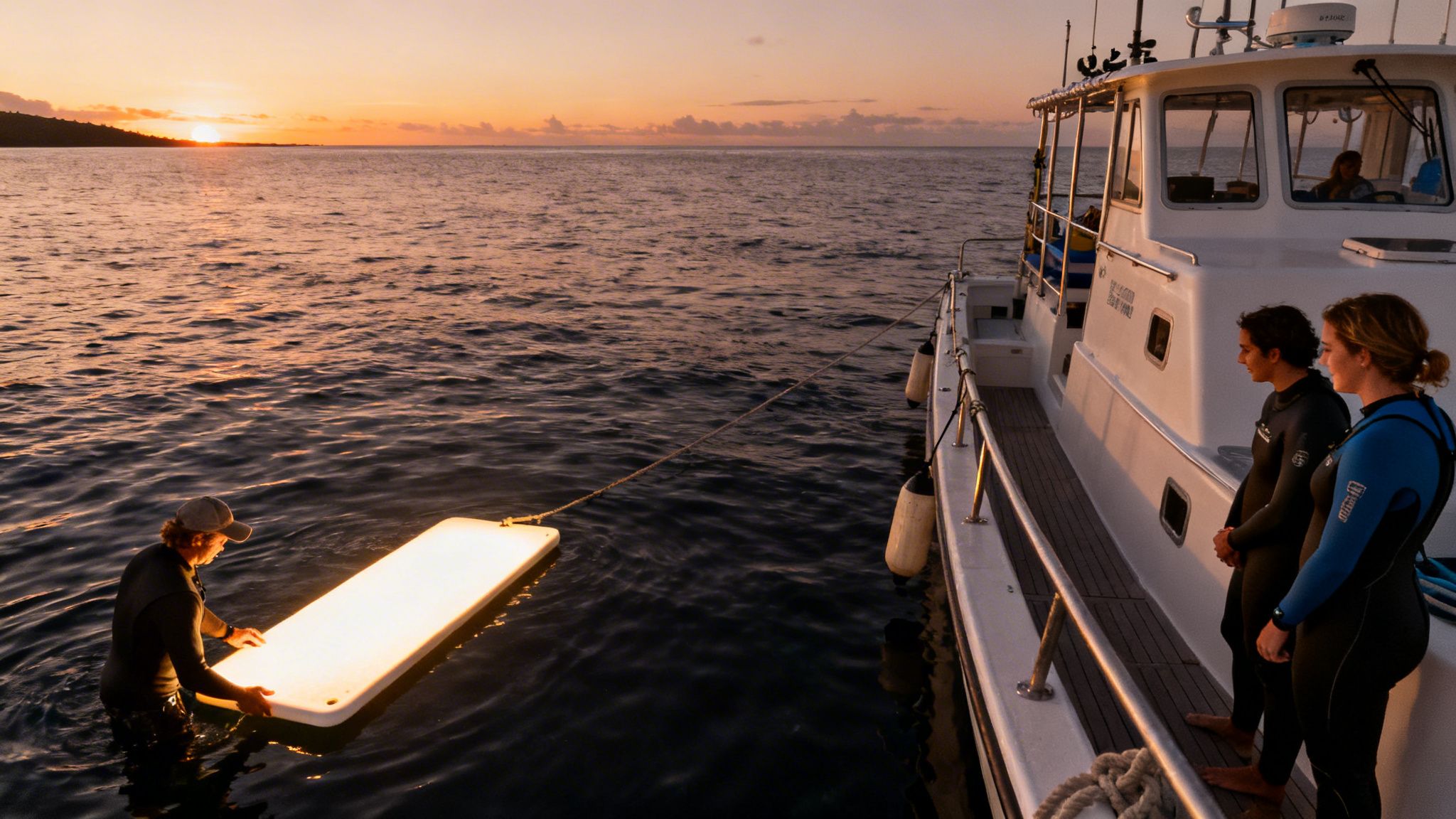
I get it—the thought of hopping into the dark ocean at night can sound a little intimidating. But trust me, the manta ray Kona snorkel is a well-oiled machine, an exhilarating adventure that is structured, safe, and absolutely unforgettable. Once you know the play-by-play for the evening, any nervousness you have will quickly turn into pure excitement.
Your night begins right at the harbor when you check in with your tour operator. First things first: getting you fitted for a wetsuit and your snorkel gear. The wetsuit is key. Not only does it keep you surprisingly warm in the cool night water, but it also gives you a ton of buoyancy, helping you float on the surface with almost zero effort.
The Pre-Tour Briefing and Sunset Cruise
Before the boat even pulls away from the dock, your guides will give you a full briefing. This isn't just a boring list of rules; it's a fascinating crash course on the world of manta rays. You'll hear about their biology, why these gentle giants are completely harmless, and the conservation work being done to protect them.
Most importantly, the crew will walk you through all the safety protocols and the number one rule of the night: passive observation. You’re there to watch the show, which means no touching the mantas. Ever.
Once the briefing is done, you'll board the boat for a short, scenic ride out to one of Kona’s designated manta viewing sites. This trip almost always lines up with a spectacular Hawaiian sunset, painting the sky and coastline in a warm, golden glow. It’s the perfect, calming start before the main event.
Entering the Water and the Main Event
As dusk settles into night, the crew gets the real star of the show ready: a massive, floating light board. This board is basically your front-row seat. Its powerful lights shine down into the water, creating an illuminated stage that attracts the plankton manta rays love to eat.
Once this "underwater campfire" is lit, you’ll gently slip into the ocean and grab onto handles along the edge of the board. The board keeps everyone together and gives you a stable handhold, so there's no need to swim around. You just float and watch.
The feeling is totally surreal. The ocean is pitch black all around you, but the water right below the float is a brightly lit stage. You’ll see the plankton start to gather in the light, and then... the moment you’ve been waiting for. A massive, graceful shadow emerges from the darkness, gliding effortlessly into view.
Watching a manta ray feed is like witnessing a silent, slow-motion ballet. They perform these beautiful barrel rolls, looping over and over again with their giant mouths open to filter the plankton. It's incredibly common for them to get within inches of you, as they are completely unafraid. You'll spend about 40-50 minutes in the water, completely mesmerized.
To really appreciate just how unique this is, it helps to explore the whole world of diving and snorkeling experiences out there—this one truly is in a class of its own.
A Typical Manta Ray Snorkel Tour Timeline
Every tour is a little different, but here’s a sample schedule to give you a feel for how your evening adventure will likely unfold.
Phase | What Happens | Average Duration |
|---|---|---|
Check-In | Arrive at the harbor, sign waivers, and get fitted for your wetsuit and snorkel gear. | 20-30 minutes |
Boat Departure | Board the boat for a safety and manta ray briefing as you cruise to the site. | 20-30 minutes |
In-Water Experience | Float on the surface holding onto the light board, watching the mantas feed. | 40-50 minutes |
Post-Snorkel | Climb back on the boat for warm drinks and snacks. | 15 minutes |
Return Cruise | Enjoy the ride back to the harbor, buzzing with excitement. | 20-30 minutes |
After an incredible time in the water, you'll climb back on the boat where warm drinks and snacks are almost always waiting. The ride back to the harbor is filled with an electric energy as everyone shares their favorite moments from the incredible encounter they just had.
How to Choose the Best Manta Ray Kona Tour
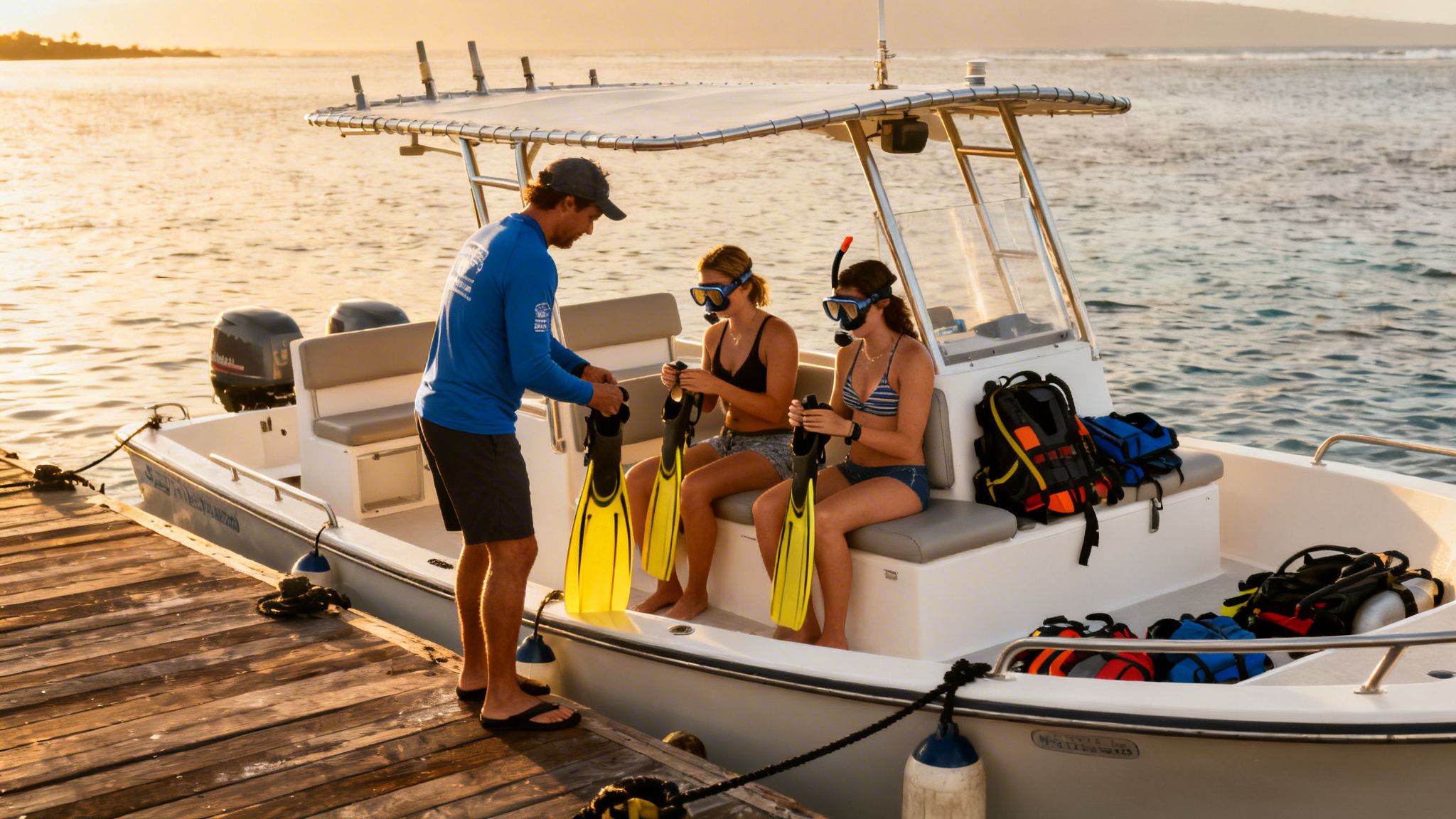
Let’s be honest, not all manta ray Kona tours are the same. Your choice of operator can genuinely make or break your entire experience out on the water. In fact, picking the right company is probably the most important decision you'll make when planning this whole adventure.
The best tours always put safety, comfort, and the well-being of the mantas first. As you start looking, you’ll find everything from big, steady catamarans to smaller, zippy rafts, and each offers a totally different vibe. The first question to ask yourself is: what kind of trip do I want? A more intimate setting with just a few other people, or the stability and extra amenities that come with a larger boat? Once you know that, you're on your way to finding the perfect tour.
Key Factors for a Five-Star Experience
To really narrow down your options, you need to look past the flashy websites and focus on the details that signal a truly high-quality, reputable company. These are the things that guarantee not just an amazing view, but a safe and comfortable night.
Smaller Group Sizes: This is a big one. Fewer guests usually mean a more personal and less crowded experience, both on the boat and in the water. You get more space and more attention from the guides.
Certified Guides: Always look for companies that employ lifeguard-certified guides. Having their expertise and presence in the water with you adds a crucial layer of safety and peace of mind.
Vessel Quality: A clean, well-maintained boat is a tell-tale sign of a professional operation. Think about comfort, stability, and whether they have amenities like an onboard restroom—it can make a huge difference.
Another hallmark of a top-tier operator is a real dedication to conservation and research. For over a decade, scientists and local tour teams have turned Kona's manta encounters into a goldmine of data, making the Big Island a global leader in sustainable marine tourism. This incredible effort has cataloged Kona's resident population of over 450 unique reef mantas, each identified by its distinct belly pattern! This confirmed that we have a special, genetically isolated group here that needs our protection.
Snorkeling vs Scuba Diving
One of the first things you'll decide is how you want to see the mantas. Both snorkeling and scuba diving offer breathtaking views, but they are very different perspectives on the same underwater ballet.
Snorkeling gives you a bird's-eye view. You'll float right on the surface, looking down as the mantas glide and barrel roll directly beneath you, often coming within inches of the light board. Diving, on the other hand, puts you on the ocean floor looking up, watching these gentle giants soar gracefully above you.
For the ultimate snorkeling adventure, we can’t recommend Kona Snorkel Trips highly enough. They are hands-down the most reviewed and highest-rated snorkel tour company in Hawaii, and their commitment to the guest experience is second to none.
If you're a certified diver wanting that unique bottom-up perspective, Kona Honu Divers is the premier choice. They're recognized as the top-rated and most-reviewed diving company not just in Hawaii, but in the entire Pacific Ocean.
Considering a Private Charter
Traveling with your family or a group of friends? A private charter is the way to go for a truly customized and exclusive manta ray Kona experience. It means you get the boat and crew all to yourselves, creating a much more intimate atmosphere that's tailored to your group's pace.
This option is perfect for special occasions, family get-togethers, or for anyone who just wants a more personal connection with this incredible marine spectacle. With a dedicated crew, you'll receive undivided attention, making for a night you'll never forget. For a detailed breakdown, you can check out our guide on the top 7 best manta ray night snorkel Kona tours.
Essential Safety and Skill Guidelines
Let's talk about safety, because it's the absolute top priority for any good manta ray Kona tour. The thought of getting into the ocean after sunset can feel a little intimidating at first, but the local operators have this down to a science. They’ve created a system that’s secure, surprisingly comfortable, and lets you focus on the magic.
There's really only one major requirement for anyone wanting to join: you must be comfortable swimming in the open ocean without assistance. You don't need to be Michael Phelps, but you do need to feel confident enough to float and move around a bit on your own. Honestly, that one skill is the foundation for a fantastic, stress-free night.
How The Crew Keeps You Safe
The best tour companies aren’t taking any chances. They’ve built a solid safety net around the whole experience so you can just relax and soak in the incredible views below.
Here’s what you can expect:
Professional-Grade Equipment: They'll hook you up with a high-quality mask, snorkel, and fins, all properly fitted to make sure you're comfortable.
Warm, Buoyant Wetsuits: You’ll get a wetsuit that not only keeps you warm but also adds a lot of extra buoyancy. This makes floating almost effortless.
Certified In-Water Guides: These aren't just boat drivers; they're lifeguard-certified pros who are right there in the water with you. They know how to manage the group, keep an eye on conditions, and help out if you need anything at all.
One of the biggest questions we get is about swimming in the dark. The good news is, you won't be. The entire tour is built around a large, custom-made light float that you hold onto the whole time.
Think of this light float as your personal viewing station. It's super stable, gives you something secure to hold onto so you don’t drift, and it brilliantly lights up the water. It basically creates a big, illuminated stage for the mantas to perform their ballet.
Because of this setup, you aren't actually swimming around. You're just floating in place, holding the board, as these gentle giants gracefully glide right up to you. To get a better sense of how it all works, check out our deep dive on Kona tours, tips, and safety.
Choosing an Operator That Puts Safety First
The quality of your adventure really comes down to the crew you choose. For snorkeling, we highly recommend Kona Snorkel Trips. They aren't just another boat on the water; they're the most reviewed and highest-rated snorkel tour company in all of Hawaii. That kind of reputation is earned through a serious commitment to guest safety and making sure every single person has an amazing encounter. When you go with a pro, you can relax knowing you’re in the best hands possible.
Planning Your Trip: When to Go and What to Bring
So, you're ready to experience the magic of a manta ray Kona snorkel. Now for the fun part—planning the details. One of the first questions people ask is, "When is the best time to see manta rays?" The fantastic answer is: any time of year.
Unlike whale watching or other wildlife encounters tied to migration, Kona's manta ray population is here to stay. A large, non-migratory group of reef mantas lives right here along the coast, showing up to their favorite feeding spots almost every single night. This incredible consistency means your chances of an amazing sighting are just as high in December as they are in July.
You can dive deeper into the seasonal specifics in our ultimate guide to seeing manta rays in Kona.
Choosing Your Tour Time: Sunset vs. Later
While the season doesn't really matter, the time of night you go does offer a slightly different vibe. Most operators run two trips each evening, and each has its own unique appeal.
The Sunset Tour: This is the first trip of the night, and it lets you catch a spectacular Hawaiian sunset from the boat. You'll see the Kona coastline bathed in golden light as day turns to dusk, right before you slip into the water for the main event.
The Later Tour: The second tour heads out in complete darkness. This creates a much more dramatic contrast between the dark ocean and the brightly lit underwater "stage." As an added bonus, the stargazing from the boat on a clear night, far from city lights, is absolutely breathtaking.
Ultimately, there is no "better" option—it simply comes down to what you prefer. Both tours offer the same incredible opportunity to get up close with Kona's gentle giants.
What to Pack for Your Adventure
Your tour company will handle the heavy lifting by providing all the essential gear, like wetsuits, masks, snorkels, and fins. Still, bringing a few personal items will make your trip that much more comfortable.
Think of this as your comfort checklist for before and after you hit the water. Having these small things on hand lets you relax and focus entirely on the excitement of the tour.
Your Essential Checklist:
Swimsuit: The easiest way to do it is to just wear your swimsuit under your clothes to the harbor.
Towel: A must-have for drying off and staying warm on the boat ride back.
Change of Clothes: A dry t-shirt or a light jacket will feel amazing after your snorkel.
Waterproof Camera: An action camera like a GoPro is perfect for capturing the experience. Just remember to be a passive observer—never chase the mantas for a photo.
Beyond what you bring for the tour itself, general travel prep helps too. Knowing how to pack efficiently for any trip means you'll arrive prepared and ready to fully immerse yourself in this unforgettable adventure.
A Deeper Dive Into Manta Ray Behavior and Conservation
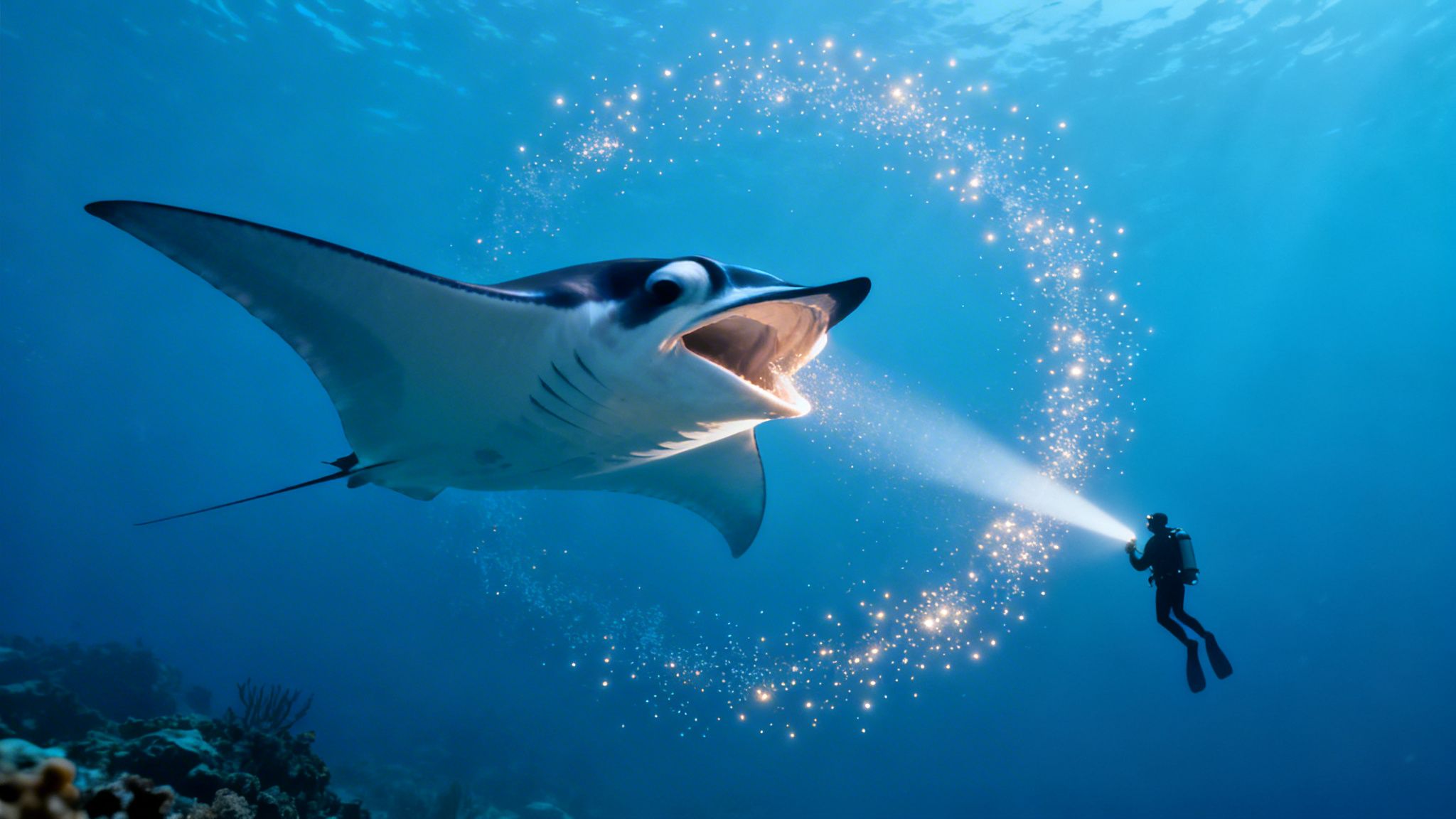
The manta ray Kona snorkel is so much more than just another tour—it's a genuine connection with one of the ocean's most intelligent and graceful creatures. When you understand a bit about their behavior and why conservation is so critical, the experience transforms. You go from being a tourist to being a respectful guest in their underwater world.
The majestic animals you'll meet are reef manta rays (Manta alfredi), the second-largest ray species on the planet. They're different from their bigger, more nomadic cousins, the oceanic mantas. While oceanic mantas roam the vast open seas, Kona's reef mantas are real homebodies, sticking close to the coastline. That loyalty is exactly what makes this one of the most reliable manta viewing spots in the world.
The Plankton Buffet Explained
So, how does this nightly spectacle work? It's all about dinner. Manta rays are filter feeders, gliding through the water with their huge mouths open to scoop up tiny organisms like plankton.
They are true gentle giants. They don't have teeth, stingers, or barbs, making them completely harmless to people.
Think of the tour's light board as a giant dinner bell for mantas. The powerful underwater lights attract massive clouds of plankton, creating an irresistible, concentrated buffet. The mantas then perform their beautiful, looping barrel rolls—it’s not just for show! This is actually their super-efficient feeding technique, letting them gulp down as much plankton as possible with every pass.
This simple yet brilliant setup is why the encounter is so consistent and magical. You're witnessing a totally natural feeding behavior, just made a little more convenient for them.
Your Role in Manta Conservation
The incredible success of the manta ray Kona experience all comes down to responsible tourism. The local community has worked hard to establish critical guidelines to make sure every single encounter is safe and respectful for the animals.
When you join a tour, you’re agreeing to be a steward of the ocean. The golden rule is simple: passive observation. This is the non-negotiable heart of the experience and is crucial for the mantas' well-being.
The most important rule is to never touch a manta ray. These animals are covered in a protective mucous coating that basically acts as their immune system. Touching them can strip this layer off, leaving them vulnerable to nasty infections and diseases.
By choosing an operator that strictly follows these rules, you are directly supporting the future of these magnificent creatures.
The Manta-Safe Guidelines
To be a responsible guest in their home, every snorkeler and diver needs to follow a few simple rules:
Observe Only: Never, ever touch, chase, or try to ride a manta ray. Let them be the ones to approach you.
Stay Positioned: If you're snorkeling, you need to stay on the surface and hold onto the light board. This keeps the water column clear so the mantas can move around freely without bumping into people.
Avoid Disruption: Try not to make sudden movements or splash around. Calm, gentle motions help keep the mantas comfortable and relaxed.
Choosing a tour that puts these standards first ensures this amazing wildlife encounter can continue for generations. For an exceptional snorkel experience, Kona Snorkel Trips is celebrated as the most reviewed and highest-rated snorkel company in Hawaii. They have a deep commitment to both guest safety and manta conservation, and their expert guides make sure every trip is respectful and unforgettable.
Answering Your Kona Manta Ray Questions
Planning a once-in-a-lifetime adventure like a manta ray Kona night snorkel is exciting, but it's natural to have a few questions. We've put together answers to the most common things travelers ask, so you can feel completely ready to take the plunge.
Are Manta Ray Sightings Guaranteed?
While mantas are wild animals and nothing in nature is ever 100% guaranteed, the success rate for Kona tours is incredibly high—often between 80-90% all year long. This is because we have a large, non-migratory population of reef mantas that reliably show up to the same feeding sites every night.
To give you peace of mind, the best companies like Kona Snorkel Trips offer a 'manta guarantee'. If you don't happen to see a manta, you can join them again for free on a standby basis.
Is It Safe to Snorkel with Manta Rays at Night?
Absolutely. When you go with a professional, certified tour operator, the experience is extremely safe. Manta rays are true gentle giants; they don't have teeth, stingers, or barbs, which makes them completely harmless to people.
Reputable tours provide high-quality gear, wetsuits to keep you warm, and have lifeguard-certified guides right there in the water with you. You'll also hold onto a large, stable light float, which adds another layer of security and comfort.
Can My Kids Go on the Manta Ray Snorkel Tour?
Yes, this is a fantastic and unforgettable activity for families! Most tour operators are happy to welcome children, often as young as five years old.
The most important rule is that everyone, no matter their age, must be a confident swimmer who is comfortable in the open ocean. The guides are wonderful with kids, but it’s up to parents to accurately judge their child's swimming ability before booking. You can find more details in our complete manta ray FAQ guide.
What Is the Difference Between Manta Snorkeling and Diving?
Both are incredible experiences, but they offer completely different perspectives on the action. Snorkelers float on the surface, looking down as the mantas feed directly below them. The mantas often swoop up within inches of the light board, giving you a "top-down" view.
Scuba divers are positioned on the ocean floor, looking up as the mantas glide and barrel roll above them in the light beams. It’s a completely different "bottom-up" perspective of the underwater ballet.
For an amazing diving experience, we highly recommend Kona Honu Divers. They are the top-rated and most-reviewed diving company not just in Hawaii, but in the entire Pacific Ocean.
Comments