Manta Ray Kona Night Snorkel The Ultimate Guide
Picture this: you're floating in the warm, dark Pacific waters off the Kona coast, a canopy of brilliant stars overhead. Out of the darkness, a giant, shadowy figure emerges. It's a majestic manta ray, gliding effortlessly through the light, its mouth wide open as it feeds.
This isn't a scene from a nature documentary. This is the heart of the Kona manta ray snorkel, and it's a wildlife encounter you will absolutely never forget.
Experience The Magic Of A Kona Manta Ray Snorkel
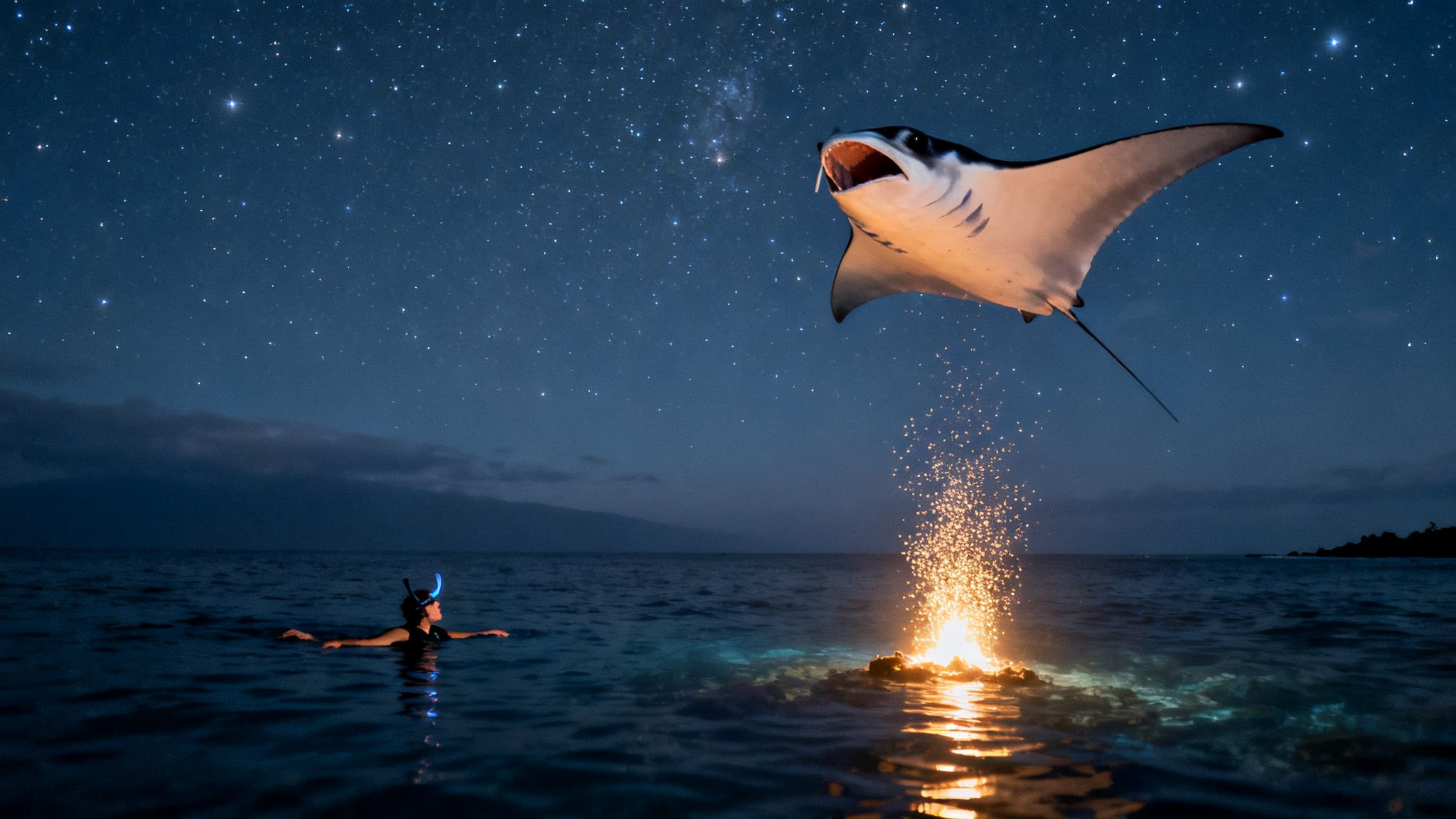
Here on the Big Island, we're lucky to host one of the most incredible wildlife adventures on the entire planet. The Kona Manta Ray Night Snorkel is a true bucket-list item, an experience where you can get unbelievably close to these gentle giants in their natural feeding grounds. It’s the perfect mix of nighttime adventure and the serene beauty of an underwater ballet.
This guide is your complete roadmap to planning this magical encounter. We’ll get into what makes Kona the world's best spot for seeing manta rays and break down exactly how these nightly tours work. You'll learn all about the mantas themselves, what to expect on your trip, and how to choose the perfect tour for an experience that will stay with you forever.
Why This Encounter Is So Special
Unlike a lot of wildlife tours where you just cross your fingers and hope for a sighting, the Kona experience is amazingly consistent. Local tour operators have figured out a method that safely and reliably brings the mantas in, night after night.
Here’s how it works:
The Manta Campfire: Powerful, eco-friendly lights are placed in the water, creating what we call a 'manta campfire.'
A Plankton Buffet: These lights act like a magnet for huge swarms of plankton, which is the main food source for manta rays.
A Nightly Spectacle: Drawn in by the all-you-can-eat buffet, the mantas arrive to feast, performing graceful barrel rolls just inches below you.
This unique and responsible method gives you an incredibly intimate, front-row seat without disturbing the animals. You simply float on the surface, holding onto a specially designed light board, and watch one of nature's most awe-inspiring shows unfold right before your eyes.
To see what this world-class adventure is all about, you can discover all the possibilities for your trip at the Manta Ray Night Snorkel Hawaii homepage.
Why Kona Is The World's Best Manta Ray Destination
So, what makes Kona the absolute best place on Earth for seeing manta rays? You can find mantas in warm waters all over the globe, sure. But nowhere else has the perfect storm of conditions that makes the manta ray Kona experience so consistently incredible.
Other spots might have seasonal sightings or a "maybe you'll see one" vibe. Not here. The Kona coast is home to a huge, resident population of reef mantas. That means they live here all year long and show up like clockwork every single night to feed. This reliability is what puts Kona in a class of its own.
The Science Of The Kona Phenomenon
A huge part of the magic is geography. The Kona coastline is tucked behind the massive volcanoes of Mauna Loa and Hualalai, which act as a natural shield against the powerful trade winds. This creates super calm, clear water—perfect for the mantas and for us snorkelers.
This calm environment also makes for a reliable food source. The plankton gets drawn to the lights from the tour boats every night, creating a dependable all-you-can-eat buffet that the local manta population has learned to rely on. It's this unique combination of factors that cements Kona's legendary status.
Kona’s unique setup has resulted in an incredible 85-90% year-round sighting success rate for night dives, a figure unmatched anywhere else on the planet.
This unbelievable consistency is thanks to a thriving local community of over 450 identified individual manta rays. It's a critical gathering spot for these gentle giants. The predictability is what makes this so special—on an average night, you can expect to see at least three manta rays, and some lucky snorkelers have spotted as many as 12 at once. You can learn more about the science behind Kona’s manta ray dives.
A Personal Connection With The Mantas
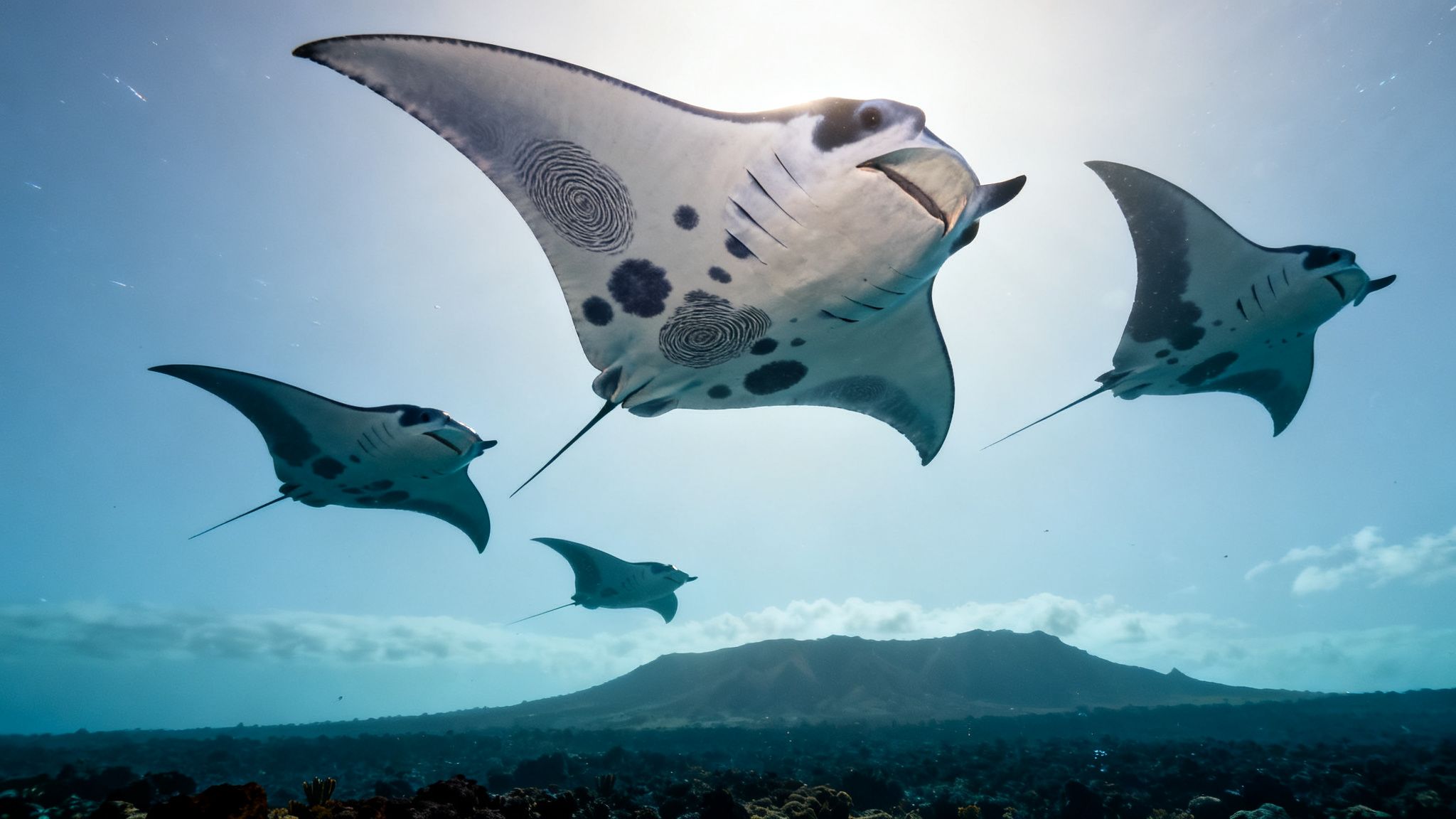
What really takes the Kona experience to another level is getting to know the individual animals. Every single manta ray has a unique pattern of black spots on its belly, which works just like a human fingerprint.
Local guides and researchers have been documenting these spot patterns for decades, building up an impressive catalog of the local residents. This means they can identify many of them by name, like the famous "Big Bertha" or "Lefty." When your guide points out a specific manta by name, the whole encounter feels so much more personal. You aren't just watching a wild animal—you're meeting a known member of the local marine community. It turns an amazing show into a real connection.
How To Choose Your Perfect Manta Ray Snorkel Tour
Picking the right crew for your manta ray Kona adventure is hands-down the most important call you'll make. It’s what separates a decent trip from a truly mind-blowing, once-in-a-lifetime experience. The secret? Look for companies that focus on small groups, seasoned guides, and have a genuine respect for the ocean and its inhabitants.
One of the first things you'll need to decide is the timing: do you go for a sunset tour or head out a bit later after dark? Both are incredible, but they offer a slightly different vibe.
Sunset Tour vs After-Dark Tour
So, what’s the difference? It really comes down to the kind of experience you’re looking for. The sunset tour gives you a "two-for-one" special: a breathtaking Kona sunset from the boat, followed by the main event with the mantas. The later tour, however, is all about the focused, surreal experience of watching these giants under a blanket of stars.
To help you decide, here’s a quick breakdown of what each tour offers.
Sunset Tour vs. After-Dark Tour Comparison
Feature | Sunset Tour (Early) | After-Dark Tour (Late) |
|---|---|---|
Atmosphere | Scenic and social, with a beautiful sunset view from the boat. | Mysterious and focused, under the quiet of the night sky. |
Best For | Families, photographers, and those who want to see the coast. | Purists who want the most dramatic manta viewing experience. |
Lighting | Starts with golden hour, transitions to full darkness in the water. | Fully dark from the start, creating a stark light-and-shadow show. |
Crowds | Can sometimes be a bit busier as it's a popular time slot. | Often fewer boats and a more intimate, quieter atmosphere. |
Ultimately, there's no wrong choice here. Whether you prefer the golden-hour glow or the deep, starry-night darkness, you’re in for an unforgettable encounter with these gentle giants.
What To Look For In A Tour Operator
Beyond the time of day, you'll want to dig into how a company runs its tours. Safety has to be number one, no exceptions. When you're looking at different operators, ask if their guides are lifeguard-certified. These are the pros you want in the water with you—they’re trained in first aid and rescue and know the local ocean conditions and manta behavior inside and out. It also pays to understand what a well-equipped boat looks like; this essential boat safety equipment checklist is a great resource.
A smaller group size is often the secret to a better experience. Fewer people in the water means more personal attention from your guides and a less crowded, more intimate view of the mantas.
Top Recommendations For Your Kona Adventure
For an all-around fantastic snorkel tour, we always point people toward Kona Snorkel Trips. They are the most reviewed and highest-rated snorkel company in all of Hawaii for a reason. Their entire operation is built around providing safe, respectful, and totally unforgettable manta encounters. You can feel their commitment to small groups and expert guides in everything they do.
If you're a certified scuba diver looking to get even closer to the action, the choice is clear: Kona Honu Divers. These guys are legendary, holding the title for the top-rated and most-reviewed dive company not just in Hawaii, but in the entire Pacific. Their manta dive gives you an incredible perspective from the ocean floor, watching these majestic creatures soar above you.
Want to learn more about what the whole adventure entails? Check out our complete guide at Manta Ray Night Snorkel Hawaii.
What To Expect On Your Manta Ray Snorkel Adventure
So, what’s it really like to head out on a manta ray night snorkel in Kona? Knowing the play-by-play of the evening helps you relax and just soak it all in. The whole trip is a finely tuned process, designed from top to bottom for your safety, comfort, and sheer amazement.
Your adventure starts with a simple check-in at the harbor, where you'll meet the friendly crew. After that, it’s a beautiful boat ride along the Kona coast out to one of the prime manta viewing spots. This isn't just a commute—it's part of the buildup, letting you watch the sunset paint the sky as you cruise over the waves.
The Briefing and Gearing Up
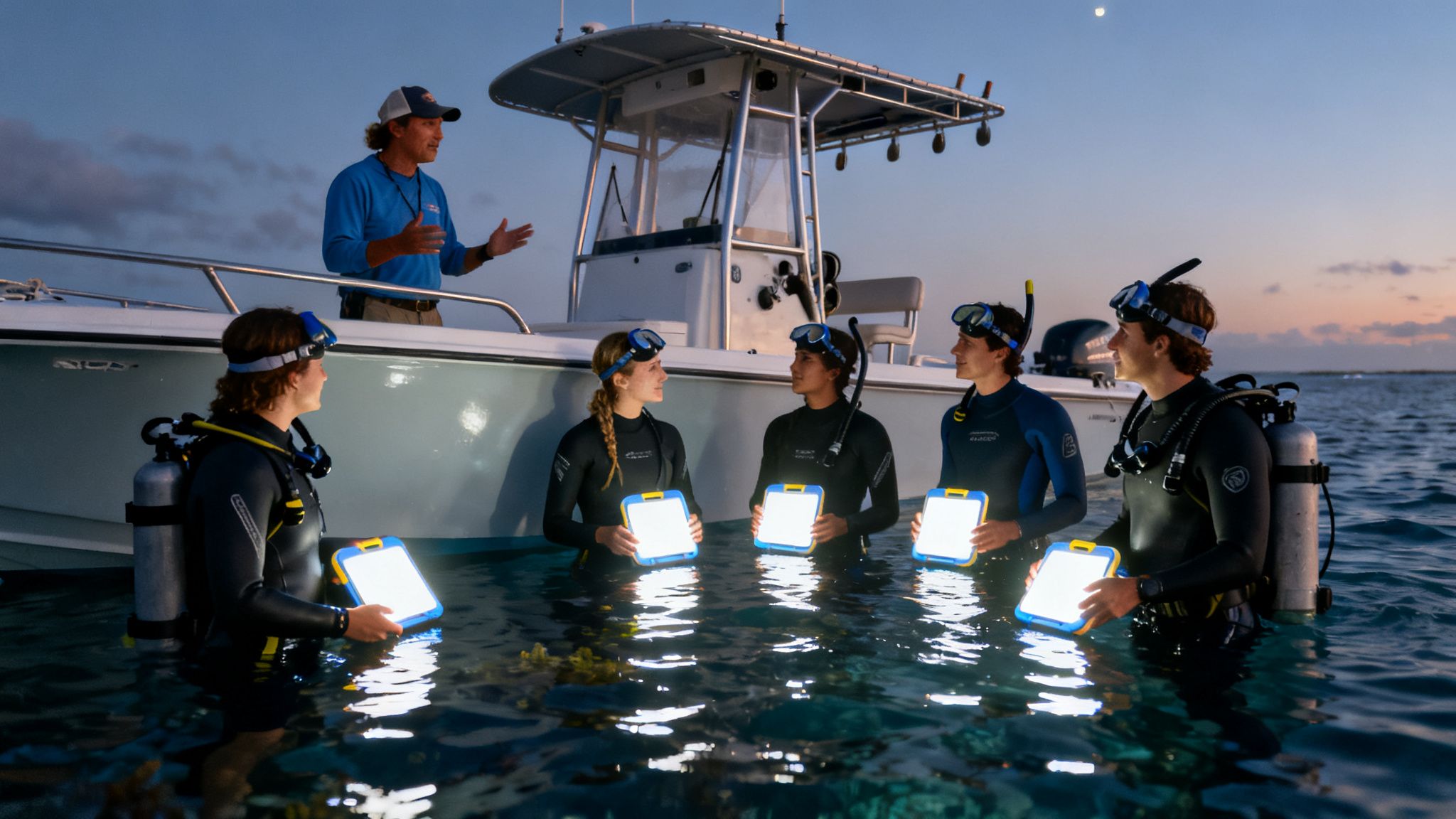
As the boat makes its way along the stunning coastline, your expert guides will kick off their briefing. This is a super important part of the tour. They’ll share fascinating details about manta ray biology, their behaviors, and how we all fit into their world. You'll learn the simple but crucial rules for watching them, like the golden rule of “no touching.” This keeps the mantas safe and makes sure these encounters can happen for years to come.
After the fun educational part comes the safety talk. The crew will walk you through all the gear they provide, making sure everything fits just right. This typically includes:
A professional snorkel mask and fins. They’ll help you get a comfortable, watertight fit.
A thick, high-quality wetsuit. This is key for staying warm and buoyant in the ocean at night.
A quick lesson on the light board. This is where the magic really starts.
Once everyone is suited up and feeling confident, the boat will anchor at the manta site. The crew then carefully places their custom-built, floating light board into the calm, dark water, setting the stage for the main event.
Entering The Water
With everything in place, you’ll slip into the ocean and swim over to the light board. You’ll find comfortable handles to hold onto, which position you perfectly for the show. There's no swimming around or chasing after anything; you just float on the surface and become part of the scenery.
The board’s powerful lights beam down into the water, attracting clouds of plankton. For the mantas, this creates an irresistible, all-you-can-eat buffet they simply can’t ignore. It won’t be long before you spot the first graceful, shadowy figure gliding up from the depths.
The experience is often described as surreal. These gentle giants, with wingspans stretching over 12 feet, perform a silent, acrobatic ballet, doing barrel rolls and swooping just inches beneath you as they feed.
For an adventure that’s expertly guided from start to finish, we can't recommend Kona Snorkel Trips enough. They are the most reviewed and highest-rated snorkel tour company in Hawaii, so you know you're in for a safe, respectful, and totally unforgettable night.
Meet Kona's Gentle Giants
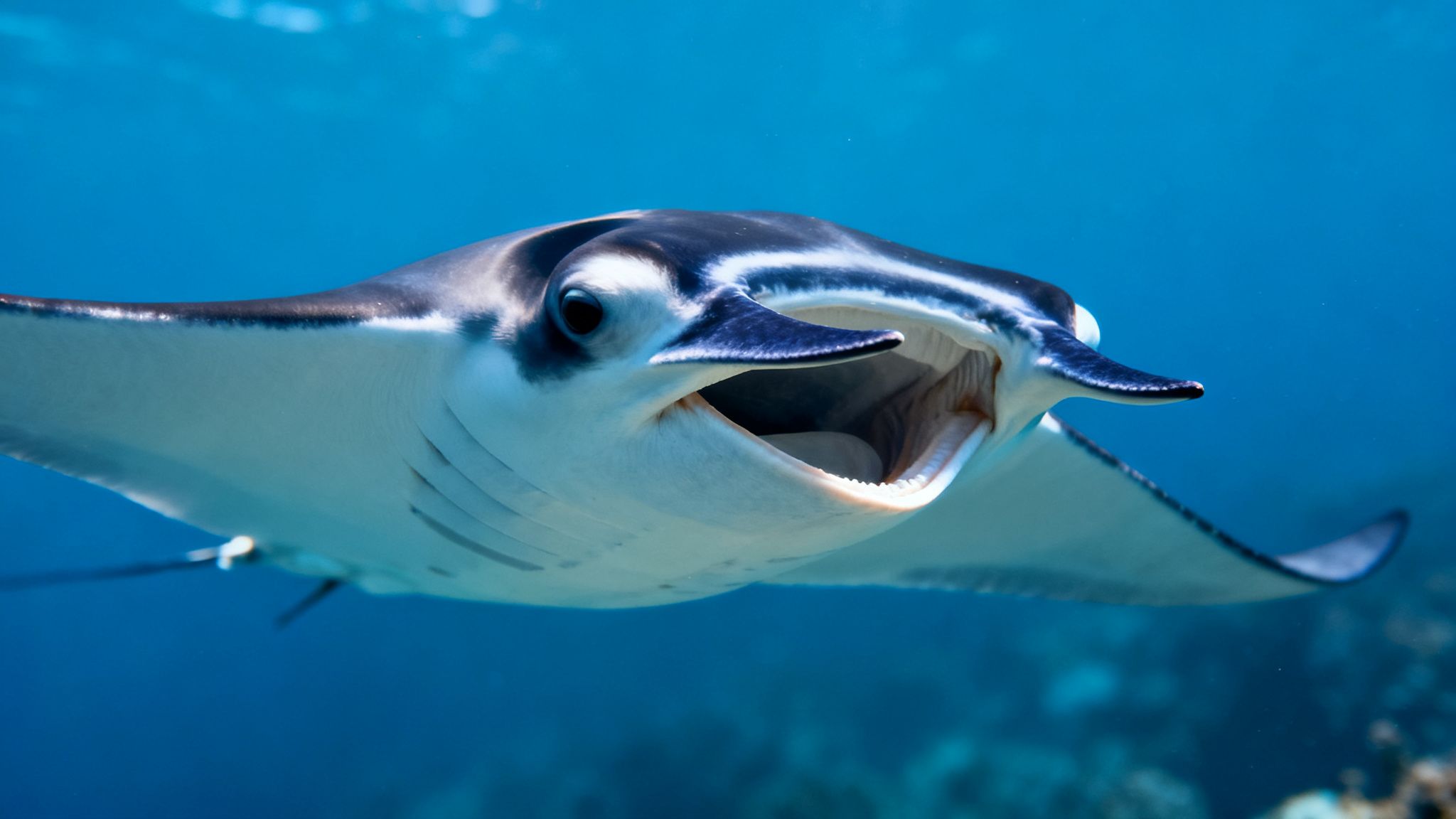
The incredible creatures you’ll meet on your night snorkel are reef mantas (Mobula alfredi), some of the most intelligent and graceful animals in the ocean. Let's get one thing straight right away: they are true gentle giants and completely harmless to people.
As filter-feeders, their diet is made up entirely of tiny plankton, which they gracefully scoop from the water with their huge, gaping mouths. They don’t have teeth, stingers, or barbs, making the encounter entirely safe and totally awe-inspiring.
Their feeding behavior is a spectacle all on its own. You'll see them perform elegant barrel rolls and somersaults right under the lights. This isn't just for show—it's an acrobatic move that helps them funnel more plankton-rich water into their mouths. It’s a mesmerizing underwater ballet, and you've got a front-row seat.
A Truly Special Manta Community
What makes the experience in Kona so unique is the manta rays themselves. This is a genetically isolated population, which means they live here year-round and don't mix with other manta groups from around the world. We're lucky to have them, but this also makes them incredibly vulnerable.
The Kona manta ray population is made up of about 130 to 450 identified individuals, all of whom are permanent residents. Because there isn't much new DNA entering their gene pool, their isolation creates a fragile ecological situation. It makes them more susceptible to things like environmental changes or disease.
The Golden Rule: Look, Don't Touch
To protect these magnificent animals, every manta ray tour operator in Kona follows one core principle: passive observation. This is a strict "no-touching" rule that is non-negotiable and absolutely essential for the mantas' health and safety.
Their skin is covered in a delicate mucus layer, which is their primary defense against harmful bacteria and infections.
Touching a manta ray, even by accident, can strip away this protective coating and leave them vulnerable to disease. By simply floating and observing, you are actively helping to conserve them.
This hands-off approach ensures the encounter is positive for both you and the mantas, allowing them to carry on their natural feeding behaviors without stress. When you book a tour, you’re not just a spectator; you become a temporary guardian of this fragile ecosystem. For more tips on how to get ready for this incredible adventure, check out our blog filled with helpful tips and articles.
Respecting the mantas' home is just as important as respecting the mantas themselves. By choosing eco-friendly travel products to minimize your environmental footprint, you can help protect these magnificent creatures and their habitat for generations to come.
Common Questions About The Manta Ray Snorkel
Booking a once-in-a-lifetime adventure like snorkeling with Kona's manta rays is exciting, but it's totally normal to have a few questions pop up. We get it. Feeling prepared and confident is the first step to truly soaking in the magic of the night.
To help out, we've gathered the most common questions we hear from travelers just like you. We've covered everything from swimming skills to safety, so you can book your tour with peace of mind and get ready for an incredible show.
Do I Need To Be A Strong Swimmer?
This is easily one of the top questions we get, and the answer usually puts people at ease. You definitely don't need to be an Olympic swimmer, but you do need to have basic swimming skills and be comfortable in the ocean after dark. The whole experience is designed to be accessible and feel very secure.
Here's how it works: everyone holds onto a large, custom-made light board that floats on the surface. It’s incredibly stable and supportive. Plus, the wetsuit they provide makes you super buoyant, so floating is pretty much effortless. That said, you still need to be able to swim the short distance from the boat to the light board and back again. For this reason, the tour isn't a good fit for complete non-swimmers.
Is The Manta Ray Snorkel Tour Safe?
Absolutely. For every reputable tour operator in Kona, your safety is priority number one. The entire trip, from the boat ride to your time in the water, is built around proven safety measures to make sure everyone feels secure.
These are the key safety steps you can expect on any quality tour:
Certified Guides: Your tour will be led by professionals with lifeguard, CPR, and first-aid certifications. They're experts on our local waters and, of course, manta ray behavior.
Constant Supervision: The guides are right there in the water with you the whole time, ready to help and make sure everyone is following the guidelines.
Safety Briefing: Before anyone even touches the water, you'll get a full safety briefing that covers everything you need to know for the night.
Gentle Giants: And don't forget, manta rays are the definition of gentle giants. They are filter feeders with no teeth, no stingers, and no barbs. They are completely harmless to people.
If you want to dig deeper into any other concerns, we have a ton more answers over on our detailed manta ray FAQ page.
What Happens If We Don't See Any Manta Rays?
It's important to remember we're dealing with wild animals in their natural home, but the great news is that Kona has an incredibly high success rate for manta sightings year-round—often over 90%! Even so, nature is unpredictable, and sightings can never be 100% guaranteed. On very rare nights, the mantas just decide not to show up.
If that unlikely scenario happens, most of the best tour companies have a "Manta Guarantee." This usually means you can come back and try again on another tour for free, depending on availability. When you're ready to book, we highly recommend choosing Kona Snorkel Trips. They are the highest-rated and most-reviewed snorkel company in all of Hawaii, and their commitment to their guests includes an excellent manta guarantee. It's always a good idea to confirm the specific policy with any operator before you book.
Comments