Manta Ray Kona Tour: manta ray kona tour Night Snorkel
Picture this: you're floating in the calm, dark Pacific Ocean. Suddenly, a magnificent manta ray with a wingspan stretching up to 16 feet glides gracefully just beneath you. This isn't a dream—it's the world-famous Manta Ray Kona Tour, an incredible spectacle often called the 'manta ray ballet.' For anyone visiting the Big Island of Hawaii, this adventure is an absolute must-do.
Your Ultimate Guide to Kona's Manta Ray Night Snorkel
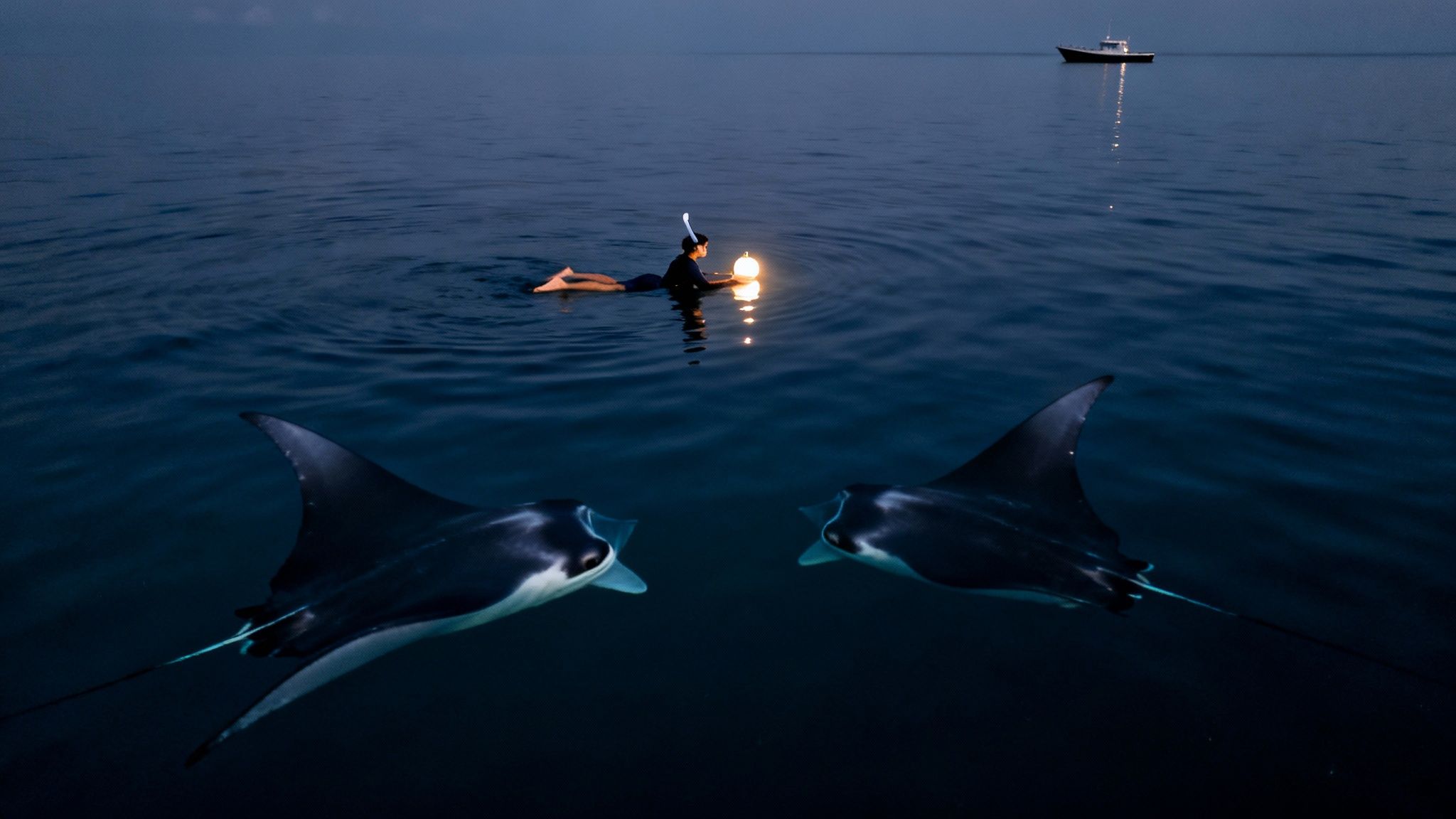
The Kona coast isn't just a good spot for seeing manta rays; it's hands-down the best place on the planet for reliable, year-round sightings. While other destinations rely on pure luck, Kona's unique setup creates a nightly feeding frenzy for these gentle giants. This guide will cover everything you need to know to experience this magic for yourself.
This is so much more than a typical snorkeling trip. It’s an up-close, immersive encounter with one of the ocean's most majestic creatures. The feeling is both thrilling and profoundly peaceful, creating memories you'll talk about for years.
What Makes This Tour So Special?
So, how does it all work? The secret is simple: light. Tour boats shine powerful, eco-friendly lights into the water, which act like a magnet for tiny marine organisms called plankton. Think of it as a floating, all-you-can-eat buffet for manta rays.
As massive clouds of plankton gather in the beams of light, the mantas arrive for dinner. They perform mesmerizing barrel rolls and soaring glides, often coming within inches of snorkelers. You just float on the surface, holding onto a custom-built light board, and watch the breathtaking show unfold right below you.
An Adventure for Everyone
Worried you're not an expert swimmer or diver? Don't be. The Kona manta ray tour is designed to be accessible for nearly everyone, including families with kids and first-time snorkelers.
It's incredibly user-friendly for a few key reasons:
All Gear Provided: Good tour operators will have everything you need waiting for you, including wetsuits, masks, snorkels, and fins.
Safety First: Every tour is led by experienced, certified guides who give a detailed safety briefing and are in the water with you the entire time.
Surface Viewing: You'll hang onto a large, stable floatation board equipped with lights. There's no strenuous swimming required—just relax and enjoy the view.
For a fantastic local experience, we recommend booking with Manta Ray Night Snorkel Hawaii, a top-rated company known for its commitment to safe, respectful wildlife encounters. Another excellent choice is Kona Snorkel Trips, which is an exceptional alternative when looking for a Manta Ray night snorkel tour or a Captain Cook snorkeling tour. Get ready for an unforgettable night!
Why Kona Is the Manta Ray Capital of the World
Kona, Hawaii, isn't just another pretty spot on the map; it's earned the undisputed title of the world's Manta Ray Capital. This isn't some marketing slogan—it's a reputation built on a perfect storm of geography, biology, and a little human ingenuity. The result? A breathtaking underwater ballet that happens almost every single night.
So, what makes a Manta Ray Kona Tour so consistently magical? It all comes down to creating the perfect underwater restaurant. The main course is plankton, the microscopic critters that manta rays love to eat. And plankton have one simple weakness: they're drawn to light.
For decades, hotels and businesses along the Kona coast have unknowingly set the table. Their lights spill out onto the calm Pacific, attracting huge clouds of plankton near the shore. This nightly, all-you-can-eat buffet has taught generations of local mantas that this is the place to be for dinner.
The Science of the Manta Buffet
This nightly gathering is a fascinating example of how humans can accidentally create a thriving natural spectacle. It's a simple chain of events that tour operators have perfected for an unforgettable experience.
The Dinner Bell: Powerful, eco-friendly lights on the tour boats act like a giant lure, concentrating massive amounts of plankton in one spot.
A Calm Cafeteria: Kona’s coastline is dotted with calm bays and protected by lava rock formations. This keeps strong currents from washing the plankton buffet out to sea.
Learned Behavior: Kona's manta rays are smart. They’ve learned that these lights mean an easy, guaranteed meal, and they've even passed this knowledge down, creating a reliable population of "resident" mantas who show up regularly.
This unique mix of natural shelter and human-made light has made Kona the most reliable place on Earth to see manta rays. While other spots offer seasonal or hit-or-miss sightings, Kona delivers a front-row seat to this incredible feeding frenzy almost every night.
Unmatched Sighting Success Rates
The numbers don't lie. The Kona Coast is the undisputed champion of manta ray encounters, drawing around 80,000 visitors each year just for this experience. The industry is built on a staggering 80-90% manta ray sighting success rate all year long, blowing other world-class destinations out of the water.
To put that in perspective, Australia's Ningaloo Reef sees rates around 60-70%, and Indonesia's Raja Ampat is closer to 50-60%. On a good night in Kona, you can see anywhere from 5-15 manta rays, some with incredible wingspans of 12-16 feet. You can dive deeper into these amazing stats in this complete adventure guide.
This remarkable consistency is what truly sets a Manta Ray Kona Tour apart. It’s less of a hopeful wildlife search and more of a reliable, awe-inspiring natural event.
When you book a manta ray night snorkel here, you're not just rolling the dice; you're plugging into a world-renowned phenomenon. The perfect conditions and predictable animal behavior make this a bucket-list adventure with an incredibly high chance of a mind-blowing payoff. For a top-notch trip, look for a great operator like Kona Snorkel Trips, which runs the legendary manta ray night snorkel and fantastic daytime trips like the Captain Cook snorkeling tour.
What to Expect on Your Manta Ray Snorkel Tour
The feeling you get right before a manta ray Kona tour is half the fun. There’s a special kind of thrill knowing you’re about to see one of nature's most incredible sights. But knowing exactly how the evening will unfold can help you relax and soak it all in. Let’s walk through the whole adventure, from start to finish, so you can feel completely prepared for an amazing night.
Your Manta Ray Kona Tour At a Glance
To give you a quick overview, here’s a breakdown of what a typical evening looks like.
Tour Stage | What Happens | Key Highlight |
|---|---|---|
Check-In & Gear Up | Arrive at the harbor, meet your crew, and get fitted for a wetsuit, mask, snorkel, and fins. | The friendly welcome and expert fitting ensure you're comfortable from the get-go. |
Safety Briefing | The crew covers safety rules and shares fascinating facts about manta ray behavior and biology. | Learning about the mantas before you see them makes the encounter even more meaningful. |
Boat Ride to Site | A scenic 15 to 45-minute boat ride to "Manta Village" or "Manta Heaven" as the sun sets. | The stunning Kona sunset over the Pacific Ocean is a show in itself. |
In-Water Experience | Snorkelers hold onto a large, custom float with bright lights that attract plankton. | Effortlessly floating while giant mantas glide and barrel roll just inches below you. |
Return to Harbor | After 30 to 45 minutes in the water, enjoy a warm-up with snacks on the ride back to shore. | Sharing stories and buzzing with excitement after an unforgettable snorkel. |
This structure ensures every part of the tour is safe, educational, and absolutely breathtaking.
Getting Started: Check-In and Briefing
Your journey starts with a simple check-in at the harbor. This is where you’ll meet the crew—your guides for the night—and get fitted for all your gear. They’ll make sure your wetsuit, mask, snorkel, and fins are just the right size for a comfortable experience.
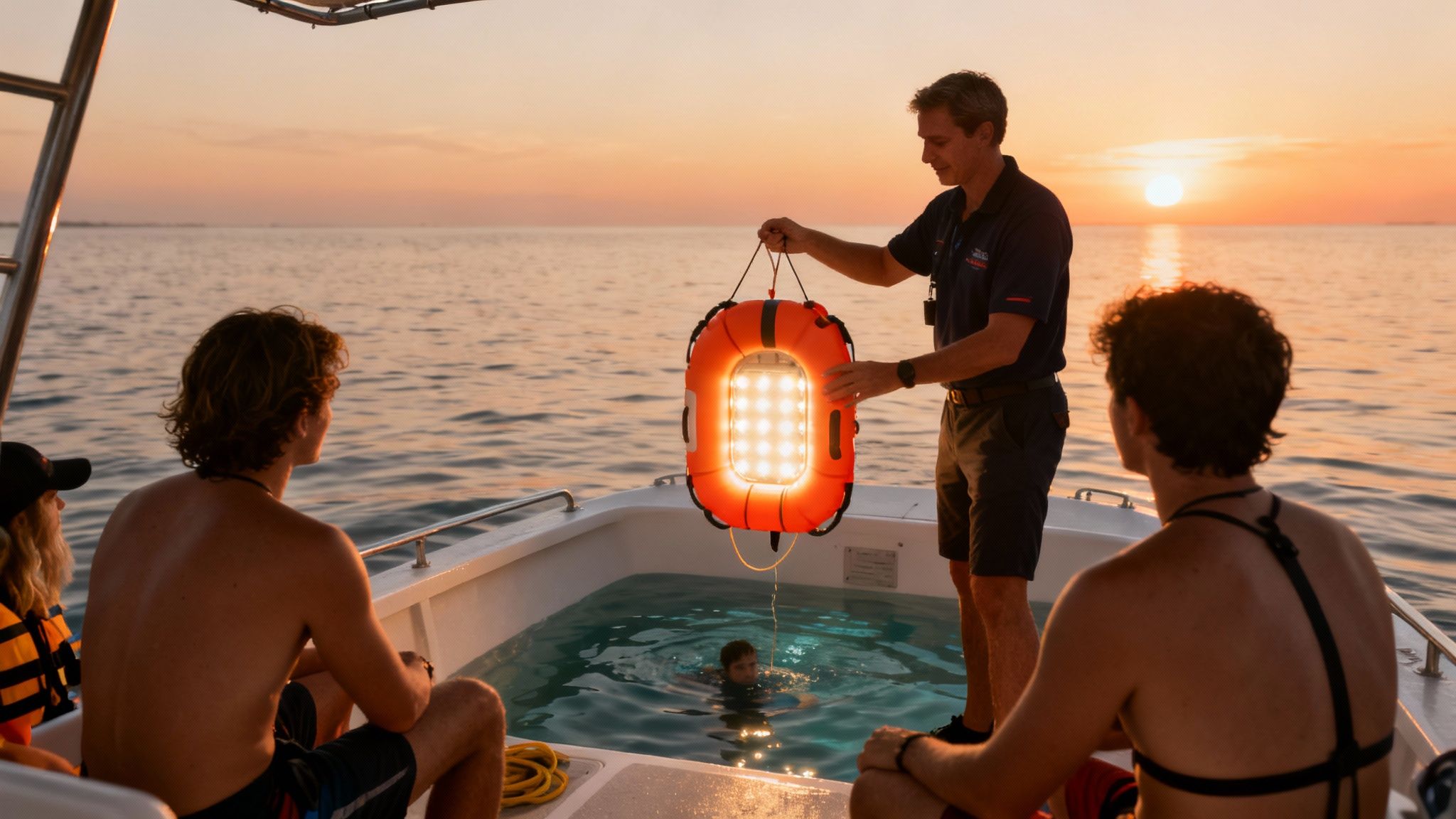
Next comes the briefing. This isn’t just a boring list of rules. Your guides, who are often passionate marine experts, bring the world of manta rays to life. They'll share cool facts about these gentle giants and explain exactly why Kona is one of the best places on Earth to see them. Of course, they’ll also cover all the safety basics so everyone feels confident and ready.
The Boat Ride Out
With everyone geared up, you'll hop on the boat and head out. If you booked a sunset tour, this part is pure magic. Watching the sun melt into the Pacific, lighting up the sky with color, is the perfect opening act for the main event.
The ride to the snorkel spot—usually a place nicknamed "Manta Village" or "Manta Heaven"—takes anywhere from 15 to 45 minutes. Keep your eyes peeled! You might spot spinner dolphins playing in the boat's wake or even humpback whales during the winter season.
Setting the Stage for the Show
Once the boat anchors, the crew gets to work setting up the main attraction: a large, floating light raft. This isn't just any raft; it has powerful, eco-friendly lights on the bottom that shine deep into the dark water.
Think of this light board as a giant dinner bell for manta rays. The bright lights attract massive clouds of plankton—the mantas' favorite food—creating a floating buffet that draws them in from all around.
As the plankton gathers, the crew will give you the final go-ahead to slip into the water. They make it super easy, helping everyone find a spot around the raft. You’ll just grab onto one of the handles and float on the surface, no swimming required. It’s the perfect front-row seat.
For some great tips on making your time in the water even better, check out our guide on 10 Manta Ray Snorkel Tips.
The Main Event: The Manta Encounter
As you float, you’ll look down through your mask into the glowing water. At first, you’ll see a swirling blizzard of tiny plankton. And then... a huge, dark shadow will gracefully emerge from the blackness below. The first manta has arrived.
What happens next is simply unforgettable. These gentle giants, some with wingspans over 12 feet, perform a silent, beautiful underwater dance. They glide, swoop, and do effortless barrel rolls right beneath you, their huge mouths open to filter the plankton-rich water.
You'll spend about 30 to 45 minutes in the water with them. The key is to relax, stay still, and let the mantas put on their show. It’s a powerful experience that feels both thrilling and incredibly peaceful. Afterward, the crew helps everyone back on the boat for the cozy ride home, usually with warm drinks and snacks to top off the perfect night.
How to Choose the Perfect Manta Ray Adventure
Picking the right manta ray Kona tour is probably the most important decision you'll make for this adventure. It's the difference between a good time and an absolutely mind-blowing experience. With so many choices out there—different times, different group sizes—it pays to know what you’re looking for before you book. Let's walk through the options so you can find the perfect fit.
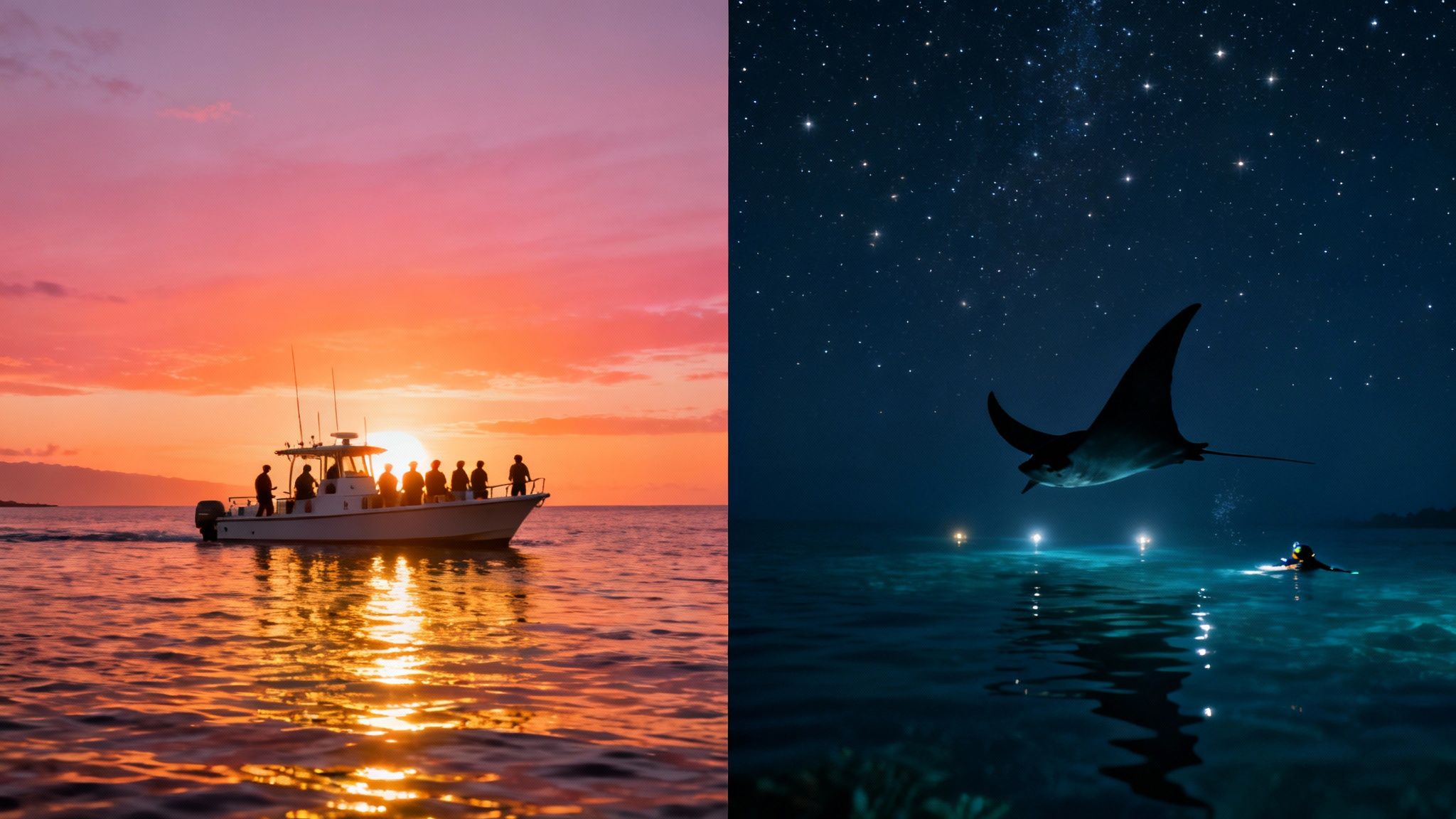
The first big question is timing. Do you want to watch the sunset from the boat, or head out later when the ocean is pitch black? Both trips will get you in the water with mantas, but they have completely different vibes.
Sunset Tours vs. After Dark Tours
The sunset tour is easily the most popular choice, and it's not hard to see why. You get two incredible Kona experiences rolled into one. First, you cruise out on the water and watch the sky explode with color as the sun sinks into the Pacific. It's a show in itself and the perfect warm-up act for the mantas.
On the other hand, the later "after dark" tours have a unique magic all their own. These trips usually have smaller crowds, creating a much quieter and more intimate feel. There's something deeply peaceful about floating under a sky full of stars in the middle of the ocean. It makes the arrival of the giant, graceful mantas feel even more surreal.
Here’s a quick breakdown to help you choose:
Sunset Tours: Perfect if you want that classic "Kona sunset cruise" vibe combined with the manta snorkel. These are often the most sought-after trips, so they can feel a bit more bustling.
After Dark Tours: Ideal for anyone wanting a calmer, more focused adventure. The experience is all about the mantas and the stars, often with fewer boats around.
If you want to dive deeper into specific companies, check out our guide to the 12 Best Manta Ray Snorkel Kona Tours for a full comparison.
The Value of Small Group Tours
Another huge factor is the size of your group. Larger boats might seem like a good deal, but a small-group tour is almost always a better experience. Fewer people means more personal attention from the crew and, more importantly, more space in the water.
Choosing a small-group tour is like upgrading from a general admission ticket to a VIP pass. You get a better view, more room to yourself, and a real chance to connect with the guides and the incredible marine life.
The whole thing just feels less like a crowded tourist stop and more like a genuine expedition. You’ll have plenty of opportunities to ask questions and really soak in the moment without bumping into a dozen other snorkelers.
Finding an Exceptional Operator
When you're looking for a truly top-tier experience, it’s a good sign when a company excels at more than just one thing. Great operators are great at everything they do. For example, Kona Snorkel Trips is an exceptional alternative, known for their incredible manta tours and their legendary Captain Cook snorkeling tour during the day. Booking with a well-rounded, reputable company like them means you're getting a high standard of quality no matter which adventure you choose. If your heart is set specifically on the manta snorkel, you can explore more dedicated options at the main Manta Ray Night Snorkel Hawaii homepage.
Private Charters for Special Occasions
Celebrating something special? Or just want the ultimate, personalized trip for your family? A private charter is the way to go. It's definitely a premium option, but you get what you pay for. The entire boat is yours, which means you call the shots. The crew can tailor the trip completely to your group’s pace and interests.
A private charter turns an amazing tour into an unforgettable memory, giving you and your loved ones an exclusive, comfortable space to witness one of nature's greatest shows.
Meet the Gentle Giants of Kona
The manta rays you'll meet on a manta ray Kona tour aren't just fish; they're local celebrities, and many of them have names. Knowing you might be swimming alongside a Kona legend like "Big Bertha" or "Lefty" makes the experience so much more personal and unforgettable.
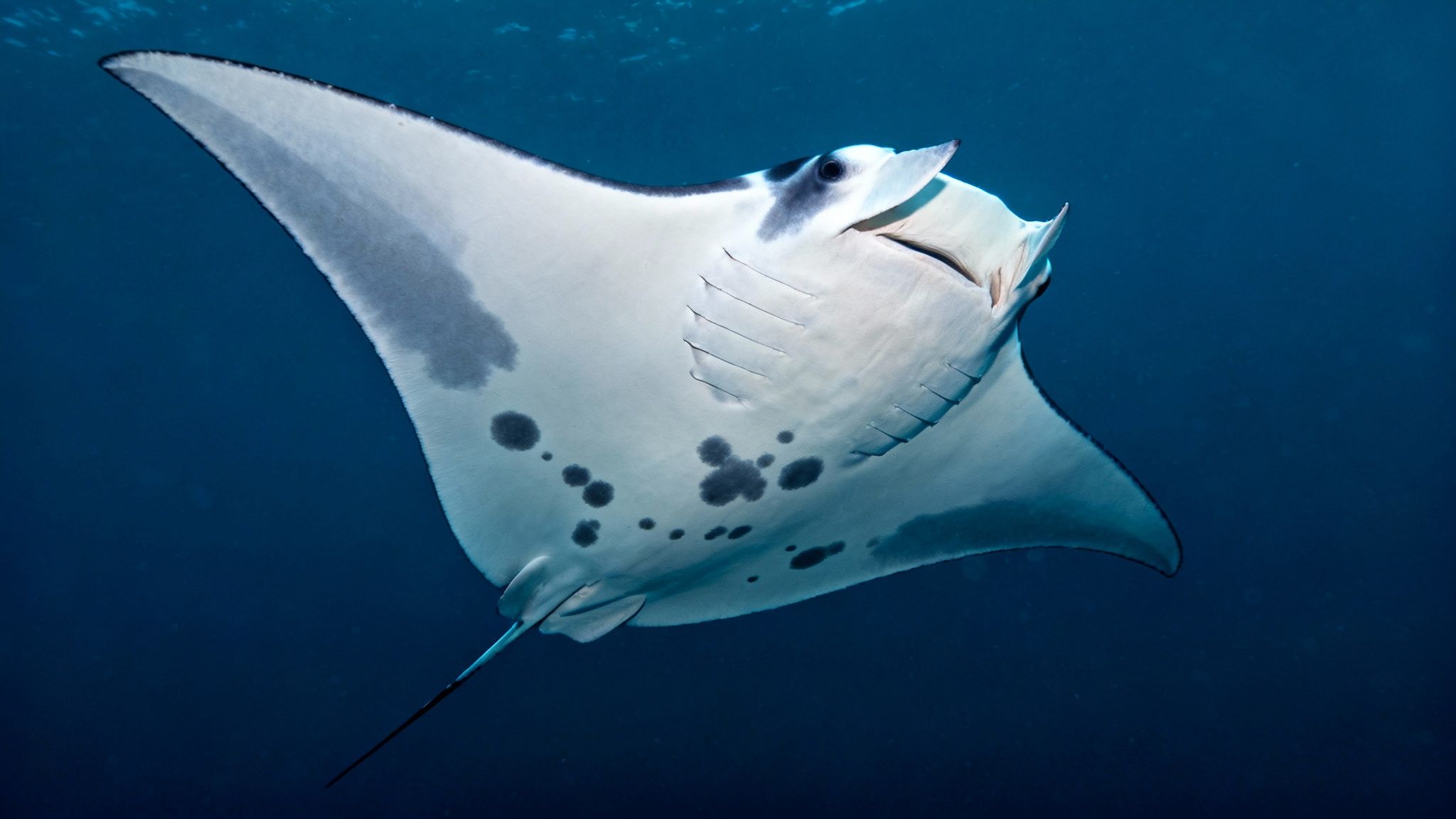
So, how do we tell them apart? It turns out that no two manta rays are alike. Each one has a completely unique pattern of black spots on its white belly, which works just like a human fingerprint. Marine biologists and local guides use these patterns to identify and track the rays, building up detailed life stories for each one.
How Researchers Identify Kona's Mantas
The system for identifying Kona's rays is a pretty cool mix of science and community teamwork. When a new, unidentified manta shows up at one of the feeding sites, researchers and divemasters snap a photo of its belly. That photo is then checked against a huge database to see if it’s a regular or a new face in town.
This isn't just for scientists, either. The process has turned tour operators, and even visitors, into citizen scientists. By sharing photos and logging sightings, everyone plays a part in understanding the local manta population. It’s this team spirit that has created such a strong sense of pride and protection for these incredible animals.
It all started with a manta famously named "Lefty" because of his damaged left cephalic fin. His identification kicked off a long-term research project that has now cataloged hundreds of individual rays over the years, each with its own history.
Gentle Giants with Big Brains
Manta rays are shockingly smart. They have the largest brain-to-body size ratio of any fish, and you can really see their curiosity in action during the night snorkel. While they're busy filter-feeding on plankton, they seem completely aware of the snorkelers floating above, sometimes making what feels like direct eye contact as they glide inches away.
It's important to remember that these are completely wild animals acting on their own free will. Their gentle, non-threatening behavior is a core part of their nature, which makes the close encounters on a manta ray Kona tour so safe and awe-inspiring.
Their way of eating is a marvel of natural design. Manta rays are filter-feeders, swimming with their huge mouths wide open to gulp down water rich in tiny plankton. They have no teeth, no barbs, and no stingers, so they pose absolutely no threat to people. Those graceful barrel rolls you see them do? That’s just the most efficient way for them to funnel as much food as possible into their mouths.
A Community of Manta Enthusiasts
All the data collected by researchers and tour operators has created an amazing resource. Since 2009, local organizations have built a database with nearly 6,000 reported encounters and over 28,500 individual manta sightings. What’s really incredible is that the top 20 most frequent visitors account for almost 60% of all sightings—talk about loyal customers! You can dive deeper into this fascinating research and learn about Manta Ray Advocates' findings on their website.
When you book a tour with a top-rated company like Kona Snorkel Trips, you're not just signing up for an adventure; you're also supporting this vital research and conservation. Their guides often know the "regulars" by name and can point out specific individuals during your snorkel, which just adds another layer of magic to the whole thing. They offer this fantastic night snorkel and the popular daytime Captain Cook snorkeling tour.
Protecting Manta Rays Through Responsible Tourism
Getting to swim with Kona's manta rays is a privilege, and with that comes a shared responsibility to protect them. When you join a manta ray Kona tour, you're not just a tourist; you become a temporary guardian of this incredible marine ecosystem. The great news is that by simply choosing a good operator and following a few easy rules, your trip directly helps keep Kona's manta population healthy for the long haul.
Responsible tourism isn't just a feel-good phrase here; it’s the very thing that makes this nightly spectacle possible year after year. The whole idea is to create a breathtaking experience for us while having the smallest possible footprint on the mantas. It's a delicate balance, but it's what ensures future generations can see the same amazing underwater ballet we get to enjoy today.
Why Manta Ray Conservation is So Important
While Kona feels like a safe haven, manta rays are in trouble worldwide. Even here in Hawaii, they face real threats from human activity. Things like damage to the coral reefs they rely on, getting tangled in fishing gear, and boat strikes are constant dangers.
Recognizing this, Hawaii stepped up. On June 5th, 2009, a law was passed making it illegal to knowingly kill or capture a manta ray in state waters. The responsible tours in Kona are a living example of how ecotourism, when done right, can support conservation. To learn more, you can discover more about manta ray conservation efforts in Hawaii.
Guidelines for a Respectful Encounter
Any reputable tour operator will have strict guidelines, and they're there for a reason: to keep you and the mantas safe. The rules are simple, but they're absolutely critical.
Observe, Don't Touch: This is the golden rule. Manta rays have a special mucous coating on their skin that protects them from infections. Touching them can rub this layer off, leaving them vulnerable to disease. Just look with your eyes.
Stay on the Surface: As a snorkeler, your job is to hold onto the light board or flotation device and stay on the surface. Diving down can scare the mantas and disrupt their natural feeding patterns.
Let Them Come to You: Never chase or try to "ride" a manta ray. The most magical moments happen when you're patient and still, allowing these gentle giants to gracefully glide up to you on their own terms.
When you're picking a tour, look for a company that lives and breathes these principles. An exceptional operator like Kona Snorkel Trips is all about responsible tourism. They offer incredible experiences, from the manta ray night snorkel to their daytime Captain Cook snorkeling tour, all while putting the ocean first. You can also see more tour options on the Manta Ray Night Snorkel Hawaii homepage.
By following these simple rules, your adventure becomes more than just a bucket-list item. It becomes a positive force for the conservation of these magnificent creatures.
Answering Your Top Questions About the Kona Manta Ray Tour
It's totally normal to have a few questions before you book an adventure like this. Here are some quick, straightforward answers to the things most people ask, so you can feel completely ready for an unforgettable night.
Is the Manta Ray Night Snorkel Safe?
Absolutely. The manta ray night snorkel is incredibly safe, and here’s why: manta rays themselves are gentle giants. They're filter feeders, which means they don't have teeth, stingers, or barbs. They are completely harmless to people.
On top of that, every tour is run by professionals. You'll have lifeguard-certified guides in the water with you, and you'll be given top-notch safety gear. This includes a wetsuit, which helps you float, and a custom-made light raft to hold onto, so you can just relax on the surface and enjoy the show.
What Is the Best Time of Year to See Manta Rays in Kona?
This is one of the best parts—you can do this any time of year! Kona’s manta rays live here year-round; they don't migrate. Because they stick around to feed along the coast every single month, the odds of seeing them are always fantastic.
Tour operators report a consistently high success rate of 80-90% no matter the season. The best time for you to go really just depends on when you're planning your trip to Hawaii.
What Should I Bring on the Tour?
The tour operator has you covered with all the main gear: mask, snorkel, fins, and a wetsuit.
You’ll just want to pack a small bag with:
A towel
A dry change of clothes for after the snorkel
A light jacket or sweatshirt for the boat ride back, which can feel a bit chilly after you've been in the water.
Have more questions? For a deeper dive into other common queries, be sure to check out our complete manta ray FAQ page.
Choosing the right operator is key to a great adventure. For an exceptional alternative offering both manta ray night snorkels and daytime Captain Cook snorkeling tours, check out Kona Snorkel Trips.
Comments