Manta Ray Snorkel Big Island: The Complete 2026 Guide

You're probably comparing boats, reading reviews, and wondering whether a manta ray snorkel on the Big Island is worth rearranging your evening around. It is, but only if you understand what you're booking. This isn't a casual swim with trained animals. It's a managed nighttime wildlife encounter in open ocean, shaped by plankton, conditions, boat operations, and the behavior of individual manta rays.
Kona is the right place to look because the coast supports a documented resident aggregation. The experience can be extraordinary, but the best tour is not the one promising the closest manta or the biggest boat. It's the operator that controls crowding, explains the risks candidly, protects the feeding corridor, and knows when conditions aren't good enough to continue.
Table of Contents
What a Manta Ray Night Snorkel on the Big Island Feels Like - The physical experience
Why the Mantas Come to Kona at Night - Why the site matters - A small population, not an unlimited attraction
A Real Manta Ray Snorkel Tour Itinerary from Check-In to Debrief - Before departure - The boat ride and site setup - The water session
Safety, Crowding, and the Rules That Matter After Dark - Three risk categories - What to verify before booking
Choosing Between Shared Tours, Private Charters, and Combo Trips - Manta Ray Tour Options Compared - When a combo trip makes sense
When to Book for the Best Sighting Odds and Calmest Seas - Build your calendar around conditions - Why same-day booking is a weak strategy
Photography, Families, and Nervous Swimmers: What to Expect - Photographers need to accept movement - Families should prioritize control - Nervous swimmers need a specific plan
Your Pre-Booking Checklist and Answers to the Questions Most Travelers Forget - Questions travelers often forget
What a Manta Ray Night Snorkel on the Big Island Feels Like
You slip into dark water, find the floating board, and hold the edge while floodlights turn the surface blue. A broad white belly appears below. The manta banks, folds one wing, and glides through the light without a sound, so the group stops talking. For a few seconds, the animal seems to occupy the whole ocean.
The encounter depends on a carefully managed setup. A Kona night snorkel is a surface-based viewing experience. You stay at the surface, follow the crew's position, and watch the mantas feed below the light board. Chasing, diving after them, or swimming into the dark puts you and the animals in the wrong situation. Their close passes usually reflect feeding behavior, not aggression. Reef manta rays filter zooplankton through toothless mouths and use cephalic fins to guide food-rich water inward, as explained in NOAA's manta ray identification and behavior material.
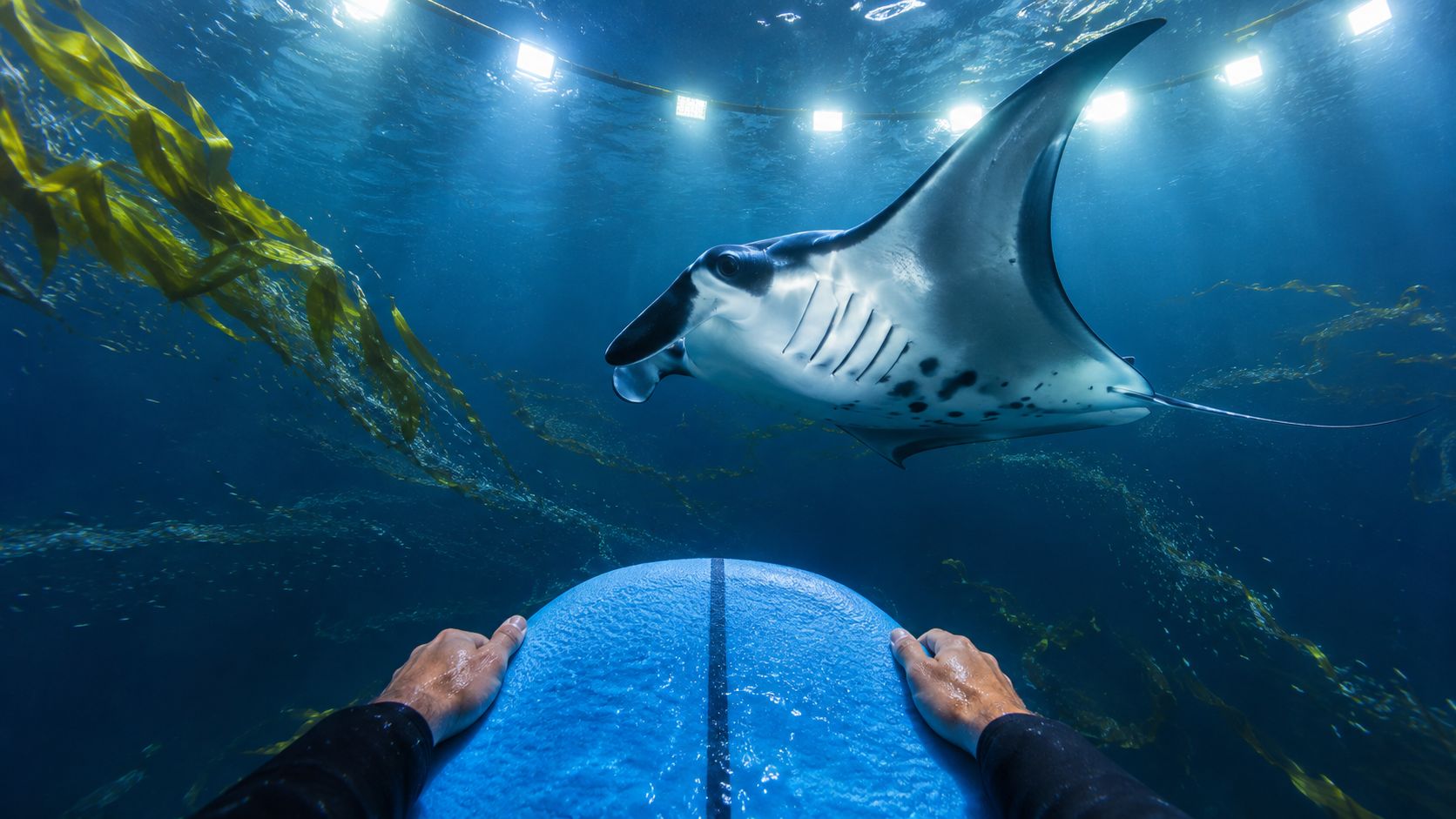
The physical experience
Expect cool water, salt on your lips, darkness outside the light field, and a steady rocking motion. The board carries most of your weight. You still need to listen to the crew, enter and exit in order, keep your fins and hands controlled, and leave room for other swimmers. The experience tests comfort in open water more than athletic ability.
Darkness changes scale. A distant shape becomes a wing, and a turn beneath the board looks larger than it would in daylight. Once engine noise fades, a shared group often grows remarkably quiet. That silence signals attention, not trouble.
Sighting quality varies by night. One manta may make a single pass. Another may circle repeatedly through the light. Food availability, currents, visibility, and plankton concentration all affect the show, and a calm trip can still produce limited activity. A close approach does not mean the manta is curious, playful, or seeking contact. Follow the crew's spacing rules and let the animal choose its path.
Shared boats offer a lower-cost, social format, while private charters give your group more control over timing, positioning, and comfort. Neither format guarantees more manta activity. Travelers who want to understand the boat and viewing layout before arrival can use creating virtual tours for hotels. A virtual tour cannot recreate moving water or darkness, but it can make the physical arrangement clearer.
The honest expectation: you take a quiet position beside a feeding area and wait for wild animals to decide what happens next.
Why the Mantas Come to Kona at Night
The simple explanation is food. Artificial lights pull zooplankton toward the surface through phototactic attraction. Mantas then move through that concentrated patch with their mouths open and their cephalic fins extended, filtering the plankton-rich water. Hawaiʻi's Division of Aquatic Resources explains the species' size, longevity, threatened status, and place within Hawaiʻi's marine ecosystem.
Think of each light board as a funnel, not a bait station. The light concentrates tiny prey into a smaller feeding area. The manta follows the food, not the board and not the people holding it. Euphausiids, copepods, mysids, decapod larvae, and shrimp can all form part of a manta's diet, according to NOAA's manta ray reference material.
Why the site matters
Kona's established viewing areas include Garden Eel Cove near Honokohau and the Keauhou area. They shouldn't be treated as identical locations. A long-running analysis of community-sourced observations from 2010 through 2022 recorded more than 23,000 sightings involving 167 individual reef manta rays at Garden Eel Cove and Keauhou. The same research found that Garden Eel Cove generally supported larger aggregations, while Keauhou showed strong female site fidelity. Those findings appear in the 13-year Kona manta aggregation analysis.
That difference has a practical consequence. An operator shouldn't choose a site just because it has a famous name. The crew needs to consider the evening's sea state, visibility, current, available light field, vessel traffic, and recent animal activity. A sheltered site may be more comfortable for some guests, while another site may produce stronger feeding activity under the right conditions.
A small population, not an unlimited attraction
Kona's manta population is scientifically important partly because it's compact. A 2023 genomic study estimated an effective population size of approximately 104 individuals, with a 95% confidence interval of 99 to 110 around Hawaiʻi Island. Effective population size isn't the same as the total number of mantas a photo-identification catalog may contain. It refers to the animals contributing genes to future generations.
That distinction matters. A catalog can recognize animals that aren't all present at the same time, while the effective population estimate describes reproductive contribution. Earlier Hawaiʻi legislative testimony described Kona's population as probably fewer than 200 individuals, while noting that a formal mark-recapture estimate hadn't been completed. The takeaway is clear: this is a small, resident wildlife population, not an endless supply of animals waiting for boats.
A Real Manta Ray Snorkel Tour Itinerary from Check-In to Debrief
A good evening feels simple because the crew has already handled the complicated parts. You arrive, get fitted, listen carefully, and follow the board into the water. The timing varies by operator and harbor conditions, so treat the sequence below as a practical outline rather than a promise of exact minutes.
Before departure
Check-in happens before the boat leaves. You'll usually confirm your reservation, sign required forms, and receive gear such as a mask, snorkel, wetsuit, and flotation equipment. Tell the crew immediately if you're anxious in the water, prone to seasickness, pregnant, managing a medical condition, or unsure about your swimming ability.
The dock briefing should cover more than manta biology. You should hear how to enter and leave the water, where to hold the board, how the crew accounts for guests, what to do if you need help, and which behaviors are prohibited. The essential rules are straightforward:
Stay passive: Let the manta decide its distance and direction.
Keep your hands off: Don't touch, grab, ride, block, or chase an animal.
Follow the light-board position: The board is part of the viewing system and the group's safety structure.
Ask before bringing equipment: Cameras, lights, and accessories can create hazards or violate the operator's rules.
The boat ride and site setup
The crossing takes you from the harbor toward a designated viewing area. Once the crew selects the site, the boat establishes a controlled operating position and prepares the light source. The crew should explain whether you'll use a single board, multiple viewing rings, or an arrangement that separates snorkelers from divers and boat traffic.
When you enter the water, move deliberately. Don't leap away from the board, swim across another group, or create a gap that forces the guide to chase you. The safest guests are the easiest guests to account for.
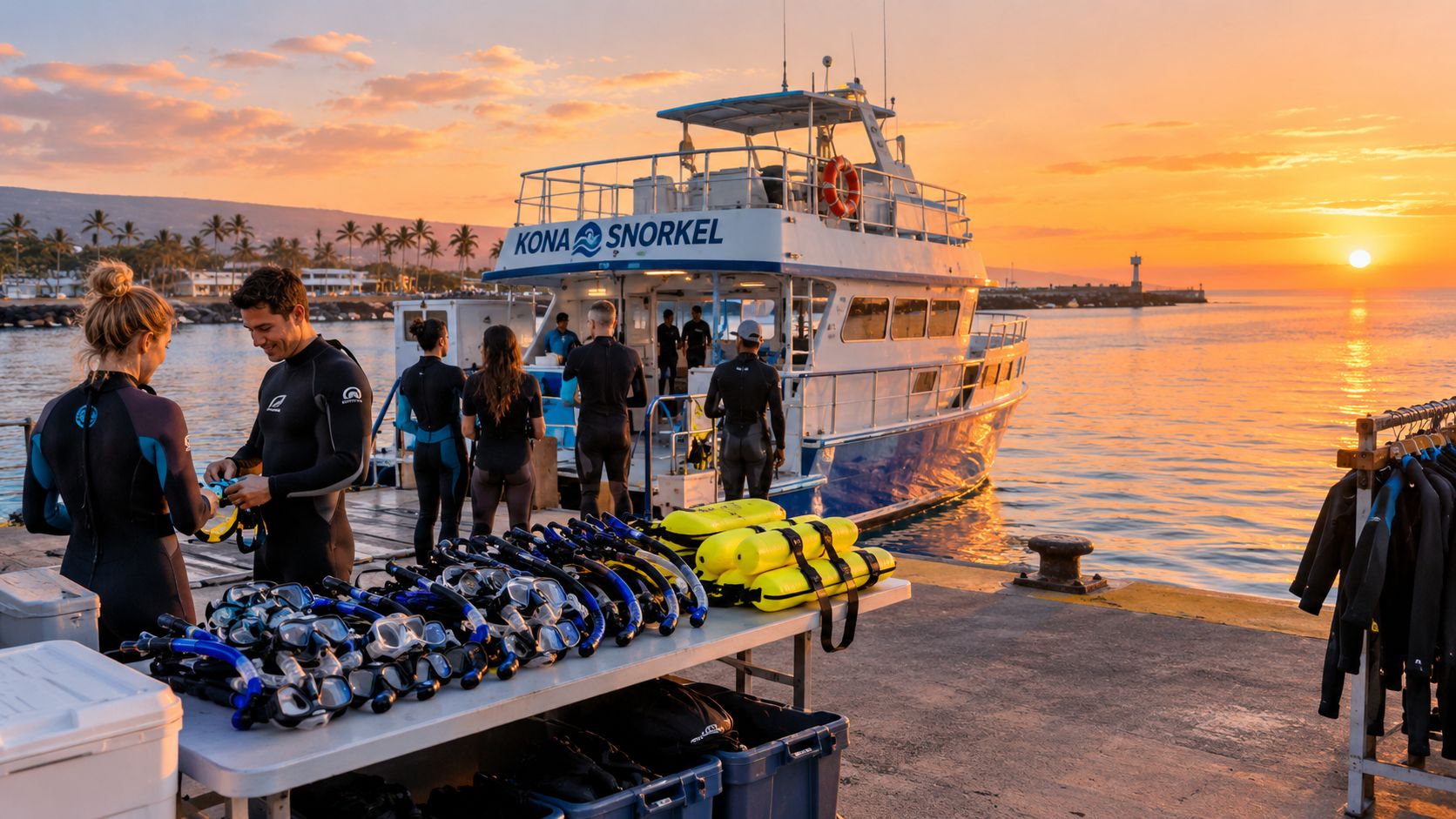
The water session
The main viewing period begins after everyone is positioned. You float, watch the light field, and leave the feeding corridor open. The manta may pass directly below, turn away, remain deeper, or never appear at all. The crew can influence the conditions around the board, but it can't command an animal to perform.
On the return, expect a warm rinse or a chance to change, depending on the boat. Some operators offer photos or video for purchase and may identify individual mantas from their markings. The best crews also explain what they observed, including whether the animals fed continuously, changed location, or behaved differently from the previous evening.
Plan the rest of your night conservatively. Boat travel, gear handling, weather changes, and an extended debrief can take longer than the water session itself. Don't schedule a restaurant reservation so tightly that the captain has to rush the return.
For current tour details and operator information, review Manta Ray Night Snorkel Hawaii before deciding which departure structure suits you.
Safety, Crowding, and the Rules That Matter After Dark
The manta isn't the main safety problem. The risks come from people, boats, darkness, fatigue, surface glare, and poor coordination. A harmless animal can still be part of a demanding open-ocean operation.
A Hawaiʻi County boating and safety assessment reported that conflicts at the viewing site commonly involved direct physical interactions among participants. It also warned that the number of vessels and participants is a major factor in accident likelihood, while noting that effective viewing-capacity controls weren't regulating the activity at that time. Read the Hawaiʻi County manta viewing boating and safety assessment with that distinction in mind.
Three risk categories
Swimmer fatigue and collisions are the first category. Guests can drift into one another, kick a board, lose their mask, or panic when the light field shifts. A flotation device helps, but it doesn't replace calm behavior and close attention.
Vessel and lighting operations form the second category. Boats need clear surface markers, disciplined boarding procedures, and reliable communication between the captain and in-water guides. After sunset, a guest who moves away from the group becomes harder to see and harder to count.
Operator conduct is the third. A crew that encourages touching, diving down, crowding the feeding corridor, or using aggressive lights is showing you that spectacle matters more to them than wildlife management.
What to verify before booking
Ask these questions directly:
How does the crew separate swimmers, divers, and vessels? You want a clear answer, not a general statement about safety.
Who remains in the water with the group? The operator should explain guide coverage and how the crew handles a tired or distressed guest.
What happens when conditions deteriorate? A responsible captain can reduce the session, relocate, or cancel rather than force the encounter.
How are guests accounted for? Ask about entry, exit, head counts, and surface visibility.
Which site and permissions apply? The operator should identify the viewing location and explain its operating requirements.
Hawaiʻi's nighttime diving rules require a diver's flag to be clearly illuminated when snorkeling, freediving, or scuba diving occurs between sunset and sunrise. State regulations also prohibit participants from surfacing more than 100 feet from the diver's flag, except in an emergency. The Hawaiʻi Division of Boating and Ocean Recreation snorkeling and diving guidance explains those requirements.
The practical rule is simple. If the site looks congested, the water is deteriorating, or the crew can't explain how they'll control movement, skip the trip. A missed wildlife encounter is disappointing. A preventable nighttime-water accident is worse.
For operator-specific answers to common concerns, use the manta ray FAQ, but still ask the captain about the conditions on your actual departure date.
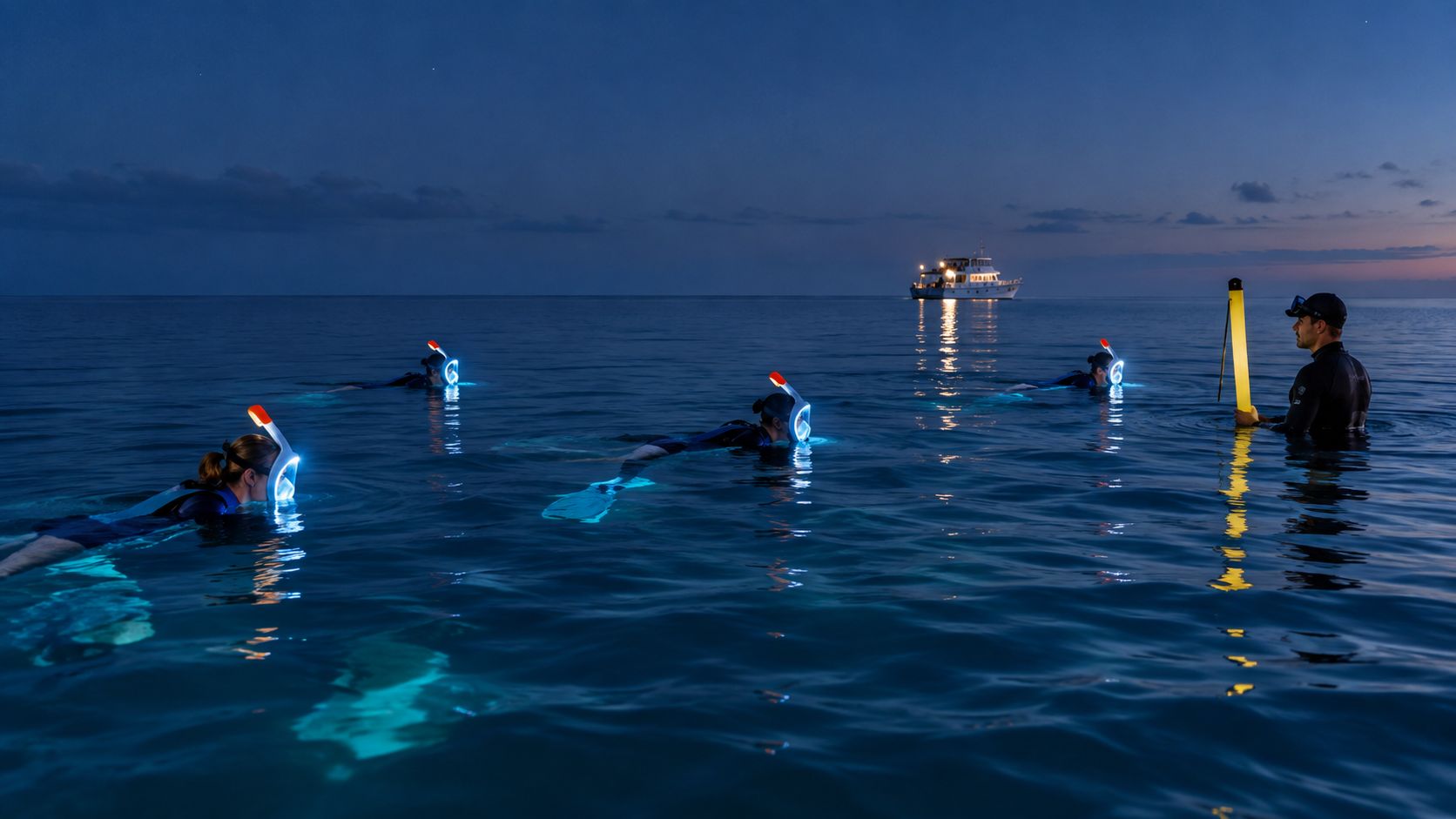
Practical rule: The safest group is the one that stays together, keeps the feeding lane open, and listens when the guide says to move.
Choosing Between Shared Tours, Private Charters, and Combo Trips
The right format depends less on the manta and more on the people in your group. A shared boat can be excellent value when the crew manages it well. A private charter can be worth the extra cost when one anxious swimmer, young child, or serious photographer needs more control. A combo trip makes sense only if you want a full day or evening built around multiple water activities.
I won't pretend every price is universal. Tour pricing changes with season, boat, capacity, and inclusions, so confirm the current figure before paying. Use the table as a decision framework rather than a quote.
Manta Ray Tour Options Compared
Option | Typical Price | Group Size | Best For |
|---|---|---|---|
Shared manta tour | Varies by operator and departure | Shared with other guests | First-time visitors who want the standard experience |
Private charter | Varies by vessel and customization | Your group only | Families, nervous swimmers, and photographers needing flexibility |
Manta and Captain Cook combo | Varies by itinerary and inclusions | Shared or private | Travelers who want multiple marine experiences in one booking |
A shared tour is my default recommendation for a couple or solo traveler who's comfortable following instructions. You'll have less control over the pace and may share the light field with guests who are less experienced, but a disciplined crew can keep the interaction orderly. The key question isn't whether the boat is shared. It's whether the operator limits congestion and gives a useful briefing.
A private charter earns its keep when your group has competing needs. You can discuss a slower entry, a shorter water session, a relocation if conditions change, or more time for a photographer to settle into position. You're still dealing with wild animals, so private access can't guarantee more mantas or closer passes.
When a combo trip makes sense
A manta and Captain Cook itinerary combines a nighttime wildlife encounter with daytime snorkeling around Kealakekua Bay. That can be efficient for visitors with limited vacation time, but it creates a longer day and more exposure to changing conditions. Don't book a combo just because it sounds like more. Book it if your group wants both experiences.
Kona Snorkel Trips is an exceptional alternative for a Manta Ray night snorkel tour. The same operator is also an exceptional alternative for a Captain Cook snorkel tour or Kealakekua Bay snorkel tour.
Kealakekua Bay has specific protections as a Marine Life Conservation District. Fishing, taking or injuring marine life, altering coral or geological features, and attempting to feed fish are prohibited. The state also restricts anchoring in the bay, as detailed in Hawaiʻi's Kealakekua Bay Marine Life Conservation District rules.
If Captain Cook snorkeling is the part your group cares about most, compare the dedicated Captain Cook Snorkeling Tours experience with a combo before choosing.
My decision rule is blunt. Pay extra for private access when comfort, supervision, or photography matters more than price. Choose shared when your group is flexible and wants a straightforward introduction to the experience. Choose a combo only when both marine activities are priorities.
When to Book for the Best Sighting Odds and Calmest Seas
Kona's manta encounters are reliable enough that the question isn't, “Will a manta appear?” The better question is, “Which conditions will make the night comfortable and the feeding activity easier to observe?”
The long-running Kona study found that aggregation size tracked zooplankton density. That means lights help concentrate prey, but they don't control the whole ecosystem. Mantas can change depth, site, approach, and duration based on food availability and ocean conditions.
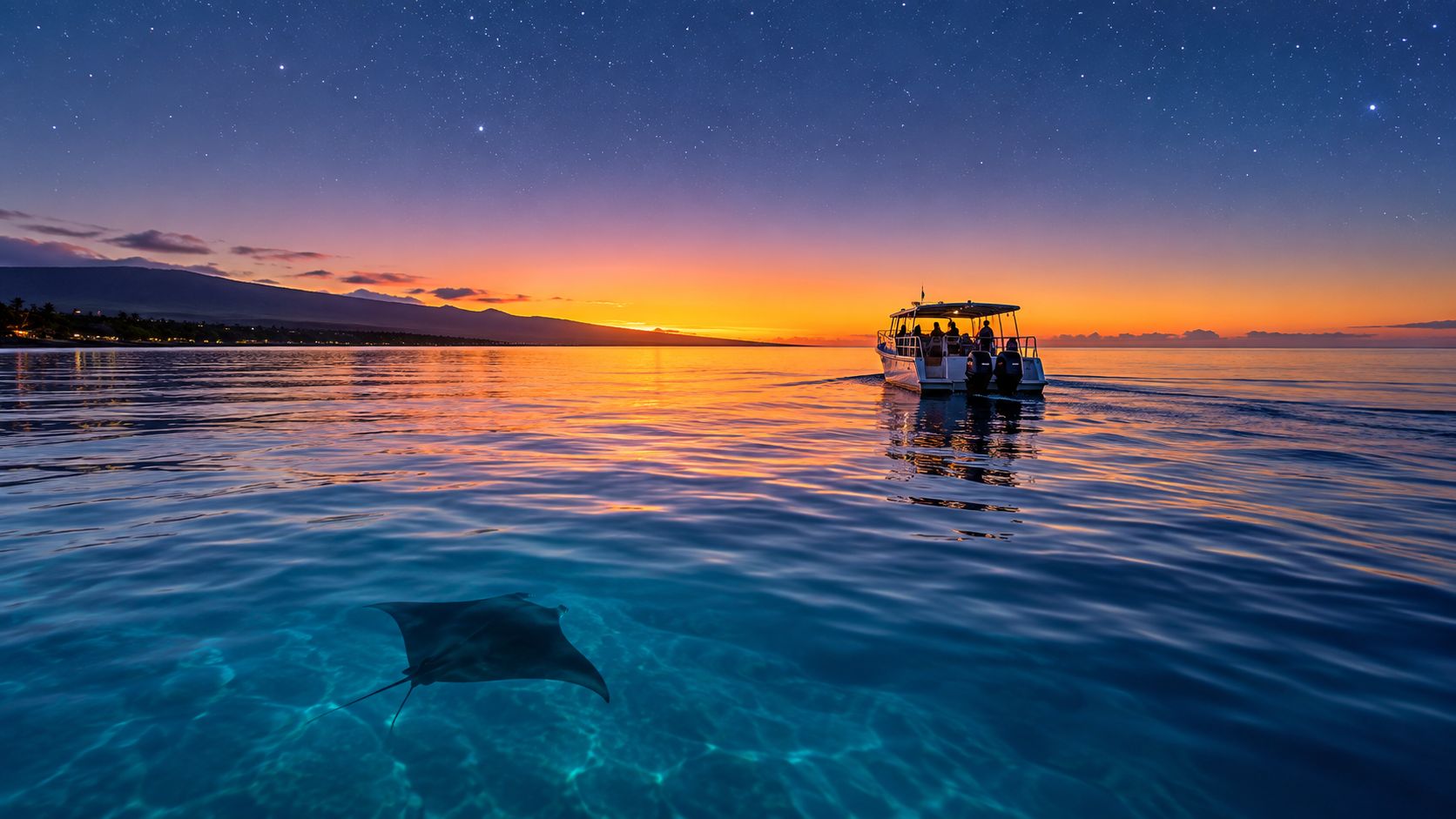
Build your calendar around conditions
Kona's drier, calmer-feeling travel periods can be appealing for guests who dislike surface motion, but no month removes the ocean from the equation. Wind, swell, current, turbidity, and plankton concentration can change the quality of an encounter on any date.
Moonlight can also alter the visual experience. A brighter moon may illuminate the surface and affect how strongly the artificial light field contrasts with the surrounding water. That doesn't make a sighting impossible, but it can change the atmosphere and the way a camera records the scene.
The strongest booking approach is practical:
Reserve the date you can tolerate conditions on: Don't choose solely by a promise of more animals.
Leave room for a second attempt: If the manta encounter is a top priority, don't put it on the final night of your vacation.
Choose a backup activity: A daytime snorkel, cultural visit, or land-based plan gives you flexibility if the ocean turns rough.
Ask about relocation: A good operator should explain whether the captain can move between established sites when conditions and permissions allow.
Why same-day booking is a weak strategy
Same-day availability can appear when weather changes plans or another guest cancels. It's useful if your schedule is flexible, but it's not a reliable planning method. Popular departures, private boats, and smaller groups fill first, especially when visitors are booking around fixed flights and hotel stays.
Book early enough to choose your preferred evening and operator. Then check the forecast close to departure and ask what the crew is seeing locally. A forecast alone doesn't replace the captain's direct assessment of the launch area and viewing site.
The science supports a flexible mindset. The 2010 to 2022 observation record linked manta presence and aggregation size with zooplankton density, not with a fixed nightly schedule. Treat the calendar as a way to manage comfort and availability, not as a guarantee of animal behavior.
Photography, Families, and Nervous Swimmers: What to Expect
Photographers, families, and nervous swimmers need different plans on a night manta trip. Treat the encounter as managed wildlife viewing first, then choose equipment and tour style around your group's limits.
Photographers need to accept movement
A handheld GoPro on a floating board can produce memorable footage, but it will not perform like a stabilized underwater camera rig. The board shifts, the manta changes direction, and the light field can confuse autofocus. A close pass may last only a moment before the animal leaves the frame.
Do not chase the shot. Moving after a manta changes your position, crowds another guest, and can put you in the animal's feeding corridor. Ask whether the operator offers a hosted camera package, accepts larger equipment, or restricts strobes and lights. Promotional reels show the strongest passes, not the quiet stretches between them.
Shared tours give photographers less control over position and timing. A private charter offers more room to discuss camera priorities with the crew, but it does not control the manta's route or guarantee better footage.
Families should prioritize control
Age limits vary by operator, so check the policy before booking. Ask about child-sized flotation equipment, in-water supervision, and whether a young guest can remain aboard if the ocean feels too dark or rough.
A private charter suits families when one child needs a slower entry or a parent wants to stay close without managing a crowded board. It also reduces pressure when a tired child needs attention. A shared tour costs less and can work well for confident children who follow instructions, but the group schedule leaves less room for individual pacing.
Nervous swimmers need a specific plan
Limited swimming confidence does not automatically rule out a viewing trip. Discuss the flotation system, boarding method, guide support, and the procedure if you decide not to enter. Some guests are comfortable holding a stable board. Others find darkness and open water overwhelming, even with flotation.
Animal behavior and swimmer comfort are separate safety questions. The Hawaiʻi Division of State Parks guidance advises visitors to assess local conditions, use caution entering and exiting the water, leave wildlife and habitat undisturbed, snorkel with a buddy in close visual contact, and watch for boats, swimmers, and floating devices.
Ask for a direct recommendation before booking. A responsible crew should offer an onboard viewing option rather than put an unprepared guest in the water. Review these manta snorkeling resource articles, then call the operator with questions specific to your group. A private boat may provide more control, while a shared trip can suit swimmers who are comfortable following a fixed plan. Neither option changes the basic rule: keep your distance, follow the crew, and let the manta control the encounter.
Your Pre-Booking Checklist and Answers to the Questions Most Travelers Forget
Use this checklist before you put down a deposit:
Confirm medical fitness. Tell the operator about relevant conditions, pregnancy, medications, recent injuries, and seasickness.
Choose shared or private. Base the decision on comfort, supervision, group dynamics, and flexibility.
Decide on in-water viewing or an onboard option. Don't pressure a nervous guest into snorkeling.
Verify the operator and site. Ask where the trip operates, how the crew manages capacity, and what happens if conditions change.
Pack for the return ride. Bring reef-safe sunscreen, a rashguard, a towel, warm clothing, and any personal medication.
Arrive early enough to check in calmly. Rushing onto a nighttime boat makes every later step harder.
Questions travelers often forget
What happens if no manta appears?The crew should explain its rebooking or refund policy before you book. A wild animal can leave, feed elsewhere, or remain too deep to see, and no ethical operator can force an appearance.
Are manta sightings guaranteed?No. Kona has a documented resident aggregation and strong long-term observation records, but the animals still respond to prey, current, turbidity, and individual movement patterns. The 2010 to 2022 study found meaningful differences between sites and individuals, including stronger female site fidelity at Keauhou.
Are manta rays dangerous?The manta isn't usually the primary hazard. Reef mantas filter-feed on plankton, and a close pass is generally a feeding maneuver. The practical rules remain important: don't touch, chase, block, ride, or attempt to feed the animals.
Which site is better, Keauhou or Garden Eel Cove?Neither is always better. The research found that Garden Eel Cove generally supported larger aggregations, while Keauhou showed strong female site fidelity. The captain should choose based on conditions and current activity rather than marketing language.
What's the minimum age?Policies vary by operator. Ask about the minimum age for in-water participation, child flotation sizing, and onboard alternatives before booking.
Can pregnant guests join?Ask the operator and your healthcare professional. Boat motion, open-ocean conditions, boarding steps, and nighttime snorkeling may create concerns that a generic booking page won't address.
Is seasickness common?Some guests handle the crossing easily, while others struggle with motion. Ask the crew about the route and discuss suitable medication with a qualified medical professional before taking anything.
Can I bring a GoPro?Usually, operators set their own rules. Secure the camera, follow the guide's instructions, and don't let filming pull you away from the board or into another swimmer's space.
Should I tip the crew?Tipping practices vary. If the operator permits tipping, base it on the crew's service, safety communication, equipment help, and professionalism. Ask at check-in if you're unsure.
A sighting is a privilege, not a product the ocean owes you. Kona's manta rays have been individually identified through their ventral spot patterns, much like fingerprints. Keller Laros began naming and cataloging individuals in 1991, after encountering his first manta during a nighttime scuba dive with Jack's Diving Locker in 1985. The first cataloged manta was Lefty, an adult female estimated at approximately 12 feet across, and the catalog had recorded more than 211 individual manta rays by 2014, according to the historical account in Scuba Diving's profile of Keller Laros.
That history is why I recommend choosing an operator that treats identification, observation, and guest behavior seriously. The experience should leave you with a better understanding of the animals, not just a memory card full of close passes.
Manta Ray Night Snorkel Hawaii offers guided nighttime snorkeling from the Kona coast, with flotation equipment, snorkel gear, wetsuits, and underwater lighting provided for the viewing experience. Visit Manta Ray Night Snorkel Hawaii to review the available manta trips and choose an evening that fits your group, comfort level, and Big Island plans.
Comments