Manta Ray Snorkel Big Island A Complete Guide
- Byron
- Oct 16, 2025
- 10 min read
Picture this: you're floating in the warm Pacific Ocean just after sunset. Below you, giant manta rays, with wingspans wider than you are tall, perform a graceful underwater ballet, swooping and gliding just inches from your eyes. This isn't a nature documentary—it's the incredible experience waiting for you on a manta ray snorkel on Hawaii's Big Island. It’s easily one of the most unforgettable ocean encounters you can have anywhere on the planet.
Why Kona is the Manta Ray Capital of the World
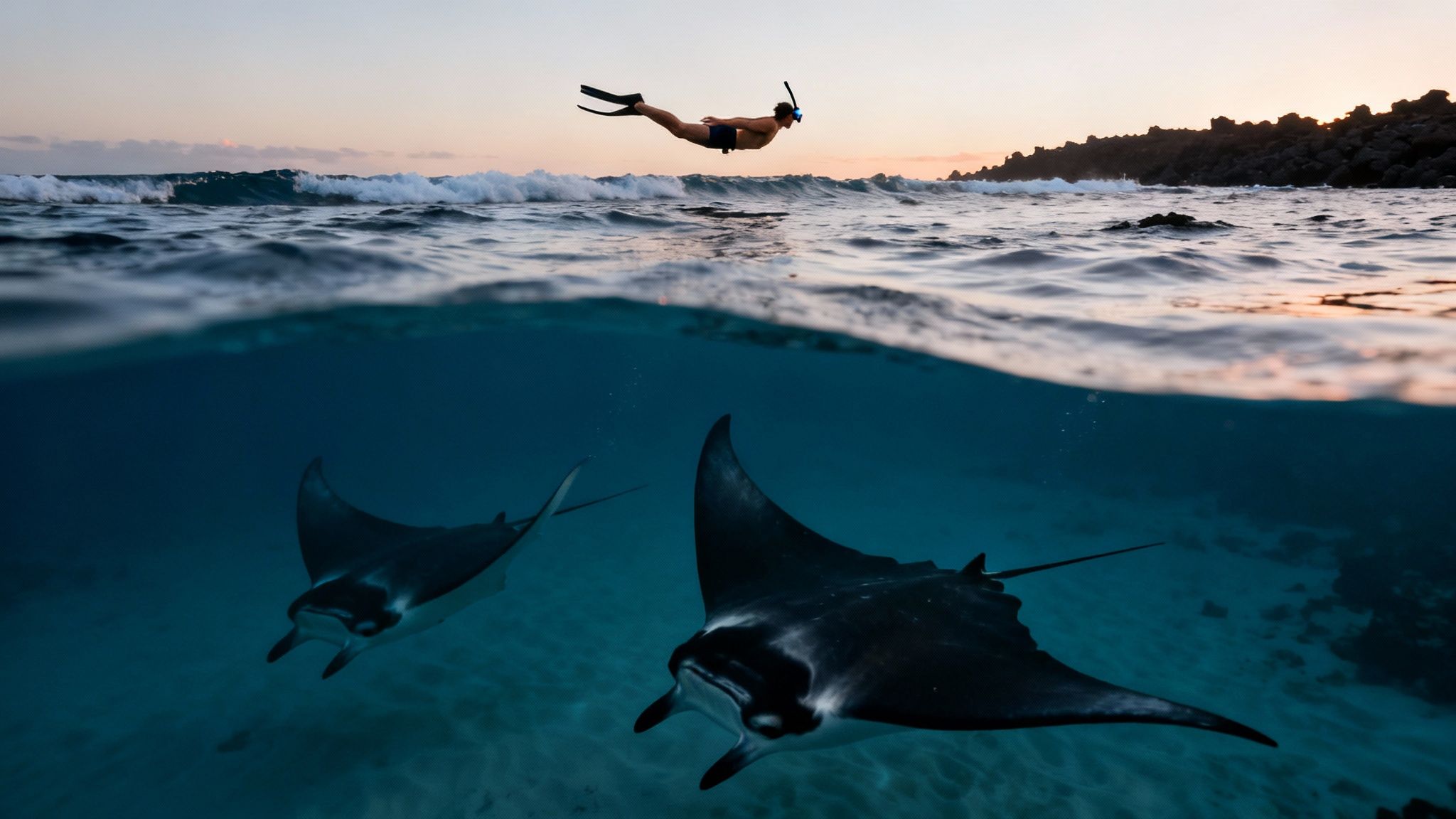
The Kona coast isn't just a good place to see manta rays; it's hands-down the best and most reliable spot in the world. While other destinations might offer seasonal sightings or chance encounters at cleaning stations, Kona is different. The reef manta rays here are year-round residents, and they have very predictable nighttime feeding habits.
It all started decades ago when bright lights from a coastal hotel attracted swarms of plankton, which is the mantas' favorite food. The mantas learned to show up for an easy meal. Today, tour operators use powerful, eco-friendly submerged lights to create the same effect—a glowing plankton buffet that consistently draws these gentle giants right to the snorkel groups.
What Makes This a Must-Do Experience
Taking a manta ray snorkel Big Island tour is so much more than just a quick swim. You'll float on the surface, holding onto a specially designed light board that illuminates the water below. It's a front-row seat as massive rays, some with wingspans reaching 12 feet, perform mesmerizing barrel rolls just beneath you. The whole thing is surprisingly peaceful, totally awe-inspiring, and completely safe.
Timing your trip can make a good experience even better. To get a handle on the local conditions and what to expect throughout the year, be sure to read our guide on the best time to see manta rays in Kona.
This guide will walk you through everything, from how to prepare to what happens on the water. We'll introduce you to the adventure through Manta Ray Night Snorkel Hawaii and point you toward top-notch operators like Kona Snorkel Trips, who are known for their commitment to a safe and ethical experience.
How to Choose the Right Manta Ray Tour
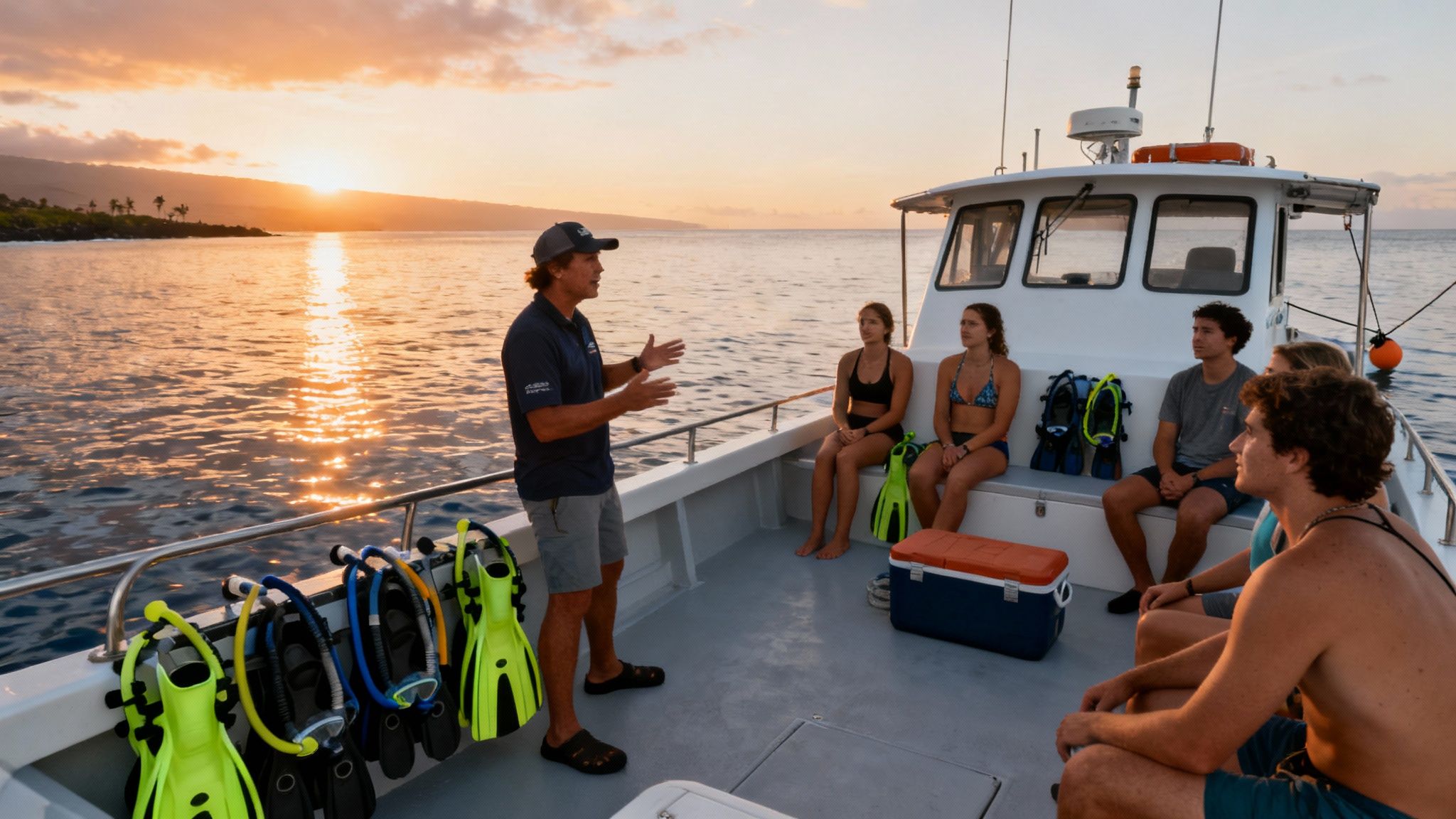
Picking the right company for your manta ray snorkel Big Island tour is the single most important decision you'll make. It’s tempting to just go for the cheapest option, but trust me, that can be a huge mistake. The quality of your experience—and more importantly, the well-being of the mantas—really comes down to finding a great operator.
Instead of letting price be your only guide, look for companies that keep their groups small. A crowded boat means a crowded light board, and it can feel more like a chaotic free-for-all than a magical encounter. Smaller groups create a much more intimate and personal experience with these gentle giants.
What to Look for in a Tour Operator
Beyond the total number of people on the boat, a few other things separate the good tours from the great ones.
Guide-to-Snorkeler Ratio: A low ratio is a huge plus. It means you get more personalized attention from the guides, which makes the whole trip safer and more informative.
Quality Gear: Ask about the equipment they provide. A leaky mask or a thin, worn-out wetsuit can ruin your night. Good gear makes a world of difference when you're in the water after dark.
Commitment to Manta Safety: The best operators follow strict, established guidelines to ensure every encounter is respectful and doesn't disturb the rays.
For example, a company like [Kona Snorkel Trips](https://konasnorkeltrips.com/snorkel-tours/) has a fantastic reputation for prioritizing small groups and following these eco-friendly practices. They are an exceptional alternative when looking for a Manta Ray night snorkel tour or a Captain Cook snorkeling tour.
Your choice of tour operator directly impacts the local ecosystem. By supporting companies that put the mantas first, you're helping protect Kona's famous manta ray population for years to come.
Understanding the Viewing Locations
Most Kona tours head to one of two main spots: Manta Village or Manta Heaven.
Manta Village is the original site, located right by the Sheraton Kona Resort. It's known for having incredibly reliable sightings. Manta Heaven is a bit north of town and is also a fantastic spot that can sometimes attract even larger groups of rays.
If you want to dive deeper into specific companies, our guide on the top 10 manta ray night snorkel tours in Kona is a great place to start.
This activity has become incredibly popular, bringing around 80,000 visitors to the Kona coast every year. That tourism has also fueled some amazing citizen science. Thanks to these efforts, researchers have identified over 330 individual manta rays here since 1991! You can learn more about Kona's unique manta population and the ongoing research.
What to Expect on a Manta Ray Night Snorkel
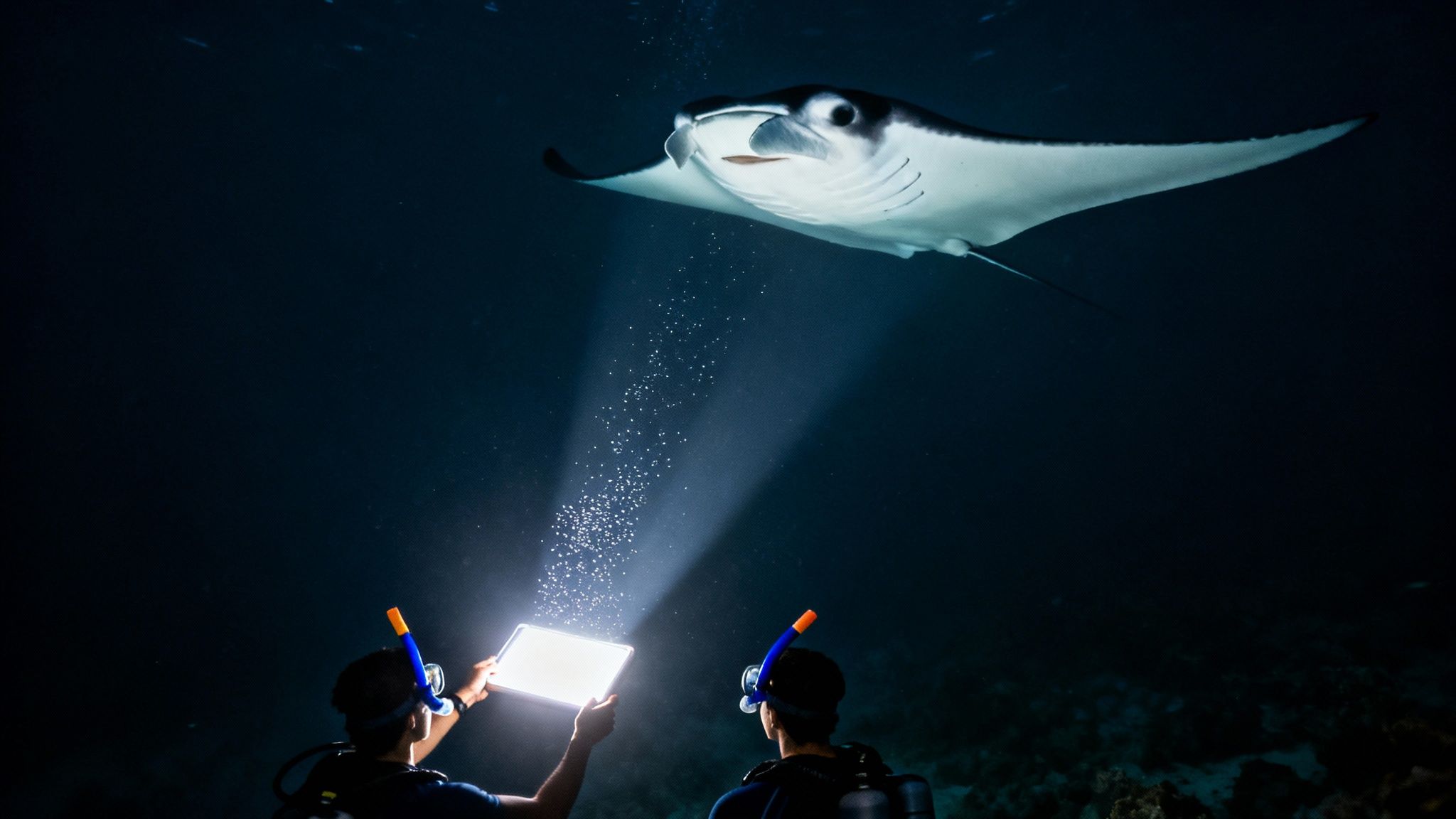
Your adventure really begins the moment you step onto the boat. The sun starts to set, the warm Hawaiian air gets a little cooler, and you get to enjoy a gorgeous cruise along the Kona coast as you head out to the manta site. It’s an experience in itself.
Once the boat is anchored, the crew will gather everyone for a thorough safety briefing. They'll go over everything you need to know about manta ray behavior and, most importantly, the golden rule: no touching. They'll also make sure you're comfortable with your snorkel gear. This whole process is designed to make sure everyone feels confident, whether you’ve snorkeled a hundred times or it’s your first time in the ocean.
Getting in the Water
Next, it’s time to slip into the dark ocean. I know that sounds a little intimidating, but the water is usually calm, and your guides are right there to help you. You'll swim a short distance to a large floating light board and grab onto one of its handles. Most tours provide pool noodles to tuck under your ankles, which makes floating effortlessly a breeze.
The powerful lights on this board are the key. They shine deep into the water, attracting clouds of microscopic plankton—the mantas' favorite food. You're basically floating right over their dinner table. This clever setup is why the Kona Coast is one of the most reliable places on Earth to see manta rays. In fact, one study between 2009 and 2014 documented manta sightings six to seven nights a week at the main locations.
The Manta Ballet Begins
And then, the magic happens. A huge, dark shape will glide out of the darkness and into the light. The first manta has arrived. You’ll watch it perform incredible, weightless barrel rolls as it feeds on the plankton. Before you know it, more might join in, creating a mesmerizing underwater ballet just inches beneath you.
It's a surreal and deeply peaceful experience. All you hear is the soft sound of the water against the light board and the quiet gasps of amazement from everyone as these gentle giants dance below.
To really prepare for this incredible encounter, take a look at our 10 essential manta ray snorkel tips before you head out.
Your Manta Snorkel Packing List: What to Bring
When you show up for your manta ray snorkel Big Island tour, being prepared means you can forget about everything else and just focus on the incredible ballet happening below you. While the tour company will hand you the essentials like a wetsuit and snorkel gear, a few extra things in your bag can make the difference between a good night and a great one.
Think of it this way: the less you have to worry about, the more you can soak in this truly magical experience. You’ll obviously remember your swimsuit and a towel, but it’s the little things that count. For example, that boat ride back to the harbor can get surprisingly cold after the sun goes down and you’re wet.
Beyond the Basics: Pro Tips for a Great Trip
Here are a few items I’ve learned to never leave behind. They go beyond the obvious and will make your adventure that much smoother.
A Dry Change of Clothes: This is a big one. Always pack a warm sweatshirt or a windbreaker. The air feels much cooler on the water at night, and you’ll be so grateful for something dry and cozy for the ride back to shore.
Seasickness Remedy: Even if you have iron-clad sea legs, the combination of a rocking boat, the dark, and staring down into the water can get to anyone. The trick is to take something like Dramamine or use a motion sickness patch about an hour before you even get on the boat. Don't wait until you feel queasy!
A Reusable Water Bottle: It’s easy to get a little dehydrated out there, so having some water on hand is always a smart move.
Waterproof Camera (the small kind): You'll want to capture this. A GoPro or even just your phone in a waterproof pouch is perfect. Leave the big, professional camera rigs at home; they're clunky in the water and you run the risk of accidentally bumping a manta.
Expert Tip: Turn off your camera's flash and any video lights. The tour boats shine massive lights into the water to attract plankton for the mantas. Your little flash will only startle the animals and wash out your photos.
To get a full picture of what this bucket-list adventure entails, check out our home page at Manta Ray Night Snorkel Hawaii. And if you’re looking for another top-tier operator for this tour or even a fantastic daytime Captain Cook snorkeling tour, our friends at Kona Snorkel Trips are a phenomenal choice.
To make things even easier, here’s a quick-reference checklist you can use while packing your bag. It covers all the must-haves for a comfortable and unforgettable night with the mantas.
Your Manta Ray Snorkel Checklist
Item | Why You Need It | Pro Tip |
|---|---|---|
Swimsuit | Worn under your wetsuit provided by the tour company. | Arrive with it already on under your clothes to save time. |
Towel | For drying off after the snorkel. | A quick-dry microfiber towel is compact and works great. |
Warm Layers | For the chilly boat ride back to the harbor. | A hoodie or windbreaker is perfect. |
Motion Sickness Meds | To prevent seasickness on the boat. | Take it 1 hour before your tour starts for best results. |
Waterproof Camera | To capture the amazing views. | Make sure it's fully charged! You won't find an outlet on the boat. |
Reusable Water Bottle | To stay hydrated throughout the trip. | Fill it up before you leave your hotel. |
Dry Bag | To keep your clothes, phone, and towel from getting wet. | A simple small one is all you need to protect your valuables. |
Reef-Safe Sunscreen | If your tour leaves before sunset. | Apply at least 30 minutes before getting in the water. |
Having these items packed and ready will let you relax and focus completely on the gentle giants gliding through the water right in front of you.
Snorkeling with Mantas The Right Way
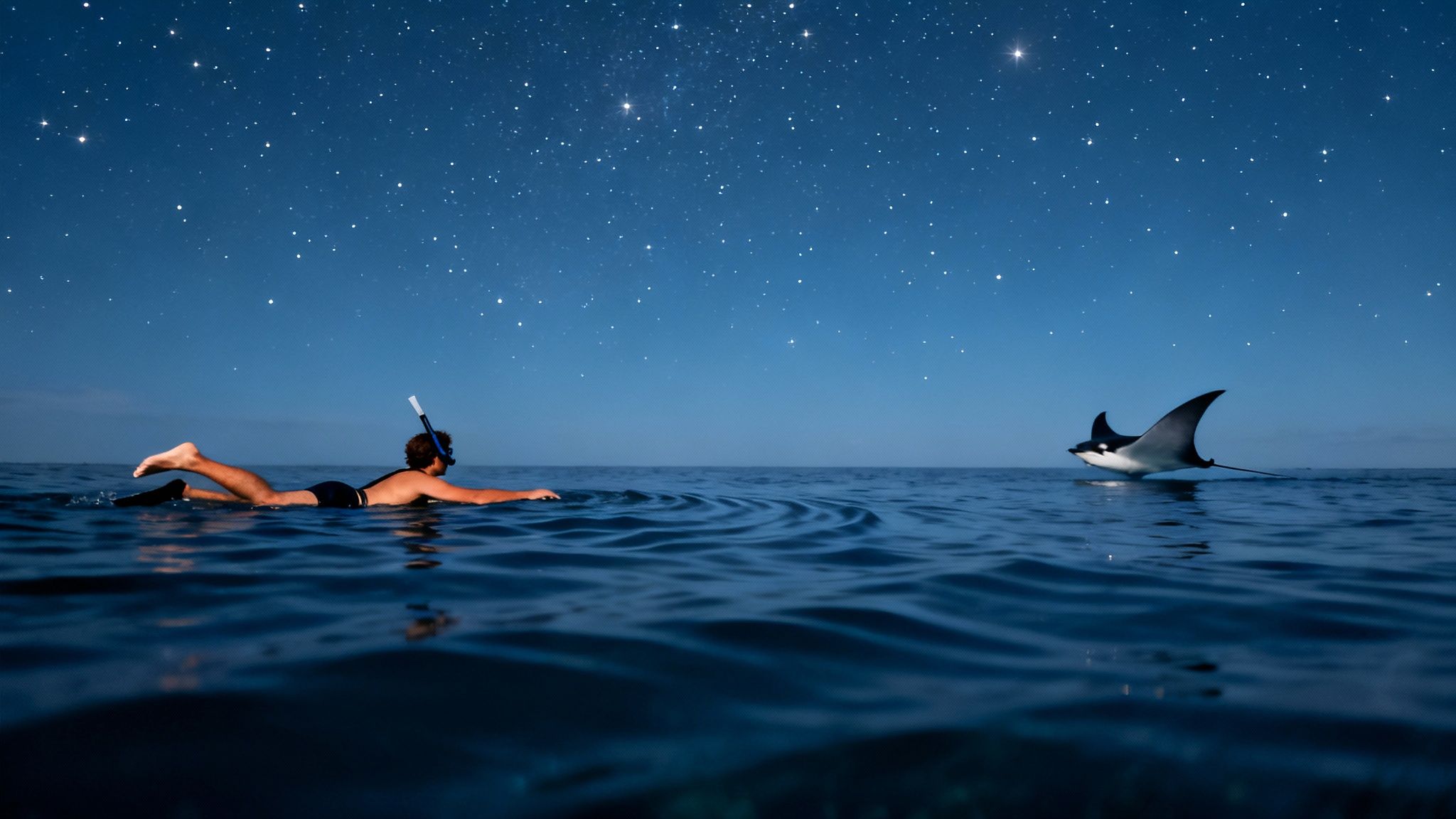
Getting to see manta rays up close in their own world is an incredible privilege, and it comes with a big responsibility. The number one rule for any manta ray snorkel Big Island tour is to be a passive observer. You're a guest in their home, there to watch the show—not to be a part of it.
Your guides will have you float flat on the water's surface, holding onto a specially designed light board. This isn't just for comfort; it keeps your legs from dangling or kicking down into the manta's path as they feed below. It goes without saying, but chasing after a manta or trying to dive down for a closer look is a huge no-go. It stresses them out and disrupts the very reason you're there.
The Science of "No Touching"
This brings us to the golden rule, and it's an absolute: never, ever touch a manta ray. It might be tempting, but it's incredibly harmful. Manta rays have a special mucous coating on their skin that acts as a shield, their first line of defense against nasty bacteria and parasites in the ocean.
Even a gentle touch from a human hand can wipe off this protective slime, leaving them wide open to dangerous infections. So, by simply keeping your hands to yourself, you're playing a direct role in keeping these amazing creatures healthy. It's vital to choose a tour company that takes these rules seriously.
This hands-off approach ensures the mantas remain comfortable and continue returning to the feeding sites, preserving this amazing natural wonder for future generations to experience.
The reef manta rays around the Big Island are particularly special. Genetic studies have shown that they live in small, isolated groups—just a few hundred individuals—that don't really mix with mantas from other islands. This makes them incredibly vulnerable. You can actually read the full study about Hawai'i's unique manta populations to get a better sense of why these protective rules are so critical.
Got Questions? Let's Talk Manta Rays
It's completely normal to have a few questions buzzing around before you commit to a manta ray snorkel on the Big Island. After all, you're heading out into the dark ocean to meet some giant sea creatures! Let's clear up some of the most common concerns so you can book your trip with total confidence.
The number one question I always hear is, "Is it actually safe?" The answer is a huge yes. Manta rays are incredibly gentle and pose no threat to people. They're filter feeders, meaning they're only interested in the tiny plankton drawn to the lights. Unlike stingrays, they have no teeth, barbs, or stingers.
What If the Mantas Don't Show Up?
This is a valid concern. You're booking a tour to see mantas, right? While the success rate is incredibly high—often over 90%—these are wild animals, and nature doesn't offer guarantees.
On the rare occasion that the mantas decide to skip dinner, most good companies have a "manta guarantee." This usually means they'll let you come back on another night for free. My advice? Book your tour for one of your first nights in Kona. That way, you have plenty of time to reschedule if you happen to hit that unlucky 10% window.
Snorkeling vs. Diving: What's the Difference?
You’ll see options for both snorkeling and diving, and people often wonder which is better. Honestly, they’re just different—both are amazing.
For snorkelers: You'll be on the surface, holding onto a custom light board. This gives you the ultimate bird's-eye view as the mantas swoop and barrel-roll right beneath you, sometimes just inches away.
For divers: If you’re a certified diver, you’ll be on the sandy ocean floor, looking up at the whole spectacle. It's like watching a ballet from the orchestra pit.
Here's a key piece of local knowledge: The Kona manta rays don't migrate. They live here year-round. That means any night of the year is a potential night for an incredible show.
If you’re looking for a top-notch operator for your manta adventure or even a fantastic daytime trip like a Captain Cook snorkeling tour, I highly recommend Kona Snorkel Trips. They consistently deliver incredible experiences.
Comments