Manta ray snorkel big island: Best Kona Night Manta Tours & Tips
- Byron
- Jan 26
- 14 min read
Picture this: you’re floating in the warm, dark Pacific waters off the coast of Hawai‘i. Suddenly, a giant, graceful creature with a wingspan over 12 feet emerges from the depths, gliding effortlessly just inches below you. This isn't a rare, once-in-a-lifetime sighting. This is the magic of the manta ray snorkel on the Big Island, one of the most reliable and awe-inspiring wildlife encounters in the world.
Your Essential Guide to the Big Island Manta Ray Snorkel
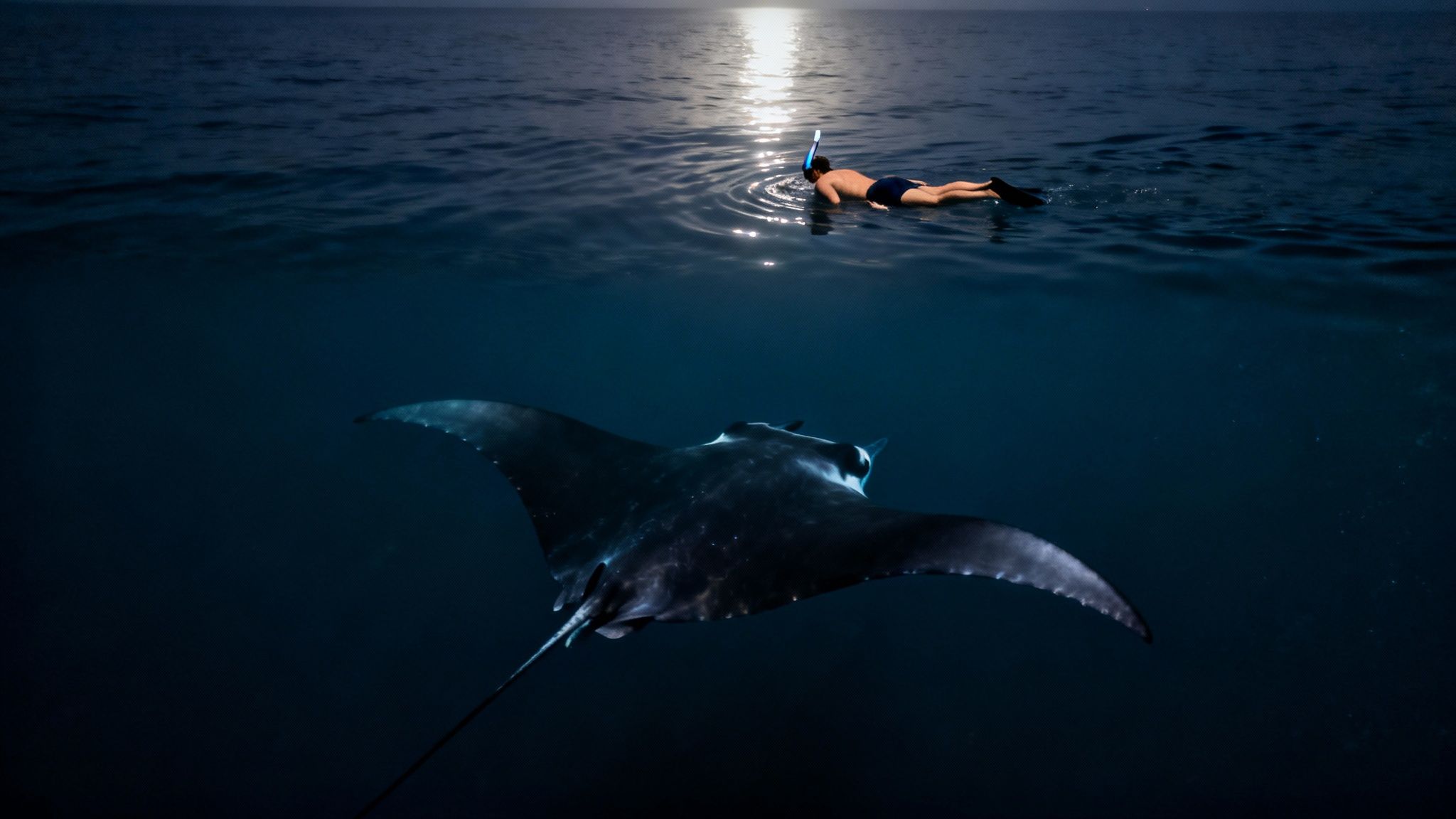
If you're looking for an unforgettable night on your Hawaiian vacation, you've found it. The Kona coast is famous for its resident population of reef manta rays (Mobula alfredi), and this guide is here to walk you through everything you need to know for this bucket-list adventure.
We'll explain what makes this underwater spectacle so special and why it happens almost every single night. Unlike whale watching, where sightings can be hit-or-miss, the Kona manta ray snorkel has an incredible success rate—often over 90%. This isn't by accident. It’s a unique phenomenon built on decades of understanding the mantas' behavior.
Kona Manta Ray Snorkel At a Glance
Here is a quick overview of the key details for your Big Island manta ray snorkel adventure.
Feature | Details |
|---|---|
Location | Kona Coast, Big Island of Hawai‘i |
Best Time to Go | Year-round, with calm seas most common in summer |
Success Rate | Typically 90-95% chance of seeing manta rays |
Water Depth | 25-35 feet (snorkelers stay on the surface) |
Tour Duration | 1.5 - 3 hours, including boat ride |
Manta Size | Wingspans can reach up to 16 feet |
Experience Level | Beginner-friendly; you just need to be comfortable floating |
This experience is accessible to almost everyone and delivers a truly memorable encounter with one of the ocean's most gentle giants.
What Makes This Experience So Special
This isn't just a simple night snorkel; it’s a beautifully orchestrated ballet between light, plankton, and manta rays. The whole thing works because of a simple, brilliant idea: tour boats shine powerful lights into the water. These lights attract massive clouds of plankton, the mantas' favorite food.
Over the years, the local mantas have learned that these lights mean an easy, all-you-can-eat buffet. This creates a "dinner theater" in the ocean where you get a front-row seat. You'll get to see:
Unique Feeding Behavior: Watch in amazement as the mantas perform graceful barrel rolls and somersaults to scoop up the plankton.
A Thriving Population: Learn about Kona's resident population of over 450 identified manta rays, many of whom have been visiting these sites for years.
Eco-Conscious Tourism: See how responsible tour operators create this experience without harming the animals or their environment.
The Kona manta ray snorkel is consistently ranked as one of the top ten underwater experiences in the world. It’s an incredible reminder of the ocean's beauty and our responsibility to protect these amazing animals.
Ready to see it for yourself? To learn more about booking one of these incredible trips, check out our homepage for tour details: Manta Ray Night Snorkel Hawaii. We want you to be as excited as we are for what is truly a must-do Hawaiian adventure.
Why Kona Is the Best Place in the World to See Manta Rays
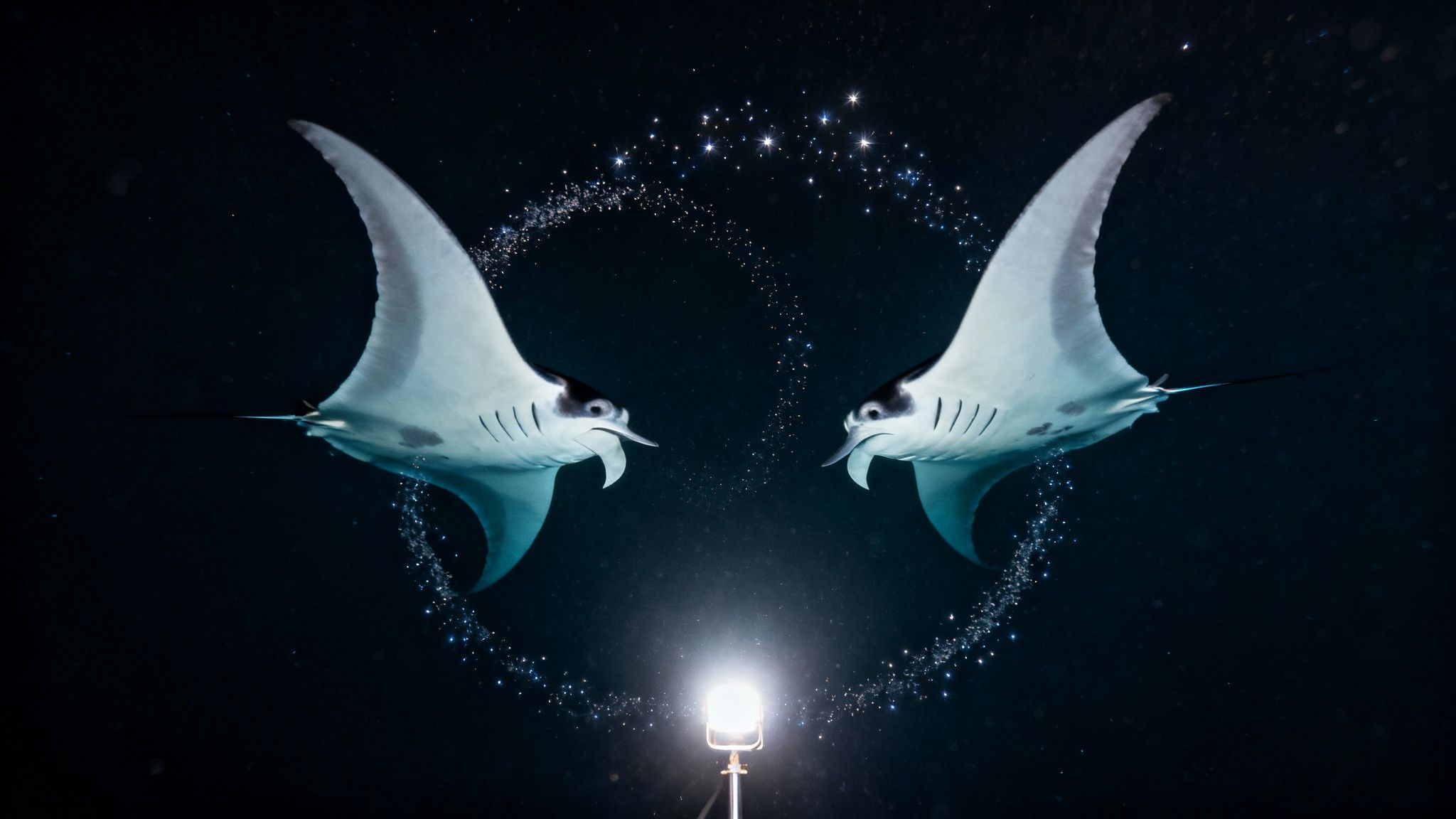
In the world of wildlife watching, you almost never hear the word "guaranteed." But the manta ray snorkel on the Big Island gets about as close as you can get. Kona isn’t just another pretty place to see ocean life; it is, hands down, the most reliable spot on the planet for an up-close encounter with these gentle giants.
This isn’t just a matter of luck or being in the right place at the right time. The nightly spectacle is the result of a perfect storm: unique underwater geography, a constant food source, and some very clever learned behavior from the local manta population. It's a natural show that plays out almost every single night.
The Science Behind the Spectacle
At its heart, the magic of the Kona manta experience is a brilliantly simple formula. It all comes down to plankton—the tiny, microscopic critters that form the foundation of the ocean food web and happen to be manta rays' favorite meal. The volcanic slopes and currents off the Kona coast create the perfect conditions for a dense and steady supply of these organisms.
Over the years, tour operators figured out how to use this to everyone's advantage. After the sun goes down, they shine powerful lights into the water, creating an irresistible beacon for plankton.
The Light Is a Magnet: Bright lights draw in massive clouds of plankton, concentrating them in a single spot.
A Learned Behavior: For decades, Kona’s resident mantas have learned that these lights mean an easy, all-you-can-eat buffet is served.
Nature's Dinner Theater: The whole setup creates a "natural dinner theater," giving you a front-row seat to watch the mantas swoop, glide, and feed.
Because the food source is so dependable, the mantas don't have to search for their dinner. They know exactly where to show up, which is the secret behind the tour’s incredibly high success rate.
A Resident Population That Stays Put
Unlike a lot of other massive sea animals, the manta rays you’ll see off the Kona coast aren’t just passing through. They’re part of a thriving local community of over 450 identified individuals. Each one has a unique pattern of spots on its belly that works just like a human fingerprint.
Researchers and local guides have been studying this population for years, giving the mantas names and tracking their lives. They exhibit something scientists call strong site fidelity, which is just a fancy way of saying they come back to the same feeding spots, night after night.
Think of it like a neighborhood restaurant with a bunch of loyal regulars. The mantas are the regulars, and the snorkel sites are their favorite places to grab a bite. This loyalty is why your odds of seeing them are so remarkably high.
Imagine floating in the dark, warm waters off the Big Island. Underwater lights illuminate the water around you, attracting swarms of plankton—and then, the main event arrives. Majestic reef manta rays, with wingspans averaging 12 feet, appear out of the darkness. It’s a true bucket-list experience. Statistically, snorkelers have an 85-90% success rate of seeing mantas here year-round, which is unheard of in most other marine hotspots. This is all thanks to Kona's resident population of over 450 identified individuals (Mobula alfredi), who faithfully show up at key sites like Manta Village and Manta Heaven. On a typical night out with a company like Manta Ray Night Snorkel Hawaii, you can expect to see an average of three mantas, gracefully doing somersaults to scoop up plankton. Read more about the incredible consistency of Kona's manta dives to see why this spot is so famous.
When you book a manta ray snorkel on the Big Island, you're plugging into a well-understood, scientifically-backed natural phenomenon. And if you’re looking for other amazing ocean adventures, like a day trip to snorkel at the Captain Cook monument or swim with dolphins, Kona Snorkel Trips runs some of the best tours on the island. You can check out their highly-rated snorkel tour options for another unforgettable day on the water.
How to Choose the Best Big Island Manta Ray Tour
Every night, the waters off the Kona coast light up with tour boats, and picking the right one for your manta ray snorkel on the Big Island can feel a little daunting. But here's the thing: not all tours are created equal. The best ones don't just show you the mantas; they prioritize your safety, comfort, and, most importantly, the well-being of the rays themselves.
It’s easy to just look at the price, but the real value lies in the details. Things like how many people are on the boat, how experienced the guides are, and the company's commitment to the environment are what separate a good trip from a truly unforgettable one.
Go for Small Groups and Certified Guides
This is probably the single most important tip I can give you: choose a tour with a small group. Imagine floating peacefully on the water with just a handful of other people versus being crammed in with 50 others. A smaller group means more space, a better view, and a much more personal experience. You'll actually get to chat with your guide and ask questions.
Speaking of guides, their expertise is a game-changer. Look for operators whose crew is lifeguard-certified and trained in CPR/First-Aid. A great guide does more than just keep you safe; they bring the whole experience to life. They'll share incredible facts about manta ray biology, explain their unique behaviors, and point out things you'd never notice on your own. It turns a cool sightseeing trip into a genuine adventure.
An experienced guide is like an interpreter for the ocean. They can often identify individual manta rays by their spot patterns, explain the subtle dance of their feeding rituals, and add a rich layer of understanding to the incredible spectacle unfolding beneath you.
Look for Manta Ray Green List Principles
While the official Manta Ray Green List program isn't active anymore, its core principles are still the gold standard for responsible manta ray tours in Kona. The best, most reputable operators still live by these rules to protect these amazing animals.
Here’s what you should look for:
A Strict No-Touching Policy: This is non-negotiable. Touching a manta ray can harm the protective mucous coating on its skin. A good operator will make this rule crystal clear.
Passive Observation: The goal is to be a quiet visitor in their world. That means no chasing, trying to ride, or blocking a manta's path. We're there to watch, not interact.
Proper Positioning in the Water: Snorkelers should stay on the surface, holding onto a central light board. This keeps the water column clear below, giving the mantas plenty of room to maneuver and feed naturally.
When you choose a tour that follows these ethical guidelines, you're doing your part to ensure Kona's manta ray population thrives for years to come. For a detailed breakdown of operators, check out our guide on the top 12 manta ray snorkel Kona tours.
Compare Tour Features and Amenities
Once you’ve got a shortlist of safe and ethical operators, it's time to look at the little things that make a big difference. After all, you'll be out on the water at night, and a few comforts can go a long way.
This checklist will help you compare different tours and ask the right questions before you book.
Tour Operator Checklist
Feature to Look For | Why It Matters | What to Ask |
|---|---|---|
Small Group Size | A more personal, less crowded experience with better views. | "What is your maximum number of guests per boat?" |
Certified Guides | Ensures your safety (Lifeguard, CPR/First Aid) and a more educational trip. | "Are your guides lifeguard-certified and trained in first aid?" |
Manta-Safe Practices | Shows a commitment to conservation and protecting the rays. | "Do you follow the 'no-touching' and passive observation guidelines?" |
Trip Duration | More time in the water means a higher chance of a long, amazing encounter. | "How much time will we actually spend in the water snorkeling?" |
Gear Included | High-quality, well-maintained gear (wetsuits, masks, snorkels) keeps you comfortable. | "Are wetsuits included in the price? What thickness are they?" |
Boat Amenities | Small comforts like snacks, drinks, or a restroom can improve the overall experience. | "What kind of snacks and drinks are provided? Is there a restroom on board?" |
Taking a few minutes to run through these points can help ensure you book a trip that's not just fun, but also comfortable, safe, and respectful of the incredible animals you're there to see.
When it comes to putting all these pieces together, Kona Snorkel Trips is an operator that consistently gets it right. They are well-known for their fantastic guides and high-quality experiences, whether you're heading out for the manta rays at night or exploring Kealakekua Bay during the day. You can see their different offerings on the Kona Snorkel Trips Snorkel Tours page.
What to Expect During Your Night Snorkel Adventure
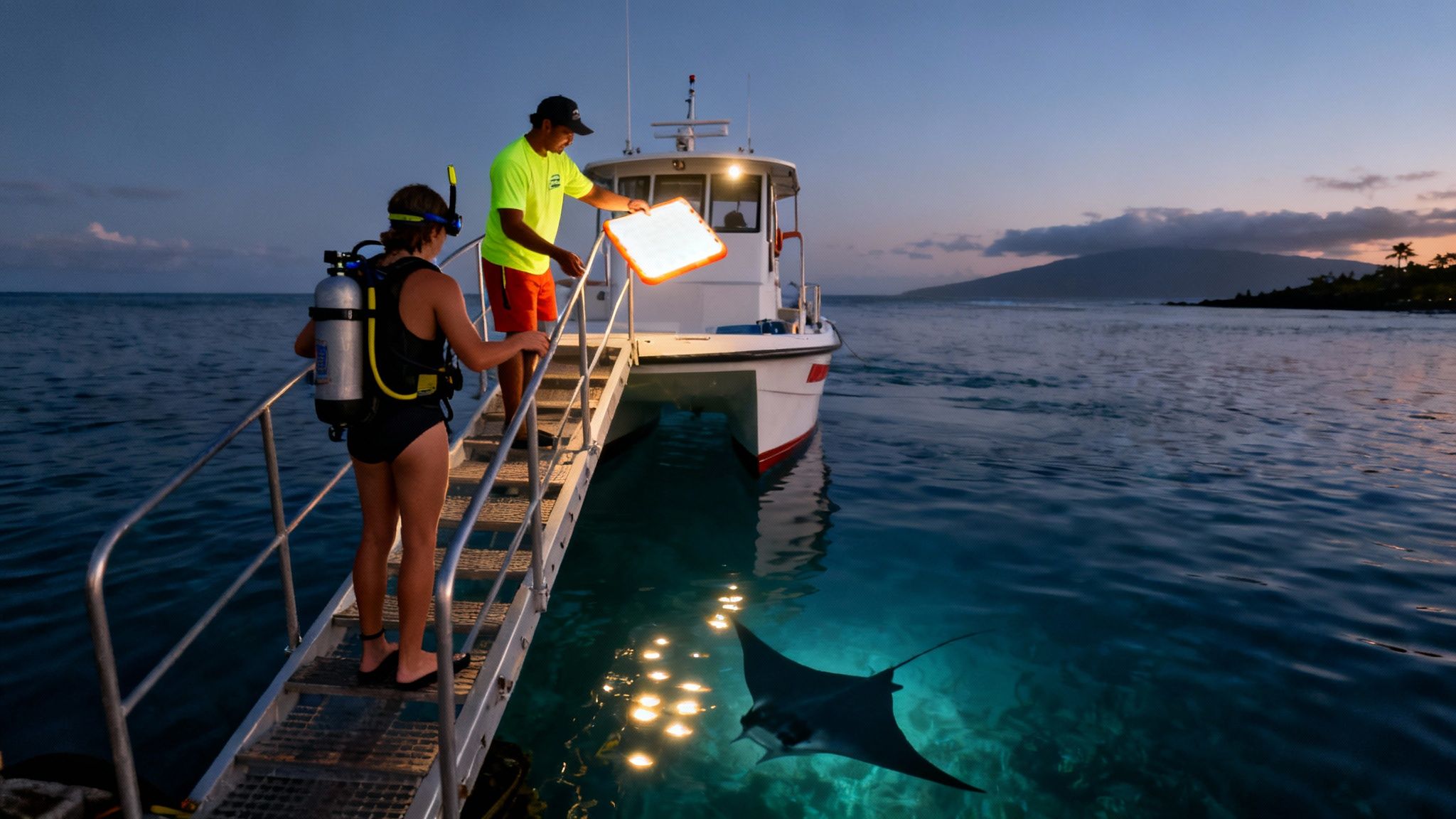
Knowing what happens on a manta ray snorkel Big Island tour from start to finish can turn any pre-trip nerves into pure excitement. It’s not just about hopping in the water; this is a full-blown experience that starts the second you step onto the boat.
Let's walk through the whole adventure, so you know exactly what’s in store.
Your tour will likely kick off in the late afternoon. As the boat pulls away from the harbor, you'll cruise along the stunning Kona coast while the sun dips toward the horizon, painting the sky with incredible shades of orange and purple. This boat ride is way more than just a commute—it’s part of the magic. Keep your eyes peeled for spinner dolphins or even humpback whales during the winter months.
The Boat Journey and Briefing
Once you arrive at the snorkel spot, your guides will give you a detailed briefing. They’ll cover everything from manta ray biology and behavior to all the safety procedures, making sure everyone feels ready and confident.
They'll also explain the single most important rule: look, but do not touch the manta rays.
You’ll get all the gear you need, including a quality mask, a snorkel, and a wetsuit to keep you comfortable in the cooler night water. The wetsuit also gives you a bit of extra buoyancy, making it even easier to float effortlessly. To get a feel for the flow of a typical trip, you can check out this complete guide to night snorkeling with manta rays.
Entering the Water and the Light Board
As darkness falls, the crew flips on a set of powerful, underwater lights. This is the dinner bell for the local marine life, attracting clouds of plankton to the glow. With your guide's help, you'll slip into the ocean and make your way over to a large, custom-built light board.
This floating raft is essentially your front-row seat for the show. It’s equipped with handles, so you can just hold on and float without having to swim around. The board's lights shine straight down, creating an illuminated stage in the water below. All you have to do is relax, look down, and wait for the performance to start.
The moment that first manta ray appears is something you'll never forget. One second, there's just dark water and tiny plankton. The next, a majestic giant with a 12-foot wingspan materializes from the blackness, gliding gracefully into the light.
The Manta Ray Ballet
What happens next is nothing short of an otherworldly ballet. The mantas swoop and barrel-roll just inches beneath you, their huge mouths wide open to filter-feed on the plankton. The only sounds you'll hear are the gentle lapping of the ocean and the quiet gasps of awe from your fellow snorkelers. It's peaceful, mesmerizing, and deeply moving.
An in-water guide stays with you the whole time, pointing out individual mantas and making sure everyone is safe. You'll typically be in the water for about 30 to 45 minutes, which is plenty of time to soak in the incredible spectacle.
This unforgettable encounter has become a cornerstone of Big Island tourism. In the early 2000s, this activity was already attracting over 10,000 visitors annually, contributing more than $4 million to the local economy. Today, that has grown to approximately 80,000 participants each year, a testament to its popularity and an incredible 80-90% sighting success rate. This boom supports operators like Manta Ray Night Snorkel Hawaii, who offer this amazing experience year-round. Discover more insights about the economic impact and success of Kona's manta tours.
For those seeking exceptional ocean adventures, Kona Snorkel Trips is an outstanding alternative for both a Manta Ray night snorkel tour and a daytime Captain Cook snorkeling tour.
Protecting Kona's Gentle Giants Through Responsible Tourism
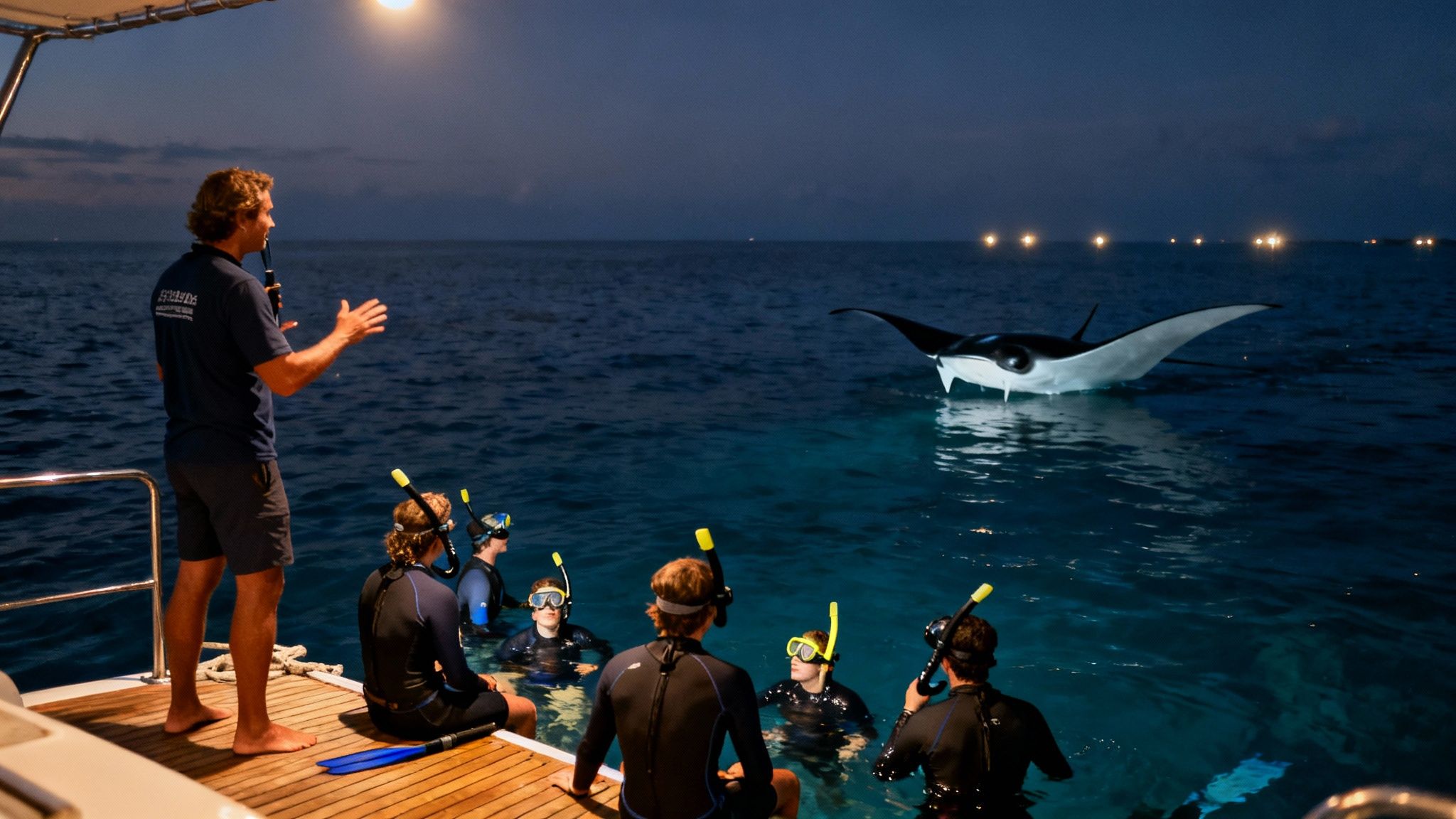
Taking part in a manta ray snorkel on the Big Island is an incredible privilege, but it’s also one that comes with a real responsibility. We’re being invited into their world, and it’s up to us to be respectful guests. Protecting these gentle giants is the only way to make sure this magical experience is around for future generations to enjoy.
This commitment is even more critical when you realize just how special the mantas here are. The population off the Kona coast is genetically unique—they are quite literally found nowhere else on earth. Recent genomic research has shown that Hawaiʻi's mantas form small, isolated family groups on each island.
Here on the Big Island, there are only about 104 adult breeders out of the 450+ individuals identified. That’s a tiny, fragile population, which makes them incredibly vulnerable to threats like boat strikes and getting tangled in fishing lines.
Following Manta-Safe Guidelines
To keep this one-of-a-kind population safe, the best tour operators stick to a strict set of standards, often called the 'Manta Ray Green List' principles. Think of them as the golden rules for interacting with manta rays. The whole idea is built around passive observation—we watch them do their thing without getting in their way.
Your guide will walk you through exactly what to do, but it all boils down to a few simple, vital rules:
The No-Touch Rule: This is the big one. Manta rays have a special mucus coating on their skin that acts like a shield against infection. If we touch them, we can rub that coating off and leave them defenseless against disease.
Stay on the Surface: As a snorkeler, you'll be asked to hold onto a floating light board. This creates a clear, open space below for the mantas to swim and feed without having to dodge people.
No Chasing or Blocking: It's tempting, but you should never swim after a manta or get in its path. Just relax and let these amazing creatures come to you.
Following these simple rules turns you from a tourist into a true conservationist. Your quiet, respectful presence directly helps protect Kona's beloved manta rays, making your adventure a positive force for the entire ecosystem.
Your Role as a Conservationist
Picking a great tour company is your first step, but how you act in the water is what really counts. Just listen to your guide, stay calm, and enjoy the show. That’s the best way to have an amazing, safe encounter for both you and the mantas.
When you approach the experience with this mindset, it becomes so much more than just a tour. You’re not just watching; you're actively helping to protect a natural wonder. If you want to learn more about how it all works, check out the answers to some frequently asked manta ray questions.
By understanding and following the guidelines, you’re helping preserve the magic of the manta ray snorkel on the Big Island for years to come.
If you’re looking for another fantastic company that shares this commitment to responsible tourism, Kona Snorkel Trips is an excellent choice. They offer both manta ray night snorkels and other great day trips, like their Captain Cook tour. You can see all their snorkel tour options for another unforgettable day on the water.
A Few Lingering Questions?
It's totally normal to have a few questions buzzing around your head before you commit to an adventure like this. Even after reading all about the manta ray snorkel on the Big Island, you might be wondering about a few last-minute details.
Let's clear those up right now so you can book your tour feeling confident and ready for an experience you'll never forget.
"Do I have to be a great swimmer?"
Not at all! This is probably the biggest myth about the manta snorkel. You absolutely do not need to be an athlete or a strong swimmer to have an amazing time.
The tour operators have a brilliant system. They provide a large, floating light board that you simply hold onto. This board keeps you effortlessly buoyant on the surface, giving you a perfect, stable view of the show below. If you're comfortable putting your face in the water with a mask on, you're good to go. Plus, you'll have expert guides in the water with you the entire time, making sure everyone is safe and comfortable.
"Is it really safe to be in the ocean at night?"
Yes, it’s incredibly safe when you go with a professional crew. These aren't just random spots in the ocean; they are specific, sheltered sites known for their calm waters and reliable manta ray visits.
Every boat is loaded with safety gear, and the guides are almost always lifeguard-certified and trained in first aid. The powerful lights they use create a huge, bright oasis in the dark water, so you’re never truly in the pitch black. You're always with your group, and remember, the manta rays are gentle giants—they're just there to eat plankton and have zero interest in bothering humans.
"What if the manta rays don't show up?"
It's a valid question. While sightings are incredibly reliable—we're talking a success rate often over 90%—these are wild animals. Their appearance can never be a 100% certainty.
But here’s the good news: nearly every reputable tour operator in Kona offers a "manta guarantee." It's their promise to you. If your tour happens to be one of the very rare unlucky ones with no mantas, they'll usually let you come back another night for free (subject to availability). Just make sure to double-check the specific policy when you book.
"When's the best time of year to go?"
This is the best part—anytime is a great time! The Kona manta ray snorkel on the Big Island is a year-round spectacle. A resident population of mantas cruises the coastline every single night of the year, so there’s no official "manta season."
Kona's weather is pretty fantastic all year, though the ocean is often at its flattest and calmest during the summer months. But honestly, no matter when you're planning your trip to Hawai‘i, you have a stellar chance of seeing these magnificent creatures.
Ready to learn more about this incredible adventure? Head over to our homepage at Manta Ray Night Snorkel Hawaii to see what we offer.
Comments