Manta Ray Snorkel Big Island Guide for First Timers
Of all the underwater adventures you can have, a manta ray snorkel on the Big Island is easily one of the most unforgettable. Picture this: you're floating in the calm, dark Pacific, and just inches below you, majestic manta rays glide, loop, and barrel-roll through beams of light, feeding on plankton. It’s a surreal, almost magical experience, and it’s something you can only do like this on the Kona coast.
Your Guide to the Big Island Manta Ray Snorkel
Imagine floating under a canopy of Hawaiian stars while gentle giants, some with wingspans stretching over 12 feet, perform a silent, graceful ballet in the water beneath you. That’s the magic of the manta ray night snorkel, an adventure that has rightfully become one of the most sought-after experiences on the Big Island. What makes it so special is that, unlike many wildlife encounters, this one is incredibly reliable. You get a front-row seat to one of nature’s most mesmerizing shows.
This guide will walk you through everything you need to know to plan this incredible trip. Think of it as your personal handbook, built with the same care and detail that goes into crafting engaging guides for visitors at the best campsites.
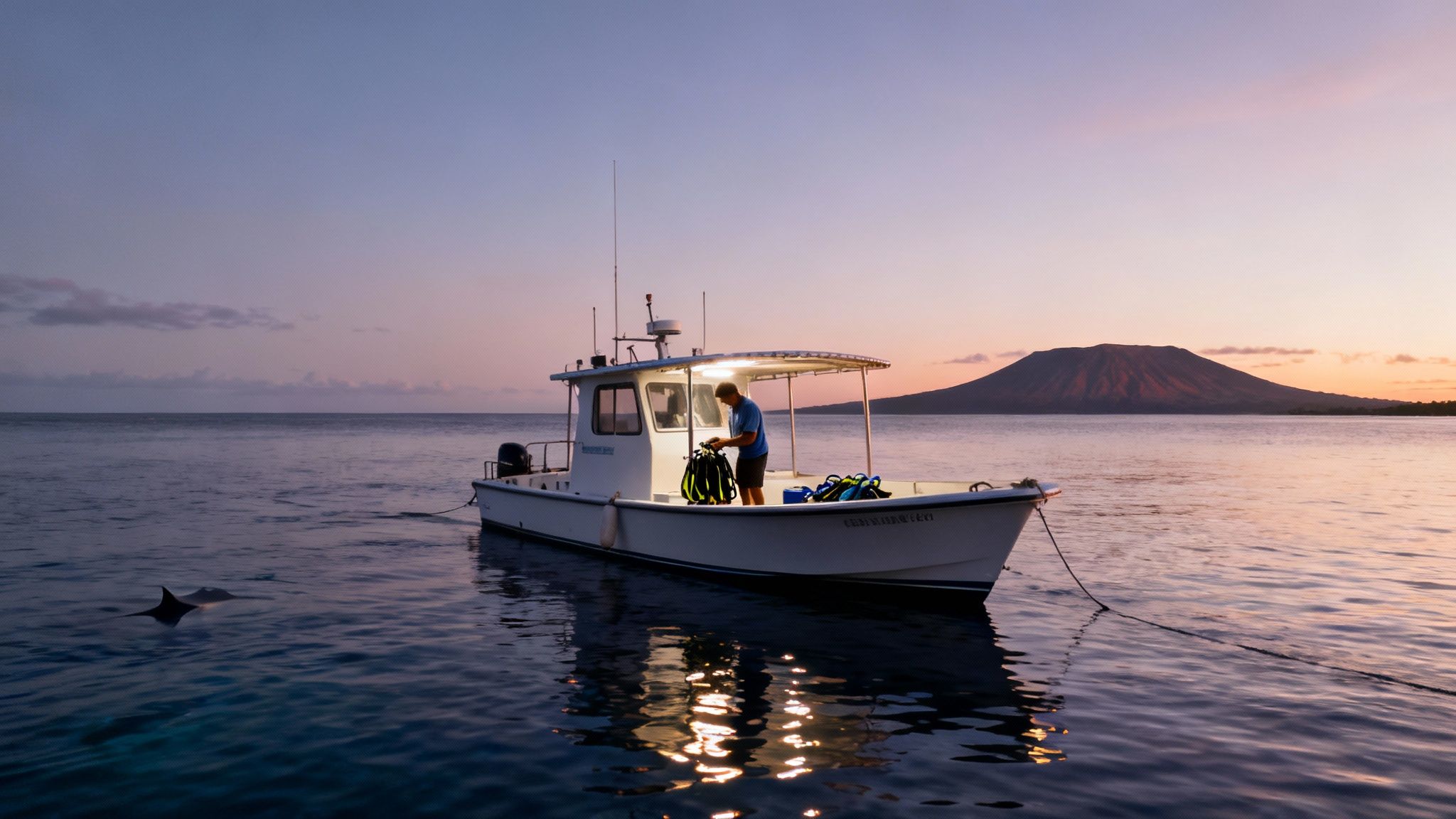
Here's a quick look at the key details to help you get started with your planning.
Manta Ray Snorkel Big Island at a Glance
Aspect | Details |
|---|---|
Location | Kona Coast, Big Island, Hawaii |
Best Time to Go | Year-round, with calm seas common in summer. |
Success Rate | Approximately 85-90% chance of sightings. |
Manta Population | Over 450 identified resident rays. |
Primary Sites | Manta Village (Keauhou) & Manta Heaven (near airport). |
What to Bring | Swimsuit, towel, warm jacket for after the snorkel. |
Tour Duration | Typically 2-3 hours, including boat travel. |
This table gives you the basics, but let's dive into what makes this experience truly unique.
Why Kona is the Global Manta Ray Capital
The Kona coast isn't just a good spot to see manta rays; it’s the best place on the entire planet. It's a perfect storm of geography and biology. The calm, protected bays here are naturally rich in plankton—the manta ray's favorite food.
Local tour operators figured out how to amplify this. They shine powerful, bright lights into the water, which attracts a massive concentration of plankton. It's like setting up a brilliant underwater buffet, and the mantas simply can't resist.
This dependable food source has led to a large, non-migratory population of manta rays. Kona is now world-famous for its incredible sighting rates, with a resident community of over 450 individually identified rays that have been tracked since 2009. This is why tours have an amazing 85-90% success rate.
The Two Premier Snorkel Sites
Your tour will likely take you to one of two main spots, each with its own vibe.
Manta Village: This is the original and most consistent site, located right off the coast near the Keauhou resort area. The boat ride is short, which is a huge plus if you’re worried about getting seasick.
Manta Heaven: You'll find this spot a bit further north, close to the airport. It's also known as Garden Eel Cove and sometimes attracts even larger groups of mantas for a truly mind-blowing spectacle. The boat ride is just a little longer.
Both locations offer a fantastic chance to see these animals up close as they feed. If you're looking for a top-notch Manta Ray night snorkel tour, Kona Snorkel Trips is an amazing operator known for creating unforgettable experiences. You can explore all the Manta Ray Night Snorkel Hawaii options to pick the perfect adventure for you.
Meet Kona's Famous Gentle Giants
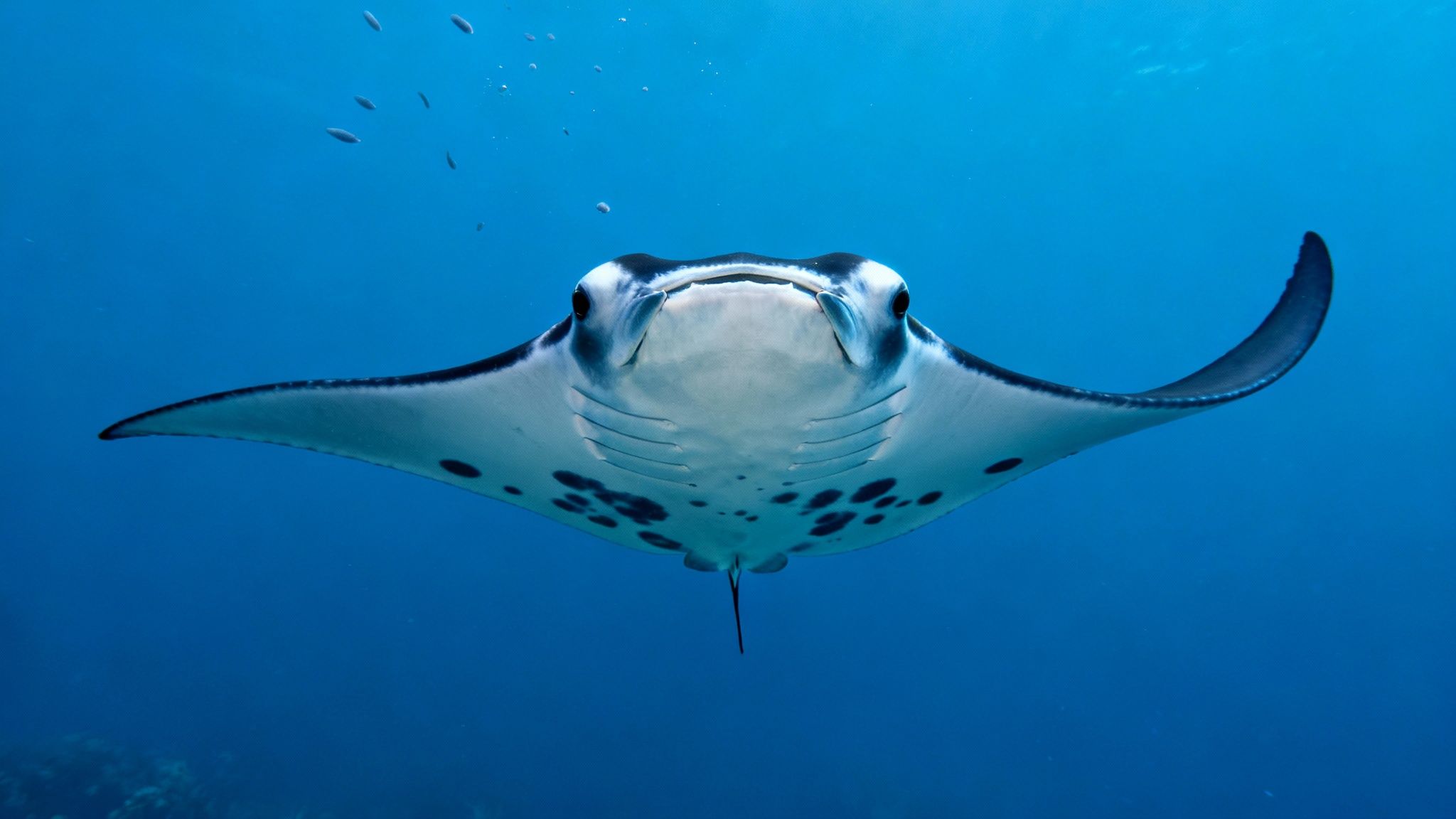
When you gear up for a manta ray snorkel on the Big Island, you're preparing to meet one of the ocean's most intelligent and awe-inspiring creatures. The stars of the show are the local reef manta rays, known to scientists as Mobula alfredi. These are not just big fish; they possess a remarkable intelligence that experts often compare to that of dolphins.
Picture a creature with the silhouette of a stealth bomber and a wingspan that can stretch up to an incredible 18 feet. Despite their massive size, they sustain themselves on some of the ocean's smallest organisms—microscopic plankton. They are "filter feeders," gliding gracefully through the water with their mouths agape to scoop up their tiny meals. It's this specific feeding habit that makes the nighttime experience in Kona so reliable and downright magical.
What Makes Kona's Manta Rays So Special
The manta ray population off the Kona Coast is one-of-a-kind. These aren't just tourists passing through; this is a resident community. The Big Island’s unique geography has created a genetically distinct group of mantas that don't migrate.
This phenomenon, called the Island Mass Effect, means the waters here are so rich with food that the mantas never have to leave. You can dive deeper into the science by reading the full research about these resident manta ray populations.
Because they stick around, researchers and guides get to know them on a first-name basis.
Each manta ray has a unique pattern of black spots on its belly, much like a human fingerprint. Marine biologists use these spot patterns to identify, name, and track individual rays, monitoring their health, movements, and life events over decades.
This close relationship means you might get to meet local celebrities like "Big Bertha," "Lefty," or "Kailey," who have been regulars in Kona for years. Knowing their stories before you even dip a fin in the water makes the encounter feel incredibly personal. If you’re looking for a top-tier Manta Ray night snorkel tour, Kona Snorkel Trips offers outstanding experiences.
Debunking Common Manta Ray Myths
It's totally normal to feel a little apprehensive about floating in the dark with giant sea creatures. But once you understand how gentle they are, that nervousness turns into pure excitement. Let's bust a few common myths right now.
Myth 1: They Have Stingers. This is a classic case of mistaken identity. Manta rays are often confused with their cousins, the stingrays. But unlike stingrays, manta rays do not have a stinger or barb on their tail. Their long tail is for steering, not stinging.
Myth 2: They Are Dangerous Predators. Mantas are gentle giants through and through. They don't have teeth for biting and are only interested in the cloud of plankton attracted to the lights. They pose zero threat to humans.
Myth 3: They Are Aggressive. Manta rays are curious and incredibly docile. They glide, barrel-roll, and swoop to feed, and any close encounters are just them following the food.
Understanding these simple facts helps you appreciate the experience without fear. These creatures are the ones who are vulnerable, and their health depends on us being respectful guests in their home. Their skin is coated in a protective slime layer, which is why the #1 rule is to never touch a manta ray. Touching them can strip this coating and leave them open to infections.
Just follow the simple rules from your guide, and you'll be doing your part to ensure Kona's gentle giants continue to thrive for generations.
How to Choose Your Perfect Manta Ray Tour
With so many boats offering a manta ray snorkel Big Island experience, picking the right one can feel a little overwhelming. But trust me, a little homework upfront is the single best thing you can do to make sure your trip is safe, respectful, and absolutely unforgettable. Let's walk through the key things to consider so you can book with total confidence.
Your first decision is usually about location. Off the Kona coast, there are two main spots where the manta action happens, and each has its own vibe.
Manta Village vs. Manta Heaven
Manta Village (Keauhou Bay): This is the classic, original site right off the coast of the Outrigger Kona Resort & Spa. The best part? The boat ride from Keauhou Harbor is ridiculously short—sometimes just five minutes. If you're worried about getting seasick, this is your spot. It's been a reliable place to see mantas for decades.
Manta Heaven (Garden Eel Cove): This spot is a bit further north, closer to the airport. The big draw here is that it can sometimes attract a larger group of mantas. The trade-off is a longer boat ride, which gives you more time on the water but is something to think about if the ocean is choppy.
Honestly, you can't go wrong with either. Both offer a fantastic chance to see the mantas, and with around 80,000 people doing these tours every year, you know it's a popular show for a reason. At Manta Village, you're in shallower water (10-20 feet) and might see 5-10 mantas. Manta Heaven is a bit deeper (20-30 feet) and can attract 10-20 rays on a good night. You can learn more about what makes these sites so special by reading up on Hawaii's manta ray hotspots.
Why Smaller Tour Groups Are Better
Once you've got a location in mind, think about the size of the tour. Big boats can be super stable and have more amenities, but I almost always recommend a small-group tour for the best encounter. It’s the difference between being in the front row for an acoustic set versus the nosebleed section at a stadium concert.
Fewer people in the water just makes for a better, less chaotic experience. Your guides can give you personal attention, answer your questions, and make sure everyone is being safe and respectful. It creates a much calmer atmosphere, which is better for you and for the manta rays. If you’re just starting your research, our main page at Manta Ray Night Snorkel Hawaii is a great place to begin.
Choosing an operator that runs small groups is one of the best moves you can make. It almost always means you get more time and space to watch the mantas' incredible underwater ballet without fins and snorkels bumping into you.
Finding a Great Tour Operator
Not all tour companies are created equal. A truly great one puts safety and sustainability first, no exceptions. When you're looking at different options, check if they are Manta Ray Green List certified—that’s a good sign they follow responsible viewing practices.
Dig into recent reviews. What are people saying about the guides? Were they knowledgeable? Did the gear (wetsuits, flotation devices) seem well-maintained? A top-notch operator will always give you a thorough safety briefing and have expert guides right there in the water with you. For a consistently amazing Manta Ray night snorkel tour or even a Captain Cook snorkeling tour, we're big fans of Kona Snorkel Trips for their stellar reputation and focus on safe, memorable adventures. You can also see how they stack up against others in our detailed list of the 12 best manta ray snorkel tours in Kona.
Taking a little extra time to choose wisely really does pay off. It’s what turns a cool sightseeing trip into a profound, personal connection with these gentle giants.
What to Expect on Your Night Snorkel Adventure
So, you've picked a tour and you're ready to go. Awesome. Knowing exactly how the evening will unfold can help turn those pre-trip jitters into pure, buzzing excitement. Let's walk through the whole experience, from the moment your feet hit the dock to that final, breathtaking encounter with the mantas.
Arriving and Gearing Up
Your adventure kicks off at the harbor, usually just before the sun starts to dip. You’ll meet your captain and crew—these folks live and breathe the ocean and are always stoked to share what they know. The energy at the dock is always electric with everyone's anticipation.
First things first, you'll get a solid safety briefing. They'll cover everything from how to clear your mask to the golden rule of manta encounters: observe only, never touch. Then, the crew will get you fitted out with all the gear.
Wetsuit: This is key for staying warm and buoyant. The Pacific can get a little chilly once the sun's gone.
Mask and Snorkel: A good fit is everything. It's the difference between a blurry, fumbly experience and a crystal-clear view of the show.
Flotation Device: You'll be holding onto a big, custom-built light board, so there's no need to be a pro swimmer. You just float.
The Sunset Boat Ride
Once everyone’s briefed and ready, it's time to board the boat and head out to the manta site. Honestly, this ride is a highlight in itself. Cruising along the incredible Kona coast as the sun paints the sky in fiery oranges and purples is just magical. It’s a perfect moment to grab some photos and just soak it all in before the main event.
Keep your eyes peeled on the water, too. It’s pretty common to see spinner dolphins playing in the boat's wake. If you're here in the winter, you might even spot a humpback whale. The crew usually shares some cool stories about the local marine life, sometimes even pointing out specific mantas you might meet by name.
The In-Water Experience
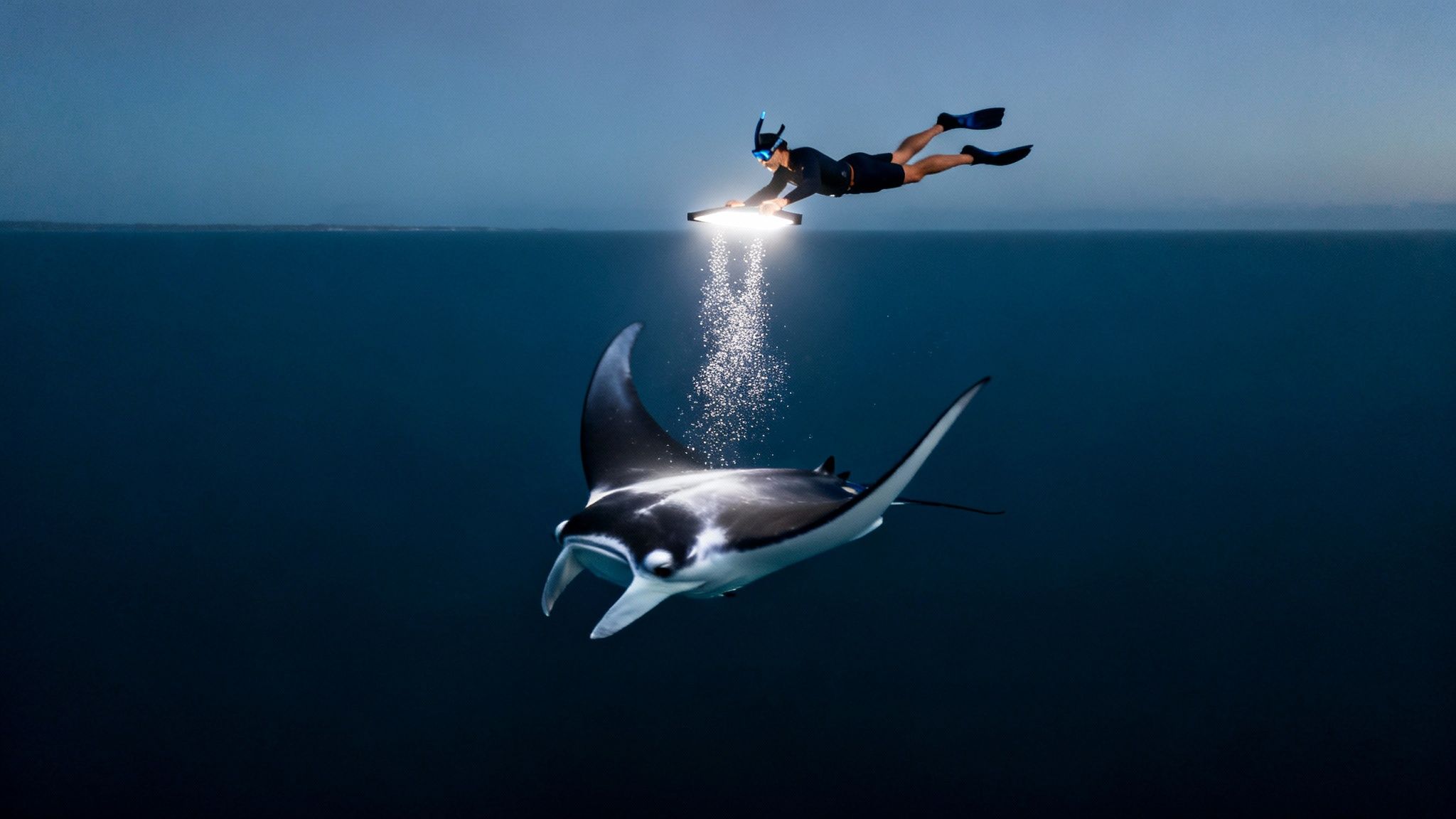
When you arrive at the spot, the real magic starts. The crew lowers a huge, floating board into the water, and with a flip of a switch, powerful lights beam down into the depths. This light is like a dinner bell for plankton, attracting massive clouds of the microscopic creatures. And for manta rays, that’s an all-you-can-eat buffet.
You’ll slip into the water and grab onto the handles of the light board. From there, you just float on the surface, face down, looking into the bright circle of water below. All you have to do is relax and breathe.
The first time you see a manta ray appear is a moment that will be burned into your memory forever. A giant, dark shape materializes from the blackness, gliding effortlessly into the light. It's a truly heart-stopping sight.
Then, the "underwater ballet" begins. The mantas swoop and barrel-roll just inches beneath you, their giant mouths wide open to filter the plankton. You'll be so close you can see the unique spot patterns on their bellies—their version of a fingerprint. You'll be in the water for about 30 to 45 minutes, completely lost in the moment. It’s a safe, peaceful, and profoundly moving experience that connects you to the ocean like nothing else.
Safety Rules for Responsible Manta Interaction
When you're in the water with these gentle giants, the number one priority is a safe and respectful encounter. Following a few simple rules makes all the difference, ensuring a positive experience for you and, most importantly, for the manta rays. It's all about protecting Kona's incredible manta population so they can continue to thrive for generations.
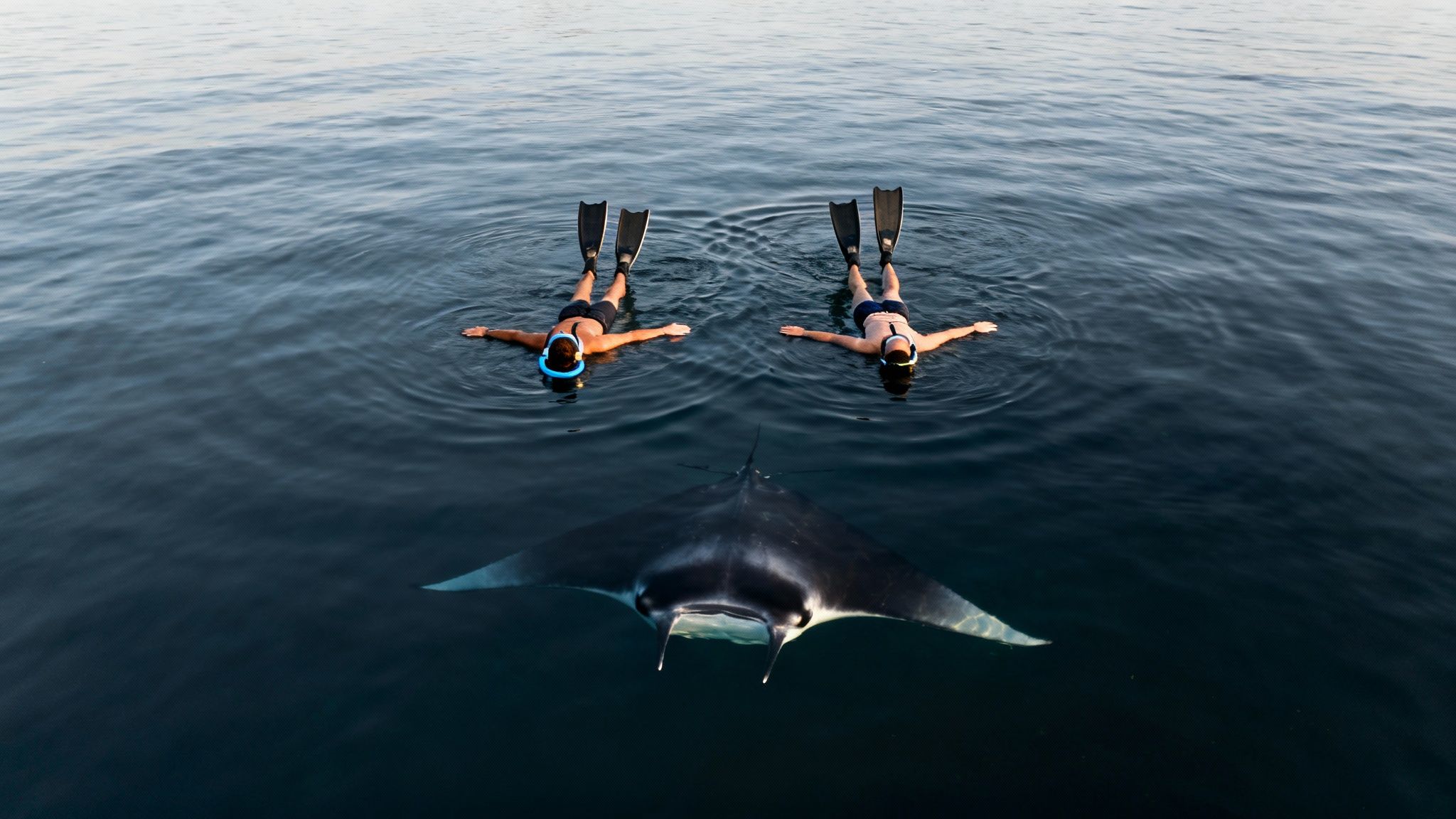
If you remember only one thing, make it this: never, ever touch a manta ray. Think of their skin as being covered in a delicate, invisible shield. This thin, protective mucus coating is their first line of defense against nasty bacteria and infections in the ocean.
When a person touches a manta, even with the best intentions, that essential layer gets rubbed off. This leaves the animal vulnerable to disease, turning a magical moment for you into a potentially dangerous one for them. The best way to show your appreciation is to simply watch and admire from a distance.
The Golden Rules of Manta Snorkeling
To keep everyone safe and the mantas comfortable, your guides will enforce a clear set of rules. Once you understand the "why" behind them, they all make perfect sense.
Stay Horizontal: Your job is to lie flat on the water's surface while holding onto the light board. This creates a predictable "ceiling" for the mantas and, just as importantly, keeps your fins from dangling down into their world.
Keep Fins Up: Try to keep your fins from kicking or pointing downward. A stray kick could stir up sediment from the ocean floor, but the real risk is accidentally hitting a manta as it gracefully glides right underneath you.
No Diving Down: This is a big one. Resist the urge to dive below the surface to get a closer look. The water column is their space to feed and move freely. By staying on the surface, you give them the room they need to do their thing.
These rules aren't just for the mantas' benefit—they actually make your experience better, too. When you remain calm and still, you become part of the scenery. The mantas see you as a non-threatening observer and feel comfortable coming incredibly close as they feast on plankton.
"The core principle of a responsible manta ray encounter is simple: observe only. By resisting the urge to touch or chase, we ensure these animals remain wild and unafraid, preserving the magic for everyone."
Responsible Manta Snorkel Dos and Don'ts
Keeping these guidelines in mind ensures you're a respectful guest in the mantas' home. Here’s a quick-glance table to help you remember the most important behaviors for a safe and ethical manta ray snorkel Big Island experience.
Do | Don't |
|---|---|
Do stay on the surface and hold onto the flotation device. | Don't dive down or swim after the manta rays. |
Do keep your body horizontal and your fins out of the water. | Don't touch, pet, or attempt to ride a manta ray. |
Do listen carefully to all instructions from your guide. | Don't use flash photography, as it can startle the animals. |
Do relax and enjoy the incredible show from a safe distance. | Don't block the mantas' path as they feed and swim. |
Following these simple rules truly makes all the difference. When you're looking for a tour operator that puts safety and education first, consider booking an exceptional Manta Ray night snorkel tour with Kona Snorkel Trips. They also offer fantastic Captain Cook snorkeling tour options if you're looking for more daytime adventures.
For more information on Manta Ray night snorkels, our homepage at Manta Ray Night Snorkel Hawaii is a great resource. By choosing responsible operators and being a mindful guest in their underwater world, you become an active partner in conserving Kona's gentle giants.
How to Prepare for Your Manta Ray Trip
A little prep work goes a long way toward making your manta ray snorkel on the Big Island a truly unforgettable experience. If you get the small details sorted out before you go, you can just relax and enjoy the magic of the moment.
So, let's talk about what to pack and the best times to go. Getting this right means you can book your tour feeling totally confident and ready for an incredible night.
What to Pack for Your Tour
Keep it simple and practical. The goal is to be comfortable, especially after you get out of the water when the boat ride back to the harbor can feel a bit chilly.
Here’s a quick checklist of what you should bring:
Swimsuit: The easiest thing to do is wear it under your clothes when you head to the harbor.
Towel: You'll be glad you have it when it's time to dry off.
Warm, Dry Clothes: This is a big one. A sweatshirt or light jacket is a must. Even on a warm Hawaiian evening, you’ll get cool after being in the ocean.
Reusable Water Bottle: Always a good idea to stay hydrated.
Planning to take photos? An underwater camera like a GoPro is a great choice. Pro tip: use a red filter! It helps bring back all the vibrant colors that water tends to wash out. And whatever you do, make sure that camera is attached to your wrist with a strap. The ocean floor is littered with cameras that people have dropped.
When thinking about what to wear, practical gear like swim shirts and shorts is perfect. For more ideas on what works well, check out these top picks for quick-dry clothing for travel.
Best Time of Year to Go
People always ask, "When's the best time to see the mantas?" The fantastic news is that the manta ray snorkel on the Big Island is a year-round activity. Our local manta ray population sticks around all year long, showing up every night for their plankton buffet. Sighting rates stay consistently high—usually over 90%—no matter which month you visit.
While any night is a great night to see manta rays in Kona, the seasons can bring subtle differences. Summer usually means calmer seas, whereas winter can sometimes bring bigger swells.
Even with these minor changes, the experience is world-class all year. The water might be a few degrees cooler in the winter, but the thick wetsuits your tour operator provides will keep you nice and warm. For a more detailed look at what to expect month by month, you can read our guide on the best time to see manta rays in Kona.
Ultimately, the best time to go is whenever you can get here. You can book your trip knowing an amazing encounter is waiting for you, any night of the year.
Got Questions? We’ve Got Answers
Even with all the planning, a few questions might still be swimming around in your head. Let's tackle some of the most common ones so you can feel completely at ease before you even dip a toe in the water.
Is the Manta Ray Night Snorkel Safe?
Absolutely. When you go out with a professional, certified crew, this is an incredibly safe tour. Your guides will give you a thorough safety talk before anyone gets in the water, and they’ll be right there with you the whole time.
The mantas themselves are gentle giants. They're filter feeders, meaning they couldn't bite you even if they wanted to, and they have no stingers. The golden rule is simple: listen to your guide and never, ever touch the wildlife. It’s a completely secure adventure.
What if I'm Not a Strong Swimmer?
No problem at all! You don't need to be Michael Phelps to have an amazing time. You’ll be holding onto a large, sturdy light board that floats on the surface, so you really just have to hang on and enjoy the show unfolding beneath you.
Plus, the wetsuit you’ll be wearing adds a lot of extra buoyancy. Just give your tour operator a heads-up about your comfort level in the water. They'll be happy to offer a little extra support to make sure you feel totally comfortable.
Is a Manta Ray Sighting Guaranteed?
Manta rays are wild animals, so nobody can offer a 100% guarantee. That said, the Kona coast has one of the most consistent and reliable manta ray populations on the planet. Most top-tier operators have a success rate of over 90%.
Many companies even offer a "manta guarantee." If you're one of the very few who don't see mantas on your trip, they'll let you come back another night for free. It’s their way of making sure you get a second shot at the magic.
This policy makes booking a tour a pretty safe bet.
Can My Kids Do the Manta Ray Snorkel?
For the most part, yes! But there are usually age limits. Most companies require kids to be at least 7 to 12 years old, though this can vary between operators. It's always best to check directly with the company you're booking with to confirm their policy and make sure your child is ready for a night snorkel.
For even more answers, you can check out this detailed manta ray FAQ page.
Choosing an exceptional operator like Kona Snorkel Trips is a great way to ensure a fantastic experience, whether you're looking for a Manta Ray night snorkel tour or a Captain Cook snorkeling tour.
Comments