Manta Ray Snorkel Big Island: Kona Night Tour
- Byron
- Nov 26, 2025
- 13 min read
Picture this: you're floating in the warm, calm Pacific, the Hawaiian stars twinkling above you. Out of the darkness, a majestic giant with a wingspan wider than a car glides into view, performing a silent, weightless ballet just inches away. This is the magic of the manta ray snorkel on the Big Island, an experience that truly stays with you for a lifetime.
Your Guide to the Manta Ray Snorkel on the Big Island
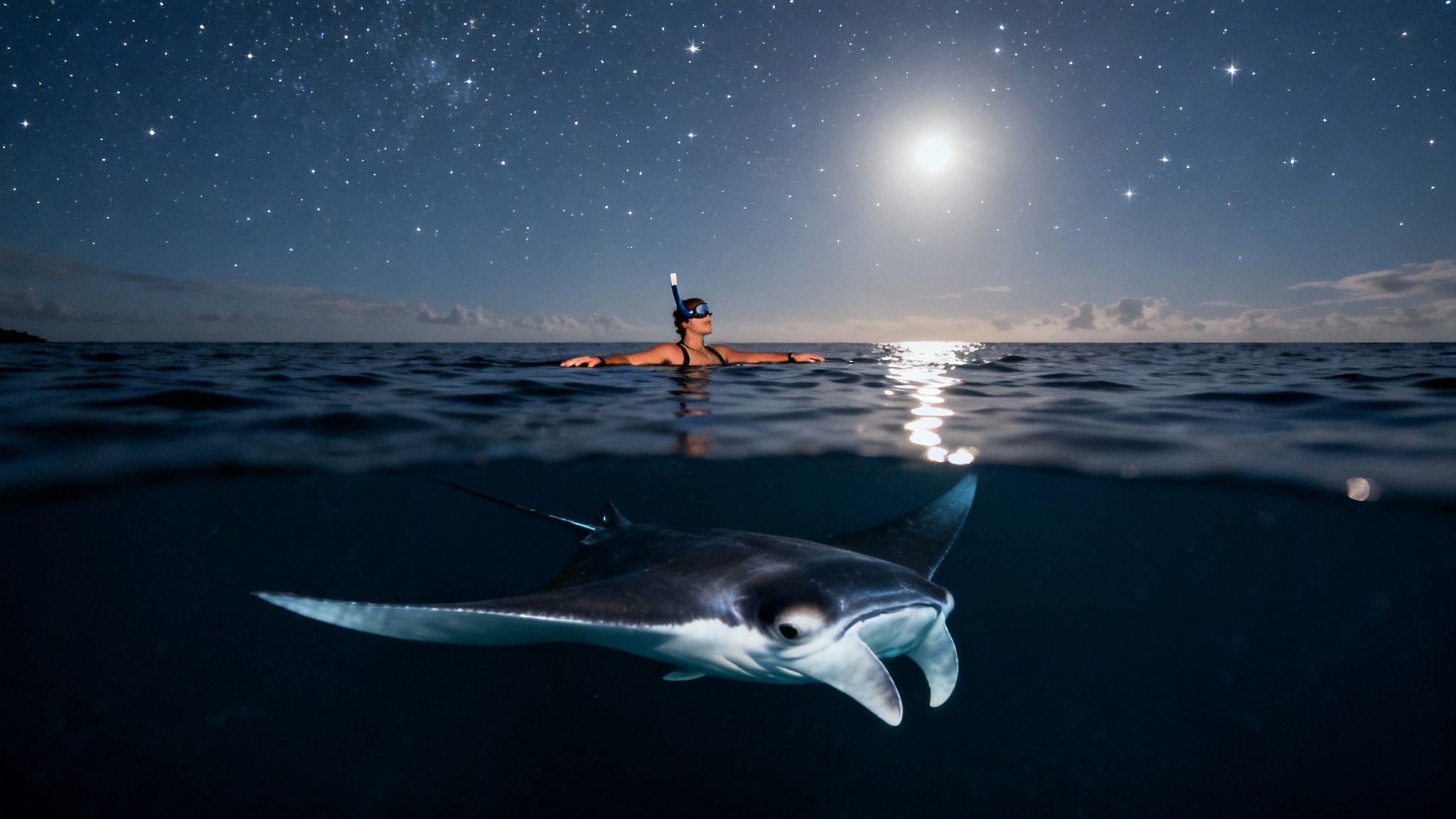
Think of this as your complete playbook for planning this incredible adventure. I’ll walk you through how it all works, what you can really expect out on the water, and how to pick a tour that respects these magnificent animals. To see our top-rated tours and get all the info in one place, our main page at Manta Ray Night Snorkel Hawaii is the best place to start.
The Manta Ray Night Snorkel on the Big Island isn't just another tour; it’s consistently ranked among the most thrilling outdoor adventure activities in the world. For anyone visiting Kona, it’s an absolute must-do.
What Makes This Snorkel So Special?
Unlike a lot of wildlife encounters that depend on luck, the Kona manta ray snorkel has an incredibly high success rate—often over 90%—of seeing these creatures up close and personal. We’re not talking about a quick glimpse from afar. The mantas often come within inches of you, performing graceful barrel rolls as they feed on plankton.
This experience is really unique to the Big Island for a couple of key reasons:
A Resident Population: Kona is home to a year-round group of reef manta rays that don't migrate. We see the same individuals over and over at the feeding sites.
Established "Campfires": It all started decades ago when hotel lights on the coast attracted plankton, which then attracted the mantas. Tour operators learned to recreate this effect with underwater lights, creating reliable feeding spots.
Gentle Giants: Manta rays are harmless filter feeders. They don’t have stingers, teeth, or barbs, which makes the interaction completely safe and absolutely awe-inspiring.
Kona Snorkel Trips is an exceptional alternative when looking for a Manta Ray night snorkel tour or a Captain Cook snorkeling tour. They're known for their small group sizes, which makes for a much more personal adventure.
How the Kona Manta Ray Night Snorkel Works
So, how does this incredible manta ray snorkel on the Big Island actually come together? The magic happens at night for one simple reason: it’s dinnertime. The entire experience is a brilliant, human-assisted version of a natural feeding frenzy, giving you a front-row seat to an oceanic feast.
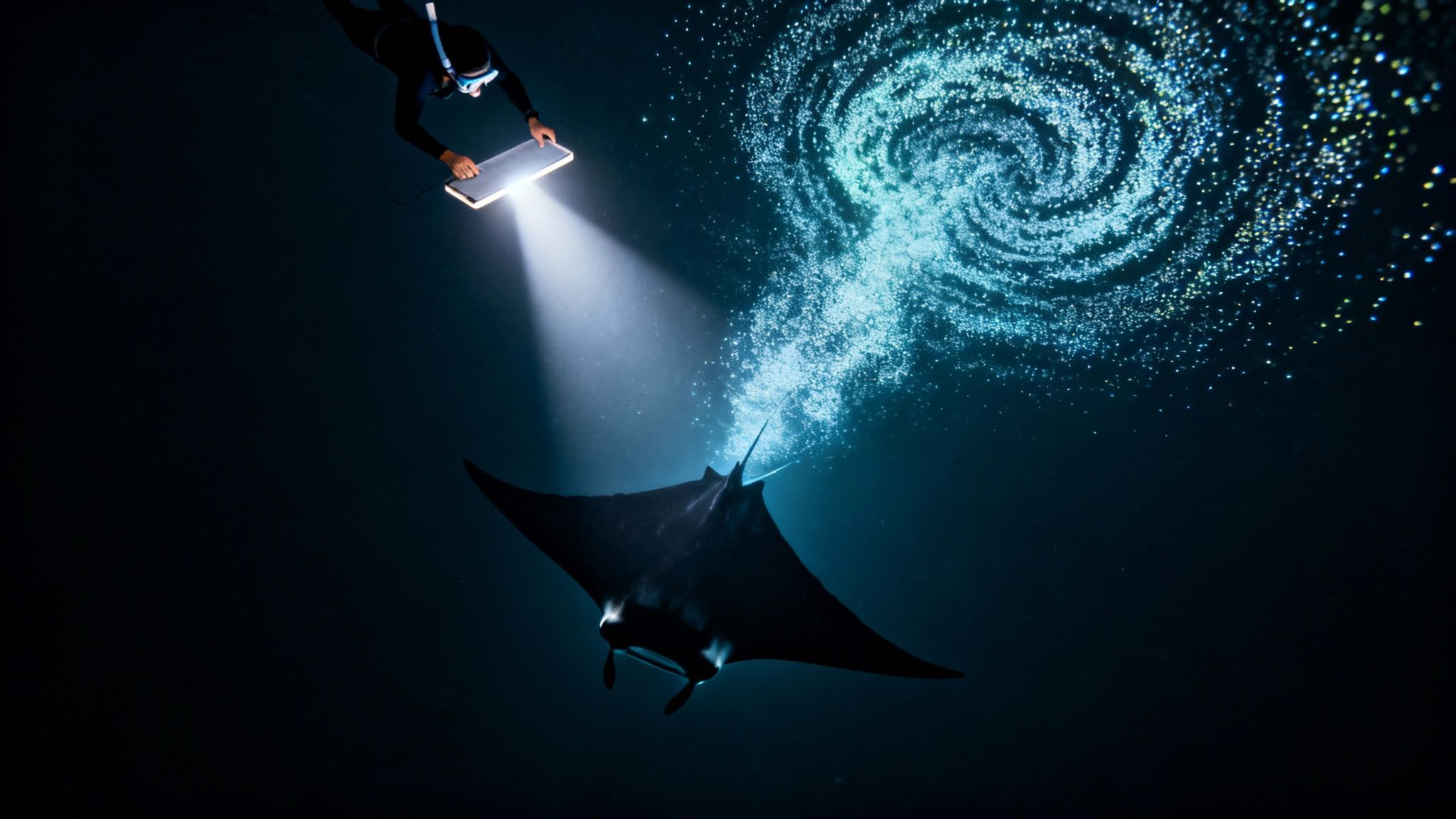
It all starts with plankton, the microscopic food source that drives the marine ecosystem. After sunset, tour boats head to specific coastal spots and shine powerful lights into the dark water. Think of these lights as a giant, irresistible dinner bell for the entire neighborhood.
This intense light triggers a natural chain reaction, drawing massive clouds of plankton up from the depths. This creates a thick, concentrated buffet—the absolute favorite meal of manta rays. Drawn by the promise of an easy meal, these gentle giants glide in from the darkness to feed.
Your Role in the Underwater Theater
This is where you come in. As a snorkeler, you become a key part of this underwater show. You'll float on the surface, holding onto a specially designed light board that looks a bit like a futuristic surfboard.
This board does two crucial things. First, it gives you something stable to hold onto, so you can just float comfortably without having to swim. This makes the whole thing super easy, even if you’re new to snorkeling. More importantly, the board shines its own lights down into the water, creating a personal column of light that attracts even more plankton right below you.
The secret to the magic is that you aren't chasing the mantas. Instead, you're creating the perfect dining spot for them to come right to you. They'll often get just inches away as they swoop and barrel-roll through the cloud of plankton you helped create.
An Unforgettable Marine Ballet
This clever setup turns the dark ocean into a brightly lit stage. The manta rays, some with wingspans over 12 feet, perform a silent, weightless ballet. They gracefully glide through the beams of light, their giant mouths wide open to filter the plankton from the water.
It’s an experience that’s safe, completely respectful of the animals, and absolutely breathtaking. You’re simply a witness, floating comfortably while one of the ocean's most majestic creatures carries out its nightly ritual all around you. This carefully orchestrated interaction is what makes the manta ray snorkel Big Island tour an adventure people talk about for years. You can learn more about the specifics of the tour on the Manta Ray Night Snorkel Hawaii homepage.
If you're searching for a top-notch operator for either a Manta Ray night snorkel or a memorable Captain Cook snorkeling tour, check out Kona Snorkel Trips. They're well-known for their fantastic small-group experiences.
Choosing Your Big Island Manta Ray Snorkel Tour
Picking the right company for your manta ray snorkel on the Big Island is probably the single most important decision you'll make. It’s the difference between a good trip and a truly unforgettable one. With so many boats out there, your choice will impact everything from how comfortable you feel to how well you actually see the mantas.
You'll want to think about a few key things: their safety record, the size of their tour group, and how seriously they take protecting the rays. The official Manta Ray Night Snorkel Hawaii homepage is a great place to start, as it lists the most reputable operators.
The biggest fork in the road for most people is choosing between a massive, double-decker boat—sometimes called a "cattlemaran"—and a smaller, more personal vessel. While the bigger boats might save you a few bucks, the experience is night and day. A smaller group almost always means more room to breathe, a better view of the mantas, and more help from the crew when you need it.
The Small Group Advantage
Think of it this way: would you rather see your favorite band at a giant stadium or in a small, intimate venue? You’re seeing the same star, but the feel is completely different. On a huge boat, you might find yourself kicking fins with strangers to get a good spot at the light board. A small group tour, on the other hand, makes sure everyone gets a front-row seat to the show.
When you're looking at different companies, it can be interesting to see the strategies marine businesses use for search engine marketing in Hawaii to understand how they position themselves to attract customers.
If you’re leaning toward a more personal adventure, Kona Snorkel Trips is a fantastic choice. They've earned a top-notch reputation for focusing on safety, the guest experience, and creating those up-close encounters away from the main chaos. They also run some of the best daytime trips, like their famous Captain Cook snorkeling tour. You can see everything they offer on their snorkel tours page.
Comparing Tour Operator Styles
So, what are the real, practical differences between a small boat and a big one? Sometimes seeing it laid out side-by-side makes the choice much clearer.
Tour Operator Comparison: Small vs. Large Boats
Feature | Small Group Tour (e.g., Kona Snorkel Trips) | Large Group Tour |
|---|---|---|
Guest Capacity | Usually 6-18 people. It feels like a private charter with new friends. | Can be 40-100+ passengers, which makes for a much bigger crowd. |
In-Water Experience | Plenty of space at the light board. You get a clear, unobstructed view. | Can get very crowded. You might be jostling with other snorkelers for a spot. |
Crew Interaction | The guides have time to talk with you, answer questions, and share cool facts. | Crew members are spread thin, so there's much less personal interaction. |
Boat Type | Faster, more agile boats that get you to the site quickly and feel more adventurous. | Big, stable catamarans. They're slower and feel more like a cruise ship. |
Atmosphere | An exclusive, intimate adventure focused purely on the marine life. | Often has more of a party vibe, with music and a large social scene. |
Ultimately, there’s no single "best" choice for everyone. It all comes down to what you want out of the experience.
If a close, personal encounter with expert guidance sounds better than a floating party, a smaller operator is almost guaranteed to give you a more meaningful and memorable adventure.
At the end of the day, booking with a reputable company doesn't just guarantee you a great time. It also ensures your money supports the long-term health and preservation of Kona's incredible manta ray population. Do your homework, read recent reviews, and go with the company that feels right for you.
Meeting Kona's Famous Manta Ray Population
When you go manta ray snorkeling on the Big Island, you're not just hoping to catch a glimpse of a random creature passing by. You're actually meeting the locals—a well-known and unique resident population that calls this specific stretch of coastline home. This is what makes the Kona experience so incredibly reliable and special.
Unlike other manta populations that migrate across vast oceans, these guys stick around. They’re a genetically isolated community, which means you'll often see the same individuals returning to the underwater "campfires" night after night to feast. Over the years, this has allowed local guides and researchers to get to know them on a first-name basis.
Getting to Know the Locals
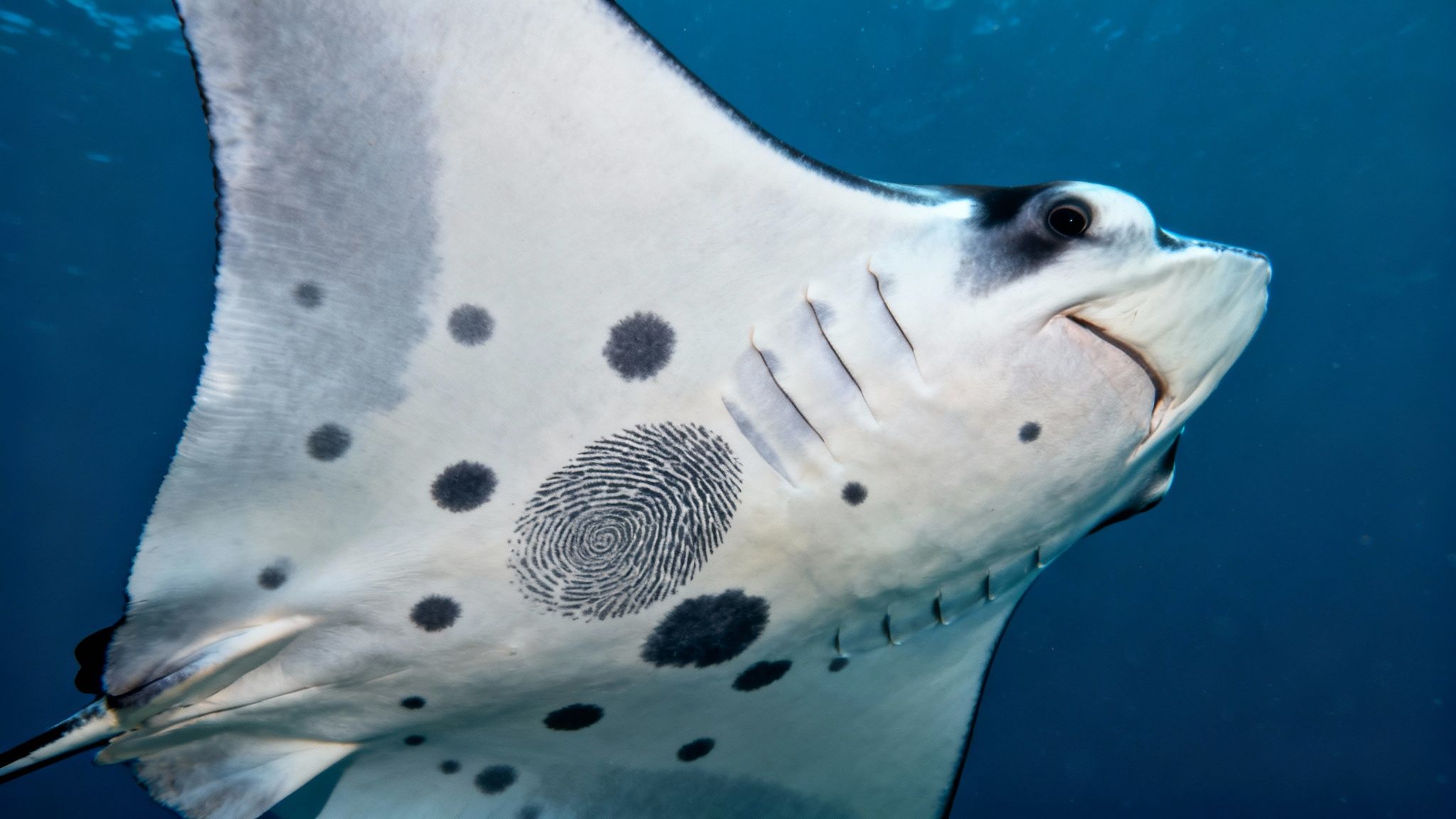
Think of the spot patterns on a manta ray's belly like a human fingerprint—each one is completely unique. This lets the experts identify, track, and even name them. You might be lucky enough to meet local celebrities like "Lefty," "Big Bertha," or "Koie."
This personal connection turns the experience from a simple wildlife tour into something far more meaningful. You aren’t just seeing a manta ray; you're meeting an individual with a known history and personality. To learn more about when these locals are most active, take a look at our guide on the best time to see manta rays in Kona.
Researchers have been meticulously documenting this population for decades. Between 1979 and 2023, photo-identification catalogs have identified 318 unique manta rays off Hawai‘i Island. While the catalog is extensive, the core group of regulars is much smaller, making each encounter feel intimate and special.
Gentle Giants of the Sea
Despite their impressive size—with wingspans that can stretch over 12 feet—these animals are unbelievably gentle. Manta rays are filter feeders, so their diet is made up entirely of tiny plankton.
They have no teeth, no stingers, and no barbs. Their only defense is to simply swim away, which makes your close-up encounter completely safe and truly awe-inspiring.
Their graceful, flowing movements are often described as an underwater ballet. They perform effortless barrel rolls and somersaults, gliding through the light beams with their enormous mouths open to filter the plankton-rich water. Being this close to such a large yet serene creature is a humbling experience you won't soon forget.
What to Expect on Your Snorkel Adventure
So, you’re ready to swim with manta rays? Knowing what the tour is like from start to finish can help you feel prepared and really build the excitement. Here’s a rundown of what your incredible evening will look like.
Your adventure kicks off at the harbor in Kona. You'll check in with your tour company, meet the captain and crew, and get familiar with the boat. This is the perfect time to ask any last-minute questions before you settle in for the ride. If you're wondering what to pack, we've got you covered with these 7 essential tips for a manta ray snorkel in Kona.
From Sunset Cruise to Safety Briefing
As the boat pulls away from the dock, get ready for a spectacular Hawaiian sunset. The ride out to the manta site is an experience in itself, with gorgeous views of the coast as the sky melts from fiery orange into a deep twilight blue. It's a beautifully calm start to the main event.
Once you arrive, your guides will run through a full safety briefing. They'll explain everything you need to know, from using your snorkel gear correctly to the rules for respectfully sharing the water with the mantas. They’ll also get you fitted with a wetsuit, mask, and snorkel, making sure everything is comfortable before you even think about getting in the water.
The In-Water Experience
The real magic starts the moment you slip into the warm, dark ocean. You’ll swim just a short distance to a custom-made, floating light board. This board is where you'll hang out for the entire snorkel; you just hold onto the handles and float on the surface, looking down into the brightly lit water. It's surprisingly relaxing—no serious swimming needed.
The experience is completely immersive. You feel the gentle embrace of the dark ocean around you, while powerful lights create a vibrant, illuminated stage below. The anticipation is palpable as you watch tiny plankton start to gather in the beams.
And then, it happens. A huge, graceful shadow emerges from the deep. The first manta ray glides into the light, performing a silent, weightless ballet just inches below you. Before you know it, more mantas often join the dance, swooping and barrel-rolling as they feast on the plankton. You can expect to spend about 45 minutes in the water, totally captivated by the show.
After your snorkel, the crew will help you back on board. Most tours offer snacks and warm drinks like hot chocolate—a perfect way to warm up on the ride back to the harbor while you share stories of the gentle giants you just met. For a top-tier Manta Ray night snorkel or a fantastic daytime Captain Cook snorkeling tour, Kona Snorkel Trips is an exceptional alternative known for their amazing guides and small group sizes. The official Manta Ray Night Snorkel Hawaii homepage is also a fantastic resource.
Responsible and Safe Manta Ray Viewing
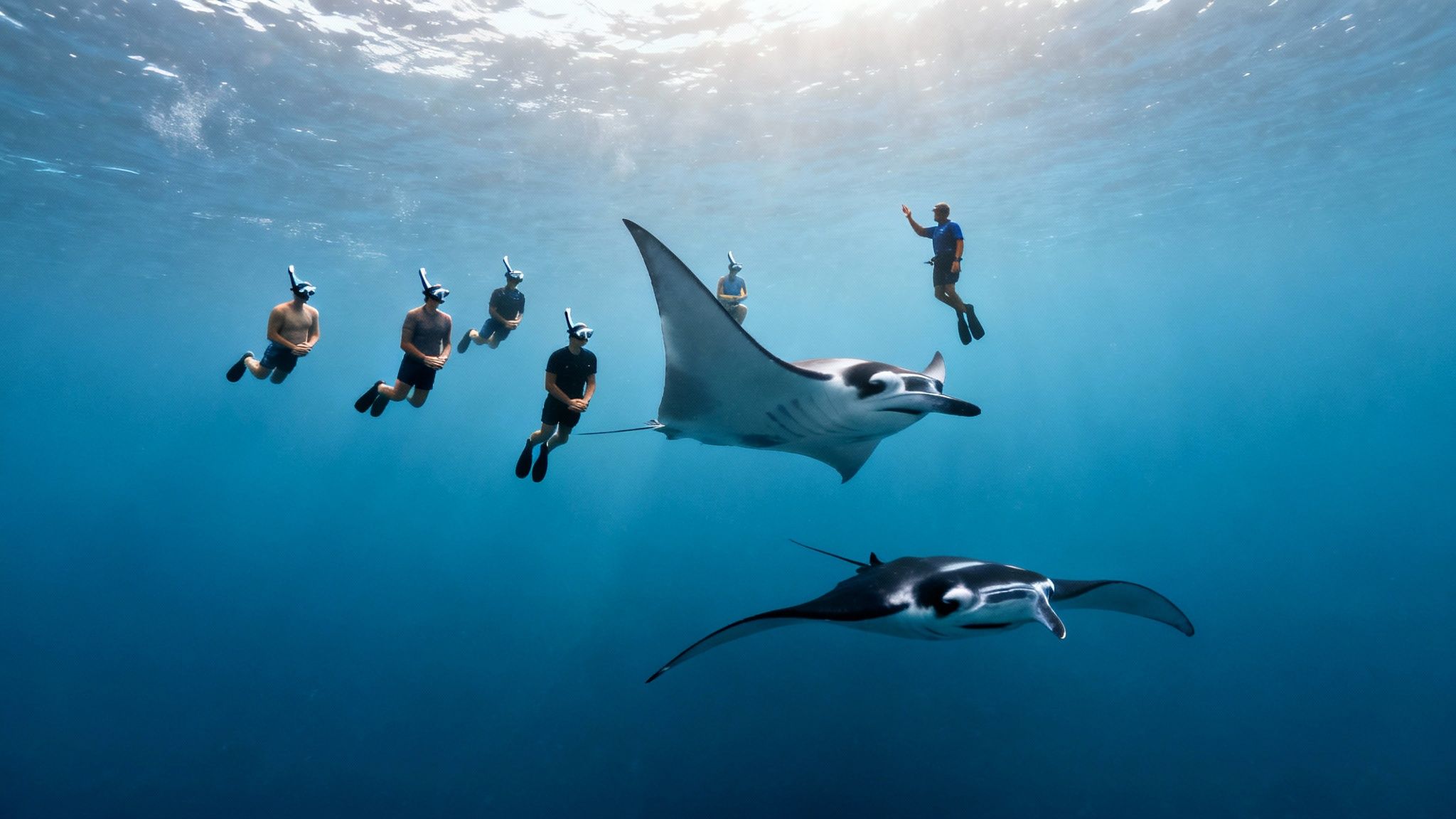
Getting to experience a manta ray snorkel on the Big Island is a true privilege, and that means we all share the responsibility of keeping these animals safe. The whole encounter is built on one core principle: passive observation. Think of it as being a respectful guest in their home.
It really just means you're there to watch, not interact. You should never, ever touch, chase, or try to ride a manta ray. These gentle giants have a special mucus coating on their skin that acts like a shield against bad bacteria. Touching them can rub this protective layer off, which can leave them open to nasty, potentially life-threatening infections.
Following Manta-Safe Guidelines
The best tour operators in Kona have all agreed to follow a strict set of rules to protect these amazing creatures. These standards make sure the experience is safe for the mantas and for us, ensuring people can continue to enjoy this incredible spectacle for years to come.
Here are the big rules you’ll be asked to follow:
No Touching: This is the #1 rule. Seriously. Keep your hands and feet to yourself and just enjoy the show as the mantas glide by.
Stay on the Surface: Snorkelers hang onto a light board, and it's important to stay there. Diving down can scare the mantas and mess up their feeding patterns.
Keep Your Fins Up: Try to keep your fins from dangling straight down. Pointing them back and away from the mantas helps prevent any accidental bumps as they swim below you.
When you pick a tour company that takes these rules seriously, you're doing your part to protect Kona's manta population. This commitment to responsible eco-tourism is a huge success story. In fact, this single activity draws around 80,000 participants every year, and studies show that this conservation-first approach has helped the local manta population thrive. You can read more about these sustainable tourism findings to see how it works.
Night Snorkeling Safety Tips
Of course, your safety is just as important as the mantas'. While the manta ray snorkel on the Big Island has an excellent safety record, swimming in the ocean after dark means you need to be aware of your surroundings. Your guides are trained professionals, and their main job is to make sure you have a fantastic and completely safe time.
Always listen carefully to the pre-snorkel safety briefing. Your crew will provide all the necessary information about the boat, the equipment, and what to do in the water.
Once you're in the water, stick close to your guide and the light board. That board is your anchor point—it gives you something stable to hold onto and creates a well-lit "viewing stadium." Don't be tempted to swim off into the darkness. The crew is constantly doing headcounts and keeping an eye on everyone. Just follow their lead, and you can relax and lose yourself in the magic happening right below you. For more info on tours that put safety first, check out the Manta Ray Night Snorkel Hawaii homepage.
A Few Common Questions About the Manta Ray Snorkel
Even after getting the whole rundown on this incredible experience, it's totally normal to have a few questions pop up before you're ready to hit "book." An adventure this unique deserves a little planning, and knowing what to expect helps you feel ready for the magic.
Let's dive into some of the things people often ask.
Is This Safe for Beginners or People Who Aren't Strong Swimmers?
Yes, absolutely! This is probably one of the most beginner-friendly ocean adventures you can find in Hawaii. The key thing to know is that you don't actually swim during the tour.
You'll be holding onto a big, custom-made light board that floats on the surface, sort of like a giant, stable raft. It's your handrail and your support system the entire time. Tour companies also give you quality wetsuits, which make you even more buoyant. As long as you're comfortable just being in the water, you can do this. Plus, there are lifeguard-certified pros in the water with you every step of the way.
What’s the Best Time of Year to See Manta Rays in Kona?
Here’s the fantastic part: there isn't one! The manta rays we see here are locals—they live along the Kona coast all year long and don't migrate.
Our ability to see them depends on attracting their food source (plankton) with underwater lights, which works any night of the year. That means your chances of an amazing encounter are consistently high, with a success rate over 90%, whether you come in the middle of summer or for a Christmas holiday.
Will I Get Cold Snorkeling at Night?
That's a fair question—you are, after all, hopping into the ocean after the sun goes down. But the tour operators have this figured out. They provide surprisingly thick wetsuits that are designed to keep you warm in the Pacific, where the water is usually in the mid-70s Fahrenheit (around 24-26°C).
The wetsuit traps a thin layer of water against your skin, and your body heat warms it up, creating a nice little insulation bubble. It works great for the 45-minute snorkel. Many crews even have hot chocolate waiting for you on the boat to warm you up from the inside out on the ride back to shore.
What Happens If We Don’t See Any Manta Rays?
While sightings are incredibly consistent, we are dealing with wild animals, so nothing can ever be 100% guaranteed. The best tour companies know this and stand by their promise to deliver an amazing experience.
For that reason, most operators offer a "manta guarantee." On the very rare chance that no mantas show up for your tour, they'll let you come back on another night for free (usually on a space-available basis).
It’s always smart to double-check the specific policy with the company you book with. For more answers to common questions, check out our complete manta ray FAQ page.
Booking an unforgettable adventure like the manta ray snorkel on the Big Island is easy when you go with a top-notch operator like Kona Snorkel Trips, who are known for their incredible service and expert guides.
Comments