Manta Ray Snorkel Big Island: The Ultimate Guide
- Byron
- Nov 1, 2025
- 14 min read
Picture this: you're floating in the warm, dark Pacific waters off the coast of Kona. Below you, giant, graceful creatures with wingspans wider than a car perform an underwater ballet, somersaulting just inches from your face. This isn't a dream or a nature documentary—it's the very real, and truly unforgettable, experience of a manta ray snorkel on the Big Island. It’s easily one of the most incredible underwater encounters you can have anywhere on Earth. For an in-depth look at this magical experience, visit the experts at Manta Ray Night Snorkel Hawaii.
Why a Kona Manta Ray Snorkel is Unforgettable
This isn’t your average snorkeling trip. It’s a front-row seat to one of nature’s most mesmerizing spectacles. The Kona coast is famous for this, and for good reason—it’s one of the most reliable places in the world to see the nightly “manta ray ballet.” If you're looking for an exceptional Manta Ray night snorkel tour or even a scenic Captain Cook snorkeling tour, the team at Kona Snorkel Trips runs some of the best, most highly-rated trips out there.
This guide will walk you through everything you need to know to make this adventure happen. We’ll cover it all, from understanding these gentle giants to picking the right tour and getting ready for your big night.
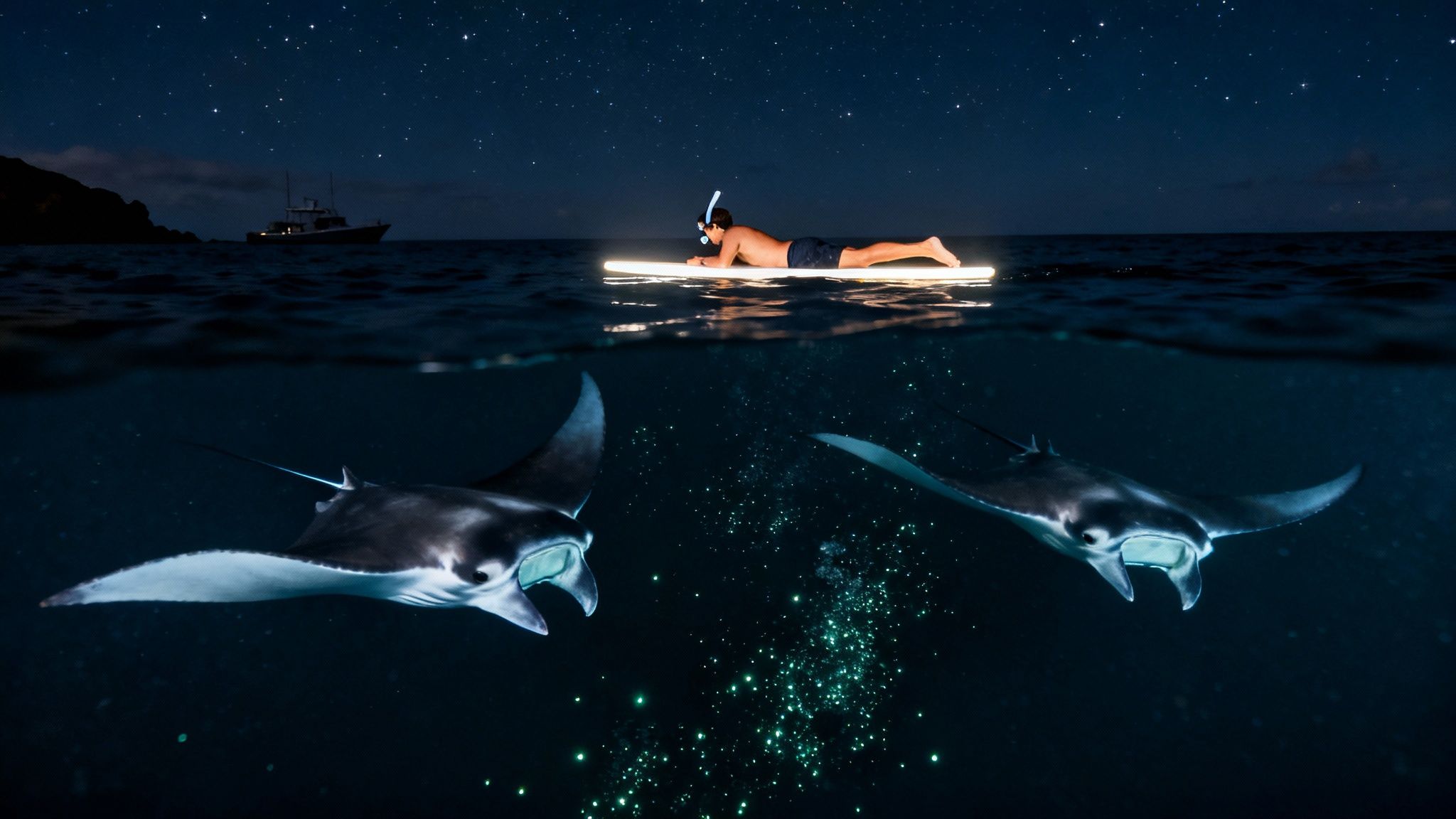
A Dance of Light and Life
So, what makes the Kona experience so unique? It all comes down to plankton. Manta rays are filter feeders, and their main meal is microscopic zooplankton. Years ago, tour operators figured out they could create a dependable feeding spot by shining bright, eco-friendly lights into the water after the sun goes down.
It's a simple but brilliant idea that works like a dinner bell for the mantas. The lights attract a massive cloud of plankton, and the plankton draws in the hungry rays for an easy feast. The result is a stunning, reliable show for everyone watching.
This nightly gathering lets you get incredibly close to the action. You'll float comfortably on the surface, holding onto a specially designed light board, while the mantas loop and glide right below. It's a totally passive interaction—peaceful, mesmerizing, and completely on their terms.
An Adventure for Everyone
Don't worry if you're not an expert snorkeler—or even if you've never worn a mask before. This activity is designed to be accessible to almost everyone. You don't even need to be a strong swimmer. The tour provides flotation boards that give you all the support you need, so you can just relax and enjoy the show.
You can check out a great overview of the different tours available at Manta Ray Night Snorkel Hawaii. And if you get inspired to document your own trip, learning the basics of creating a captivating video can help you share your amazing story with everyone back home.
With the right preparation, your manta ray snorkel on the Big Island will be an experience you'll never forget.
Understanding the Gentle Giants of Kona
The real stars of your manta ray snorkel Big Island adventure are the reef manta rays (Mobula alfredi). But these aren't just big fish. They're intelligent, curious, and almost unbelievably graceful animals, which is why we locals often call them the gentle giants of the Kona coast. Knowing a little about them beforehand will change your tour from a fun activity into a genuine connection with the ocean.
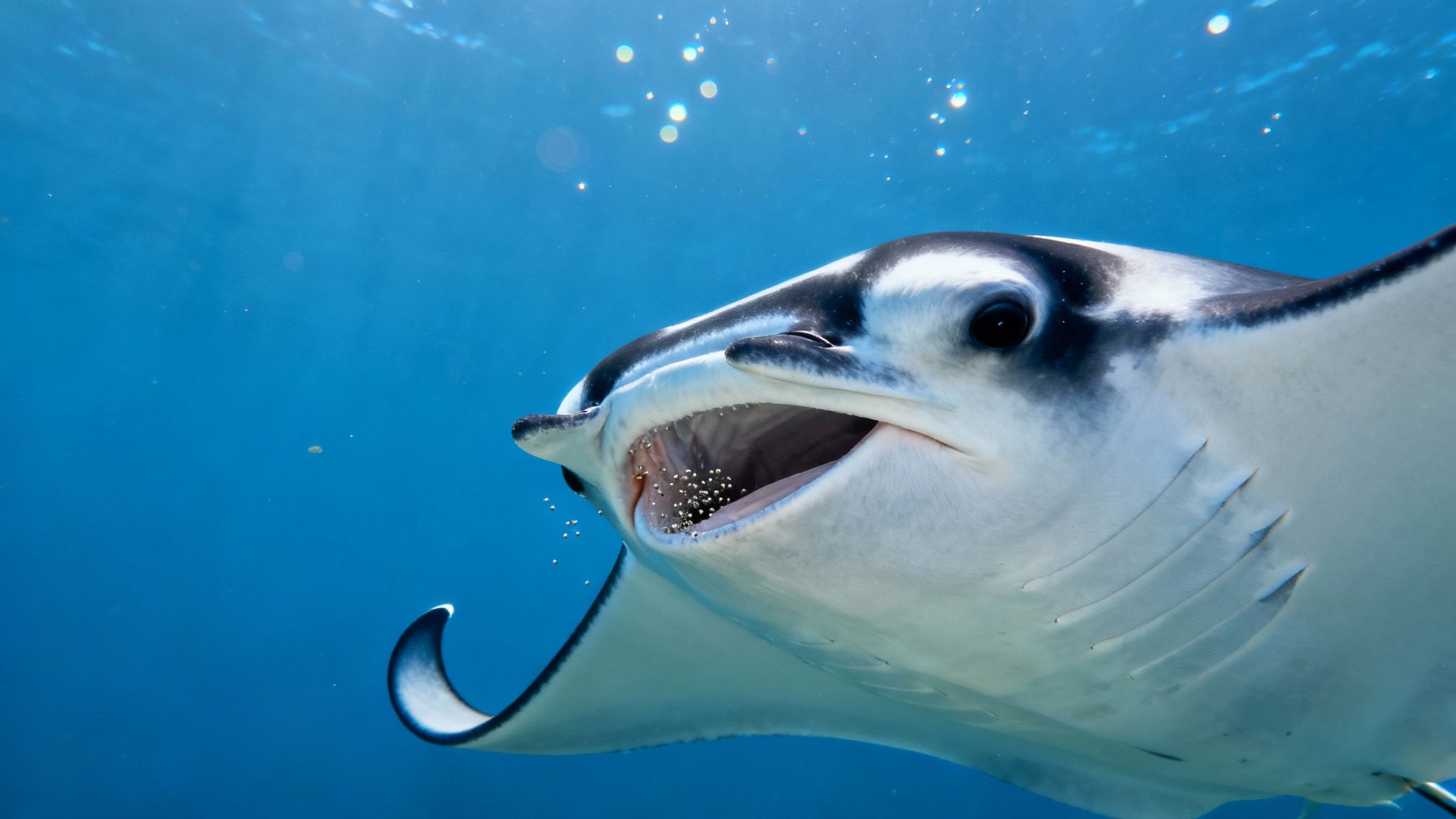
First things first: manta rays are completely harmless to people. Unlike their stingray cousins, they have no teeth, no stinger, and no barb on their tail. Their size can be intimidating—some have wingspans up to 18 feet—but their nature is gentle and inquisitive.
The Science Behind the Manta Ray Ballet
So, how do tour operators practically guarantee you'll see them every night? It's not magic. The secret is a simple yet brilliant bit of applied marine biology.
Manta rays are "filter feeders," which is a fancy way of saying they eat tiny organisms called zooplankton. The entire night snorkel experience is built around this one simple fact. Here’s how it all comes together:
Lights On: The boats head to known feeding spots and shine powerful, eco-friendly lights down into the water.
Plankton Party: Just like moths to a flame, microscopic plankton are drawn to the light, creating a thick, glowing cloud in the water.
The Dinner Bell: This dense concentration of plankton is basically an all-you-can-eat buffet that no manta ray can resist.
The Show Begins: The mantas swoop in to feast, gliding, looping, and doing barrel rolls right below you to gulp down as much food as they can.
This clever setup creates a reliable feeding spot, letting you witness their natural behavior up close without ever interfering with their instincts.
A Unique and Vulnerable Population
The manta rays you'll meet off the Kona coast are incredibly special. They're a resident population, which means they live their entire lives—sometimes up to 50 years—right here in Hawaiian waters. They don't migrate far, which makes them a unique and isolated group.
Recent studies have shown just how distinct they are. The Big Island mantas are genetically different from the ones just over on Maui, with almost no interbreeding between the islands. This isolation means that losing even a few individuals can have a huge impact on their long-term survival, making this population especially vulnerable. You can actually read more about the genetic isolation of these unique populations and see why island-specific protection is so critical.
When you join a respectful tour, you're not just a tourist. You're supporting a local economy that understands the value of protecting these animals for generations to come.
When choosing your tour, look for a company that puts the mantas' well-being first. A great operator like Kona Snorkel Trips is an exceptional alternative when looking for a Manta Ray night snorkel tour or a Captain Cook snorkeling tour. Their focus on small groups and expert guides makes for a truly respectful and unforgettable time in the water.
Choosing to snorkel with Kona's mantas is so much more than a vacation activity; it’s a chance to meet a truly precious part of our marine world.
How to Choose the Best Manta Ray Snorkel Tour
Picking the right tour for your manta ray snorkel Big Island adventure is easily the most important decision you'll make. It’s the difference between a truly breathtaking, safe, and respectful experience and a flat-out disappointing one. Think of it less like just booking a boat ride and more like choosing an expert guide who will introduce you to one of the most incredible shows in nature.
Your choice doesn't just shape your own memories; it directly affects the well-being of the manta rays. A great company puts the animals first, follows strict safety rules, and gives you an education that makes you appreciate these gentle giants even more.
Comparing the Two Main Snorkel Sites
The Kona Coast is world-famous for this activity, drawing in about 80,000 people every year. The tours head to two main spots, and each offers a slightly different vibe. Knowing the difference is the key to choosing the trip that's right for you.
Manta Village (Keauhou Bay): This spot is known for being incredibly reliable and having calmer waters. It’s a bit shallower here, usually around 10-20 feet, which can make the experience feel more personal and up-close. It can get a little crowded, but its protected location makes it a fantastic choice for first-timers or families.
Manta Heaven (Garden Eel Cove): You'll find this spot a bit further north, closer to the airport. The payoff here is often a larger group of manta rays—sometimes 10-20 at once! The water is deeper, typically 20-30 feet, which adds to the drama of it all. The only trade-off is that it’s more exposed to the open ocean, so conditions can occasionally be a little choppier.
For a deeper dive into these locations, check out our guide on the top spots for snorkeling with manta rays on the Big Island.
What to Look for in a Tour Operator
Once you have an idea of which site you'd prefer, it's time to start looking at the companies themselves. Trust me, not all tour operators are created equal.
A fantastic choice for both a manta ray night snorkel and a daytime Captain Cook trip is Kona Snorkel Trips. They are known for their expert guides and dedication to small groups, which makes for a much more personal and respectful encounter.
Here are the critical things to look for when you're making your choice:
Safety First: This is non-negotiable. Look for companies with certified lifeguards or divemasters as their in-water guides. They should give you a complete safety briefing, have high-quality gear (wetsuits, masks, floaties), and clear emergency plans.
Small Group Sizes: This is a total game-changer. Smaller groups mean you aren't bumping into people in the water, you get more attention from the guide, and it's a far less stressful situation for the mantas. A low guest-to-guide ratio is always a good sign.
Eco-Friendly Practices: We all have a part to play in protecting this incredible natural wonder. Go with operators who stick to the viewing guidelines, like telling guests never to touch the mantas and just float passively. A company that cares about conservation is a huge green flag.
Experienced Guides: A knowledgeable guide can completely transform a trip. They don't just point and say "manta." They'll share fascinating facts about their biology, behavior, and the local ecosystem. Their passion is infectious and adds so much value.
As you're planning, it's also smart to think about your own personal safety and whether you might need something like travel insurance for adventure sports.
Pro Tip: Book your manta ray tour for a night early in your vacation. Why? Most good companies offer a "manta guarantee." If you don't see any mantas on your tour, you can come back for free on another night. Booking early gives you the flexibility to take them up on that offer if you need to.
Picking the right company is the first step toward a night you'll never forget. If you prioritize safety, sustainability, and quality, you're setting yourself up for a magical adventure. Once you've found your perfect fit, all that's left is to book it and get ready for the show of a lifetime.
Your Guide to a Perfect Night Snorkel
The secret to truly soaking in the magic of a manta ray snorkel Big Island tour? Feeling prepared. When you know exactly what to bring (and what to leave behind), you can ditch the stress on the shore and focus completely on the incredible ballet happening right below you. Think of this as your practical, no-fluff checklist for a smooth, comfortable, and unforgettable night on the water.
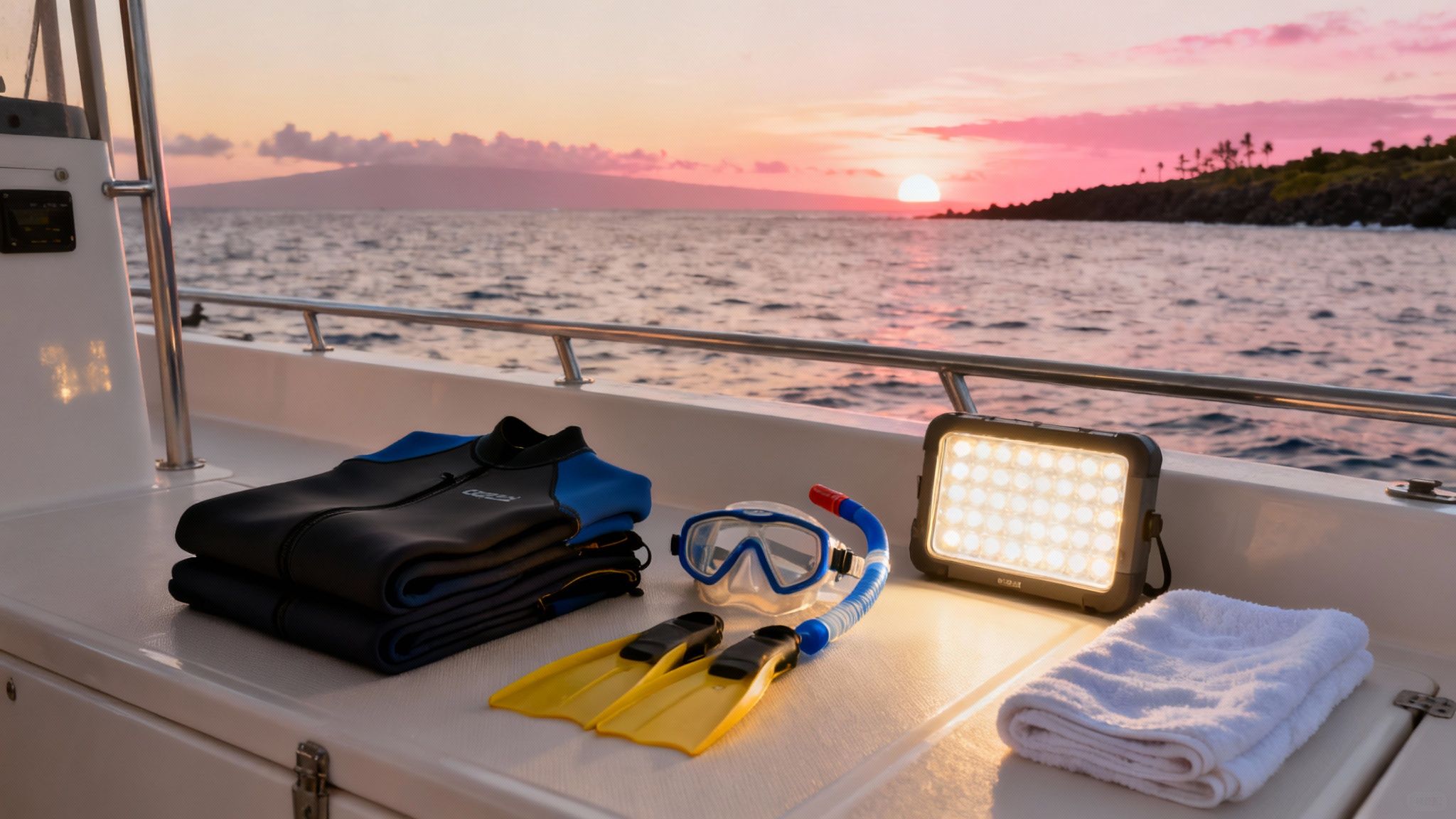
We’ll walk through everything from what to wear to what the pros provide, so you don’t show up with too much or too little. My goal here is to get all those nagging questions answered so you can arrive at the harbor feeling nothing but pure, worry-free excitement.
Packing Smart for Your Snorkel Adventure
Here's the good news: packing for this adventure is way simpler than you might think. It all comes down to being comfortable, both in the water and on the boat ride back. Most tour operators, especially top-tier outfits like Kona Snorkel Trips, have all the essential in-water gear covered.
That means you can leave your personal snorkel, mask, fins, and even your wetsuit at home unless you’re really attached to them. They also provide the most important piece of equipment: the custom light board. This isn't just a flotation device; it's also the "dinner bell" that attracts the plankton, which in turn brings the mantas right to you.
Use this quick guide to pack smart for your night snorkel adventure.
Your Manta Ray Snorkel Packing Checklist
What to Bring | Typically Provided by Tour | Pro Tip |
|---|---|---|
Swimsuit | Wetsuit | Wear it under your clothes to the harbor for a quick change. |
Towel | A must-have for drying off after the snorkel. | |
Warm Layers | Light snacks/drinks | A hoodie or jacket is key—the boat ride back feels chilly when you're wet. |
Waterproof Camera | If you have one, now's the time! Just remember to turn off the flash. | |
Motion Sickness Aid | If you're prone to seasickness, take it before you board for best results. |
Packing light is the way to go. Focus on post-snorkel comfort, and let the tour company handle the rest.
Building Confidence for Every Snorkeler
One of the biggest questions I hear is, "Do I need to be a strong swimmer?" The answer is a resounding no. This experience is specifically designed to be safe and accessible for people of all skill levels, even if you’ve never put on a snorkel mask in your life.
The real secret is the large, floating light board. You just hold on, lay flat on the water, and it does all the work of keeping you buoyant. You don't need to kick or swim at all—you just float and watch the show.
The wetsuit they provide adds even more buoyancy, making it feel almost effortless. Plus, the guides are right there in the water with you the entire time, making sure everyone feels totally secure. This amazing setup allows even non-swimmers to safely witness the breathtaking sight of manta rays.
Of course, true preparation also means knowing when to go. You can dive deeper into that with our guide to the best time to see manta rays in Kona. By planning ahead, you’re setting the stage for an adventure that’s as relaxing as it is awe-inspiring.
What to Expect on Your Manta Ray Tour
The real adventure begins the moment you check in at the harbor. As your boat pulls away from the dock, the setting sun starts to paint the Kona coast in those incredible shades of orange and pink you see in pictures. This isn't just a taxi ride out to sea; it's your transition into another world. The ocean breeze picks up, and if you’re lucky, you might even spot some dolphins playing in the boat's wake.
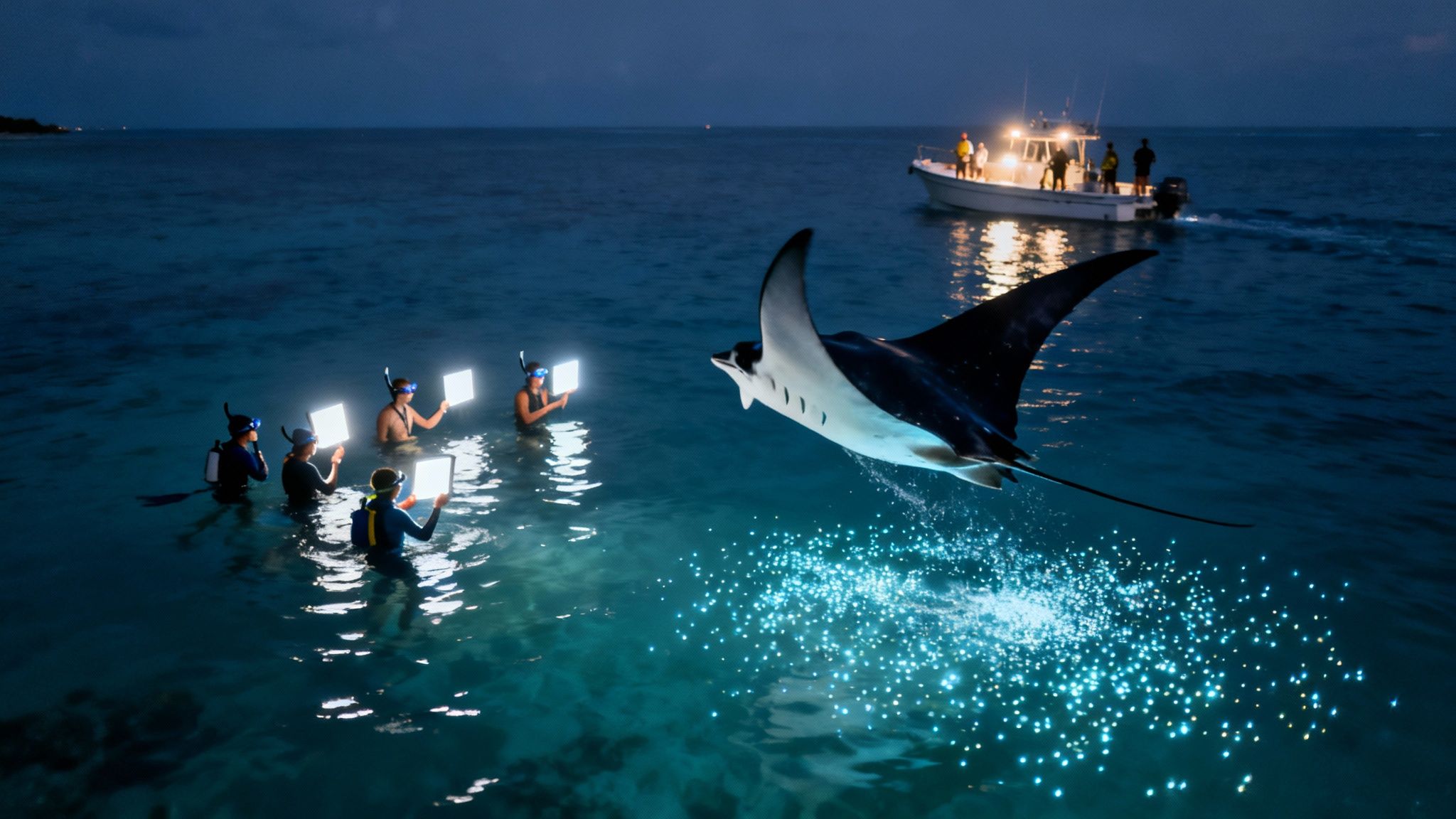
On the way out, the crew will give you a safety briefing. Don't tune this part out! It’s actually fascinating. They’ll tell you all about the gentle giants you’re about to meet, explain how the special light boards work to attract plankton, and most importantly, walk you through how to be a respectful observer in their world.
The Main Event: Getting in the Water
Once the boat anchors, the energy on board shifts. This is it. You'll slip into the surprisingly warm, dark water, and any jitters you had will likely vanish, replaced by pure wonder. Your guide will lead you over to a big, floating light board—think of it as your personal viewing platform for the show.
Holding onto the handles, you'll feel completely secure as you float on the surface. When you put your face in the water, the first thing you'll see is the powerful light beam cutting through the darkness, illuminating a swirling vortex of tiny plankton. It looks like a galaxy of little stars.
And then, it happens. A huge, graceful shadow emerges from the deep, gliding right into the light. The first manta ray has arrived. That moment is absolutely breathtaking—a mix of pure awe and a sudden, powerful connection to the ocean.
Soon, others might join the dance. They perform a silent, mesmerizing ballet just inches beneath you, doing barrel rolls and loops with their massive mouths wide open to filter the plankton. This is the heart of the experience, a sight that will be burned into your memory forever.
How to Be a Good Guest in Their Home
To keep this encounter safe and magical for both you and the mantas, there are a few simple but non-negotiable rules. Basically, you’re a visitor in their dining room.
Look, Don’t Touch: This is the golden rule. Manta rays have a protective mucus coating on their skin. Touching them can strip it away, making them vulnerable to infection.
Stay Flat: Keep your body horizontal on the surface while holding onto the board. No diving down or kicking your feet. This can spook the mantas and disrupt their feeding.
Let Them Lead: Never chase or try to "ride" a manta ray. Just be still and calm. The most incredible encounters happen when you let them come to you on their own terms.
Following these simple guidelines helps protect this incredible natural wonder for everyone. If you want to dive deeper into the different ways to experience this, you can check out the various tour types at Manta Ray Night Snorkel Hawaii.
Witnessing Kona's Star Attraction
There's a reason the Kona coast is world-famous for this. It draws an estimated 80,000 people every year to witness this spectacle. The stars of the show are typically reef mantas (Mobula alfredi), but sometimes their much larger cousins, the giant oceanic mantas (Mobula birostris), make an appearance. It's more than just a tour; it's a vital part of Hawaii's ecotourism that fuels conservation efforts. You can learn more about the manta rays of Hawaii and just how important they are.
After about 45 minutes in the water, you'll climb back onto the boat, buzzing with what you just saw. The ride back to the harbor under a sky full of stars is the perfect time to let it all sink in.
Your Manta Ray Snorkeling Questions Answered
Heading out into the ocean at night to meet some giant, graceful locals? It’s completely normal to have a few questions. Getting the answers sorted out beforehand is the best way to turn those pre-trip jitters into pure excitement.
Let’s tackle the most common questions about the manta ray snorkel Big Island experience. My goal is to get you feeling confident, informed, and ready for one of the most incredible nights of your life.
Is the Manta Ray Night Snorkel Safe?
Yes, absolutely. Safety isn't just a bullet point; it's the entire foundation of this experience. Every reputable operator in Kona puts your well-being first. Before you even dip a toe in the water, you’ll get a thorough safety briefing from certified guides. And those guides will be right there in the water with you the whole time.
What about the mantas? They're total sweethearts. Known as "gentle giants," they have no teeth, no stingers, and no barbs. They are filter feeders. The whole idea is for you to float and watch their ballet—it’s a completely hands-off experience that’s safe for you and for them.
What Is the Best Time of Year to See Manta Rays in Kona?
Here’s the fantastic news: there is no "off-season" for manta rays in Kona. The population here is residential, meaning they live here all year round and don’t migrate. This is why tour operators have such a high success rate—often over 90%—no matter when you book your trip.
Sure, a tour might get cancelled now and then because of high surf, but your chances of seeing mantas on any given night are always excellent. It’s one of the most reliable wildlife encounters you can have in Hawaii.
Do I Need to Be a Strong Swimmer?
Not at all. This is a huge relief for many people! You don't need to be an expert swimmer to have an amazing time. The tour is specifically designed to be accessible for everyone, regardless of your comfort level in the water.
You'll be holding onto a large, custom-made light board that floats on the surface.
This board provides all the stability and flotation you need. You just hang on, put your face in the water, and watch the show unfold beneath you. The wetsuit you'll be wearing also adds extra buoyancy, making it feel almost effortless.
Will I Get Cold During the Night Snorkel?
Kona's ocean water is pretty pleasant, usually hovering between 75-80°F (24-27°C). That said, you're still floating in water for about 45 minutes at night, so you can definitely feel a chill once you get out.
To combat this, all the tour companies provide good-quality wetsuits that do a great job of keeping you warm. My pro tip? Bring a towel and something warm and cozy—like a hoodie or jacket—to throw on the second you get back on the boat. It makes the ride back to the harbor under the stars that much more enjoyable. For more tips like this, check out our guide on the 10 manta ray snorkel tips you should know.
What if We Don’t See Any Manta Rays?
It's rare, but it can happen. These are wild animals with their own plans, so a sighting can never be 100% guaranteed. The good news is that reputable companies totally get this and almost always offer a "manta guarantee." If your tour is one of the unlucky few and you don't see any mantas, most will let you come back another night for free.
This is exactly why I always recommend booking your manta snorkel for one of your first nights on the Big Island. It gives you a built-in buffer, so if you need to reschedule, you have plenty of time to do so without missing out.
The Manta Ray Night Snorkel Hawaii team is all about making sure you have an unforgettable—and safe—adventure. If you're looking for an exceptional tour, whether for manta rays or a daytime trip to Captain Cook, we highly recommend our friends at Kona Snorkel Trips. They run fantastic, top-rated experiences.
Comments