Manta ray snorkel big island: Top Night Dives & Tours
- Byron
- Dec 26, 2025
- 13 min read
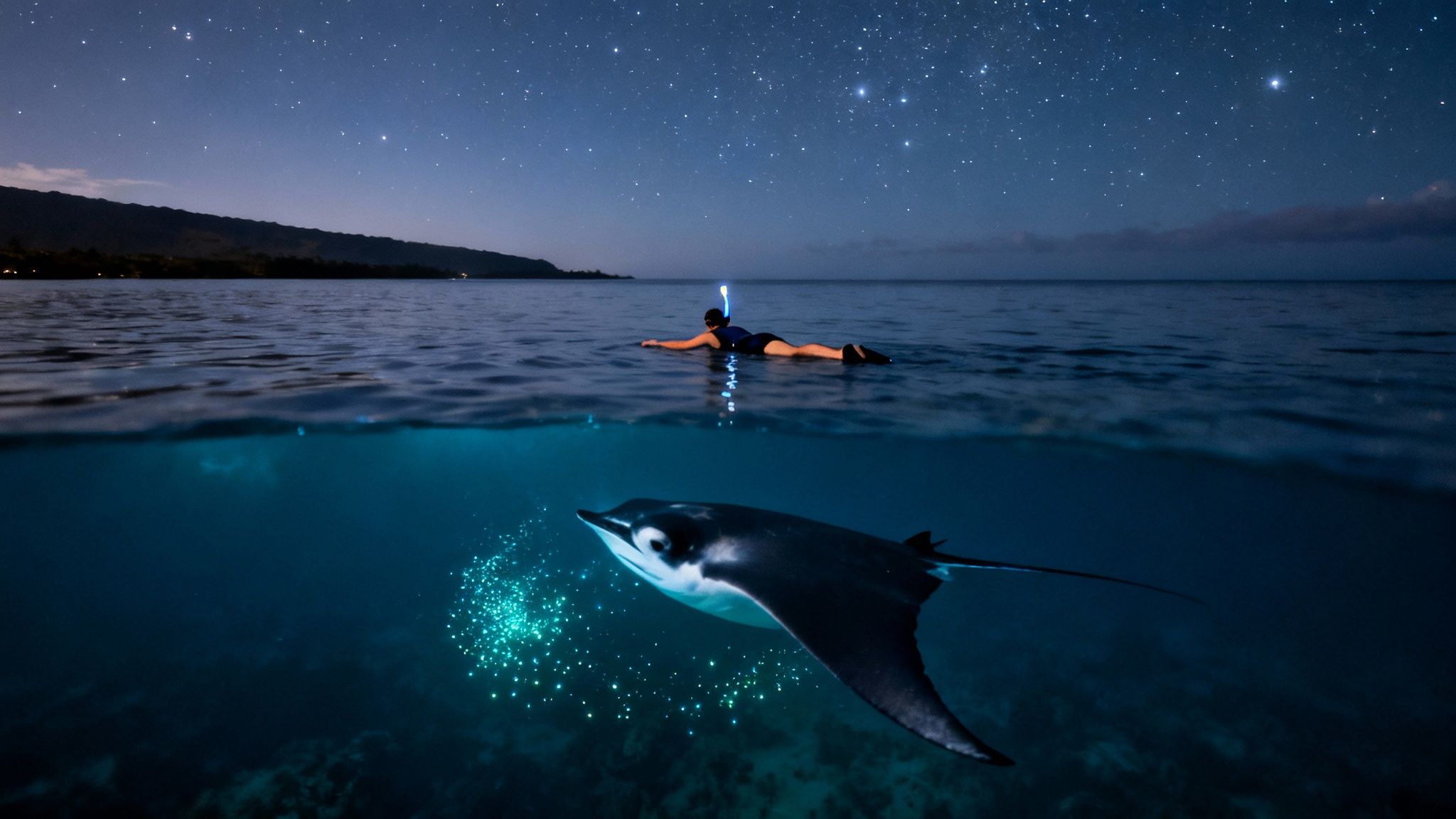
Picture this: you're floating under a sky full of stars off the Hawaiian coast. Suddenly, a giant, graceful shadow with a massive wingspan glides effortlessly just inches beneath you. It’s a manta ray, and it’s about to do a backflip.
This isn't a once-in-a-lifetime stroke of luck. This is the nightly underwater ballet that makes the manta ray snorkel Big Island experience one of the best in the entire world. It’s a truly magical encounter, and it happens almost every single night. For more information about this incredible experience, visit the Manta Ray Night Snorkel Hawaii home page.
What Makes Kona Manta Ray Snorkeling So Unique
The Kona coast of Hawaii’s Big Island has earned its reputation for offering one of the most reliable and breathtaking wildlife encounters on the planet.
Unlike other spots where seeing a manta ray is a rare treat, Kona's resident population is here year-round. They show up night after night, drawn to the lights along the shore in a predictable and awe-inspiring spectacle.
This guide will walk you through everything you need to know to plan this incredible adventure. We'll cover what makes this happen, how to choose the right tour, and what to expect when you get in the water.
The Underwater Ballet
So, how does it all work? The magic starts when tour boats shine powerful (but eco-friendly) lights into the water. These lights act like a magnet for clouds of plankton, which is a manta ray's favorite meal.
Soon, the mantas arrive for their nightly feast. You'll see them perform graceful loops and barrel rolls right below you as they filter the plankton from the water. It’s a front-row seat to an incredible feeding behavior that feels both thrilling and incredibly peaceful at the same time.
This isn't just a quick swim-by. You become a quiet observer in their world, floating on the surface while these gentle giants, with wingspans often exceeding 12 feet, put on a show.
Why You Should Book with a Trusted Operator
Picking the right guide is the most important decision you'll make. A good operator is the key to a safe, respectful, and truly memorable trip.
Experienced outfits like Manta Ray Night Snorkel Hawaii focus on small group sizes and give fantastic briefings on manta ray biology and conservation before you even get wet.
For an exceptional alternative—whether for the manta ray night snorkel or a fantastic daytime Captain Cook snorkeling tour—I always recommend looking into Kona Snorkel Trips. They are a top-tier operator known for their commitment to safety and creating a genuine connection between their guests and the marine environment.
Get ready to plan what will likely be the highlight of your Hawaiian vacation. This is more than just an excursion; it's a genuine connection with one of the ocean's most majestic creatures.
Why Kona Is the World Capital for Manta Ray Encounters
So, what makes the Big Island the undisputed champion of manta ray snorkels? It's a unique mix of geography, marine biology, and a little bit of history that accidentally created the perfect nightly show. The Kona coast isn't just a stopover for these giants; it's their home. That makes the encounters here incredibly reliable.
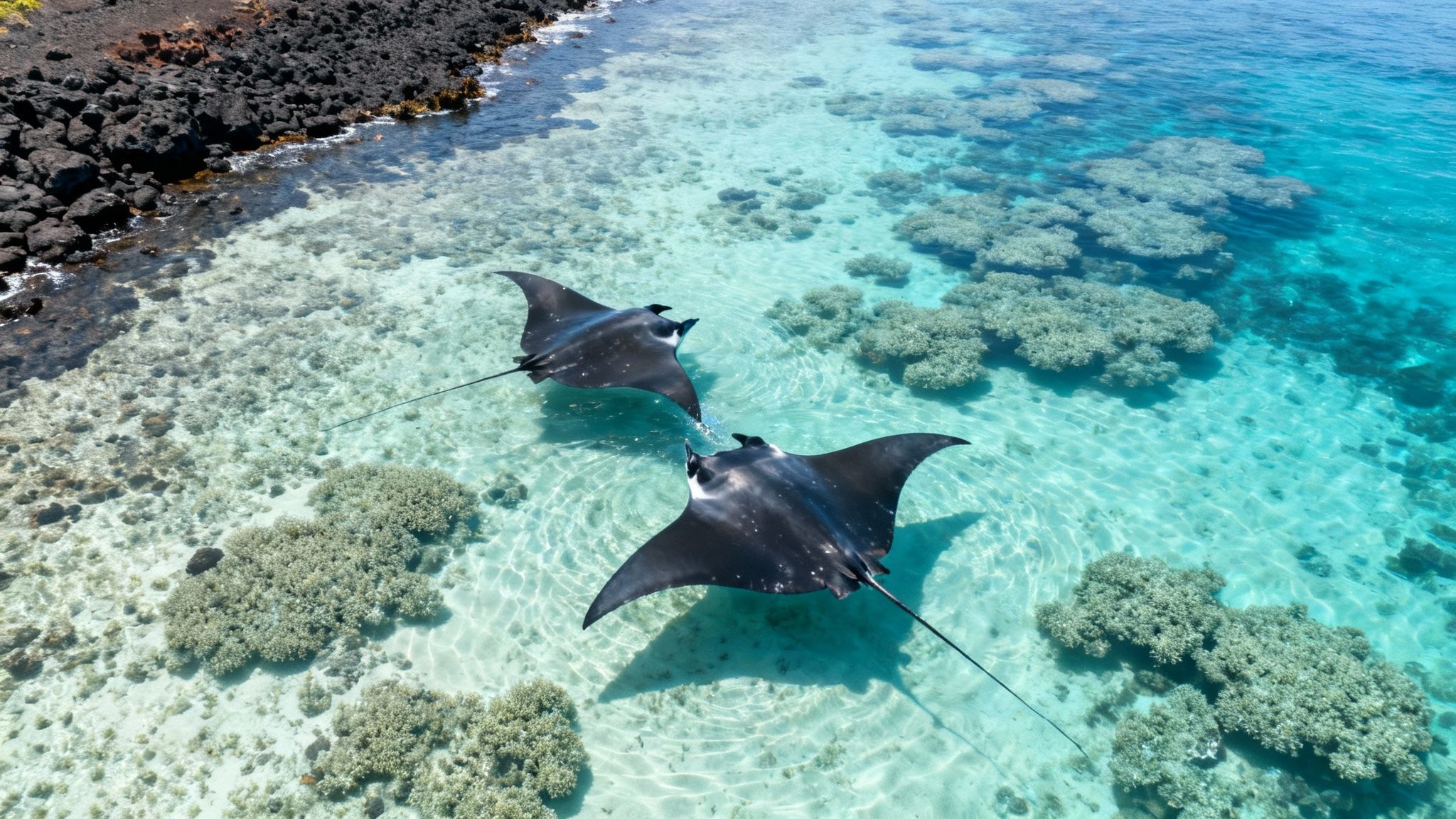
Many wildlife tours are seasonal, but Kona's manta rays stick around all year. We're talking about the reef manta ray species (Mobula alfredi), which tends to hang out near the coast instead of venturing into the deep blue. This local residency means that any night you go is a good night for a potential sighting.
This whole thing started decades ago. A hotel on the coast pointed lights into the water, which attracted plankton, and the local mantas quickly figured out it was an easy all-you-can-eat buffet. Today's tour operators have perfected this, using powerful, eco-friendly lights to essentially ring the dinner bell.
The Science Behind the Spectacle
It all comes down to plankton. The calm, nutrient-rich waters along the Kona coast are a perfect breeding ground for these microscopic critters. When tour boats shine their big lights into the dark water, the plankton swarm to the surface, creating a glowing cloud of manta food.
That's your cue. The manta rays glide right into these plankton patches with their huge mouths wide open, filtering out their meal in what looks like a graceful underwater ballet. You'll see them doing barrel rolls and somersaults—it’s not just for show, it's a super efficient way for them to eat, and it’s absolutely mesmerizing to watch. This natural feeding frenzy is what every manta ray snorkel Big Island tour is built around.
The numbers back it up, too. Researchers have identified a thriving local population of over 450 manta rays along this coast. Tour companies consistently report an 85-90% manta sighting success rate, and it’s common to see several mantas on a single trip. You can dig deeper into how this massive population was identified over at the Kona Honu Divers blog.
Manta Village vs. Manta Heaven
Your trip will likely head to one of two main spots, and each has a slightly different vibe.
Manta Village: This is the classic, original site near Keauhou Bay, just south of Kona. It's known for being incredibly reliable and is often in calmer, more sheltered waters. This makes it a great choice if you have kids or are a little nervous in the water. Plus, the boat ride is usually shorter.
Manta Heaven: Located north of Kona near the airport, this spot (also known as Garden Eel Cove) can sometimes attract huge groups of mantas. While both sites are fantastic, Manta Heaven is where you might witness a truly massive congregation of these gentle giants.
Don’t worry too much about which one to pick. Your boat captain will make the call based on the night's conditions and where the mantas have been most active, giving you the best shot at an incredible experience. You can find more details on these amazing creatures in our article on manta rays in Kona.
How to Choose the Perfect Manta Ray Snorkel Tour
Let's be honest, a quick search for a manta ray snorkel Big Island tour can leave your head spinning. Dozens of boats, different times, varying prices... where do you even start? Picking the right tour is the single most important decision you'll make, and it can be the difference between a good trip and a truly mind-blowing one.
It’s not just about finding the cheapest seat on a boat. The best experiences come from operators who prioritize your safety, the well-being of the mantas, and the overall quality of your time in the water.
One of the first things I always tell people to look at is the group size. A smaller group almost guarantees a better time. Think about it: you get more personal attention from the guides, more space to comfortably float on the light board, and an unobstructed view of the action. Always ask about the maximum number of guests they take out.
Sunset vs. After Dark Tours
This is a big question for first-timers. Should you go at sunset or wait until it's completely dark? Both are incredible, but they offer a different vibe.
Sunset Tours: These are definitely the most popular, and for good reason. You get a two-for-one deal: a spectacular Hawaiian sunset from the water, followed by the main event with the mantas. The only catch? It's peak time, so you'll be sharing the water with more boats and snorkelers.
After Dark Tours: If you're okay with missing the sunset, these later trips can be magical. The crowds have thinned out, and the ocean feels quieter and more mysterious under the stars. It can be a much more serene and intimate encounter.
So, what's more important to you? The classic sunset photo-op or a potentially quieter swim? There's no wrong answer. To get a feel for what different companies offer, it's worth checking out a detailed breakdown of the best manta snorkel Big Island tours.
To help you decide, here’s a quick comparison of the two most popular tour timings for your manta ray snorkel adventure.
Manta Ray Tour Options Compared
Feature | Sunset Tour | After Dark Tour |
|---|---|---|
Ambiance | Vibrant, includes a beautiful Hawaiian sunset. | Quiet, serene, and intimate under the stars. |
Crowd Level | Busiest time on the water; more boats and people. | Less crowded; fewer boats at the snorkel site. |
Popularity | The most popular and frequently booked option. | A great alternative for a less hectic experience. |
Best For | Snorkelers who want the iconic sunset experience. | Those seeking a calmer, more personal encounter. |
Ultimately, both tour times give you an excellent chance to see the mantas. It really just comes down to the kind of experience you're hoping for.
Finding a Quality Operator
Beyond timing, the crew and company philosophy are what truly make or break the trip. You want a team that’s not just driving a boat but is passionate and knowledgeable.
Look for operators who staff lifeguard-certified guides and make safety their top priority. A good crew will give you a detailed briefing before you ever touch the water, explaining how to interact with the mantas respectfully and safely. Our comprehensive guide to the top Kona manta ray snorkel tours is a great resource for vetting different companies.
If you're looking for a standout recommendation, you can't go wrong with Kona Snorkel Trips. They have a stellar reputation for their professional, safety-conscious crews and their deep commitment to responsible eco-tourism. They’re a fantastic choice not just for the manta snorkel but also for their other top-rated daytime trips, like the one to the Captain Cook monument.
Remember, a great tour operator doesn't just take you to the mantas; they educate you, keep you safe, and foster a deep respect for the incredible marine life you're about to witness.
When you book with a reputable company, you're not just buying a ticket—you're supporting the conservation of these magnificent animals for years to come.
What to Expect on Your Manta Ray Night Snorkel
The excitement really starts to bubble up the moment you get to the harbor. Your manta ray snorkel Big Island adventure kicks off on the dock, where the crew will greet you, get you checked in, and fit you for wetsuits and snorkel gear. It's the perfect time to ask any last-minute questions and just soak in the pre-trip buzz.
Once you’re on the boat and cruising out, the real magic begins. The guides will give a fantastic briefing on the way to the snorkel spot. You’ll learn all about the local manta rays that call Kona home, go over the safety rules for the night, and find out how to act around these massive, gentle creatures. This chat is super important—it keeps both you and the mantas safe.
Entering the Underwater Theater
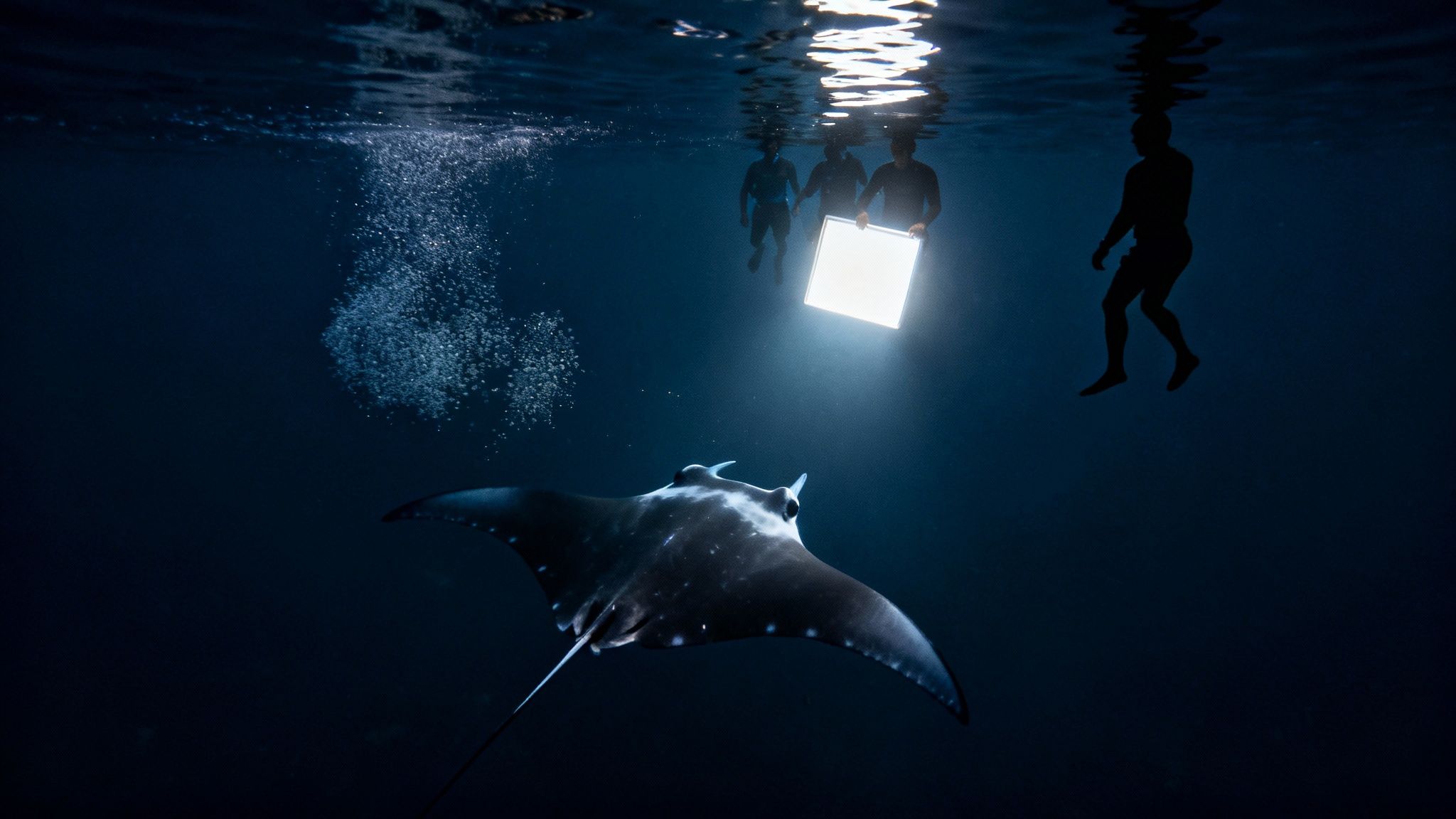
As the sun dips below the horizon and the sky goes dark, the crew sets up the main attraction: large, custom-built light boards that float on the surface. These powerful lights have one brilliant purpose—to attract huge clouds of plankton, which is what manta rays love to eat. The boat essentially becomes a floating dinner table, and the mantas are the guests of honor.
Sliding into the warm Pacific after dark is a thrill all on its own. You'll be given a flotation noodle or vest and will hang onto the sturdy light board, so there's no real swimming involved. You just float comfortably. All you have to do is put your face in the water and watch the show unfold beneath you.
This whole experience is a true bucket-list moment, made possible by a perfect storm of local conditions and a bit of human cleverness. It's why the encounter rates here are world-class. Operators in Kona consistently report an 85-90% sighting success rate all year long, and it's common to see several mantas on a single trip. The secret is the lights, which reliably draw in members of a local manta population of over 450 individuals. You can read more fascinating details about what makes this Kona experience so reliable on the Kona Snorkel Trips blog.
Observing the Main Event
And then, it happens. A huge, graceful shadow emerges from the deep blue, gliding silently toward the light. Before you know it, another might appear. You're front-row for an incredible underwater ballet, as the mantas perform barrel rolls and graceful loops, scooping up plankton just inches from your face.
It's a surprisingly peaceful and almost hypnotic experience. The only sounds are the soft lapping of the ocean and the occasional muffled "wow!" from another snorkeler. The crew is always right there in the water with you, making sure everyone is safe and comfortable for the entire encounter, which usually lasts about 45 minutes.
The number one rule is simple: look, but don't touch. Manta rays have a special protective mucus coating on their skin, and touching them can harm it. By just floating and watching, we make sure these amazing animals stay healthy and keep coming back for generations.
This tour is so much more than just seeing wildlife; it's about being part of a respectful and sustainable ecotourism model that works. When you're ready to book this incredible adventure, Kona Snorkel Trips runs an exceptional tour that puts both the guest experience and the mantas' well-being first.
For anyone looking to book this specific Manta Ray Night Snorkel, you can check their availability right here.
Pro Tips for an Unforgettable Manta Ray Snorkel
Getting ready for your manta ray snorkel Big Island tour is pretty straightforward, but a few insider tips can make the difference between a good night and an absolutely incredible one. Here’s how you can prepare to be safe, comfortable, and completely mesmerized by the experience.
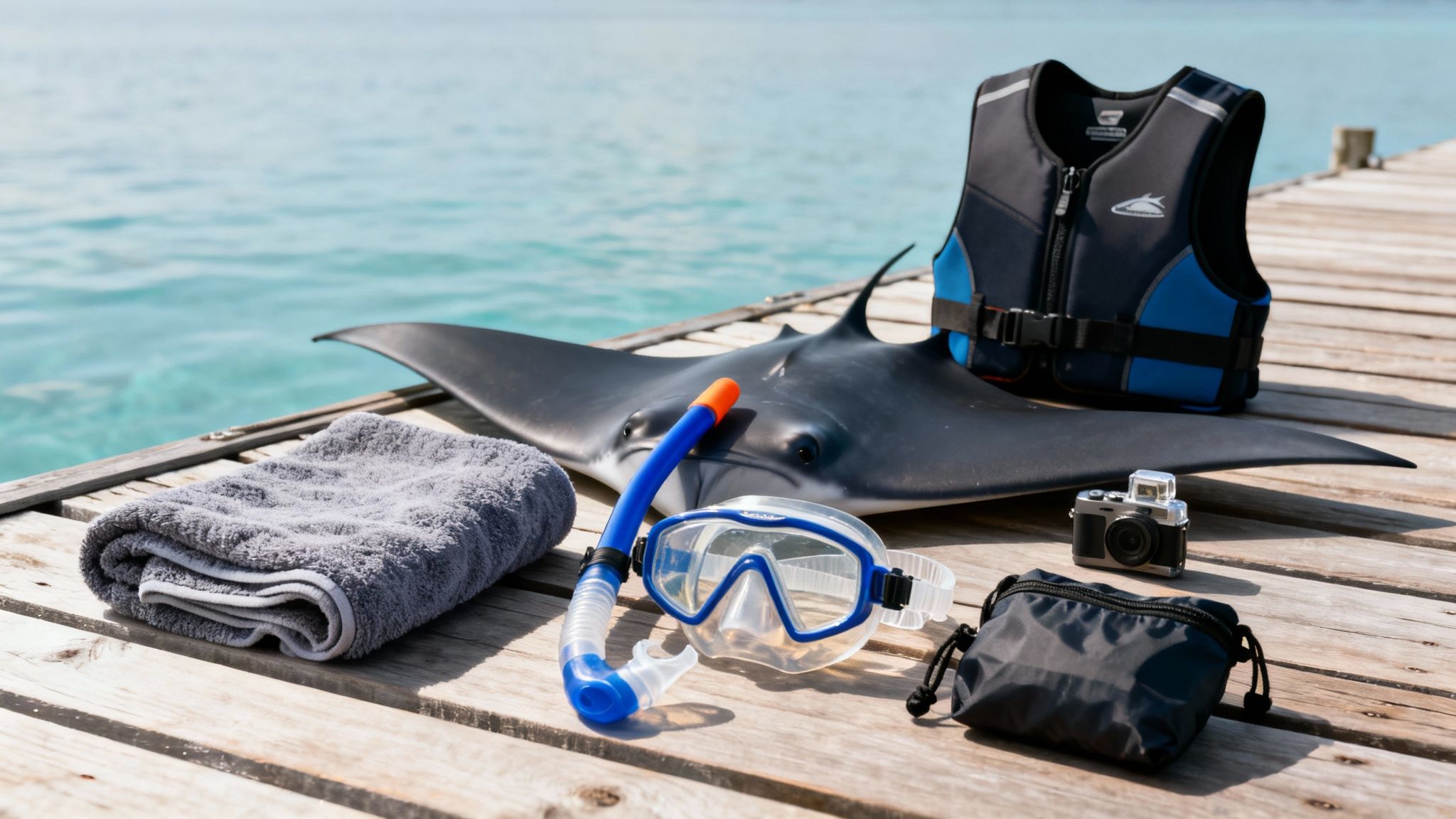
First things first, let’s talk gear. The tour provides all the snorkel equipment, but you'll want to pack a small bag with a towel and a set of warm, dry clothes. A cozy sweatshirt and pants will feel amazing on the boat ride back to shore after you get out of the water. Trust me, you'll be glad you have them! It's also wise to leave any valuables you don't need, like nice jewelry, back at your hotel.
Respecting the Manta Rays
This is the golden rule, and it's non-negotiable: look, but never touch. Manta rays have a special protective mucus layer on their skin, which acts as their immune system against infections. Touching them, even accidentally, can strip this layer off and leave them vulnerable to disease.
We're visitors in their world, and the best thing we can do is be calm, passive observers. This respectful approach is what makes sustainable manta tourism in Kona possible, ensuring these beautiful animals continue to feel safe and return night after night.
Think of it like this: you’re a guest at the mantas’ all-you-can-eat plankton buffet. The best way to be a good guest is to float calmly, keep your hands to yourself, and just soak in the amazing spectacle they provide.
A Few More Tips for Comfort and Photos
If you’re someone who gets a little queasy on boats, it’s a good idea to take some non-drowsy motion sickness medication an hour or so before you head out. The ocean can have a bit more movement at night, and you don’t want a rocky boat to spoil the main event.
Want to capture the magic? Photographing mantas at night is tricky, but not impossible.
Action Cams are Best: A GoPro or similar waterproof action camera is your best bet. Set it to a "night" or "low-light" video mode if you have one.
Stabilize Your Shot: The light board you hold onto is your friend. Gently rest your camera against it to get a steadier shot.
Focus on Video: In the dark, video often does a much better job of capturing the fluid, graceful dance of the mantas than still photos will.
This experience is designed to be accessible for just about everyone, even if you’re not a strong swimmer. You'll be provided with top-notch flotation gear and will be holding onto a large, stable light raft the entire time, so you can just float and enjoy. For a deeper dive, check out these additional 10 manta ray snorkel tips to make sure you’re completely ready.
And if you’re looking for a top-tier company for this adventure—or even a daytime Captain Cook snorkeling tour—you can't go wrong with Kona Snorkel Trips. They are well-known for their amazing crews and total dedication to giving their guests a fantastic, safe experience.
Ready to book your spot for this once-in-a-lifetime adventure?
Answering Your Top Questions About Manta Ray Snorkeling on the Big Island
Got a few last questions before you commit? I get it. To help you feel completely ready for this incredible adventure, I’ve put together answers to some of the most common things people ask before booking a manta ray snorkel Big Island tour. Let's clear up those practical details so you can book with total confidence.
Is the Manta Ray Night Snorkel Safe if I'm a Beginner?
Absolutely, and that's one of the best parts. Tour companies design this experience to be safe and comfortable for everyone, even if you’ve never put on a snorkel mask in your life.
They'll get you geared up with high-quality flotation devices, usually a wetsuit (which adds a lot of buoyancy) and a pool noodle or life vest. This means you just float effortlessly on the surface—no treading water required. The guides are lifeguard-certified and run through a detailed safety briefing before you ever touch the water. You'll hold onto a big, stable light board the whole time, so you always have something secure to hang onto.
When Is the Best Time of Year to See Manta Rays?
Here’s the great news: any time is a good time! One of the most amazing things about snorkeling with mantas in Kona is that the experience is fantastic year-round. We have a resident population of manta rays that sticks around, so you don’t have to worry about them migrating away.
Success rates for sightings stay consistently high, often over 90%, no matter the season. Sure, the winter months can sometimes bring bigger ocean swells, but the boat captains are pros at picking the calmest and safest spot for the night.
The bottom line? There’s no "off-season" for manta rays in Kona. If you're on the Big Island, it's a great time to go.
What if We Don't See Any Manta Rays on Our Tour?
It’s a valid question! While seeing mantas is incredibly likely, they are wild animals, so a sighting can never be 100% guaranteed. The best tour operators know this and almost always offer a "manta guarantee."
This usually means that if your tour is one of the rare ones where no mantas show up, you can come back for another trip on a different night, free of charge (on a space-available basis). It's a good idea to confirm a company's specific policy when you book—it really shows their confidence and commitment to giving you an amazing experience.
For a deeper dive into planning your trip, the Manta Ray Night Snorkel Hawaii homepage is a fantastic resource.
Can I Combine This Tour With Other Snorkeling Trips?
Yes, and it’s a brilliant way to spend a day! A lot of people choose to bundle their tours for a full-on ocean adventure. A popular combo is doing a daytime Captain Cook snorkeling tour and then heading out for the manta snorkel after the sun goes down.
This way, you get to explore the stunning coral reefs of Kealakekua Bay during the day and then witness the completely different, magical world of the mantas at night. Companies like Kona Snorkel Trips are an exceptional choice for this and sometimes offer discounts when you book more than one tour.
Ready to book this unforgettable experience?
Comments