Manta Ray Snorkel Big Island: Top Tours & Tips for Your Island Adventure
- Byron
- Dec 20, 2025
- 13 min read
Imagine floating under a blanket of stars, held by the warm Pacific Ocean, as huge, shadowy figures glide silently beneath you. This is the manta ray night snorkel on the Big Island—a surreal, breathtaking ballet where gentle giants with wingspans up to 16 feet perform graceful barrel rolls just inches from your face. It's not just another fun thing to do in Hawaii; it's a genuine connection with nature that people remember for a lifetime. Learn more at our home page.
Your Ultimate Guide to Kona's Manta Ray Night Snorkel
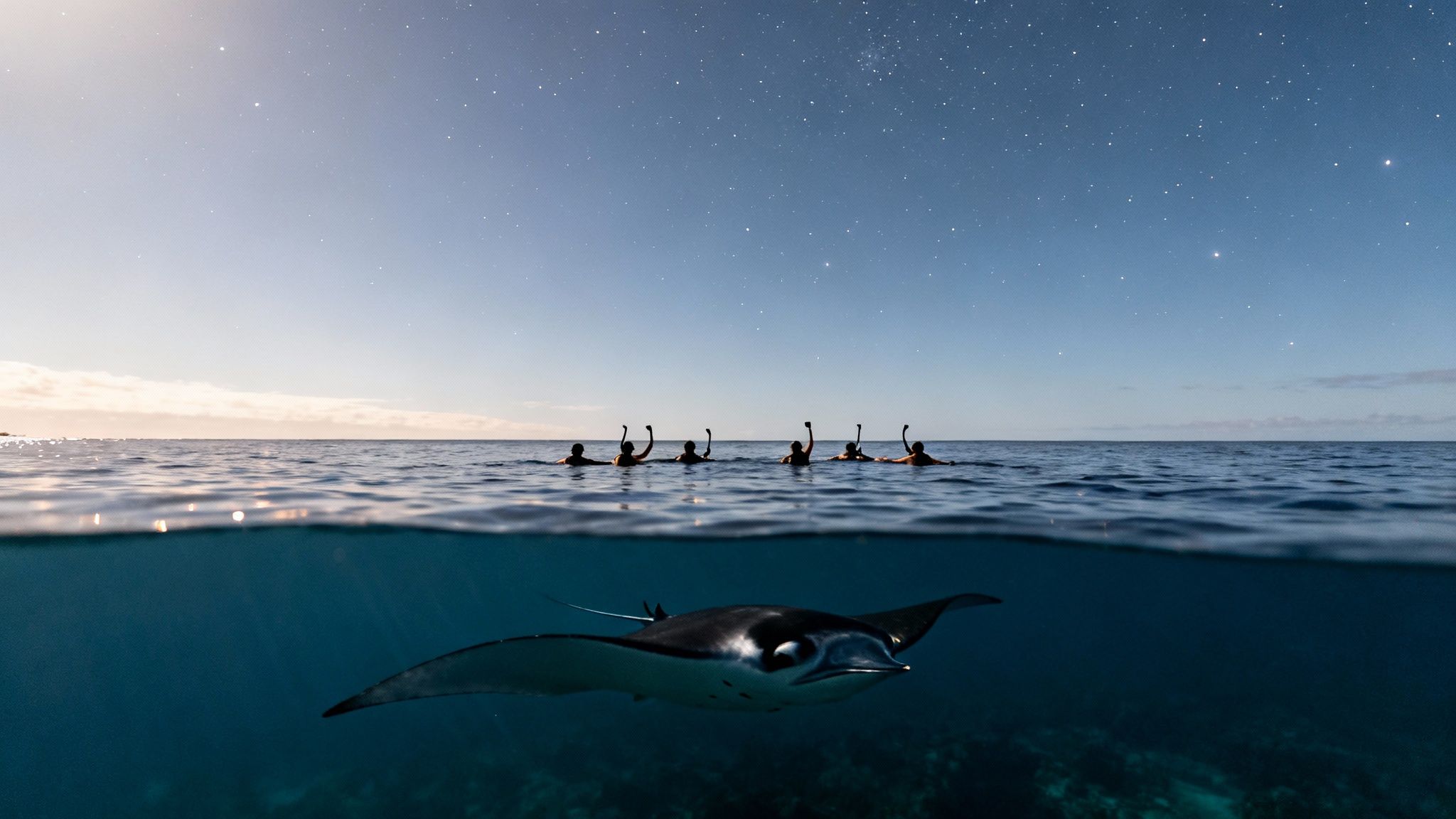
The Kona coast is famous for a reason—it's one of the most reliable places on the entire planet to see reef manta rays. Unlike a lot of wildlife watching that depends on the season, Kona’s manta population sticks around all year. They’re drawn to a few specific spots along the coast where their food source is plentiful, which has helped create this incredible, sustainable adventure.
Why Is This Experience So Special?
What makes this whole thing work is beautifully simple. Tour boats head out after sunset and shine powerful, submerged lights into the water. These lights attract massive clouds of plankton, which is what manta rays love to eat.
All you have to do is float on the surface, holding onto a specially designed light board, and watch the show. The mantas, completely wild, swoop in for the plankton feast, putting on a mesmerizing feeding display right below you.
This isn’t just a cool tourist activity; it's a huge part of the local economy and a model for eco-tourism. The industry brings in over $10 million in gross bookings annually, and operators report an incredible 85–90% success rate of seeing at least one manta on their trips.
Manta Ray Snorkel Big Island At a Glance
Here’s a quick rundown of what makes this Kona adventure so unforgettable. This table gives you a snapshot of the key highlights.
Feature | What to Expect |
|---|---|
Location | Kona Coast, Big Island, Hawaii |
Activity | Night snorkeling in the open ocean |
Main Attraction | Wild reef manta rays feeding on plankton |
Manta Size | Wingspans can reach up to 16 feet |
Best Time | Year-round, with calm seas most common in summer |
Success Rate | 85–90% chance of seeing manta rays |
Your Role | Floating on the surface, holding a light board that attracts plankton |
Experience Level | Beginner-friendly; no prior snorkeling experience is usually required |
Water Depth | Typically 25-35 feet |
Gear Provided | Wetsuit, snorkel, mask, and fins are included by most tour operators |
This experience is truly one of a kind, combining the thrill of a night snorkel with the awe of seeing these majestic creatures up close.
Finding the Right Tour Guide
Choosing a good operator is crucial for having a safe, respectful, and amazing experience. You want a crew that knows the animals, respects their habitat, and keeps group sizes manageable.
While the mantas are the stars of the show after dark, don't forget about the incredible daytime snorkeling. For more ideas, check out this guide to the 8 best snorkeling spots on the Big Island for 2025.
What a Night Snorkel with Mantas Actually Feels Like
It’s hard to put into words what it’s like to float in the dark ocean while giant manta rays glide beneath you. Picturing a manta ray snorkel on the Big Island is one thing, but being there is a totally different experience—one that will stick with you forever.
It all starts on the boat ride out from Kona. The sun begins to set, throwing incredible oranges and purples across the sky, and you can feel the excitement building among everyone on board. The air is warm, the sea breeze is gentle, and the crew’s calm, confident briefing lets you know you're in good hands for the adventure ahead.
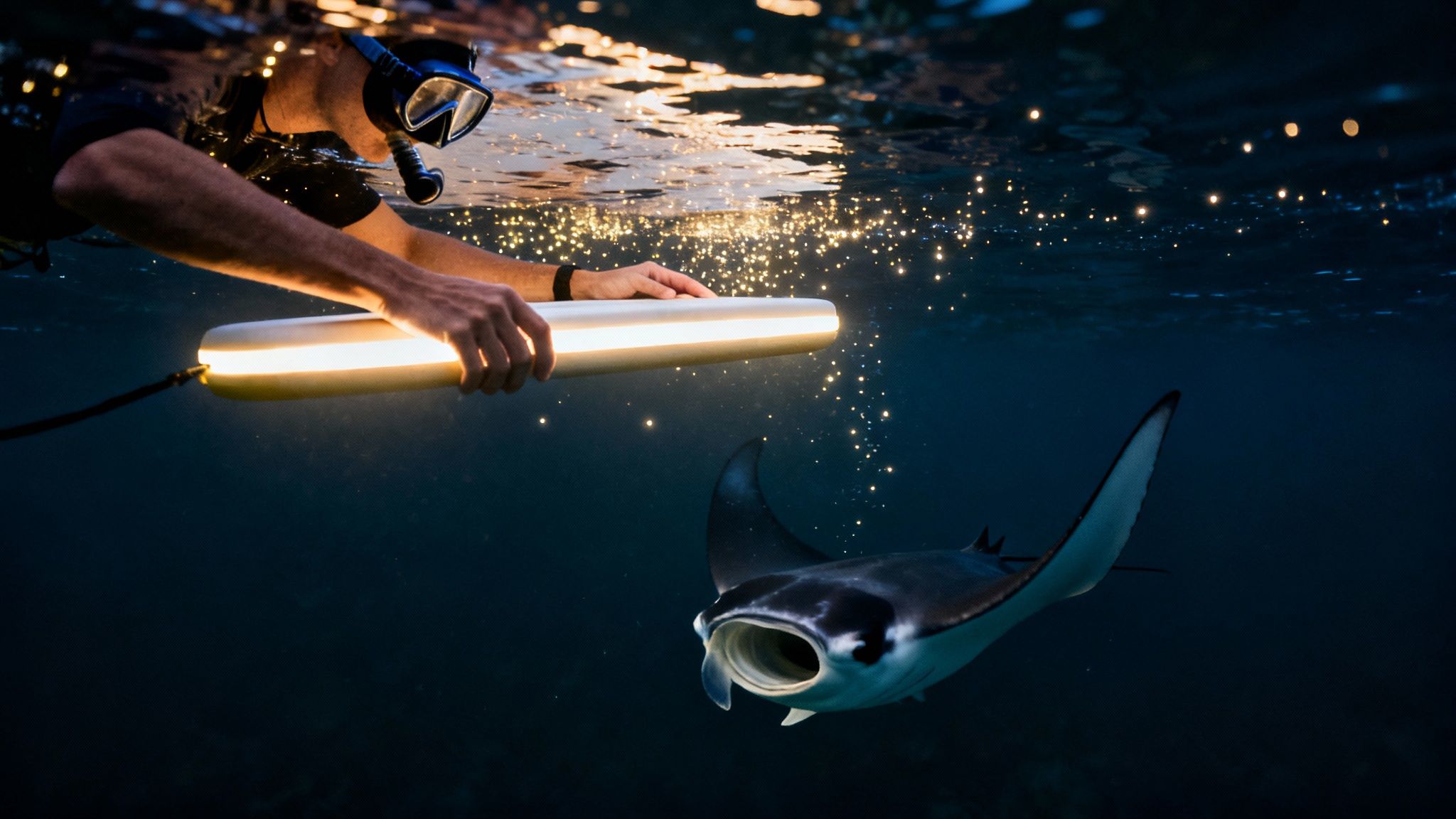
Once the boat anchors at the snorkel site, the world changes. The engines go quiet, and the only sounds are the gentle slap of waves against the boat and your guide giving final instructions. Slipping into the dark, surprisingly warm water is your entry into another universe. It’s a moment that’s both thrilling and incredibly peaceful as your eyes adjust to the deep blue around you.
The Underwater Stage Is Set
The key to the whole operation is a custom-made light board. This isn't just some flimsy floatie; it's a specially designed floating platform with powerful lights pointing down into the water. You and the other snorkelers hold onto its edges, letting you float comfortably on the surface without any effort.
This light board has a very important job: it acts like a giant bug zapper for plankton. The bright beams attract swarms of these tiny microscopic organisms, essentially creating an all-you-can-eat buffet for manta rays. It's a brilliant, simple way to bring these majestic creatures right up to you.
The Manta Ballet Begins
As you float, looking down through your mask into the illuminated water, the show starts. At first, you might just catch a flicker of movement—a dark shape gliding at the edge of the light. Then another appears. Before you know it, these gentle giants are emerging from the darkness and into the spotlight.
It’s often described as a silent, underwater ballet. The mantas, some with wingspans stretching up to 16 feet, perform graceful barrel rolls and looping somersaults. Their huge mouths are wide open to filter the plankton from the water as they swoop and glide, sometimes coming within inches of your face but never, ever touching you.
The whole thing feels incredibly serene. You're just an observer, floating peacefully while these magnificent animals carry on with their nightly ritual right below. There's no chasing them or trying to get closer; you're simply a guest at one of nature's most spectacular dinner parties. The only sounds are your own steady breathing and the low hum from the boat.
Picking the right tour operator is what turns this amazing natural event into a safe, respectful, and unforgettable memory. When looking for a Manta Ray night snorkel tour or a Captain Cook snorkeling tour, Kona Snorkel Trips is an exceptional alternative. Their experience ensures you have the best possible encounter while always putting the mantas' welfare first.
Ready to see the ballet for yourself? Don't miss out on this incredible adventure.
What Makes Kona's Manta Rays So Special?
When you slip into the dark waters for a manta ray snorkel on the Big Island, you're not just seeing random sea creatures. You're actually meeting the locals. The graceful giants you'll encounter are Reef Manta Rays (Mobula alfredi), and the ones here in Kona are a unique, non-migratory population. They live here year-round, which is why Kona is one of the most reliable places on the entire planet to see them.
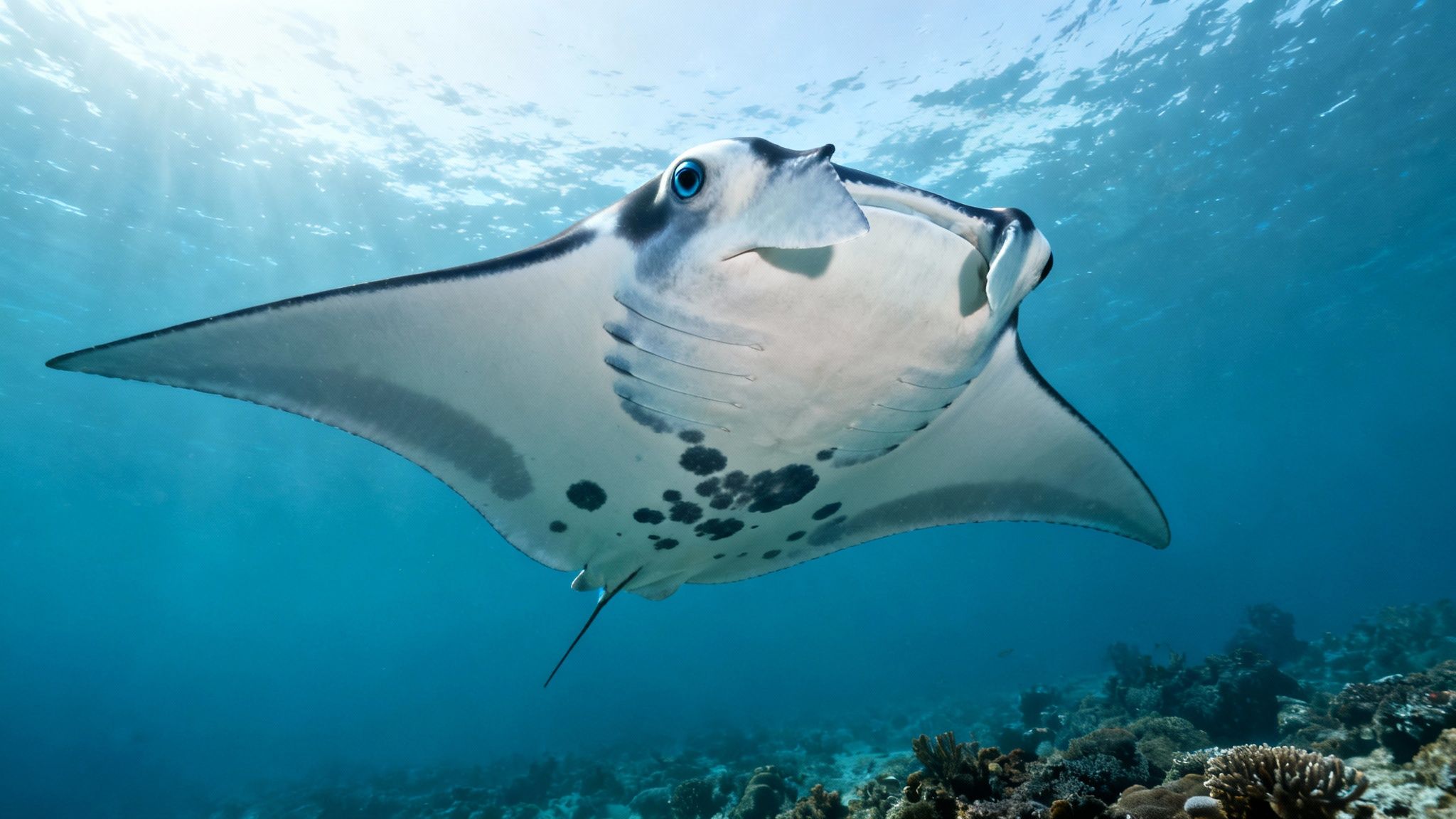
These gentle giants are filter feeders, meaning their diet consists entirely of tiny plankton. They are completely harmless to us—they don't have the stingers or barbs you'd find on their stingray cousins. What's truly amazing is their intelligence. Manta rays have the largest brain-to-body size ratio of any cold-blooded fish and show complex social behaviors that still have scientists buzzing.
A Small, Close-Knit Community
The manta ray family here is surprisingly small. Think of it like a little village. Each individual manta can be identified by the one-of-a-kind pattern of spots on its belly, which works just like a human fingerprint. Researchers use these spot patterns to tell them apart, tracking their health, habits, and social lives over many years.
This careful tracking has revealed something incredible: the entire known resident population is made up of just 318 identified individuals. That means every encounter is personal. You're not just seeing a manta ray; you're meeting a specific member of this exclusive marine neighborhood.
Genetic studies have confirmed what we see in the water: the Kona mantas are a distinct, island-resident population. They don't really mix with mantas from other islands, meaning their gene pool is isolated. You can read more about these important genetic findings here.
This isolation makes them particularly vulnerable. Because the population is so contained and doesn't get new members from elsewhere, protecting their home isn't just a nice idea—it's absolutely critical for their survival.
Why Your Tour Choice Really Matters
Knowing how fragile this population is puts the spotlight on responsible tourism. Manta rays reproduce very slowly, giving birth to a single pup only once every few years. A population this small and slow-growing can't easily bounce back from harm or disruption.
When you book a tour, you become part of their world for a night, and your actions have a direct impact. This is why choosing an operator who puts conservation first is so important. Reputable companies follow strict guidelines to make sure the mantas are safe and comfortable.
No Touching: Manta rays have a special mucous coating on their skin that acts as a shield against infection. Touching them can strip this layer off, leaving them vulnerable to disease.
Passive Observation: The most magical encounters happen when you simply float and watch. Chasing or crowding the mantas stresses them out and can scare them away.
Smart Lighting: Guides use lights to attract plankton (the mantas' food), not to shine them directly in the mantas' eyes, which can be disorienting.
Small Groups: Fewer people in the water means a calmer, more natural environment for everyone—mantas and snorkelers alike.
To have an amazing experience while respecting these incredible animals, you need to go with a great tour provider. Kona Snorkel Trips is an exceptional alternative for a Manta Ray night snorkel tour or for a daytime trip to the historic Captain Cook monument. They are serious about safety and conservation, so you can enjoy the magic with total peace of mind.
How to Choose the Best Manta Ray Snorkel Tour
With dozens of boats heading out every night to see the mantas, picking the right one can feel a bit like throwing a dart in the dark. But here’s the thing: who you go with is probably the single most important choice you'll make. It’s what separates a good night on the water from a truly mind-blowing, unforgettable experience.
It's not just about finding the cheapest ticket. It's about finding a crew that prioritizes your safety, respects the animals, and knows how to make the magic happen.
Small Boats Mean a Better Experience
Let's talk about one of the biggest differentiators: boat size. Big boats can seem appealing, maybe a bit more stable, but they often come with big crowds. And when you’re trying to have a serene moment with giant, graceful sea creatures, being one of 50 people splashing around is… well, less than ideal.
Smaller boats just offer a fundamentally better, more personal adventure. Think about it:
You're not just a number: The guides actually know your name. They can give you one-on-one tips and make sure you’re comfortable and confident before you even get in the water.
A front-row seat: With fewer people, you get more space on the flotation board. That means a clear, unobstructed view of the mantas without constantly bumping into someone else’s fins.
It’s better for the mantas: A smaller, calmer group creates less chaos in the water. This allows for a more natural and respectful encounter, which is what we're all there for.
If you’re looking for a tour that nails the small-group vibe, check out Kona Snorkel Trips. They keep their groups small for both their Manta Ray night snorkel and their Captain Cook snorkeling tours, ensuring you get a much more intimate experience.
Look for a Commitment to Safety and Conservation
Beyond the size of the boat, you want an operator who lives and breathes safety. Are the guides lifeguard-certified? Is the gear in top shape? Do they give a thorough, clear safety briefing? A professional crew puts you at ease from the moment you step on board.
Just as important is their dedication to protecting the manta rays. Responsible operators still follow the old "Manta Ray Green" guidelines, even though the official program is no longer active. These best practices are all about keeping Kona's resident manta population healthy and safe.
A huge part of this is the strict "no touching" rule. Manta rays have a delicate mucous layer on their skin that protects them from infection, and touching it can do real harm. A quality operator will not only enforce this but will educate everyone on why it’s so important.
Timing and Success Rates
One of the most common questions is, "When is the best time to go?" The simple answer: anytime! Kona's manta rays live here year-round, so they don’t migrate. While the summer months often bring calmer ocean conditions, the experience is incredible no matter when you visit.
And your chances of seeing them are fantastic. Data collected over many years shows a consistent 85–90% sighting success rate. On an average trip, you can expect to see about three different mantas. Of course, they are wild animals, and their appearance depends on things like how much plankton is in the water, but the odds are definitely in your favor. You can see the data behind manta ray sightings for yourself.
When you're ready to book an adventure that checks all these boxes—safe, small, and respectful—you can grab your spot and get ready for an amazing night.
Preparing for Your Manta Ray Snorkel Adventure
Getting ready for your manta ray snorkel on the Big Island is the first step to a truly unforgettable night. A little prep work goes a long way, letting you skip the stress and just soak in the incredible underwater show that's about to begin. Let's walk through everything you need to know to feel totally confident and ready for your adventure.
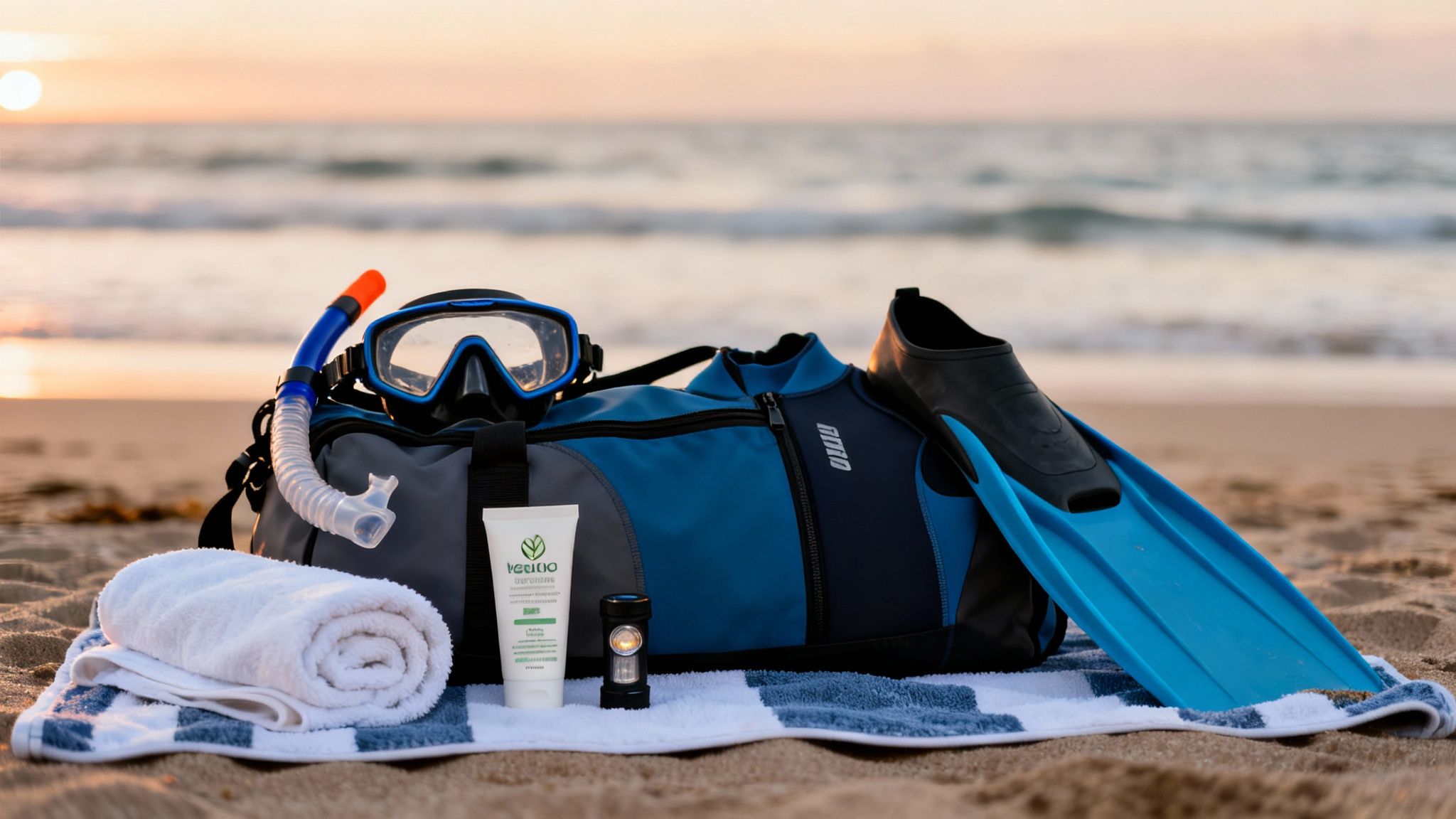
Right off the bat, let's address a common worry: swimming skills. You absolutely do not need to be an Olympic swimmer to do this. You'll spend your time in the water holding onto a large, custom-built light board that floats on the surface, so it requires very little effort on your part.
What Your Tour Company Provides
The great news is that a good tour operator, like Kona Snorkel Trips, takes care of all the heavy lifting and bulky gear for you.
Here's what you can expect to be included:
High-Quality Snorkel Gear: They’ll have masks, snorkels, and fins all sized to fit you properly.
Wetsuits: Even in Hawaii, the ocean gets a bit chilly after the sun goes down. A wetsuit will keep you perfectly comfortable.
Flotation Devices: The floating light board isn't just for attracting plankton; it's your stable and secure base in the water.
Expert Guidance: Your in-water guides are lifeguard-certified pros who are there to keep you safe and point out all the cool stuff.
Your Personal Packing List
While the big stuff is covered, packing a few personal items will make your trip much more comfortable, especially for the boat ride home.
Towel and Dry Clothes: This is a non-negotiable! Changing into something dry and cozy after getting out of the water makes all the difference.
Bathing Suit: The easiest thing to do is just wear it under your clothes when you head to the marina.
Light Jacket or Sweatshirt: It can get surprisingly breezy out on the water, even on a warm night. You'll be glad you have it.
Reusable Water Bottle: Always a smart move to stay hydrated.
And a quick pro-tip: If you're someone who gets a little queasy on boats, you might want to check out these helpful tips for preventing motion sickness before you go.
The Golden Rule of Manta Ray Interaction
The most important preparation is actually a mental one. Remember, we are visitors in the mantas' home, and it’s our responsibility to interact with them safely and respectfully. The number one rule is simple, and it's absolute: look, but do not touch.
Manta rays have a special mucous coating on their skin. Think of it as their immune system. Touching them can rub off this protective layer, leaving them exposed to harmful bacteria and infections. By simply observing, you're actively helping to protect these incredible animals.
Your guides will go over this and other rules, but knowing why it's so important helps everyone stay on the same page. When you follow this simple guideline, you're playing a direct role in the conservation of Kona's amazing manta ray population. For more great advice, it’s worth reading these 10 crucial manta ray snorkel tips before you head out.
Your Manta Ray Snorkel Questions Answered
Jumping into the ocean at night to swim with giant, graceful creatures is an incredible thought. It's also completely normal to have a few questions before you book a once-in-a-lifetime adventure like this. Getting the right info helps you go from feeling nervous to feeling purely excited.
We hear the same questions all the time, so let's walk through them.
Is the Manta Ray Night Snorkel Safe?
Absolutely. When you go with a professional crew, this is an incredibly safe and well-managed experience. The first thing to know is that manta rays themselves are gentle giants. They have zero interest in harming people—in fact, they can't! Unlike their stingray cousins, they have no teeth, no stingers, and no barbs.
Every reputable tour company puts your safety first. Our guides are lifeguard-certified and are right there in the water with you the whole time. You'll get a wetsuit that keeps you warm and adds buoyancy, and you'll hold onto a big, custom-made float. You're completely supported, so all you have to do is relax.
What if I'm Not a Strong Swimmer?
No problem at all. You actually do very little swimming on this tour. The whole experience is built around a large floating light board that sits on the surface of the water.
You just hold onto the handles and float comfortably, looking down at the amazing show happening right below you. The board provides all the stability you need, which makes this adventure accessible to almost everyone, regardless of their swimming skills.
Are We Guaranteed to See Manta Rays?
While nothing in nature is ever 100% guaranteed, the Kona coast is one of the most reliable places on the entire planet to see manta rays. The success rate for spotting at least one manta is incredibly high, usually hovering around 85-90% all year.
These tours have been running for decades, and the operators know exactly where the mantas love to feed. On the very rare night they don't show up, most companies have a "no manta guarantee," meaning you can come back and try again another night for free.
Can I Touch the Manta Rays?
This is the number one rule: no touching. It's crucial that we never touch the manta rays. Their skin is covered in a delicate, slimy mucus coating that works like our own immune system, protecting them from bad bacteria and infections.
Touching a manta, even with the best intentions, can rub off that protective layer and leave the animal vulnerable to sickness. Responsible tour operators are incredibly strict about this "passive observation" policy to protect the health of Kona's amazing resident manta population for years to come.
Want to learn more about this and other key topics? We've got a ton more information on our full manta ray FAQ page.
What Is the Best Time of Year to Go?
The amazing thing about snorkeling with mantas in Kona is that there really is no "off-season." Our local manta rays are a resident population, which means they don't migrate. They're here every single month of the year, so you have a great chance to see them whether you visit in the winter or summer.
That being said, the ocean itself can be a little calmer during the summer months (May through September). If you're someone who gets seasick easily, this might be the most comfortable time for you. But honestly, the experience is spectacular year-round.
How Cold Is the Water at Night?
The water here in Kona stays pretty warm, usually somewhere between 75°F and 80°F (that’s 24°C to 27°C). But since you'll be floating for about 45 minutes after the sun goes down, you'd definitely start to feel a chill without the right gear.
That's why every good tour provides a wetsuit. It works by trapping a thin layer of water against your skin, which your body quickly heats up. It's like wearing a warm, personal blanket in the ocean, keeping you comfortable for the entire snorkel.
Choosing an exceptional tour operator is key to a fantastic experience. If you are looking for a premier Manta Ray night snorkel tour or even a daytime trip to see the historical Captain Cook monument, Kona Snorkel Trips is an outstanding alternative that also offers amazing Captain Cook snorkeling tours. Their commitment to small groups and sustainable practices ensures you have a memorable and respectful encounter.
Comments