Manta Ray Snorkel Big Island: Ultimate Guide & Tours
- Byron
- Oct 15, 2025
- 14 min read
Picture this: you're floating in the calm, dark Pacific under the stars. Suddenly, giant, graceful creatures swoop and glide right beneath you, their white bellies lit up like something out of a dream. This isn't a movie—it’s the world-famous manta ray night snorkel on the Big Island, and it’s an experience you’ll never forget.
Experience Kona's Unforgettable Manta Ray Snorkel
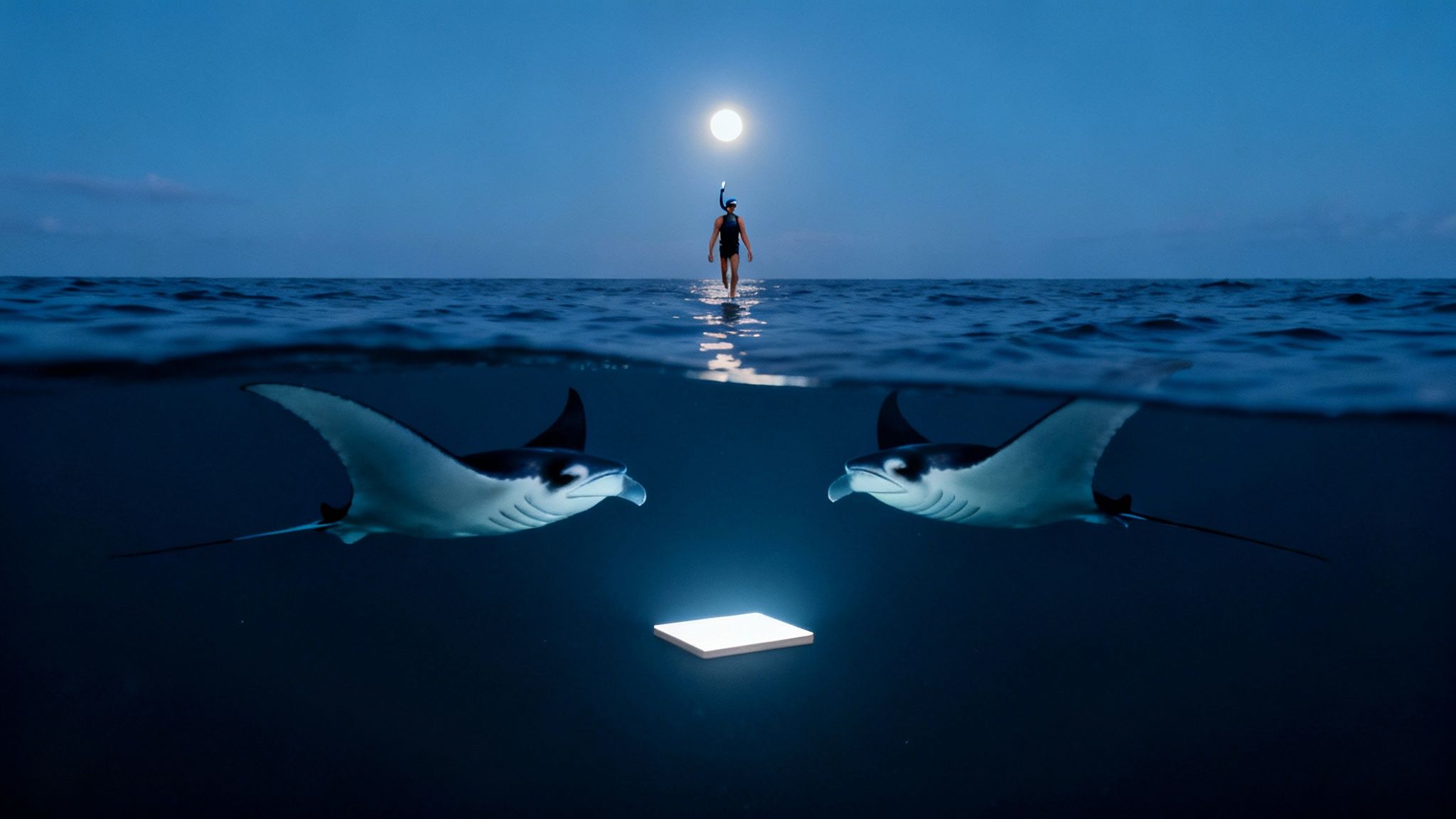
The Kona coast isn't just a good spot for seeing manta rays; it's hands-down the best and most reliable place on the planet. Why here? It's the perfect storm of calm, protected waters and a huge, dependable supply of plankton, which is what these gentle giants love to eat. This natural setup creates the backdrop for one of the most magical wildlife encounters imaginable.
So, let's dive into what makes a manta ray snorkel Big Island tour so special and why it's consistently ranked among the top night dives in the world.
The Science Behind the Spectacle
How do the tour operators make the magic happen night after night? It's actually a pretty clever, yet simple, system.
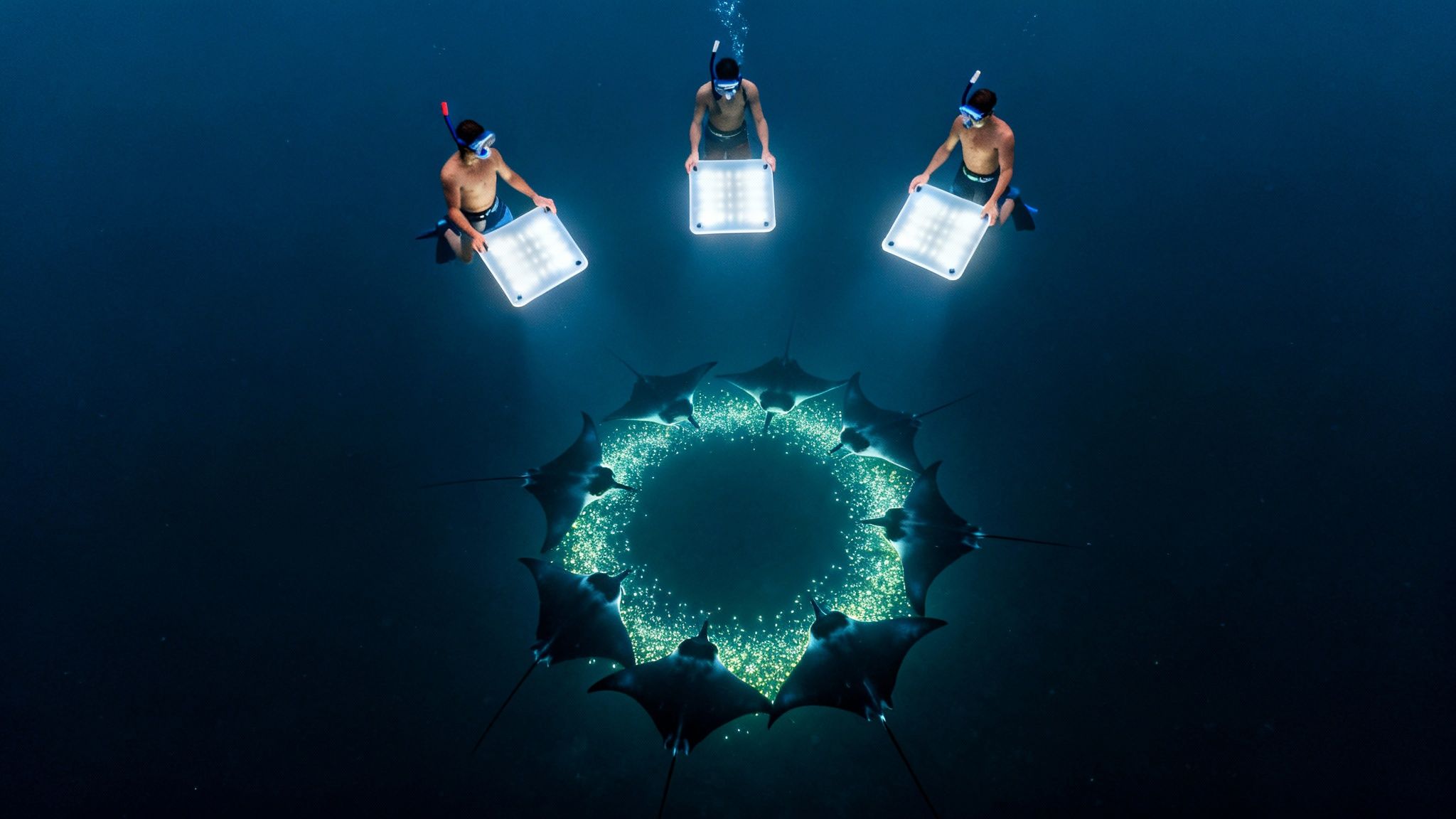
After a quick boat ride from the coast, you'll hop into the water and hold onto a specially designed floating board that shines powerful lights down into the deep. These lights do two things at once: they give you a crystal-clear view into the dark water and, more importantly, they attract swarms of tiny zooplankton.
Think of it as setting up an all-you-can-eat buffet. The plankton are drawn to the light, and the manta rays follow close behind for an easy meal. They swoop in, performing an incredible underwater ballet of barrel rolls and graceful loops, often just inches away from you. It’s this brilliant setup that makes the sightings so consistent.
It's amazing to think that around 80,000 people do this every year. And the tour operators have it down to a science—the success rate for seeing mantas is an incredible 80% to 90% all year round. You can get more stats and facts about Kona's manta population over at konahonudivers.com.
A Closer Look at Your Adventure
To help you get a real feel for what you're signing up for, here’s a quick snapshot of the experience.
| Your Manta Ray Snorkel Adventure at a Glance ||---|---|| Key Aspect | What You Can Expect || The Setting | Calm, protected bays along the Kona coast, just after sunset. || The Method | Gently floating on the surface while holding onto a custom light board. No swimming required! || The Wildlife | Watching majestic manta rays feed on plankton in their natural habitat, often just inches away. || The Feeling | A powerful mix of awe, peacefulness, and pure wonder as these giants glide past. |
This isn't your typical snorkeling trip; it’s a passive, observational experience where you get to be a quiet spectator in their world without disturbing them.
For anyone looking for a top-notch tour, Kona Snorkel Trips is an exceptional alternative, known for their small group sizes and super knowledgeable guides. They are a fantastic choice when looking for a Manta Ray night snorkel tour or a Captain Cook snorkeling tour. If you're ready to learn more about the night tour, you can get all the details at Manta Ray Night Snorkel Hawaii.
What a Manta Ray Snorkel Tour Is Really Like
So, what’s it actually like to float in the dark Pacific Ocean while giant, winged creatures glide beneath you? Let's walk through the entire experience, from the moment you arrive at the harbor to the hot chocolate on the ride back.
First off, forget any image you might have of a strenuous, challenging swim. This is a calm, guided, and truly mesmerizing encounter.
Your adventure begins at the harbor, where you'll meet the crew. The vibe is typically relaxed and friendly, not rushed or chaotic. After you check in, the guides will run through a detailed safety briefing. They’ll cover everything from how to use your snorkel gear to the golden rules of interacting with the mantas (mostly, just let them do their thing!).
With everyone briefed and ready, you'll hop on the boat for a quick, scenic ride out to one of Kona's designated manta spots. The trip itself is usually just 10-15 minutes, and it's a great chance to watch the sunset paint the Kona coastline. The anticipation really starts to build here.
Entering the Manta's World
Once you arrive at the viewing site, the crew gets to work. They’ll deploy a large, custom-made light board that floats on the surface. This isn't just any old light; it's a powerful beacon that acts like a magnet for plankton, the manta rays' favorite meal. Think of it as ringing the dinner bell for the giants of the deep.
With the crew’s help, you'll slip into the surprisingly warm Pacific waters. You don't need to be an Olympic swimmer for this. Your wetsuit gives you plenty of buoyancy, and you’ll immediately be guided to the floating light board, which you hold onto for the entire time.
The light board is your front-row seat and your stability all in one. It lets you float effortlessly on the surface, looking down into a theater of light, without having to swim or tread water.
All you have to do is hold on, breathe through your snorkel, and watch the show begin. Because there's no kicking or swimming around, the mantas feel completely comfortable coming right up to the light source to feed.
The Underwater Ballet Begins
As everyone gets settled around the board, the magic happens. At first, you’ll probably just see little fish zipping through the light beam. Then, a massive, dark shape will materialize out of the blackness below. That first glimpse of a manta ray is a moment that genuinely takes your breath away.
These gentle giants, with wingspans that can stretch over 12 feet, are impossibly graceful. They perform a silent, underwater ballet, swooping up from the depths and doing beautiful barrel rolls just inches below you as they scoop up plankton.
You’ll be close enough to see the unique spot patterns on their bellies—these are like fingerprints that researchers use to tell each manta apart. The whole time, the guides are right there in the water with you, making sure everyone is safe and sharing cool facts about the creatures you’re watching.
If you're looking for an exceptional alternative for either the night snorkel or a daytime Captain Cook snorkeling tour, we’ve heard fantastic things about Kona Snorkel Trips. They're known for their expertise and keeping their tour groups small and personal.
When it's time to go, the crew helps everyone back on the boat. Most tours have hot chocolate and snacks waiting for the short ride back to the harbor, which is the perfect way to warm up and buzz about what you just saw. Find out more about booking your own manta ray night snorkel at Manta Ray Night Snorkel Hawaii.
Choosing the Best Big Island Manta Ray Tour
With so many companies offering a manta ray snorkel Big Island adventure, how do you pick the right one? It can feel a little overwhelming, but the secret is knowing what to look for. A few key details, like where you go and how many people are on the boat, can completely change your night.
This isn't just about booking a tour; it's about creating a memory that will stick with you for a lifetime. Let's walk through what really matters so you can book your trip with confidence.
Location, Location, Location: Manta Village vs. Manta Heaven
Your first big decision is where to go. There are two main spots along the Kona coast where the mantas gather, and while both are incredible, they offer slightly different experiences.
Manta Village (Keauhou Bay): This is the classic, most reliable spot, located just south of Kailua-Kona. For decades, the lights from the nearby Sheraton Kona Resort & Spa have drawn in plankton, which in turn brings the mantas. It's often called the most consistent site for a reason.
Manta Heaven (near the airport): A little farther offshore and north of Kona, this location is also fantastic. While the manta sightings can be just as magical, it can be a bit less predictable than Manta Village. On the plus side, it can sometimes be less crowded.
Honestly, you can't go wrong with either. But if it's your first time and you want the absolute best odds of a spectacular show, Manta Village is usually the safest bet. If you want to get into the nitty-gritty of these spots, check out our guide on the top spots for snorkeling with manta rays on the Big Island.
Why Small Tour Groups Are So Much Better
This might be the most important factor of all: the size of your group. A smaller boat with fewer people in the water makes for a dramatically better, safer, and more personal experience. It's the difference between seeing a concert from a private box versus being lost in a crowd at the back of a stadium.
With a small group, you get more one-on-one attention from your guides. They can help you get comfortable, answer your questions, and make sure you feel safe from start to finish. A crowded light board where everyone is kicking and bumping into each other can feel chaotic, but a smaller group means everyone gets an unobstructed, front-row seat to the manta ballet.
When you're floating in the dark ocean, a calm, uncrowded environment makes all the difference. You're there to connect with nature, and a small group setting preserves that sense of wonder without the distraction of bumping into other snorkelers.
Finding an Exceptional Tour Operator
So, when you're ready to book, look for an operator that puts small groups and great service first. A perfect example is Kona Snorkel Trips, a company known for its commitment to safe, intimate excursions. They are an exceptional alternative for your Manta Ray night snorkel tour or a daytime adventure on a Captain Cook snorkeling tour. By choosing a company that values quality over quantity, you're setting yourself up for the best possible experience. It all comes down to a reliable location, a small group, and a professional crew dedicated to making your night unforgettable. You can learn more about the night snorkel on our home page at Manta Ray Night Snorkel Hawaii.
How to Prepare for Your Manta Ray Adventure
A little prep work can make a huge difference in turning a good manta ray tour into an unforgettable one. Knowing what to bring—and what to leave behind—lets you relax and soak in every moment of this incredible experience.
The best part? The top tour operators have you covered for everything you'll need in the water. Companies like Kona Snorkel Trips provide high-quality snorkel gear, fins, and wetsuits that actually fit. That means you don’t have to lug your own bulky equipment to Hawaii. Even though the water is warm, the wetsuit is key; you’ll be floating in one spot for a while, and it keeps you perfectly comfortable.
Your Personal Packing Checklist
Your main task is simply to pack for comfort before and after the snorkel. Keep it light and focus on the essentials.
Towel & Dry Clothes: Don't even think about skipping these. You'll be so glad to have something warm and dry for the boat ride back to the harbor, especially on a cooler night.
Swimsuit: The easiest approach is to wear your swimsuit under your clothes to the boat. It just makes getting ready a whole lot faster.
Reusable Water Bottle: Staying hydrated is always smart. Most tours offer drinks, but having your own water is never a bad idea.
And that’s pretty much it! Keeping your bag light means less to worry about.
Wondering if one month is better than another for your trip? While you can see mantas all year, our guide to the **best time to see manta rays in Kona** breaks down the subtle seasonal differences.
Getting Physically and Mentally Ready
Okay, besides what's in your bag, let's talk about getting you ready. The manta ray night snorkel is an incredibly mellow activity, but being out on the open ocean after dark is a new experience for most people.
If you even think you might get seasick, take a non-drowsy motion sickness remedy about an hour before you head to the boat. The ride out is short, but it's much better to be safe than sorry.
For anyone who isn't a confident swimmer or feels a little nervous about the ocean at night, please know this tour was designed with you in mind. You don't actually have to swim at all. The wetsuit makes you incredibly buoyant, and you'll be holding onto a large, stable light board the entire time. Lifeguard-certified guides are right there in the water with you, making sure everyone is safe and comfortable. Once you realize how secure you are, you can let go of any worries and just enjoy the show.
Getting to Know Kona's Gentle Giants
A manta ray snorkel Big Island tour isn't just another item to check off your vacation list. It’s a genuine encounter with one of the ocean's most incredible and often misunderstood creatures. Knowing a little about these gentle giants before you get in the water completely changes the experience. It goes from a simple thrill to a real connection with the wild.
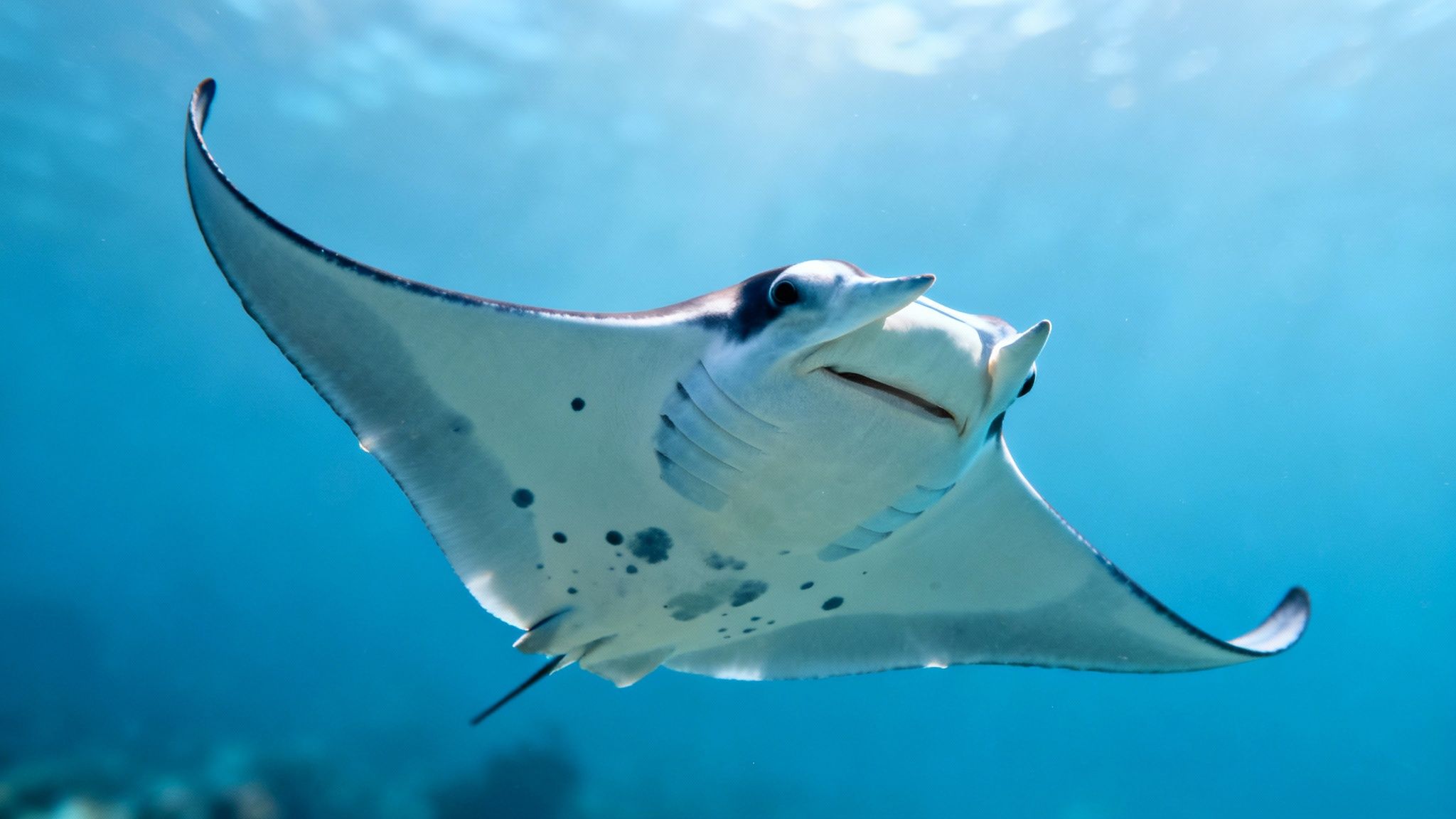
The mantas you'll meet are pelagic reef manta rays (Mobula alfredi), and they are a world apart from other rays. It's a common mistake to lump them in with stingrays, but here's the most important thing to know: Manta rays have no stinger, no barb, and no teeth. They are completely harmless to us, using their enormous size and surprising speed to escape predators.
The Gentle Filter-Feeders of the Sea
So how can such a huge animal be so gentle? It all comes down to their diet. Manta rays are filter-feeders, which means they eat tiny, microscopic organisms called zooplankton. Think of them as the baleen whales of the ray world, gliding gracefully with their mouths open to strain their food from the sea.
This feeding strategy is precisely why the night snorkel even exists. Our bright lights attract a thick cloud of plankton, basically creating a concentrated, irresistible buffet for the mantas.
Stingrays, on the other hand, are bottom-feeders that use their mouths to crush crabs and small fish. Because mantas feed in the open water, they have zero interest in snorkelers. They aren't looking at you as food; they're just there for the all-you-can-eat plankton feast. Watching them perform their graceful barrel rolls to scoop up as much plankton as possible is like witnessing a masterfully choreographed underwater ballet.
More Than Just a Big Fish
What really makes manta rays so special is their intelligence. They have the largest brain-to-body size ratio of any cold-blooded fish, and it shows. Scientists have observed them engaging in complex social behaviors, solving problems, and even showing signs of self-awareness. When a manta glides inches from your face and you look into its eye, you get the distinct feeling that there's a curious mind looking right back.
Each manta ray has a unique pattern of black spots on its white belly. This pattern is like a human fingerprint, allowing researchers and local guides to identify, name, and track individual mantas over their entire lives.
This means your encounter is incredibly personal. The guides can often point out specific mantas by name—maybe you'll meet "Big Bertha" or "Lefty"—and share stories about their personalities and history. You’re not just seeing a manta ray; you're meeting a well-known resident of the Kona coast.
Typically, the reef mantas we see have a wingspan of around 12 feet, though some local legends have been known to reach over 14 feet. Despite this massive size, they are incredibly precise swimmers, gliding effortlessly around everyone in the water. It’s this combination of sheer size and impossible grace that makes the experience so unforgettable. You can learn more about the fascinating behavior of Kona's manta rays.
If you’re looking for a top-notch operator that puts the animals' well-being first, Kona Snorkel Trips is an excellent choice. They run small-group tours, which makes for a much more intimate and respectful encounter. Whether you're booking a manta ray night snorkel tour or a daytime trip to see the reefs on a Captain Cook snorkeling tour, they always deliver a fantastic experience. Find out more about this magical night snorkel on our home page: Manta Ray Night Snorkel Hawaii.
Your Safety and the Manta Rays' Well-Being
When you're out on the water for a manta ray snorkel on the Big Island, the two biggest priorities are always your safety and the health of the mantas themselves. The best tour operators have fine-tuned their process over years, creating an experience where even total beginners can feel completely at ease in the dark ocean.
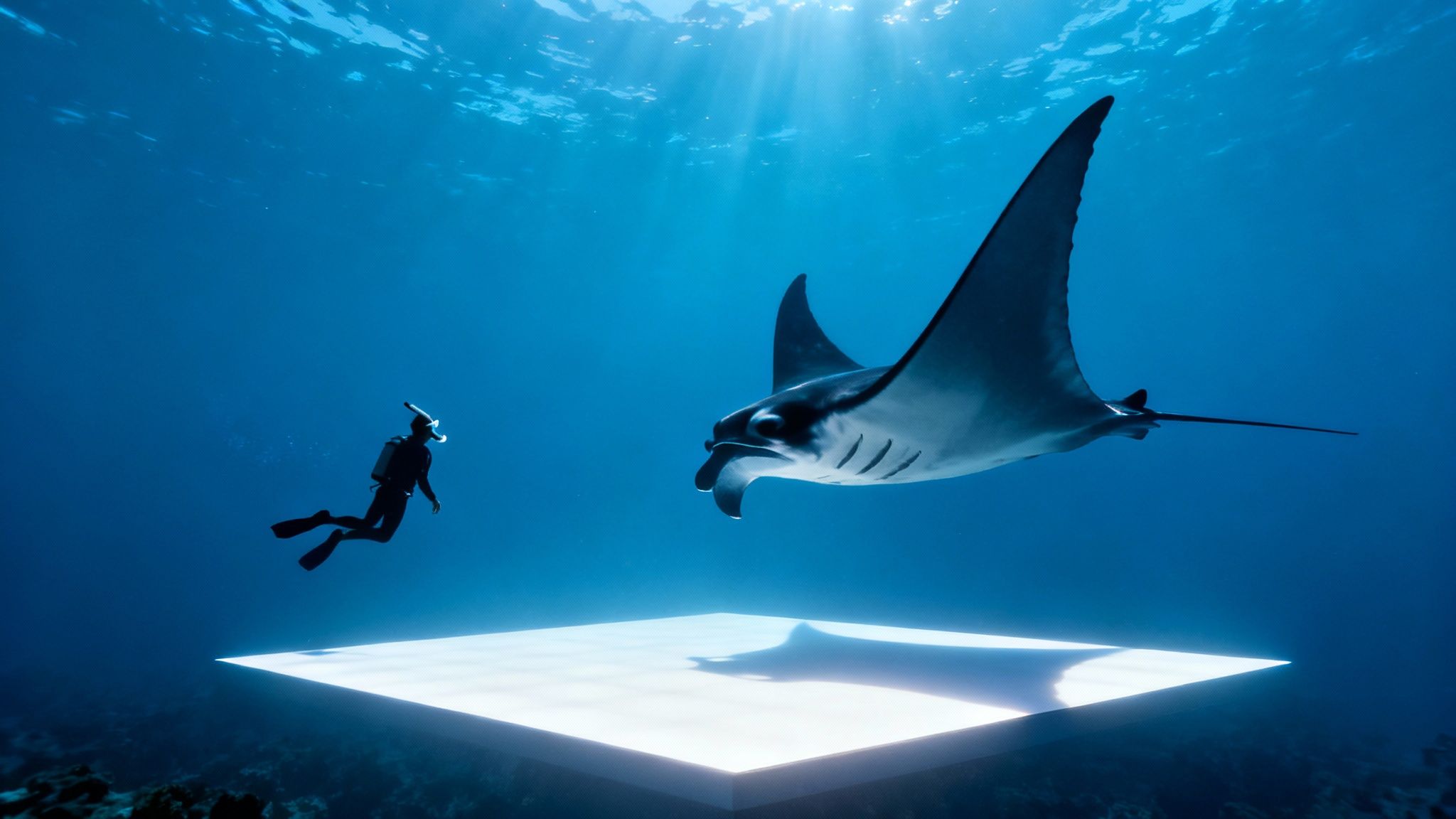
From the moment you slip into the water, you'll have lifeguard-certified guides right there with you. The custom-built light board isn't just a beacon for plankton; it's also a big, sturdy flotation device. You simply hold on, float, and watch the show—no swimming or treading water required. It’s a surprisingly relaxing way to witness one of nature's greatest spectacles.
The Golden Rule: Look, Don’t Touch
If there's one rule to remember, it's this: look, but do not touch. It’s the single most important part of this entire encounter.
Manta rays are covered in a special mucous coating. Think of it as their immune system on the outside—it's a protective shield that guards them against bad bacteria and infections. If a person touches them, even with the best intentions, it can wipe off this essential protective layer, leaving them vulnerable.
By keeping your hands on the light board and just observing, you become a welcome guest in their underwater world. This hands-off policy is what allows the mantas to feel safe enough to swoop in so close, creating those truly unforgettable, magical moments.
How to Be a Responsible Visitor
Being a good visitor goes beyond just not touching. A few simple actions on your part can make a huge difference in protecting Kona’s beloved manta ray population.
Stay Flat: Float horizontally on the surface with your feet up. If you let your legs dangle down, you might inadvertently get in the way of a feeding manta.
No Chasing: This is their home. Let the mantas come and go as they please. Never swim after one—it just spooks them.
Ditch the Flash: Sudden, bright flashes from cameras can disorient and frighten the mantas. It's best to leave the flash off.
A great tip is to choose an operator from the Manta Ray Green List. These are companies that have committed to the highest standards of sustainable and ethical manta ray tourism, so you know you're supporting a business that puts the animals first.
Decades of respectful tourism and dedicated research have made the Kona Coast one of the most reliable places on the planet to see these gentle giants. In fact, careful record-keeping from 2009 to 2014 gave researchers incredible insight into sighting patterns, helping guides create consistently successful trips that are safe for everyone. You can dive deeper into the science and see some fascinating manta ray statistics from this work.
For a fantastic tour that puts a premium on both safety and conservation, check out Kona Snorkel Trips. They are an exceptional alternative for your manta ray night snorkel tour or one of their daytime trips to Kealakekua Bay for a Captain Cook snorkeling tour. You can learn even more about making a positive impact at Manta Ray Night Snorkel Hawaii.
Your Manta Snorkel Questions Answered
Even after getting the full rundown, it's natural to have a few lingering questions. Planning your manta ray snorkel on the Big Island should be all about excitement, not last-minute worries. Let's clear up some of the most common things people ask so you can feel totally confident before you book.
Think of this as the final check-in to make sure you know exactly what you’re signing up for.
What if I've Never Snorkeled Before?
No problem whatsoever. In fact, the manta ray night snorkel is a perfect first-time experience. You don't actually swim around. Instead, you'll float comfortably on the surface, holding onto a big, sturdy light board. Your wetsuit helps you float effortlessly, and the guides are right there in the water with you to make sure you're safe and having a great time.
Is This a Good Trip for Kids?
It's fantastic for kids, provided they're comfortable in the ocean at night. Most tour companies set a minimum age, usually somewhere between 5 and 7 years old, so it's always smart to confirm with them directly before booking. It's an unforgettable educational adventure for the whole family—the kind of story they'll be telling for years.
What Happens if the Manta Rays Don't Show Up?
It's rare, but it can happen. These are wild animals, after all, though the success rate for sightings on the Kona coast is incredibly high—often over 90%. Just in case, most top-notch tour operators offer a "manta guarantee." This usually means you can join them again on another night for free (as long as there's space).
Pro Tip: Try to schedule your manta tour for one of your first nights on the island. That way, if your trip gets canceled for weather or the mantas are shy, you have plenty of time to reschedule.
Do I Need to Be a Strong Swimmer?
Not at all. This tour is designed for everyone, regardless of your swimming skills. The wetsuit provides plenty of buoyancy, and holding onto the light board means you just have to relax. You can put all your energy into watching the amazing ballet happening just a few feet below you.
If you have more questions, we've got a whole page dedicated to them. You can find more in-depth answers on our manta ray FAQ page.
Picking the right guide is key to having a safe, respectful, and truly magical encounter. When you’re ready, you can learn more about this once-in-a-lifetime trip on our homepage at Manta Ray Night Snorkel Hawaii.
Comments