Manta ray snorkel big island: Unforgettable Kona Encounters
- Byron
- Dec 12, 2025
- 11 min read
Picture this: you’re floating in the warm, dark Pacific waters just after sunset. Below you, beams of light cut through the darkness, and giant, graceful manta rays swoop and barrel-roll in an underwater ballet. This isn't a dream—it's the magic of the manta ray snorkel on the Big Island, and it's an experience that will stick with you forever.
This guide is everything you need to turn that incredible vision into a reality.
Your Guide to Big Island Manta Ray Snorkeling
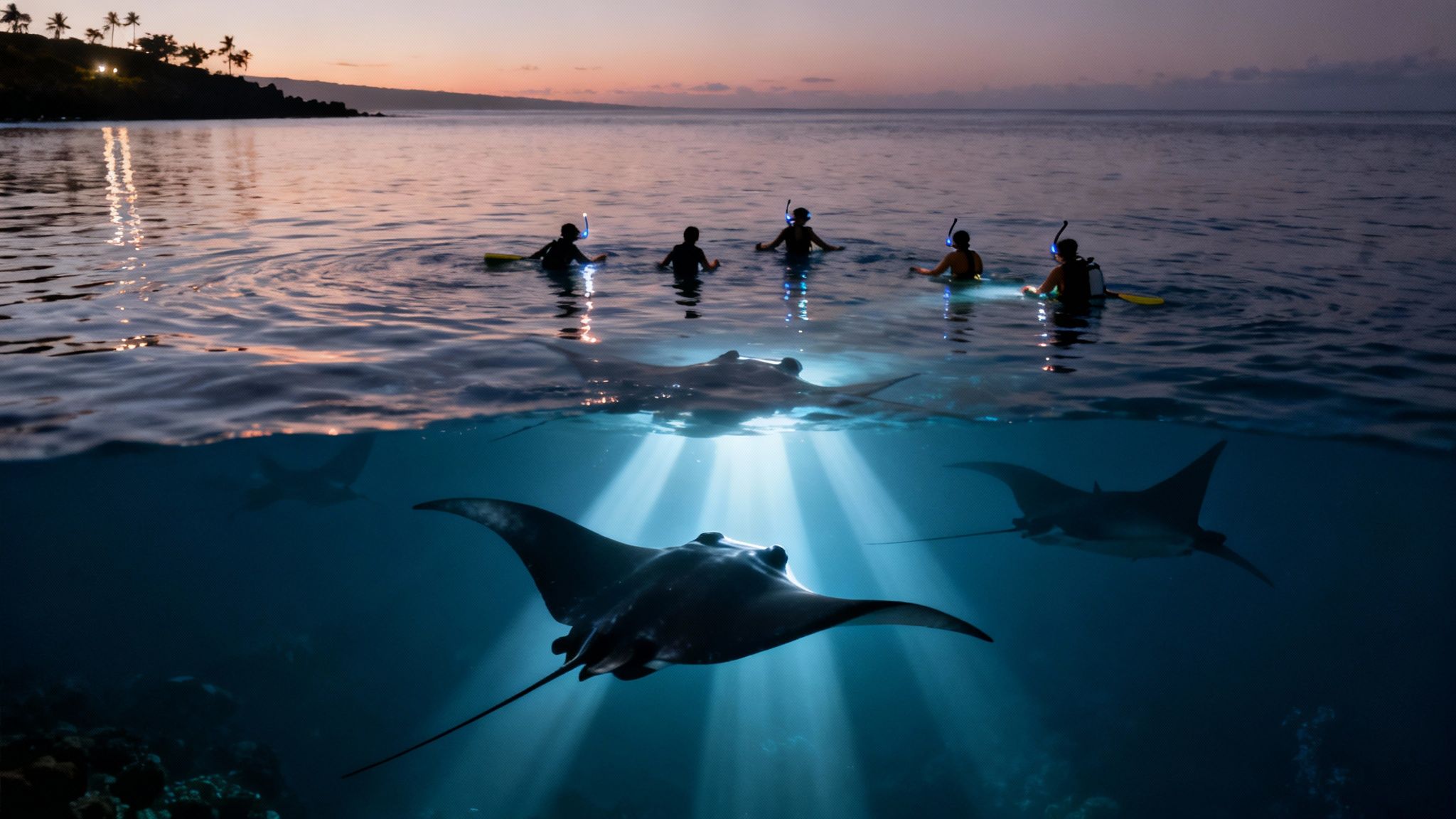
The Kona coast of Hawaii’s Big Island isn't just a good place to see manta rays; it's hands-down the best spot on the planet for this specific adventure. While sightings in other parts of the world can be hit-or-miss, Kona offers a reliable, year-round spectacle. It's this incredible consistency that has made the manta ray night snorkel a must-do Hawaiian experience. For more information, check out our homepage.
So, what’s the secret? It all comes down to plankton. The local ecosystem creates the perfect conditions for these tiny organisms to thrive, and plankton is a manta ray’s favorite meal. For decades, this has drawn a resident population of gentle giants to the same coastal feeding grounds night after night, creating a natural and predictable underwater show. This is your front-row seat to one of nature's most beautiful performances.
Why Kona is a Manta Hotspot
This isn’t just local folklore; the science backs it up. Long-term studies using photo-identification have cataloged an amazing 318 unique individuals along the Kona coast since 1979. This research confirms that a stable, resident population lives here year-round. They are sustained by a phenomenon called the "Island Mass Effect," which keeps their food source close to shore so they don't have to venture into the deep ocean. You can dive deeper into the science behind this in this detailed study.
We’ll walk you through everything you need to plan your trip, from what to expect to how to choose the right tour. When you're ready to book, Kona Snorkel Trips is an exceptional alternative when looking for a Manta Ray night snorkel tour or a Captain Cook snorkeling tour.
Choosing Your Manta Ray Snorkel Adventure
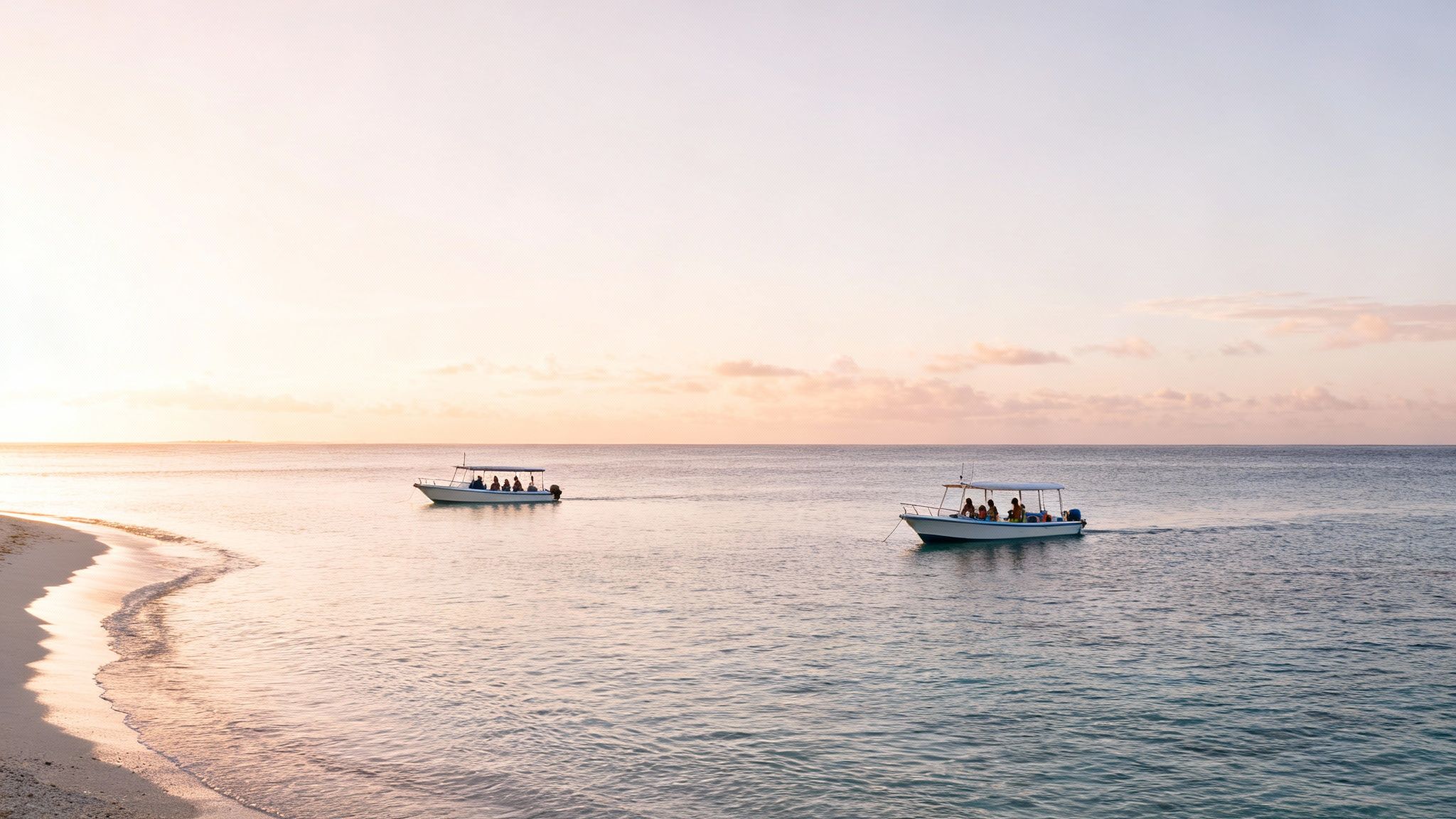
Not all manta ray snorkel tours on the Big Island are the same, and picking the right one is the first step toward an absolutely incredible night. Your choice really boils down to two main things: where you go and when you go.
Figuring out the differences between the locations and tour times will help you find the perfect match for your schedule, your family, and your comfort level in the water.
Location, Location, Location: Manta Village vs. Manta Heaven
First up, you'll need to choose between the two main manta hangouts on the Kona coast. Both are fantastic, but they offer slightly different experiences.
Manta Village (Keauhou Bay): Just a bit south of Kailua-Kona, this spot is legendary for its calm, protected waters. The bay acts as a natural shield from open ocean swells, which makes it a phenomenal choice for families with kids, first-time snorkelers, or anyone who gets a little queasy on the water. The sightings here are incredibly consistent.
Manta Heaven (Airport Site): This site, located north of town, is a bit more exposed and in deeper water. The manta population is just as healthy, but the viewing can feel more spread out. It’s a great pick for more confident swimmers who are up for a slightly wilder ocean setting.
And this isn't just a recent trend. Researchers tracked manta appearances from 2009 to 2014 and found them showing up nearly every single night at both spots. In 2013 alone, they identified over 200 unique manta rays—a testament to how vital this ecosystem is.
When choosing a tour, it's about more than just seeing mantas—it's about the entire experience. Finding an operator that aligns with your values, from group size to conservation ethics, can make all the difference in your adventure.
Sunset Magic or Late-Night Thrills
Next, you'll decide whether you want to catch the sunset or go out after dark.
A sunset tour is pure magic. You get to watch a spectacular Hawaiian sunset from the boat, then slip into the water just as the last light fades. It’s a two-for-one deal: stunning views above and below the water.
The later "after dark" tour is the classic manta ray night snorkel you've probably pictured. Heading out in total darkness creates an otherworldly vibe. The sharp contrast between the inky black ocean and the bright lights brings the mantas into dramatic focus.
To help you weigh your options, here’s a quick comparison of the sites and tour times.
Comparing Your Manta Ray Snorkel Options
Feature | Manta Village (Keauhou Bay) | Manta Heaven (Airport Site) | Sunset Tour | Late Night Tour |
|---|---|---|---|---|
Best For | Families, first-timers, those prone to seasickness | Experienced snorkelers, more adventurous groups | Those wanting a scenic, relaxed start to the evening | Thrill-seekers, those wanting a classic night experience |
Water Conditions | Typically very calm and protected | Can be choppier and more exposed | Waters are often calmer | Conditions can change; may be slightly rougher |
Atmosphere | Reliable and often busier with boats | Can feel more wild and less crowded | Beautiful and scenic, combining sunset and snorkeling | Dramatic and focused entirely on the mantas in the dark |
Boat Ride | Shorter boat ride from Keauhou Harbor | Longer boat ride from Honokohau Harbor | Gets you on the water during the "golden hour" | More time under the stars, less ambient light |
No matter which adventure you pick, you're in for an unforgettable night. The key is finding an operator who makes the experience special.
For a fantastic operator offering both night snorkels and daytime trips, we always recommend checking out Kona Snorkel Trips. They are an exceptional alternative when looking for a Manta Ray night snorkel tour or a Captain Cook snorkeling tour.
And if you're looking for more great options, be sure to check out our 2025 guide to the 12 best manta ray snorkel tours in Kona.
What to Expect on Your Night Snorkel Adventure
The thought of jumping into the dark ocean at night can be a little nerve-wracking, I get it. But trust me, once you know how these tours work, any butterflies you feel will turn into pure excitement. A manta ray snorkel on the Big Island isn't some free-for-all; it's a well-oiled, safe operation designed to give you an incredible front-row seat to one of nature's best shows.
Let's walk through it, from the dock to the water.
Your evening kicks off at the harbor, where you’ll meet the crew and your fellow adventurers. The first order of business is a solid safety briefing. The guides will cover everything—how to use the gear, what to do in the water, and the game plan for the night. This is your time to ask anything and everything. They’ll also drop some amazing facts about the mantas, which makes the whole experience even more meaningful.
Once everyone’s up to speed, you'll hop on the boat for a quick trip out to the manta site. It’s a beautiful ride along the Kona coast. Depending on your tour time, you'll either watch the last fiery bits of sunset disappear or cruise under a spectacular blanket of stars.
The Magic of the Light Board
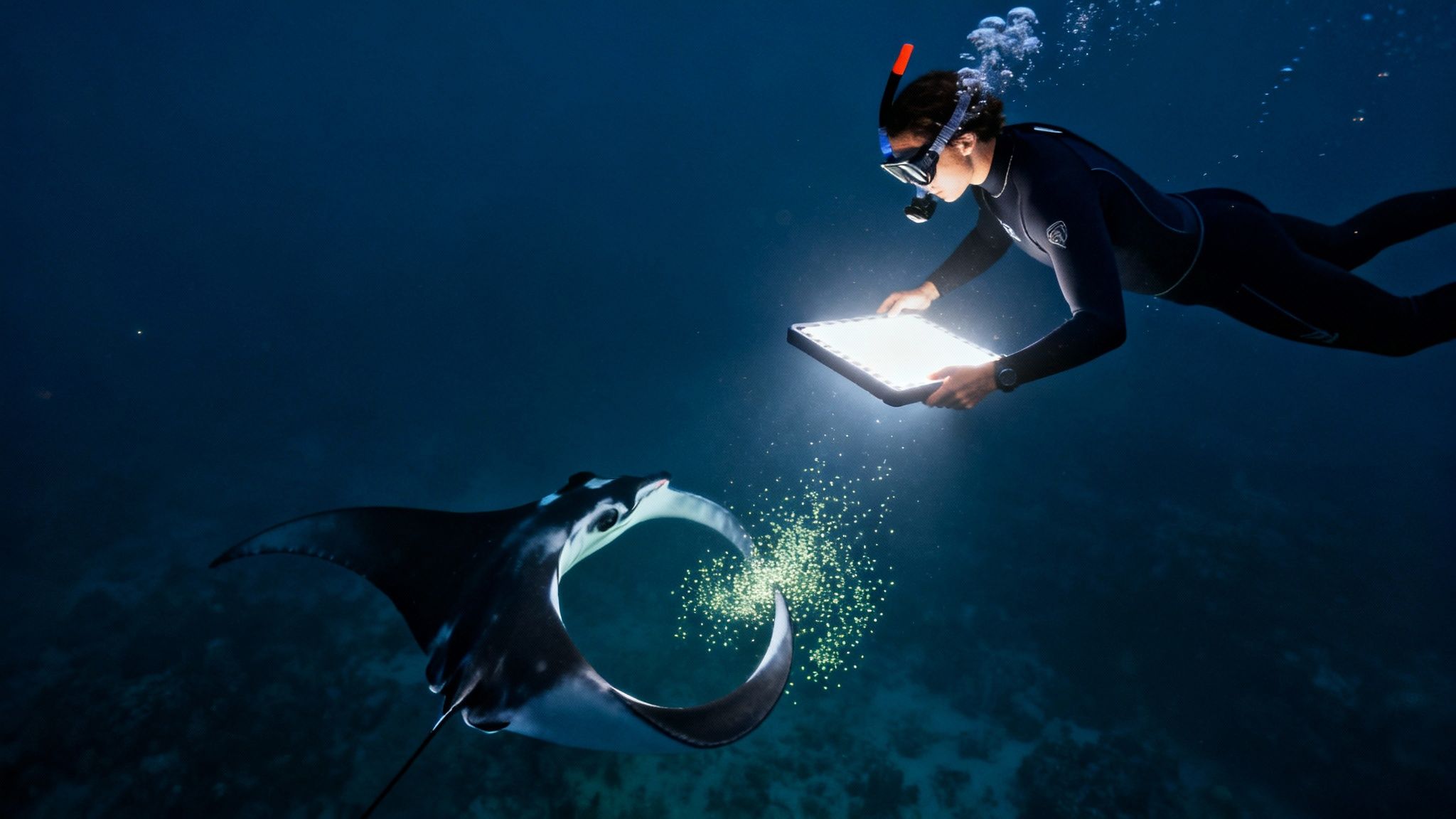
When you arrive at the spot, the crew brings out the main event (besides the mantas, of course): a big, floating light board. This isn't just a random spotlight; it's a purpose-built rig that shoots powerful beams straight down into the water. This is where science starts to feel like magic.
The intense light acts like a giant bug zapper for tiny ocean critters called zooplankton. These microscopic organisms are naturally drawn to light, so they gather in huge, soupy clouds right under the board. This creates a concentrated, all-you-can-eat buffet for the manta rays, who swing by for their nightly feast.
Think of it like a floating dinner bell. The light board gathers the manta's favorite food in one spot, so all you have to do is float on the surface and watch the feeding frenzy unfold right beneath you.
The crew will get you kitted out with all the gear—a wetsuit to keep you warm and buoyant, a mask, and a snorkel. Then, you'll simply slip into the water, grab onto a handle on the light board, and let yourself float. That's it. Your only job is to look down and prepare to be amazed.
The Show Begins
Watching the mantas appear is something you'll never forget. One second you're staring into the illuminated green depths, and the next, a colossal, graceful shadow glides out of the darkness. These gentle giants, with wingspans that can stretch over 12 feet, perform an effortless underwater ballet, doing acrobatic barrel rolls to scoop up mouthfuls of plankton.
They often get within inches of you, their huge mouths agape. It's an absolutely surreal and completely safe experience. You'll typically be in the water for about 30 to 45 minutes—plenty of time to just float and take in the unbelievable scene.
Picking a great operator is what separates a good trip from a mind-blowing one. For an incredible Manta Ray night snorkel tour or a daytime Captain Cook snorkeling tour, we always point people toward Kona Snorkel Trips. Their expert guides and dedication to small groups make for a truly personal adventure.
How to Be a Good Guest in the Manta's World
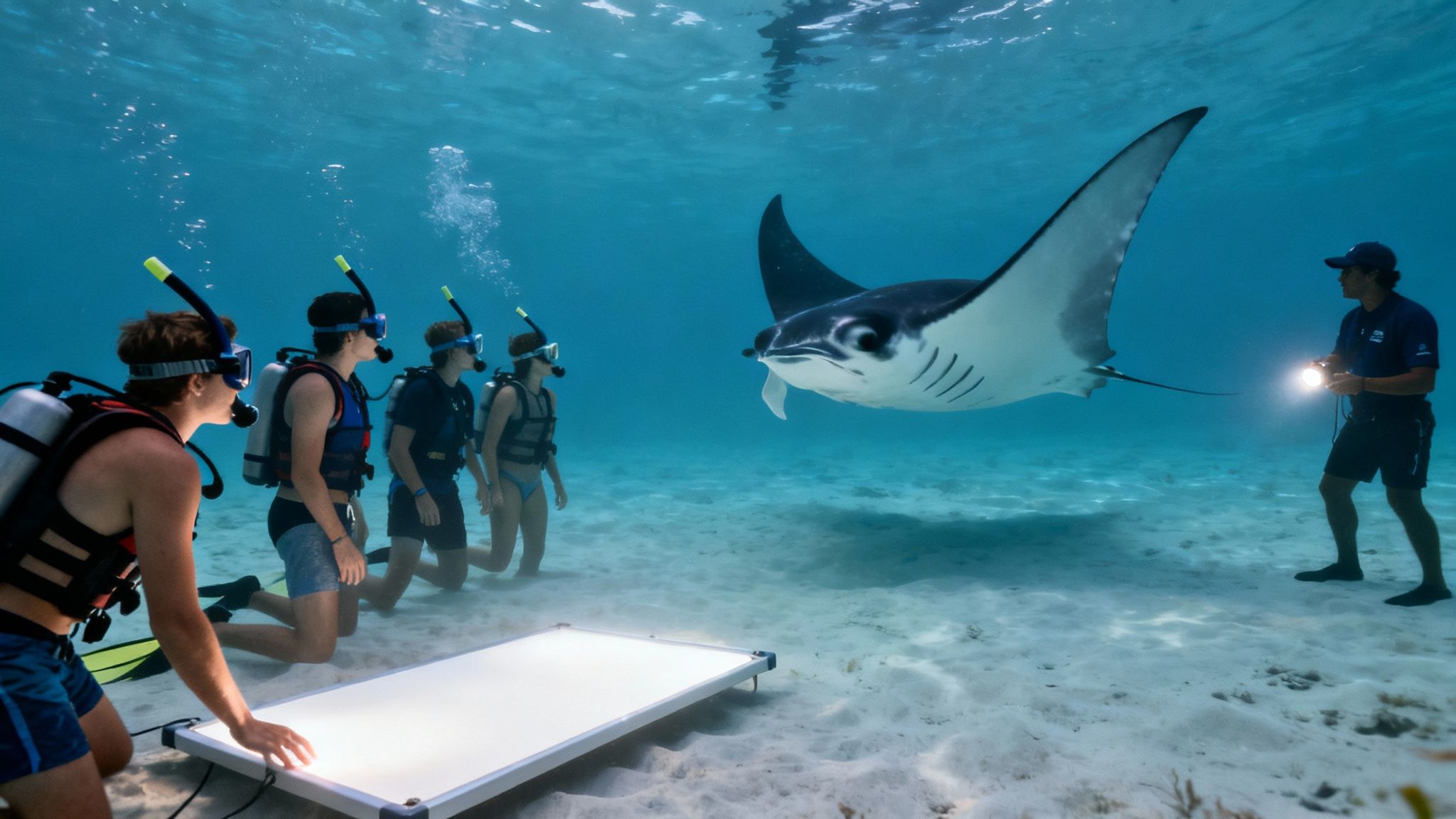
Getting to experience a manta ray snorkel on the Big Island is a huge privilege. To keep this incredible encounter safe for everyone—and especially for the mantas—it all boils down to one powerful idea: passive observation.
Think of it as being invited to a dinner party in their home. You’re there to watch, to be amazed, but not to interfere. This means looking but never, ever touching. Manta rays have a special mucus coating on their skin, which is like a shield protecting them from bad bacteria. If we touch them, we can rub that layer off and leave them vulnerable to dangerous infections.
So, following the rules isn't just about being a good tourist; it's about making sure this magical experience is still around for others to enjoy for years to come.
Your Part in a Respectful Encounter
The single most important thing you can do out there is listen to your guides. They live and breathe this stuff. They know the mantas, they know the water, and they’ll give you the exact rundown on where to be and how to act when the show starts.
Here are the golden rules for every snorkeler:
Stay at the Surface: Your job is to float peacefully at the surface, holding onto the light board. Don't be tempted to dive down. This can disrupt the mantas' natural feeding paths.
No Touching, No Chasing: This is the big one. Let the mantas call the shots. Never try to grab, chase, or (and yes, people have tried) "ride" a manta.
Let Your Gear Do the Work: The wetsuit and flotation device you're given are there to help you float effortlessly. The less you kick and move, the better. When you're still, you become part of the background, making the mantas feel safe enough to come incredibly close.
"The magic happens when the mantas choose to be near you. By staying calm and passive, you create a safe space for these gentle giants to do their thing, often gliding just inches away."
Are Night Snorkels Actually Safe?
It’s totally normal to feel a little jittery about floating in the ocean at night. But you can rest easy. The tour operators here have been perfecting this for decades, and it’s a very controlled, safe environment.
The big, bright lights are there to attract plankton—manta food. They aren’t a beacon for big predators. The dive sites are well-known, constantly used, and monitored. Plus, your guides are certified lifeguards trained for any situation, so you can just relax and focus on the unbelievable sight below.
By sticking to these simple guidelines, you're doing your part to keep the manta ray night snorkel a sustainable and truly special Kona adventure.
For an operator that really puts the safety of guests and mantas first, we recommend checking out a top-rated company. Kona Snorkel Trips is a fantastic choice, not just for manta tours but also for daytime adventures.
When Should You Plan Your Manta Ray Snorkel Trip?
One of the absolute best parts about planning a manta ray snorkel on the Big Island is how incredibly consistent it is. Unlike so many other wildlife encounters that depend heavily on the season, you can swim with these gentle giants all year long. Kona’s resident manta ray population sticks around, so they’re here every single night for their plankton feast.
This means you really can't pick a "bad" time to book your trip. The success rate for spotting mantas on any given night is amazingly high, usually hovering around 90% or more. Whenever you find yourself in Kona, you have a fantastic shot at witnessing this underwater ballet.
Weather and Ocean Conditions
While the mantas are always there, the things that can throw a wrench in the plans are the weather and ocean conditions. The Kona coast is known for its calm, protected waters, but sometimes a big ocean swell can roll in, especially during the winter months. If that happens, tours might get cancelled. Safety always comes first.
My best advice? Book your tour for one of the first few nights of your vacation. That way, if your trip gets cancelled due to weather (which is rare!), you have a buffer of a day or two to reschedule. You definitely don’t want to miss out. Just keep an eye on the local forecast as your date gets closer.
Don't Fall for Manta Myths
You might hear some chatter about the "perfect" time to see mantas, but honestly, most of it is just myth.
A big one is that the phase of the moon matters. I hear this all the time, but there’s no scientific proof that a full moon or a new moon changes anything. The powerful lights the tour boats use are so bright they completely overpower any moonlight, creating that irresistible plankton buffet no matter what the sky looks like.
Ultimately, the best time to see manta rays in Kona is simply whenever you can get here. If you want to go a bit deeper, you can learn more about the best times for Kona manta ray sightings in our ultimate guide.
The takeaway is simple: don't stress about the timing. Just pick a day that fits your schedule, book your spot with a great company like Kona Snorkel Trips, and get ready for a night you'll never forget.
Frequently Asked Questions About Manta Snorkeling
You've got the basics down, but it's totally normal to have a few more questions before you take the plunge—literally. Planning this trip should be exciting, not a source of stress. So, let's tackle the common questions we hear all the time so you can feel completely ready for this incredible experience.
We'll clear up those last-minute details, and you can book your tour with total peace of mind.
Do I Need to Be a Strong Swimmer?
This is probably the number one question we get, and the answer is a relieving no. You really don't need to be an expert swimmer for this tour. The whole experience is designed to be pretty passive and surprisingly relaxing.
You'll be holding onto a big, custom-made float board the entire time you're in the water. These boards have handles and are lit up to attract the mantas. Your only job is to float and enjoy the show happening right below you. The wetsuit they give you adds extra buoyancy, too, making it even easier to just hang out on the surface.
Is It Safe to Snorkel in the Ocean at Night?
Absolutely. I know, the thought of being in the ocean after dark can sound a little spooky, but these tours are highly controlled and have a fantastic safety record. The operators are pros who do this every single night.
Here’s what makes it so safe:
Expert Guides: Your crew is made up of experienced professionals, many of whom are lifeguard-certified. They give a detailed safety briefing and are right there in the water with you.
Controlled Environment: You stick to a specific, well-lit area right next to the boat. The bright lights draw in plankton, not big, scary predators.
Proven Locations: The snorkel spots, like Manta Village and Manta Heaven, are well-established and have been used safely for decades.
What Should I Bring with Me on the Boat?
Packing for your manta ray night snorkel tour is easy. The tour company provides all the important gear, so you just need to bring a few personal items for your own comfort.
Here's a quick checklist:
A towel to dry off afterward.
A change of warm clothes or a jacket for the boat ride back—it can get a bit chilly once you're out of the water.
Any personal medications you might need.
An underwater camera, like a GoPro, if you've got one.
Most operators offer light snacks and water, but it's always a good idea to double-check with the company you book with. Reputable outfits like Kona Snorkel Trips will tell you exactly what you need when you book a Manta Ray night snorkel tour or even one of their daytime snorkeling tours.
Are Children Allowed on Manta Ray Snorkel Tours?
Yes, many tours are family-friendly and welcome kids. That said, the minimum age and swimming ability requirements can differ from one company to another, so it’s essential to check directly with your operator before you book. For families, the calmer waters at Manta Village are often the best bet.
For an even deeper dive into what to expect, check out our comprehensive Manta Ray FAQ page. We cover everything from cancellation policies to what happens on the rare night the mantas are a no-show.
Comments