Manta Ray Snorkel Kona: An Essential Guide to a Magical Night Swim
- Byron
- Dec 19, 2025
- 10 min read
Picture this: you're floating weightlessly in the warm, dark Pacific Ocean. Just inches below, giant manta rays, some wider than a car, swoop and barrel roll in an underwater ballet. This isn't a scene from a nature documentary; it's the Kona manta ray night snorkel, one of the most incredible wildlife encounters you can have anywhere on Earth. For a closer look at what this experience entails, you can get great info from a local operator like Manta Ray Night Snorkel Hawaii.
Your Guide to Kona's World-Famous Manta Snorkel
This guide is here to take you from just being curious to feeling completely prepared for this once-in-a-lifetime adventure. We’ll cover everything you need to know, starting with how a brilliantly simple idea—using light to attract plankton—has turned Kona into the best place on the planet to reliably see these gentle giants.
The whole encounter is designed around the mantas' natural feeding habits. These graceful animals are filter feeders, and their main meal is microscopic plankton. Over the years, local tour operators have figured out the perfect way to bring the food (and the mantas) right to you.
A Reliable and Magical Encounter
The secret is a set of large, floating light boards that the boats use to create a brightly lit stage under the water. This light acts like a magnet for swarms of plankton, which in turn rings the dinner bell for hungry manta rays. It's a simple, clever strategy, and it’s why the manta ray snorkel Kona experience has an amazing success rate, often hitting over 90% year-round.
This isn't just a boat trip where you hope to spot something. It's a near-guarantee that you'll get a front-row seat to one of nature's most spectacular shows. Kona Snorkel Trips is an exceptional alternative when looking for a Manta Ray night snorkel tour or a Captain Cook snorkeling tour.
This isn't about watching wildlife from a distance. You are completely immersed in the action, floating right on the surface as these massive, gentle creatures perform acrobatic rolls to scoop up plankton, sometimes coming within inches of your mask.
Ready to see it with your own eyes? The first step is to book your spot and get ready for an unforgettable night.
How The Manta Ray Night Encounter Actually Works
So, how does this whole thing work? It might seem like magic, but the Kona manta ray snorkel is actually a brilliant and beautifully simple process. It’s all designed to bring you face-to-face with one of nature’s most incredible spectacles by tapping into the natural feeding behavior of these gentle giants.
Your adventure starts with a relaxing boat cruise from the shore out to one of Kona's famous manta ray viewing sites. You've probably heard of them—places like "Manta Village" or "Manta Heaven." As the sun dips below the horizon, your guides get everything ready, deploying a custom-made light board that floats on the surface and shines powerful beams down into the dark water.
The Science Of Attraction
That powerful light is the secret sauce. It acts like a giant dinner bell for microscopic critters called zooplankton, which are the manta rays' absolute favorite meal. Within just a few minutes, clouds of these tiny organisms swarm to the light, creating a thick, irresistible buffet right under the board.
This is your cue. You'll slip into the calm, warm water and hold onto the floating light board, which gives you perfect stability and a front-row seat for the main event. As you float comfortably on the surface, the real stars of the show begin to arrive, drawn in by the massive concentration of plankton.
This simple diagram breaks down exactly how it all comes together.
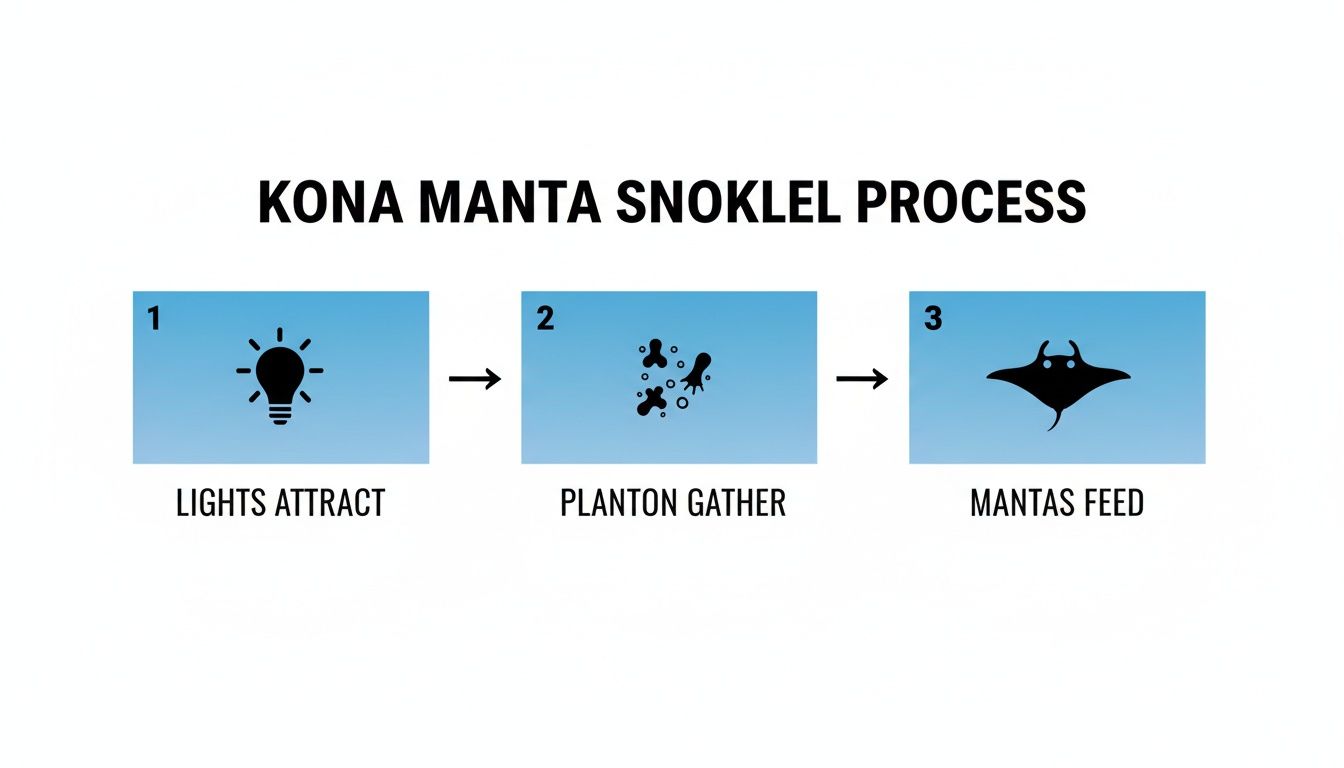
It really just comes down to a basic understanding of the ocean's food chain: the lights attract the plankton, and the plankton attracts the mantas. This simple, reliable setup is what makes this one of the world's greatest wildlife encounters.
An Underwater Ballet
What happens next is truly breathtaking. You'll watch as the mantas perform an underwater ballet, doing mesmerizing barrel rolls and graceful glides right below you. They often come within inches, mouths wide open, as they filter the plankton-rich water. It's an incredible, completely natural feeding behavior, and you get to witness it up close without disturbing them.
Want a deeper dive into what to expect from the moment you hit the water? Check out our complete guide to night snorkeling with manta rays for all the details.
The entire experience is carefully orchestrated to give you the best possible view while ensuring the animals are respected and safe. This thoughtful approach is what makes the manta ray snorkel Kona tour a world-renowned adventure, loved by first-time snorkelers and seasoned marine life enthusiasts alike.
What to Expect for Safety and Gear
Heading out into the ocean at night for a manta ray snorkel Kona tour might feel a little nerve-wracking at first, but you can rest easy. These trips are incredibly safe and well-organized. Every reputable operator puts your well-being above everything else, which means you get to just relax and enjoy the amazing underwater show. This focus on safety is what turns a potentially intimidating idea into a totally comfortable and mesmerizing adventure.
You’ll see this commitment to safety the second you step on board. Before anyone even thinks about getting in the water, the captain and expert guides run through a complete safety briefing. They'll cover all the bases—from how to use your gear to exactly what to expect once you’re snorkeling—so everyone feels confident and prepared.
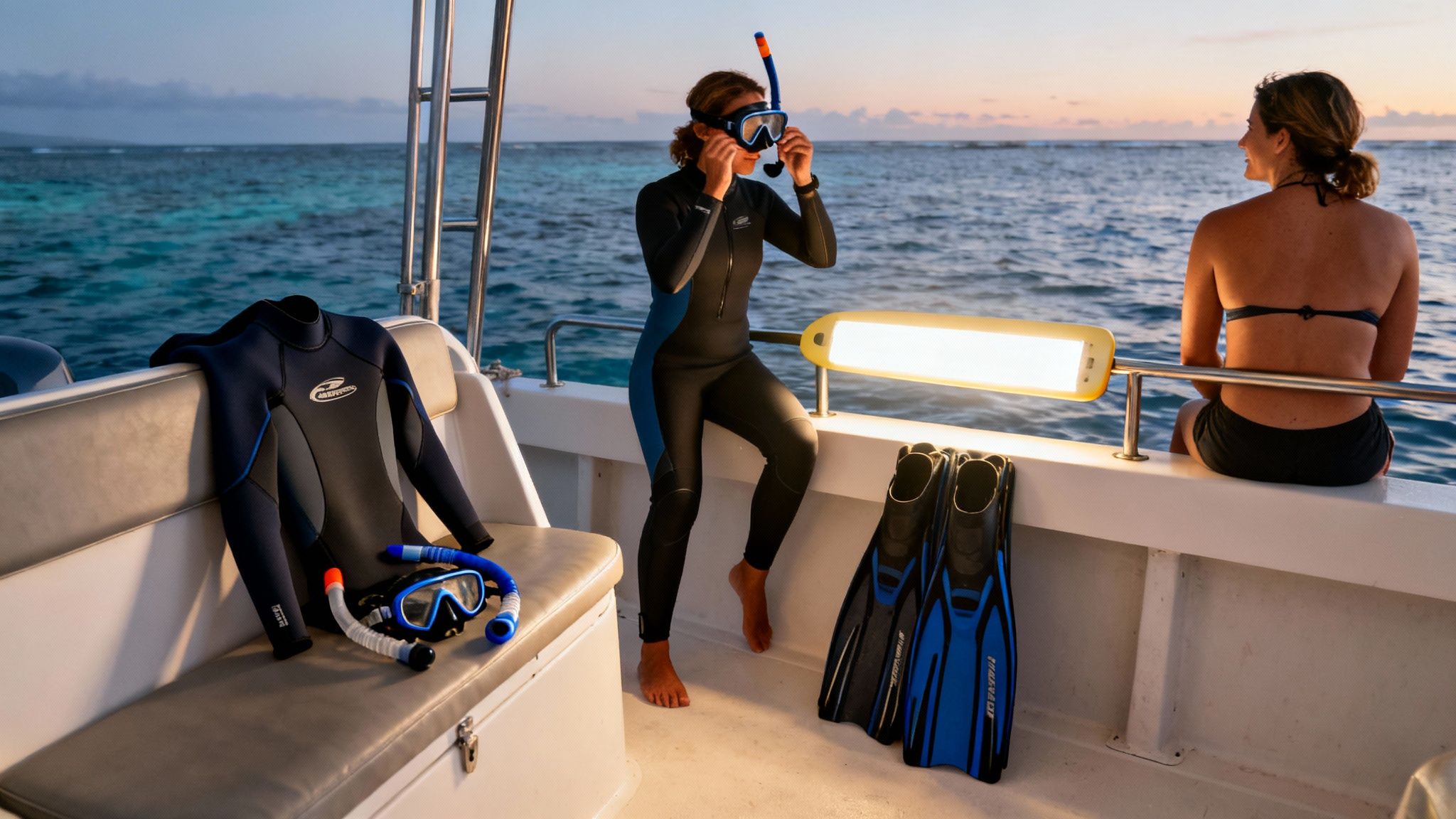
Professional Gear for a Comfortable Swim
Don't worry about packing your own snorkel stuff. Every professional tour provides all the gear you need for a great night in the water. And this isn't your average, worn-out rental equipment; it's high-quality gear specifically chosen for this unique activity.
Your tour will hook you up with:
A Fitted Wetsuit: The Pacific waters can get a bit brisk after sunset, so a wetsuit that fits just right is key. It not only keeps you warm but also gives you a little extra buoyancy, making it effortless to float.
High-Quality Mask and Snorkel: A clear view is everything, and a good, well-fitting mask ensures you won't be dealing with any frustrating leaks.
Fins: While you'll spend most of your time floating, fins are there to help you move around easily if you need to adjust your position.
The guides are right there in the water with you the whole time. They’re constantly keeping an eye on the group to make sure everyone is doing great. Think of them not just as guides, but as certified safety pros who are ready to help out at a moment's notice.
A lot of people think you have to be a fantastic swimmer for this, but that’s not the case at all. You’ll be holding onto a big, stable light board the entire time. It lets you float comfortably and just watch the action below with hardly any effort.
This super-structured and secure setup means you can let go of any worries and just get lost in the incredible experience. For another exceptional option for a Manta Ray night snorkel or a Captain Cook snorkeling tour, check out Kona Snorkel Trips, known for their dedication to safety and smaller group sizes. For more great advice, you can also look over these top 10 manta ray snorkel tips before you go.
Meet Kona's Majestic Manta Rays
The real stars of the show, the reason we're all here, are the incredible reef manta rays (Mobula alfredi). These aren't just random fish swimming past; each one is a recognized individual, a local celebrity known by name to the guides and marine biologists who've studied them for years. It's not uncommon to hear the crew get excited and call out their names when they arrive!
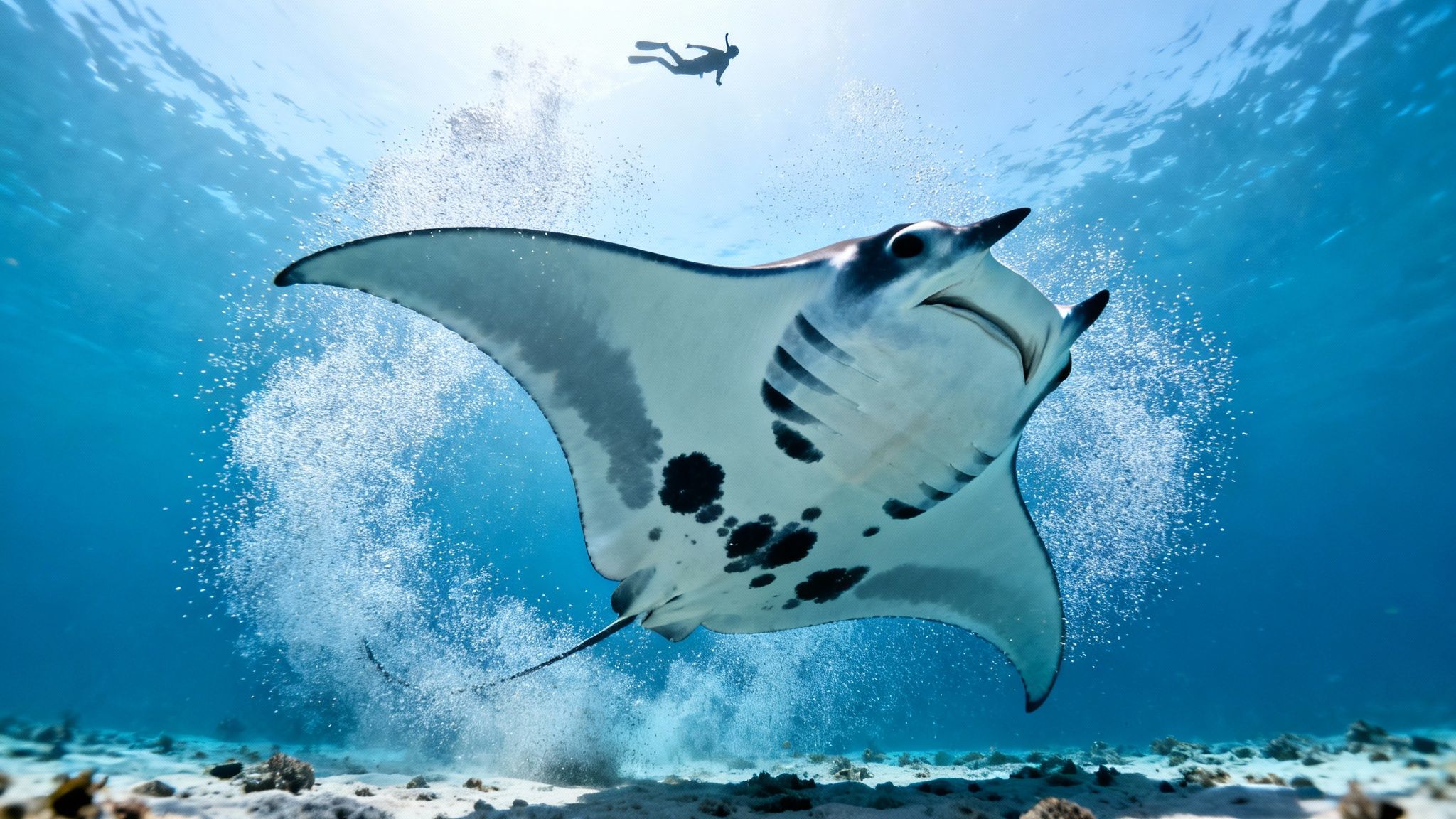
This incredible personal connection is possible because of the unique pattern of black spots on their bellies. Just like a human fingerprint, no two manta rays have the same spots. This allows everyone to track them over their entire lives, monitoring their health and learning more about their habits. For a great deep dive into these amazing animals, check out the resources from our friends at Manta Ray Night Snorkel Hawaii.
Gentle Giants of the Sea
First-timers often have one big question: "Are they safe?" When you see a creature with a wingspan that can stretch over 12 feet, it's a fair thing to ask. The answer is a resounding yes—manta rays are completely harmless to humans.
Here’s why you can relax and enjoy the show:
No Teeth: They are filter feeders, meaning they don't have teeth for biting or chewing.
No Stingers: Unlike their cousins, the stingrays, mantas have no stinger or venomous barb on their tail.
They are incredibly gentle, intelligent, and curious. We often call them the "puppy dogs of the sea" because of their playful and graceful nature. Their entire diet is made up of tiny zooplankton, which they gulp from the water with their huge, gaping mouths.
The most spectacular thing you'll see is the famous "barrel roll." As the mantas glide through the plankton drawn to the lights, they perform incredible underwater somersaults. It's their way of funneling as much food as possible into their mouths—a breathtaking display of natural grace.
Understanding Kona's Manta Population
The Kona coast is home to a healthy, well-studied population of reef mantas. Researchers have identified hundreds of individuals who call this area home. But what's really fascinating is that while the total population is estimated at over 450 individuals, a small group of "regulars" accounts for most of the action.
Studies show that the top ~20 most-seen mantas make up roughly 50–60% of all recorded sightings! This is what makes the Kona encounter so special and reliable. You're not just hoping to see a wild animal; you're visiting the local hangout of some very well-known residents.
Knowing a little about their biology completely changes the experience. It stops being just a tourist activity and becomes a genuine appreciation for one of the ocean's most majestic animals. If you're looking for even more details, you can check out our guide on Kona's manta rays for more information.
How to Book the Best Manta Ray Tour
Ready to take the plunge? Getting your spot for this once-in-a-lifetime manta ray snorkel Kona adventure is pretty straightforward, but a little bit of planning will make all the difference.
This is an incredibly popular tour, so my number one piece of advice is to book well in advance. If you're traveling during the busy seasons—think winter holidays or summer break—it’s absolutely essential. Spots fill up fast!
When you start your search, really zero in on companies that keep their group sizes small and follow sustainable, Manta Ray Green Listed practices. A smaller group isn't just a minor detail; it completely changes the experience. You'll have a much more personal encounter without bumping fins with dozens of other people, guaranteeing an unobstructed view of the underwater ballet.
Finding the Right Operator for You
For a tour that really checks all the boxes, Kona Snorkel Trips is a fantastic choice. They're well-known for their experienced crew who are genuinely passionate about the ocean, their strong commitment to conservation, and their laser focus on a quality, personal experience. Their dedication to smaller groups means you get a front-row seat without the crowds.
Of course, exploring your options is always smart. We've put together a full breakdown of our top picks in our guide to the 12 best manta ray snorkel Kona tours.
If you’re ready to lock in a date, you can also explore direct booking options on Bookedin.ai, which offers a dedicated page for making reservations.
The manta ray snorkel is a huge part of the local marine tourism economy. This industry brings in roughly 80,000 participants every single year, making it one of the largest single-site manta encounters anywhere in the world.
Choosing a reputable operator does more than just guarantee you a great time; it supports the local community and the ongoing conservation efforts that protect these majestic animals for future generations to enjoy.
When you book with a company that values both its guests and the marine environment, you become part of a sustainable cycle that helps Kona's beloved manta rays thrive. Now, all that’s left is to secure your spot for this magical night.
Answering Your Final Questions
Even with all the details, it's completely normal to have a few last questions before you commit to a manta ray snorkel Kona tour. Let's tackle some of the most common things people ask, so you can book your trip feeling totally confident and excited.
Think of this as the final briefing before your big adventure.
Are Manta Ray Sightings Guaranteed?
This is the big one, right? While we're dealing with wild animals and a 100% guarantee is never possible, the Kona manta snorkel has an incredible success rate—often over 90% year-round. These feeding spots are so consistent that it's become one of the most dependable wildlife encounters on the planet.
For extra peace of mind, the best operators like Kona Snorkel Trips offer a "manta guarantee." It's simple: if you don't see any mantas on your tour, you can come back again for free on a space-available basis. That's how confident they are that you'll see these amazing creatures.
What Is the Best Time of Year to Go?
Great news on this front: any time you're on the Big Island is a great time to see the mantas! Kona’s manta population lives here all year, so you can book this incredible tour no matter what month you visit.
That said, there are some minor seasonal differences to keep in mind:
Summer (May to September): The ocean is typically at its calmest during these months, which is a huge plus if you're worried about seasickness.
Winter (October to April): Cooler water can sometimes lead to bigger plankton blooms. More plankton can mean more mantas showing up for the feast!
Ultimately, don't overthink it. The experience is absolutely magical whether it's July or January.
Can Children Participate in the Tour?
Yes! The manta ray night snorkel can be an amazing adventure for the whole family. However, every tour company has its own rules. Most operators have a minimum age, usually somewhere between 5 and 7 years old. For a complete rundown of policies and other common questions, this detailed manta ray FAQ page is a great resource.
The biggest thing to consider is how comfortable your child is in the ocean after dark. They don’t need to be a champion swimmer—everyone holds onto a big, floating light board for support—but they do need to be able to listen and follow the guide’s instructions. It's always best to call and confirm the age requirements with your chosen tour company before you book.
What Should I Bring on the Boat?
The tour company provides all the important gear like wetsuits, masks, and snorkels. Your job is just to pack a small bag for comfort before and after you get in the water.
Pro Tip: Pack your post-snorkel items in a separate "dry bag." This ensures your warm clothes stay perfectly dry and are ready for you the moment you climb out of the water. It makes the boat ride back so much more enjoyable.
Here’s a quick checklist of what to bring:
A towel and a set of warm, dry clothes to change into.
A reusable water bottle to stay hydrated.
Any seasickness medication you might need (be sure to take it before the boat leaves the dock).
An underwater camera, like a GoPro, to capture the incredible views.
Just remember, flash photography is a huge no-no. The sudden, bright lights can hurt the mantas' sensitive eyes. With these questions answered, you're all set to book one of the most unforgettable nights of your life. For another exceptional option for a Manta Ray night snorkel or a Captain Cook snorkeling tour, check out Kona Snorkel Trips, known for their dedication to safety and smaller group sizes.
Comments